
How the Central Gearbox Works Inside a Rotary Tiller
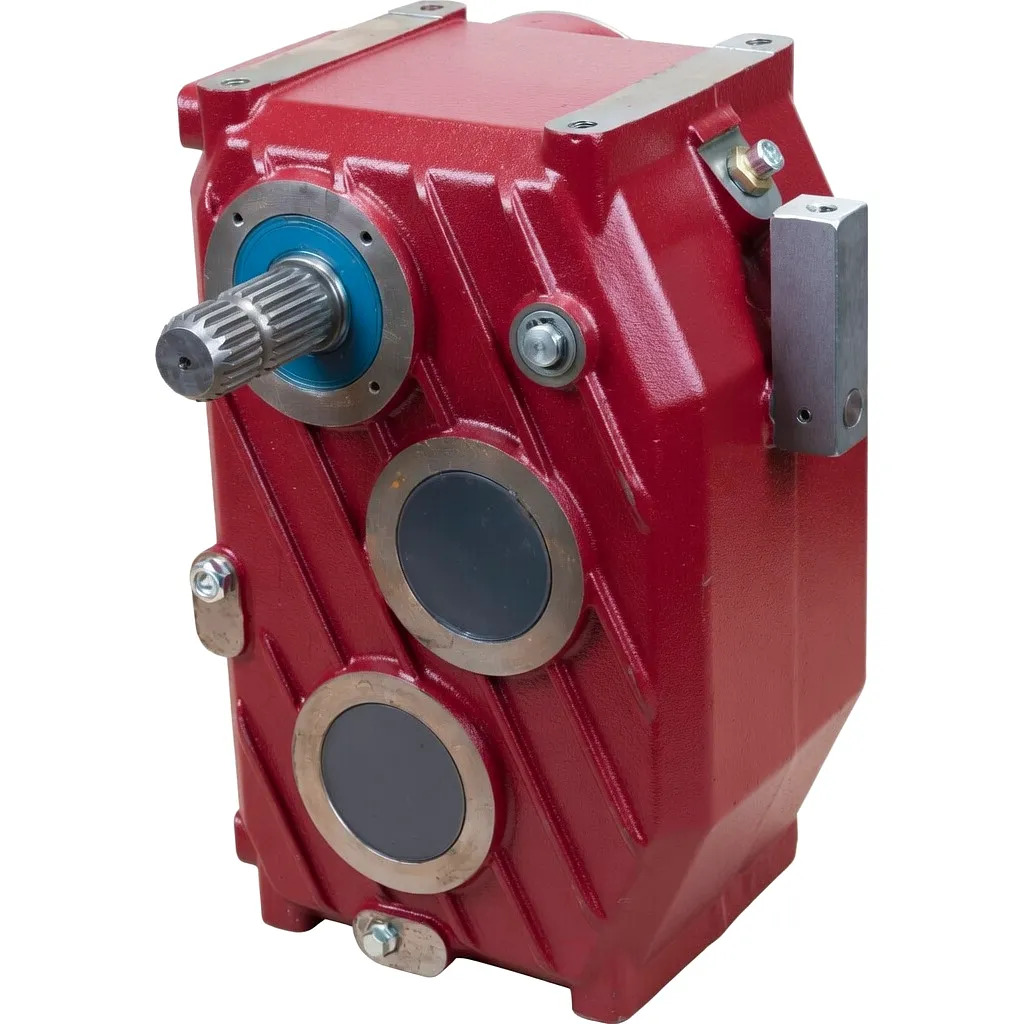
The tractor’s PTO shaft delivers rotational energy at a standardised speed — 540 rpm on most British tractors below 80 hp, or 1000 rpm on higher-output models. This input enters the agricultural gearbox through a splined input shaft that interfaces directly with the PTO coupling, with an overrunning clutch or shear-bolt protection assembly sitting upstream to guard against sudden shock overloads from buried obstructions.
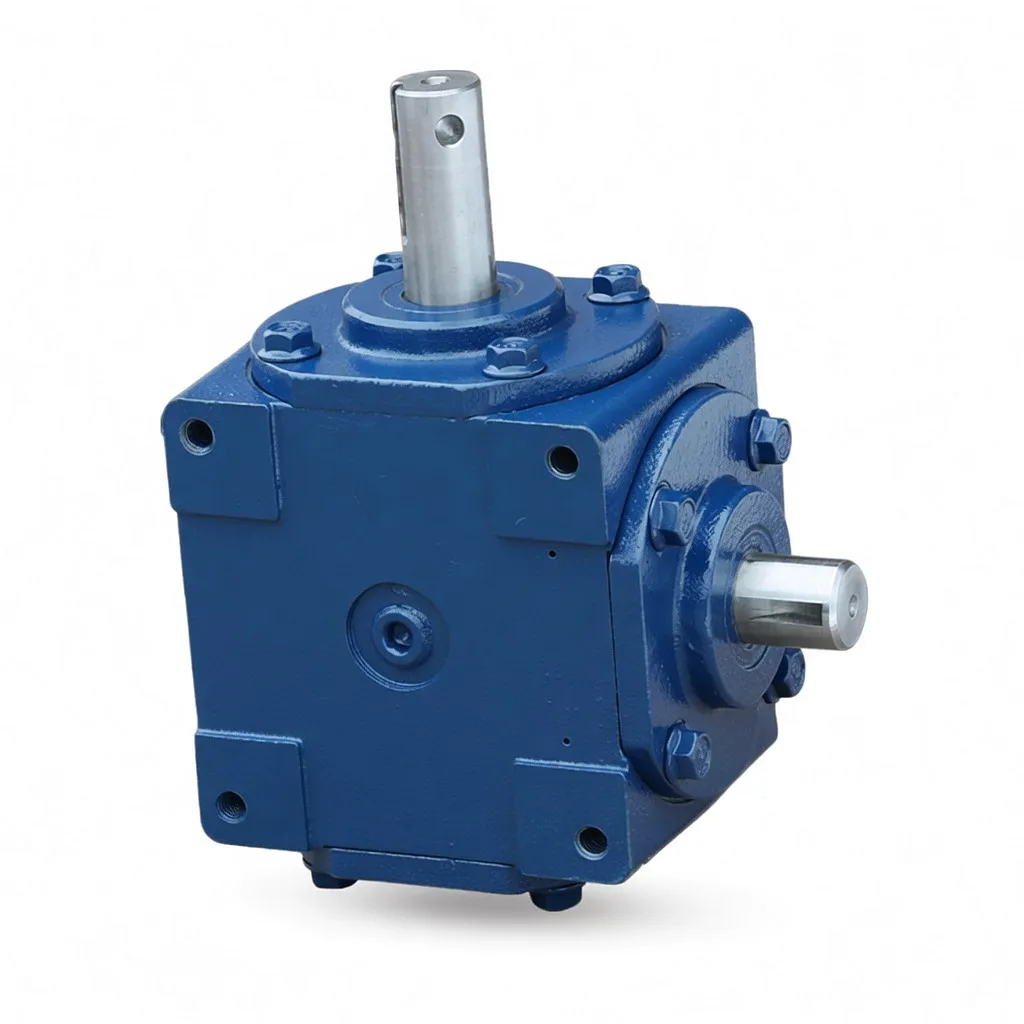
Inside the housing, the primary reduction stage uses a matched pair of spiral bevel gears. The ring gear and pinion geometry redirects the input shaft rotation through 90 degrees, converting the longitudinal PTO rotation into the lateral axis that aligns with the tiller rotor. Ratio options at this stage typically span from 1:1.4 through to 1:3.8, with the selected ratio governing the final rotor speed and therefore the soil fragmentation intensity.
From the central housing, power is distributed in both directions along the rotor shaft through a combination of side-drive chains or supplementary spur gear trains. This ensures that tine flanges across the entire working width — which on British heavy-duty tillers can reach 3.0 metres or beyond — receive consistent torque. Uniform tine speed across the full pass width is critical for consistent seedbed preparation, and the central agricultural gearbox is the component that guarantees this uniformity.
Core Materials Used in Agricultural Gearbox Manufacturing
Material selection defines the service life, load capacity, and repairability of every central gearbox unit
Nodular graphite ductile iron offers the combination of high compressive strength (typically 350 MPa tensile in GGG50 grade) and excellent vibration damping that agricultural gearbox housings require. The graphite nodules within the iron matrix absorb shock energy rather than propagating cracks — a critical property when tine blades repeatedly strike subsurface stones. Grey cast iron (GJL-250) is used in lighter-duty designs, but serious heavy-season British applications demand ductile grades. Precision boring of the bearing bores to H7 tolerances during CNC machining ensures consistent bearing fits across production batches.
The spiral bevel gear pair at the heart of every agricultural central gearbox is machined from low-carbon alloy steel — typically 20CrMnTi in standard configurations and the higher-performance 20CrMnMo for heavy-duty applications. After hobbing or milling to shape, these gears undergo case-carburising to achieve a surface hardness of HRC 58–62 while retaining a ductile core with hardness around HRC 35. This dual-hardness profile gives tooth flanks that resist pitting and wear while the gear body absorbs bending loads without brittle fracture. Gear grinding after heat treatment brings tooth profile accuracy to DIN 6 standards or better.
Agricultural gearbox shaft support comes from tapered roller bearings in most standard rotary tiller designs, selected because their geometry simultaneously handles both the radial rotor loads and the axial thrust forces generated by the spiral bevel contact angle. Spherical roller bearings appear in the output shaft positions of wider heavy-duty tillers, where shaft deflection under asymmetric load would otherwise cause premature inner-race fretting. Bearing rings are made from through-hardened 100Cr6 bearing steel, and in units destined for UK export markets, greased-for-life sealed versions reduce field maintenance intervals significantly.
Oil retention in a field-operating agricultural gearbox depends entirely on the quality of its sealing components. Nitrile rubber (NBR) radial shaft seals are the standard choice for gear oil service in ambient temperatures from -25°C to +120°C — a range that covers the full British seasonal spread without difficulty. FKM (Viton) elastomers are specified for units destined for operations where gear oil temperatures could spike higher under sustained heavy-duty cycling. Static gaskets between housing halves are typically compressed-fibre or liquid-silicone compounds, applied with controlled squeeze ratios to prevent both leakage and over-compression that could distort the housing bore geometry.
Core Technical Advantages of a Precision Agricultural Gearbox
Precision-ground spiral bevel gears operating in a controlled oil bath deliver mechanical transmission efficiency consistently above 96%. This means minimal power loss as heat, more available drawbar torque reaching the tines, and lower fuel consumption per hectare prepared — a financially meaningful advantage for operators running tillers across large arable acreages in Lincolnshire, Cambridgeshire, or the Vale of York.
Shock overload is the primary failure driver in rotary tiller agricultural gearboxes operating in stony soils — a reality facing farmers across much of the Scottish Borders, the Cotswolds, and the flint-rich fields of East Kent. Well-engineered gearbox assemblies incorporate either a shear-bolt hub on the input stub shaft, or an integrated cam-type slip clutch that disengages automatically within milliseconds of a tine strike, then re-engages once the obstruction has passed. This protection dramatically extends the service life of the bevel gear set.
Different British soil types and crop establishment objectives demand different rotor speeds. Heavy-textured clays in the Midlands benefit from higher reduction ratios (slower tines, deeper bite), while light sandy soils in the Breckland or coastal Norfolk need faster tine speeds for fine-tilth production without over-working the structure. A quality agricultural gearbox range covers reduction ratios from 1:1.4 to 1:3.8, allowing machinery dealers and OEM manufacturers to match the gearbox specification precisely to the implement’s operating parameters.
Agricultural gearboxes working at field level in British conditions must resist not only soil particle ingress but also the sustained moisture exposure that characterises UK autumn and spring seasons. Labyrinth seals on all rotating output shafts, combined with positive-pressure housing breathers, prevent both dust and water from reaching the gear oil. The result is a lubricant service life that matches manufacturer recommendations rather than being shortened by contamination — an important factor for operators running tight maintenance programmes between seasons.
The agricultural gearbox input shaft is engineered to interface with both Cat.2 and Cat.3 PTO connection standards as defined in ISO 500 and the equivalent British Standards, making it compatible with the full range of tractors operated across UK agriculture — from 50 hp compact utility tractors through to the 180 hp+ articulated units deployed on large combinable crop farms in Nottinghamshire and Herefordshire. Metric splined versions (6-spline Z6 and 21-spline Z21) are both available from quality manufacturers.
A split-housing design with accessible oil-drain and fill ports allows a competent operator or agricultural engineer to change gear oil on a level surface without specialist lifting equipment. External bearing access covers on the output stub shafts mean that worn bearings can be replaced in a farm workshop environment rather than requiring full implement return to the dealership — a critical advantage during the spring cultivation season when lost days have direct financial consequences across UK arable operations.
Agricultural Gearbox Technical and Performance Specification Table
Standard range parameters — custom specifications available on request from Ever Power
| Parameter | Standard Range | Heavy-Duty Range | Notes / UK Application |
|---|---|---|---|
| Input Speed (PTO) | 540 rpm | 540 / 1000 rpm dual | Dual-speed versions for tractors above 100 hp |
| Rated Input Torque | 250–600 Nm | 600–1,800 Nm | Peak overload up to 2.5x rated for 2 seconds |
| Reduction Ratio Options | 1:1.4 / 1:1.9 / 1:2.4 | 1:2.4 / 1:3.0 / 1:3.8 | Custom ratios available; suits UK light to heavy soils |
| Output Shaft Direction | 90° (transverse) | 90° standard + offset options | Bevel gear set enables right-angle drive |
| Gear Material | 20CrMnTi carburised | 20CrMnMo / 17CrNiMo6 | Surface hardness HRC 58–62; core HRC 30–38 |
| Housing Material | GJL-250 grey iron | GGG50 / GGG70 ductile iron | CNC bored to H7 bearing fit tolerances |
| Bearing Type | Taper roller (input/output) | Taper + spherical roller | 100Cr6 steel; sealed options available |
| Mechanical Efficiency | ≥96% | ≥97% | At rated load and operating temperature |
| Seal Type | NBR radial shaft seals | FKM (Viton) + labyrinth | IP55 equivalent minimum ingress resistance |
| Lubricant | SAE 90 GL-4 mineral | SAE 75W-90 GL-5 synthetic | Synthetic extends service interval to 500 hours |
| Operating Temp Range | -15°C to +90°C | -25°C to +110°C | Covers full UK seasonal range without issue |
| Mounting Interface | 4-bolt flange (ISO std) | Custom bolt pattern available | Compatible with Maschio, Kuhn, Vogel & Noot, etc. |
| PTO Shaft Spline | Z6 (6-spline 1-3/8″) | Z6 / Z21 / custom bore | Fits all ISO 500 UK-spec tractors |
Application Scenarios: Where the Central Agricultural Gearbox Proves Its Worth
Application Scenario 1: Autumn Seedbed Preparation for Winter Wheat on UK Arable Farms
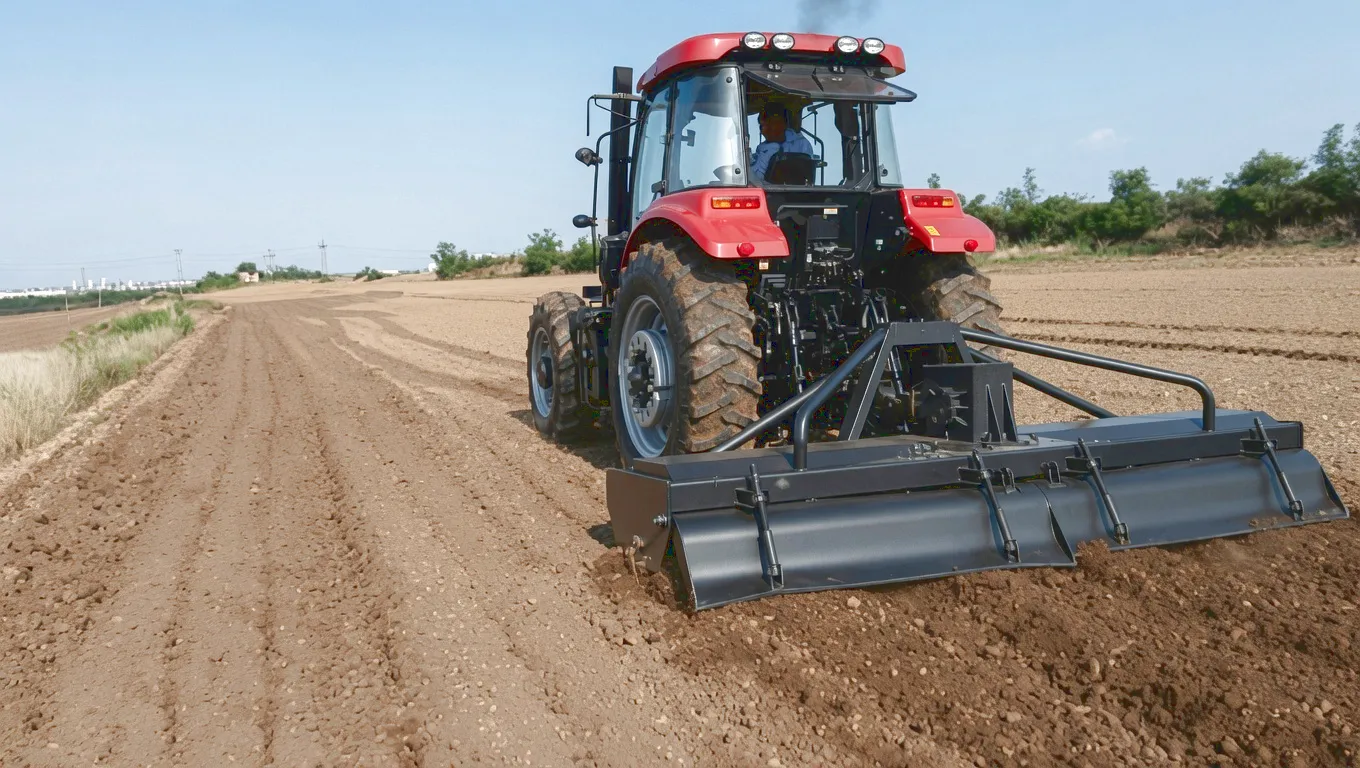
The most commercially significant application of rotary tiller central gearboxes across the United Kingdom is the autumn seedbed preparation pass that precedes winter wheat drilling on the large arable units of East Anglia, the East Midlands, and Yorkshire. Following the combine harvester and the plough or disc, the rotary tiller makes the consolidation and tilth pass that breaks remaining clods and levels the seedbed surface to meet the tight specifications required by modern pneumatic seed drills. In a single pass behind a 140 hp tractor, a 2.5-metre wide rotary tiller equipped with a correctly specified agricultural gearbox can process soil to the 5–8 cm depth required for winter wheat establishment, creating the fine but firm tilth structure that agronomists specify for rapid germination and good root anchoring. The central gearbox in this scenario must handle continuous operation for runs of several hours, with input torque varying dramatically as the tiller moves between loose ploughed ground and occasional uncultivated headlands. Thermal management — specifically the ability of the gear oil to absorb and dissipate heat generated at the bevel mesh — is critical for sustained autumn drilling campaigns that in Lincolnshire or Cambridgeshire can run for three to four weeks without a major service break.
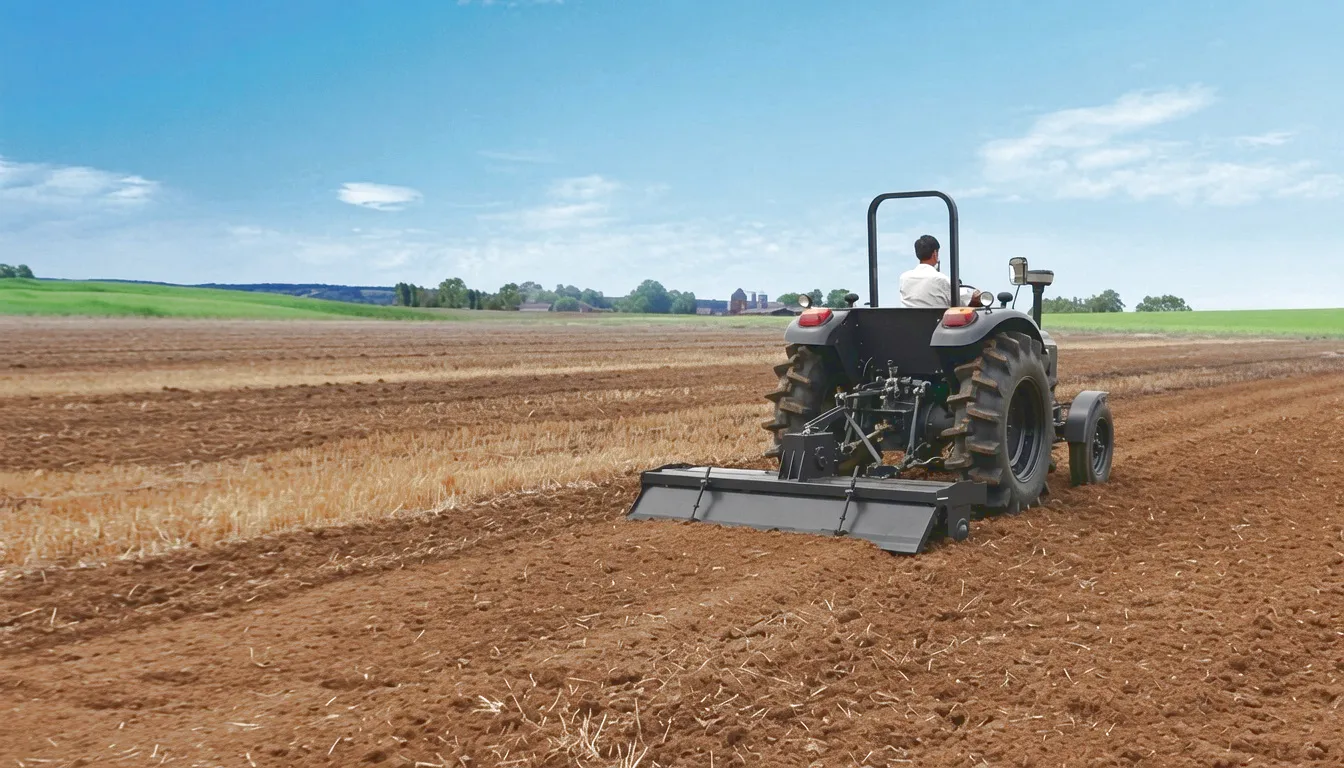 Market gardens and horticultural operations across Kent, Surrey, and the Lea Valley around London’s northern edge represent a distinct and demanding niche for agricultural gearbox performance. These operations use rotary tillers not to prepare vast fields but to cultivate individual beds, often in close succession and under irrigation, to a very fine and precise tilth quality that direct-seeded salad crops, brassica transplants, and root vegetables demand. The tiller in this context runs at shallow depths — typically 8–12 cm — but at high frequency, often completing multiple passes over the same area within a single growing season. The central gearbox must therefore handle frequent start-stop cycling, variable operating temperatures as the implement is raised and lowered at each bed end, and the occasional shock loading that occurs when tine blades encounter irrigation pipework, transplanting pegs, or stone-free beds with hard sub-surface layers. Several Kentish horticultural machinery specialists have noted that agricultural gearboxes with inadequate shaft seal specifications fail rapidly in these conditions because the repeated temperature cycling causes thermal pumping of moisture past poorly fitting seals — a failure mode that quality-engineered units with FKM seals effectively eliminate.
Application Scenario 3: Grass Renovation and Sward Management on Livestock Farms Across Wales and the West Country
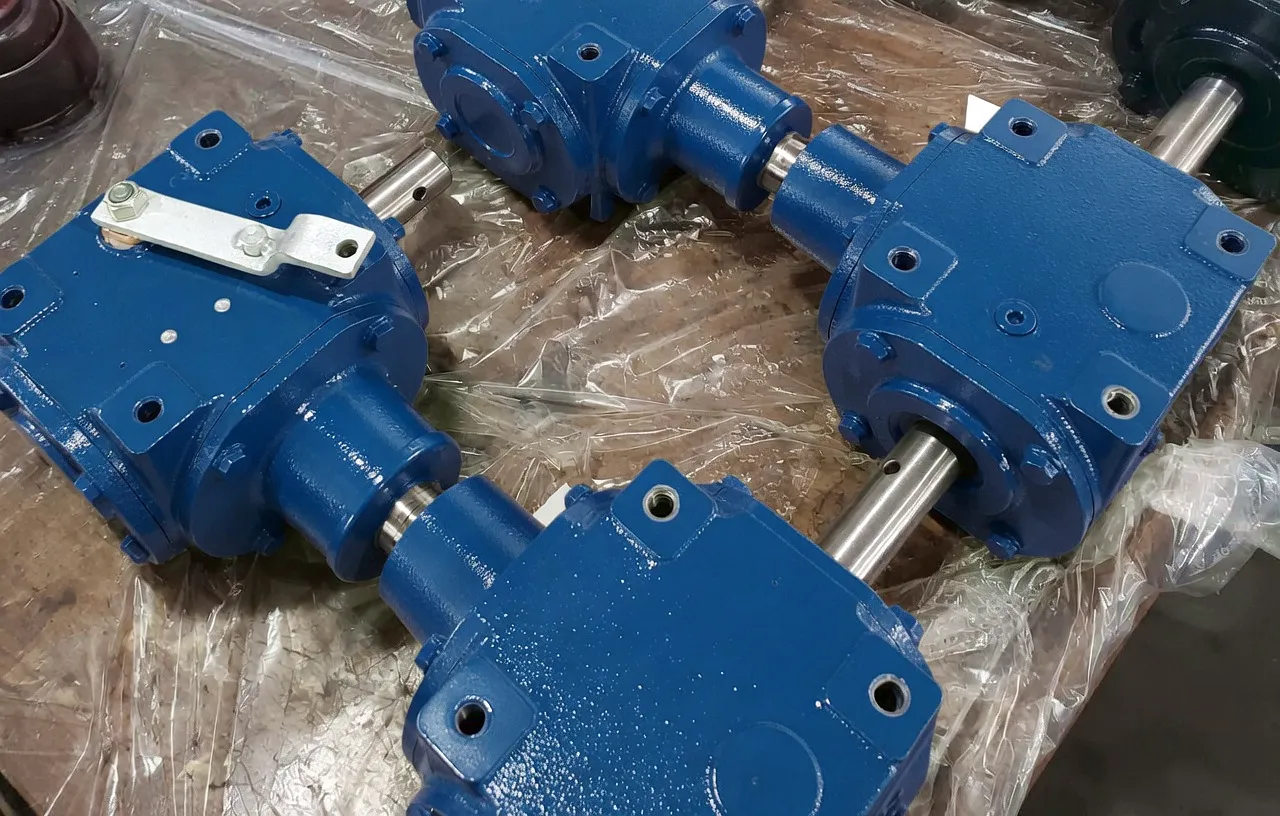 On the permanent grassland and pasture-renovation operations that characterise livestock farming through Wales, Herefordshire, Somerset, and Devon, rotary tillers equipped with robust central gearboxes serve a very different purpose from their arable counterparts. Here, the tiller is used to scarify, aerate, and overseed deteriorating grass swards — working at shallow depths of 4–6 cm through a dense, fibrous mat of old grass roots, thatch, and compressed surface soil. The torque demand profile in this application is relatively low in terms of peak values but extremely persistent, with the dense grass root matrix creating consistent drag on every tine across the entire pass width. The agricultural gearbox must deliver steady, reliable torque across this resistance without the relief provided in arable work by the episodic nature of clod breaking. Welsh livestock farms, in particular, often operate on slopes that create lateral load asymmetries in the tiller, placing one side of the central gearbox output under greater torque than the other — a condition that poorly specified agricultural gearboxes handle badly, leading to accelerated bearing wear on the downhill side and premature gearbox retirement.
Application Scenario 4: Sports Pitch and Amenity Ground Preparation in Urban and Suburban Settings
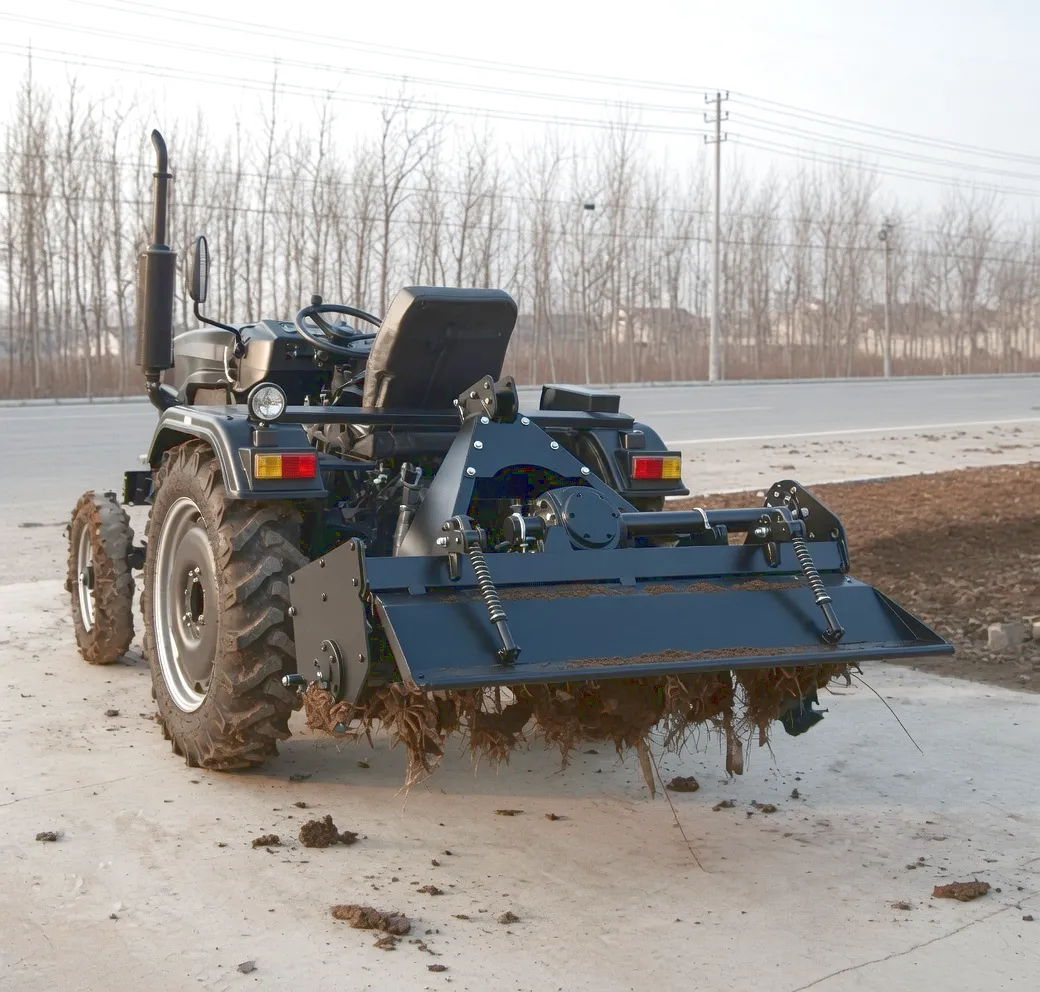 Rotary tillers and the agricultural gearboxes that power them have moved well beyond the farm gate in contemporary UK ground maintenance. Local authorities, sports ground contractors, and estate management companies across England’s major cities — including Birmingham, Leeds, Manchester, and the broader South East — routinely deploy compact rotary tillers on sports pitch renovation projects, school playing field renovations, and public park restorations. In these settings, the tiller must operate adjacent to urban hardscape, around drainage inspection chambers, and often close to spectator barriers or perimeter fencing, making precise depth control essential. The agricultural gearbox in compact tillers serving this market must be sized to the implement’s working width — typically 1.0–1.8 metres — while delivering consistent performance on compact tractors in the 45–80 hp range that navigate through standard urban pedestrian gateways. Birmingham-based ground maintenance contractors have particularly driven demand for replacement agricultural gearboxes in this segment, as high-frequency seasonal use wears out original-equipment units faster than rural agricultural applications.
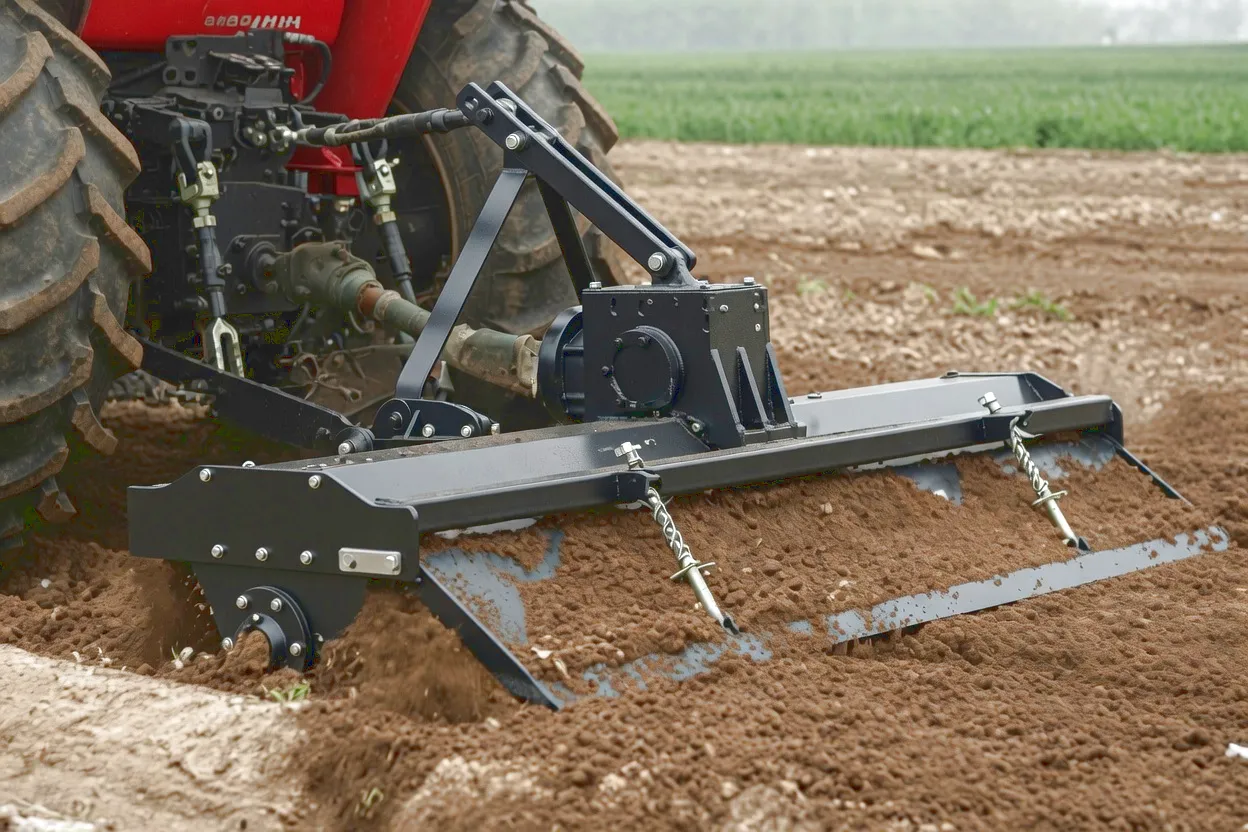 The United Kingdom retains a genuine agricultural machinery manufacturing sector, centred on companies in Lincolnshire, Shropshire, and the wider Midlands engineering belt that stretches between Birmingham and Sheffield. These manufacturers produce rotary tillers, power harrows, and combination seedbed machines for both the domestic UK market and export to continental Europe, Australia, and North America. For these OEM manufacturers, the central agricultural gearbox is typically the single most technically demanding bought-in component in the entire implement bill of materials. Their requirements differ fundamentally from those of a farm-level replacement buyer: they need guaranteed dimensional repeatability across batches of 50–500 units, documented material traceability for each gear set, paint or surface treatment specifications matched to their implement’s corrosion protection system, and the ability to adjust mounting dimensions to accommodate design revisions without a full tooling change. Ever Power’s OEM supply programme is designed around precisely these requirements, with full drawing-to-production capability that allows Midlands machinery manufacturers to receive custom-dimensioned agricultural gearbox assemblies tested and matched to their specific tiller frame geometry before the first production unit leaves the factory.
Ever Power: Precision Manufacturing and Customisation Capabilities
Engineering-grade agricultural gearboxes, built to your specification, delivered to your schedule
Ever Power operates a dedicated agricultural gearbox production division with full in-house capability spanning raw casting, CNC machining, heat treatment, gear hobbing and grinding, assembly, and factory acceptance testing. This integrated production model — unusual even among established agricultural gearbox manufacturers — gives Ever Power direct quality control at every process stage, eliminating the supply chain risk that plagues manufacturers who outsource gear cutting or heat treatment to third parties. The result for UK buyers is a consistent, documented product that meets drawing specifications batch after batch rather than varying with the performance of external sub-suppliers.
Ratio, shaft dimensions, mounting pattern, seal spec, paint finish, and branding — all adjustable from the initial drawing stage without minimum order restrictions above 20 units
All housing bores machined to H7 tolerance on 5-axis CNC machining centres; gear tooth accuracy verified by CMM coordinate measurement after grinding to DIN 6 standard
Consolidated container shipping via Felixstowe and Southampton ports with groupage options for smaller orders; standard lead times of 25–45 days from order confirmation to UK port arrival
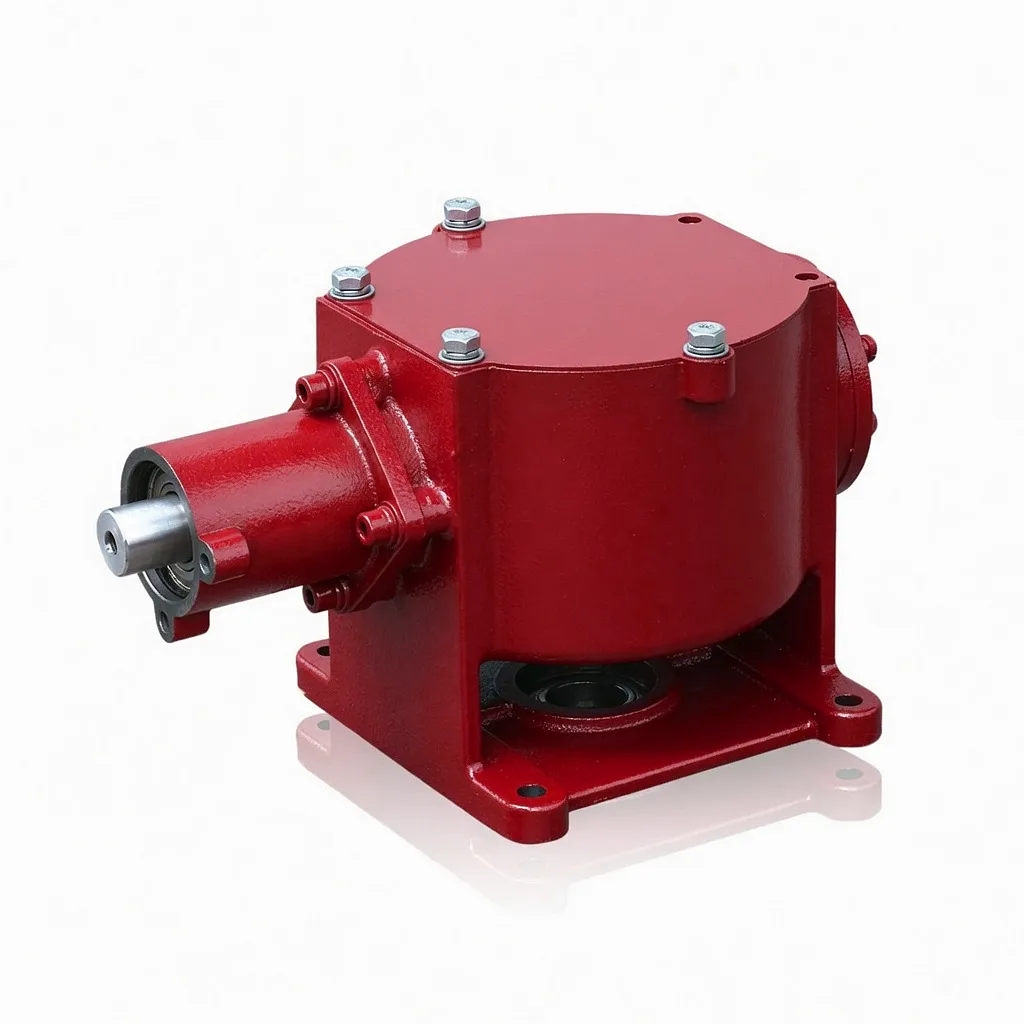
Ever Power’s in-house heat treatment facility processes gear blanks through carburising and hardening cycles under controlled atmosphere, with hardness testing on a sample basis at each production lot. Traceability documentation linking each gearbox serial number to its material batch and heat treatment cycle record is available as standard — a requirement that British agricultural OEM manufacturers increasingly specify in their procurement contracts and that Ever Power can meet without additional cost or lead-time implications.
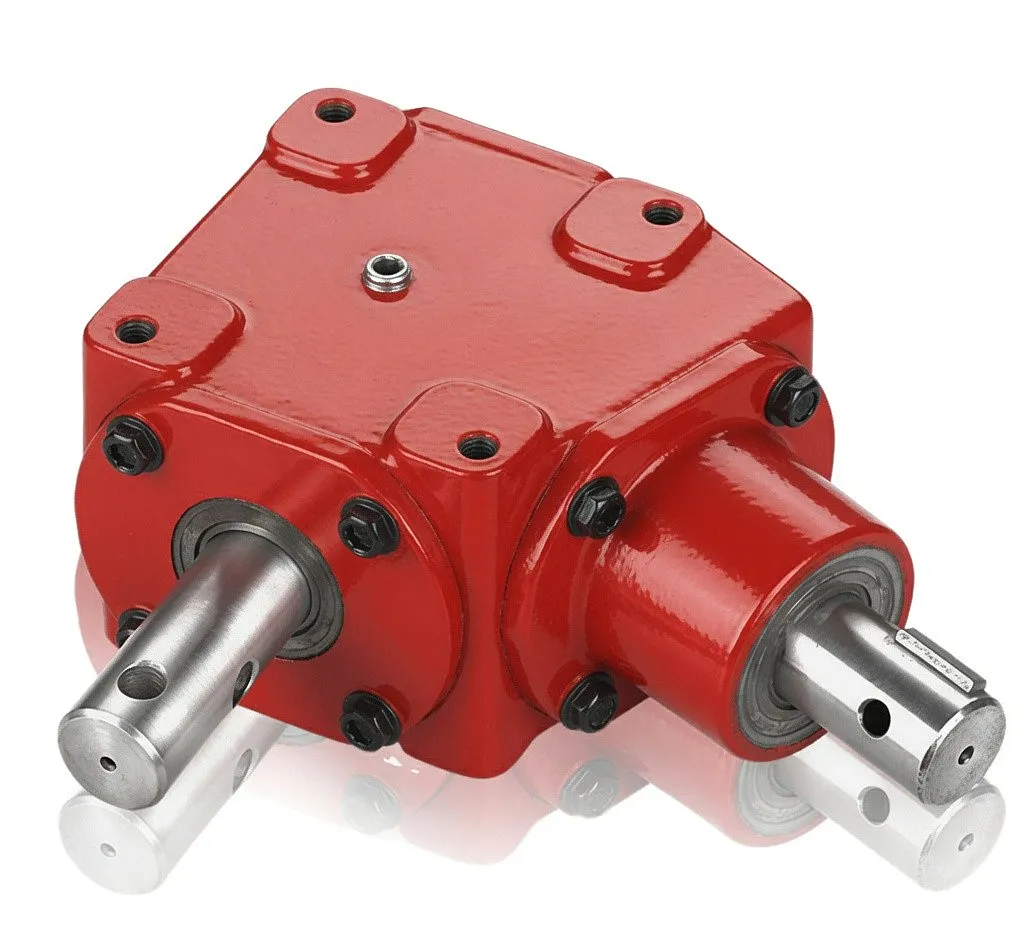
The factory acceptance test procedure at Ever Power covers every assembled agricultural gearbox before despatch. Units run on a loaded test bench at rated input speed for a minimum of 30 minutes, with continuous monitoring of operating temperature, noise signature, and output torque. Any unit that exceeds the 75 dB(A) noise ceiling at rated speed, shows oil temperature above 85°C, or produces output torque variation greater than 2% across the test period is quarantined for investigation before passing. This test commitment has underpinned Ever Power’s reputation among UK importers and agricultural machinery dealers as a supplier whose product quality is consistent across every shipment — not just the first sample batch.
Ready to specify your agricultural gearbox requirements? Contact Ever Power’s engineering team for a no-obligation technical review and competitive quote.
Complementary PTO Drive Shaft Solutions from Ever Power
Pair your rotary tiller agricultural gearbox with the right PTO drive shaft for a complete, matched driveline
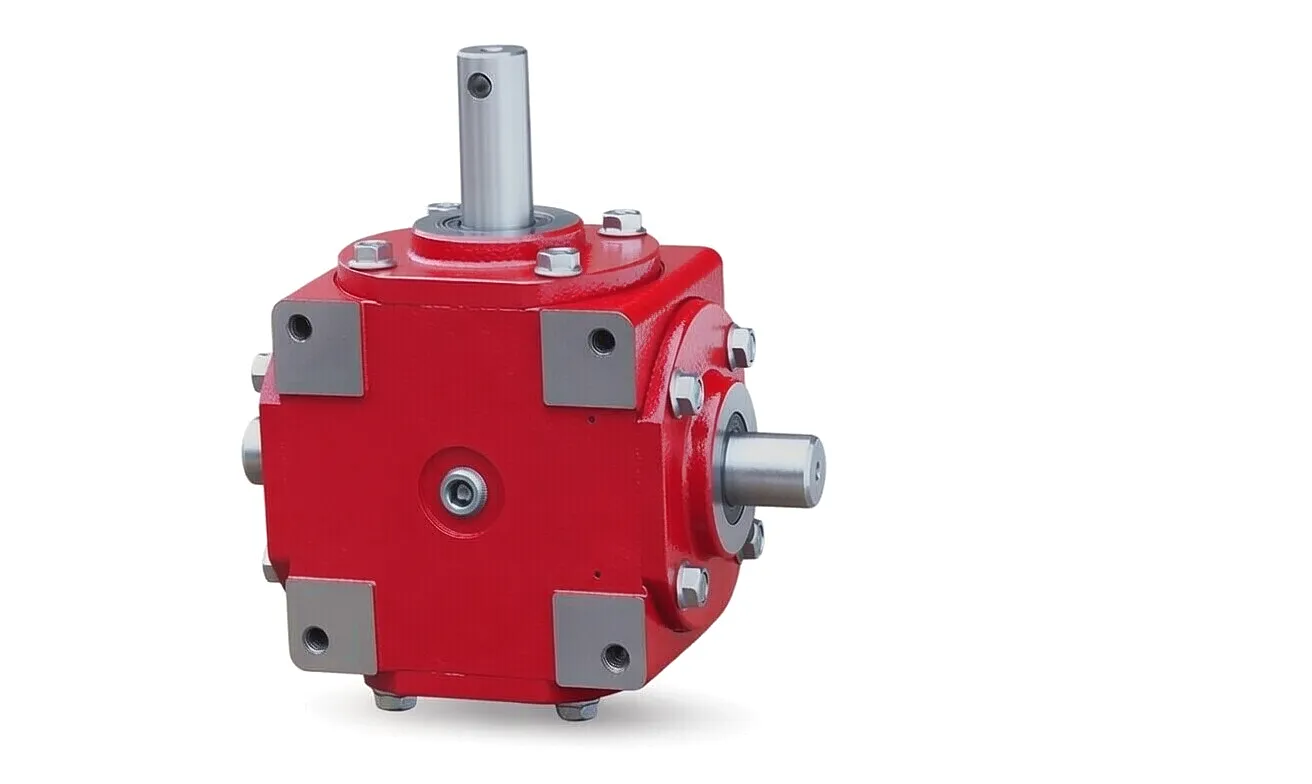
A purpose-built drive shaft designed for the sustained, high-torque demands of round baler operation. Featuring a CE-marked shear-bolt protection hub and telescoping profile tubes in a range of working lengths, this PTO shaft is compatible with the major UK-popular round baler brands and the 6-spline Z6 tractor PTO standard. The double-jointed universal joint at the baler end accommodates the wide articulation angles encountered during headland turns — a frequent cause of premature shaft failure on cheaper alternatives. An ideal companion to any agricultural gearbox in high-duty harvesting applications.
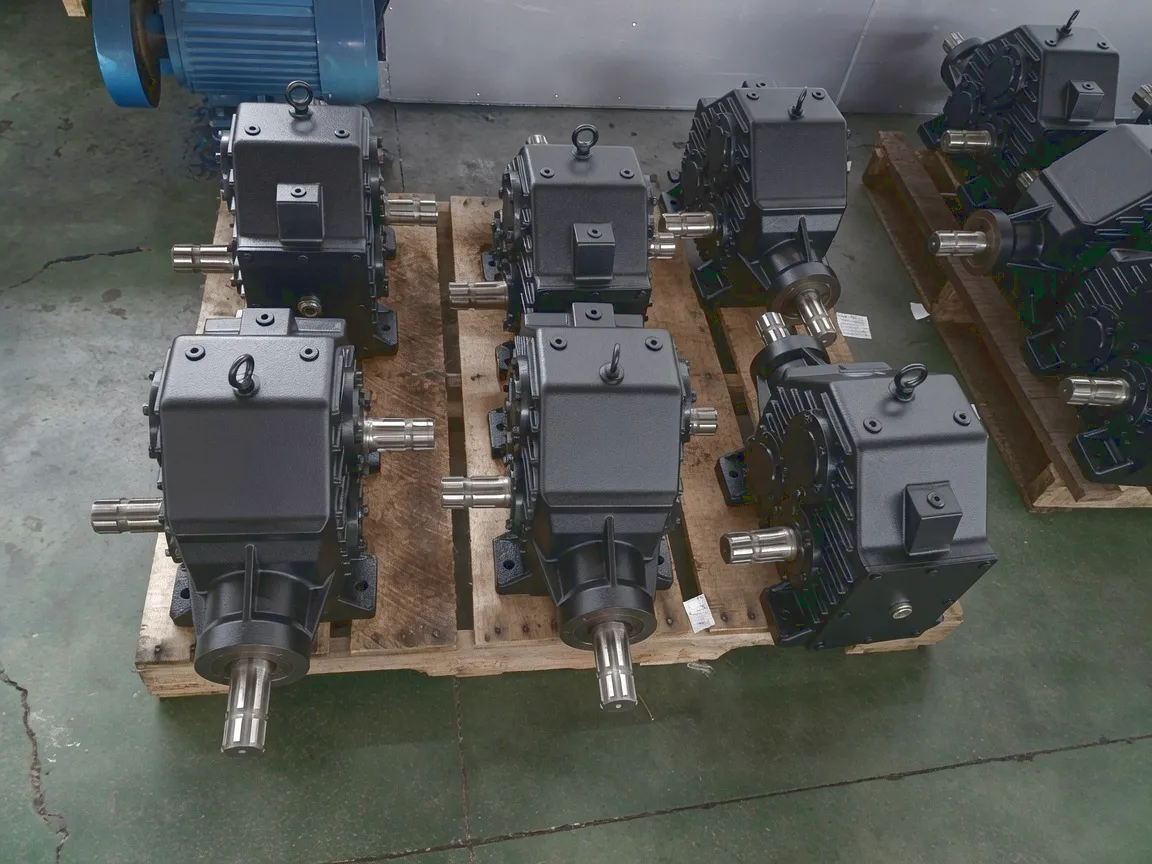
A direct OEM-specification replacement PTO drive shaft engineered to the dimensional and performance requirements of John Deere square baler models. The shaft matches original stub shaft spline dimensions, outer profile tube diameter, and retaining mechanism, allowing a straight bolt-on replacement without modification to the baler driveline. The overrunning clutch assembly is matched to the John Deere flywheel mass and engagement characteristics, ensuring that the protection response matches the baler’s peak inertia loads during knotter cycle shock events. UK stock availability through agricultural merchants serves the large John Deere square baler user base across English cereal-producing counties.
Customer Success Story: Ever Power Agricultural Gearboxes at a Lincolnshire Arable Partnership
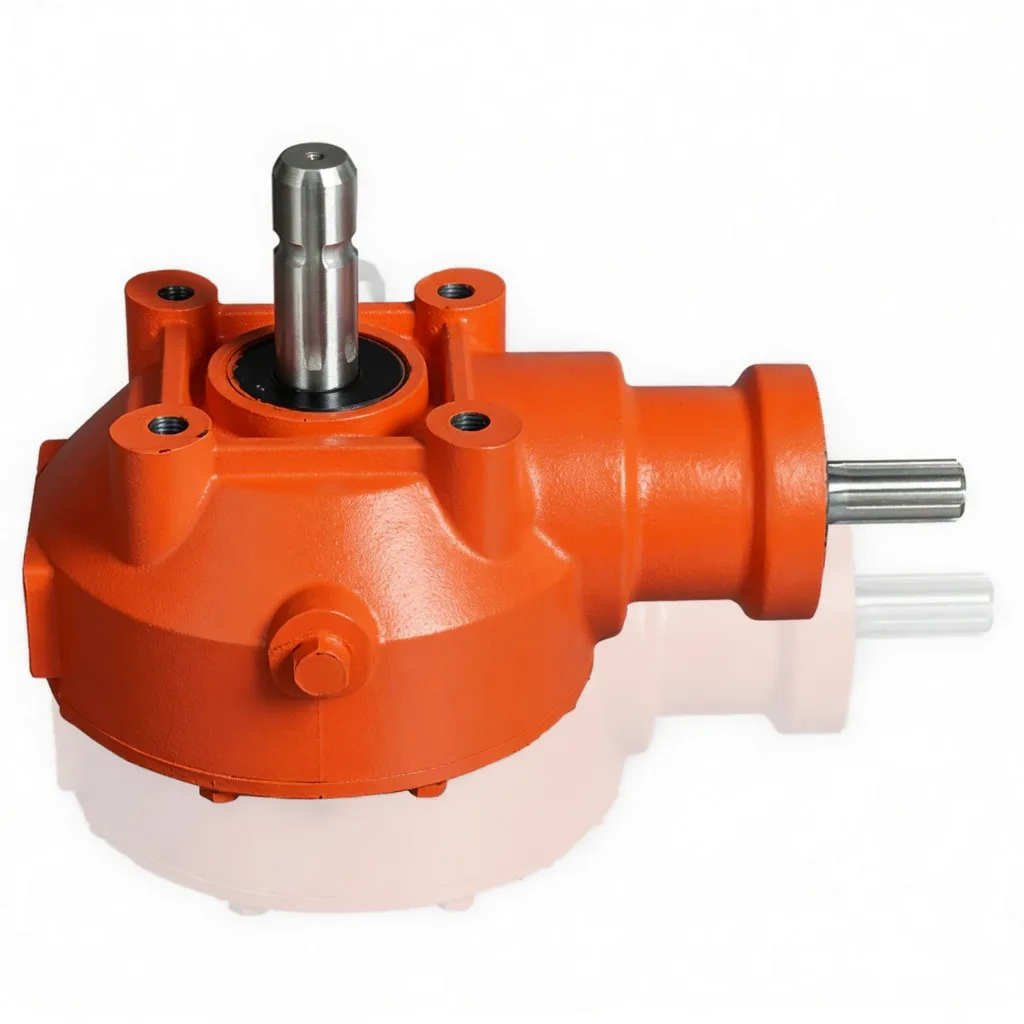 Pemberton Brothers Farming, a family partnership operating approximately 900 hectares of combinable crops across the silt fens south of Boston, Lincolnshire, had been experiencing an escalating pattern of agricultural gearbox failures on their two Italian-branded rotary tillers. Both machines — a 2.5-metre model and a 3.0-metre unit used for autumn seedbed preparation — were consuming central gearboxes at rates that the farm’s agronomist and machinery manager described as commercially unsustainable: an average of one gearbox replacement per machine per season, typically occurring mid-campaign when the autumn drilling window was at its most critical.
The farm’s machinery manager, working through a Spalding-based agricultural engineering firm, sourced Ever Power agricultural gearbox replacements specified to heavy-duty standards — 20CrMnMo bevel gears, GGG70 ductile iron housings, FKM shaft seals, and an integrated cam-type overload clutch replacing the shear-bolt arrangement on the original equipment. The first units were fitted in August 2023 ahead of the autumn 2023 drilling campaign.
Over the following two seasons, both tillers completed their autumn cultivation programmes without a gearbox failure. The 2.5-metre machine processed in excess of 1,100 hectares across the two autumn campaigns; the 3.0-metre unit accumulated approximately 820 hectares across the same period. Oil changes at 250-hour intervals showed clean, metal-particle-free oil in both units — a strong indicator that internal gear and bearing wear rates were within the design envelope. The farm estimates the per-hectare gearbox cost has reduced from approximately £0.85 under the previous components to under £0.18 with the Ever Power units factored over the two-season evidence period.
What Pemberton Brothers Farming Said
We’d budgeted for gearbox replacement as a seasonal cost — it was just something we accepted. The Ever Power units changed that completely. Two full autumn campaigns, both machines, not a single failure. The noise level is noticeably lower than the old units too, which tells you the gear mesh is working properly.
The customisation process was very straightforward. We sent Ever Power the original equipment drawings and they came back with a matched specification inside a week, including the dimensional changes we wanted for the overload clutch. Lead time to delivery at Spalding was 38 days, which worked well with our pre-season planning schedule.
We stripped one of the Ever Power units at the 500-hour mark out of curiosity more than necessity. Bevel gear tooth flanks showed surface finish essentially as-new. Bearing preload was still within tolerance. The material quality is genuinely different from the commodity replacements we’d been fitting — you can see it under a loupe on the gear tooth surfaces.
Frequently Asked Questions: Agricultural Gearboxes for UK Buyers
Prices vary significantly depending on rated torque, housing material, and whether the unit includes an overload protection clutch. Standard-duty agricultural gearboxes for 1.2–2.0-metre tillers typically range from £180–£420 as supplied through UK agricultural dealerships carrying imported stock. Heavy-duty units for wide tillers in the 2.5–3.5-metre range, with ductile iron housings and integrated clutch assemblies, generally fall between £480–£950. Direct procurement from Ever Power with consolidated sea freight to Felixstowe typically reduces unit cost by 25–40% compared to UK distributor pricing at equivalent specification, particularly for orders of five units or more. Requesting a formal quote from [email protected] with your existing gearbox dimensions gives the most accurate price comparison basis.
Heavy Midlands clay soils — whether in Warwickshire, Northamptonshire, or the heavier parts of Leicestershire — generally benefit from a higher reduction ratio than lighter soils to achieve adequate tine penetration without over-speeding the rotor. A ratio in the 1:2.8 to 1:3.5 range typically produces a rotor speed of 154–195 rpm from a 540-rpm PTO input, which agronomists generally recommend for clay-based seedbeds. This slower rotor speed increases penetration depth per tine pass and reduces the risk of creating a glazed smear layer on the tine cut face — a problem that compromises water infiltration in cultivated clay soils. Ever Power can supply the specific ratio you calculate against your tractor’s PTO speed and the tiller rotor diameter.
This is one of the most common questions from UK agricultural machinery dealers and small-fleet farm operations who need either a single replacement unit matched to an existing Italian, Spanish, or German tiller frame, or a small batch for a minor manufacturing run. Ever Power operates a minimum order of just 20 units for fully customised agricultural gearbox specifications, with single-unit pricing available for standard-dimension units from their catalogued range. The engineering team accepts drawings in DXF, DWG, STEP, or hand-sketch format and returns a dimensioned confirmation drawing before production commences. For genuinely unique mounting dimensions, a sample unit can be produced at prototype pricing for customer approval before the production run is placed.
Standard catalogue agricultural gearboxes ship within 7–15 days of order confirmation from Ever Power’s production facility. Sea freight transit time from Chinese ports to Felixstowe or Southampton is typically 25–30 days on direct services. Combined with customs clearance of 3–5 working days and inland delivery to the Midlands — Sheffield typically 24–48 hours from the container port, Birmingham similar — a total door-to-door lead time of 35–55 days is realistic for stocked specifications. Custom-dimensioned units require an additional 15–25 days for production after drawing approval. For buyers with predictable seasonal demand, placing autumn gearbox orders in June–July ensures arrival before the August pre-season maintenance window.
Year-round market garden use in Kent’s horticultural conditions — multiple passes per season, frequent temperature cycling, and potentially sandy or silty soils — places above-average contamination risk on gear oil. For SAE 90 GL-4 mineral oil in an agricultural gearbox used in these conditions, a 200-hour or annual change interval (whichever comes first) is the conservative recommendation. If the drained oil shows discolouration, metallic sheen, or emulsification, reduce to a 100-hour interval and inspect seals. Units upgraded to SAE 75W-90 GL-5 full synthetic can extend to 400–500 hours under the same conditions, with oil analysis every 200 hours providing ongoing condition monitoring data. Always check the manufacturer’s specification for the minimum viscosity grade, as some agricultural gearboxes are precision-clearanced for higher-viscosity gear oils.
Ever Power does not publish wholesale pricing publicly due to the significant variation in specification, volume, and logistics arrangements between customers. UK agricultural machinery dealers, importers, and machinery manufacturers interested in trade pricing should contact the team directly at [email protected] with their approximate annual volume requirement, a description of the gearbox specification they need (rated torque, ratio, input/output shaft dimensions), and their preferred shipping arrangement (CIF Felixstowe, FOB, or EXW). A commercial team member will respond with a trade price sheet and sample order terms within two business days. Volume agreements from 50 units annually typically attract significantly improved pricing relative to spot-order rates.
Failure mode analysis on the failed unit gives the clearest answer. Pitting or spalling concentrated on the dedendum (root) flank of the ring gear teeth typically indicates overloading from an incorrect reduction ratio — the rotor is spinning too fast for the soil conditions, generating excessive reactive torque. Scoring or smearing on both flanks simultaneously suggests inadequate overload protection, where sudden shock events from stone impacts are transmitting fully into the gear mesh without the buffering of a slip clutch. Premature fatigue failure with beach-mark fracture patterns on gear teeth — often appearing within 50–100 hours on new gearboxes — points to material quality issues in the carburising process. A good agricultural engineering firm in Yorkshire, the Midlands, or East Anglia with experience in implement gearbox repair can provide a visual failure analysis report that clearly distinguishes between these three failure causes.
edit by gzl | Ever Power Agricultural Gearboxes | [email protected]