
PTO Shaft for Square Baler: Powering High-Density Hay & Straw Compaction Across UK Farms
Engineered driveline solutions · 540 / 1000 RPM rated · Shear-bolt & overrunning clutch protected · Built by Ever Power
Walk through any Yorkshire farmyard at the height of straw harvest and you will hear it instantly — that signature thump-thump-thump of a square baler punching out perfectly rectangular bales. Behind that rhythm sits one of the most punishing duty cycles in agricultural mechanisation: a flywheel storing kinetic energy and releasing it through a plunger nearly a hundred times every single minute. The component shouldering all of that violence, transmitting it from tractor to implement, is the PTO shaft for square baler operations.
At Ever Power, we have spent the past 18 years designing, machining, and field-testing the PTO shaft for square baler applications across European agriculture, with deep specialisation in the conditions British growers face — from the chalky downs of Wiltshire to the wet clay of Lincolnshire and the rolling pasture of the Welsh borders. The square baler is unlike a mower, a slurry tanker, or a wood chipper. It demands a driveline engineered specifically around shock loading, mass flywheel inertia, and absolute repeatability across thousands of plunger cycles per hour.
This guide walks through the engineering decisions that separate a competent PTO shaft for square baler duty from a mediocre one — torsional damping, profile selection, telescoping behaviour, shear-bolt rating, and the metallurgy that lets a shaft survive a full Lincolnshire wheat-straw season without yielding. Whether you operate a New Holland BB1290, a Massey Ferguson 2270XD, a Krone BiG Pack 1290 HDP II, or a vintage Welger AP 730, the same physical principles apply. Get the shaft right and your baler runs for ten thousand bales without complaint. Get it wrong and you will be welding flywheel hubs by the second cut of silage.
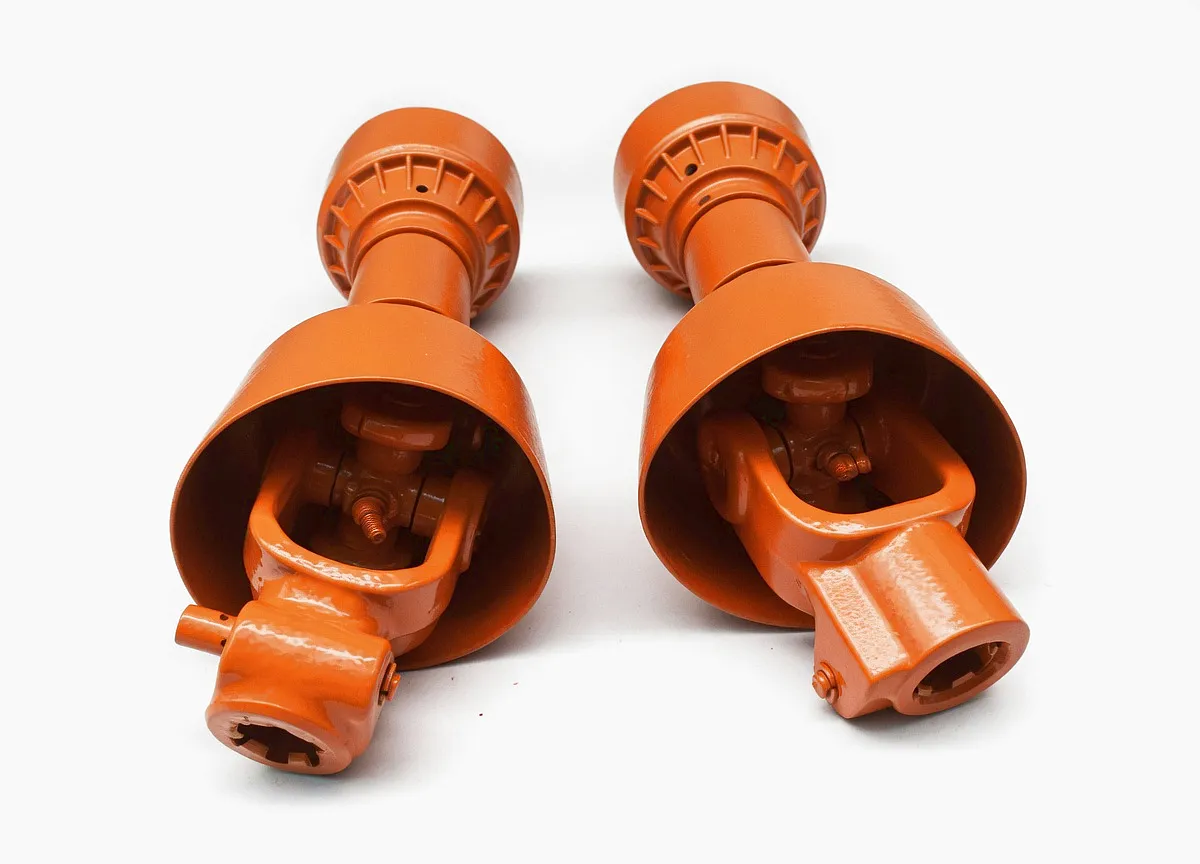
Why the Square Baler Demands a Specialised Driveline
Most PTO-driven implements — rotary mowers, slurry tankers, wood chippers, post drivers — present the tractor with a relatively constant load. The tractor governor compensates, fuel consumption stabilises, and the driveline transmits a fairly smooth torque curve. A square baler is the polar opposite. Inside the bale chamber, a heavy plunger driven by a crank-and-conrod mechanism crashes forward against compressed crop at pressures often exceeding 200 bar in the density rams. A flywheel — typically 200 to 500 kilograms of cast steel — stores rotational energy between strokes and discharges it the instant the plunger meets resistance.
The PTO shaft for square baler service therefore handles a load profile that looks like a sawtooth waveform: peak torque spikes at the moment of plunger compression, near-zero torque during the recovery stroke, then another peak. This happens 80 to 105 times per minute depending on baler model. A standard mower-grade PTO shaft would suffer fatigue cracks in the yokes within a few seasons under that duty cycle.
Three engineering features distinguish a properly designed PTO shaft for square baler use. The yokes need generous wall thickness and forged geometry — typically a Bondioli & Pavesi Series 8 or higher equivalent. Protection devices need to be sized to the actual flywheel mass: a high-rated shear bolt or friction clutch that breaks before the baler flywheel hub or tractor PTO splines yield. An overrunning clutch is essential too, allowing the heavy flywheel to spin down gradually after the operator disengages the PTO at the headland, preventing destructive back-drive into the gearbox. Skipping any one of those features turns the PTO shaft for square baler line into the weak link that takes out the gearbox, the driveline, or both.
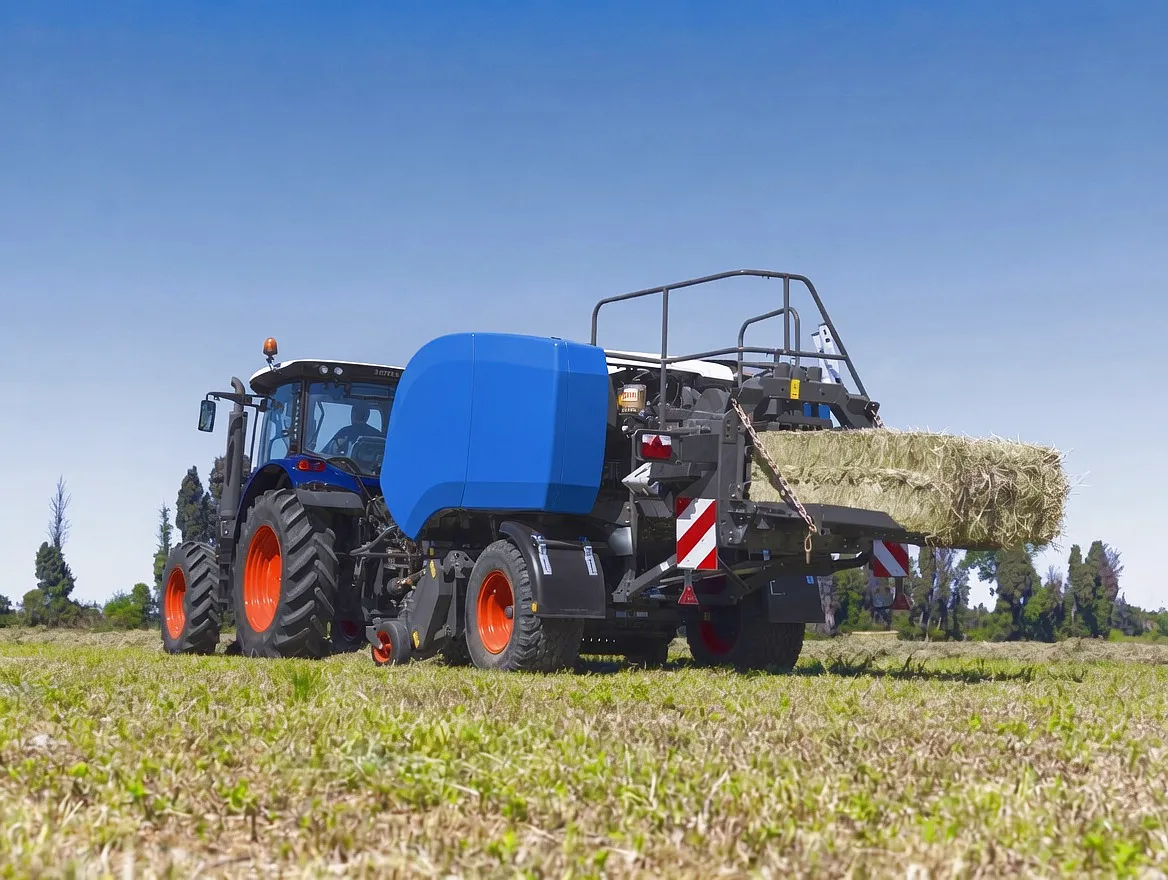
Engineering Advantages Built Into Every Unit
Forged 42CrMo4 Yokes
Cross hubs and yoke ears are forged from chromium-molybdenum alloy steel rated to 1100 N/mm² tensile strength, then heat treated to 280–320 HB. Resists the cyclic micro-fatigue that destroys cheaper sintered yokes within a single baling season.
Cold-Drawn Profiles
Lemon, triangular, and star telescoping profiles maintain dimensional stability across 50–200 mm of working stroke. Honed to ISO h9/H9 tolerances, so the PTO shaft for square baler duty transmits torque smoothly without binding under articulation.
Integrated Overrunning Clutch
Every PTO shaft for square baler in our standard catalogue ships with a unidirectional ratchet on the implement-side yoke. Decouples the spinning flywheel from the tractor driveline the moment the PTO disengages, protecting the gearbox bevel set.
Calibrated Shear Bolts
We ship with a graded 8.8 or 10.9 shear bolt sized to your specific baler model — not a generic one-size-fits-all. The bolt fractures at 15–20% below the weakest downstream component, so a £4 bolt sacrifices itself instead of a £4,000 gearbox.
Chrome-Plated Cross Trunnions
Universal joint cross arms are induction hardened then chrome plated. Combined with full-circumference grease grooves and four needle bearings per cross, this delivers field-proven 50-hour service intervals between greasing — a real advantage during compressed UK harvest windows.
Wide-Angle CV Option
For upland operators in Cumbria, the Pennines, and the Scottish borders, we supply constant-velocity drivelines rated to 80 degrees of articulation. Eliminates the torque pulsation that single-cardan shafts produce above 25 degrees on undulating ground.
How the Driveline Actually Works — Mechanics, Materials, Mechanism
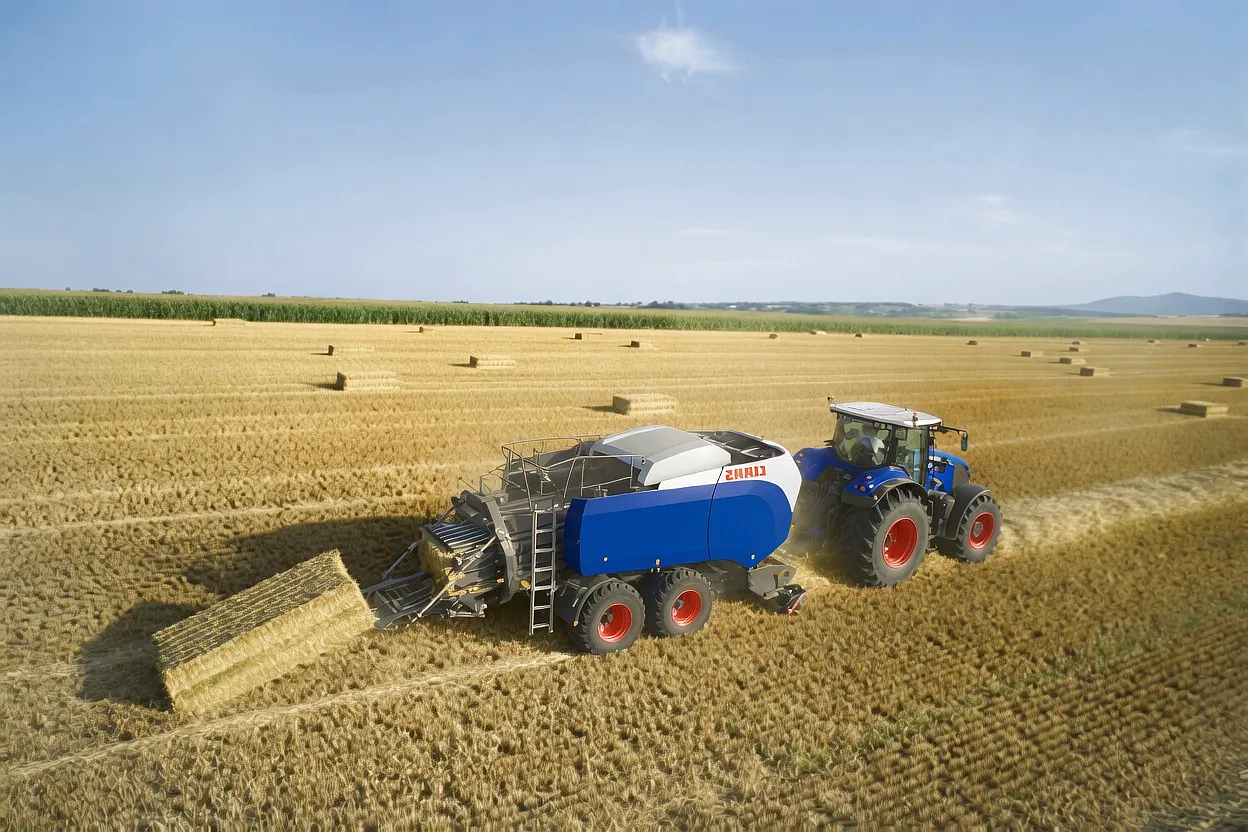
How does a PTO shaft for square baler service actually work, mechanically? The driveline starts at the tractor’s rear PTO stub, which spins at 540 or 1000 RPM under standard ISO 500 specification. A splined yoke clamps onto that stub with a push-pin or quick-release collar. Through a universal joint cross — a four-armed forged element supported by needle-bearing caps — torque transfers into the inboard tube. That tube telescopes inside an outer tube of larger profile, allowing the shaft to extend and retract as the tractor and baler articulate over uneven ground. A second universal joint at the implement end transfers torque into the baler gearbox input shaft.
Inside the baler gearbox, a bevel set turns the input rotation 90 degrees and steps the speed down to drive the main flywheel shaft. The flywheel — a heavy cast iron or steel disc — accelerates to operating speed and stores rotational kinetic energy. A crank arm on the flywheel shaft converts rotation into reciprocating motion via a connecting rod, driving the plunger forward and back inside the bale chamber. Every plunger stroke compresses windrowed crop against the previously formed flake, building density bale by bale.
The PTO shaft for square baler duty operates at the front of this energy chain, and it absorbs every torque ripple generated by the plunger cycle. That is why material selection matters so much. The yokes are forged from 42CrMo4 (UK equivalent: BS 970 708M40) — a chromium-molybdenum steel that resists fatigue crack initiation. The telescoping tubes are cold-drawn from C45 medium-carbon steel for dimensional stability. The cross trunnions are machined from 20MnCr5 case-hardening steel, induction hardened to a depth of 1.0–1.5 mm and surface hardness HRC 58–62. This combination lets the bearing surface resist wear while the core remains tough enough to absorb shock loading without brittle fracture.
Protection devices — the shear bolt assembly and overrunning clutch — sit on the implement-side yoke. When the plunger meets a foreign object such as a flint or stray wheel weight that wandered into the windrow, torque spikes instantly to several times the normal peak. The shear bolt fractures within milliseconds, decoupling the driveline before plastic deformation propagates to the gearbox. The operator stops, replaces the bolt, and continues baling within minutes. Without that bolt, the next failure point is a £3,500 bevel set and a half-day workshop visit at the worst possible moment in the harvest week.
Technical & Performance Parameters
| Parameter | Series 8 (Standard Duty) | Series 9 (Heavy Duty) |
|---|---|---|
| Rated Power @ 540 RPM | 125 kW (170 hp) | 175 kW (235 hp) |
| Rated Power @ 1000 RPM | 175 kW (235 hp) | 240 kW (322 hp) |
| Peak Torque (transient) | 2,200 Nm | 3,100 Nm |
| Yoke Material | Forged 42CrMo4 | Forged 42CrMo4 + shot peen |
| Cross Hardness | HRC 58–60 | HRC 60–62 |
| Telescoping Stroke | Up to 250 mm | Up to 350 mm |
| Max Articulation Angle | 25° (single cardan), 80° (CV) | 25° (single cardan), 80° (CV) |
| Spline Options | 1 3/8″ 6-spline / 21-spline | 1 3/4″ 20-spline / DIN 9611 |
| Service Interval (grease) | 50 working hours | 50 working hours |
| Certification | CE / ISO 5673 / EN 12965 | CE / ISO 5673 / EN 12965 |
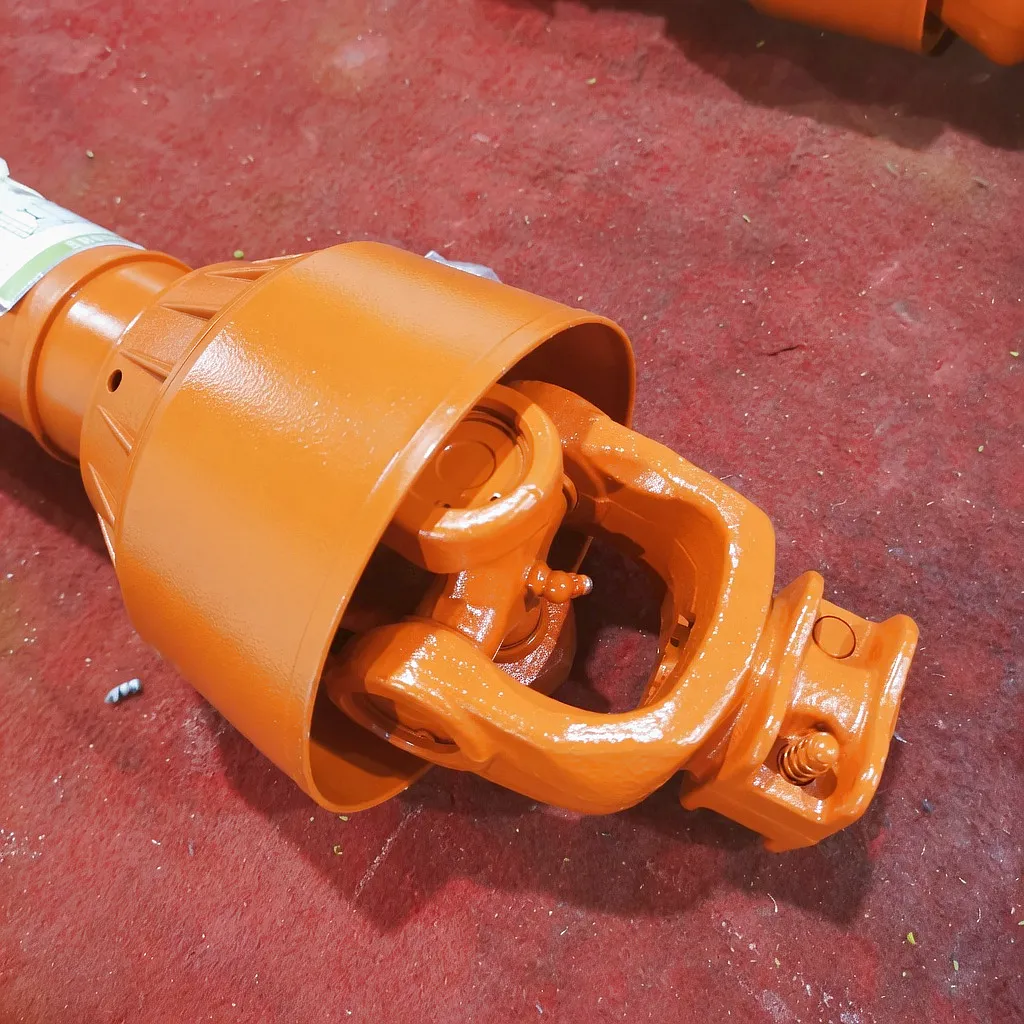
Application Scenarios Across British Agriculture
Across the United Kingdom, the PTO shaft for square baler duty operates in remarkably varied conditions. Below are the four scenarios where we see the highest deployment of our heavy-duty driveline range, each with its own optimisation profile.
Wheat & Barley Straw Collection
The dominant application across East Anglia, Lincolnshire, and the Yorkshire Wolds. Operators run 540 RPM systems behind 130–200 hp tractors, baling 800–1,200 bales per day at peak. Dry, abrasive straw and high cycle counts demand our Series 8 driveline with hardened cross journals and chrome plating as standard fitment.
Alfalfa & Lucerne Forage
Common across the South Downs and Welsh dairying regions where high-protein forage commands a premium. Lucerne is denser and wetter than cereal straw, increasing peak torque per stroke by 20–30%. We typically uprate the shear bolt grade and recommend a friction clutch in place of the standard pack to reduce nuisance downtime.
High-Density Export Bales
Operations producing 1290 × 700 mm export-grade bales for the Middle East and North African markets. These balers run at 1000 RPM with plunger pressures pushing 240 bar. The PTO shaft for square baler service here uses Series 9 components throughout — our heaviest-duty option — paired with a drop-out support bearing on long-wheelbase tractors.
Upland Hay Collection
Cumbria, the Pennines, and the Scottish borders. The challenge here is steep articulation angles between tractor and baler as the rig follows undulating ground. We supply constant-velocity wide-angle drivelines rated to 80 degrees of articulation, eliminating torque pulsation that single-cardan shafts produce above 25 degrees.
Customer Success Story — Lincolnshire Contractor, 2023–2025
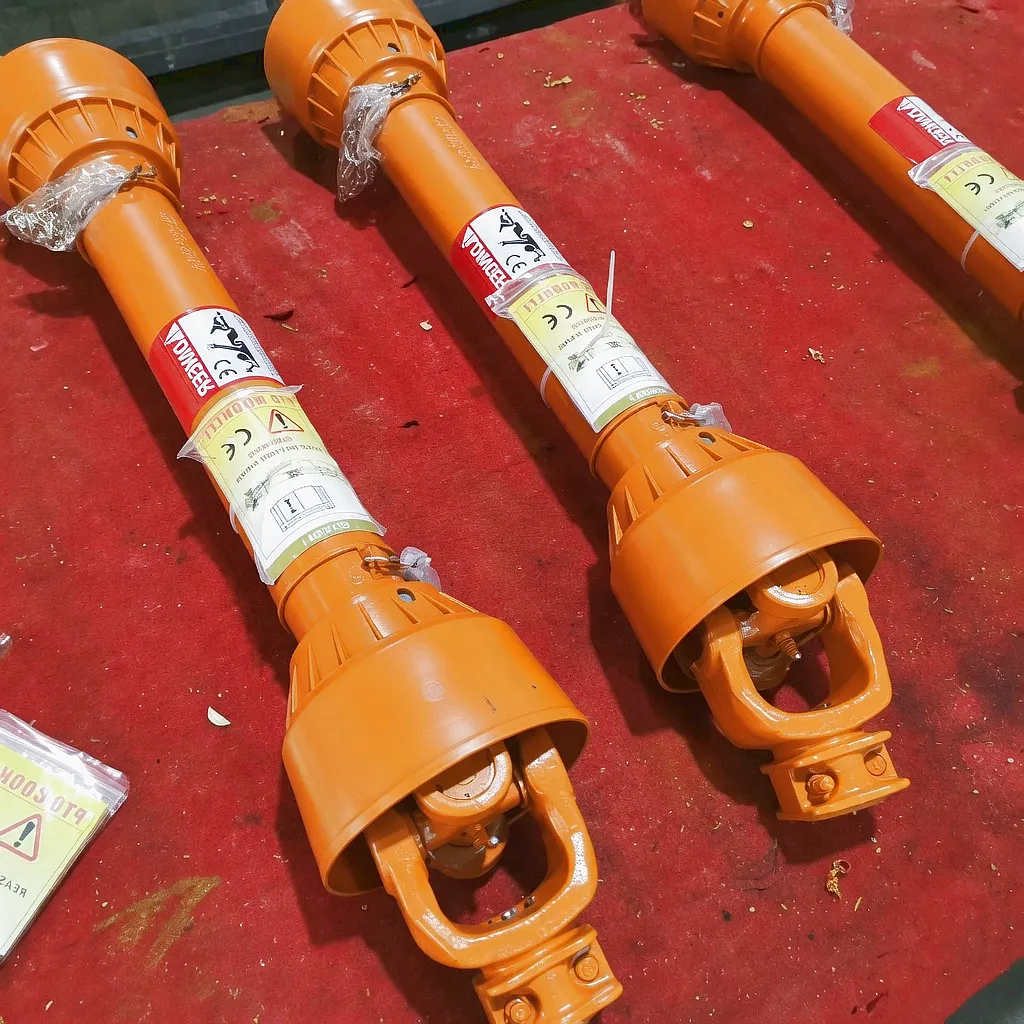 A Lincolnshire-based agricultural contractor running a fleet of three Krone BiG Pack 1290 HDP II balers came to us in the spring of 2023 with a recurring failure pattern. Their original-equipment PTO shafts were showing yoke ear cracks at the 4,000–5,000 bale mark, well below the manufacturer’s published service life. The contractor — a third-generation farming family operating across Lincolnshire and South Yorkshire — bales approximately 180,000 wheat-straw bales per season for an export customer shipping into North African feedlots.
After visiting the yard near Boston and inspecting two cracked shafts, our applications team identified the issue. The factory shafts were specified to a generic 1000 RPM Series 8 standard, but the contractor’s tractors — Fendt 936 Vario units — were routinely loading the driveline above 95% of rated peak torque due to the high baling density requirements imposed by the export contract. The shaft was technically within specification but operating at the upper edge of its envelope continuously across 12-hour working days.
We engineered a replacement PTO shaft for square baler duty using forged Series 9 yokes (uprated by approximately 22% over Series 8), upgraded the shear bolt to grade 10.9, and integrated a heavy-duty friction clutch to absorb peak transients without nuisance bolt failures. Spline pattern, working length, and protection-device geometry were custom-matched to each baler unit individually.
The new units have now completed two full seasons across all three balers — over 380,000 bales combined — without a single yoke crack or cross-journal failure. The contractor reported a downtime reduction of approximately 14 hours across the 2024 season alone, equating to roughly £8,500 in additional baling revenue compared to 2023, alongside a noticeable reduction in nuisance shear-bolt replacements during pressured working windows.
Voices From the Field
We bale around 60,000 small-square bales of meadow hay for the equine market each summer across our Wiltshire operation, and the Ever Power PTO shaft for square baler we fitted to our Welger AP 530 has now done three full seasons. The previous shaft was lasting two seasons at best. The shear bolt has triggered twice — both times protecting the gearbox exactly as it should.
As a contractor running Massey Ferguson 2370 Ultra HD balers across Norfolk and Suffolk, downtime in August costs me thousands per day. The friction clutch upgrade Ever Power specified into our drivelines has cut our nuisance shutdowns dramatically. Their applications engineer actually came out and measured our peak torque in-field before recommending the build spec. Refreshing approach for this industry.
Running two Krone BiG Pack units on alfalfa for the Middle East export trade, we needed a PTO shaft for square baler duty that could handle continuous high-load cycles without weekly grease intervals. Ever Power’s chrome-plated cross trunnions hold grease properly, and the 50-hour service interval is a real benefit when you are baling against the British weather window.
Built Around How British Farms Actually Bale
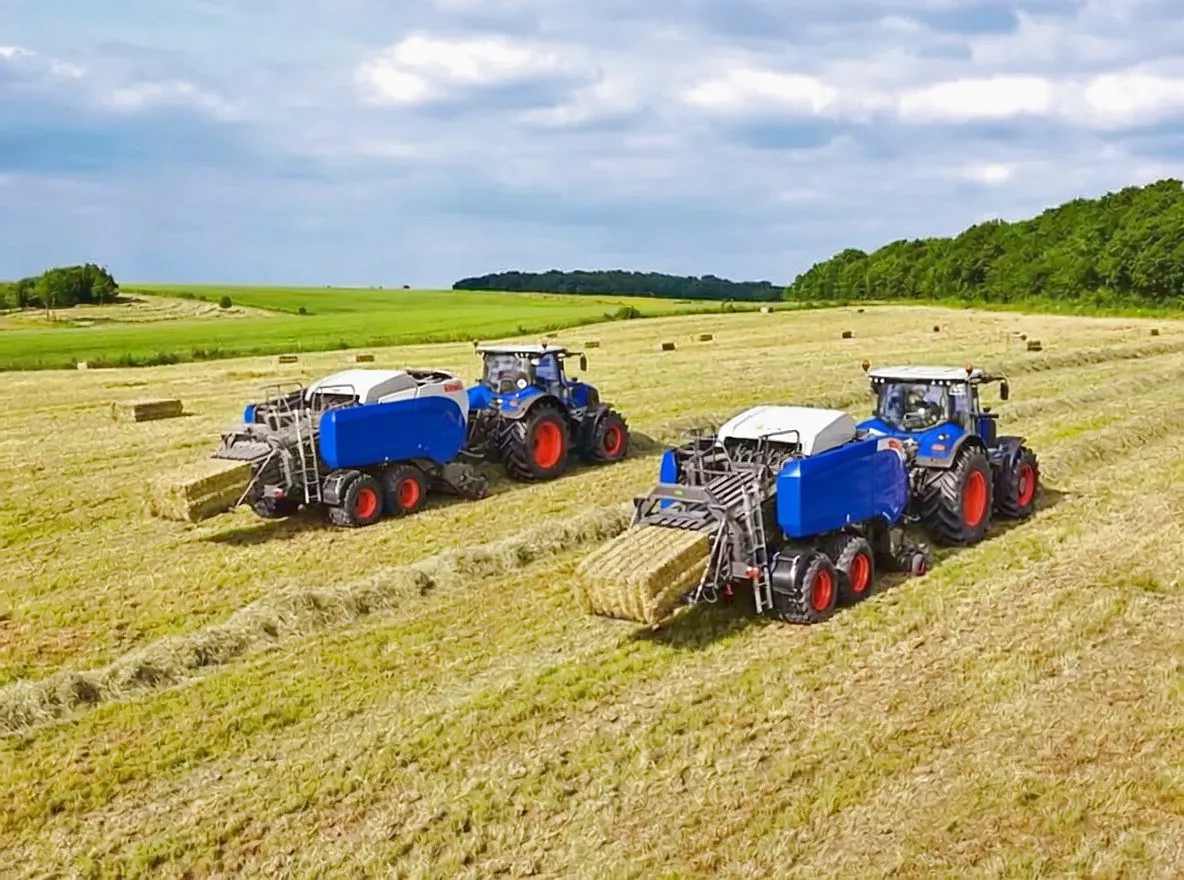
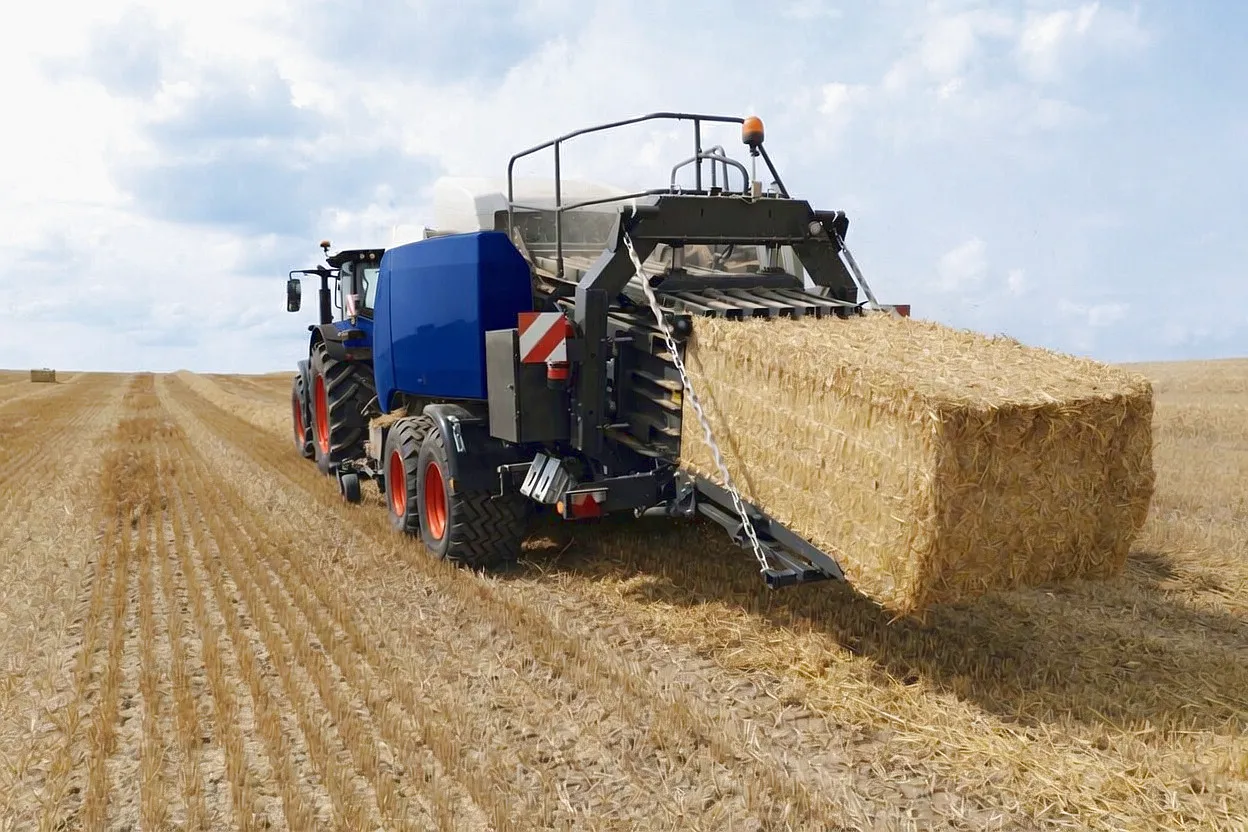 British baling conditions present specific challenges that drive our component specifications. The mixed crop economy across England, Wales, Scotland, and Northern Ireland means a single contractor often switches between cereal straw, meadow hay, lucerne, and silage within a single working week — each crop with different density characteristics and peak-torque profiles. The PTO shaft for square baler duty here cannot be optimised for a single crop; it has to perform reliably across the whole spectrum without intervention between jobs.
Climate plays a defining role too. UK baling windows are short and weather-dependent. Operators routinely push baler throughput to the absolute limit during dry spells, which means peak torque events cluster densely rather than spreading evenly across the season. A driveline designed for steady continental conditions will fail prematurely under British harvest patterns. We specify our PTO shaft for square baler builds with a 25% peak-torque safety margin above continental standard ratings to account for this clustering, plus enhanced corrosion protection on external surfaces to handle the moisture exposure typical of damp UK working environments.
We support customers across the major UK arable and livestock regions through direct shipping from our European distribution warehouse, with typical delivery to mainland Britain within 5–7 working days for stock items and 14–21 days for custom-engineered specifications. Replacement parts — shear bolts, cross journal kits, telescoping profile seals, push-pin yoke assemblies — ship within 3 working days to any UK postcode, including the Highlands, Hebrides, and Northern Ireland addresses.
For dealers and distributors across England, Scotland, Wales, and Northern Ireland, we offer trade pricing structures, technical product training, and on-site applications support. Whether you are a small dealer in the Welsh Marches, a multi-branch agricultural distributor across the Home Counties, or an independent service workshop in the Scottish Lowlands, we can support your customer base with stocked inventory and rapid technical response.
Inside the Ever Power Factory — Custom Builds at Production Cost
Our manufacturing facility operates across 28,000 square metres of integrated production space, with in-house forging, CNC machining, induction heat treatment, and assembly under one roof. This vertical integration is what allows us to offer custom PTO shaft for square baler builds at production-line cost rather than at one-off bespoke pricing — the savings flow directly through to UK customers.
Customisation options span every dimension of the driveline. Working length can be specified to within ±5 mm of the customer’s requirement, accommodating any tractor-baler combination from compact 60 hp utility tractors to 500 hp prime movers. Spline patterns include 1 3/8″ 6-spline, 1 3/8″ 21-spline, 1 3/4″ 20-spline, and the metric DIN 9611 patterns common on European balers. Telescoping profile choice includes lemon, triangular, splined, and star options. Protection devices can be specified as shear bolt only, friction clutch, overrunning clutch, friction-plus-overrunning combinations, or the wide-angle CV configuration for high-articulation upland work.
Our quality management system runs to ISO 9001:2015, our products carry CE certification for the European market, and every PTO shaft for square baler unit ships with a serial number traceable to its forging batch, heat-treatment cycle, and final assembly inspector. For UK customers, our minimum order quantity for custom builds is one unit. Distributors and large fleet operators receive volume pricing on orders above 25 units. Engineering consultation — including in-field torque measurement and applications analysis — is provided free for projects above 10 units.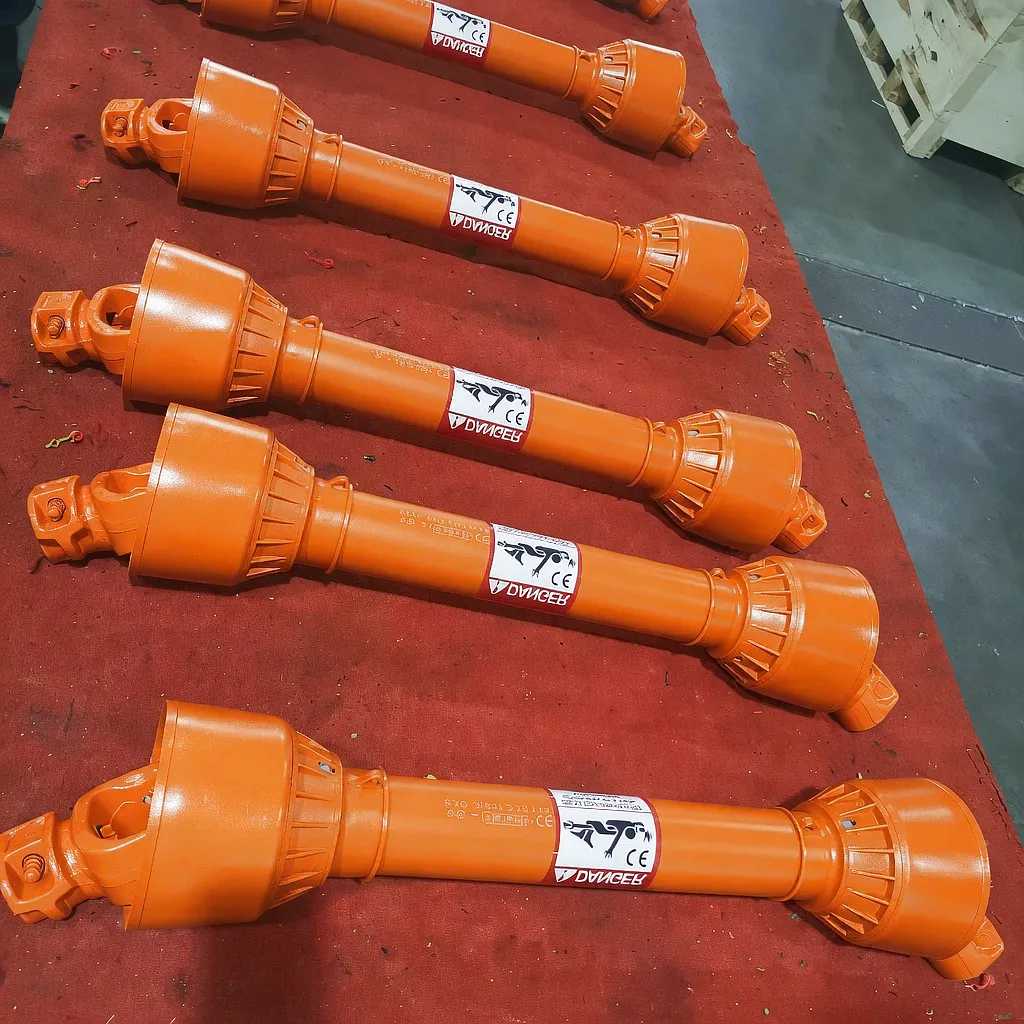
Frequently Asked Questions From UK Operators
▸ How much does a heavy-duty PTO shaft for square baler typically cost in the UK market?
Pricing for a Series 8 PTO shaft for square baler duty in the UK generally falls between £320 and £680 depending on length, spline configuration, and protection-device selection. A Series 9 heavy-duty unit with friction clutch and overrunning protection typically lands between £580 and £980. Custom-engineered builds for high-density export operations can exceed £1,200. Email our sales team for a tailored quote with current British pound pricing and delivery to your postcode.
▸ What is the best PTO shaft for square baler use on a Krone BiG Pack 1290 in Lincolnshire?
For a Krone BiG Pack 1290 running on Lincolnshire wheat and barley straw with high cycle counts, we recommend our Series 9 driveline with forged 42CrMo4 yokes, a 1 3/4″ 20-spline tractor-side yoke, DIN 9611 implement-side connection, integrated friction clutch sized to 2,800 Nm slip torque, and an overrunning clutch on the implement yoke. This configuration handles peak transients without nuisance shutdowns and matches the original Krone duty rating with comfortable margin.
▸ Where can I buy a replacement PTO shaft for square baler equipment in England with fast delivery?
Ever Power ships directly to England, Scotland, Wales, and Northern Ireland from our European distribution warehouse. Stock units typically arrive at UK postcodes within 5–7 working days. Custom builds take 14–21 days. Spare parts including shear bolts, cross journal kits, and grease nipples ship in 3 working days. Place your order via [email protected] with your baler model, year, and current shaft specification, and we will confirm pricing and lead time within one business day.
▸ Which shear bolt grade should I order for a 1000 RPM PTO shaft on a high-density baler?
For a 1000 RPM driveline on a high-density baler producing 1290 mm export bales, we ship grade 10.9 shear bolts as standard, sized to fracture at approximately 2,400 Nm — roughly 80% of the gearbox bevel set’s yield torque. Lower-density operations can use grade 8.8 bolts at the same physical dimension. Always replace shear bolts with the exact grade specified in your shaft documentation; substituting a higher-grade fastener defeats the protection function.
▸ How do I know when my PTO shaft for square baler operations needs replacement rather than a service?
Replace the entire driveline when you observe any of the following: hairline cracks at the yoke ears or cross hub, excessive radial play in the universal joint cross greater than 0.3 mm, telescoping tube binding under load, rust pitting on the inner profile, or repeated shear bolt failures at lower-than-rated torque. Cross journal kits and individual yokes can be replaced as service items below those thresholds. Beyond them, full unit replacement is the safer commercial decision.
▸ Can Ever Power supply a custom PTO shaft for square baler use that fits my vintage Welger AP 730?
Yes — we regularly build replacement drivelines for vintage square balers including Welger AP 530, AP 630, AP 730, AP 830, John Deere 332/342, and earlier New Holland units. Provide us with your baler year, gearbox input spline pattern, current shaft working length (compressed and extended), and tractor PTO speed (540 or 1000 RPM). We will engineer a drop-in replacement using current heavy-duty components — modern protection, period-correct connection geometry.
▸ What is the price difference between shear bolt and friction clutch protection on a baler PTO shaft?
A friction clutch typically adds £180–£260 to the unit cost over a standard shear-bolt configuration. The trade-off is faster recovery from foreign-object events — a friction clutch slips and re-engages once the obstruction clears, where a shear bolt requires replacement (5–10 minutes downtime). For high-cycle contractors baling 100,000+ bales per season, the friction clutch usually pays back its premium within one harvest through reduced downtime and replacement-bolt inventory savings.
▸ When should I grease the cross journals on my square baler PTO drive shaft during a busy harvest week?
Our Series 8 and Series 9 PTO shaft for square baler units use full-circumference grease grooves and chrome-plated cross trunnions, giving a 50 working-hour service interval between greasings under typical conditions. During a pressured harvest week, grease the four cross fittings and the telescoping profile every Monday morning, before the first job. In dusty straw operations, halve that interval to 25 hours. Use a lithium-complex EP2 grease — a single full pump per fitting until you see fresh grease emerge.
Specify Your PTO Shaft Build Today
Send your baler model, tractor, working length, and crop application — we will return a custom-engineered specification with British pound pricing and delivery date within one business day.
edit by gzl