
 When a square baler is working at full pace through a dense crop of barley straw in the East Midlands, the mechanical demand on every component in the driveline is immense. The machine must coordinate the pick-up rotor, the feeder fingers, the plunger, the knotter mechanism, and the bale ejector — all simultaneously, all driven by a single power take-off connection to the tractor. That connection is the PTO drive shaft, and its engineering precision determines whether the entire operation succeeds or fails under load. A shaft that flexes poorly, transmits vibration, or lacks overload protection will cause costly downtime at the worst possible moment — mid-harvest, in a field far from the nearest agricultural supplier in Lincolnshire or Cambridgeshire.
How a PTO Drive Shaft Works in a Square Baler System
Working Principle & Mechanical Architecture
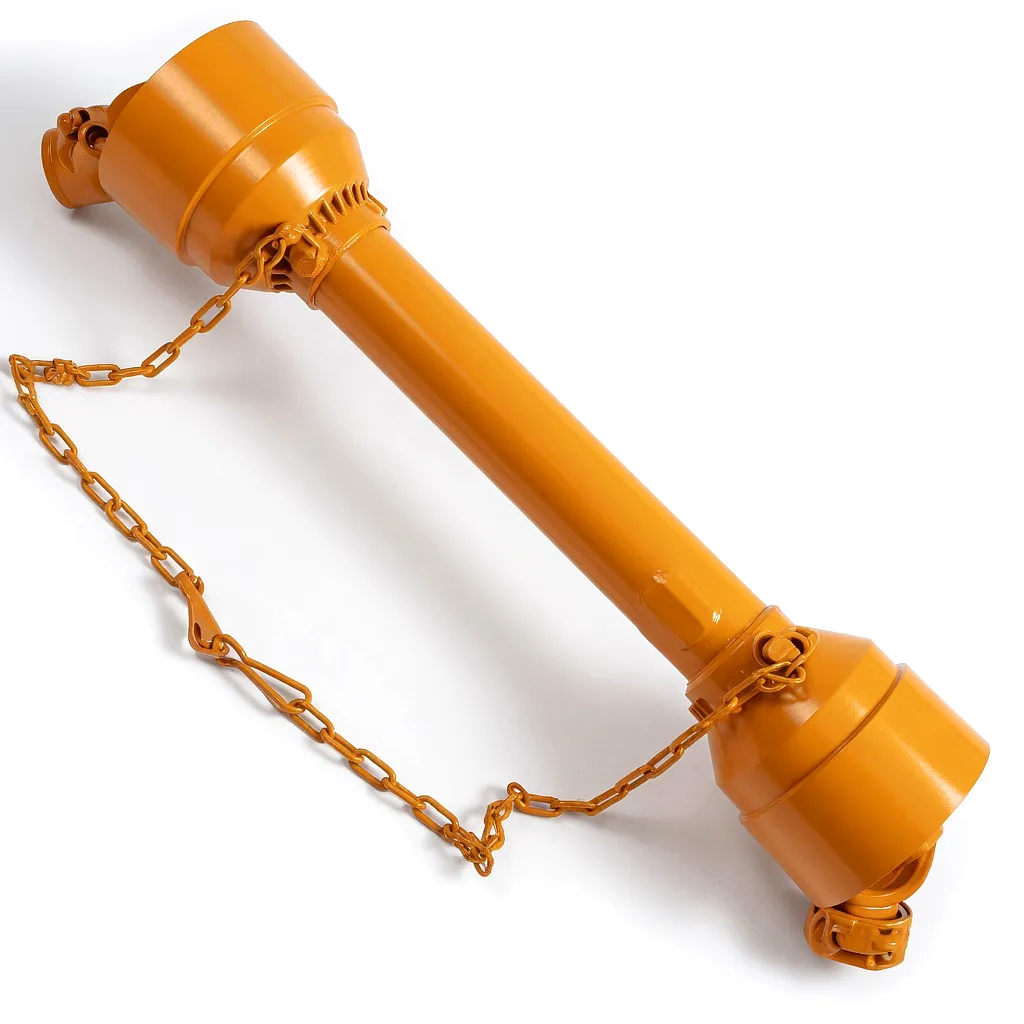
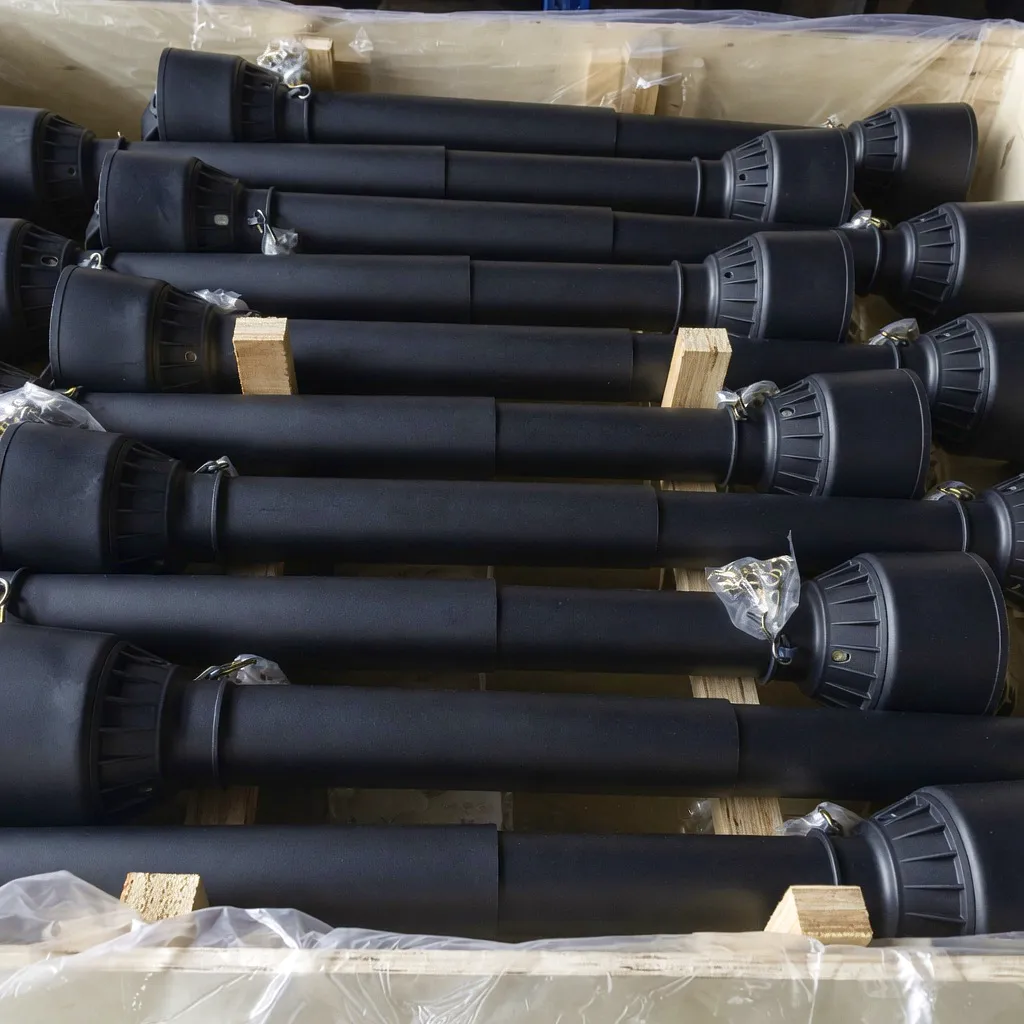 At its core, a PTO drive shaft is a telescoping, double-jointed mechanical linkage. The shaft connects the tractor’s power take-off output — rotating at either 540 rpm or 1,000 rpm depending on the tractor specification — to the input shaft of the square baler’s primary gearbox. The telescoping section, typically composed of an inner tube profile sliding within an outer tube profile, allows the shaft’s effective working length to vary as the tractor and implement move relative to each other. Without this telescoping function, any slight change in hitch distance would place catastrophic bending loads on the driveline.
The overload protection mechanism integrated into the coupling is, arguably, the single most important safety and reliability feature in the assembly. Two designs dominate the square baler market: the slip clutch and the shear bolt coupling. A slip clutch uses a spring-loaded friction disc arrangement calibrated to slip at a preset torque value — the clutch disengages momentarily if the baler jams, then re-engages automatically once the blockage clears. This is the preferred solution for contractors running continuous operations across large acreages in counties like Herefordshire or Shropshire, where the time lost stopping to replace a shear bolt accumulates quickly over a long season. The shear bolt coupling is simpler and cheaper, using a single precision bolt of defined cross-sectional strength that fractures at a calibrated torque load — it is a one-time sacrifice that protects the gearbox at the cost of a brief stop to fit a replacement bolt. Both systems have their place, and the right choice depends on crop density, tractor power, and the operator’s workflow preferences.
Core Materials: Engineering for Agricultural Durability
Material Science Behind High-Performance PTO Shafts
⚈ Alloy Steel Tubes
The outer and inner tubes of the telescoping section are cold-drawn from seamless alloy steel — typically grades equivalent to 20CrMnTi or 42CrMo4. Cold drawing produces a precisely controlled profile (round, triangular, lemon, or star cross-section) with tight dimensional tolerances and a work-hardened surface that resists fretting wear. The tubular wall thickness and profile geometry are calculated to carry the design torque with an adequate safety factor while keeping rotating mass — and therefore vibration — to a minimum.
⚈ Carburised Universal Joint Crosses
The cross-shaped trunnion, or spider, at the heart of each U-joint is forged from low-carbon case-hardening steels such as 20MnCr5. After forging and rough machining, the crosses undergo carburising at temperatures around 920°C, followed by hardening and tempering to achieve a surface hardness of approximately 58–62 HRC over a case depth of 0.8–1.2 mm, with a tough, ductile core. This combination resists both the surface fatigue induced by the needle roller bearings and the core fracture from torsional shock loads — the two primary failure modes in agricultural U-joints.
⚈ Yokes & Guards
Yokes — the fork-shaped end connectors — are typically precision die-forged from medium-carbon steel, heat treated, and then finish-machined to provide accurate bearing bore geometry. The safety guard — mandated under UK PUWER regulations — is moulded from high-density polyethylene or polypropylene, UV-stabilised to withstand the British outdoor environment. The guard rotates with the shaft in some designs, or is tethered to the implement in others; both approaches aim to prevent the rotating shaft from catching clothing or debris.
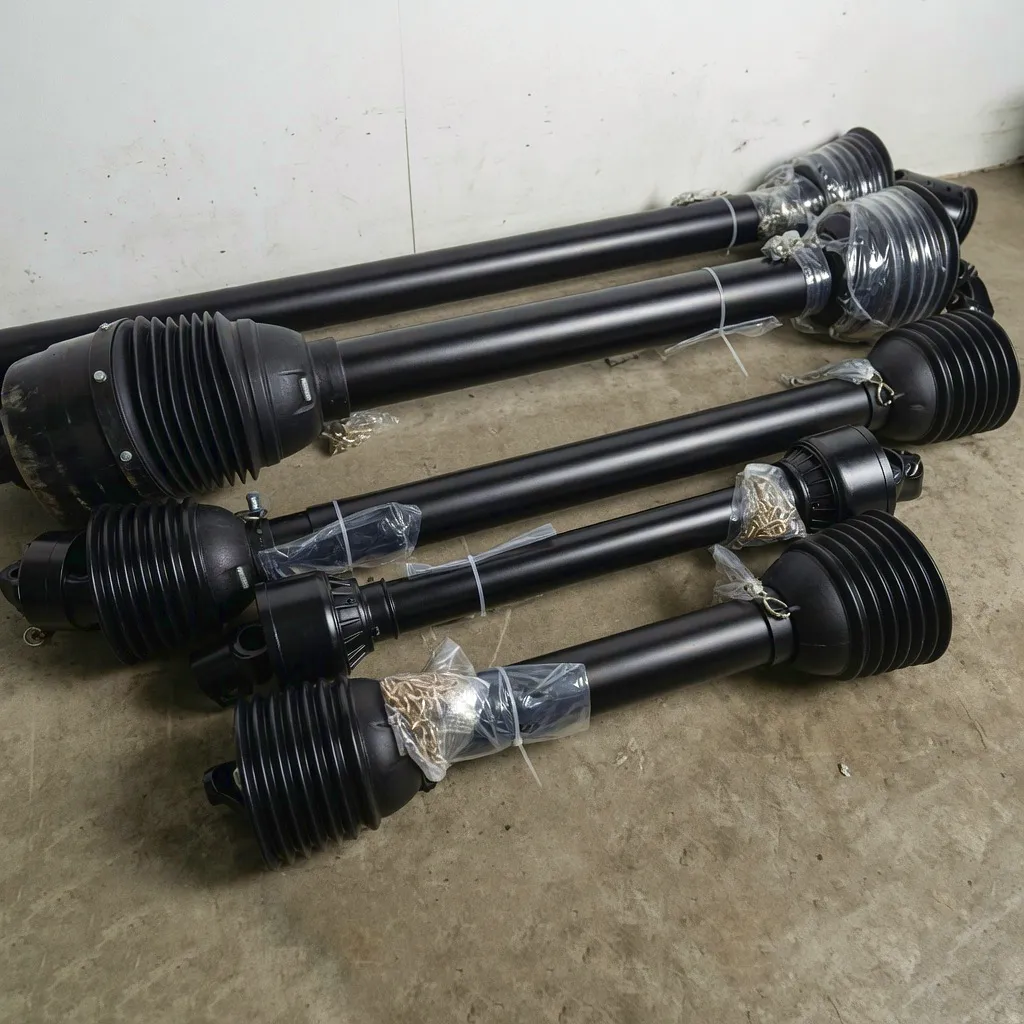 A complete PTO drive shaft assembly also incorporates needle roller bearings, snap rings, grease nipples, and often a sleeve bearing in the telescoping bore. Each of these elements must meet agricultural machinery-grade standards — not automotive-grade. The operational duty cycle in harvest season can exceed 1,000 hours in a single year for a busy contractor in Norfolk or Lincolnshire, with abrasive dust, mud, and wide temperature swings from early-morning damp to afternoon summer heat adding further stress to every component. Material selection is never a cost-cutting exercise in this application — it is an engineering necessity.
Why Choose a Precision-Engineered PTO Shaft for Square Balers
Core Technical Advantages
Technical & Performance Parameter Table
PTO Drive Shafts for Square Baler Applications — Key Specifications
Application Scenario: Square Baler Operations Across the UK
Detailed Field Application Analysis — British Agricultural Context
 The conventional small square baler — producing twine-tied bales weighing roughly 20–25 kg — remains commonplace on British livestock farms, particularly in Wales, the West Country, and upland areas of Northern England. These machines are connected to tractors in the 60–100 hp range and typically operate at 540 rpm PTO speed. The PTO drive shaft in this application must cope with the aggressive reciprocating loads generated by the plunger mechanism, which on a well-set machine completes 60–90 strokes per minute. Each stroke generates an inertial torque spike as the plunger decelerates at the end of its travel, and these repeated load cycles create a fatigue environment that differs substantially from continuous-torque applications like pumps or generators. A correctly specified PTO drive shaft with a properly lubricated U-joint cross assembly and a well-maintained telescoping bore will handle these cycles across many harvesting seasons, but a shaft sourced purely on purchase price — with thin-walled tubes and under-hardened crosses — will develop play in the U-joints within a single season, ultimately transmitting vibration that accelerates wear in the baler’s knotter mechanism and feeder drive.
Square Baler — Large Bale Straw Contractors in East Anglian Cereal Farms
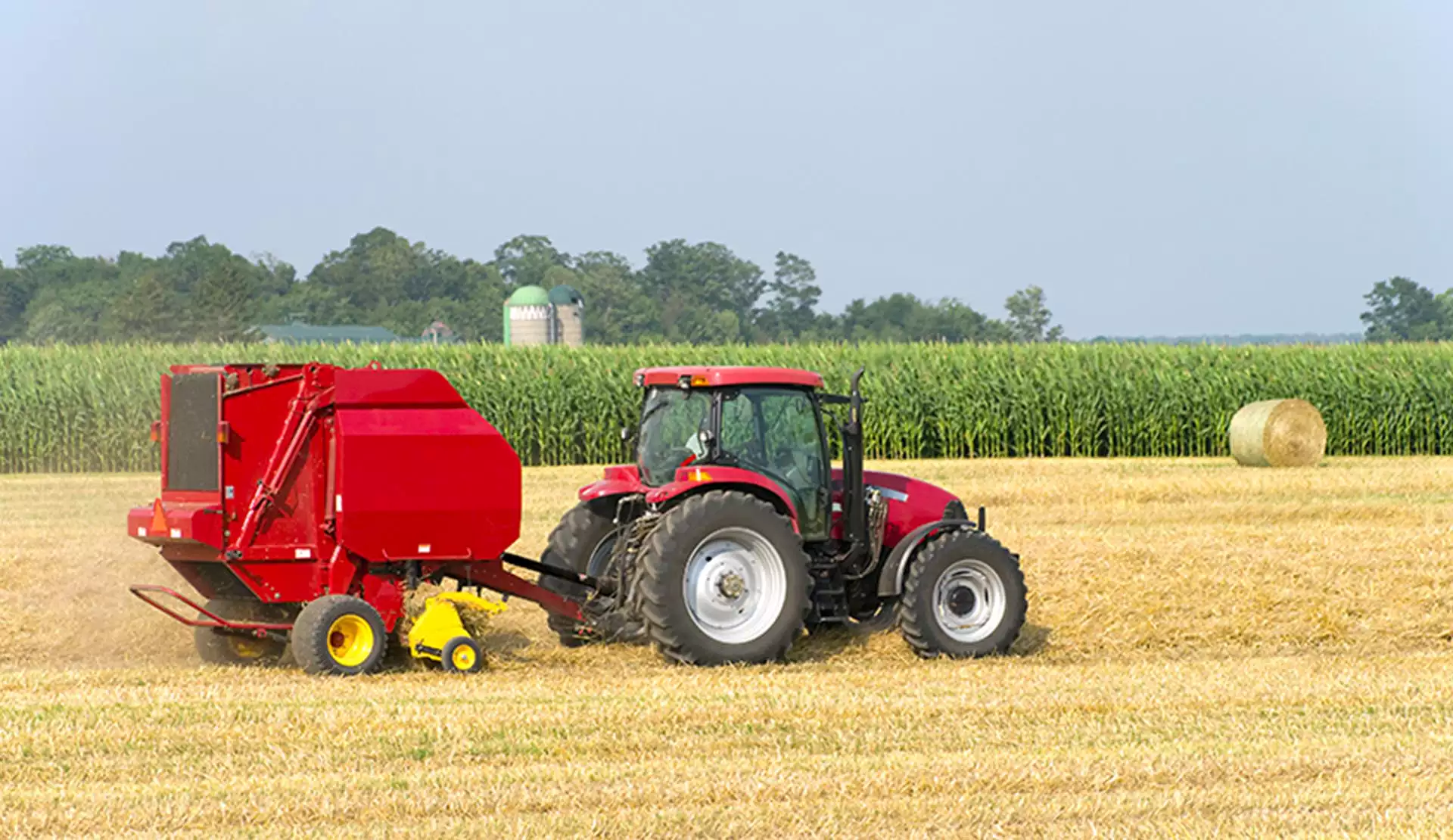 The large square baler market in the UK is dominated by high-output machines from manufacturers such as New Holland, John Deere, Claas, and Krone, producing bales of 80×90 cm or 120×130 cm cross-section in lengths up to 2.4 metres. These machines are the workhorses of arable contracting businesses operating across the cereal-growing heartlands of Cambridgeshire, Suffolk, Norfolk, and Lincolnshire. A single contractor outfit in this region might bale 5,000 to 10,000 tonnes of straw between harvest in August and the field clearance deadline in October, running the baler for 10–14 hours a day. The PTO drive shafts on these machines endure extraordinary cumulative fatigue loading. The rated torque requirements for a large baler in dense barley straw can reach 1,200–1,800 Nm, with peak loads during blockage events easily exceeding 3,000 Nm — which is precisely why the slip clutch setting on the PTO shaft must be accurately calibrated at the factory and verified on installation. An over-tight clutch passes excessive torque peaks through to the gearbox; an under-tight clutch slips unnecessarily during normal operation, generating heat and wearing the friction discs prematurely.
Square Baler — Silage and Hay Harvesting in the Scottish Borders and Northern England
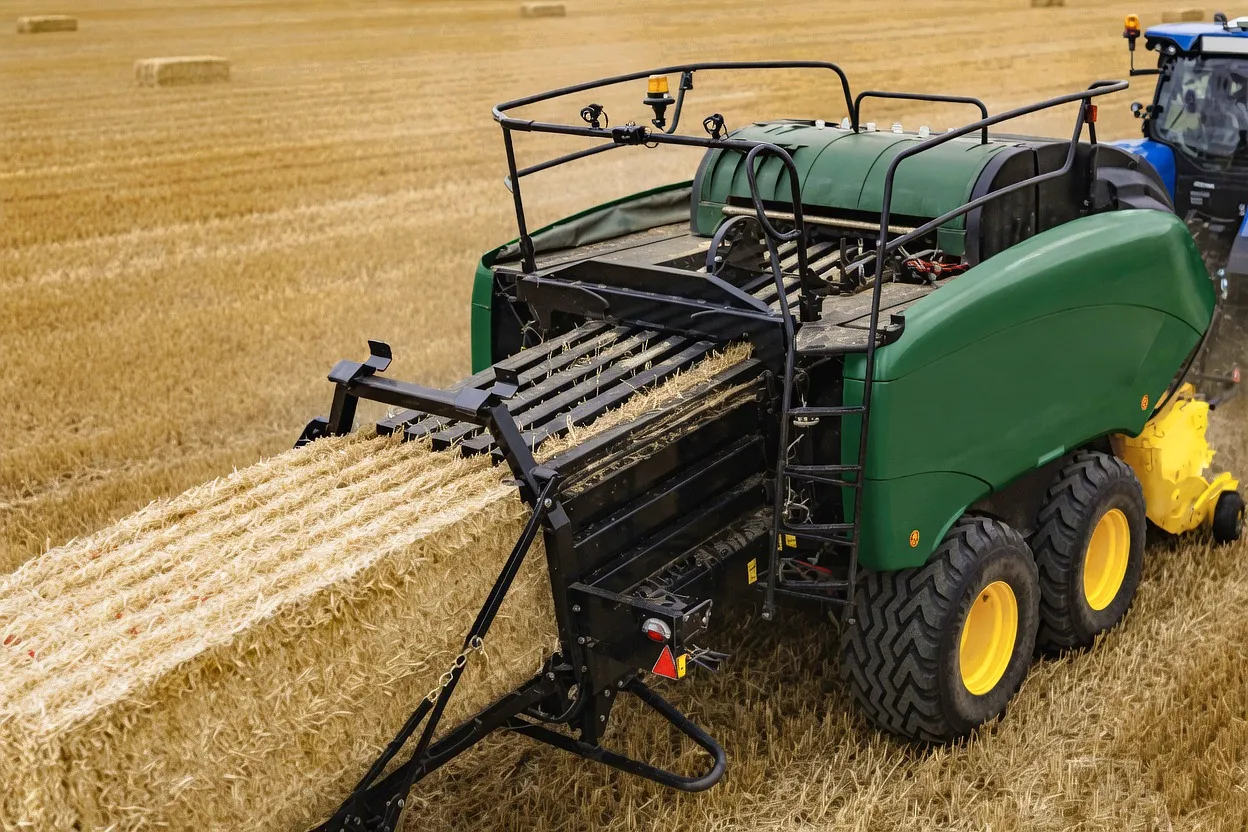 In the Scottish Borders, the Lake District, and the Pennine upland farms of Yorkshire and Lancashire, grass silage and hay production present a different set of challenges for PTO drive shaft performance. The fields are typically smaller, more irregular in shape, and with steeper gradients — all factors that increase the angular misalignment demands placed on the shaft during operation. Where a flat East Anglian field might require the PTO shaft to operate through angles of no more than 8–10 degrees during normal work, an upland field with cross-slope working and tight headlands can require the shaft to operate continuously at 15–20 degrees. For operations in these regions, the wide-angle or CV-joint version of the PTO drive shaft is not merely a premium option — it is the engineering-correct choice to prevent premature U-joint wear and the velocity fluctuations that damage the baler’s gearbox over time.
Square Baler — Contractor Fleet Management and Spare Parts Logistics in the Midlands
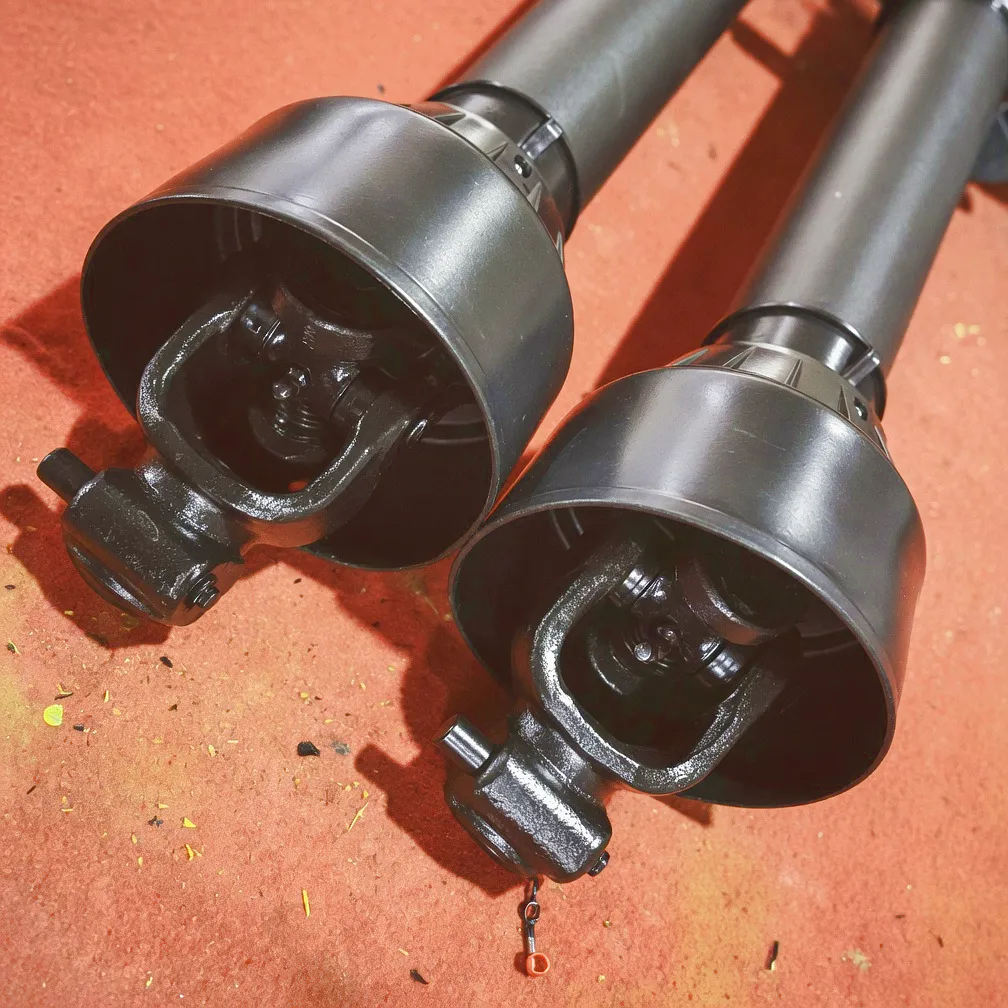 Agricultural contracting businesses based in the Midlands — particularly those operating out of Warwickshire, Northamptonshire, and Staffordshire — often run fleets of three to eight balers across multiple farms simultaneously at peak harvest. For these operators, the PTO drive shaft is as much a logistics challenge as it is an engineering specification. The golden rule in fleet management is that every machine must have a complete spare shaft assembly — or at minimum a spare U-joint kit and telescoping tube set — on the vehicle at all times during the harvest period. A baler stopped for three hours waiting for a parts delivery from Birmingham while standing in a field of cut straw in uncertain weather represents a financial and reputational cost that vastly exceeds the cost of carrying a spare shaft.
Ever Power: Precision Manufacturing & Customisation for UK Square Baler Shafts
Factory Capability · Custom Engineering · Supply Chain Excellence
Dedicated OEM Customisation
Ever Power’s engineering team works directly with UK importers, machinery dealers, and OEM baler manufacturers to design and manufacture PTO drive shaft assemblies to precise dimensional specifications. Yoke connection geometry, tube profile, working length range, slip clutch torque setting, and guard configuration can all be customised to match the exact requirements of John Deere, New Holland, Claas, Krone, or Massey Ferguson square baler models currently operating in the UK market. Sample shafts can be produced and dispatched within 15 working days for evaluation, with batch production lead times confirmed at order placement.
Precision CNC Manufacturing
All U-joint crosses, yoke bores, and spline profiles are finish-machined on CNC turning and milling centres to tolerances that ensure interchangeability across production batches. Automated coordinate measuring machine (CMM) verification of critical dimensions is performed on every batch, with measurement reports available to UK customers on request as part of Ever Power’s quality assurance documentation package.
UK-Ready Supply Chain
Ever Power partners with UK-based agricultural parts distributors and freight forwarders to provide FOB, CIF, and DAP pricing options, with DDP (Delivered Duty Paid) available for major contract customers. Sea freight consolidation services allow UK dealers and importers to maintain cost-effective stock of high-volume shaft SKUs, with air freight available for urgent spare part orders during the harvest period.
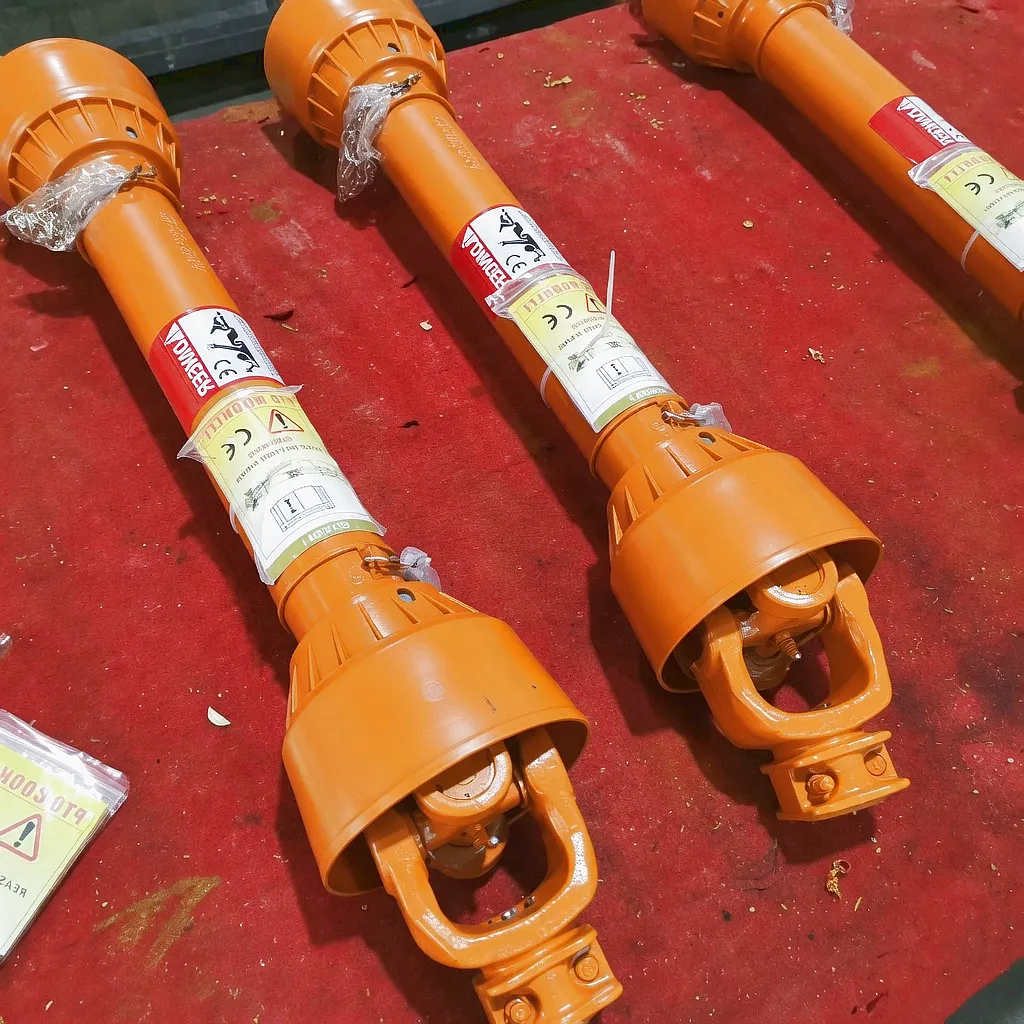 The heat treatment capability at Ever Power’s manufacturing facility covers both batch carburising and induction hardening, allowing the production team to select the optimum hardening route for each component based on its geometry and torque rating. The carburising furnaces are controlled to ±5°C temperature uniformity, and all heat treatment batches are accompanied by hardness test records from both the case surface and the core section, providing traceability for every delivery. This level of process documentation is increasingly required by UK agricultural machinery importers operating under ISO 9001-based quality management systems — and Ever Power’s documentation package is designed to slot directly into these systems without requiring additional test work on the customer’s side.
Ready to specify PTO drive shafts for your baler range or contracting fleet?
Customer Success Story: Yorkshire Contracting Business Doubles Harvest Output
Real-World Application · UK Market · Agricultural Contracting
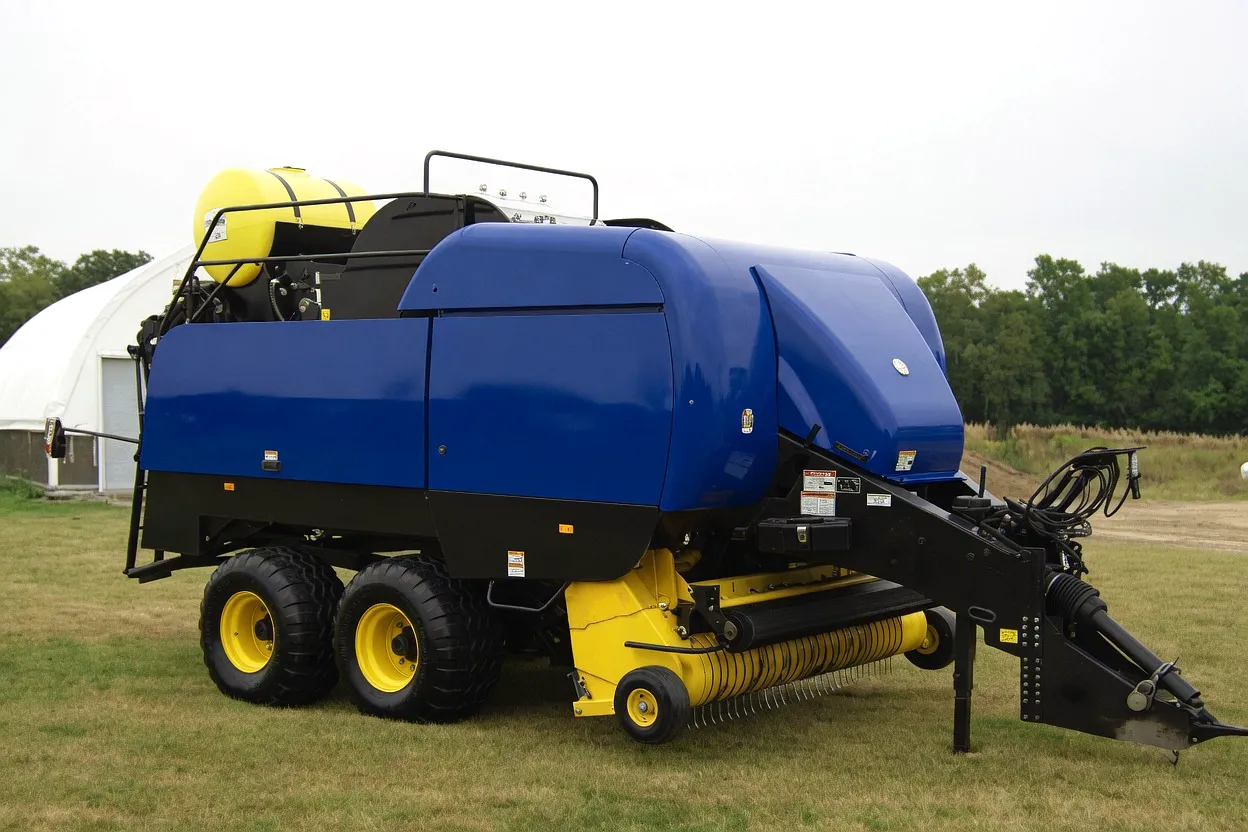 Hargreaves Agricultural Services, a contracting business based near Harrogate in North Yorkshire, operates a fleet of three large square balers across cereal and grass farms in the Wharfe Valley and surrounding areas. The business had experienced repeated PTO drive shaft failures during the 2023 harvest season — three shaft assemblies failed on two separate machines within a six-week period, causing combined downtime losses estimated at over £8,000 in missed contract revenue. An examination of the failed shafts revealed that the U-joint crosses had developed significant play after relatively few operating hours, and one slip clutch had seized in the engaged position, passing a full torque overload event directly into the baler’s gearbox and causing £3,200 in repair costs to the flywheel gearbox housing.
What UK Customers Say About Ever Power PTO Shafts
★★★★★
“The slip clutch setting was exactly as specified when I checked it with a torque wrench on arrival — something I’ve never been able to say about shafts from other suppliers. We ran three machines through a full Yorkshire barley harvest with no stoppages. The dimensional documentation also made our ISO audit straightforward.”
— James Hartley, Fleet Manager, Hargreaves Agricultural Services, Harrogate, North Yorkshire
★★★★★
“We specified a custom yoke configuration to match a particular New Holland 900-series baler that’s common in our region. Ever Power produced samples within two weeks and the fit was perfect first time. The CV joint performs noticeably better on our upland fields in Cumbria compared to the standard Cardan shafts we used previously — far less vibration at the headland turns.”
— Sarah Whitfield, Technical Buyer, Lakeland Farm Supplies Ltd, Kendal, Cumbria
★★★★★
“Price point was competitive with alternatives from mainland Europe, but what won the order for Ever Power was the combination of proper material certification, fast sample turnaround, and a UK parts distributor able to hold buffer stock for us. The guard assemblies also comply with PUWER without any modifications — which matters when we’re supplying to farms with formal health and safety audits.”
— David Chen, Import Procurement Manager, Midlands Agricultural Parts Ltd, Coventry, West Midlands
Ever-Power Transmission
Agricultural PTO Drive Shafts
Precision-engineered power take-off shafts built for demanding field conditions — delivering torque reliability across every baler type and brand specification.
Frequently Asked Questions
PTO Drive Shaft for Square Baler — UK Agricultural Market
Ready to Source PTO Drive Shafts for Your Square Baler Fleet?
Ever Power · Precision Agricultural Drive Shaft Manufacturing · UK Market Supply
📧 Get a Quote: [email protected]
edit by gzl