
PTO Drive Shaft for Trailed Forage Harvester: Power Transmission Performance for UK Silage and Forage Operations
Why the Trailed Forage Harvester Places Unique Demands on a PTO Drive Shaft
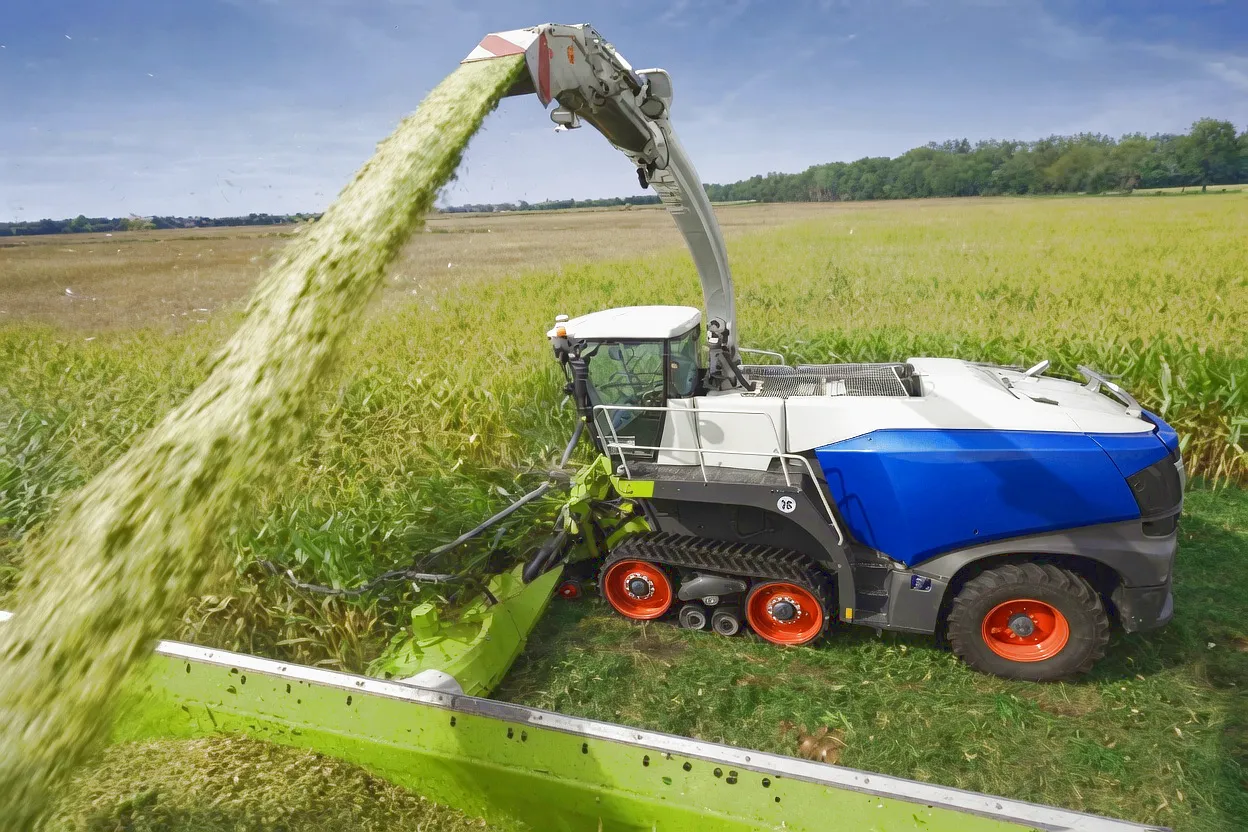
Unlike a baler or a static feed mixer, a trailed forage harvester carries a heavy rotating flywheel and cutterhead assembly that must accelerate from idle to full operating speed almost instantly when crop enters the intake. That sudden inertial load creates a torque pulse far higher than the steady-state running torque, and the drivetrain component absorbing that pulse must combine torsional strength with a degree of controlled flex so the shock does not transmit directly into the tractor’s power take-off bearing. Forage harvesters also run wider working angles than most trailed implements because the hitch point sits low and the gearbox input sits comparatively high, so the shaft spends most of its working life at an operating angle rather than running dead straight. UK contractors covering undulating ground in the Welsh Marches or the Peak District foothills know this angle variation compounds wear on universal joints far faster than flat-field operation in East Anglia, which is why shaft selection has to account for terrain as much as horsepower rating.
Working Principle: How Torque Moves From Tractor to Cutterhead
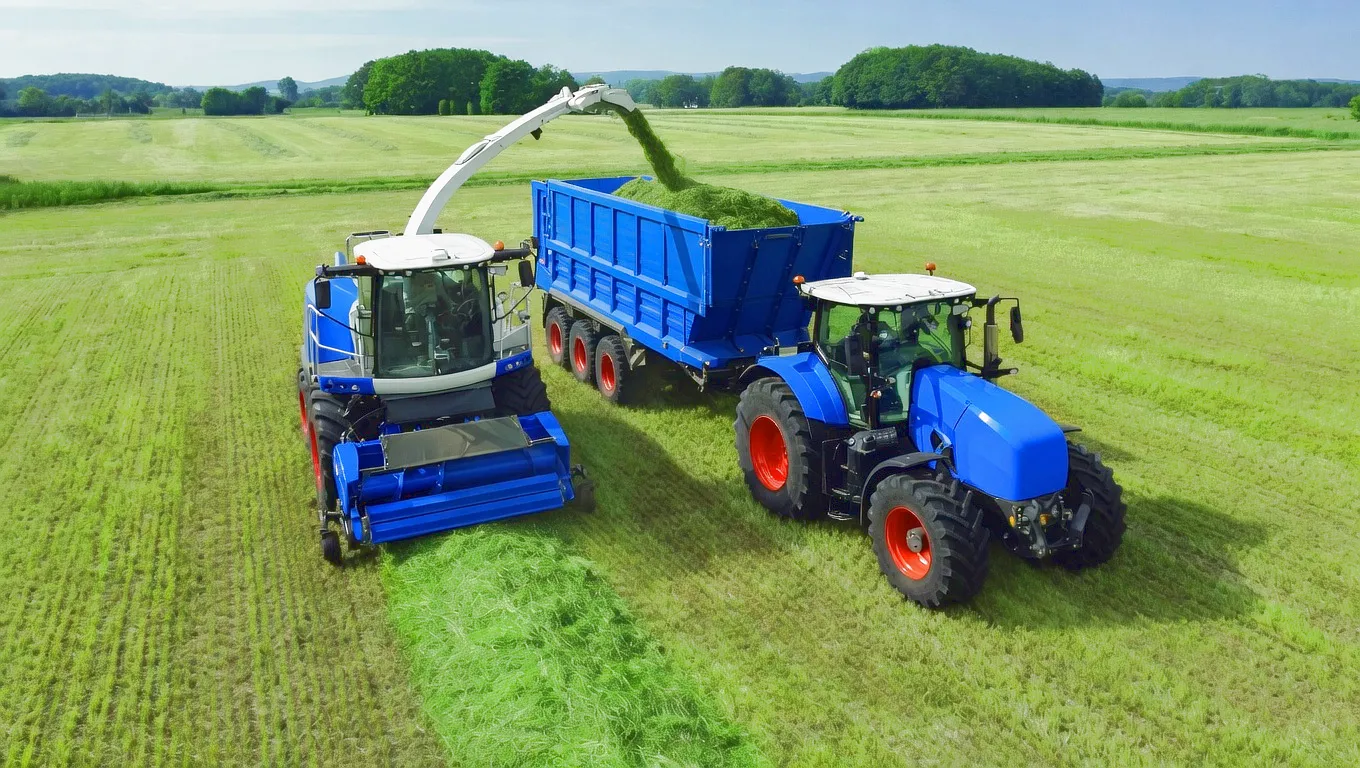
The fundamental principle behind this drivetrain link is straightforward in concept but demanding in execution. Rotational power leaves the tractor’s rear power take-off stub at a fixed speed, usually 540 rpm or 1000 rpm depending on tractor setting, and that rotation must be carried across a variable distance and a variable angle to the harvester’s input gearbox without losing torque or introducing damaging vibration. This is achieved through a pair of universal joints, one at each end of the shaft, connected by a telescoping profile tube section that allows the overall length to extend and retract as the drawbar geometry changes during turns and ground following. The universal joints themselves use a cross-and-bearing arrangement that permits angular movement while still transmitting full torque through needle roller bearings seated in hardened bearing cups, and on a well-engineered shaft these bearings are sealed and greased to resist the dust and chopped plant fibre that constantly surrounds forage harvesting operations.
Beyond the universal joints, the telescoping profile section is machined to a precise spline tolerance so the inner and outer tube slide freely under length change while still locking together rotationally with no backlash. Backlash in this sliding section translates directly into vibration at the gearbox input, which over time loosens fasteners and accelerates bearing wear throughout the harvester drivetrain. Most forage harvester drivetrain assemblies also incorporate a torque-limiting safety device, either a shear bolt, a friction clutch, or a cam clutch, positioned to disconnect drive the instant torque exceeds a calibrated threshold. This protects the far more expensive cutterhead gearbox and flywheel bearings from the shock load that occurs if foreign material, a stone or a length of wire, jams the intake mechanism. Understanding this layered protection system, from universal joint through telescoping tube to torque limiter, explains why a properly specified shaft costs more upfront yet saves substantially more in avoided gearbox repairs over its working life.
Material Engineering Behind a Durable PTO Drive Shaft

The protective tube guards surrounding the rotating shaft, which UK operators sometimes call shields or covers, are commonly built from impact-resistant polypropylene or high-density polyethylene with a UV stabiliser package, since these shafts often sit exposed to direct sunlight during long summer harvesting days across the English Midlands. A guard that degrades and cracks under UV exposure is not just a cosmetic failure, it becomes a serious entanglement hazard around a rotating drivetrain component running at several hundred revolutions per minute. Bearing components within the universal joints use case-hardened bearing races, hardened to a depth sufficient to resist surface fatigue (pitting) while retaining a softer, tougher core that absorbs impact without shattering. Premium grease seals made from nitrile rubber compounds keep contamination out across thousands of operating hours, which matters enormously in forage harvesting where chopped plant material, soil and moisture are constantly present around the shaft assembly throughout a typical working day.
Core Product Advantages
High Torque Capacity: forged yokes and through-hardened tube sections allow the pto drive shaft to handle the inertial spikes of cutterhead start-up without permanent deformation, keeping the drivetrain reliable through full silage seasons.
Wide Angle Operation: precision cross-and-bearing universal joints maintain smooth torque delivery even at the elevated working angles typical of trailed harvester hitch geometry on rolling UK terrain.
Overload Protection: integrated shear bolt, friction clutch or cam clutch options isolate the cutterhead gearbox from shock loads caused by foreign object intake, protecting far costlier downstream components.
Backlash-Free Telescoping: tight spline tolerance on the sliding profile section eliminates rotational play during length extension, reducing vibration transfer into the harvester gearbox input.
Weather-Resistant Guarding: UV-stabilised polymer shields maintain structural integrity through long exposure to sunlight and moisture, supporting both safety compliance and operator confidence in the field.
Sealed Bearing Life: nitrile grease seals around case-hardened bearing races resist chopped fibre, dust and moisture ingress, extending service intervals across demanding forage harvesting duty cycles.
Technical Specifications and Performance Parameters
The table below summarises typical performance parameters for a pto drive shaft engineered for trailed forage harvester duty. These figures represent common specification ranges; Ever Power tailors exact values to each harvester model and tractor pairing during the customisation process.
| Parameter | Typical Specification |
| Rated Torque | 800 to 2200 Nm continuous, depending on series |
| Peak Torque (Overload Protected) | Up to 3500 Nm momentary, limited by shear bolt or clutch setting |
| Operating Speed | 540 rpm and 1000 rpm series available |
| Maximum Working Angle | Up to 25 to 35 degrees continuous, higher intermittent |
| Tube Material | Cold-drawn alloy steel, through-hardened and tempered |
| Yoke Construction | Forged steel, precision machined |
| Overload Protection Options | Shear bolt, friction clutch, cam clutch, freewheel clutch |
| Guard Tube Material | UV-stabilised polypropylene or HDPE |
| Bearing Type | Needle roller, case-hardened races, sealed grease lubrication |
| Length Range (Closed to Extended) | Customisable per harvester hitch geometry |
| Surface Treatment | Phosphate coating or zinc plating against corrosion |
Application Scenarios Across UK Forage Operations
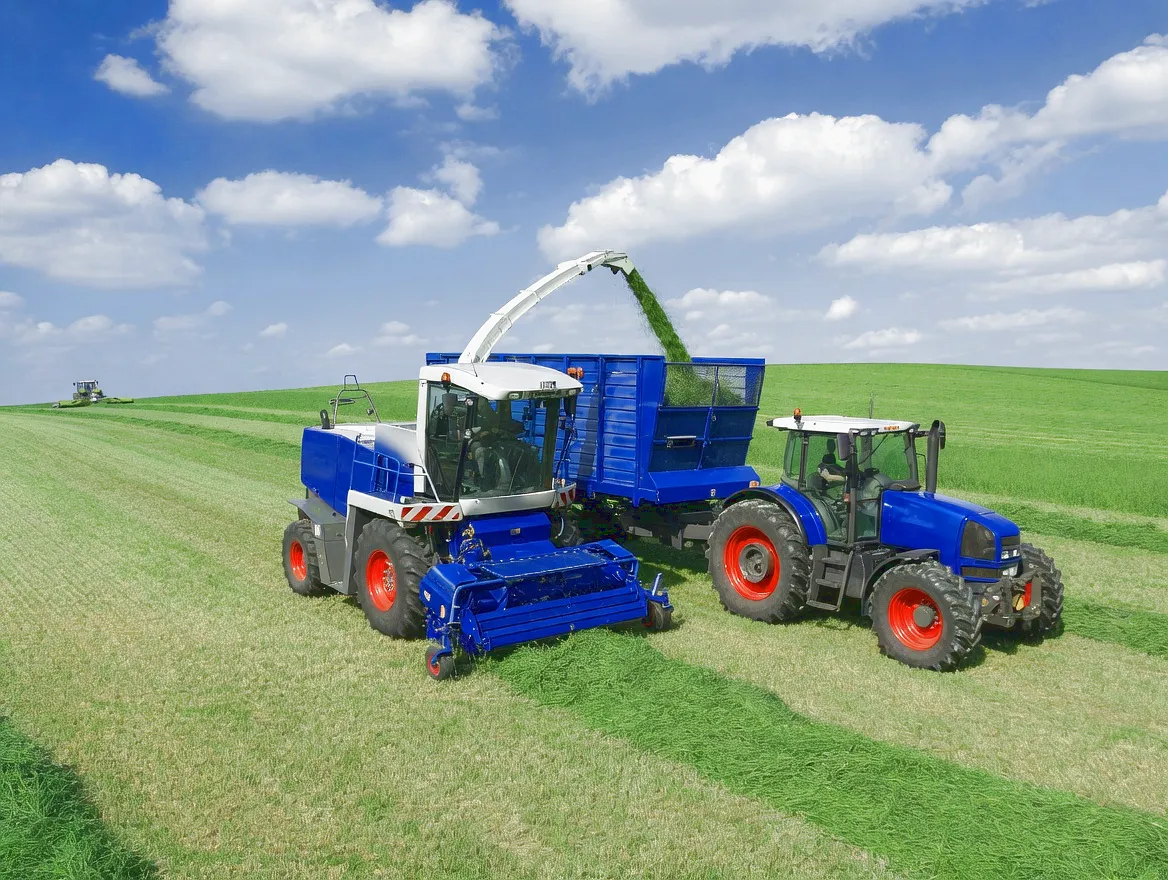
Contractors operating fleets across multiple counties also encounter varied ground conditions within a single harvesting run, from the flat, dry fields typical of Lincolnshire arable country to the wetter, steeper pasture found across parts of Wales and the Pennines. Each transition changes the working angle the pto drive shaft must accommodate, and fleets that standardise on a shaft series rated for wide-angle continuous duty avoid the premature joint wear that shows up when a shaft designed for flat-field use gets pressed into hillier terrain. Game cover crop harvesting and biomass willow or miscanthus cutting, both growing niches across rural England, place yet another demand profile on the drivetrain because these crops can be significantly more fibrous and resistant to cutting than standard grass silage, again raising sustained torque requirements at the shaft.
Ever Power Manufacturing: Precision Production and Customisation Capability
Ever Power has built its reputation in the power transmission sector around the ability to engineer a pto drive shaft to the exact length, spline profile, torque rating and overload protection method a customer’s specific harvester and tractor pairing requires, rather than forcing buyers into a narrow catalogue of fixed configurations. Our manufacturing facility runs precision forging, CNC spline cutting and through-hardening heat treatment in a controlled production line, supported by an in-house quality inspection process that checks torsional strength, dimensional tolerance and bearing fit on every batch before it leaves the factory. This level of process control allows Ever Power to support both individual contractor replacement orders and large-volume original equipment manufacturer supply agreements from the same production base, with consistent quality across every unit regardless of order size.
Supply chain reliability matters as much as the engineering itself when UK customers are working against a narrow harvesting window. Ever Power maintains stocked raw material inventory and standardised tooling for common spline and yoke configurations, which shortens lead times considerably compared with manufacturers who machine each order entirely from scratch. Combined with flexible packaging and shipping arrangements suited to international freight, this means UK contractors and equipment dealers can secure a customised pto drive shaft without the long wait typically associated with bespoke engineering, keeping fleets equipped and ready before the silage season opens rather than scrambling for parts once cutting has already begun.
Customer Success Story: A Silage Contractor in Carlisle Solves a Recurring Drivetrain Problem
A mid-sized agricultural contracting business based near Carlisle in Cumbria had spent two consecutive silage seasons replacing universal joints on the pto drive shaft connecting their trailed forage harvester to a high-horsepower tractor, with failures clustering around the busiest weeks of first cut when the machine ran longest hours across hilly grazing land. Their existing shaft supplier offered a generic replacement part rated for general trailed implement duty, which technically fit the connection points but had not been engineered with the wider working angle and higher inertial torque spikes characteristic of forage harvester cutterhead start-up. After the second season of repeated joint failures and the resulting downtime during peak cutting weeks, the contractor’s workshop manager reached out to Ever Power for an engineering review rather than another like-for-like replacement.
Ever Power’s engineering team reviewed the tractor horsepower rating, the harvester gearbox input specification and the typical hitch geometry the contractor described for their hillier fields, then specified a heavier-duty pto drive shaft series with a wider rated working angle and a cam clutch overload protection device calibrated specifically to the harvester’s gearbox torque limit. The replacement shaft also used a reinforced forged yoke and a tighter telescoping spline tolerance than the original part, addressing the backlash that had been contributing to vibration-driven wear. Following installation, the contractor reported a full season of operation across both first and second cuts without a single joint failure, even running through the same hilly terrain that had caused repeated problems in previous years, and has since standardised their entire harvester fleet on the same Ever Power shaft specification ahead of the following season.
We run through some of the steepest grazing land in Cumbria and the old shaft just could not cope with the angle changes. Since switching to the Ever Power cam clutch series we have not lost a single day to a joint failure across an entire silage season.
What impressed me was how Ever Power actually asked about our gearbox torque rating and field conditions before recommending a shaft, instead of just selling us their standard part. The customisation made a real difference to reliability.
Lead time was faster than expected for a custom spec, and the build quality on the forged yokes is noticeably better than the generic shaft we replaced. Our whole fleet is now standardised on this spec.
Featured PTO Shaft Products from Ever Power
PTO Shaft for Round Balers
Engineered for the start-stop torque cycles typical of round baler operation, with reinforced universal joints and overload protection suited to continuous baling shifts. View the PTO Shaft for Round Balers
PTO Shaft Replacement for John Deere Square Balers
A direct-fit replacement shaft specification matched to John Deere square baler gearbox input requirements, built with the same forged yoke and hardened spline standards used across our forage equipment range. View the PTO Shaft Replacement for John Deere Square Balers
Frequently Asked Questions
How much does a replacement pto drive shaft typically cost for a forage harvester in the UK?
Pricing depends heavily on torque rating, overload protection type and length, so the most accurate way to get a price is to send your harvester model and tractor horsepower to a supplier for a tailored quote rather than relying on a generic listed figure.
Who supplies custom pto drive shafts for trailed forage harvesters operating across Yorkshire and the North of England?
Manufacturers offering engineering-led customisation, rather than fixed catalogue parts, are generally best placed to support the wider working angles and higher torque demands seen on hillier farms across the North of England.
What is the difference between a shear bolt and a cam clutch on a forage harvester pto shaft?
A shear bolt breaks under overload and must be replaced before drive resumes, while a cam clutch slips momentarily and re-engages automatically, which many contractors prefer for the time savings during a busy harvest day.
Which working angle range should a contractor in the Welsh hills look for in a pto drive shaft?
Contractors working steep or undulating ground across Wales typically benefit from a shaft rated for continuous operation at the higher end of the available working angle range, since this reduces joint wear compared with shafts designed mainly for flat-field use.
Where can a Birmingham-based agricultural dealer source a bulk supply of forage harvester pto drive shafts?
Dealers looking for volume supply arrangements should approach manufacturers with established export experience and stocked tooling for common spline configurations, which supports shorter lead times on repeat bulk orders.
When is the best time of year to order a replacement pto drive shaft ahead of the UK silage season?
Ordering during late winter or early spring, well ahead of first cut, allows time for any customisation and shipping, helping contractors avoid the supply pressure and longer lead times that build up once the season is already underway.
How do I get a quote for a custom pto drive shaft built for my specific forage harvester and tractor pairing?
The fastest route is to email your harvester model, tractor horsepower and typical field conditions directly to a supplier’s sales team so they can recommend the correct torque rating and overload protection before issuing a price.
edit by gzl