
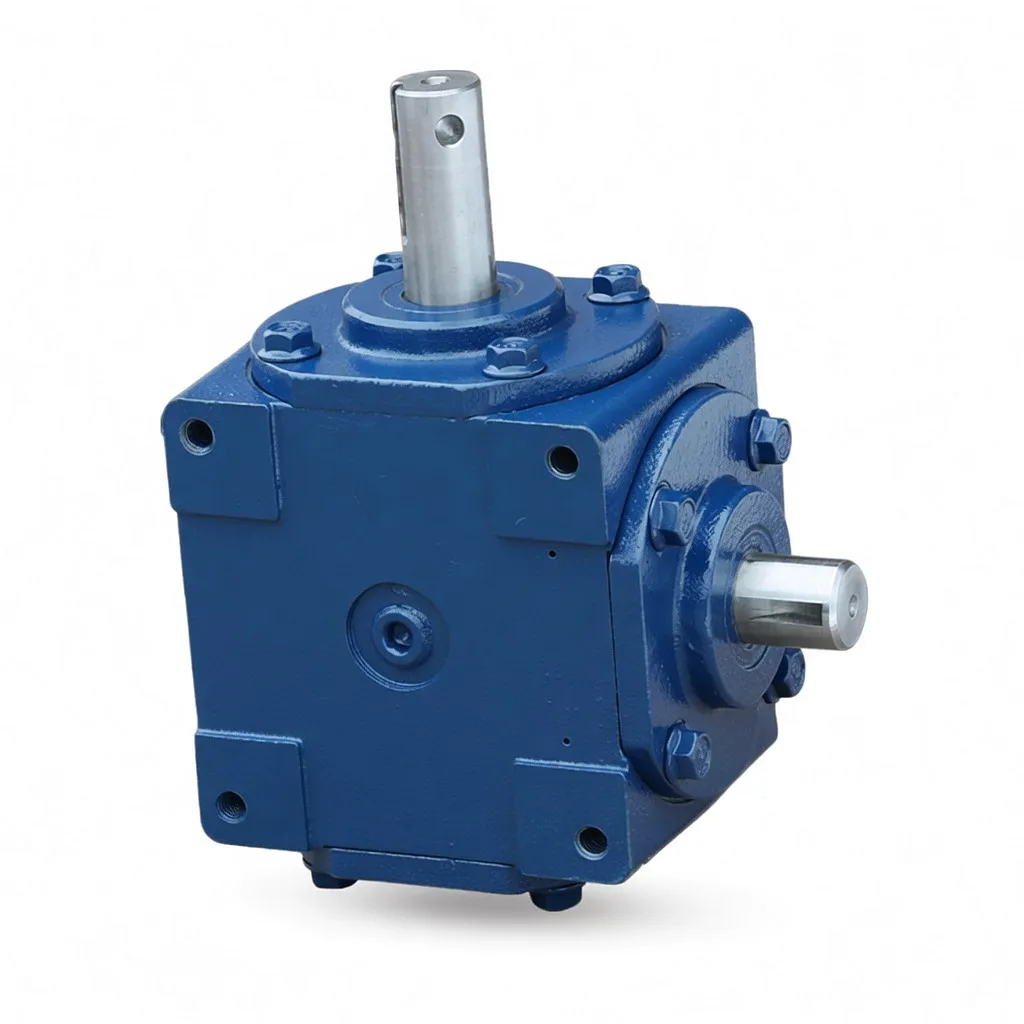
 Among the many driven implements that UK farmers rely on season after season, the rotary tiller stands out as one of the most mechanically demanding. Every pass across a field in the Yorkshire Wolds, the Lincolnshire Fens or the rolling arable land around Shropshire places enormous stress on the drivetrain. At the centre of that drivetrain sits the central agricultural gearbox — a compact but exceptionally rugged unit that receives rotational power from the tractor’s PTO shaft and redirects it, at the correct speed and torque, to the tine rotor that breaks, turns and aerates the soil. Without a gearbox engineered precisely for this duty, the tiller would either seize within hours or fail to deliver the soil tilth that modern UK cropping systems demand.
The specification and selection of the right agricultural gearbox for rotary tiller applications is therefore far from a commodity decision. Gear ratios, housing alloy grade, bearing selection, sealing strategy and shaft configuration all interact to determine whether a machine gives ten seasons of reliable service or becomes a workshop liability. This article examines every layer of that decision, drawing on the engineering realities of UK field conditions, the demands of the British mixed-farming calendar, and the manufacturing capabilities that separate a dependable gearbox from a false economy.
Need a custom agricultural gearbox for your rotary tiller or other driven implement?
Working Principle of the Central Gearbox in a Rotary Tiller
Power Input
The tractor’s power take-off (PTO) shaft spins at either 540 rpm or 1000 rpm depending on the tractor model and implement requirement. The agricultural gearbox accepts this input at its stub shaft, which is flanged and keyed to accept standard PTO coupling profiles. A properly rated input shaft — typically forged alloy steel ground to close tolerance — ensures concentricity and minimises the vibratory energy that would otherwise travel back through the driveline.
Gear Train & Ratio Reduction
Inside the housing, a helical or bevel-helical gear set steps down the input speed and multiplies torque to a level appropriate for rotor tine operation. Typical gear ratios for rotary tiller central gearboxes range from 1:1.92 to 1:3.75, with the exact ratio determined by tine diameter, working depth and desired soil throw pattern. The gear teeth are profile-ground and case-hardened, giving the mesh a contact ratio above 1.6 that distributes load smoothly even during hard soil engagement where shock loading is severe.
Power Distribution to Side Gearboxes
On wider rotary tillers, the central gearbox also serves as a power distribution hub. A secondary bevel stage or lateral output shaft delivers torque outward to left and right side chain-and-sprocket assemblies or secondary gearboxes, ensuring that all tine sections across a working width of 1.2 m to 3.6 m receive uniform power. The symmetry of this arrangement keeps the implement balanced and prevents uneven soil disturbance on one flank — critical when preparing seedbeds for precision drilling across the broad, flat fields typical of Lincolnshire or Cambridgeshire.
Sealing & Lubrication System
Agricultural gearboxes face soil ingress, water splash and airborne agrochemical contamination on every working day. A robust labyrinth seal backed by a double-lip radial shaft seal at each bearing location keeps the gear oil in and field debris out. The housing holds a precisely calculated oil volume — typically 0.8 l to 2.2 l of EP 90 or EP 140 gear oil — that ensures full splash lubrication of every gear and bearing at all operating orientations. A breather valve prevents pressure build-up that would otherwise force oil past the seals over time.
Core Materials That Define Gearbox Reliability
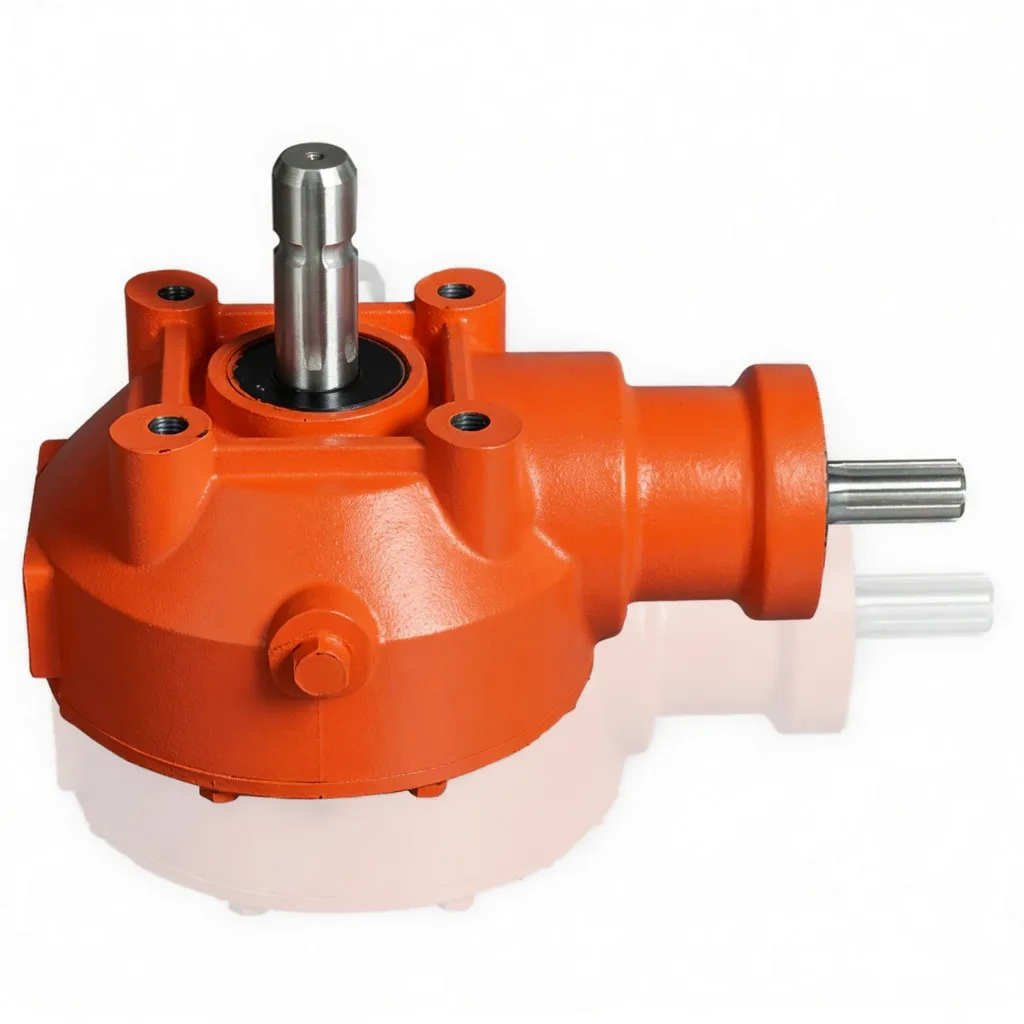 Material selection in a rotary tiller central gearbox is not driven by catalogue convenience — it is driven by the specific failure modes that show up after years of field use. The housing is almost universally cast in grey iron to EN-GJL-250 specification or, for lighter premium designs, in GGG-50 spheroidal graphite iron. Grey iron absorbs vibration extremely well due to its lamellar graphite microstructure, a property that matters greatly when the tine rotor hammers into stony ground at speed. For tractor-mounted implement gearboxes where every kilogram of mass affects the three-point linkage geometry and tyre wear, SGI housings offer a useful weight saving while retaining the same damping characteristic.
Gear blanks are forged from 20CrMnTi or 42CrMo4 low-alloy steel, both of which respond well to the carburising-and-quenching process that raises surface hardness to 58–62 HRC while preserving a ductile core with Charpy impact values above 60 J at -20 C. This dual property profile is exactly what survives the combination of high mean torque during normal cultivation and sudden impact peaks when the tine hits a buried stone. Shafts follow a similar specification, with critical diameters ground to ISO h6 tolerances for bearing interference fits that remain tight across the full temperature range encountered in outdoor British conditions.
Tapered roller bearings sourced to DIN 720 carry the dominant radial and axial loads at both input and output locations. The tapered contact geometry self-aligns slightly under combined loading, extending fatigue life beyond what angular contact ball bearings would achieve in the same envelope. All external fasteners are 10.9 grade zinc-phosphate treated for corrosion resistance in the wet field environments common across Wales, the Scottish Borders and the wetter upland farms of Northern England.
Product Advantages: Why the Right Agricultural Gearbox Changes Everything
High Torque Density
Profile-ground helical gears with a pressure angle of 20 degrees achieve power densities above 35 Nm per kilogram of gearbox mass, allowing compact installation even in the narrow interframe space of subcompact or mid-range tractors commonly found on British livestock farms. The efficiency across the gear mesh typically exceeds 97%, meaning negligible heat rejection into the housing during sustained cultivation runs.
Overload Protection Architecture
A shear-bolt or slip-clutch overload protection device integrated at the input coupling disconnects the power path within milliseconds of a tine-rock collision, protecting the entire drivetrain from the destructive spike that would otherwise propagate back through the PTO shaft to the tractor transmission. This feature is non-negotiable for UK fields with high flint content, particularly across the chalk downs of Kent, Wiltshire and Hampshire.
Extended Service Intervals
High-quality agricultural gearboxes engineered to ISO 9001 production standards typically carry an oil-change recommendation of 250 operating hours for the initial run-in fill, then 500-hour intervals thereafter. For UK contract cultivators running rotary tillers across many customer farms each spring and autumn, this translates to substantially lower maintenance cost per hectare compared to cheaper units that require more frequent attention or suffer premature bearing failure.
Universal Mounting Compatibility
Standardised bolt-circle patterns conforming to DIN 9684 and ASAE S201 specifications mean that an agricultural gearbox sourced from a high-quality supplier like Ever Power can be fitted to existing implement frames without machining modifications. The input shaft flange accepts both 1-3/8” 6-spline and 1-3/8” 21-spline PTO profiles, the two most prevalent connection types on British farm tractors from 40 hp compact machines to 300 hp-plus articulated units.
Noise & Vibration Control
Helical gears generate significantly lower noise and smoother torque delivery than their straight-cut counterparts. Agricultural gearboxes built with helix angles of 15 to 25 degrees suppress gear mesh harmonics that would otherwise drive sympathy vibrations in the implement frame, loosening fasteners and fatiguing welded joints over time. In the context of UK Health and Safety Executive whole-body vibration guidelines, smoother running gearboxes also contribute to reduced driver fatigue and compliance with daily vibration exposure action values.
Corrosion-Resistant Surface Treatments
The British climate is unkind to unpainted ferrous components. A properly finished agricultural gearbox housing receives a phosphate conversion coating followed by a two-component epoxy primer and a polyurethane topcoat, giving a total dry film thickness of at least 120 microns. This system passes a 500-hour salt-spray test to ISO 9227 and tolerates repeated fertiliser and biocide exposure without disbonding, keeping the implement presentable and corrosion-free through multiple seasons of storage in open-sided sheds.
Product Technical & Performance Parameter Table
The table below summarises the principal design parameters applicable to central gearboxes used in rotary tiller applications, reflecting the standard range offered by Ever Power and covering the majority of UK tractor-implement pairings currently in commercial service.
| Parameter | Specification / Range | Remarks |
|---|---|---|
| Input Speed | 540 rpm / 1000 rpm | Selectable to match tractor PTO standard |
| Gear Ratio | 1 : 1.92 to 1 : 3.75 | Custom ratios available on request |
| Rated Input Torque | 500 Nm – 2,800 Nm | Depends on model series and working width |
| Peak Shock Torque (x rated) | 2.5 × rated | Shear-bolt protection at input coupling |
| Housing Material | GJL-250 / GGG-50 (SGI) | SGI variant for weight-critical applications |
| Gear Material | 20CrMnTi / 42CrMo4 | Carburised and quenched, 58–62 HRC surface |
| Shaft Material | 42CrMo4 alloy steel | Ground to ISO h6 bearing seat tolerance |
| Bearing Type | Tapered roller, DIN 720 | Pre-loaded for axial + radial combined load |
| Gear Accuracy Grade | ISO 6 (profile ground) | Low noise, high contact ratio ≥ 1.6 |
| Input PTO Profile | 1-3/8” 6-spline or 21-spline | ASAE S201 / ISO 500 compliant |
| Seal Type | Double-lip radial shaft seal + labyrinth | IP66-equivalent protection in field use |
| Lubricant Type | EP 90 or EP 140 gear oil | Splash lubrication; initial change at 250 h |
| Oil Volume | 0.8 l – 2.2 l | Model dependent; breather valve fitted |
| Operating Temperature | -20 C to +80 C | Suitable for full UK seasonal range |
| Surface Treatment | Phosphate + epoxy primer + PU topcoat | 500 h salt-spray ISO 9227 compliant |
| Efficiency | ≥ 97% per stage | Helical mesh geometry |
| Mounting Standard | DIN 9684 / ASAE S201 | Interchangeable with OEM frames |
| Customisation Options | Ratio, shaft length, output angle, colour | OEM private-label available |
Application Scenarios: Where the Agricultural Gearbox in a Rotary Tiller Proves Its Worth
Application Scenario 1 — Arable Seedbed Preparation on Heavy Clay Soils
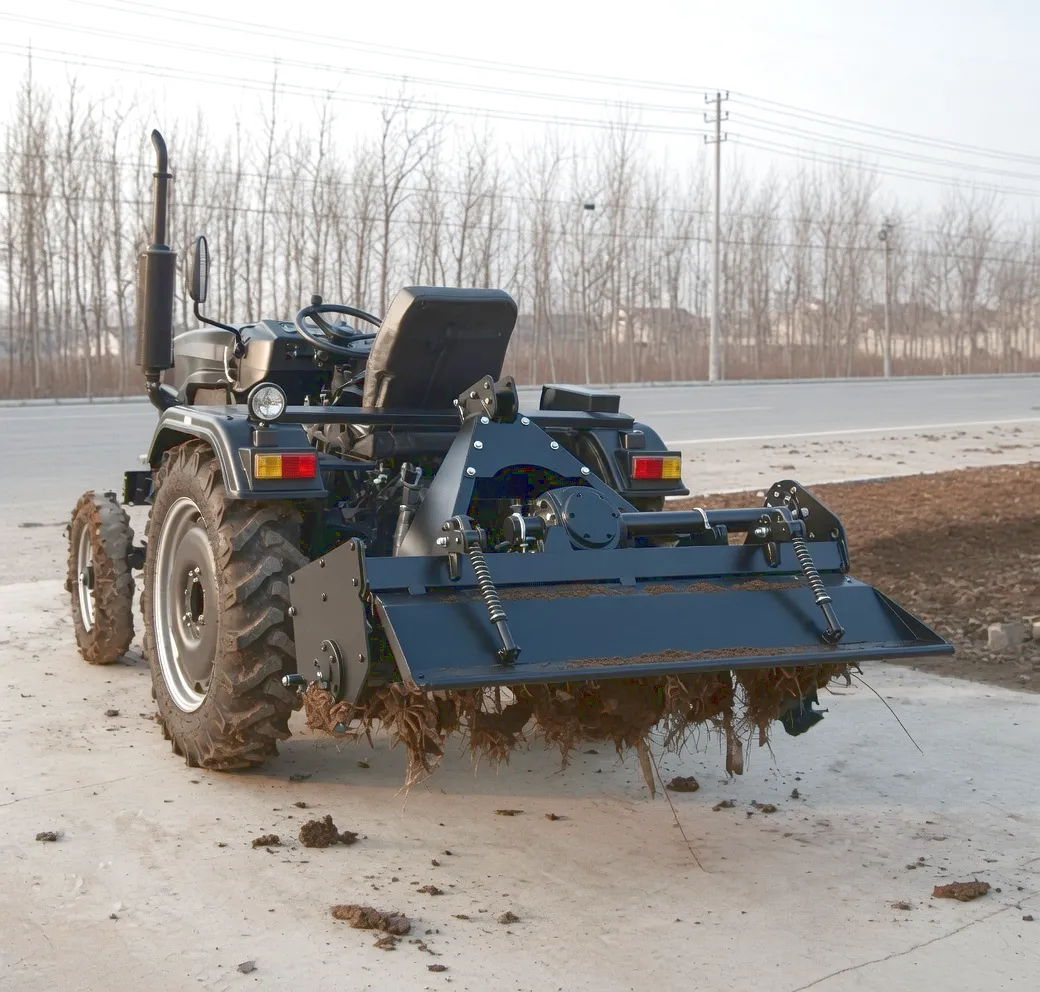
The heavy clay soils of the English Midlands — particularly those around Birmingham’s agricultural hinterland in Warwickshire, or the heavy boulder clays of East Anglia — place the highest possible demands on a rotary tiller central gearbox. Clay at field capacity is essentially plastic and offers enormous resistance to tine penetration, forcing the gearbox to sustain near-rated torque output for extended periods without the momentary unloading that sandy or loamy soils provide. A correctly rated agricultural gearbox in this environment must have a service factor of at least 1.5 applied over the nominal torque rating, ensuring that the gears, bearings and housing all operate well inside their endurance limits even during the continuous heavy-duty tillage passes needed to achieve the fine seedbed tilth required for winter wheat and spring barley establishment. Farming contractors operating out of places like Leamington Spa and Coventry servicing multiple arable clients report that gearbox selection has a direct impact on their ability to guarantee field preparation windows, particularly when the late-October weather closes in quickly and leaves only narrow opportunities between rain events to complete drilling preparations.
Application Scenario 2 — Market Garden and Horticultural Bed Preparation
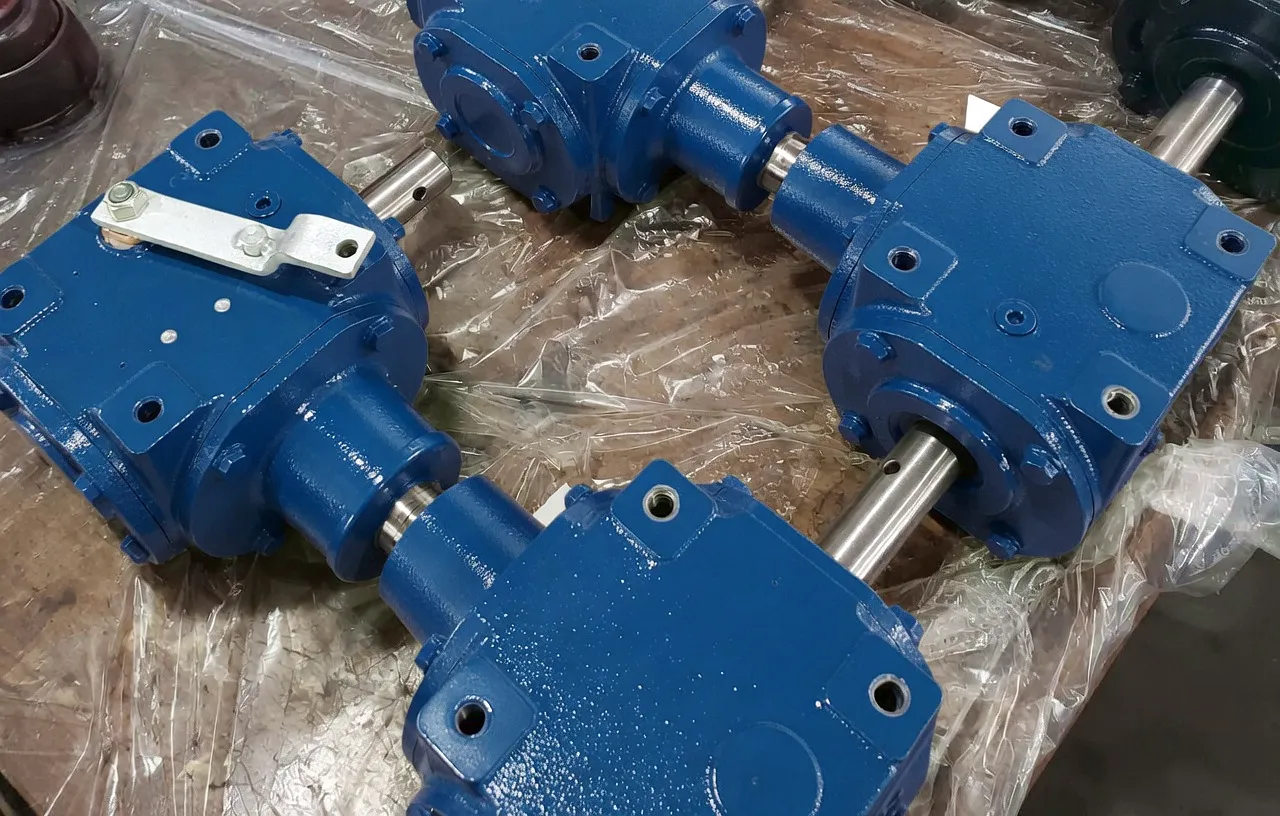 The UK horticultural sector — concentrated in regions such as the Vale of Evesham in Worcestershire, the Lea Valley in Hertfordshire and the south-eastern market garden belt of Kent — runs rotary tillers on relatively light tractors to prepare raised beds, rotation strips and polytunnel floors where precision and uniformity matter as much as raw throughput. In these settings, a compact-frame agricultural gearbox with a higher gear ratio (typically 1:3.0 to 1:3.75) produces a slower rotor speed and a finer soil tilth with less stone-throwing risk. The gearbox must operate without oil leaks because even a small contamination event in an organic-certified growing area can jeopardise crop certification status. Double-lip sealing on all shaft exits, combined with an oil-filler cap with a dip-stick for easy inspection between runs, keeps maintenance simple and contamination risk as low as it can practically be. Many small operators in this sector purchase replacement agricultural gearboxes directly from suppliers like Ever Power rather than sourcing through OEM dealer networks, because the lead times are shorter and the price per unit is substantially more competitive.
Application Scenario 3 — Incorporation of Crop Residues and Cover Crops
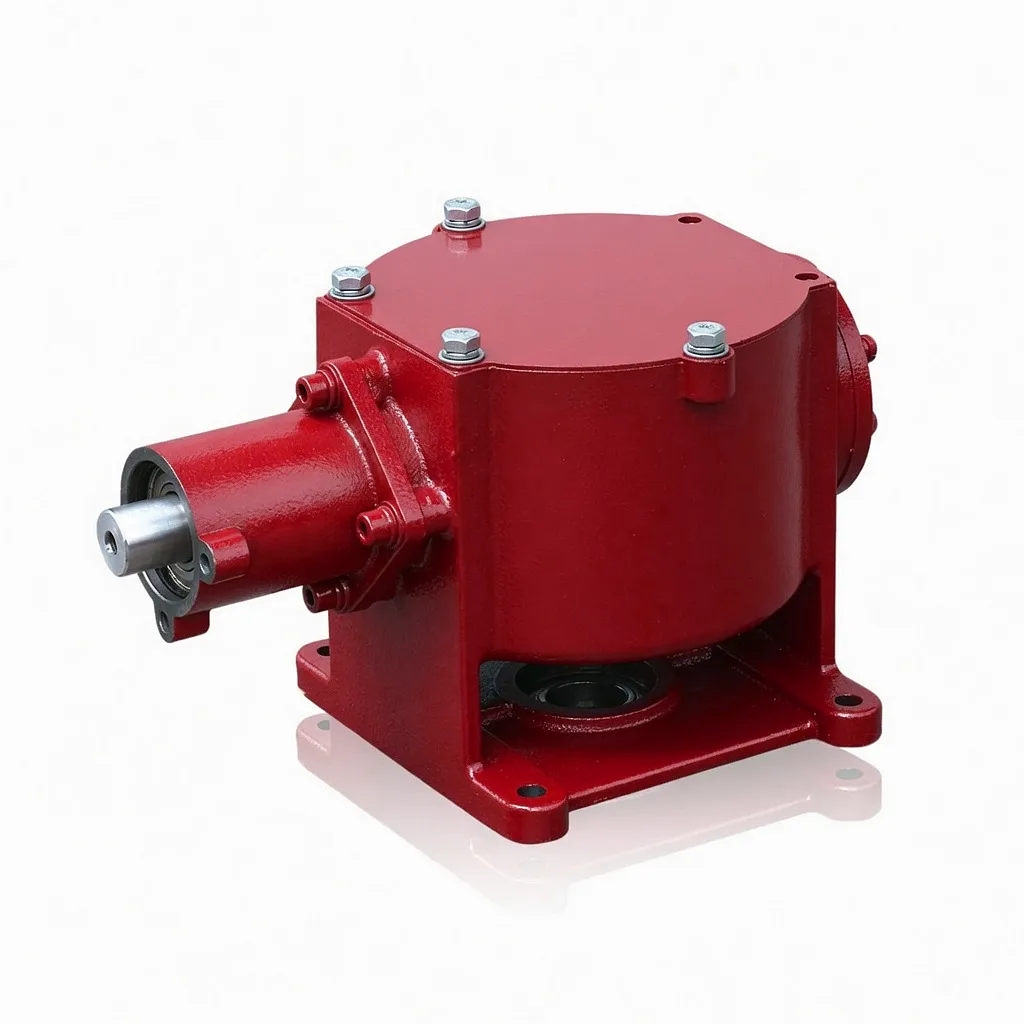 The growing adoption of cover cropping in UK arable rotations — driven by Countryside Stewardship scheme requirements and the Environmental Land Management (ELM) framework replacing direct payments — has dramatically increased the use of rotary tillers specifically for biomass incorporation. Chopped cereal straw, flattened mustard, radish or phacelia cover crops are mechanically tougher than bare soil because the fibrous material wraps around tines. This creates high-torque, low-speed running conditions for the agricultural gearbox that differ fundamentally from conventional cultivation. A gearbox handling this duty must have generous shaft-to-bore clearance ratios that prevent the bending moments from tine wrapping from transmitting into bearing misalignment. Ever Power’s range addresses this directly by specifying input shaft diameters at least 10% oversize relative to the pure torque calculation, giving margin for the combined bending and torsional loads that arise during heavy residue incorporation across the large continuous arable blocks typical of farms in Norfolk and Suffolk.
Application Scenario 4 — Grassland Renovation and Pasture Reseeding
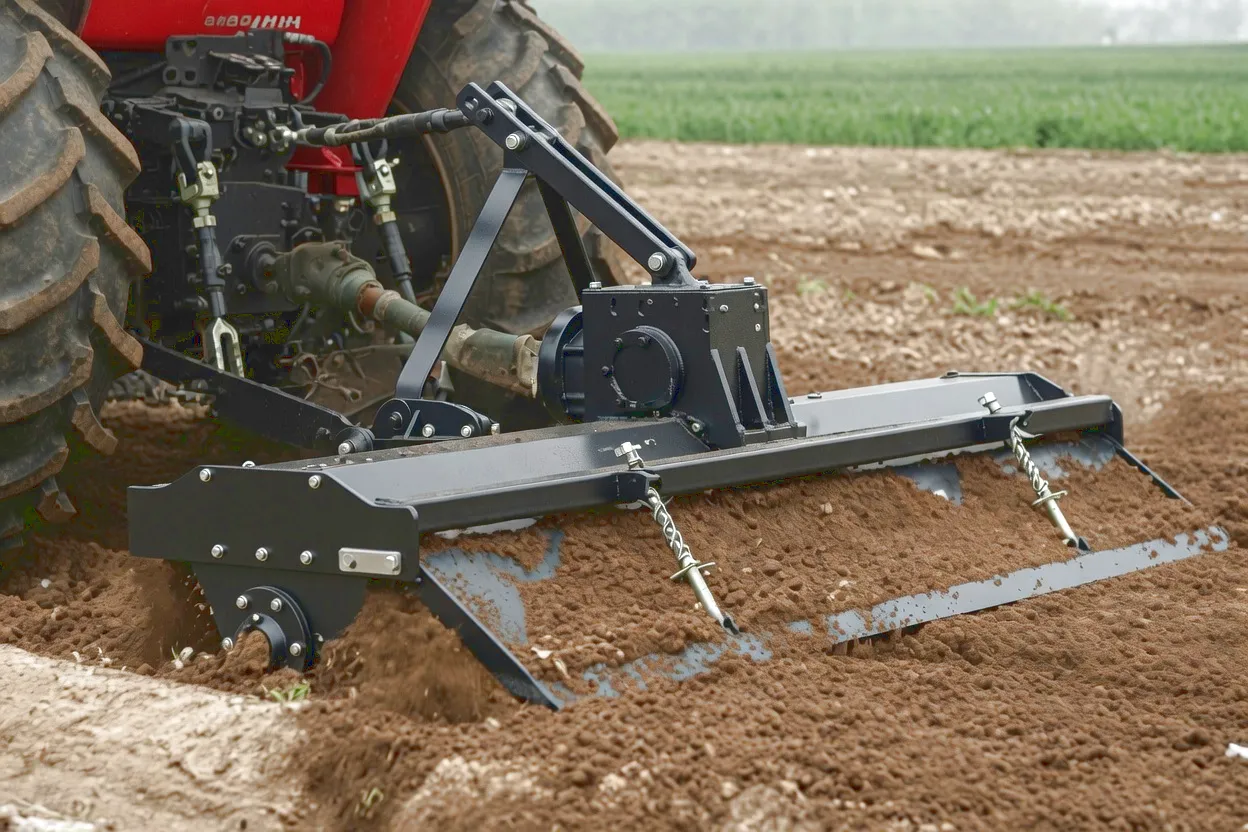
Livestock farms across Wales, the South West of England and the Scottish Borders periodically resurface deteriorated pasture using a rotary tiller to break up compacted sward before overseeding with improved grass varieties. In these environments, the agricultural gearbox is frequently operating on uneven terrain with the implement following ground contours at steep angles, placing axial and combined loads on output bearings that would not arise in level arable conditions. A well-engineered central gearbox for this duty specifies taper roller bearings at both ends of the rotor output shaft rather than single-row deep-groove ball bearings, because only the tapered geometry handles the continuously varying load vector that arises when the implement pitches and rolls across a sloped Welsh hillside or a Dartmoor field edge. Contamination from damp grass and mud is also high on these sites, making seal quality even more important than in dry arable conditions. Livestock farmers in this category tend to prioritise long seal service life above almost every other gearbox attribute, as any oil leakage onto grassland raises immediate welfare and environmental concerns.
Ever Power — Precision Agricultural Gearbox Manufacturing & Custom Engineering
Ever Power operates a dedicated agricultural drivetrain manufacturing facility equipped with CNC gear hobbing and profile-grinding centres capable of producing gears to ISO accuracy grade 5 — one step finer than the standard agricultural requirement, a deliberate quality margin that extends field life well beyond the competition. The design team works closely with UK machinery dealers and OEM implement builders across Sheffield’s agricultural engineering supply chain, Birmingham’s fabrication sector, and the East Anglian implement assembly cluster to deliver replacement and custom agricultural gearbox units that integrate without adaptation into existing implement frames.
Customisation at Ever Power is not a premium add-on — it is the default operating mode. Customers can specify output shaft direction, gear ratio, housing colour (RAL or Pantone matched to implement frame), coupling profile, drain plug location, breather valve orientation, and ancillary power take-off points for hydraulic pump drives. Each custom project is supported by a dedicated engineering contact who coordinates from enquiry through production to freight-forwarded delivery to any UK port, typically via Liverpool or Felixstowe. DDP Incoterms are available, removing all import logistics burden from the UK buyer.
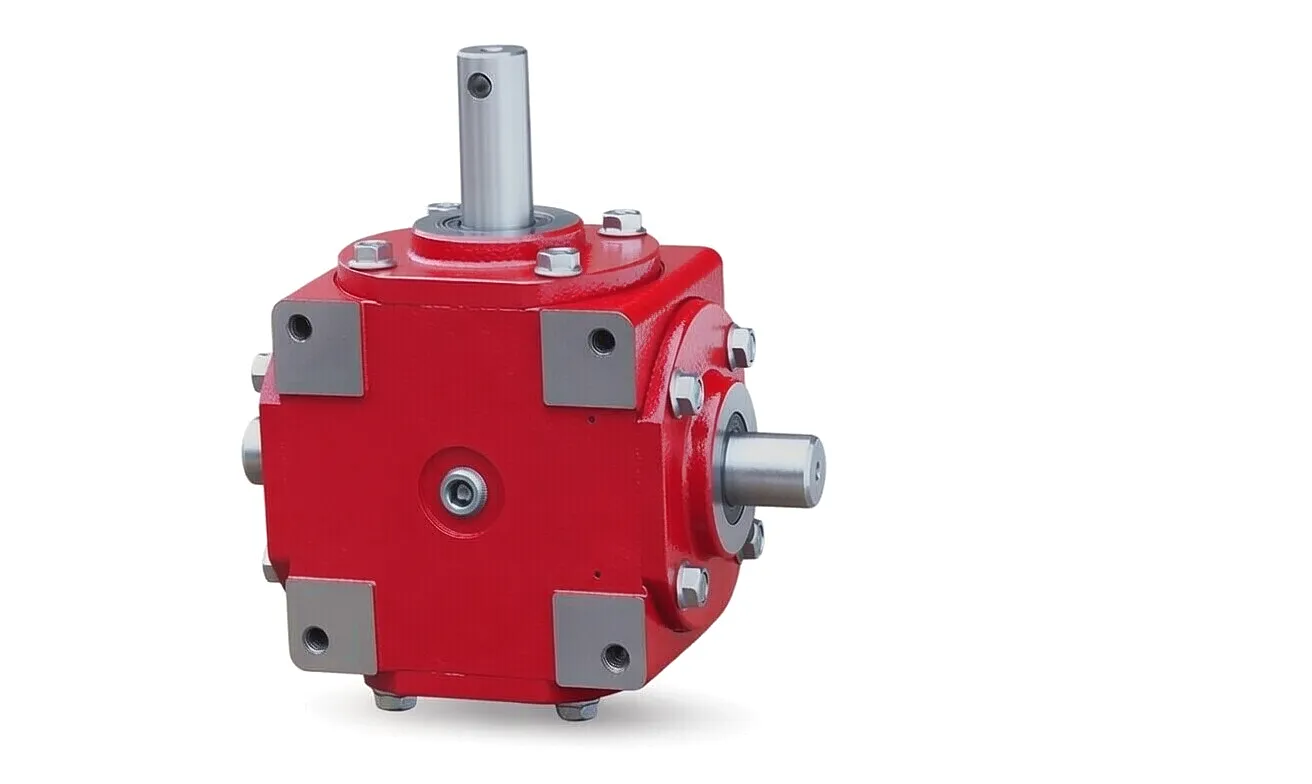
Customer Success Story — Sheffield-Based Agricultural Contractor
Greenfield Agri Services Ltd — Sheffield, South Yorkshire
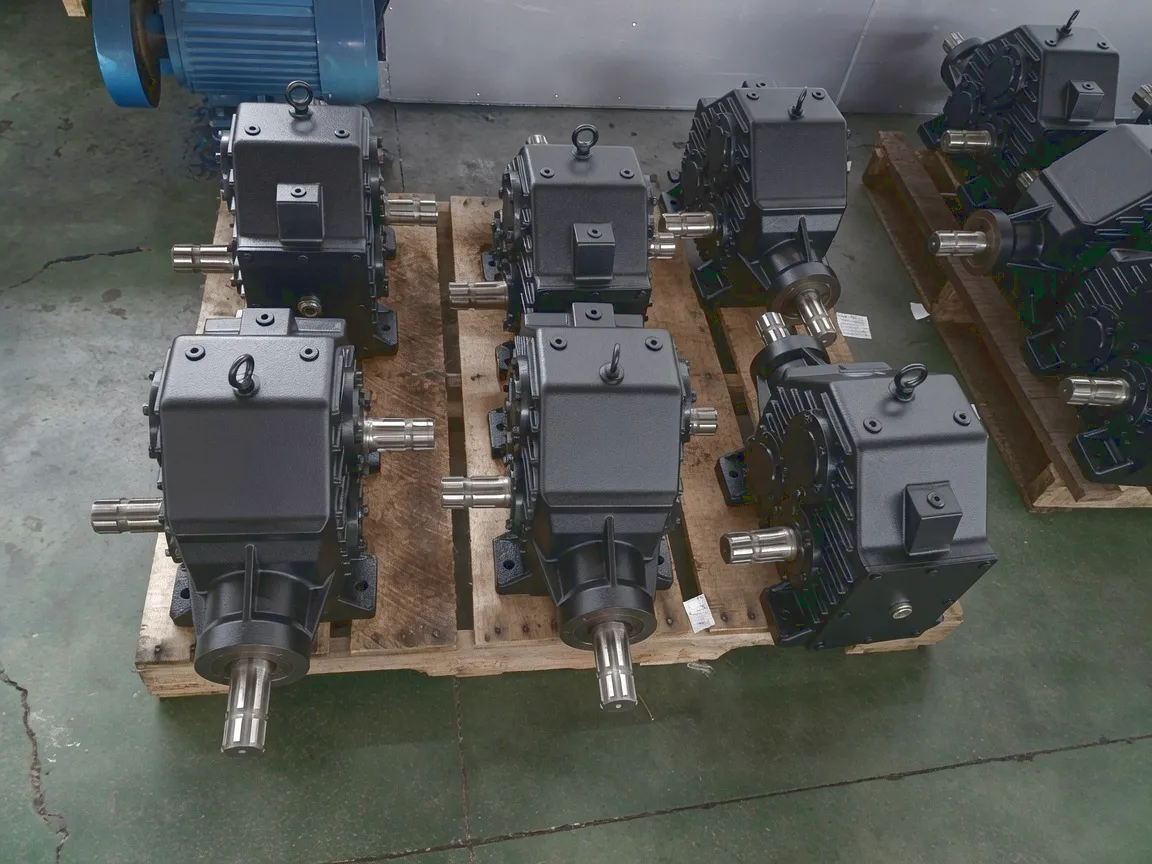 Greenfield Agri Services Ltd is a family-run agricultural contracting business based on the southern edge of Sheffield, servicing mixed arable and livestock farms across South Yorkshire, Derbyshire and Nottinghamshire. In 2023, the company expanded its rotary tillage operation, adding two wide-format (2.8 m) rotary tillers to handle the growing demand for cover-crop incorporation and seedbed preparation from local farmers transitioning to reduced-tillage systems under the new Sustainable Farming Incentive scheme.
The original OEM central gearboxes on both machines failed within three seasons of heavy use on the local clay-with-flints geology, exhibiting bearing wear at the rotor output shaft and oil leakage past the input shaft seal. After researching replacement options, Greenfield’s workshop manager contacted Ever Power through an online enquiry. The Ever Power engineering team specified a direct-replacement agricultural gearbox with upgraded tapered roller output bearings (increased width series) and a reinforced double-lip seal arrangement. Delivery was made DAP Sheffield within four weeks of order confirmation, including a full spare seal kit and first-fill oil.
Both replacement units have now completed three full seasonal work cycles totalling approximately 820 hours each without any oil leak or bearing noise. The workshop manager estimates that the total ownership cost per hour of operation is 34% lower than the OEM replacement gearboxes quoted through the original dealer network, factoring in unit price, duty, freight and zero unplanned downtime in the first 820 hours.
“We have run Ever Power replacement gearboxes through three full spring seasons without a single seal or bearing issue. The output shaft tolerance was spot-on for our frame — straight swap, no machining needed. The price was also well below anything the OEM dealer quoted for equivalent performance.”
“The customised gear ratio Ever Power supplied for our 1000-rpm PTO tractors gave us exactly the rotor speed we needed for the sandy loam fields we work around the Nottinghamshire border. The team walked us through the calculation by email before we even placed the order. That kind of pre-sales technical detail is rare at this price point.”
“We supply rotary tillers to market garden operations in Yorkshire and always recommend Ever Power agricultural gearboxes to our fabrication clients now. The ISO 9001 documentation pack they provide speeds up our own quality assurance process, and their DDP delivery to our Leeds warehouse means no customs administration on our end at all.”
Completing the Drivetrain: PTO Shaft Products from Ever Power
The agricultural gearbox is only as reliable as the shaft delivering power to it. Ever Power’s PTO shaft range is engineered to match the gearbox specifications above, ensuring that the complete drivetrain from tractor coupling to tine rotor performs as a coherent, matched system with compatible service lives and consistent quality standards throughout.
Purpose-built for the high-torque, variable-speed demands of round baler drivetrains, this shaft combines a wide-angle CV joint at the implement end with a shear-bolt overload protector, delivering smooth power even at extreme articulation angles. The profile tube and outer tube are manufactured in 20CrMnTi alloy steel with a phosphate surface treatment, giving excellent corrosion resistance for outdoor storage between seasons. Compatible with the most common baler models found on UK farms.
PTO Shaft Replacement for John Deere Square Balers
Engineered as a direct replacement for the original John Deere square baler PTO shaft, this unit replicates OEM geometry and spline specifications exactly, allowing a straightforward swap without frame modifications. The 1000-rpm input rating and integrated slip-clutch protect both the baler knotting mechanism and the tractor gearbox from the sudden shock loads that occur when dense hay or straw blocks the pickup. A popular maintenance item for UK farms running John Deere 440, 450 and 460 series square balers.
Ready to Source a High-Performance Agricultural Gearbox?
Contact the Ever Power technical sales team to receive a tailored specification and competitive price for your rotary tiller central gearbox or full drivetrain assembly. UK-focused logistics, short lead times, and custom engineering as standard.