
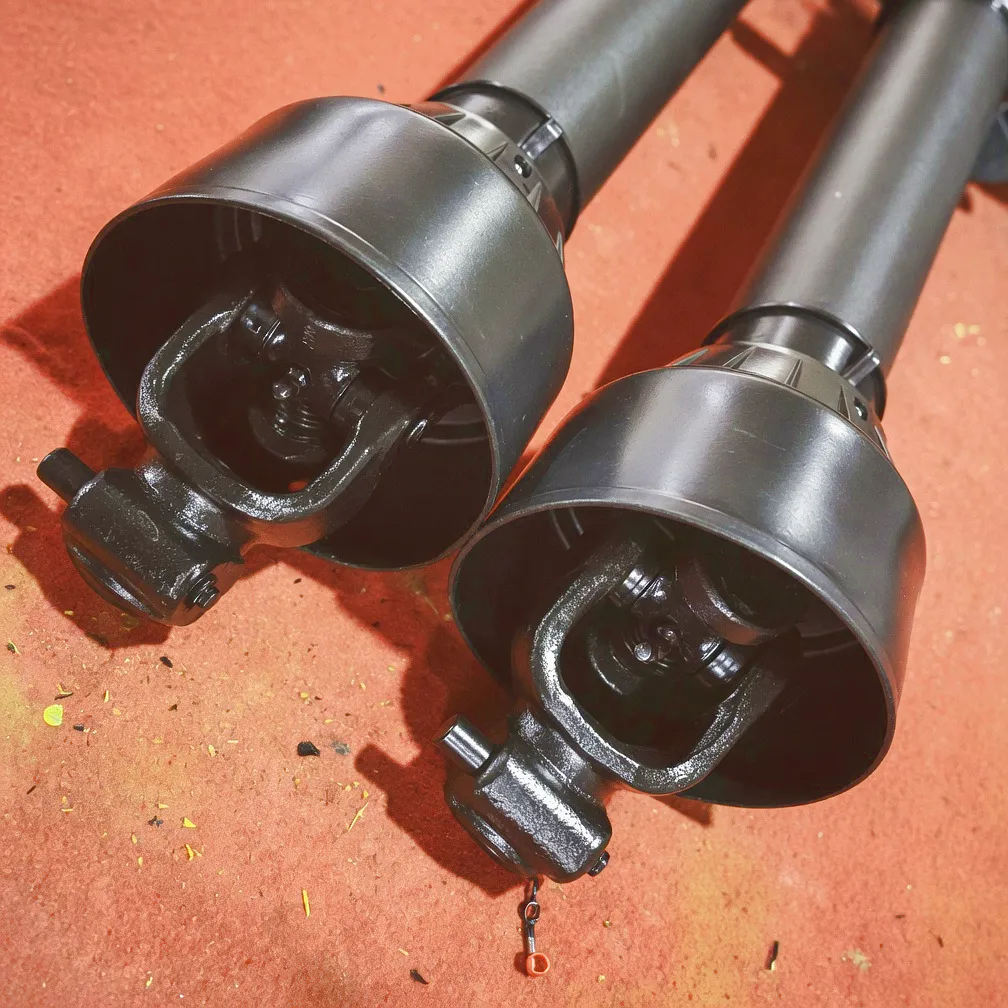
How a PTO Drive Shaft Transfers Power to a Wood Chipper
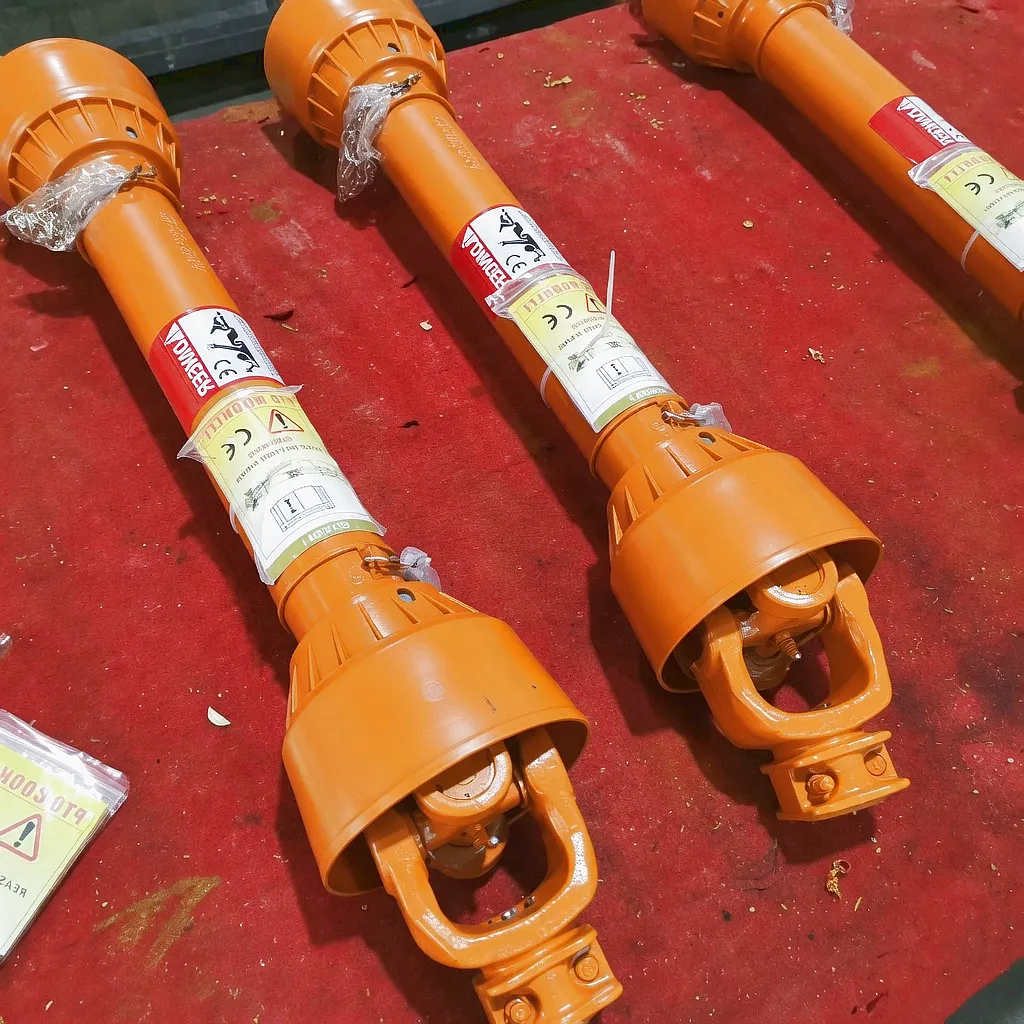
The velocity signature of a Cardan joint is worth understanding for wood chipper applications specifically because it governs vibration behaviour. A single universal joint produces a sinusoidal velocity fluctuation twice per shaft revolution, with an amplitude that grows as the joint angle increases. At the moderate speeds typical of PTO shafts this produces a perceivable vibration and, at high joint angles, a mechanical rattle that operators sometimes misidentify as a bearing failure. A phased double-Cardan arrangement corrects this by ensuring the output velocity variation of the first joint is cancelled by the equal and opposite variation of the second, giving smooth constant velocity output even at compound angles. High-specification PTO shafts supplied by Ever Power for demanding wood chipper duties use this double-Cardan geometry as standard, significantly reducing vibration-induced stress cycles on the chipper input bearings and the tractor gearbox output seal.
1
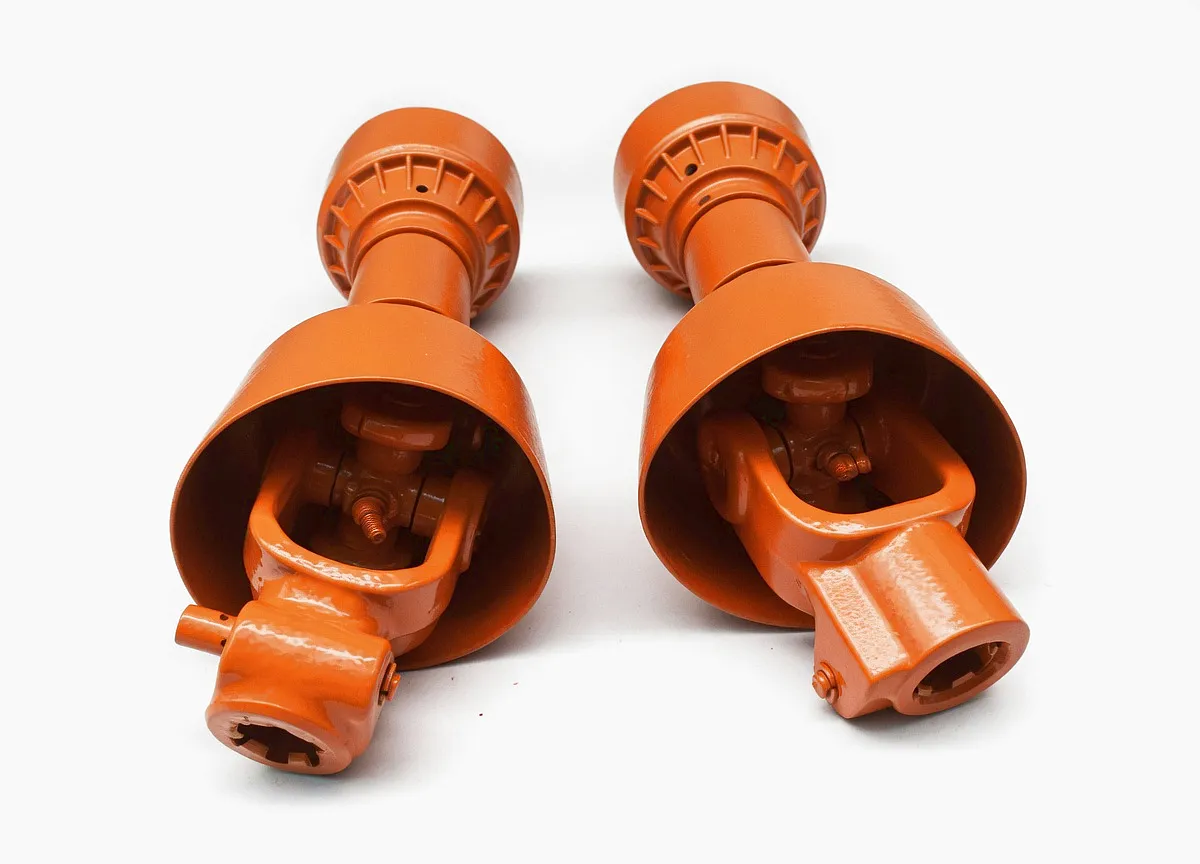
Universal Joint (Cross & Bearing Kit)
Allows angular articulation and torque transmission simultaneously. Needle roller bearings packed with high-temperature grease carry the radial load.
2
Telescoping Profile Tube
Inner splined tube slides within outer profile tube. Profiles available: lemon, star, triangular, square — each with different torsional stiffness and torque capacity.
3
Overload Protection Device
Shear bolt hub or friction slip clutch limits peak torque transmitted during a jam or sudden engagement, protecting gearbox and bearings from shock damage.
4
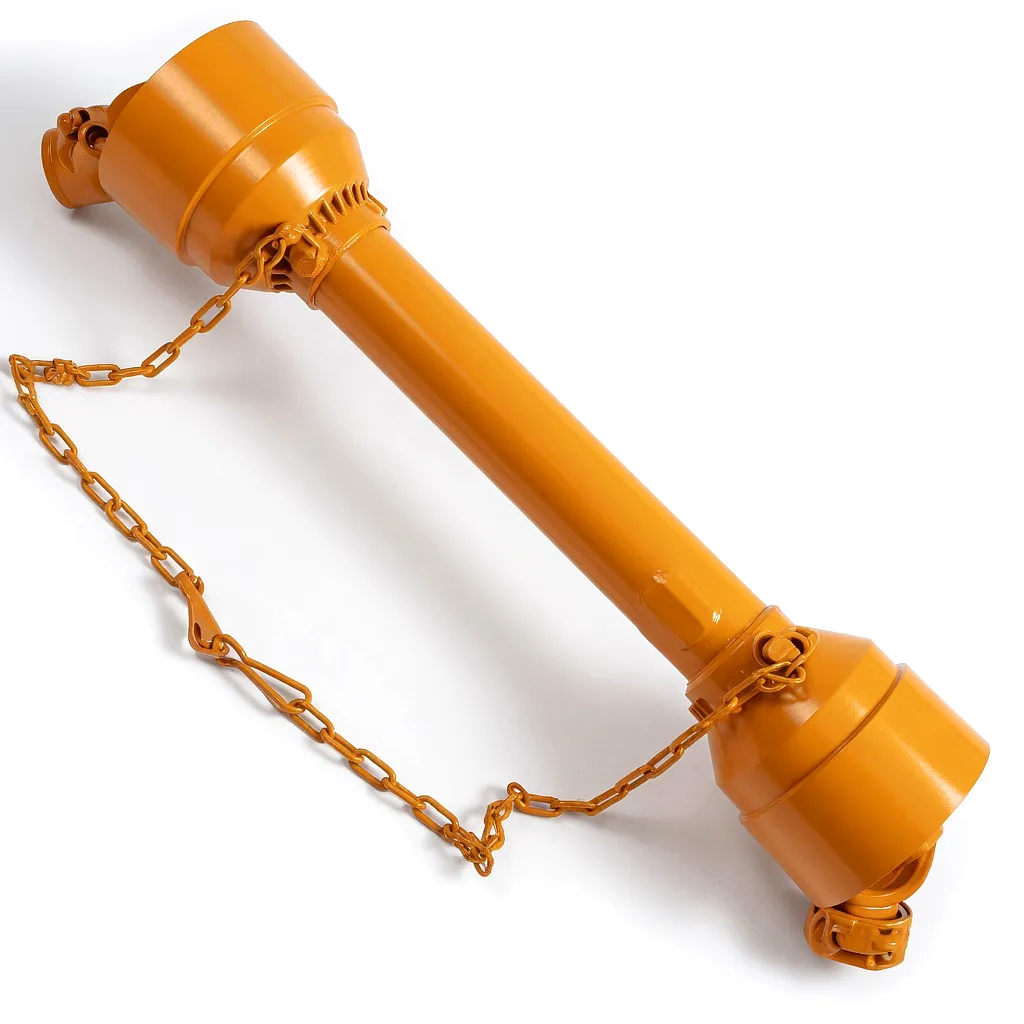
CE-Compliant Safety Guard
Plastic or steel guard assembly with non-rotating chain anchor prevents operator contact and satisfies UK Provision and Use of Work Equipment Regulations (PUWER) requirements.
Core Materials in PTO Drive Shaft Manufacturing
Material selection in PTO drive shaft construction is a discipline in itself. The demands placed on a wood chipper shaft — high peak torque, shock loading, outdoor weathering, lubricant compatibility, and the need for tight dimensional tolerances on splined surfaces — push materials to their limits and rule out the cost-cutting shortcuts that might be acceptable in lighter duty applications. The following specifications reflect the material grades used in Ever Power wood chipper shaft range.
Low-alloy chromium-manganese-titanium steel for yoke forgings offers a core toughness and case hardness combination that resists both fatigue cracking under cyclic bending and surface wear on the splined profile bore. Tubes are drawn seamless from C45 medium carbon steel, normalised, and then surface-hardened on the profile through induction or carburising processes to achieve a case depth of 0.8 to 1.2 mm with surface hardness in the range of 58 to 62 HRC. This preserves the tough ductile core while providing wear resistance on the sliding surfaces, which is critical for the long-life performance demanded by commercial arborists running machinery 200-plus days per year in the English countryside.
The cross journal, often called the spider, is arguably the most highly stressed component in the entire shaft assembly. Four trunnion surfaces carry the needle roller bearings that transmit torque in bending and shear simultaneously, and in wood chipper applications these joints see impact loads that can double or triple the nominal rating momentarily. Chromium-molybdenum or chromium alloy steels carburised to a case depth of 1.0 to 1.5 mm are the standard specification, providing a Hertzian contact stress resistance exceeding 2,500 MPa on the trunnion surface while maintaining a core impact energy absorption capacity of over 60 J at minus 20 degrees Celsius, a specification relevant to Scottish highland forestry contractors working through winter months.
The precision bearing cups that house the needle roller complement for each trunnion are manufactured from GCr15 through-hardened bearing steel, the Chinese standard equivalent of the European 100Cr6 designation used widely by Sheffield-based bearing engineers. Through-hardening to a uniform 60 to 64 HRC provides the subsurface shear stress resistance needed for needle rollers under combined radial and axial load, while tight bore tolerance control at H5 level ensures accurate roller guidance that prevents skewing. Dimensional interchangeability with Walterscheid, Bondioli and Pavesi, and Weasler series is maintained in the Ever Power catalogue, which simplifies replacement sourcing for UK agricultural machinery dealers.
Corrosion protection is non-negotiable for equipment operating in the wet and muddy conditions typical of English forestry work. Hot-dip galvanising on yoke forgings provides a zinc layer of 50 to 85 microns that sacrificially protects the underlying steel even where coating continuity is broken by abrasion against branches or machinery. Tubes receive an electrostatic powder coat in a yellow or orange RAL colour for visibility and compliance with machinery safety marking guidelines. Internal tube surfaces receive a phosphate-and-oil treatment that assists initial break-in lubrication of the sliding spline, reducing the risk of fretting corrosion that is a common warranty claim on cheaply finished shafts used in high-cycle applications like continuous chipping operations.
Application Scenario: Wood Chipper — Forestry, Arboriculture and Biomass Processing
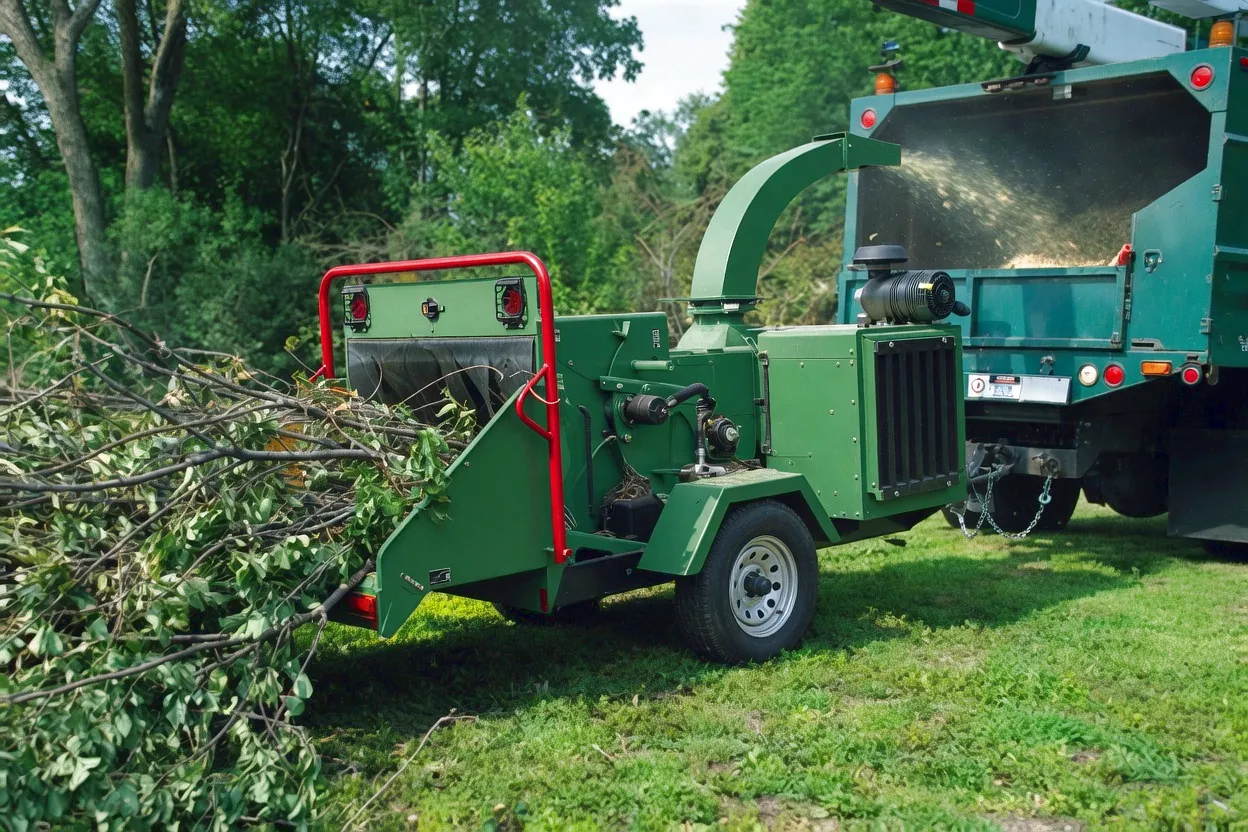
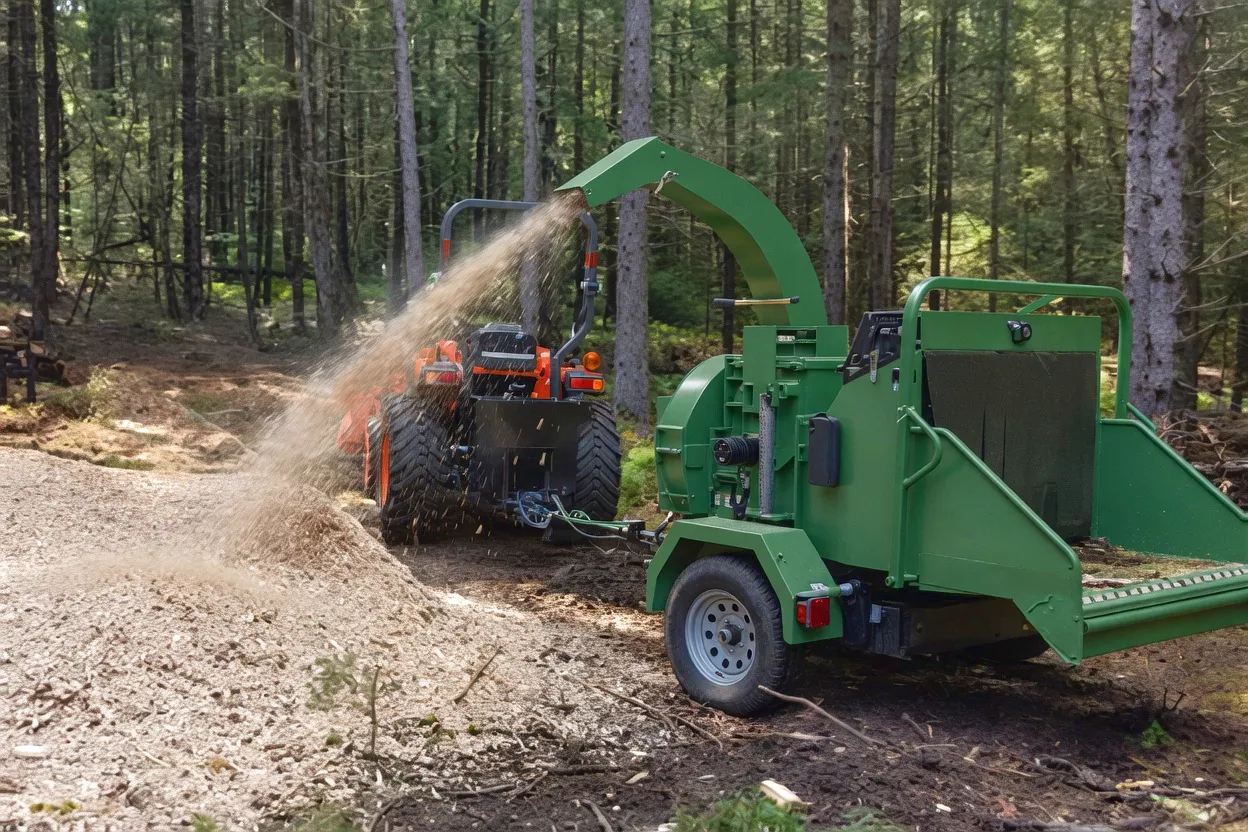
High-torque drum chippers processing hardwood and softwood brash in commercial plantations. PTO shafts rated to 3,500 Nm with friction slip clutches set to 130-150% of nominal torque are the standard specification. Telescopic length adjustment of 300 to 500 mm accommodates the varied hitch heights of logging tractors and forwarders operating over rough, sloping terrain in sites like the Thetford Forest complex.
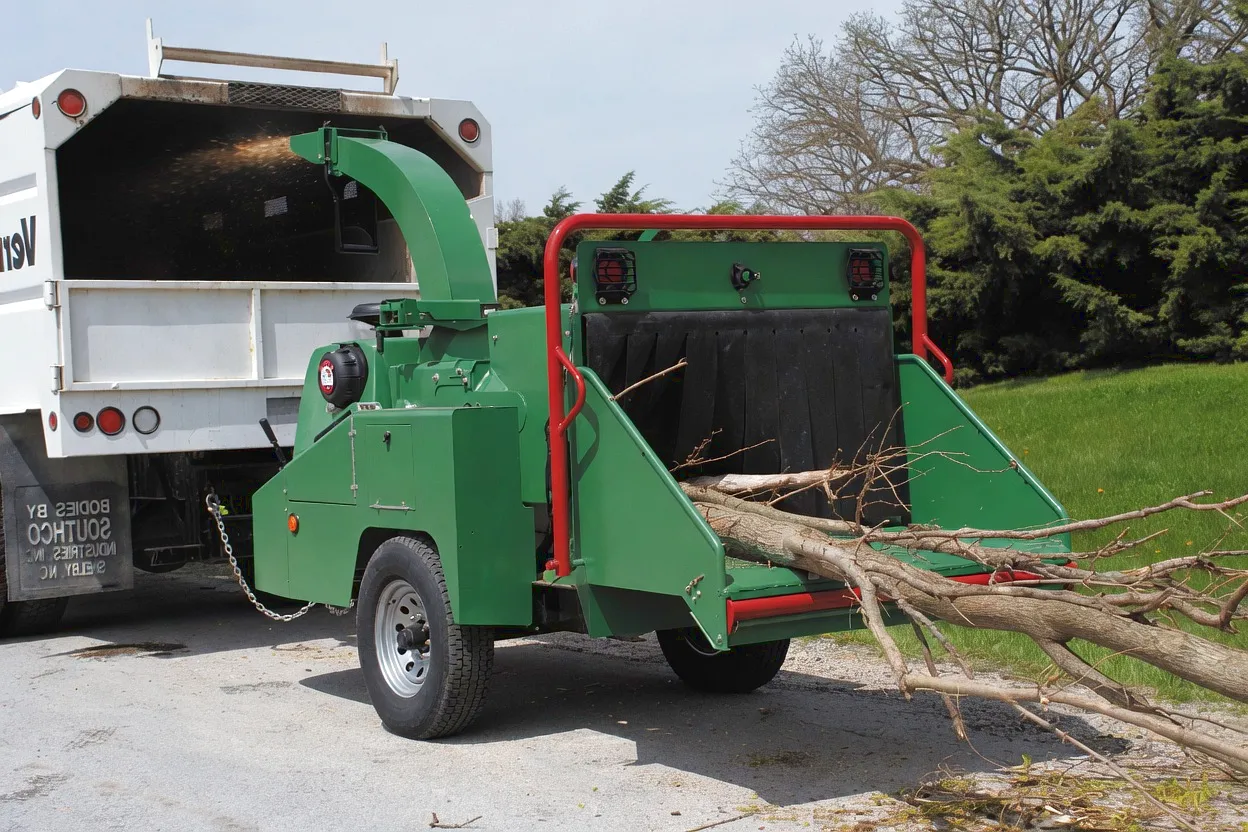
Compact disc chippers operating at 540 rpm PTO in parks and highway verge maintenance across Greater Manchester and the West Yorkshire conurbation. Shear bolt protection with clearly marked torque ratings assists rapid on-site bolt replacement by arborist crews who may be maintaining a fleet of six to eight machines on a single council contract. Shafts must accommodate the tight turning radius requirements of compact tractors in confined urban spaces.
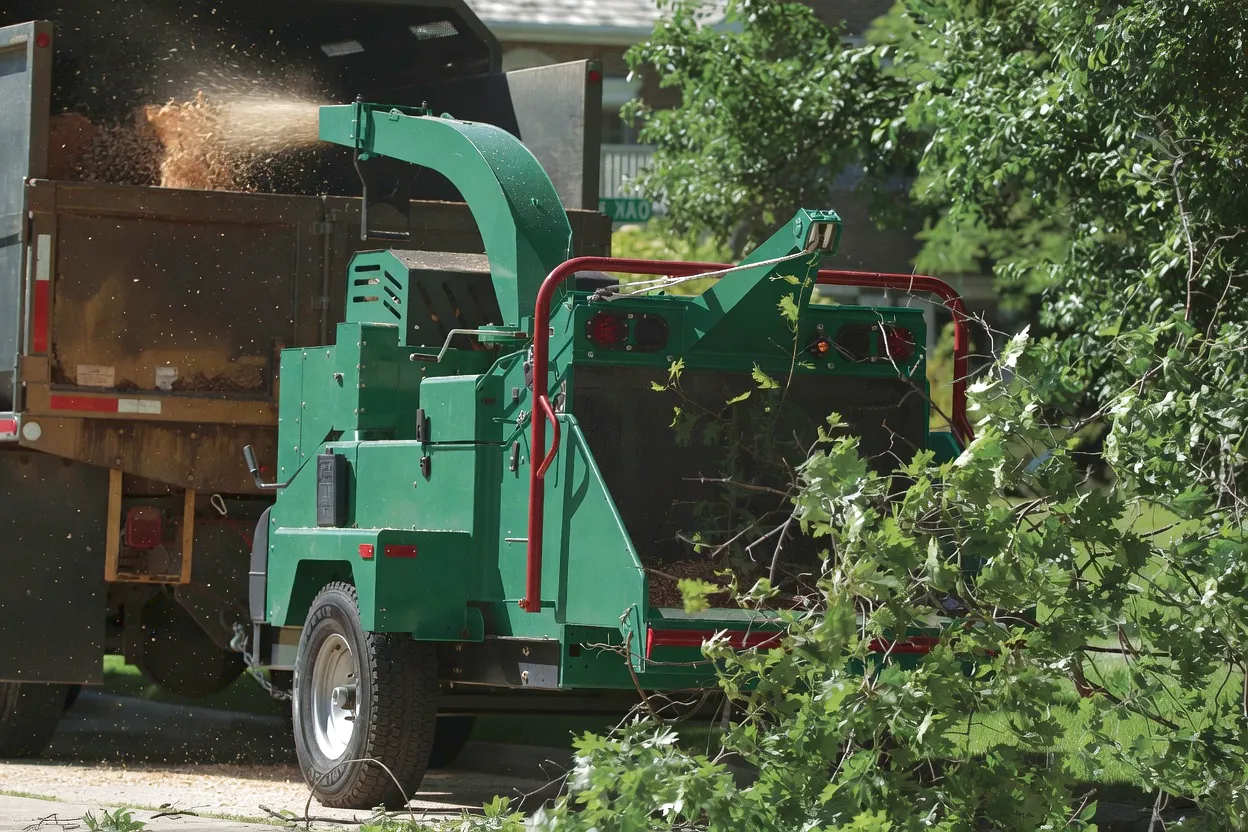
Large-scale chipping operations supplying wood fuel to Drax-type biomass power stations and district heating networks in Yorkshire and the North West. These machines run at very high duty cycles, often eight to twelve hours per day, and the PTO shaft friction clutch slip settings must be precisely matched to the chipper rated input torque to prevent both premature clutch wear and under-protection of the drivetrain. Ever Power supplies shafts with adjustable friction torque clutch assemblies for this category.
Farm estate management across the agricultural heartlands of Lincolnshire, East Anglia, and the Welsh Marches represents a third substantial demand centre for wood chipper PTO shafts. Estate managers and farm forestry contractors use chippers to process hedge trimming arisings, orchard prunings, and small roundwood from copse thinning into mulch for fruit and vegetable production systems, or for sale as landscaping bark. The shafts in this context tend to be lower specification than industrial forestry equivalents — typically rated to 800 to 1,500 Nm — but they face the challenge of extended storage between seasonal uses, which places a premium on corrosion resistance of the profile tube bore and the sliding surfaces. Ever Power phosphate-and-oil internal treatment combined with external powder coating has proven particularly well-suited to the UK farm estate context, where machinery often spends several months between active seasons exposed to the notoriously damp British climate.
Product Technical & Performance Specification Table
| Parameter | Series L (Light) | Series S (Standard) | Series H (Heavy) | Series G (Super Heavy) |
|---|---|---|---|---|
| Nominal Torque (Nm) | Up to 800 | 800 – 1,600 | 1,600 – 3,500 | 3,500 – 7,500 |
| Peak Torque Capacity (Nm) | 2,000 | 4,000 | 8,000 | 18,000 |
| Operating Speed (rpm) | 540 / 1000 | 540 / 1000 | 540 / 1000 | 1000 |
| Max Joint Angle (degrees) | 25 | 25 | 20 | 15 |
| Telescoping Range (mm) | 150 – 300 | 200 – 400 | 250 – 500 | 300 – 600 |
| Tube Profile | Lemon / Star | Star / Triangle | Triangle / Square | Square / Keyway |
| Overload Protection | Shear bolt | Shear bolt / Friction slip | Friction slip / Cam clutch | Cam clutch / Ratchet |
| Yoke Connection — Tractor End | 1-3/8″ 6-spline | 1-3/8″ or 1-3/4″ 6-spline | 1-3/4″ 20-spline | 2″ 20-spline / Custom flange |
| Yoke Material | 20CrMnTi forged | 20CrMnTi forged | 20CrMnTi forged | 42CrMo4 forged |
| Guard Type | Plastic cone guard | Plastic or steel | Steel guard + chain | Heavy steel guard + chain |
| Grease Nipple Interval | 50 hours | 50 hours | 25 hours | 25 hours |
| Certifications | CE | CE | CE / ISO 9001 | CE / ISO 9001 / Custom |
Core Technical Advantages for Wood Chipper Applications

Multi-disc friction slip clutches with precisely calibrated spring preload provide repeatable overload release torques within plus or minus 5 percent of the set value, far tighter than the 15 to 20 percent tolerances typical of cheap shear bolt alternatives. For wood chipper applications, this precision means the clutch reliably engages at the calibrated point every time a jam occurs, rather than sometimes allowing through damaging excess torque and sometimes slipping unnecessarily at normal operating load. The clutch resets automatically after the jam clears, avoiding the downtime associated with shear bolt replacement during a commercial chipping contract.
The profile tube bore and the inner tube outer profile are machined to a sliding fit tolerance of H7/f6 after hardening and before the phosphate treatment is applied. This tight tolerance ensures that the sliding function requires only low axial force — typically under 50 N — which prevents fretting on the surfaces during the constant micro-displacements that occur at the tractor hitch during field operation. Low sliding force also means that the profile does not bind and resist the telescoping motion needed to accommodate length changes, a failure mode that can cause catastrophic shaft buckling or tractor PTO stub overload if the profiles seize under load.
The phased double-Cardan design used in Ever Power Series H and G shafts for wood chipper duty provides constant velocity output at joint angles up to 20 degrees, which is essential for chippers attached to tractors operating on slopes or with significant hitch height differences. This eliminates the cyclic speed variation inherent in single-joint shafts that creates a once-per-revolution torque ripple, which at 1000 rpm produces a 16.7 Hz vibration — right in the range most likely to excite natural frequencies in the chipper frame and cause premature fatigue cracking of welded joints in the machine housing.
All Ever Power PTO drive shafts for the UK market are supplied with CE-marked rotating guard assemblies that satisfy the requirements of the Provision and Use of Work Equipment Regulations 1998 and the Supply of Machinery (Safety) Regulations 2008. Guards are attached to the implement frame via a non-rotating anchor chain with a galvanised shackle, and the guard profile is designed to prevent the commonly observed failure mode where a loose strap or rope winds around an unguarded shaft and creates a dangerous entanglement hazard for the operator. Health and Safety Executive inspection records consistently identify unguarded or poorly guarded PTO shafts as among the most frequent serious injury mechanisms in UK agricultural and forestry work.
Ever Power: Manufacturing Excellence and Custom Shaft Engineering
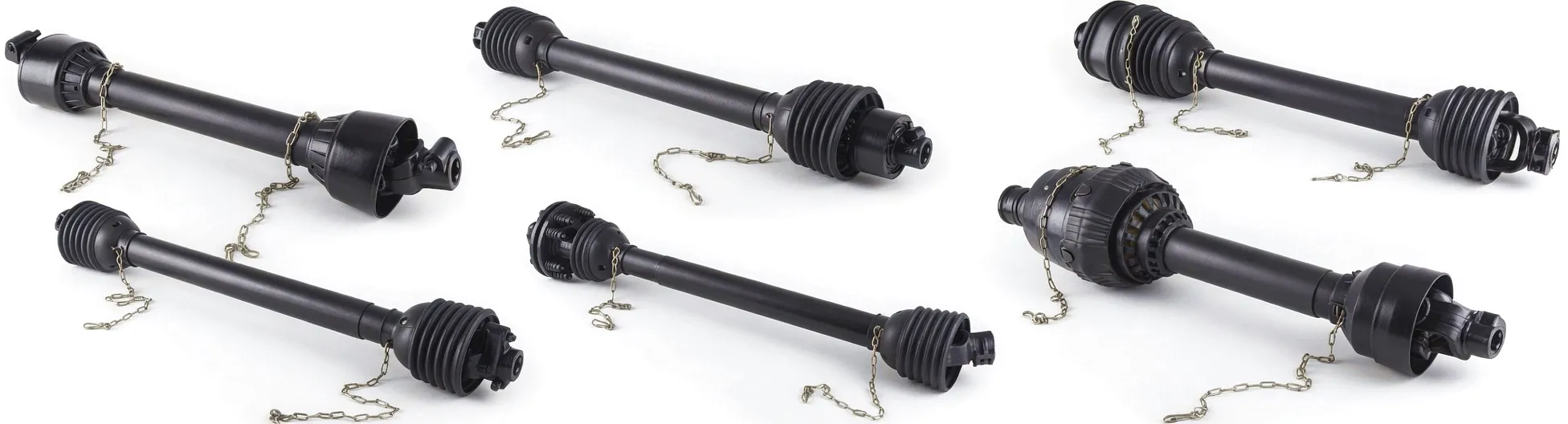
Ever Power operates a dedicated PTO drive shaft production facility with over 60 machining centres, heat treatment furnaces, and precision inspection equipment. The factory holds ISO 9001:2015 quality management certification and produces shafts to both standard catalogue specifications and full customer-specific engineering drawings. For wood chipper OEM manufacturers and fleet operators across the UK, this means a genuine ability to supply shafts dimensioned to the exact input shaft configuration, clutch setting, and guard profile of a specific machine rather than an approximation that requires field adaptation.
The customisation capability at Ever Power extends to every element of the shaft assembly. Yoke bore profiles can be produced in any standard or non-standard spline count and pitch diameter, with keyway, interference fit, or quick-release locking collar options. Tube lengths are cut to order in 5 mm increments, eliminating the over-length shaft that is a common source of binding and vibration in installations where the shaft is too long for the machine hitch-to-implement distance range. Clutch slip torque settings can be calibrated by the factory against customer-supplied torque specifications, with each completed clutch assembly tested on a dedicated torque verification rig and supplied with a traceable test certificate — a requirement increasingly specified by UK agricultural machinery manufacturers seeking to meet their own product liability obligations under the Consumer Rights Act 2015.
Minimum order quantities for custom shaft production are kept low — typically 10 to 25 units depending on complexity — making Ever Power custom capability accessible not just to large OEM assembly lines but to small and medium chipper manufacturers in the West Midlands and East Anglia who produce specialist machines for niche markets such as biomass energy contracts and estate management operations. Lead times for custom shafts run to 4 to 6 weeks from drawing approval, with standard catalogue items available for immediate despatch from held stock.
Yoke bores, tube lengths, clutch settings, guard profiles — all produced to customer DXF or STEP drawings with full dimensional inspection reports.
Every friction slip clutch assembly tested on dedicated rig, certified to within 5% of set point. Traceable documentation for OEM product liability compliance.
Standard catalogue shafts in stock for next-day UK shipping. Custom orders from 10 units, 4–6 weeks delivery from drawing approval. Pallet and part-load shipping to Birmingham, Sheffield, Bristol, Leeds and all UK distribution centres.
Full quality management system, inbound material certification, in-process dimensional inspection, and outgoing product audit. CE declarations of conformity supplied with every batch.
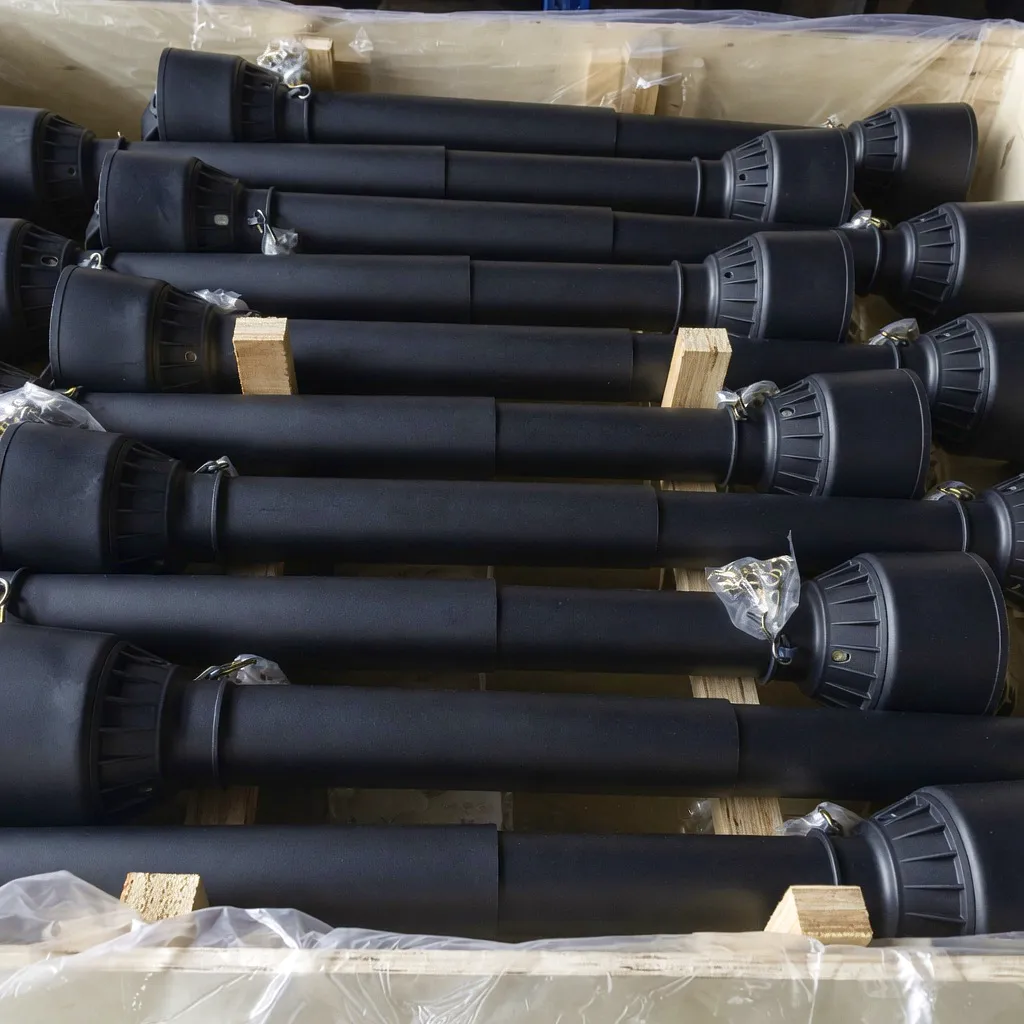
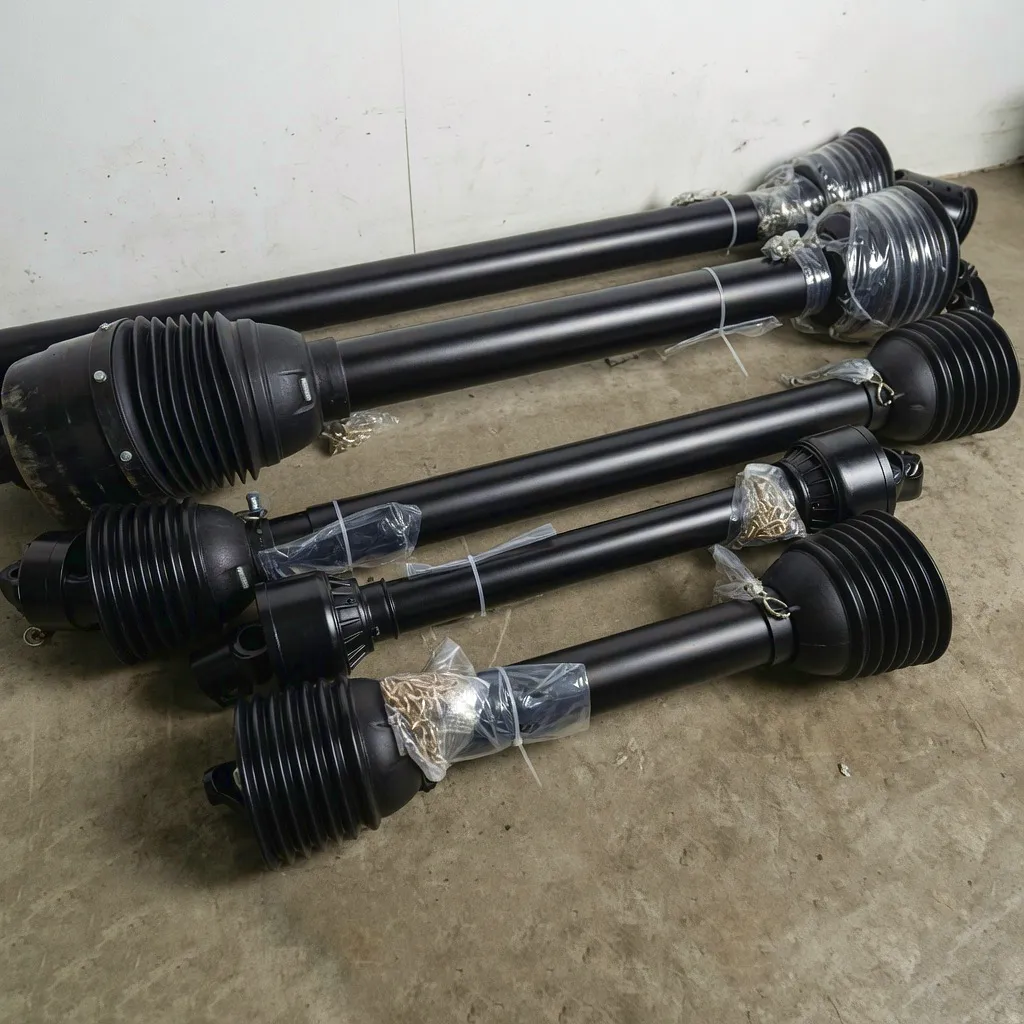
Customer Success Story: Woodland Biomass Contractor, Shropshire
Marches Woodland Services Ltd, a family-run contractor based outside Ludlow in the Shropshire Hills Area of Outstanding Natural Beauty, operates a fleet of three drum chippers processing hardwood coppice and mixed woodland thinnings under long-term contracts with the Forestry Commission and several private estates. Their machines run between 180 and 220 days per year through the autumn and winter harvest season, processing everything from soft willow coppice on riverside sites to dense mature oak from estate woodlands on the Welsh Marches.
Through two successive seasons the company had been experiencing repeated cross and bearing kit failures on the implement-end joints of their three machines, typically after around 60 to 80 hours of seasonal use. The failures were causing downtime at the worst possible time — mid-contract during the peak chipping period — and the replacement shafts sourced through a local agricultural merchant were of inconsistent quality, with one exhibiting a yoke bore that did not fully seat on the chipper input spline and had to be returned. The total cost across the two seasons, including machine downtime, emergency part sourcing, and contract penalties, came to a figure that the company director described simply as “significant enough to make us rethink the whole supply chain.”
On the recommendation of a fellow contractor they had met at the Midland Machinery Show in Stoneleigh, they contacted Ever Power to discuss a custom shaft solution. The Ever Power technical team reviewed the failure analysis — which showed fatigue cracking originating at the bearing cup journal fillet radius on the cross, indicating the original shafts were manufactured to inadequate case hardness depth — and proposed a custom Series H shaft with a transition radius increased from 0.5 mm to 1.2 mm at the trunnion-to-flange junction, carburised to 1.3 mm case depth, and fitted with a 1,800 Nm rated friction slip clutch. The clutch setting was determined from a measured torque recording the customer supplied, taken from a data logger fitted to one of the chippers during a typical hardwood oak chipping session.
Twenty-four custom shafts — eight per machine — were manufactured and delivered within six weeks of drawing approval. Three full seasons later, with over 550 operating hours accumulated across the fleet, not a single cross or bearing kit failure has been recorded. The company has extended their arrangement to include a standing order for annual inspection kits supplied by Ever Power, and has begun specifying the same shaft design for a fourth machine being added to the fleet for the coming season contracts in the Wyre Forest complex north of Bewdley.
What UK Wood Chipper Operators Say About Ever Power PTO Shafts
“The friction slip clutch tolerance on the Ever Power shafts is genuinely impressive. We had been used to clutches that would slip at anything from 1,400 to 2,100 Nm when they were supposed to be set at 1,800. The Ever Power units hold within about 80 Nm of the set point every time. That precision made an immediate difference to our oak-processing work in the Forest of Dean where you can go from clean grain to a knotted section in a single branch and the shaft needs to react correctly every time.”
“We run a mixed fleet of disc and drum chippers for municipal tree surgery contracts across the Bradford and Leeds area, and shaft interchangeability has always been a headache with our previous suppliers. The Ever Power custom programme allowed us to standardise on a single shaft specification that fits both machine types with different yoke inserts. That has taken a significant overhead out of our parts management and means our fitters can swap a shaft in under 20 minutes without consulting the original machine documentation.”
“Price was obviously part of the evaluation when we first approached Ever Power, but what actually closed the decision was the technical depth of the proposal they put together. They came back to us with a failure mode analysis of the previous shaft design, a proposed engineering change with supporting calculations, and a delivery schedule that we could actually plan a season around. That level of engagement from a supplier at this price point was unexpected and made the whole process straightforward. The shafts have been running without a single warranty issue through two full seasons on our wood energy chipping contracts in Lincolnshire.”
PTO Drive Shaft Maintenance for Long-Life Wood Chipper Service
Frequently Asked Questions About PTO Drive Shafts for Wood Chippers in the UK
Ready to Source PTO Drive Shafts for Your Wood Chipper Fleet?
The Ever Power engineering team is ready to review your chipper specifications, recommend the right shaft series and protection device, and provide a detailed quote. Whether you need standard replacement units or a fully custom-engineered driveline, we have the manufacturing capability and technical depth to deliver it.