Central Gearbox in Rotary Tillers: Engineering Precision for Modern UK Agriculture
par ep | Juil 1, 2026 | application
Agricultural Power Transmission
Central Gearbox in Rotary Tillers: Engineering Precision for Modern UK Agriculture
A deep technical guide to the agricultural gearbox that drives the heart of rotary cultivation — from working principles and material science to real-world application in British farmland.
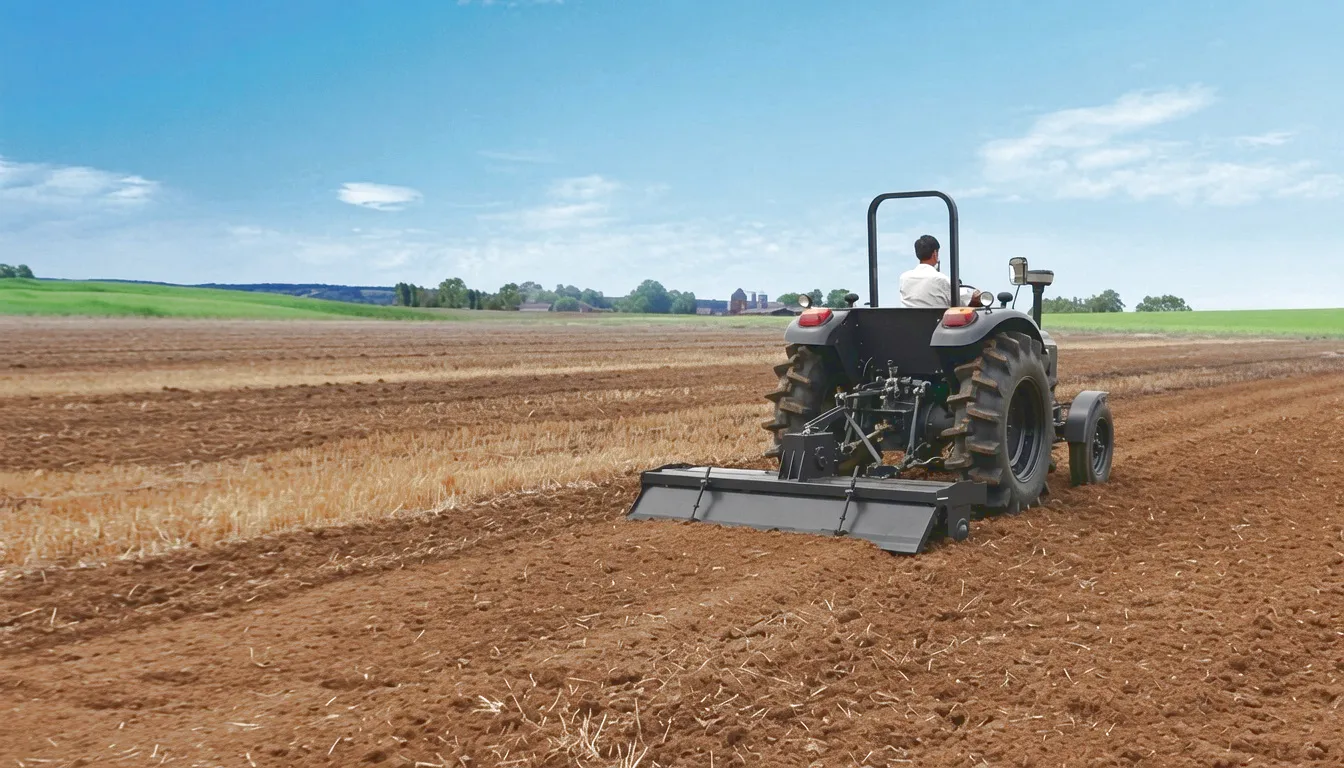
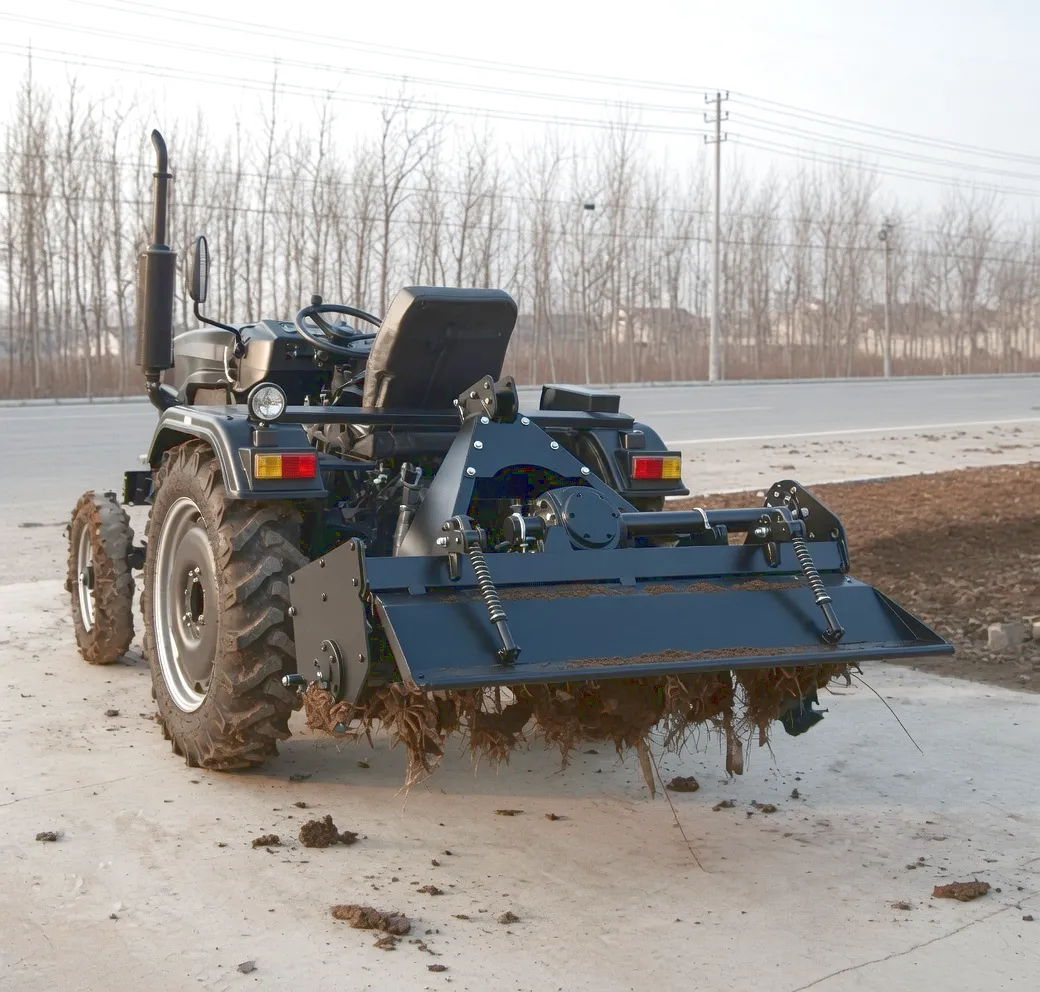
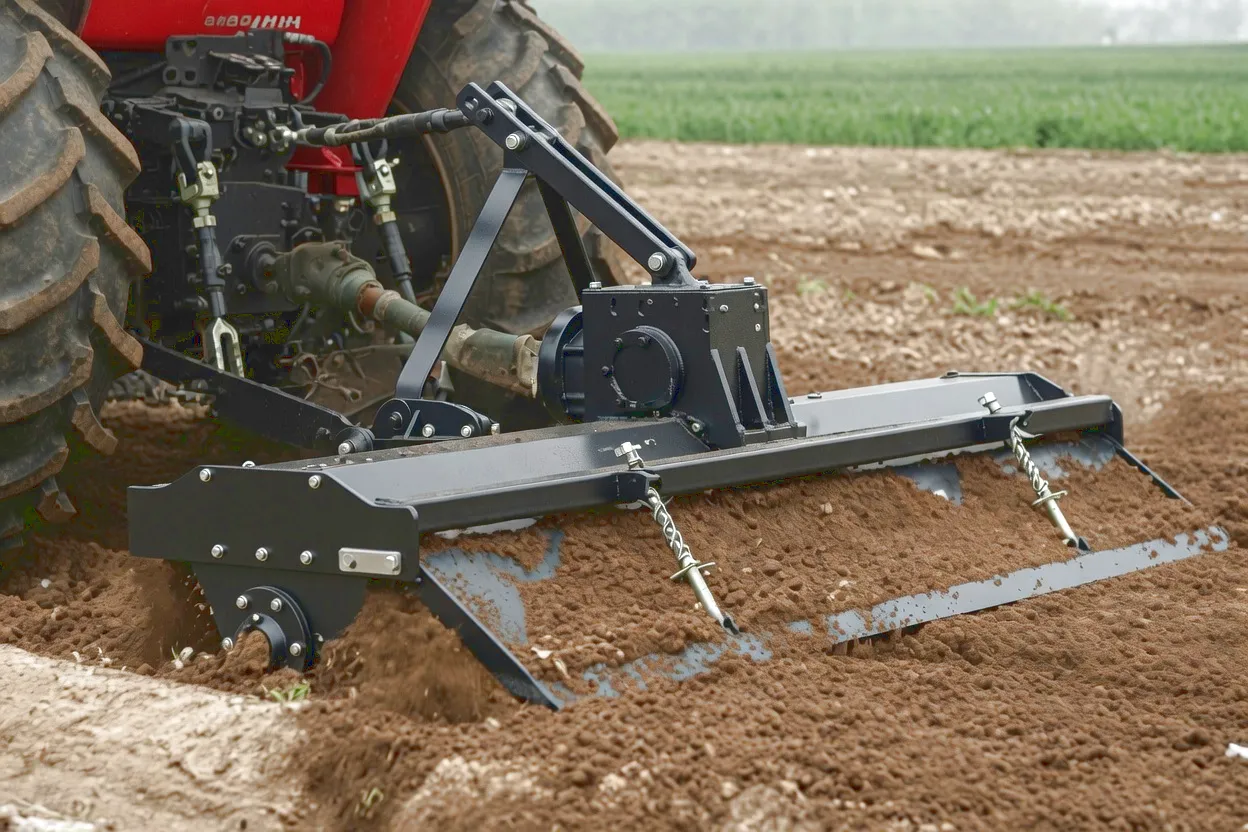
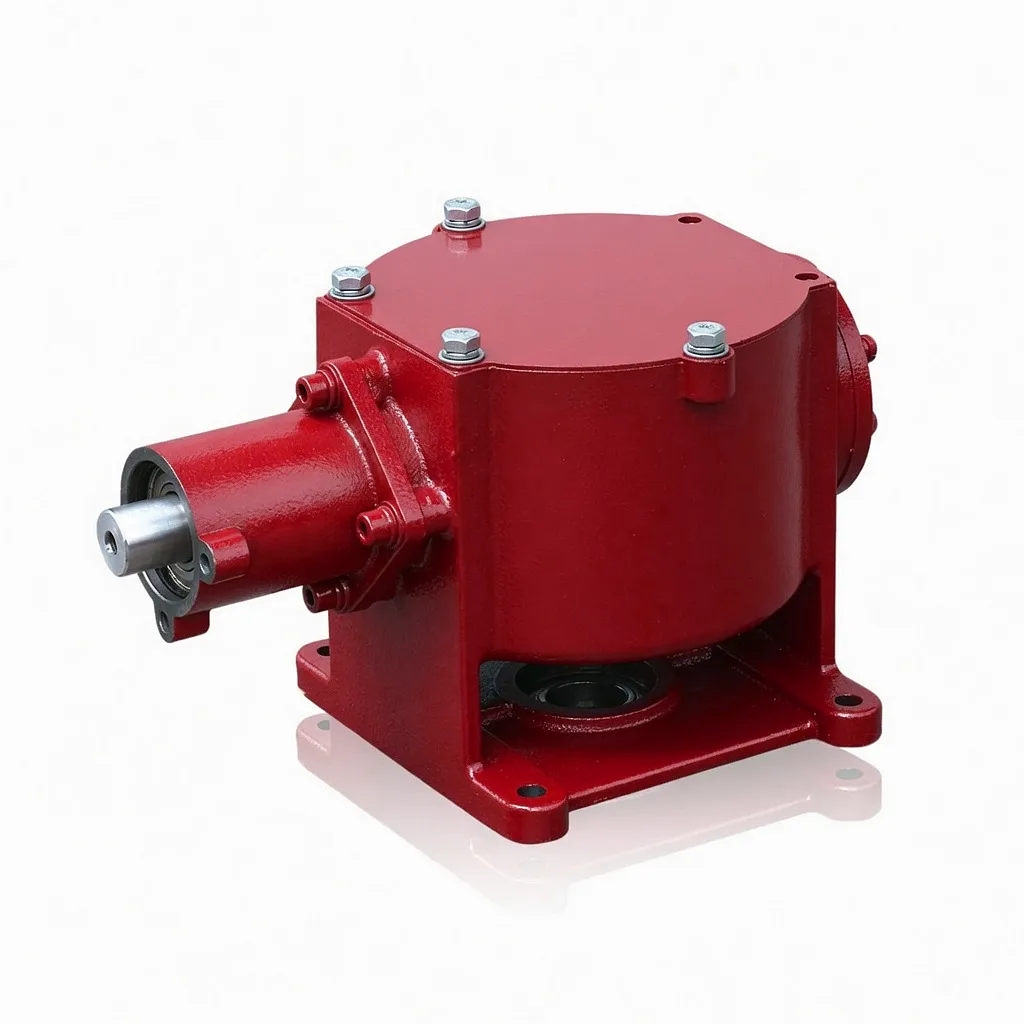
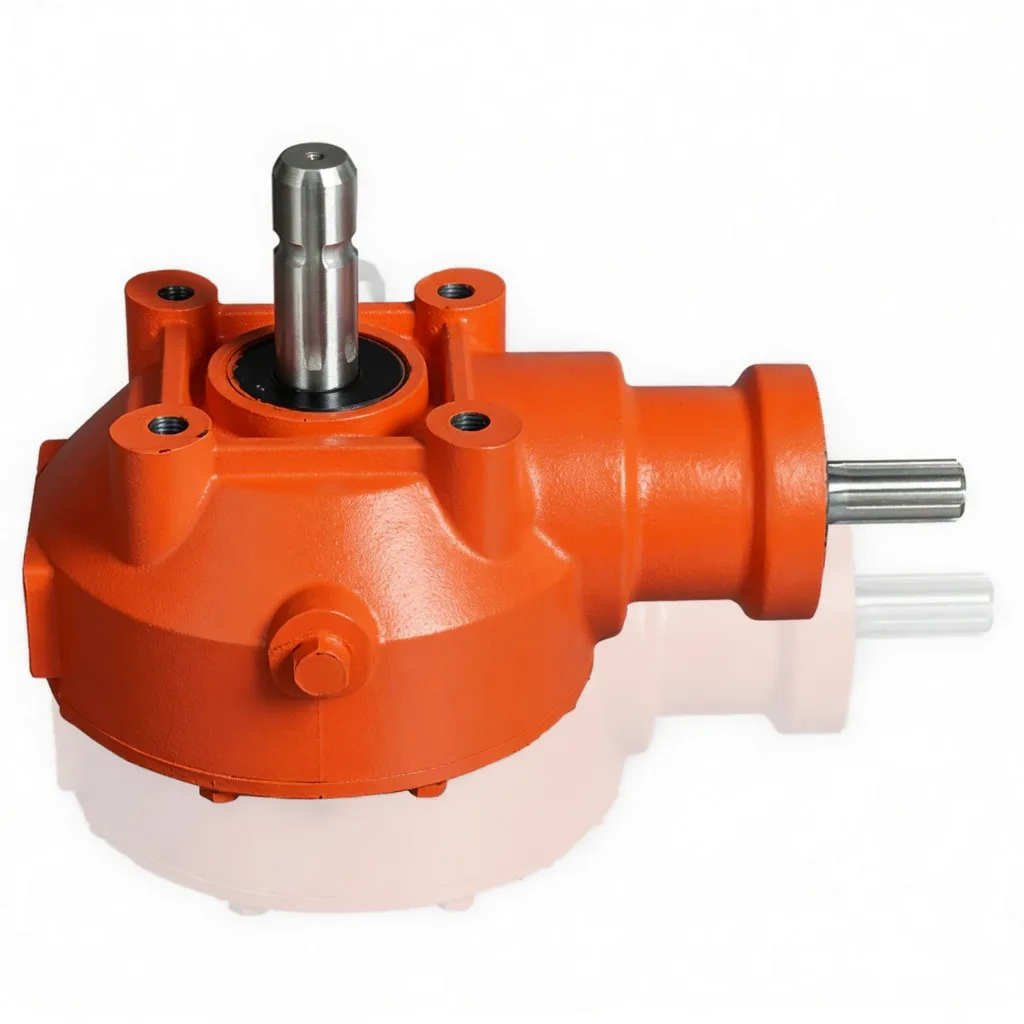 The rotary tiller has long been one of the most versatile and widely deployed soil preparation implements in British agriculture. From the clay-heavy fields of the East Midlands to the lighter soils of East Anglia, these machines are expected to perform relentlessly through wet springs and dry autumns alike. At the mechanical heart of every rotary tiller sits a component that most operators never think about until it fails: the central gearbox, also called the central drive gearbox or main transmission housing. This is the agricultural gearbox responsible for receiving rotational power from the tractor’s power take-off shaft and distributing it to the rotor blades at precisely the right speed and torque to break, turn, and refine soil without overloading the machine or the tractor. Without a precisely engineered central gearbox, even the most powerful tractor would be unable to translate its engine output into the fine, controlled cultivation action that modern farming demands. Understanding how this component works, what materials make it durable, and which design choices separate good gearboxes from great ones is critical knowledge for any purchasing manager, farm machinery dealer, or agricultural engineer sourcing equipment for UK conditions.
Looking for a precision-engineered agricultural gearbox for your rotary tiller? Contact our technical team today.
✉ Get a Free Quote Now
How the Central Gearbox of a Rotary Tiller Actually Works
⚙
Power Input Stage
Power enters the central gearbox through an input shaft directly coupled to the tractor’s PTO stub, rotating at either 540 rpm or 1,000 rpm depending on the tractor specification. British tractors used in arable operations — such as those common in Lincolnshire and Cambridgeshire fenlands — typically run at 540 rpm for most tillage work, providing a strong torque base. The input shaft carries an involute spur or bevel gear that meshes with the main transmission gear cluster. This initial gear stage determines the primary speed reduction ratio, which in most rotary tiller central gearboxes falls between 1.8:1 and 3.5:1, establishing the baseline rotor speed before the side chain drives further adjust it.
⇆
Bevel Gear Transmission
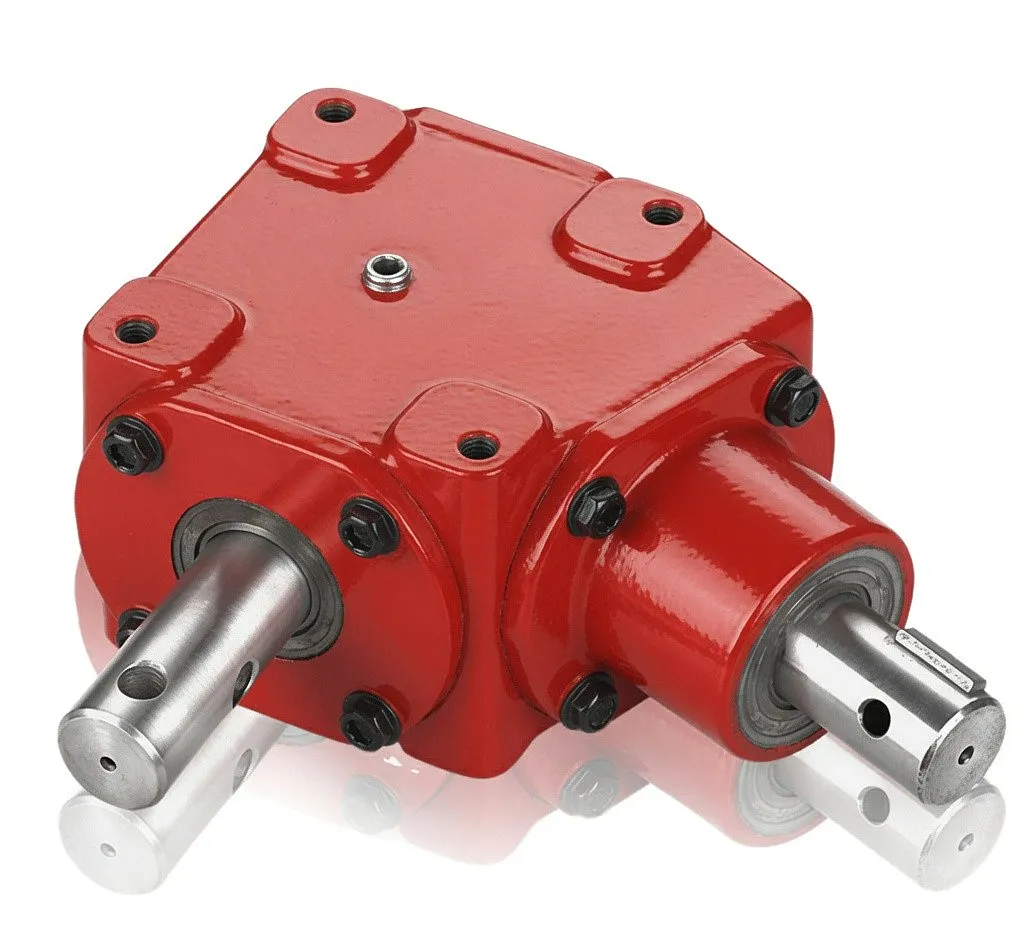
The defining mechanical element in any rotary tiller central gearbox is the bevel gear set. The input shaft, which runs parallel to the tractor’s direction of travel, must redirect rotational force by 90 degrees to drive the rotor shaft running perpendicular across the machine’s working width. This is achieved through a precisely matched pair of spiral bevel gears — a design chosen specifically because spiral bevel gears offer smoother engagement, lower noise generation, and dramatically higher torque capacity than straight-cut bevel gears. The spiral tooth form distributes the contact load across multiple teeth simultaneously, reducing stress concentration and prolonging service life even in continuous heavy-duty soil work. In a properly designed agricultural gearbox for rotary tillers, the bevel gear mesh is set with a controlled backlash between 0.10 mm and 0.25 mm, ensuring quiet operation while preventing binding under thermal expansion during sustained field work.
✖
Output Distribution & Side Drives
Once the bevel gears redirect the power through 90 degrees, the output shaft of the central gearbox sends drive to both left and right sides of the rotor via chain drives, belt drives, or in larger professional units, additional gear stages housed in side gearboxes. The central agricultural gearbox functions as the master power distribution point, ensuring that both halves of the rotor receive equal torque at all times. In wider tillers — such as the 3-metre or 4-metre working width models common on larger UK arable farms — the torque demand on the central gearbox is substantial, often exceeding 1,200 Nm under peak load conditions when striking compacted soil or encountering buried debris. Torque limiters or shear bolt assemblies are often integrated at this output stage to protect the entire drivetrain from shock overloads.
Core Materials: What Goes Into a Professional Agricultural Gearbox
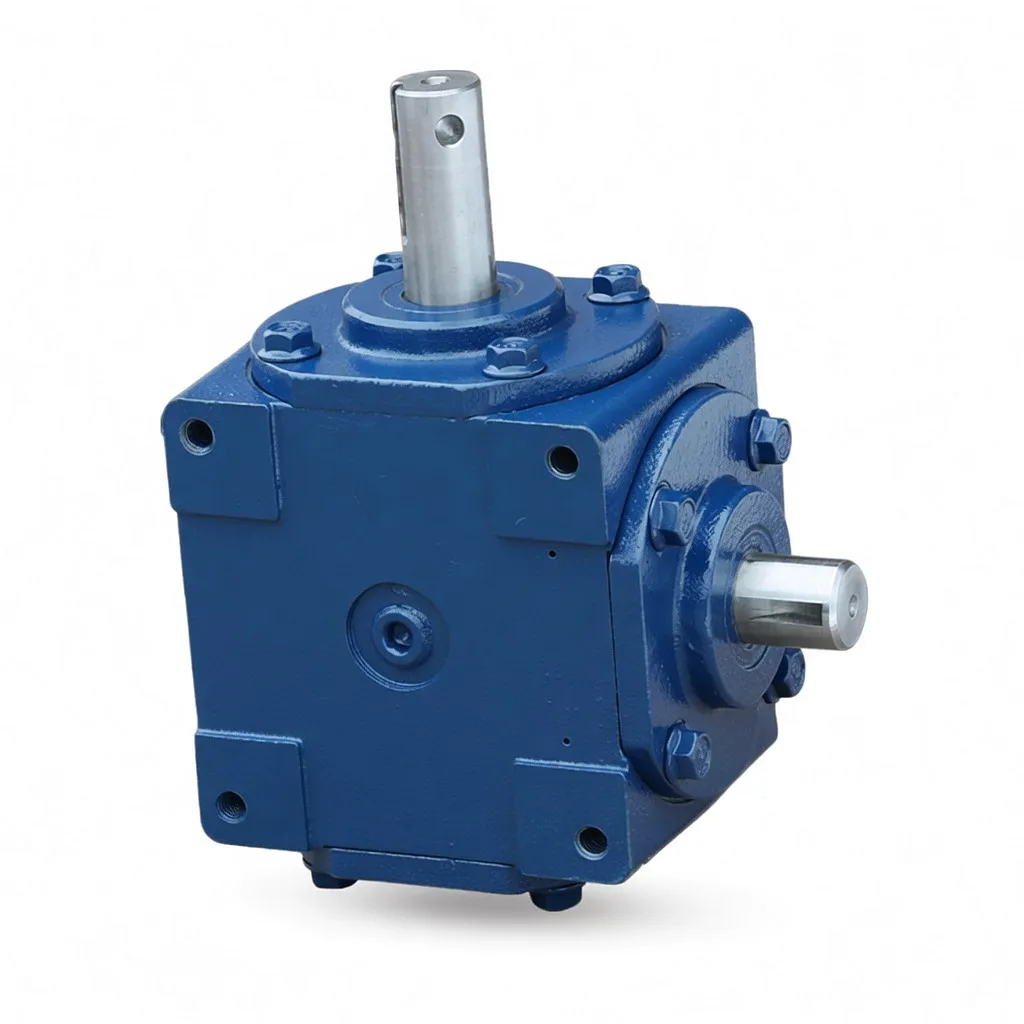
The lifespan and reliability of a central gearbox for rotary tillers depends almost entirely on the quality of materials selected at the design stage. Agricultural operating environments are among the most demanding in all of mechanical engineering: constant vibration, shock loads from hidden stones, temperature cycling between cold morning starts and heat-soaked afternoon operations, and relentless exposure to dust, soil moisture, and fertiliser residue. Each component within the gearbox must be chosen to withstand this specific combination of stresses over thousands of operating hours.
The housing itself is manufactured from grade GG25 or GG30 grey cast iron in most production units, or from nodular (ductile) cast iron EN-GJS-500-7 in heavy-duty premium models. Nodular iron is preferred for high-performance applications because its graphite exists in spheroidal form rather than flake form, giving it a tensile strength approaching 500 MPa with good elongation — properties essential for resisting cracking under shock loads. The outer walls of the housing are ribbed for structural rigidity and heat dissipation without adding unnecessary weight that would make tractor implement management more difficult.
Gear blanks are typically forged from 20CrMnTi or 20CrMnMo alloy steel — chromium-manganese alloys that respond exceptionally well to case-hardening processes. After rough machining, the gears are carburised and case-hardened to achieve a surface hardness of 58-62 HRC at a case depth of 0.8-1.4 mm, while maintaining a tough core hardness of approximately 33-48 HRC. This combination of hard surface and resilient core gives the gears the ability to resist pitting and scuffing from abrasive soil contamination while absorbing the bending stress of heavy torque loads without fracture. Shafts are machined from 42CrMo4 alloy steel — the same material widely used in crankshaft manufacturing — and are induction-hardened at the bearing journals and gear seat locations for dimensional stability throughout the gearbox service life.
Housing Material
Nodular Cast Iron EN-GJS-500-7
Tensile strength up to 500 MPa, excellent shock resistance
Gear Material
20CrMnTi Alloy Steel
Case hardness 58-62 HRC, case depth 0.8-1.4 mm
Shaft Material
42CrMo4 Alloy Steel
Induction hardened journals, core HRC 33-48
Sealing System
Double-lip Oil Seals + Labyrinth
IP65-grade protection against dust and water ingress
Technical Performance Parameters: Rotary Tiller Central Gearbox
| Parameter | Light Duty | Medium Duty | Heavy Duty |
|---|
| Rated Input Torque | Up to 450 Nm | 450 – 900 Nm | 900 – 2,200 Nm |
| Input Speed (PTO) | 540 rpm | 540 / 1,000 rpm | 540 / 1,000 rpm |
| Speed Reduction Ratio | 1:1 to 2.5:1 | 2.0:1 to 3.5:1 | 2.5:1 to 5.0:1 |
| Output Shaft Diameter | 35 mm | 40 – 50 mm | 55 – 75 mm |
| Rotor Working Width | 1.2 – 1.8 m | 1.8 – 2.8 m | 2.8 – 6.0 m |
| Gear Module (m) | m4 – m5 | m5 – m7 | m7 – m10 |
| Gear Tooth Hardness | 58 – 60 HRC | 58 – 62 HRC | 60 – 64 HRC |
| Oil Capacity | 0.5 – 0.8 L | 0.8 – 1.5 L | 1.5 – 3.5 L |
| Lubrication Type | ISO VG 220 | ISO VG 220 EP | ISO VG 320 EP |
| Housing Material | GG25 Grey Iron | EN-GJS-400-18 | EN-GJS-500-7 |
| Typical Tractor Power Range | 25 – 55 hp | 55 – 120 hp | 120 – 350 hp |
Core Technical Advantages of a High-Performance Central Agricultural Gearbox
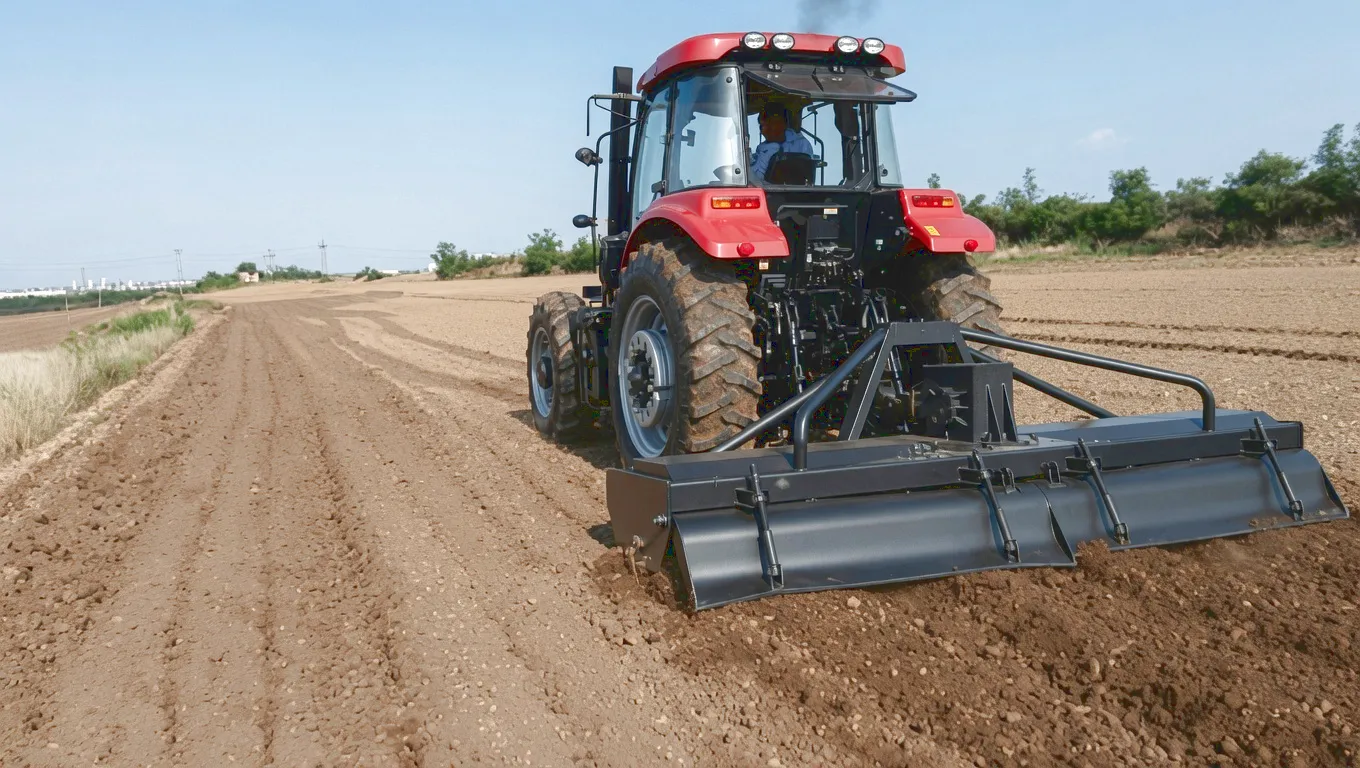
Selecting the right agricultural gearbox for a rotary tiller is not simply a matter of matching shaft diameters and PTO speeds. The engineering choices embedded in the gearbox design — from the geometry of the bevel gears to the surface treatment applied to bearing raceways — determine whether the unit will last one season or ten. UK farm operators and machinery importers who have worked with multiple suppliers consistently identify the following performance characteristics as the most critical differentiators in real-world use.
🌞
High Thermal Stability
Precision-matched bevel gear pairs with correct flank contact patterns maintain stable operation even after several hours of continuous cultivation, preventing the thermal seizure failures that plague lower-grade units when oil viscosity drops in summer field conditions.
⚡
Shock Load Absorption
Forged alloy steel gears with case-hardened flanks and resilient cores act as natural shock absorbers when rotor blades hit stones or compacted clods. The combination of a hard surface and tough core prevents the catastrophic flank fractures that shatter through-hardened gears in identical conditions.
🔒
Superior Sealing Performance
Double-lip radial shaft seals combined with labyrinth channels at the output flanges eliminate oil leaks and prevent abrasive soil particles from reaching bearing surfaces. This is particularly valuable in UK springtime cultivation when wet soil adheres to every component surface and accelerates seal wear on inferior units.
🔧
Modular Interchangeability
Well-designed central gearbox units share common bearing sizes, oil seal dimensions, and housing bolt patterns across a product family. This modularity substantially reduces spare parts inventory costs for dealers and workshops from Sheffield to Exeter who maintain multiple tiller brands in their service portfolio.
📈
High Mechanical Efficiency
Precision-ground spiral bevel gears with optimised tooth profiles achieve overall transmission efficiencies of 96-98%, meaning that very little of the tractor’s PTO power is wasted as heat within the gearbox itself. On 80 kW tractors covering hundreds of hectares per season, even a 2% efficiency improvement translates into meaningful fuel savings and reduced operating cost per hectare.
🏠
Long Overhaul Intervals
A premium agricultural gearbox designed with generously sized tapered roller bearings, adequate lubrication volume, and appropriate oil change intervals of 200-250 operating hours can run for 1,500 to 2,000 hours between major overhauls — a critical requirement for contractors operating in the tight spring cultivation windows typical of UK arable farming schedules.
Application Scenarios: Where Central Gearboxes for Rotary Tillers Perform
🌿
Arable Seedbed Preparation
East Anglia & Yorkshire Wolds
In the intensively farmed arable belts of East Anglia and the Yorkshire Wolds, rotary tillers fitted with high-capacity central agricultural gearboxes are used to produce the ultra-fine seedbeds required for precision drilling of sugar beet, carrot, and onion crops. These crops are notoriously intolerant of cloddy or compacted seedbeds. The central gearbox must maintain consistent rotor speed under variable soil resistance — a performance requirement that demands tight gear tolerances and a high-inertia output shaft design to buffer sudden changes in soil density as the tiller crosses headland tramlines, wheel ruts, or plough furrow boundaries.
🏈
Sports Turf & Golf Course Renovation
Throughout the UK
Compact rotary tillers equipped with precision central gearboxes are widely used across UK golf courses, sports grounds, and lawn renovation projects. In this application, the gearbox must operate at reduced depth and lower torque settings without generating the vibration that damages irrigation pipe networks or disturbs prepared turf surfaces adjacent to the working zone. Golf course groundskeeping teams from Surrey to the Scottish links have adopted rotary tillers with variable-speed drives precisely because fine-tuning the output via the central gearbox’s ratio selection allows operators to match blade tip speed to the grass species and root structure being worked. The agricultural gearbox in these compact tillers typically drives narrower rotors at relatively high speed — up to 250-280 rpm — to create the smooth finish that turf managers demand.
🍇
Vegetable & Market Garden Cultivation
Kent, Herefordshire & Vale of Evesham
The market gardening heartlands of Kent’s Thanet area, Herefordshire’s orchards, and the Vale of Evesham present a demanding mix of soil types and crop spacing requirements. Rotary tillers used between vegetable rows must operate at shallow depths — often just 80-120 mm — with the central gearbox bearing the full brunt of high-frequency engagement and disengagement cycles as the tractor enters and exits bed ends. These start-stop duty cycles create repeated shock loading on the bevel gears and input shaft bearings that is more damaging, in aggregate, than sustained full-depth tillage. Agricultural gearbox designs that incorporate hardened input shaft bearing journals and pre-loaded tapered roller bearing pairs survive these applications significantly better than ball-bearing designs of comparable nominal rating.
👳
Grassland Re-seeding & Renovation
Cumbria, Wales & West Country
Dairy and beef farming regions across Cumbria, Wales, and the West Country regularly require grassland renovation to restore pasture productivity after poaching damage from livestock or the natural decline in grass species composition. Rotary tillers used in surface cultivation and re-seeding operations face particularly challenging conditions in these areas: heavy, wet clay soils with a mat of tough perennial ryegrass roots that wrap around rotor flanges and create enormous resistance spikes through the drivetrain. The central agricultural gearbox in a re-seeding tiller must handle peak torque transients that can exceed the rated figure by a factor of 3 to 5 times. Only gearboxes engineered with significant strength margins beyond the nameplate rating — and equipped with effective torque limiters at the input shaft — survive long seasons of this type of work without bearing or gear failures that force costly mid-harvest stoppages.
🏢
Conservation Agriculture & Minimum Tillage
Midlands & South West England
As UK farmers adapt to Environmental Land Management (ELM) schemes and agri-environment payment structures that reward reduced soil disturbance, shallow-working rotary tillers operating at just 50-80 mm depth have become integral to cover crop destruction and strip-till seedbed creation. In this minimum tillage role, the central gearbox of the rotary tiller must provide reliable high-frequency operation over many hectares without generating excessive vibration that would compact underlying soil structure — the very outcome these farming systems are designed to prevent. Gear mesh quality and bearing preload settings within the agricultural gearbox directly influence the smoothness of rotor operation and the vibration signature transmitted back to the tractor, making precision gear grinding and careful assembly critical to the performance specification.
Manufacturing Excellence
Ever Power: Precision Agricultural Gearbox Manufacturing & Customisation
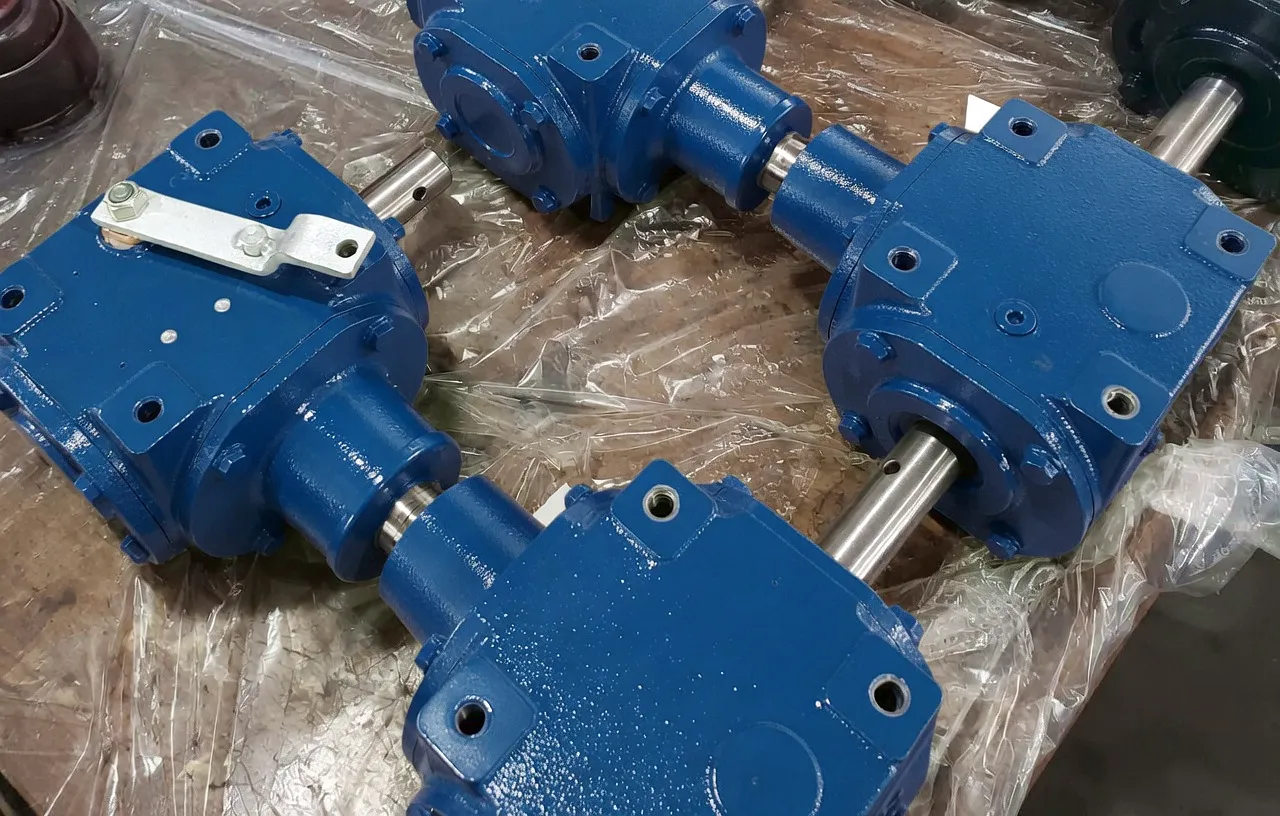 Ever Power has been engineering and manufacturing agricultural gearboxes, PTO transmission components, and precision power transmission products for over two decades. Our manufacturing operations bring together CNC gear-grinding centres, computer-controlled heat treatment furnaces, CMM-verified quality inspection, and a team of application engineers who understand the specific demands of rotary tiller central gearbox service across different soil types, climate zones, and tractor specifications. For UK agricultural machinery importers, OEM tiller manufacturers, and farm machinery dealers seeking a dependable supply partner, Ever Power offers something that mass-production catalogue suppliers cannot: genuine engineering customisation backed by manufacturing precision.
Every central gearbox produced in our facilities undergoes a documented production sequence that includes material certification checks, in-process gear tooth profile verification using Klingelnberg or Gleason gear testing equipment, housing pressure testing for oil seal integrity, and a final run-in test under load before packing and dispatch. Lead times for standard agricultural gearbox models are typically 15-25 working days from confirmed order, with express dispatch options available for urgent replacement requirements. Custom-engineered units — including modified mounting bolt patterns, non-standard shaft diameters, or specific gear ratio requirements for specialist tiller designs — are quoted individually and typically delivered within 35-45 working days from drawing approval.
🏗
Custom Gear Ratios
Engineered to your precise PTO speed and rotor speed requirements, with full load analysis documentation
🔬
OEM Flange Matching
Direct bolt-on replacement flanges matched to existing tiller frames without modification
⚙
Torque Limiter Integration
Factory-fitted shear bolt, friction disk, or cam-and-spring overload protection to your specified trip torque
📦
UK-Compliant Dispatch
Documentation including CE declaration, material test reports, and packing declarations compatible with UK customs clearance
Complete the Drive System: PTO Shaft Products from Ever Power
A high-performance central gearbox delivers its full potential only when paired with an equally well-engineered PTO drive shaft. Ever Power supplies a range of purpose-designed PTO shafts that complement our agricultural gearbox product line, ensuring that the entire power transmission chain from tractor to implement operates with the reliability and efficiency that serious farming operations demand.
🚊
PTO Shaft for Round Balers
Engineered specifically for the demanding shock loads and continuous high-torque operation characteristic of round baler drives, this PTO shaft series features reinforced universal joint crosses, heavy-duty telescopic tubes with high-strength weld seams, and CE-compliant guard assemblies. The shaft is designed to maintain constant velocity and smooth power delivery even at the high articulation angles generated when a tractor turns at headlands with a baler attached, a scenario that rapidly fatigues inferior shaft designs. Available in multiple spline configurations to suit a wide range of European and British tractor PTO stubs.
View PTO Shaft for Round Balers →
🚒
PTO Shaft Replacement for John Deere Square Balers
This direct-fit replacement PTO shaft is manufactured to match John Deere square baler dimensional specifications with precision, allowing operators to swap worn or damaged original shafts without the alignment and fitment challenges that can arise with generic replacement parts. The shaft uses forged steel yoke bodies machined to tight dimensional tolerances, matching spline lengths and tooth forms, and an overall assembled length within 2 mm of the OEM specification. For UK farms and contractors running John Deere machinery — a common sight from the cereal fields of Lincolnshire to the hay meadows of Somerset — this is a proven, cost-effective servicing solution that maintains machine performance without the premium price of dealer-supplied parts.
View John Deere Square Baler PTO Shaft →
Customer Success: Birmingham-Based Agricultural Machinery Distributor
Case Study
Midlands Agricultural Machinery Ltd, Birmingham
Agricultural machinery wholesale distributor serving the English Midlands
98.2%
Field Reliability Rate
3 Yrs
Partnership Duration
Midlands Agricultural Machinery Ltd is a wholesale distributor based in Birmingham, supplying independent farm machinery dealers and farm supply merchants across Staffordshire, Warwickshire, and Worcestershire. In 2023, they were experiencing a persistent problem with their then-current central gearbox supplier: field failure rates of approximately 6-8% within the first 200 hours of operation on rotary tillers sold to Midlands arable farmers. The failures were concentrated in the bevel gear set and input shaft bearing, and were consistently triggered by the heavy, stone-laden mixed soils common in the south Staffordshire belt — ground conditions that generate significantly higher shock loads than the lighter soils of East Anglia.
After approaching Ever Power through a referral from a Continental European tiller OEM, the company submitted soil condition data, existing gearbox failure samples, and their target tractor power range to Ever Power’s application engineering team. Ever Power recommended a modified version of their EP-CTG-750 series central gearbox with upgraded tapered roller bearing pairs at the input shaft, a modified gear module stepping up from m6 to m7 on the bevel gear set, and a pre-fitted shear bolt torque limiter set at 850 Nm. A trial batch of 45 units was despatched from Ever Power’s facility and delivered to Birmingham within 22 working days. After one full cultivation season covering approximately 8,500 tiller operating hours across the trial units combined, not a single central gearbox failure was reported. Midlands Agricultural Machinery Ltd subsequently placed a standing order for 340 units annually, and has since extended the partnership to include Ever Power’s side gearbox range for wider tiller models.
What Our Customers Say
★★★★★
“Since switching to Ever Power’s central gearboxes for our rotary tiller range, we have not had a single warranty call-back related to gearbox failure during the spring cultivation season. The bevel gear quality is noticeably better than what we were using before — the tooth contact pattern is clean and the units run quiet from day one. For farming conditions in this part of the Midlands, that level of reliability is non-negotiable.”
James Whitfield
Technical Director, Midlands Agricultural Machinery Ltd, Birmingham
★★★★★
“The customisation service from Ever Power was what impressed us most. We submitted our dimensional requirements, our tractor power rating range, and our failure mode history, and their engineering team came back with a specific recommendation within three working days. They understood straight away why the south Staffordshire soils were causing our previous gearboxes to fail, and they gave us a solution rather than just offering a standard catalogue part. That level of technical engagement is rare at this price point.”
Rachel Pemberton
Procurement Manager, Staffordshire Farm Machinery Supplies, Stafford
★★★★★
“We operate large-format rotary tillers on contract across several thousand hectares of Lincolnshire arable land each season. Ever Power supplied us with heavy-duty central gearboxes rated for our 4-metre working width machines, complete with torque limiters calibrated exactly to our specification. After two full seasons covering an estimated 4,200 combined machine hours, I can report that the gearboxes are performing without issue. Crucially, the units ran cool even during extended high-load periods in August when we were dealing with particularly dry and hard soil conditions.”
David Holt
Owner, Holt Contracting Services, Lincoln, Lincolnshire
Frequently Asked Questions About Agricultural Gearboxes for Rotary Tillers
How do I know which central gearbox ratio is correct for my rotary tiller when operating at 540 rpm PTO on a UK tractor?
The correct gear ratio depends on the target rotor blade tip speed for your specific soil type and cultivation depth. For typical UK arable seedbed work, a rotor speed of 160-220 rpm at the tine flange is standard, which means a reduction ratio of approximately 2.5:1 to 3.4:1 when driving from a 540 rpm PTO. Heavier clay soils common in the Midlands and East Anglia generally require a slightly higher reduction ratio — and therefore more torque at the rotor — compared with lighter sandy loams. Always check the tiller manufacturer’s recommendation first, then cross-reference with the gearbox supplier’s application data for your specific soil classification.
What is the typical price range for a replacement central agricultural gearbox for a mid-range rotary tiller in the UK market, and where can I get a quote from a reliable supplier?
Replacement central gearboxes for mid-range rotary tillers typically range from approximately £180 to £650 in the UK market, depending on torque rating, gear module, housing material grade, and whether the unit includes an integrated torque limiter. OEM-branded replacements from major tiller manufacturers generally sit at the higher end of this range. Well-specified manufactured units from specialist suppliers like Ever Power offer comparable engineering quality at more competitive cost levels, particularly for contractors or dealers purchasing in volume. For an accurate quote matched to your specific tiller model, shaft specifications, and required gear ratio, contact Ever Power directly at [email protected] with your gearbox dimensions and current application details.
Which type of oil should I use in a rotary tiller central gearbox, and how often should it be changed for UK farming conditions?
Most rotary tiller central gearboxes specify ISO VG 220 EP gear oil for medium-duty units, with ISO VG 320 EP recommended for heavy-duty models operating in sustained high-torque conditions. In UK conditions, where springtime ambient temperatures can drop below 5°C early in the morning, a synthetic or semi-synthetic gear oil offers better cold-start lubrication than straight mineral oil. The first oil change should be carried out after approximately 50 operating hours on a new or rebuilt gearbox to flush any metal particles from the running-in process. Subsequent change intervals are typically 200-250 hours for mineral oils and 350-500 hours for quality synthetic lubricants, or at least once per year regardless of hours, whichever comes sooner.
How can I tell when the central gearbox on my rotary tiller needs replacing rather than just repairing, and what are the warning signs to watch for during a season?
The clearest warning signs that a central gearbox is approaching end of service life include: persistent oil leaks from shaft seals that return within a few hours of resealing, suggesting worn or scored shaft journals; a grinding or whining noise during operation that increases with load, indicating gear flank wear or bearing deterioration; visible oil discolouration towards black or dark grey, suggesting metallic debris from gear or bearing wear in the lubricant; and excessive housing temperature — more than 15-20°C above ambient — during normal operation, which points to bearing preload loss or inadequate oil level. When any of these signs appear alongside measured backlash significantly greater than the factory specification, replacement rather than repair is usually the more cost-effective route, as reassembling a worn housing with new gears rarely restores original geometric accuracy.
Where in the UK can I find a reliable supplier who offers both standard and custom-engineered agricultural gearboxes for rotary tillers with fast delivery lead times?
UK dealers and machinery importers sourcing central gearboxes for rotary tillers typically work with specialist power transmission suppliers who hold UK stock or can despatch directly from manufacturing facilities in Europe or Asia with documented customs compliance. Ever Power offers both standard catalogue agricultural gearboxes and custom-engineered units designed to precise dimensional and performance specifications. UK shipments are typically despatched within 15-25 working days for standard models and 35-45 working days for custom units, with air freight options available for urgent replacement requirements. Full documentation is provided with each shipment, including material test reports, gear hardness certificates, and CE conformity declarations appropriate for UK import clearance. Enquiries from Birmingham, Sheffield, Manchester, and rural regions throughout England, Wales, and Scotland are handled through [email protected].
What minimum information does an agricultural gearbox supplier need from me when requesting a cost estimate or technical quote for a custom rotary tiller central gearbox?
To provide an accurate engineering assessment and cost estimate, a supplier needs: the tractor PTO speed (540 or 1,000 rpm), the required output shaft speed or gear reduction ratio, the maximum input torque in Nm or the tractor engine power rating in kW, the working width of the tiller, the input and output shaft diameter and spline type if replacing an existing unit, the mounting bolt pattern or flange face dimensions, and any specific environmental requirements such as high dust exposure, frequent water submersion, or extreme temperature ranges. Photographs of the existing gearbox — including the input shaft stub, output flanges, and housing bolt pattern — combined with any available original specification sheets, allow the supplier’s engineering team to recommend a solution far more quickly and accurately than a specification-only inquiry. Ever Power’s technical enquiry team responds to complete enquiries within 2-3 working days.
Ready to Source?
Discuss Your Agricultural Gearbox Requirements With Ever Power
Whether you need a standard replacement central gearbox for a common rotary tiller model or a purpose-engineered unit matched to a specialist tiller design, Ever Power’s application engineering team provides expert guidance and competitive pricing for UK buyers. Send your technical requirements or a brief description of your application to receive a tailored response.