
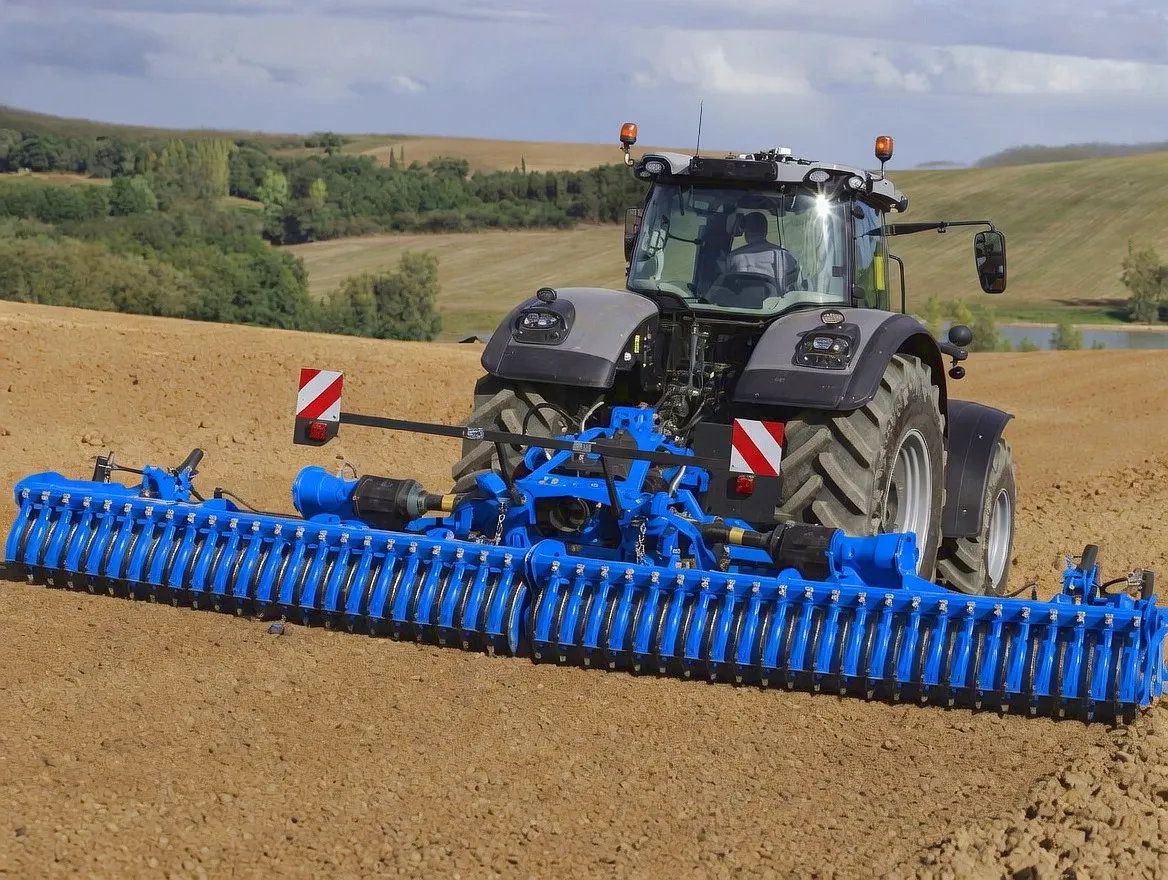
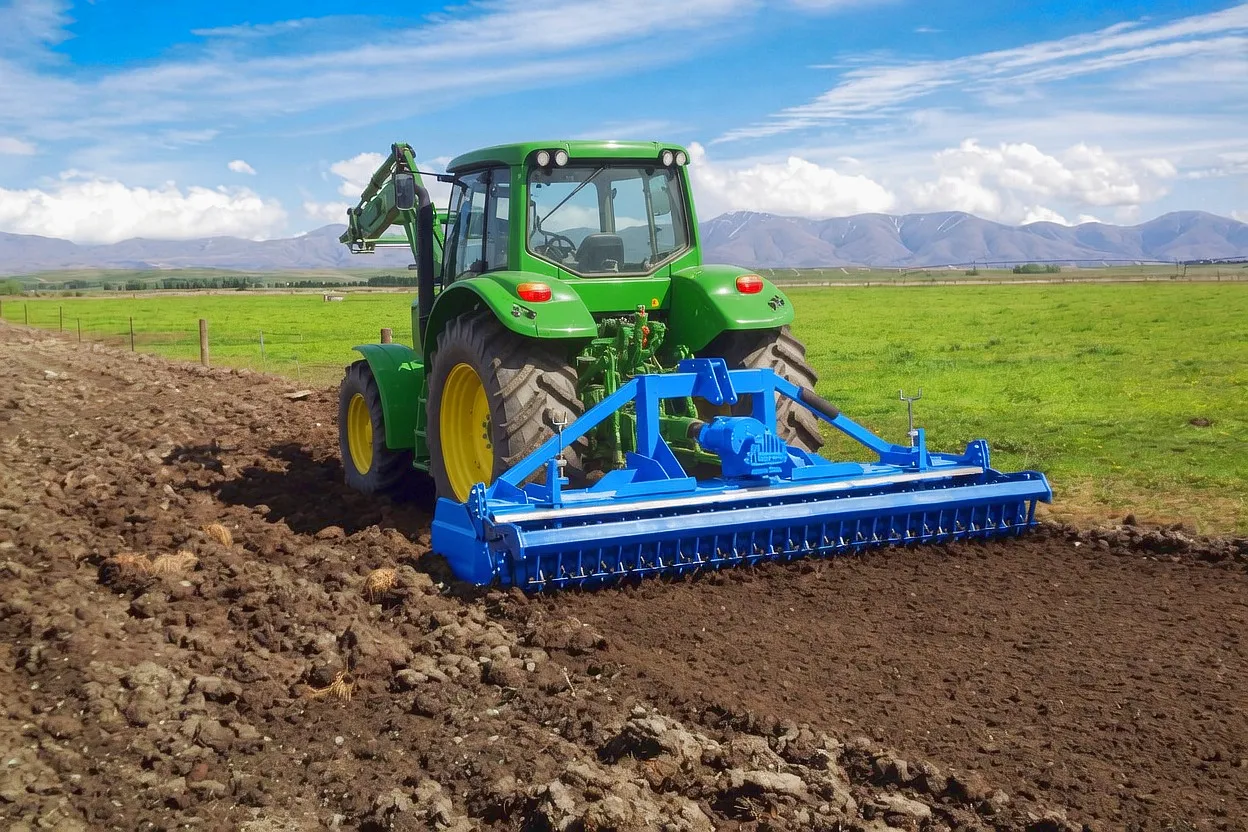
Walk into any agricultural merchant across Lincolnshire, Shropshire or the Scottish Borders and ask about PTO shaft failures on power harrows — the stories come thick and fast. A shear bolt snapped on the morning of drilling. A telescoping tube seized mid-field in March clay. A universal joint destroyed because someone ran a shaft at too steep an angle while the linkage was slightly out of alignment. These aren’t freak events. They are the predictable result of pairing the wrong drivetrain component with one of the most mechanically demanding implements in the arable toolkit.
The power harrow is a fundamentally different beast compared with a rotary tiller or mower. Instead of horizontal blades spinning on a lateral axis, it deploys a row of paired vertical tines — typically six to twelve pairs per machine — that rotate counter to each other in tight, opposing circles. The soil is lifted, shattered, and consolidated vertically rather than thrown forward or backward. Critically, the stratified layers of the topsoil are preserved. That matters enormously in moisture-limited UK springs, where keeping a fine, firm seedbed without destroying soil capillary structure can be the difference between a 10 t/ha wheat crop and an 8 t/ha one. But driving all those pairs of vertical tines simultaneously requires a power delivery system engineered with serious respect for shock loading, continuous high torque, and the occasional catastrophic jolt when a tine hits a buried stone at operating depth.
Reply within 24 hours · UK stock available
How a Power Harrow Actually Loads Its PTO Shaft
To understand why PTO shaft specification matters so much on a power harrow, you need to follow the torque path from the tractor’s gearbox output all the way through to the implement’s main rotor. Tractor PTO output — standardised at 1000 RPM for larger implements — feeds into the power harrow’s primary gearbox through a rotating shaft fitted with two universal joints at either end. The primary gearbox reduces speed slightly and distributes that drive across a gang of spur gears or bevel gears arranged in a straight line beneath the machine’s protective housing. Each gear pair in that lineup drives a vertical stub shaft, and each stub shaft carries a set of two opposing tines.
On a 4-metre working-width harrow, you might have ten or twelve tine pairs engaged simultaneously in medium-textured soil. In a single rotation, each tine traces through resistant material, generating repeated torque spikes that travel back up the drivetrain and arrive at your PTO shaft as an overlapping, uneven impulse load. The PTO shaft must absorb, transmit and occasionally isolate these spikes without fatigue failure in its cross-and-bearing universal joints, without seizure in its telescoping splined tubes, and without loss of protection for the operator or tractor.
A linear row of meshing spur gears drives each tine pair simultaneously. Torque distribution is inherently uneven — the PTO shaft must handle peak combined loads rather than average ones.
Large-format power harrows (3m+) run exclusively on 1000 RPM PTO connections. This higher speed demands precision balancing in the rotating shaft assembly to prevent vibration-induced fatigue at operating torque.
Heavy-duty cam clutches or friction torque limiters in the shaft’s protection device disengage at a set torque threshold, preventing drivetrain destruction when a tine impacts buried stone or compacted subsoil.
Power harrows with front rollers and rear packer rollers create significant hitching geometry variation. Wide-angle joints (up to 80°) in the tractor-side yoke accommodate this without NVH issues.
Technical Specifications: Ever Power PTO Shafts for Power Harrow
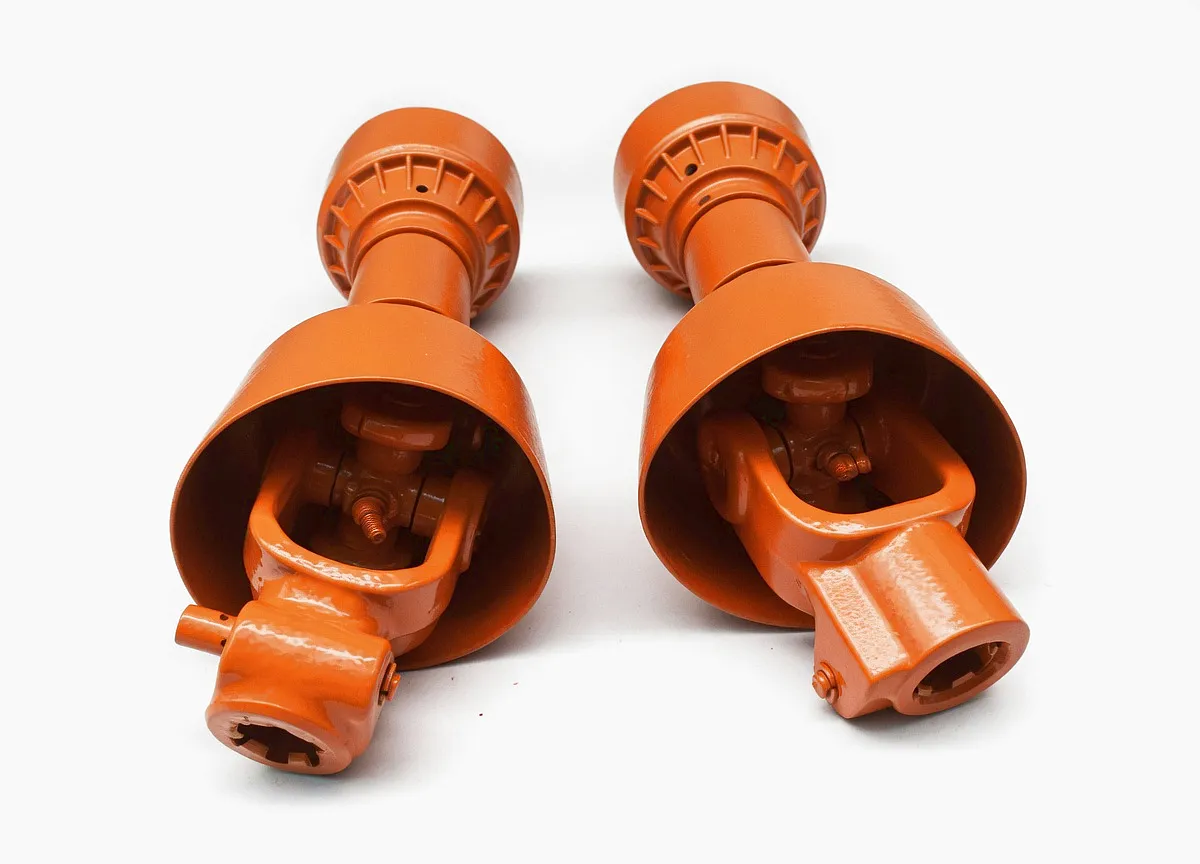
The table below covers our standard product range applicable to power harrow applications from 80 HP to 280 HP. All Series 4 and Series 6 shaft assemblies are CE-marked and tested to ISO 5673-1 standards. Custom bore diameters, yoke profiles and shaft lengths are available — contact our applications team for tailored specifications.
| Series | Max Torque (Nm) | PTO Speed (RPM) | HP Range | Tube Profile | Protection Type | Guard Standard | Typical Implement |
|---|---|---|---|---|---|---|---|
| Series 4 | up to 1,400 | 540 / 1000 | 80–120 | Lemon / Triangular | Cam Clutch / Friction Disc | CE / ISO 4254 | 2.5–3m Power Harrow |
| Series 6 | up to 2,800 | 1000 | 120–200 | Star / Triangular | Heavy Cam Clutch | CE / ISO 5673-1 | 3–4m Power Harrow |
| Series 8 | up to 5,000 | 1000 | 200–280 | Star Profile (6-lobe) | Shear Bolt + Friction Disc | CE / ISO 5673-1 | 4–6m Folding Harrow |
| Series 8W | up to 5,500 | 1000 | 220–300 | Wide-Angle Star | Electronic Torque Sensor | CE / PSSR 2000 (UK) | Combi Drill Harrow Systems |
| Custom OEM | On application | 540 / 1000 | Any | All profiles | Any combination | CE / UKCA | OEM & Retrofit |
Why Ever Power PTO Shafts Outperform Generic Alternatives
Forged Yoke Construction
Every yoke is drop-forged from 20CrMnTi alloy steel, not pressed or cast. Forged grain structure runs parallel to load paths — this produces 35–40% higher fatigue resistance compared to casting under the cyclic loading typical of power harrow operation. The difference shows itself after 500 hours rather than after 50.
Precision-Calibrated Torque Limiters
Our cam clutch and friction disc torque limiters are individually bench-tested and set to ±5% of the rated disengagement torque before despatch. Many imported shafts carry limiters that slip at 40–60% below specification, giving you a false sense of protection. An under-calibrated limiter will fail to protect your implement gearbox on a first hard rock strike.
Induction-Hardened Splined Tubes
The internal and external splined telescoping tubes undergo high-frequency induction hardening to achieve a surface hardness of 52–58 HRC while retaining a tough, ductile core. The result is a sliding interface that resists the abrasive grit ingress that inevitably occurs in field conditions, and which maintains smooth travel even after extended service without re-greasing intervals being missed.
Full-Coverage Plastic Guard Systems
Guards are injection-moulded from high-density polyethylene and incorporate chain-retention brackets at both ends. Compliance with UK PSSR 2000 and the Provision and Use of Work Equipment Regulations 1998 (PUWER) is built in — not an afterthought. For agricultural contractors operating under formal health and safety management, this matters more than ever since the Health and Safety Executive intensified its machinery inspection schedule for farm operations.
Application-Matched Shaft Length
A shaft that is 50 mm too short will run with insufficient tube engagement at full extension, risking tube separation. A shaft 50 mm too long will bottom out at minimum linkage height, immediately destroying a yoke. We manufacture shafts to your specific tractor-to-implement dimension, measured with the linkage in its intended working position — not from a catalogue table that may not match your category III or IIIA linkage geometry.
Direct UK Supply, Rapid Dispatch
We hold buffer stock of the most common power harrow shaft configurations at a UK logistics hub, enabling 48-hour despatch on standard Series 4 and Series 6 assemblies during the March–May drilling season when demand peaks. Emergency same-day fabrication of yoke adaptor kits is available for commercial contractors who simply cannot afford a day’s downtime.
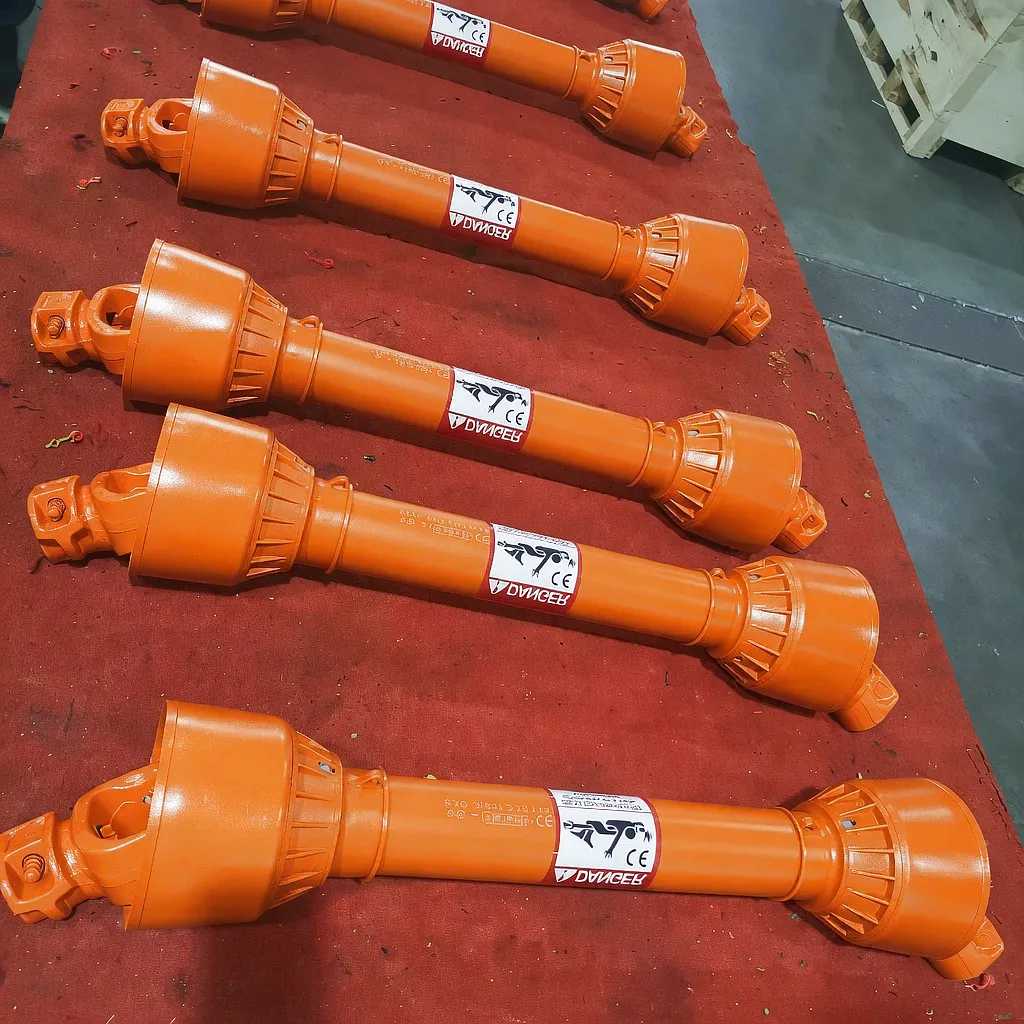
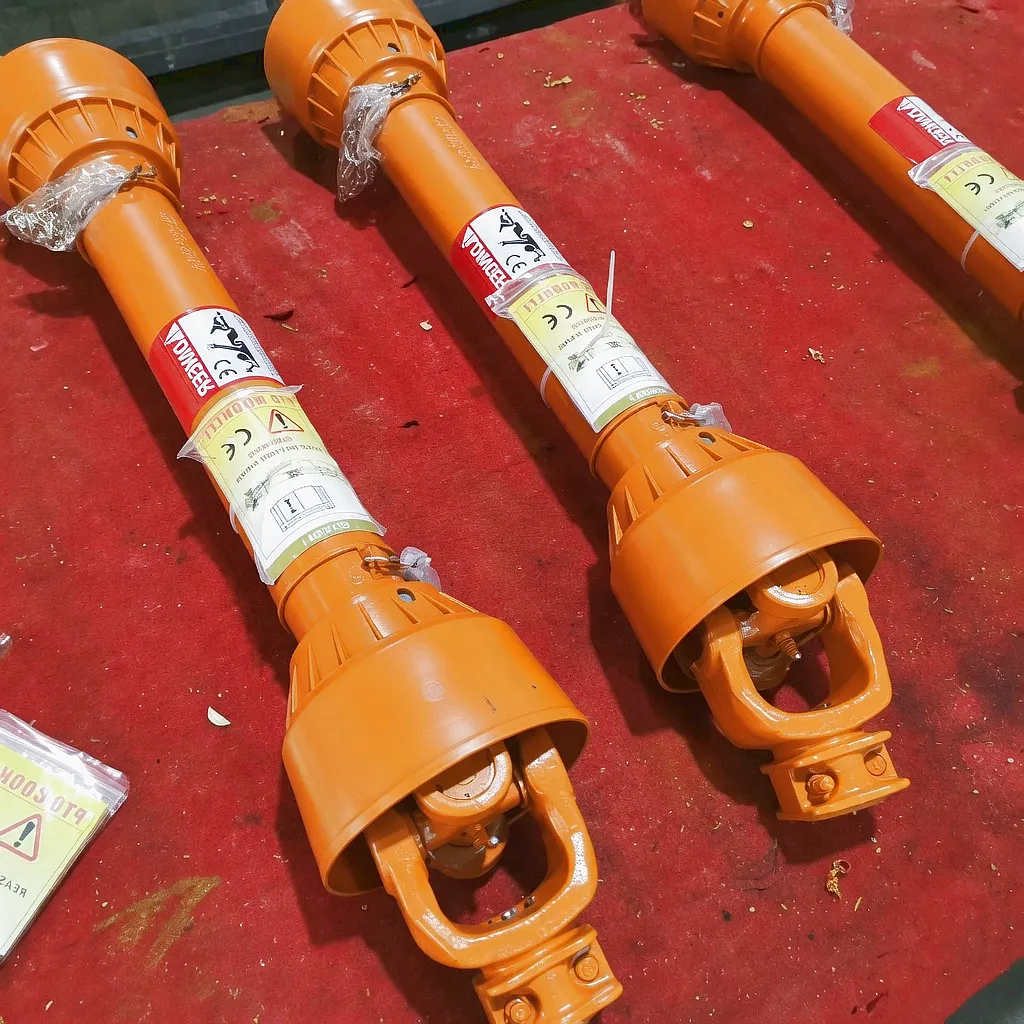
Product Gallery
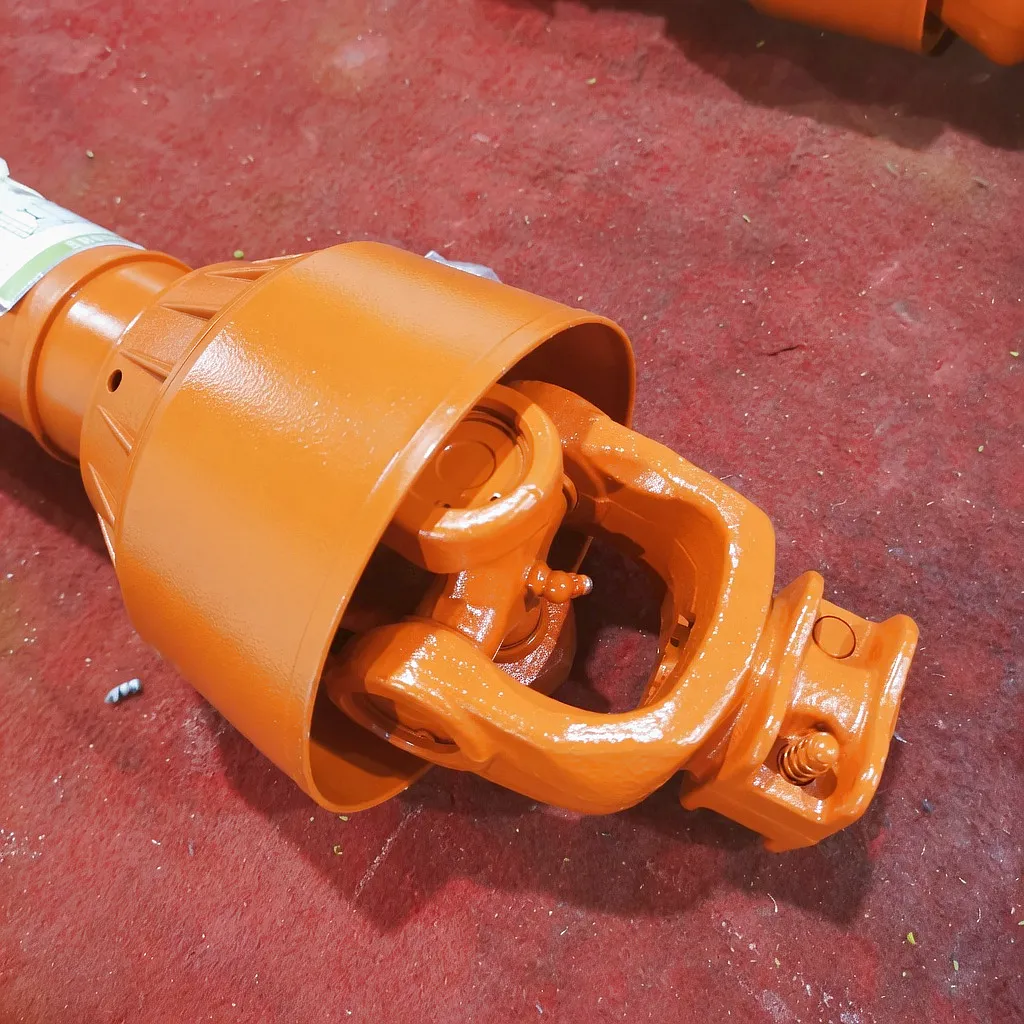
Materials, Manufacturing Process & Construction Standards
The raw tube material in an Ever Power power harrow PTO shaft is seamless cold-drawn steel to DIN 2391 specification. Cold drawing rather than hot rolling produces a tighter dimensional tolerance across the tube wall — typically ±0.15 mm on outside diameter versus ±0.4 mm for hot-rolled product. That precision translates into consistently uniform wall thickness, which matters because a tube with an eccentric wall develops a bending moment during rotation that conventional dynamic balancing cannot fully correct. It is a small detail that compounds across millions of rotations in a working season.
Universal joint crosses (the spider assemblies inside each yoke pair) are machined from case-hardened 20CrMnTi steel, ground to ISO tolerance grade IT5 on the trunnion journals, and fitted with needle roller bearings that carry a standard grease nipple and a secondary lip seal. The lip seal detail is worth noting: in harvesting-to-drilling rotations, many machines go from autumn stubble work through wet winter storage into spring drilling without the shaft being removed. Shafts without effective lip seals accumulate water in the needle bearing cups, causing corrosion pitting within a single off-season. Our sealing arrangement prevents this.
Application Scenarios: Where the Right PTO Shaft Makes All the Difference
A 4-metre combination drill-harrow system running on Lincolnshire boulder clay in late March is arguably the most demanding scenario for any PTO shaft in UK arable farming. The soil is typically near field capacity, tine resistance is extreme and the drive impulses are rapid and high-amplitude. A Series 6 shaft with heavy cam clutch set to 2,600 Nm disengagement and wide-angle joints at the tractor end will handle this without the vibration fatigue that destroys lower-spec assemblies inside one season.
In the lighter sandy loam soils of East Anglia and Nottinghamshire, power harrow demands are lower in peak torque but higher in thermal load because machines run faster and cover more hectares per day. A well-engineered shaft with an accurately calibrated friction disc limiter and properly sealed bearings will run through a 10-hour day without the bearing temperature rise that degrades grease and causes premature wear.
Smaller 1.5–2.5 metre horticultural power harrows used by market gardeners across Kent, Devon and the Vale of Evesham require shafts engineered for frequent coupling and uncoupling, compact geometry and resistance to the fine-textured, highly organic soils where grit contamination can accelerate spline wear. A compact Series 4 shaft with easily replaceable shear bolt protection keeps maintenance simple for smaller operations without specialist engineering support.
Agricultural contractors operating 5–6 metre folding combination harrow-drill systems across the Scottish Borders and Yorkshire Wolds require Series 8 shafts capable of sustained 5,000 Nm torque transmission. For these machines, we frequently supply matched pairs of shafts with identical torque limiter calibration to ensure that front-mounted harrow and rear-mounted drill sections receive synchronised drive without one section robbing torque from the other at field headlands.
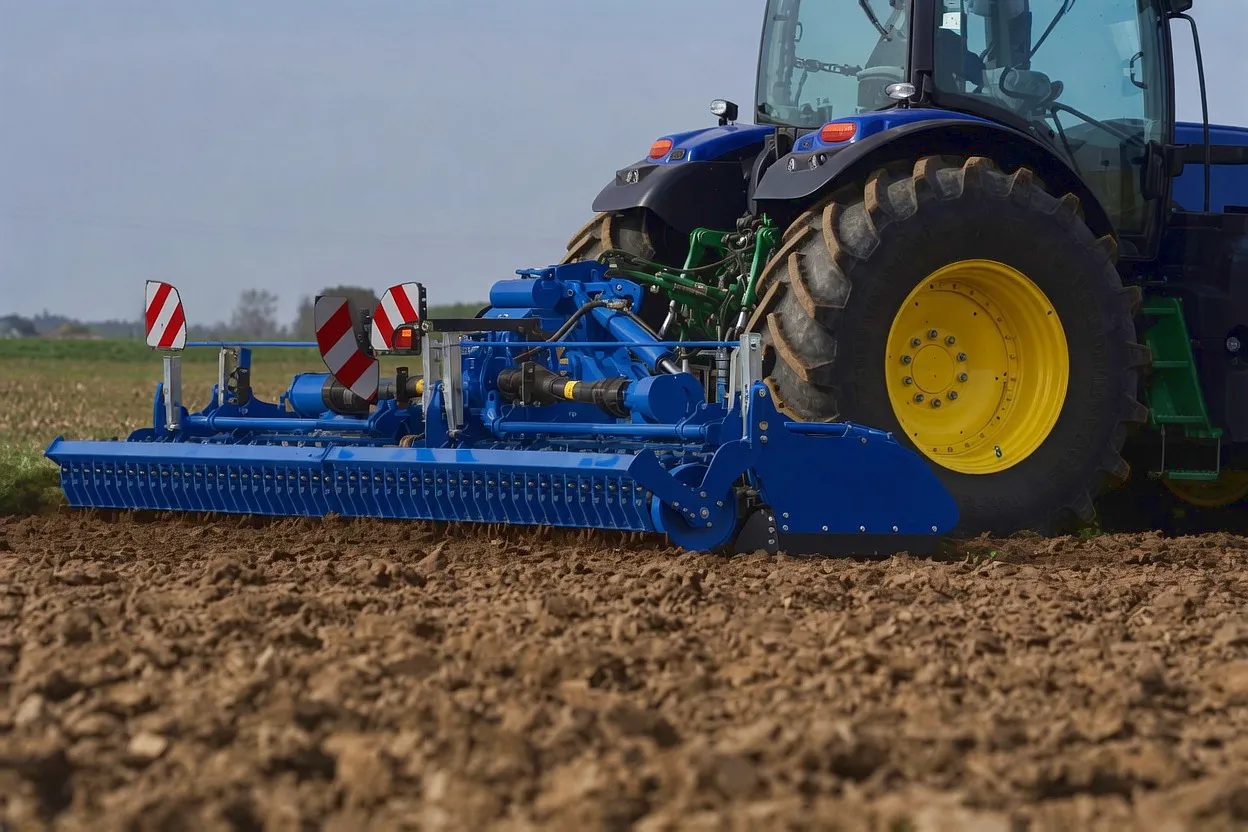
The Critical Role of Overload Protection in Heavy Clay Conditions
In sticky, heavy clay soils — the kind found across broad swaths of the English Midlands, the Humber plain and much of Scotland’s central belt — a power harrow can experience torque spikes of three to five times the nominal running torque when a tine pair encounters a compacted lens or a buried stone. Without an overload device in the PTO shaft, that energy has nowhere to go except into the weakest mechanical link in the drivetrain. In many cases, that weakest link is the implement’s main gearbox — an item costing £600 to £1,800 that a shaft-mounted cam clutch costing a fraction of that could easily have protected.
The cam clutch mechanism deserves a detailed explanation because it is widely misunderstood. Inside the clutch body, a set of hardened steel cams are pre-loaded against a plate by a calibrated spring stack. Under normal running torque, the cams remain engaged, transmitting drive smoothly. When the torque exceeds the set point, the cams ride over their engagement points and the clutch slips one tooth position, absorbing the spike. Critically, once the overload event passes, the clutch automatically re-engages — the operator does not need to stop and reset it, unlike a shear bolt arrangement. For a contractor working 60–80 hectares in a day, avoiding the cumulative time loss from multiple shear bolt replacements is a genuine commercial advantage.
| Type | Auto-Reset | Best Soil | Accuracy |
|---|---|---|---|
| Shear Bolt | No | Light / Sandy | ±30% |
| Friction Disc | Yes | Medium Loam | ±15% |
| Cam Clutch | Yes | Heavy Clay | ±5% |
| Electronic Sensor | Yes | All types | ±2% |
Customer Success: Real Results from British Agricultural Operators
Thornwick Agri Services runs a fleet of five tractors delivering spring cultivation and drilling services to approximately 1,400 hectares of mixed arable across the East Riding, an area characterised by heavy magnesian limestone clay in the wolds and river alluvium on the Holderness plain. For the 2023 and 2024 spring drilling campaigns, they had been experiencing repeated PTO shaft failures on their two Horsch Joker RT-mounted power harrow combinations — typically a cross-and-bearing failure around the 180-hour mark, just as the spring workload was at its peak.
After contacting our UK applications team, we reviewed their tractor hitch geometry measurements and established that their existing shafts were being operated at a consistent 18–22° angle on the tractor-side yoke — well beyond the continuous operating angle limit of the standard joint they had been using. We supplied a pair of Series 6 assemblies fitted with wide-angle (80°) tractor-end joints and recalibrated cam clutches set to 2,800 Nm, matched to the rated torque of their Fendt 724 tractors at 1000 RPM PTO. Both shafts completed the entire 2025 spring campaign — approximately 340 hours each — with no failures and no unscheduled maintenance beyond routine greasing.
“We run a 4.5 metre Väderstad Carrier with power harrow combination on Shropshire shale clay. The Ever Power Series 6 shaft has now done two full seasons without so much as a replaced grease nipple. After two years of annual shaft replacements with our previous supplier, that’s remarkable.”
“As a horticultural contractor in Kent, we need shafts that connect and disconnect a dozen times a day across different machines and beds. The custom bore and yoke combinations that Ever Power produced for us match all three of our power harrows perfectly. The lead time was 6 days — far better than anything from the mainstream catalogue suppliers.”
“We ordered Series 8 shafts for a new 6-metre folding combi harrow. The technical support in sizing the cam clutch to our Claas Axion 870’s PTO output was genuinely expert — not just a spec sheet recommendation. The shaft arrived pre-assembled, guard chains in place, ready to connect. Saved us half a day in workshop time.”
Custom Manufacturing & OEM Capability: Tailored for Every Application
Not every power harrow application fits a standard catalogue shaft. Agricultural machinery manufacturers developing new combine harrow-drill systems, power harrow manufacturers based in the UK and Europe, and professional contractors running non-standard implement combinations regularly need shaft assemblies that simply do not exist off the shelf. That is where our manufacturing capability becomes the conversation rather than just a background footnote.
Our production facility runs CNC turning and milling centres on 20CrMnTi and C45 steel, induction hardening lines, a dynamic balancing rig accurate to G2.5 residual imbalance, and an in-house clutch calibration bench. This means we can produce a fully custom PTO shaft assembly — with non-standard yoke patterns, unusual shaft lengths, special tube profiles, or bespoke torque limiter settings — typically within 7–10 working days from confirmed drawings. For OEM customers supplying power harrows into the UK market, we offer branded packaging, documentation in English, UKCA marking, and annual production audits against agreed quality control plans. For individual contractors with unusual equipment combinations, we are equally comfortable producing a one-off solution and treating it with the same quality rigour as a batch of five hundred.
Non-standard shaft lengths (300–2,000 mm)
Custom bore diameters (25–100 mm)
All major yoke profiles: W, Q, CV joint
OEM branded packaging & UKCA marking
Torque limiter calibration to ±5% tolerance
7–10 day lead time on custom orders
Serving UK Arable Farmers & Contractors Across England, Scotland and Wales
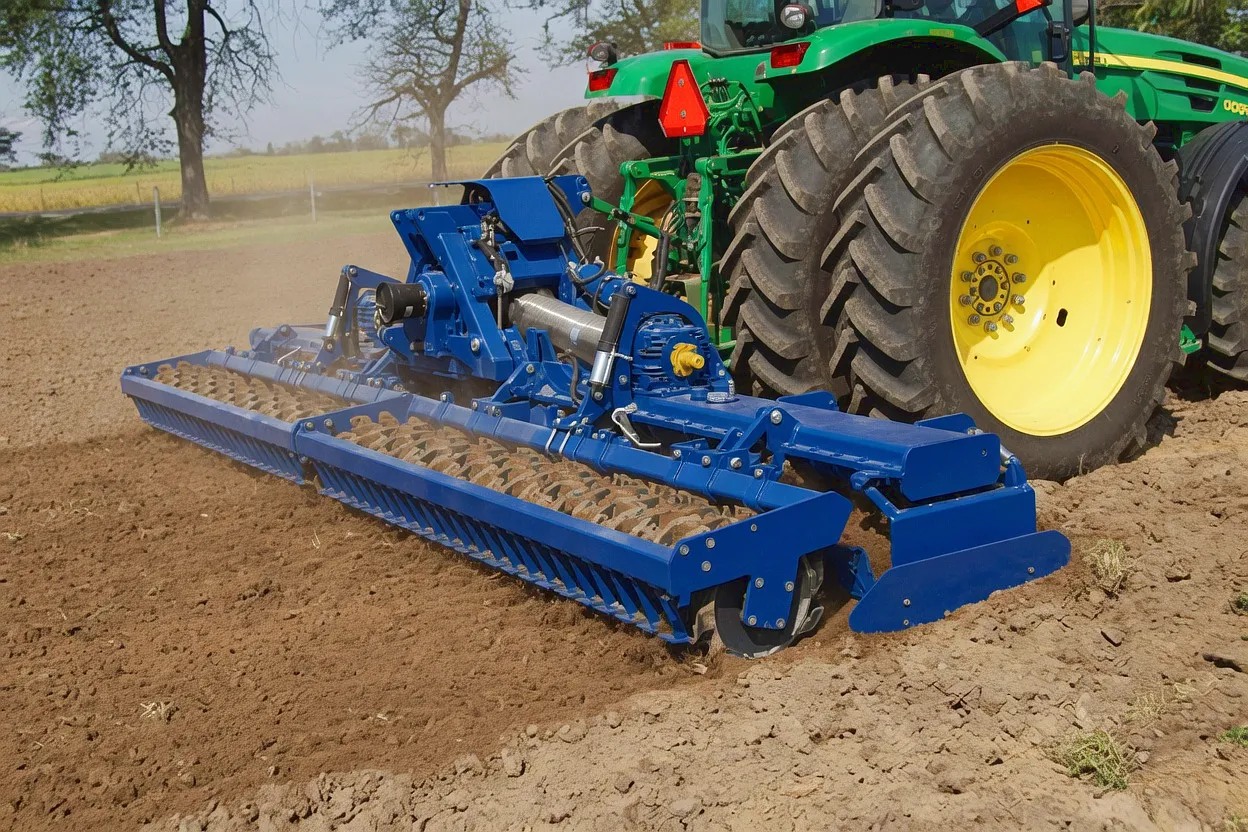
Britain’s agricultural geography is extraordinarily varied in ways that directly affect PTO shaft selection. The cold, heavy boulder clays of Yorkshire and the East Riding put the hardest cyclical shock loads on drivetrain components. The alluvial silts of the Somerset Levels and the Fens of Cambridgeshire and Lincolnshire tend toward medium torque with high moisture contamination risk — stressing seals and surface finishes more than raw structural capacity. The thin, stony chalk downland soils of Wiltshire, Dorset and the North Downs can create rapid, unpredictable tine impacts from flint and chalk stone that demand well-calibrated overload protection even at modest operating depths.
Our UK customer base spans sole-trader farmers running a single 120 HP tractor with a 2.5 metre power harrow on a 200-acre mixed farm in Devon, through to multi-tractor contracting businesses operating 5 or 6 metre combination systems across the Lincolnshire limestone wolds. We understand that arable cultivation windows in the UK are often narrow — sometimes only four to six consecutive days between rain events in March and April — and that having the right replacement shaft available at short notice is not a convenience, it is a business necessity. Our UK stockholding and rapid despatch capability is designed around that reality.
Yorkshire
East Anglia
Shropshire
Scottish Borders
Midlands
Kent
Devon
Norfolk
Cambridgeshire
Wiltshire
Wales & Borders
Related Products
Industrial Gearbox Solutions
Engineered to work seamlessly with PTO shaft systems, our gearbox lineup delivers precision torque transmission, robust load capacity, and field-proven reliability across agriculture, construction, and industrial applications worldwide.
Frequently Asked Questions
edit by gzl