
PTO Shaft for Potato Harvester: The Complete Guide to Drive System Performance in UK Root Crop Operations
When it comes to harvesting potato crops across the UK’s demanding field conditions — from the heavy clay soils of Lincolnshire to the sandier ground of East Anglia — the mechanical reliability of a tractor’s power take-off system can make or break an entire season. This in-depth guide explores how a properly specified PTO shaft for potato harvester equipment shapes crop quality, operational uptime, and long-term profitability.
UK B2B Supply
Custom Configurations
Potato harvesting is one of the most mechanically aggressive operations in British arable farming. A modern trailed or semi-mounted potato harvester relies on its PTO shaft not merely as a connection between tractor and machine — it is the heartbeat that drives conveyor webs, shaker mechanisms, fan assemblies, and loading elevators simultaneously. The demands placed on a PTO drive shaft in this setting are genuinely extreme: sustained torque loads at 540 RPM, unpredictable shock pulses when the digging share encounters stones or compressed soil pans, and the ever-present need for constant low-speed torque smoothness to avoid bruising the tubers.
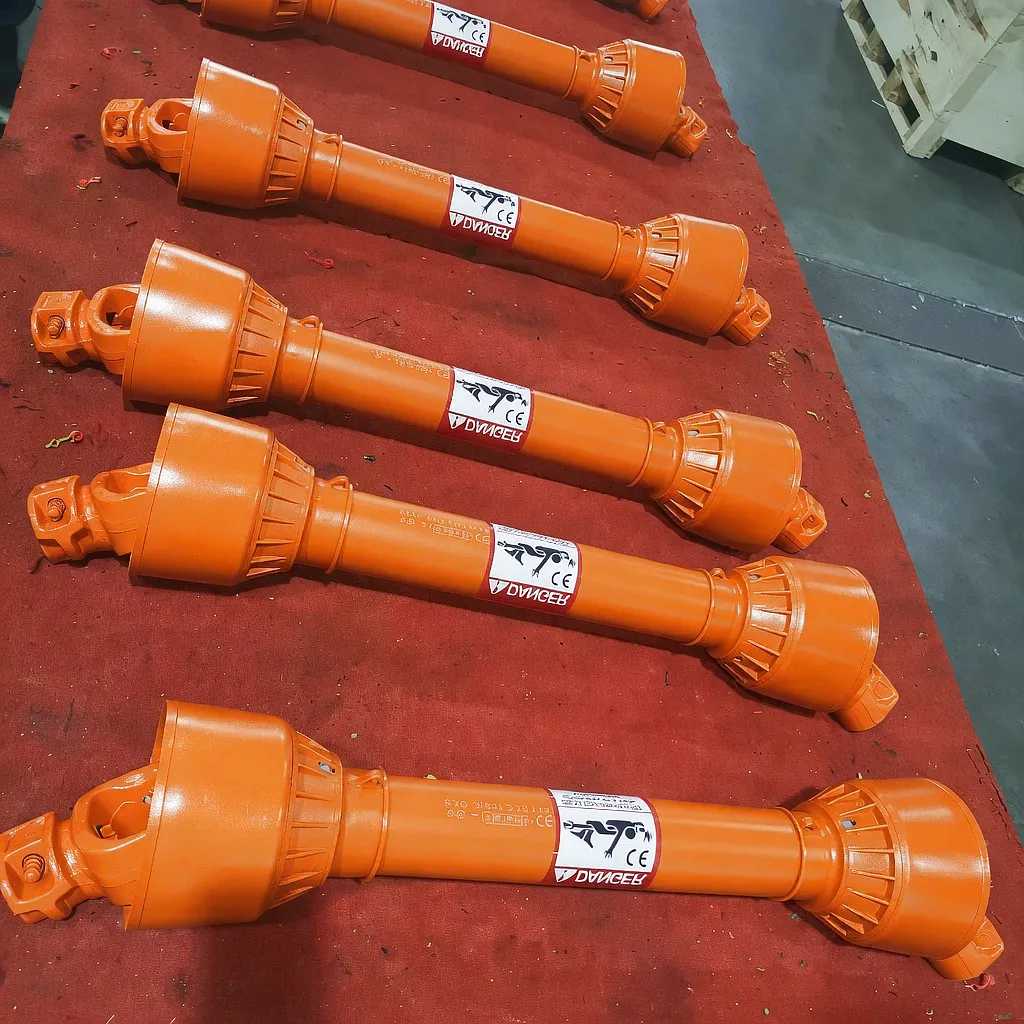
How the PTO Drive System Powers a Potato Harvester
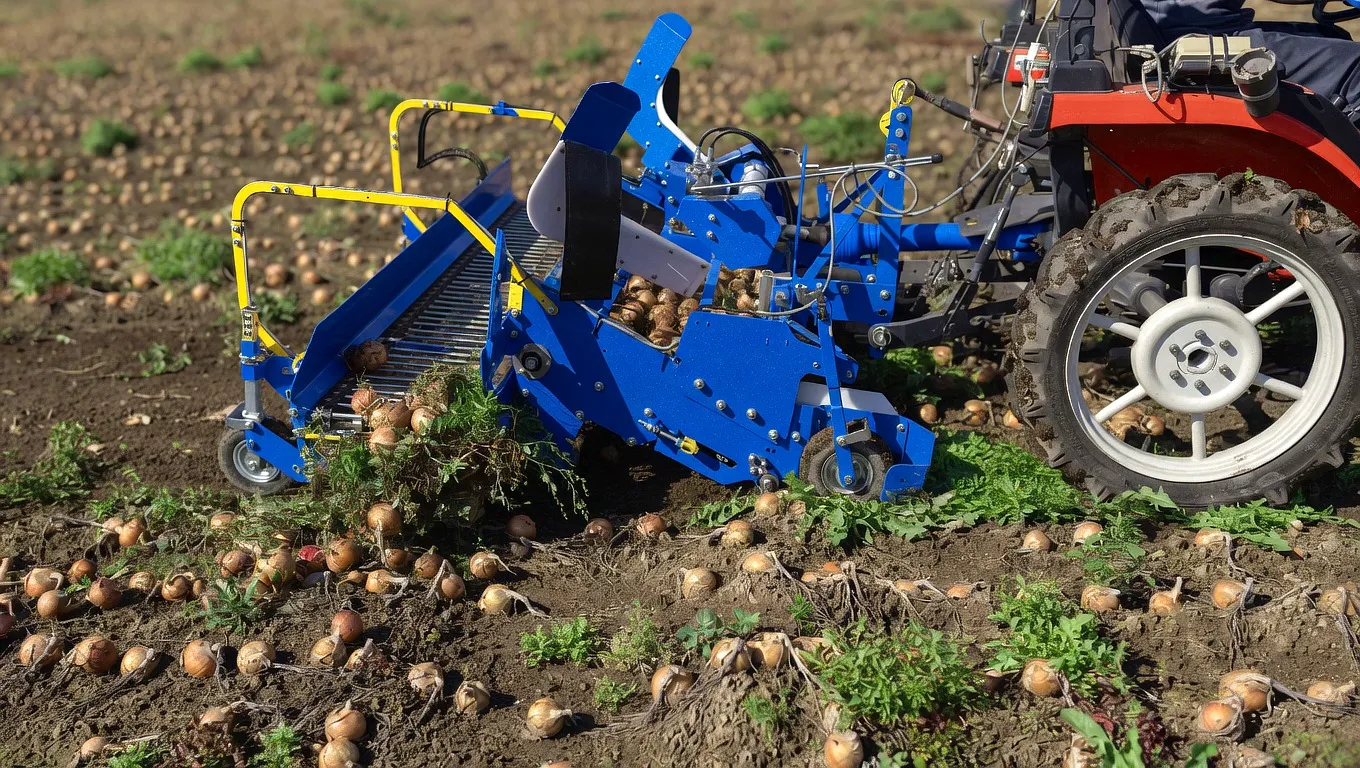 The mechanical chain begins at the tractor’s rear PTO stub — typically a 1-3/8 inch, 6-spline or 21-spline shaft rotating at 540 RPM. The PTO drive shaft bridges the variable gap between tractor and harvester drawbar hitch, accommodating angular misalignment of up to 25 degrees and telescopic length changes as the harvester pitches over undulating ground. Without a quality telescopic PTO shaft capable of handling these angular and linear excursions simultaneously, universal joint wear accelerates dramatically.
Once the input shaft enters the harvester’s primary gearbox, torque is distributed to multiple driven assemblies. The main conveyor web — typically a series of linked, round-bar chains — runs continuously at a speed carefully matched to ground travel. This web does the real work of separating soil from tubers: the PTO drives a series of elliptical agitator rollers beneath the web that impart a rapid, low-amplitude vertical vibration. This is where the quality of the PTO shaft’s torque delivery matters most. Any rotational irregularity or vibration from worn universal joints is amplified through the gearing chain and manifested as erratic web agitation, which in turn increases tuber-to-bar impacts.
Secondary PTO-driven assemblies typically include a cross-web cleaning unit, a side elevator or StarWheel separator, and on self-propelled or large trailed harvesters, a primary crop elevator delivering tubers to a bunker or trailers running alongside. The total torque demand across all these assemblies at full throughput in heavy, wet Scottish or Yorkshire soils can easily reach 1,500–2,000 Nm at the input shaft — figures that make component quality non-negotiable.
Why Torque Smoothness at 540 RPM Is the Critical Specification
Potato harvesting demands a unique operational profile compared with most other PTO-driven implements. Unlike a rotary mower or a forage harvester where a flywheel buffers torque spikes, the potato harvester’s conveyor web and agitator system has virtually no rotational inertia to absorb sudden load changes. Every time the digging share hits a compacted sub-soil layer or a large stone, the torque demand spikes and the entire drive train must absorb or dissipate that energy. This is why the overload protection mechanism integrated into the PTO shaft — whether a friction clutch, a shear bolt coupling, or a cam-type overrunning clutch — is more than a safety device; it is an active quality-protection mechanism for the crop itself.
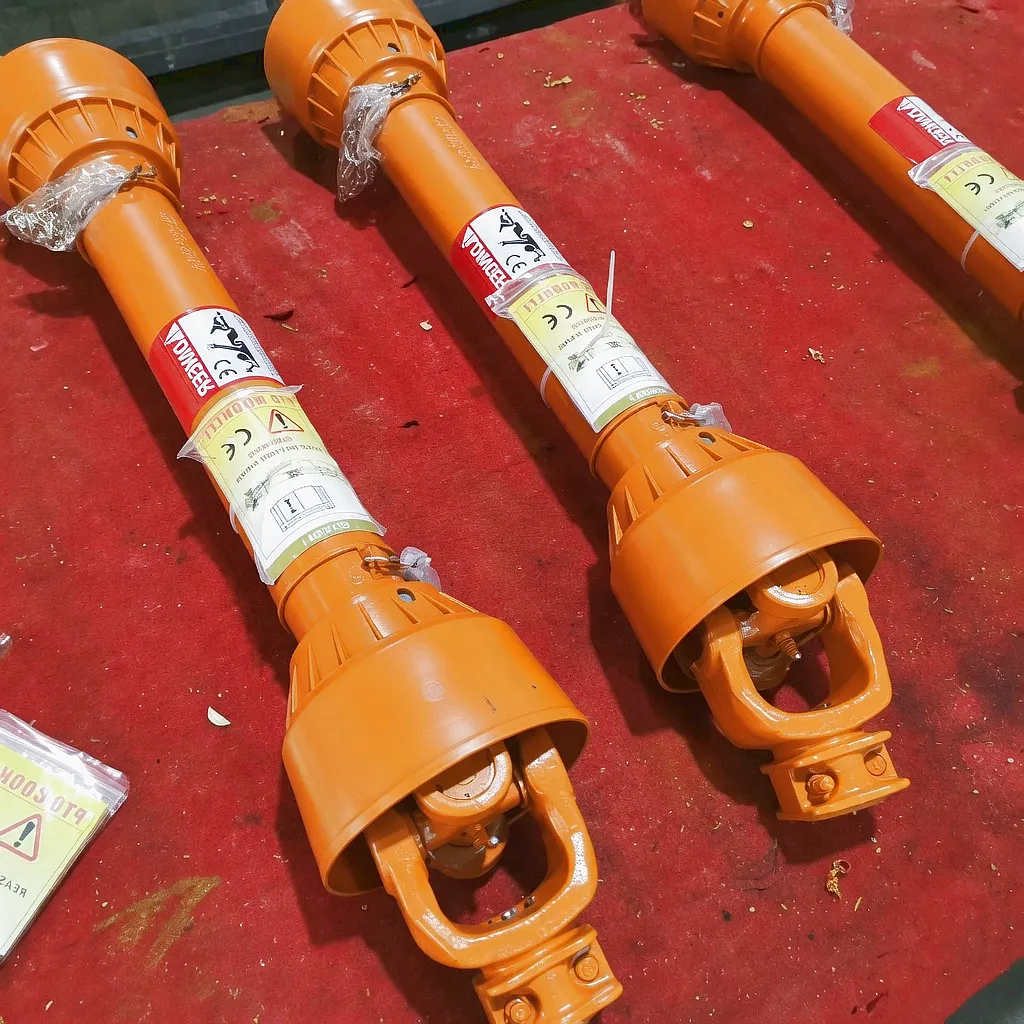
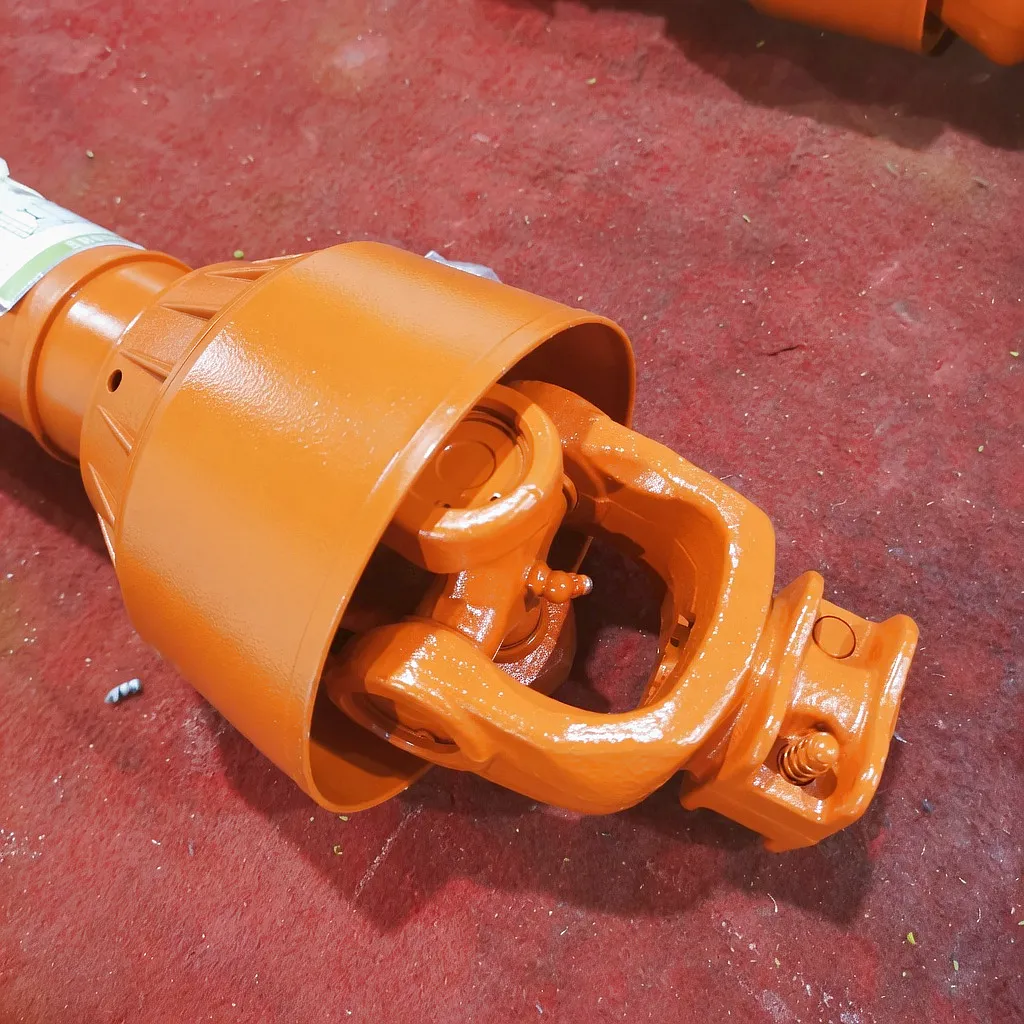
It is worth noting that the difference between a 540 RPM shaft running at smooth, consistent torque and one with even 2–3% rotational irregularity — caused by worn universal joints with excessive backlash — translates directly into conveyor web speed variations. Over a long harvesting day, this cyclic variation creates a characteristic pattern of bruising along tuber shoulders that quality-control inspectors can identify with certainty. The reputational and financial cost to a grower is significant, and the root cause is often traced back to a worn or poorly specified PTO shaft that has been in service beyond its safe operational life.
Technical Specifications: Ever Power PTO Shaft for Potato Harvester Applications
The following table summarises the key parameters for Ever Power’s agricultural series PTO shafts as applied to potato harvester duty cycles. These figures represent the standard catalogue range; custom configurations with modified tube lengths, alternative yoke profiles, or enhanced overload clutch settings are available on request from our UK distribution partners and directly via the factory.
| Parameter | Standard Series | Heavy Duty Series | Wide-Angle CV Series |
|---|---|---|---|
| PTO Speed (RPM) | 540 | 540 | 540 |
| Max. Torque (Nm) | 800 | 1,600 | 1,200 |
| Overload Clutch Type | Friction / Shear Bolt | Multi-disc Friction | Cam / Ratchet |
| Angular Capacity (°) | up to 15° | up to 20° | up to 80° (CV end) |
| Spline Profile | 1-3/8″ 6-spline (Z6) | 1-3/8″ 21-spline (Z21) | 1-3/8″ Z6 / Z21 options |
| Tube Profile | Lemon / Square | Lemon / Star | Lemon |
| Collapsed / Extended Length | Custom to spec | Custom to spec | Custom to spec |
| CE / PTO Guard Compliance | CE Marked | CE Marked | CE Marked |
| Material (Outer Tube) | Seamless Steel (St52) | Seamless Steel (St52) | Seamless Steel (St52) |
Application Scenarios Across the UK Potato Growing Regions
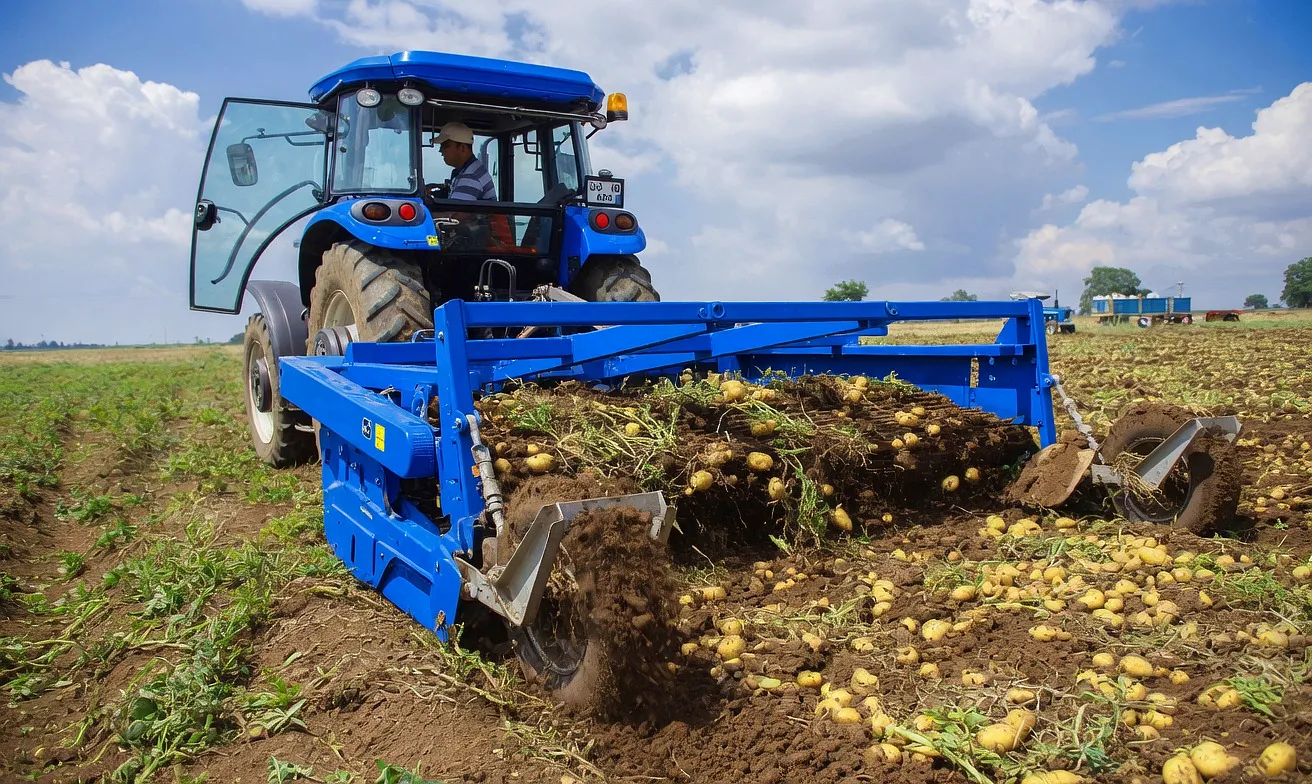
Lincolnshire represents the heartland of the UK’s commercial potato growing industry, with large-scale operations running John Deere, New Holland, and Fendt tractors with Grimme, AVR, or Standen harvesters. In these operations, the PTO shaft is subjected to long daily operating hours — often 10 to 14 hours during the brief harvest window — in soils ranging from sandy loam to moderately heavy alluvial clay. The torque demand fluctuates throughout the day as soil moisture content changes with temperature, meaning the overload protection system of the PTO shaft is genuinely working throughout the shift rather than sitting dormant as a last-resort safety device.
In Scotland, particularly Perthshire and Angus where main-crop Maris Piper and King Edward cultivation is significant, operators face additional challenges from stoniness and steeper terrain. Here, the wide-angle constant-velocity (CV) joint version of the PTO shaft becomes particularly valuable because hillside operation regularly places the drive angle outside the comfortable range of a standard crossed universal joint, causing cyclic torque variation at every revolution. The CV joint eliminates this variation entirely, maintaining consistent power flow regardless of articulation angle.
Product Advantages: Why Ever Power PTO Shafts Deliver in Root Crop Operations
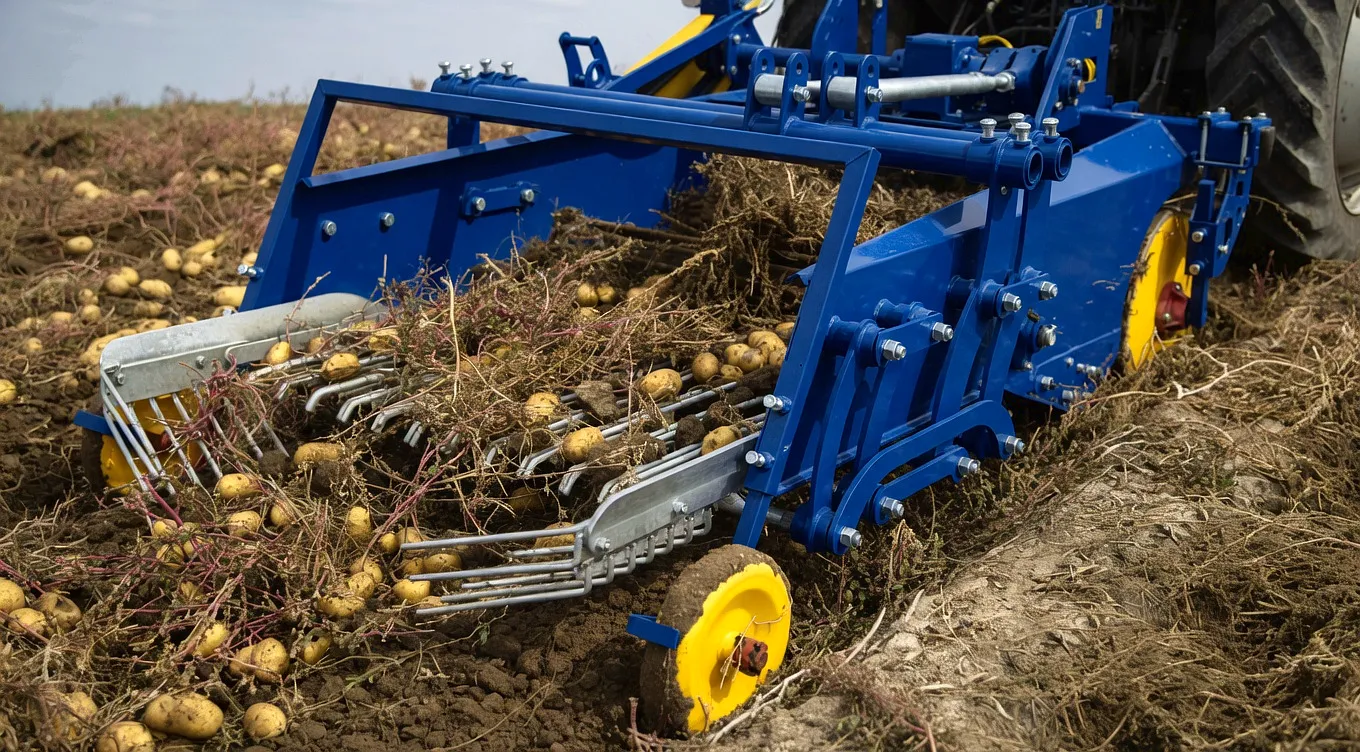
The advantages of specifying Ever Power PTO shafts for potato harvester applications stem from a combination of material quality, manufacturing precision, and application-focused engineering. These are not generic driveshafts adapted to agricultural use — they are components engineered from the ground up for the demands of soil-engaging machinery, with attention to the specific operational profile that root crop harvesting creates.
Materials, Construction, and Operating Principles
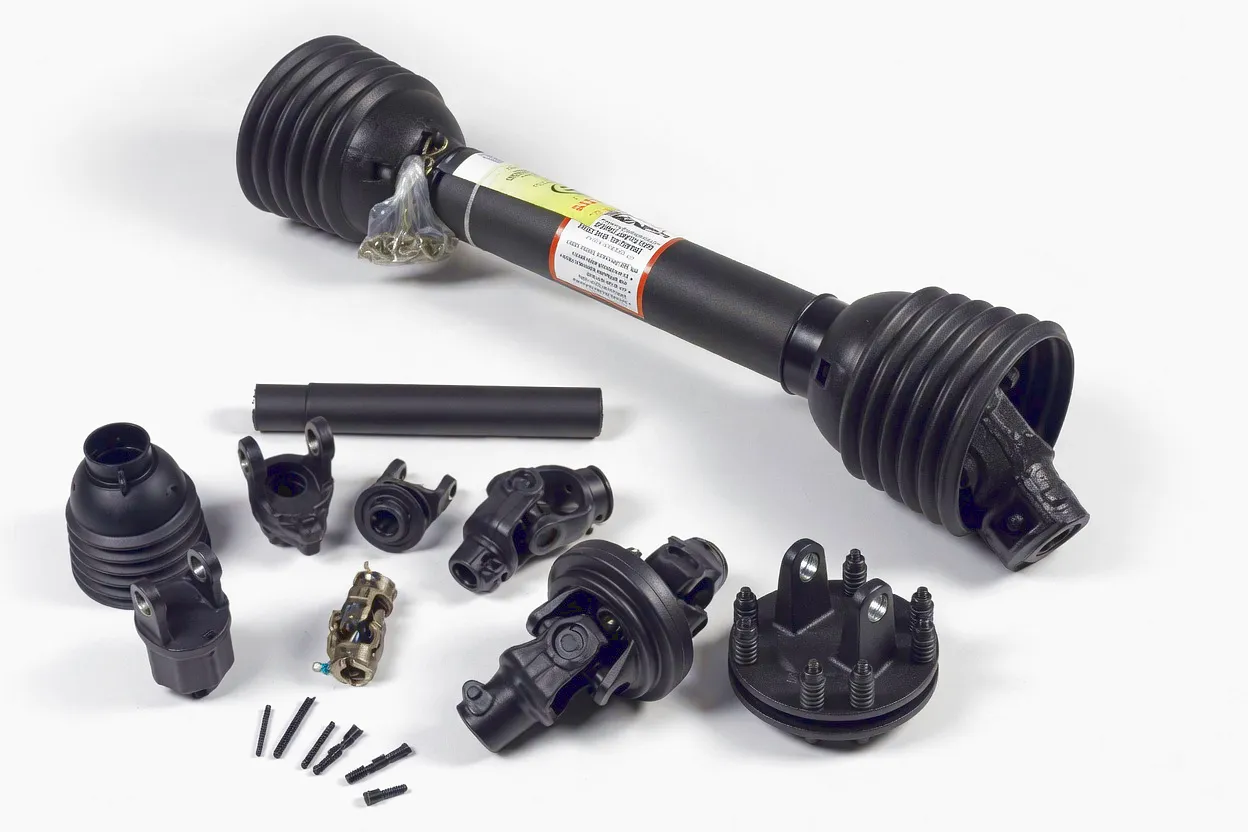
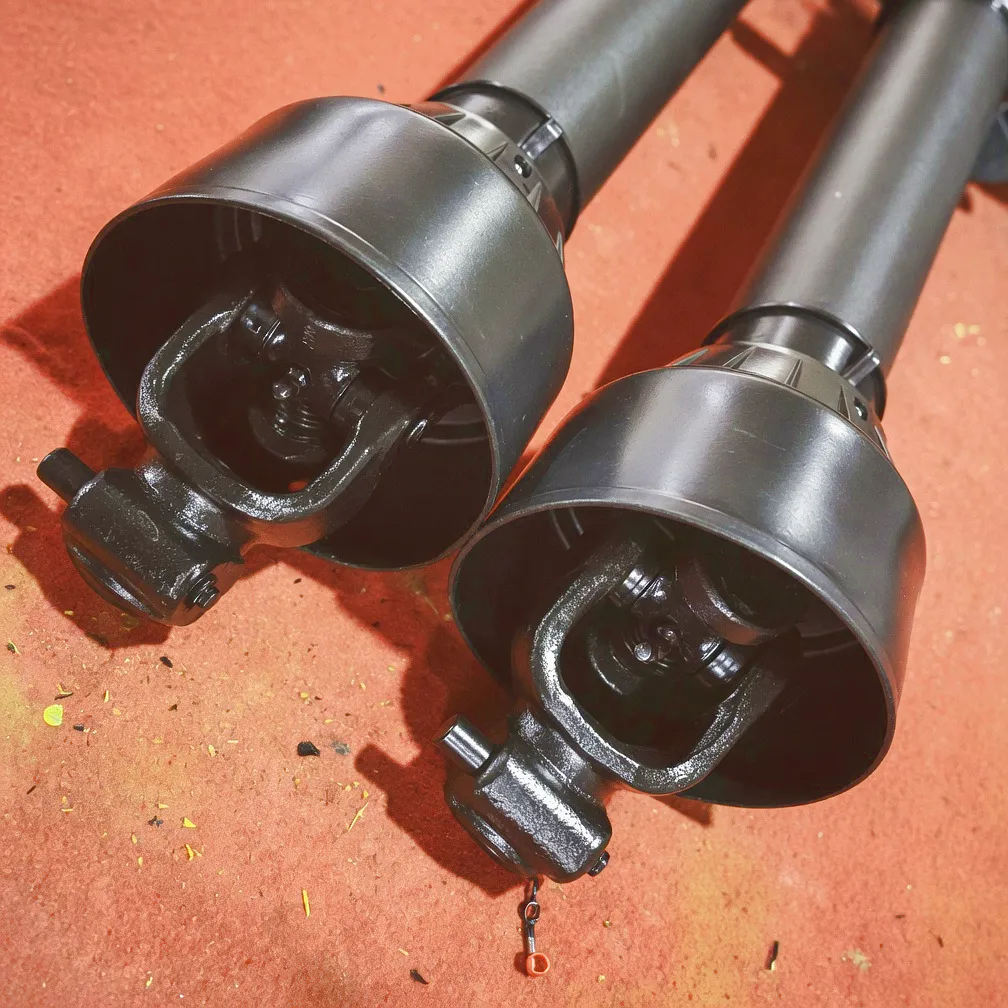
Understanding the internal construction of a PTO shaft designed for potato harvester service requires looking beyond the visible tube-and-guard assembly to the precision components within. The universal joint cross — the cruciform element at the heart of each joint — is the most safety-critical component in the entire shaft assembly, since its failure under overload results in immediate loss of drive and potential hazards from the released rotating assembly. Ever Power manufactures these crosses from alloy steel to a specification that balances toughness (resistance to shock fracture) with wear hardness, achieving this through a precisely controlled case hardening process that produces a hard outer case over a ductile core.
The operating principle of the entire shaft rests on maintaining a constant-velocity output despite the angular displacement caused by tractor-to-implement geometry. In a standard double-joint PTO shaft, velocity fluctuations from each individual cross joint cancel one another out — but only if the yokes at either end of the centre tube are phased correctly (fork planes aligned). Ever Power shafts are assembled with phasing clearly marked and factory-verified, eliminating the installation errors that can introduce vibration into a system even when all individual components are in perfect condition.
Customer Success Stories from UK Agricultural Operations
Real results from real operators — based on commercial deployments across British potato growing regions.
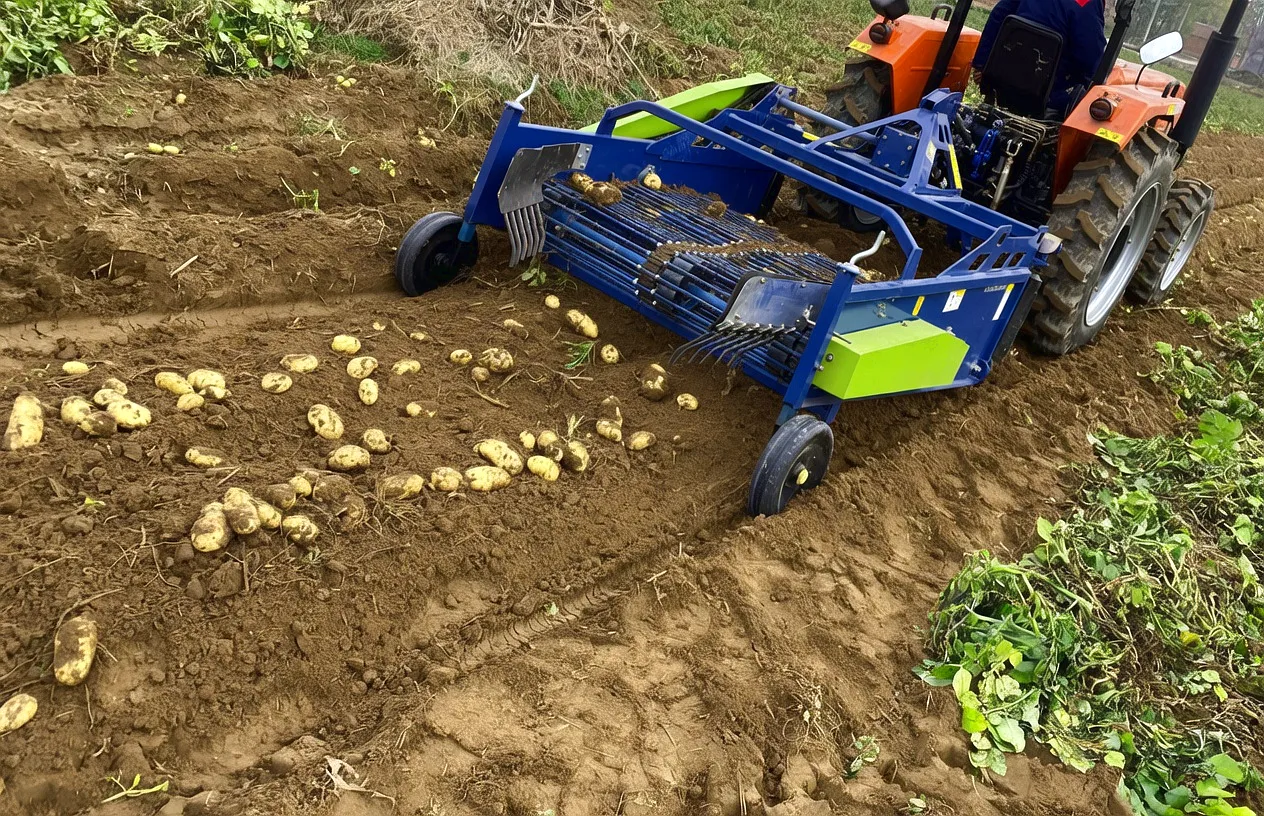
Thistledown Farm had been experiencing an unacceptable level of skin-spot bruising in their Pentland Dell crop during the 2023 harvest season. Quality control inspections from their supply chain partner flagged a consistent pattern of damage on one face of the tubers, consistent with conveyor web vibration. After a systematic diagnostic review, the root cause was identified as worn universal joints in the OEM PTO shaft on their Grimme SE 260 harvester — the joint backlash was generating a rotational irregularity of approximately 3% at 540 RPM that translated directly into periodic web agitation surges.
Ever Power’s heavy-duty replacement shaft, custom-specified to the harvester’s input length and fitted with a multi-disc friction clutch pre-set to 800 Nm, was installed before the 2024 harvest season. The farm’s agronomist reported that post-harvest quality checks showed a 73% reduction in mechanical damage attributable to conveyor vibration, and the farm successfully maintained its supply contract with no quality penalties for the full season.
“Running Standen Superflow harvesters on 300 acres of Maris Piper in East Anglia. Switched to Ever Power shafts three seasons ago after an OEM shaft failed mid-harvest. The build quality is excellent — joints are smooth, the guards are properly designed, and the price is about 40% less than going back to the OEM supplier. Will not be changing back.”
“We ordered four custom-length shafts for our AVR Puma 3-row harvester — unusual input length configuration that most suppliers wouldn’t quote on. Ever Power had the drawings confirmed within 24 hours and the shafts on-site inside two weeks. Absolutely critical as we were mid-season. Performance has been faultless through 600+ hours of harvesting in Perthshire conditions.”
“As a machinery dealer based in Antrim, we stock Ever Power PTO shafts as aftermarket replacements for the full range of potato harvesting equipment our customers run. The fit and finish is consistently good, and we’ve had zero warranty claims in three years of stocking them. Our customers appreciate being able to get a high-quality replacement shaft at a reasonable price without a 6-week OEM lead time.”
Factory Capabilities & Custom PTO Shaft Configuration Services
One of the most significant commercial advantages Ever Power offers to UK agricultural machinery dealers, OEM manufacturers, and large farming operations is the depth of its custom configuration capability. The UK potato harvester market is characterised by a diverse fleet spanning multiple brands — Grimme, AVR, Standen, Structural, Reekie, and various bespoke fabrications — each with its own input shaft specifications, available installation length, and torque demands. A one-size-fits-all shaft frequently does not fit at all.
Ever Power’s manufacturing facility operates CNC tube machining, precision grinding, and automated heat treatment lines that can accommodate non-standard tube lengths from 400mm to 2,500mm collapsed length, multiple yoke face patterns, alternative spline forms including quick-release push-pin connections, and overload clutch assemblies calibrated to customer-specified torque settings. Lead times for custom shafts from confirmed drawing approval typically run to 10–14 working days for small batches, with larger production runs accommodated within standard factory scheduling.
For OEM agricultural machinery manufacturers based in the UK or exporting to UK markets, Ever Power provides a full technical collaboration service: working from your assembly drawings, the engineering team will design the complete PTO shaft assembly, prepare approval drawings, manufacture pre-production samples for your evaluation, and establish a supply agreement that supports your production schedule. Custom part numbering, packaging, and documentation to your specifications are all standard parts of this service.
The factory also offers a rapid-response service for emergency replacement shafts during harvest season — a provision that has become particularly valued by UK customers who cannot afford extended downtime when crop conditions are right. With measurement data provided by photograph and dimension sheet, replacement shafts can be dispatched to UK addresses within 3–5 working days for most standard configurations.
Non-standard tube lengths (400–2,500mm)
Custom spline profiles and yoke face types
Torque-calibrated friction clutch settings
OEM-branded packaging and documentation
Emergency harvest-season rapid despatch
Wide-angle CV joint conversions
CE certification and test documentation
Maintenance Schedule for PTO Shafts in Potato Harvesting Service
A PTO drive shaft operating on a potato harvester in UK conditions accumulates wear at a rate that makes the following maintenance schedule not merely advisory but commercially necessary. The consequences of an in-field failure — immobilised harvester, crop left in the ground past optimal conditions, contractor overtime, and emergency repair costs — almost always dwarf the cost of preventive maintenance carried out at the workshop during the off-season or between campaigns.
| Interval | Task | Notes |
|---|---|---|
| Every 8 hrs | Grease all universal joint nipples | Use EP2 grease; 3–4 strokes per nipple; do not over-grease |
| Every 8 hrs | Grease telescopic tube interface | EP2 grease via profile tube nipple; prevents seizing under torque load |
| Each shift start | Visual inspection: guard integrity | Check retaining chains; replace cracked or missing guard sections before operating |
| 50 hrs or weekly | Check yoke bolt torque | Re-torque to harvester manufacturer’s specification; vibration loosens fasteners over time |
| End of season | Full disassembly inspection | Measure joint backlash; replace if >0.3° rotational play; check tube wear at contact surfaces |
| End of season | Verify friction clutch slip torque | Use in-line torque wrench or specialist clutch tester; readjust spring preload if drift >10% |
| 2 seasons / 1,000 hrs | Replace universal joint cross kits | Proactive replacement in professional harvesting service; needle roller bearing fatigue is predictable |
Ready to Specify the Right PTO Shaft for Your Potato Harvester?
Whether you need a standard replacement shaft, a custom-engineered assembly for an unusual harvester configuration, or trade supply arrangements for your dealership, our engineering team is ready to assist. UK-focused. Fast response. Factory-direct pricing.
✉ Get a Quote — [email protected]