
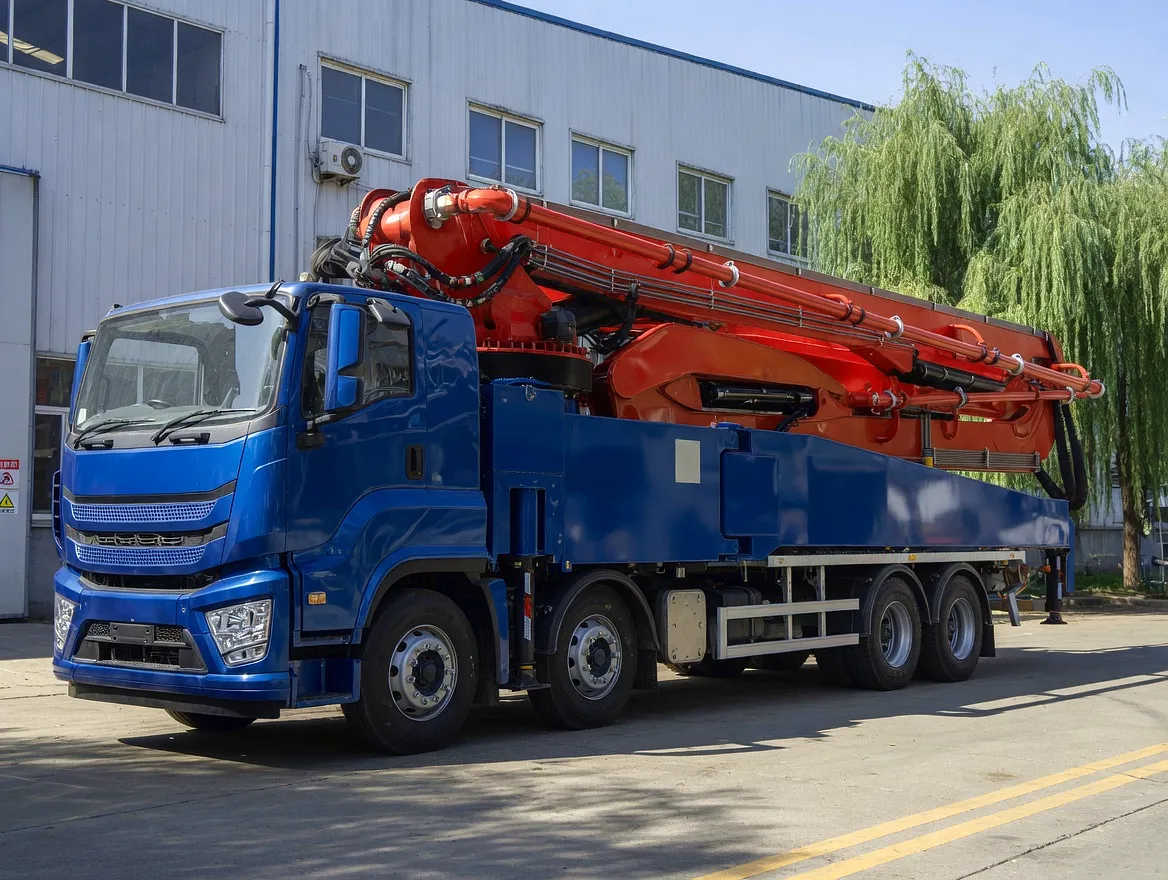
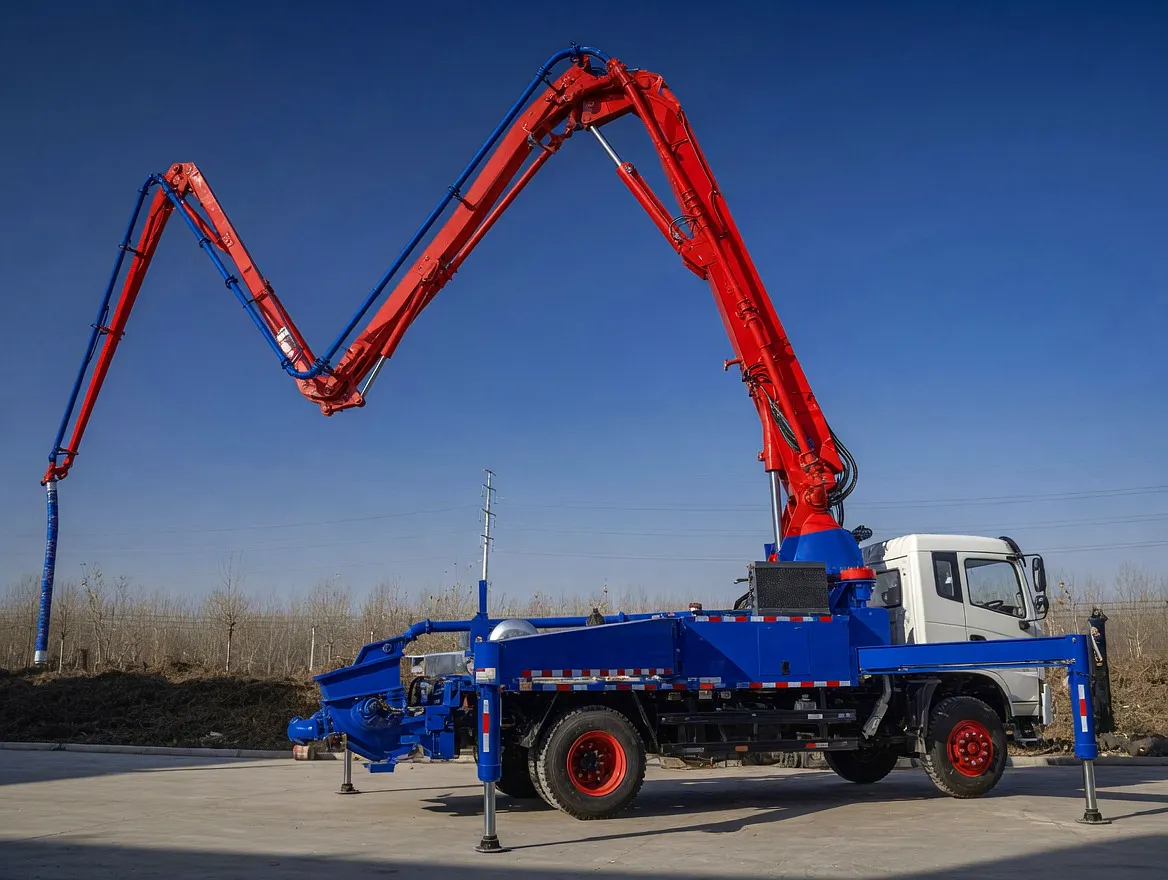
 Concrete pump trucks are among the most mechanically demanding vehicles operating on British construction sites today. Whether pouring foundations for a new housing estate on the outskirts of Leeds, feeding concrete into high-rise steel formwork in Manchester, or supporting civil engineering contracts along the M25 corridor, these machines must deliver continuous, pressurised concrete flow with zero tolerance for mechanical downtime. The hydraulic pump that drives the concrete piston system is powered, in many truck-mounted configurations, directly by a tractor power take-off or auxiliary engine through a dedicated PTO drive shaft — the mechanical backbone that converts rotational input into hydraulic power output.
How a PTO Drive Shaft Works in a Concrete Pump Truck System
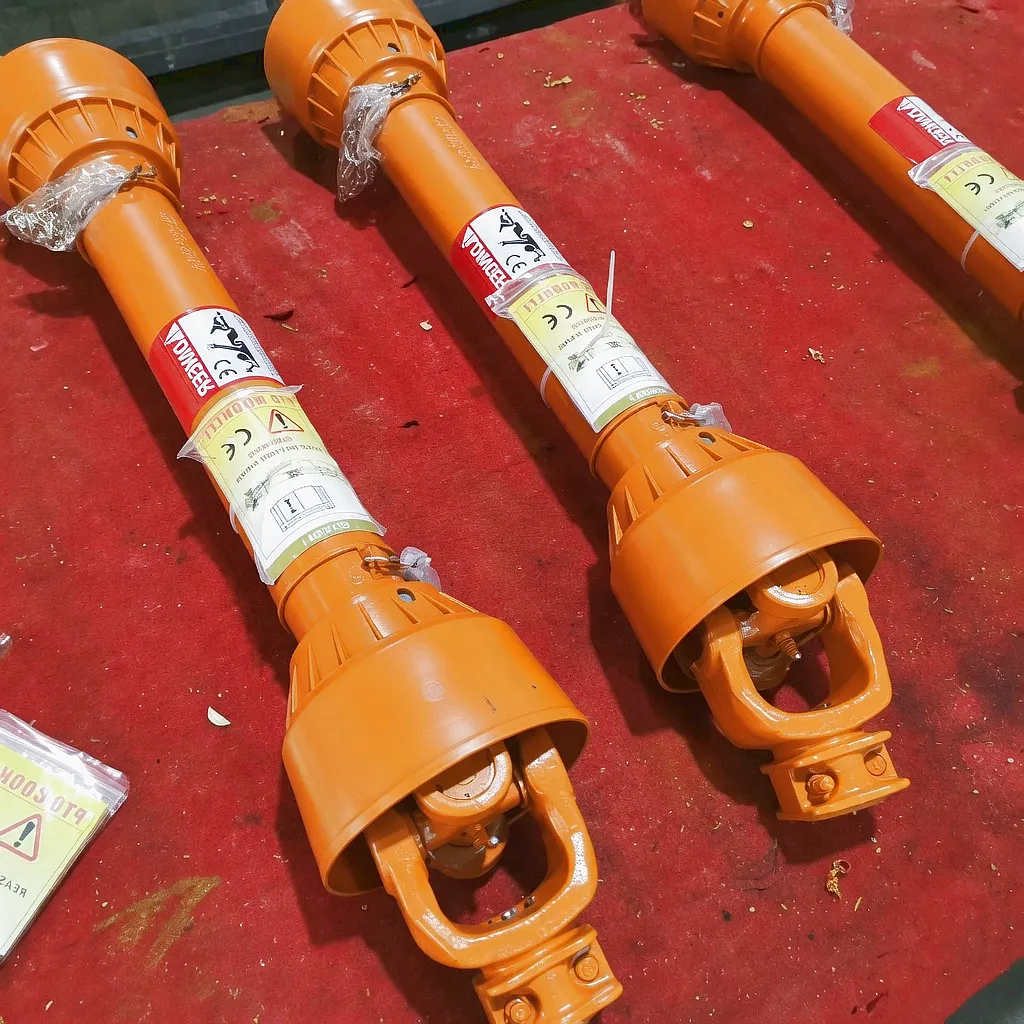 The operating principle behind a PTO drive shaft in a concrete pump truck configuration follows a straightforward but precision-dependent mechanical chain. The vehicle’s engine — typically a heavy-duty diesel unit producing between 250 kW and 380 kW of continuous output — routes power through a power take-off gearbox mounted on the transmission housing. This gearbox extracts rotational energy from the main driveline and transfers it to a dedicated output flange. From that flange, the PTO drive shaft transmits the torque across a flexible connection to the hydraulic pump assembly mounted at the rear or side of the truck body.
The telescopic element of the shaft is particularly significant in concrete pump applications. Because the hydraulic pump mounting geometry can vary between truck models from manufacturers such as Schwing, Putzmeister, and Zoomlion — all of which are operated by British plant hire firms — the shaft must extend and compress within its operational length range while the driveline is under load. The inner and outer tubes, typically splined or hexagonal in profile, slide freely through each other while maintaining torsional engagement. This ensures that even as the truck body flexes or the pump shifts slightly under torque reaction forces, the shaft continues to deliver uninterrupted rotational input to the pump.
Core Materials Used in PTO Drive Shaft Manufacturing
The primary structural tube of the PTO shaft is manufactured from 20CrMnTi case-hardening alloy steel, a material widely used in Chinese and European driveline manufacturing for its excellent combination of surface hardness after heat treatment and ductile core toughness. In concrete pump applications, where torque spikes occur during pump reversal cycles, this alloy’s fatigue resistance is critical.
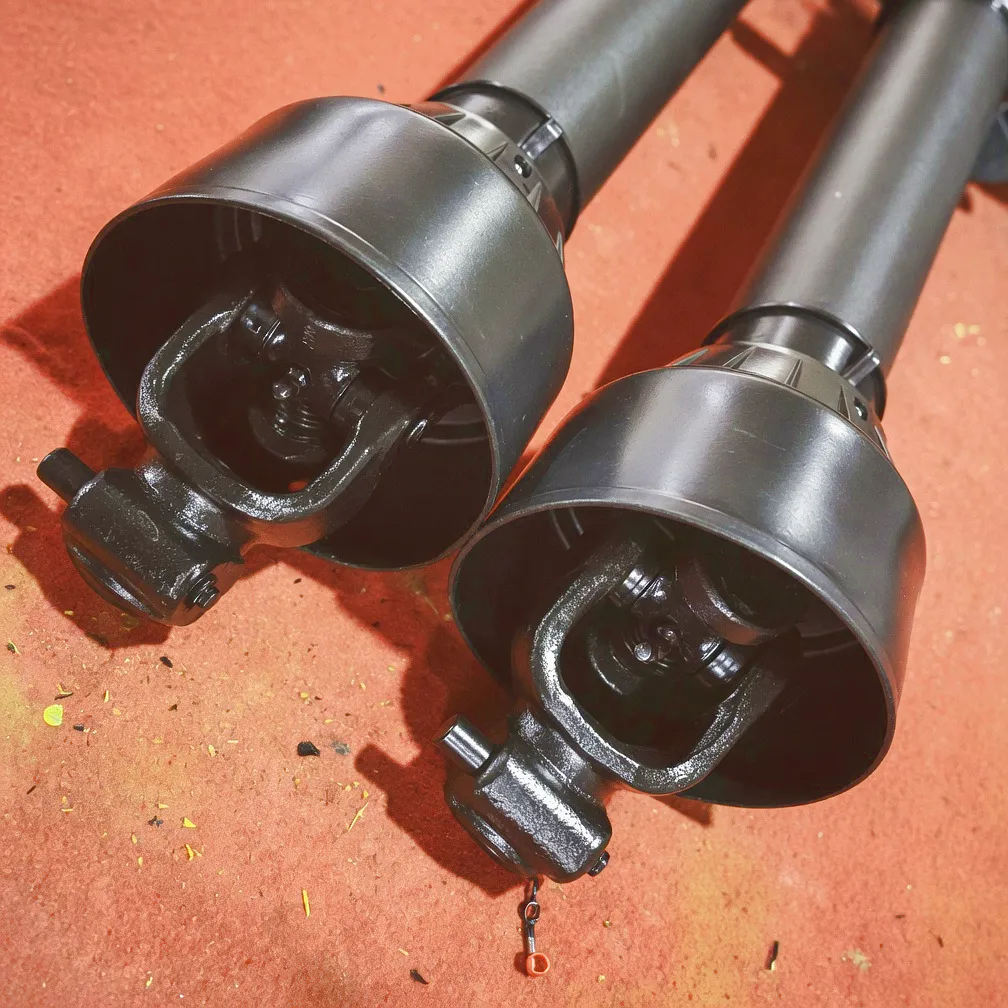
Universal joint cross-spiders and yoke assemblies are precision-forged from 40Cr or 42CrMo4 steel, then induction-hardened to achieve surface hardness values between 58 and 62 HRC at the bearing race contact zones. The forging process eliminates internal voids and creates a grain structure that resists rotational stress fatigue far more effectively than cast alternatives.
The outer guard tube enclosing the rotating shaft assembly on site-operating equipment is manufactured from high-density polyethylene or reinforced ABS. In the UK, compliance with PSSR 2000 and relevant PUWER regulations requires that rotating PTO components are effectively guarded. HDPE guards resist concrete splatter and chemical corrosion from cement admixtures far better than painted steel alternatives.
Needle roller bearing assemblies within each universal joint cross are grease-packed and sealed with lip seals at the factory. In dusty or wet site environments — common on UK construction sites during autumn and winter months — these sealed units maintain lubrication integrity over extended service periods, reducing the maintenance burden on plant operators who may not have immediate access to workshop facilities.
Technical Performance Parameters — PTO Drive Shafts for Concrete Pump Applications
| Parameter | Specification | Notes |
|---|---|---|
| Rated Torque | 500 – 3,500 Nm | Varies by pump model; concrete pump trucks typically require 1,200–2,400 Nm |
| Peak Torque (shock load) | Up to 2× rated (with torque limiter) | Shear bolt or ratchet torque limiter recommended for pump protection |
| Rotational Speed (max) | 540 / 1,000 RPM | Match to PTO gearbox output; 1,000 RPM preferred for hydraulic pump efficiency |
| Operating Angle (UJ) | Up to 15° (standard) / 25° (wide-angle) | Wide-angle joints available for tight installation geometries |
| Telescopic Stroke | 100 – 400 mm | Customisable to installation requirements |
| Tube Profile | Round / hexagonal / triangular / star | Hexagonal and triangular for high-torque pump shaft applications |
| Shaft Tube Material | 20CrMnTi / 40Cr alloy steel | Heat-treated; surface hardness 58–62 HRC at joint zones |
| Surface Treatment | Zinc phosphate + epoxy paint / hot-dip galvanised | Salt spray tested to 500+ hours for UK outdoor site conditions |
| Yoke Connection Type | Splined bore / plain bore / flanged | Per-vehicle specification; DIN / SAE / ISO spline standards available |
| Safety Guard Material | HDPE / ABS composite | Compliant with PUWER/CE guarding requirements |
| Balancing Grade | G6.3 or better (ISO 1940) | Dynamic balancing at rated speed; critical for vibration-sensitive pump systems |
Why Industrial-Grade PTO Shafts Outperform Standard Alternatives
Concrete pump truck operators across the UK — from specialist subcontractors in Coventry to nationwide plant hire groups headquartered in the East Midlands — have learned through operational experience that shaft specification decisions made at procurement stage have a disproportionate effect on fleet uptime, service intervals, and total cost of ownership.
Concrete pumping involves a highly repetitive load cycle — forward stroke, pressure peak, valve reversal, and return stroke — repeated hundreds of times per hour. Industrial-grade PTO shafts are designed with cross-joint bearing assemblies rated for cyclic fatigue loads rather than simple static torque values. This distinction is critical: a shaft rated for 2,000 Nm static may fail prematurely if its fatigue rating is inadequate for cyclic loading at 70% of that figure applied 600 times per hour over a ten-hour pour.
Pump blockages — caused by aggregate segregation, premature concrete setting, or pipeline kinks — generate instantaneous torque spikes that can be 3 to 4 times the rated operating torque. A shaft equipped with a calibrated shear bolt or automatic ratchet torque limiter will disconnect the driveline before that spike transmits to the hydraulic pump, protecting both the pump and the truck’s PTO gearbox from catastrophic damage. The cost difference between a shaft with an integrated limiter and one without is minimal compared to the repair bill for a seized hydraulic pump on a hire fleet asset.
British construction schedules rarely pause for weather. Concrete pump trucks operate through wet winters, on sites where cement washwater and de-icing road salt contaminate the undercarriage environment. Quality PTO drive shafts manufactured to industrial standards are zinc phosphate pre-treated and finished with epoxy-based paint or electro-galvanised coating that resists this corrosive cocktail. Salt spray test data of 500 hours or better is a reasonable specification baseline for UK market equipment, ensuring that surface corrosion does not compromise the structural integrity of tube walls or the telescopic sliding bore over the shaft’s expected service life.
At 1,000 RPM, even a minor mass imbalance in a 600 mm shaft generates measurable centrifugal forces that translate into vibration transmitted through the truck chassis. Over the course of a long pour, this vibration fatigues pipework connections, loosens fasteners, and creates operator discomfort that affects precision in boom placement. PTO shafts balanced to ISO 1940 Grade G6.3 or better at rated operating speed eliminate this vibration source at its origin, rather than relying on downstream damping measures.
Concrete pump truck chassis designs vary considerably between manufacturers, and the spatial relationship between the PTO output and the hydraulic pump mounting often necessitates operating the driveline at angles beyond the 15-degree limit of a standard universal joint. Wide-angle joint variants — accommodating up to 25 degrees of continuous articulation — allow engineers to accommodate difficult mounting geometries without introducing the velocity non-uniformity and harmonic vibration that a standard joint produces when operated beyond its angular rating.
Site maintenance on concrete pump trucks is conducted under time pressure between pours, often in poor lighting conditions. PTO shafts fitted with externally accessible grease nipples on each cross-joint allow a fitter to complete lubrication in under five minutes without removing the guard system. When shafts are sealed-for-life at the joint bearing packs, this requirement shifts to guard removal for bearing inspection — a significantly longer procedure that most operators defer, accelerating bearing degradation.
Application Scenario: PTO Drive Shaft in Concrete Pump Truck Operations
Across the UK’s diverse construction landscape, concrete pump trucks equipped with properly specified PTO drive shafts are deployed in an impressive range of operational contexts. The following scenarios illustrate the breadth of environments where driveline quality determines project outcomes.
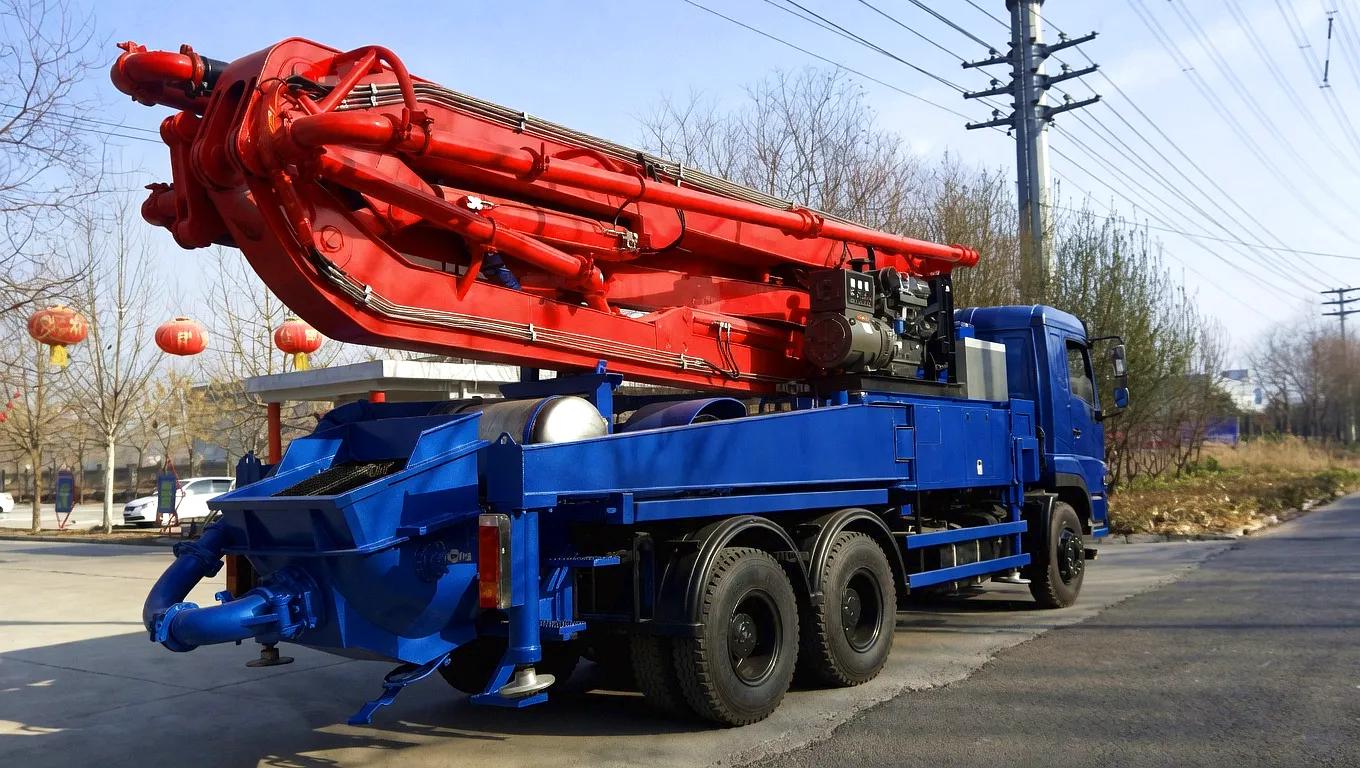 Manchester’s city centre residential development boom, concentrated particularly around Deansgate, Salford Quays, and the NOMA district, has generated sustained demand for high-reach concrete pump trucks capable of delivering concrete to formwork at heights of 30 metres and above. These boom pump configurations are almost exclusively powered by the truck’s own diesel engine through a dedicated PTO system, with the hydraulic pump drawing power directly from the drive shaft at 1,000 RPM to supply the high-pressure oil circuit that extends the boom sections and drives the concrete pistons.
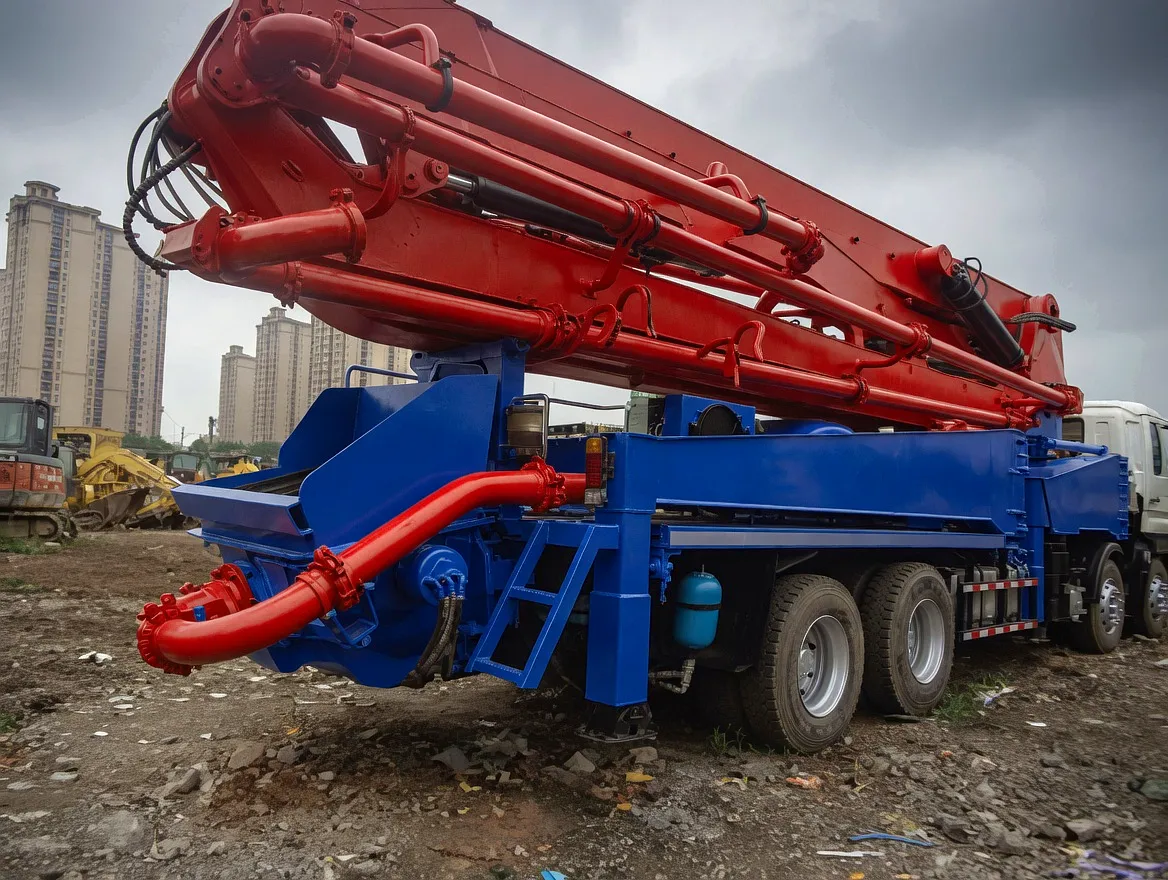 South Yorkshire’s infrastructure renewal programme, including bridge deck replacement and motorway junction upgrades along the M1 and A1(M) corridors near Sheffield, presents a different set of demands for concrete pump truck drivelines. Bridge deck work requires precisely timed concrete placement into structural formwork under strict quality control conditions — specification concrete mixes with tight slump requirements and accelerated early-strength admixtures that significantly increase pumping pressure compared to standard residential concrete.
 The West Midlands logistics and industrial property sector has seen significant expansion, with major distribution centres and manufacturing facilities constructed across sites in the Birmingham, Coventry, and Redditch corridors. Concrete pump trucks deployed on large-format floor slab pours for logistics warehouse construction operate in a distinctive duty cycle: high-volume, relatively low-pressure pumping of flowing concrete over large floor areas, often with line pumps that require the truck to remain stationary for many hours with the PTO engaged continuously.
 Coastal flood defence schemes along the north-east coastline of England, from the Tees Estuary to the Northumberland shore, involve the placement of large concrete volumes in highly corrosive marine environments. Concrete pump trucks operating on coastal defence contracts face the most demanding corrosion conditions encountered in UK civil engineering: constant salt spray, frequent washdown with seawater, and extended periods where the undercarriage is exposed to tidal influence if working from temporary access roads.
Ever Power: Precision PTO Shaft Manufacturing for the Global Market
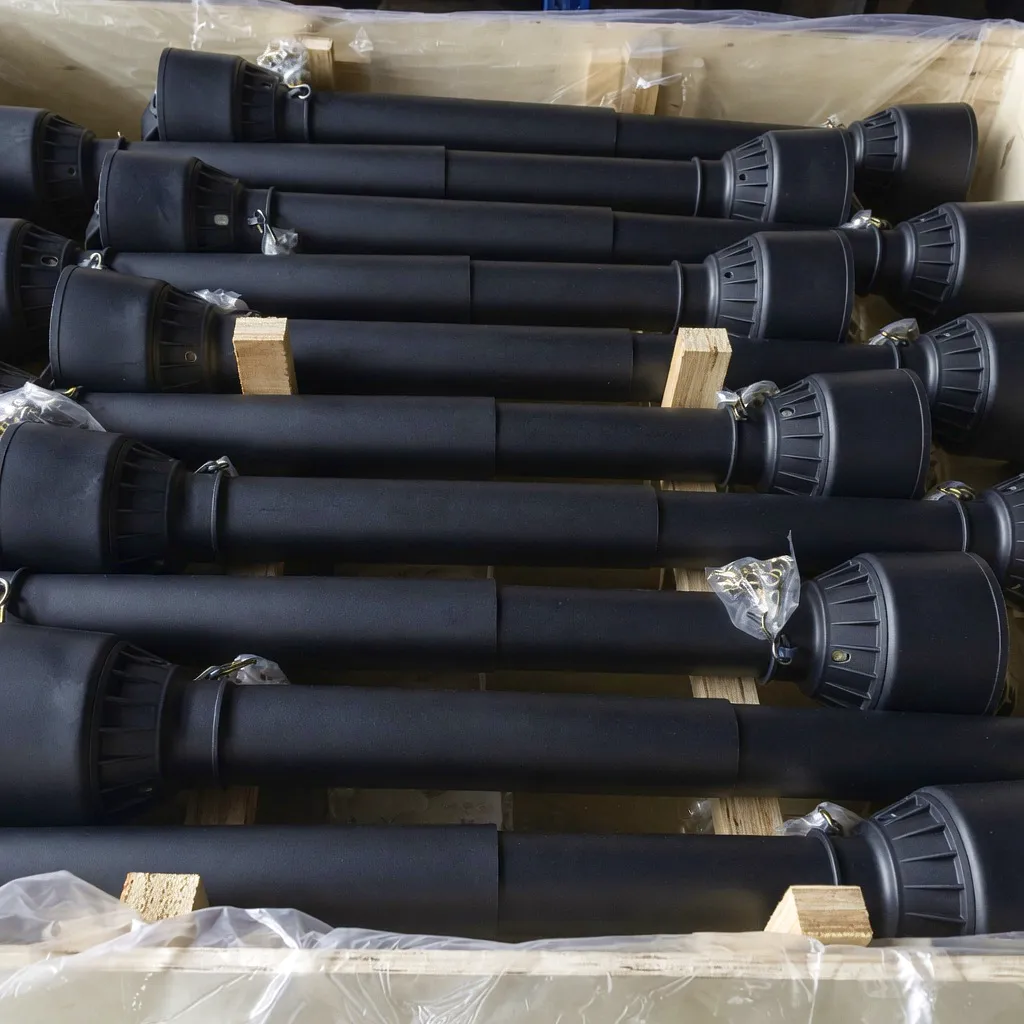
Ever Power is a dedicated PTO drive shaft and power transmission component manufacturer with over two decades of production experience serving agricultural equipment OEMs, construction machinery builders, and industrial plant operators across Europe, North America, and Australia. Our manufacturing facility operates precision CNC turning centres, induction hardening lines, dynamic balancing machines, and fully automated grease injection systems for sealed bearing assembly, giving us the process control capability to produce shafts that meet or exceed the performance specifications demanded by concrete pump truck operators in the UK market.
What distinguishes Ever Power from catalogue suppliers is our genuine custom engineering capability. Where standard product ranges end — in terms of shaft length, torque rating, yoke connection geometry, or safety device specification — our engineering team begins. We work directly with fleet engineers, plant hire procurement managers, and concrete pump truck OEM service departments to develop replacement and retrofit shafts that match the exact dimensional, torsional, and safety requirements of any installation. Our minimum customisation order quantities are designed for fleet operators, not just large OEM programmes, making precision custom specification accessible to specialist concrete pump hire businesses of all sizes.
- Custom shaft lengths from 400 mm to 2,500 mm
- DIN, SAE, ISO spline standards to order
- Torque limiter selection: shear bolt, ratchet, automatic
- Wide-angle joint assemblies up to 80°
- OEM colour and marking to specification
- CE/PUWER compliance documentation
- Standard stocked configurations: 3–5 working days
- Custom engineered shafts: 15–25 working days
- Express freight via DHL / sea freight for bulk orders
- UK-based stocking partners for fast replacement supply
- Spare part cross-reference service available
- ISO 9001:2015 quality management system
- 100% torque testing on industrial-grade shafts
- Dynamic balancing certification per ISO 1940
- Material traceability for alloy steel certification
- Full dimensional report available on request
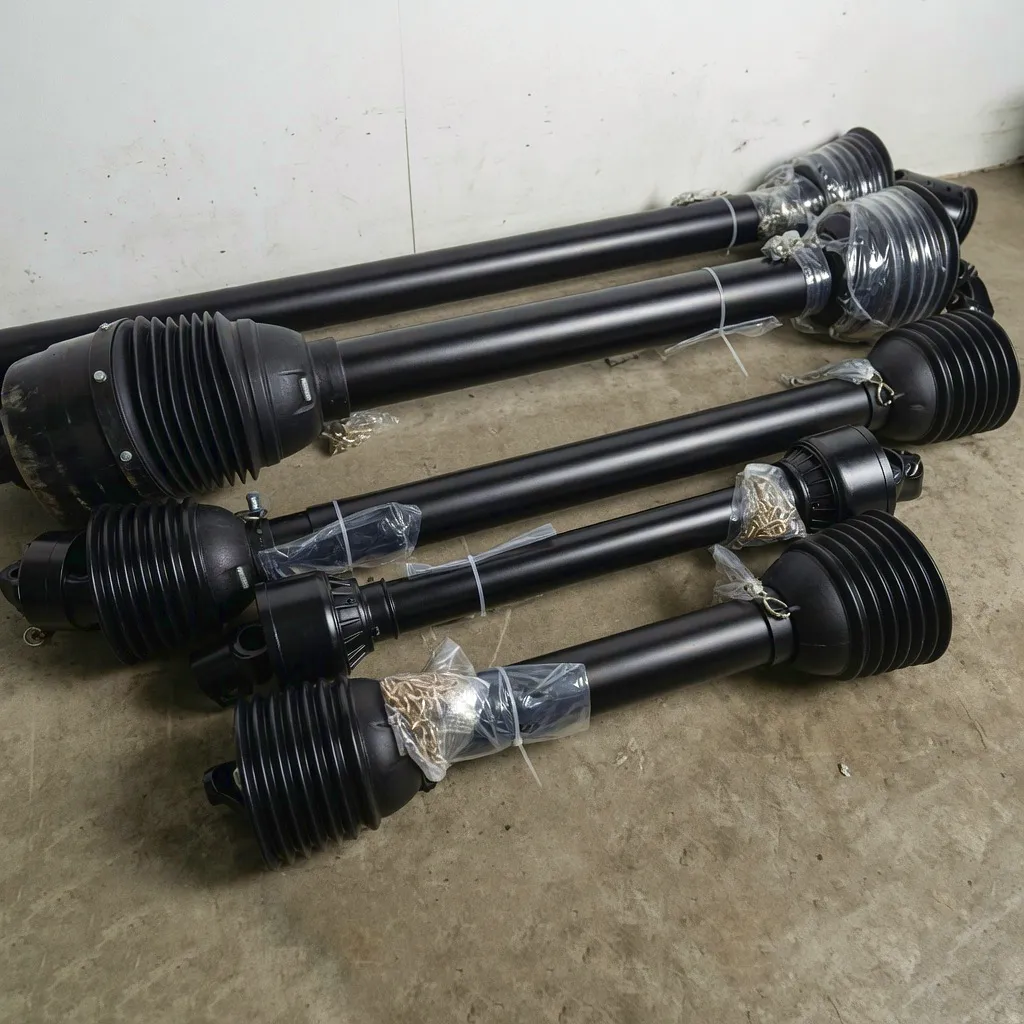
PTO Drive Shaft Product Range

How Ever Power Transformed Fleet Reliability for a Leeds Concrete Pumping Specialist
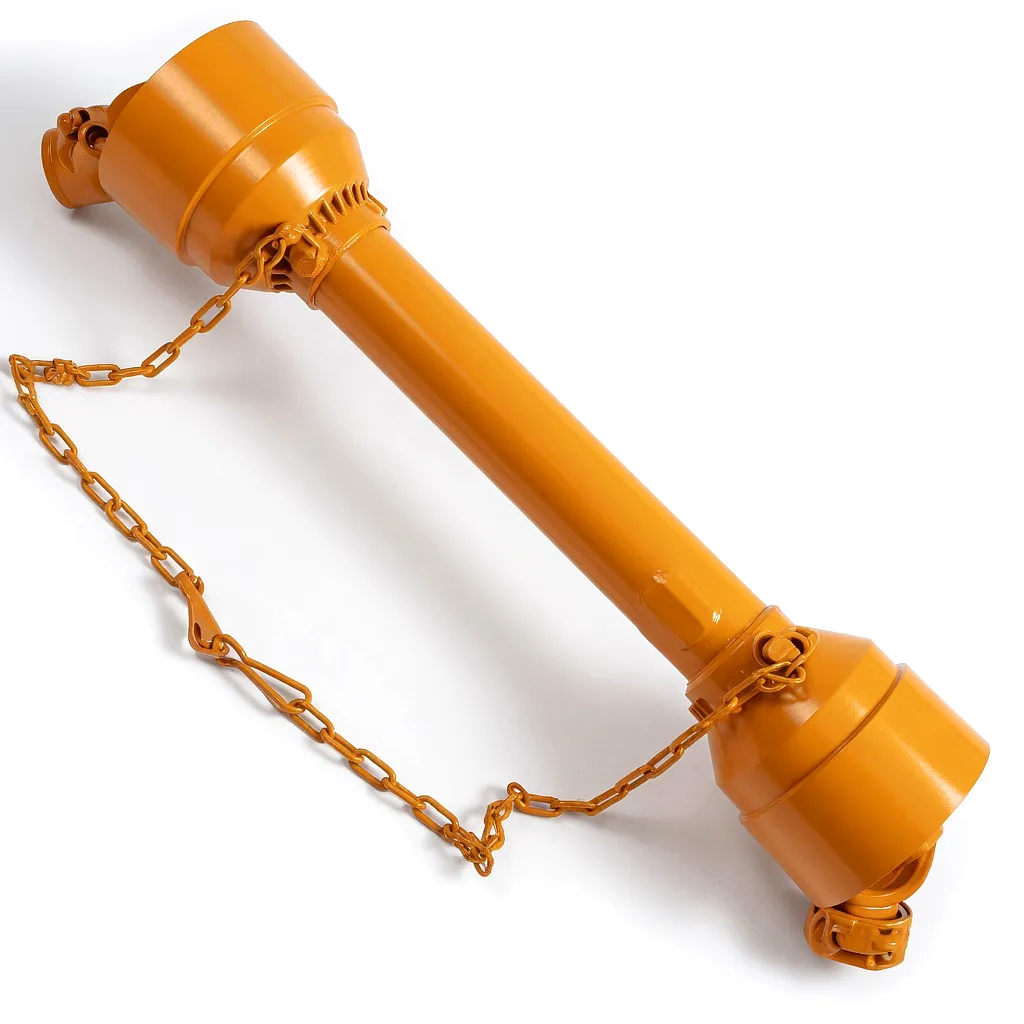 Northern Concrete Solutions Ltd, a specialist concrete pumping contractor operating across West Yorkshire and the broader northern region, was experiencing recurring PTO drive shaft failures across its fleet of twelve boom pump trucks. The failures were concentrated in the universal joint assemblies of three-metre shafts used to connect the truck’s PTO gearbox output to aftermarket hydraulic pump units that had been retro-fitted to extend the operational capability of older vehicles. Joint failures were occurring at intervals of approximately 800 to 1,100 hours of pump operation — less than half the expected service life — resulting in costly unplanned downtime during peak contract periods, particularly in autumn when ground preparation and foundation work for residential developments across the Leeds, Bradford, and Harrogate areas reaches its seasonal peak.
After contacting Ever Power’s technical sales team with a detailed description of the failure pattern — including photographs of fractured cross-spiders showing classic fretting fatigue marks on the bearing needle contact zones — our engineers identified the root cause as an undersized cross-joint specification relative to the actual cyclic torque load the hydraulic pump was imposing. The original shafts had been selected by tube length alone, without cross-referencing the hydraulic pump’s torque demand against the bearing fatigue life data for the joint size specified.
Ever Power supplied replacement assemblies with an uprated cross-joint size — moving from the original 30.2 mm journal diameter bearing series to a 35 mm series — while maintaining the same overall shaft envelope dimensions. A calibrated ratchet torque limiter was added to each assembly, set to disengage at 125% of the hydraulic pump’s maximum drive torque, providing automatic protection against blockage-related torque spikes. After 18 months of operation and well over 2,000 pump hours accumulated across the upgraded shafts, Northern Concrete Solutions has not experienced a single joint failure. The fleet manager estimates the reduction in unplanned downtime has saved the business in excess of £35,000 in lost contract revenue and emergency call-out costs over that period.
What Our Customers Say
“The uprated joint specification Ever Power recommended completely eliminated the failure pattern we’d been struggling with for two years. Their engineering team actually understood what was causing the problem rather than just offering a direct replacement. Eighteen months on and not a single joint failure — the ROI on switching supplier has been exceptional.”
“We specified Ever Power shafts for a new fleet of truck-mounted pumps we commissioned for our Birmingham operations. The custom spline matching to our PTO gearbox output was done from our drawings with zero back-and-forth iterations. Lead time was 18 working days for twelve custom units, which was genuinely impressive for a non-standard specification.”
“We’ve been running Ever Power shafts on the concrete pump units working our coastal defence contracts near Newcastle for the past two seasons. The hot-dip galvanised finish has held up remarkably well against salt exposure — we’re seeing roughly double the corrosion protection life compared to what we were getting from our previous supplier. Worth every penny.”
Frequently Asked Questions
Common questions from UK plant operators, fleet engineers, and procurement teams about PTO drive shafts for concrete pump truck applications.
Ready to Upgrade Your Concrete Pump Fleet’s Driveline?
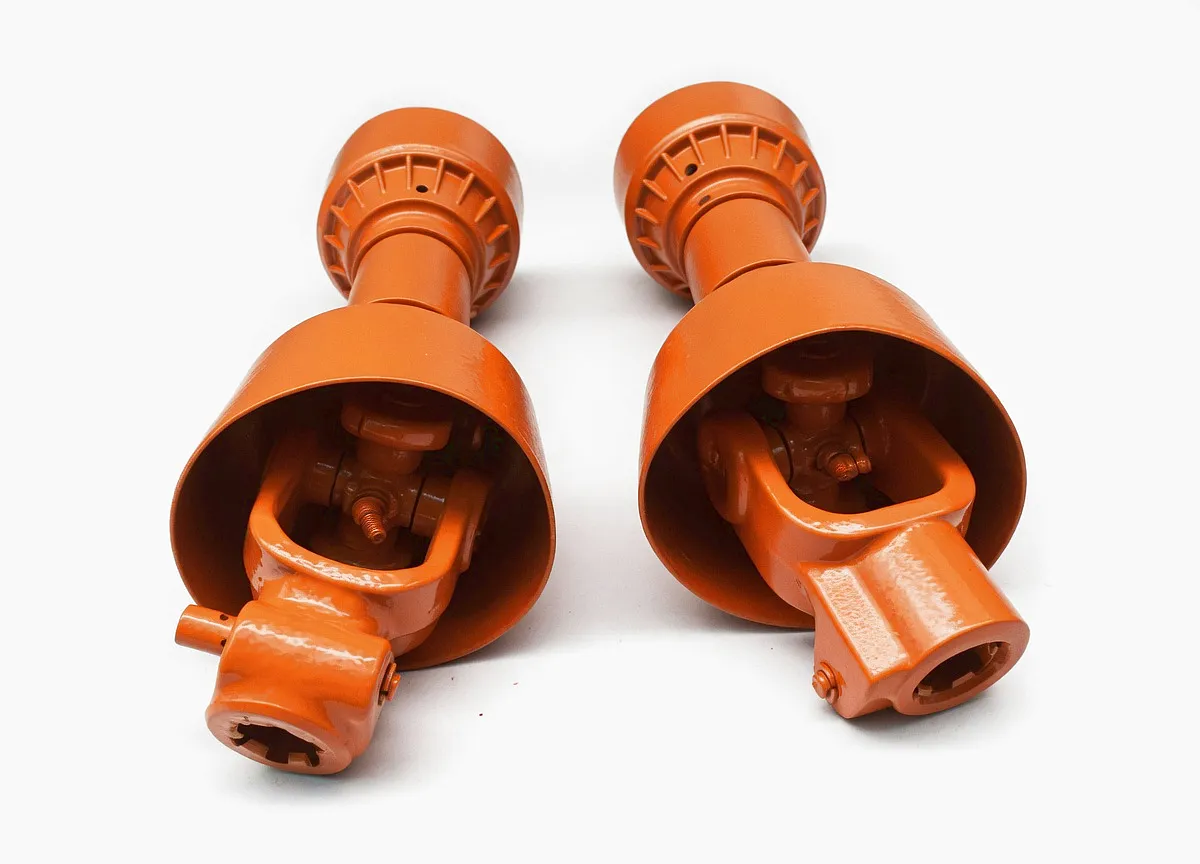
Talk to Ever Power’s engineering team about the right PTO drive shaft specification for your concrete pump truck application. Whether you need a direct replacement for a stocked configuration or a fully custom-engineered assembly, we deliver the technical depth and manufacturing precision your fleet demands.