
Product Description
The Pump Drives (Hydraulic pump Drives) is a gearbox allowing the connection between a prime mover (internal combustion engine or electric motor for example) and 1 or more hydraulic pumps. Usually it is used on both stationary and mobile application where mechanical power must be converted into hydraulic power for the purpose of operating travel functions and services.
The hydraulic pumps drives gearboxes consist of a gear drive inside a CHINAMFG housing that connects to a gasoline or diesel engine. The opposite side contains 1 or more standard 2- or 4-bolt flanges for mounting hydraulic pumps. This configuration provides several benefits. For one, 2 or more identical pumps can be connected to provide nearly identical hydraulic output flow from each. Or different sized pumps can be used provide output flow proportional to the displacement of each pump.These gearboxes not only saves space and weight but also eliminates the number of components and reduces assembly time for the whole machinery. Our modular pump drives could allow driving 2 to 4 pumps simultaneously. This not only offers design flexibility, but can boost system efficiency as well.
| Model | 2 pumps drive | 3 pumps drive | 4 pumps drive | |||||||
| Parameter | KK190-2N | KK400-2N | KK530-2N | KK700-2N | KK280-3N | KK400-3N | KK530-3N | KK700-3N | KK530-4N | KK700-4N |
| Max. Input power (KW) | 190 | 400 | 530 | 700 | 280 | 400 | 530 | 700 | 530 | 700 |
| Max. Output power per pump pad (KW) | 110 | 210 | 270 | 360 | 150 | 210 | 270 | 360 | 270 | 330 |
| Max. Output torque per pump pad (Nm) | 400 | 900 | 1500 | 1900 | 800 | 900 | 1500 | 1900 | 1500 | 1800 |
| Max. Input speed (RPM) | 2800 | 2600 | 2600 | 2400 | 2800 | 2600 | 2600 | 2400 | 2600 | 2400 |
| Max. Output speed (RPM) | 3200 | 2800 | 2800 | 2700 | 3200 | 2800 | 2800 | 2700 | 2800 | 2700 |
| Transmission ratio | 0.74/0.81/0.89/0.98··· | 0.67/0.74/0.81/0.89/0.98··· | 0.67/0.74/0.81/0.89/0.98··· | 0.67/0.74/0.81/0.89/0.98··· | 0.74/0.81/0.89/0.98··· | 0.67/0.74/0.81/0.89/0.98··· | 0.67/0.74/0.81/0.89/0.98··· | 0.67/0.74/0.81/0.89/0.98··· | 0.67/0.74/0.81/0.89/0.98··· | 0.67/0.74/0.81/0.89/0.98··· |
| Mount size of Prime mover | SAE #3 #4 etc. | SAE #2 #3 etc. | SAE #1 #2 #3 etc. | SAE #0 #1 #2 etc. | SAE #3 #4 etc. | SAE #2 #3 etc. | SAE #1 #2 #3 etc. | SAE #0 #1 #2 etc. | SAE #1 #2 #3 etc. | SAE #1 #2 etc. |
| Port size of Single pump | SAE A,B,C flange etc. | SAE A,B,C,D flange etc. | SAE B,C,D,E flange etc. | SAE C,D,E flange etc. | SAE A,B,C flange etc. | SAE A,B,C,D flange etc. | SAE B,C,D,E flange etc. | SAE C,D,E flange etc. | SAE B,C,D,E flange etc. | SAE B C,D flange etc. |
| Housing material | Cast iron | Cast iron | Cast iron | Cast iron | Cast iron | Cast iron | Cast iron | Cast iron | Cast iron | Cast iron |
| Application: | Machinery, Agricultural Machinery |
|---|---|
| Function: | Distribution Power, Speed Changing, Speed Reduction, Speed Increase |
| Installation: | Horizontal Type |
| Type: | Cylindrical Gear Box |
| Product Name: | Hydraulic Pump Drive |
| Conditon: | New |
| Samples: | US$ 4990/Piece 1 Piece(Min.Order) | |
|---|
| Customization: | Available | Customized Request |
|---|
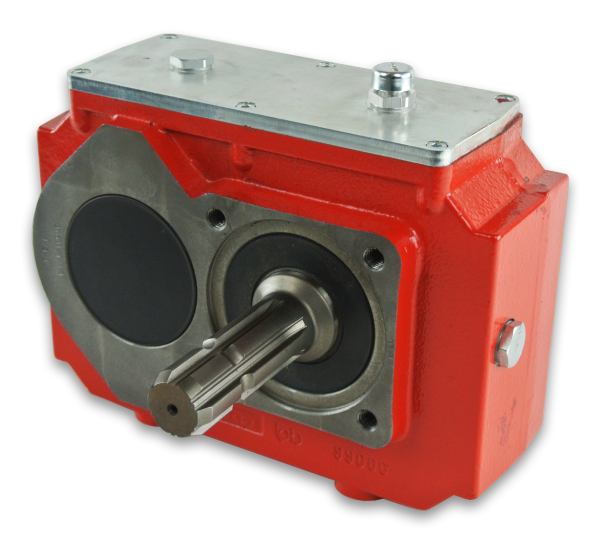
Challenges in Using Miter Gearboxes
While miter gearboxes offer various advantages, they also come with certain challenges that need to be addressed:
Lubrication: Proper lubrication is crucial for miter gearboxes to minimize friction, heat, and wear between gear teeth. Ensuring consistent and sufficient lubrication in the gearbox can be challenging, especially in enclosed or hard-to-reach spaces.
Maintenance: Miter gearboxes require periodic maintenance to ensure their optimal performance and longevity. Maintenance tasks may include checking and replenishing lubrication, inspecting gear teeth for wear, and addressing any misalignment or mounting issues that may arise over time.
Backlash: Backlash, or the clearance between gear teeth, can impact the accuracy of motion transfer. Excessive backlash can lead to reduced precision and positioning errors in applications that require high accuracy.
Complex Design: Miter gearboxes have a more intricate design compared to some other gearbox types, which can make manufacturing, assembly, and maintenance more complex. This complexity may also result in higher manufacturing and maintenance costs.
Efficiency Loss: Miter gearboxes can experience efficiency losses due to factors such as friction and misalignment. These losses can reduce the overall efficiency of power transmission, leading to energy wastage.
Space Constraints: In some applications, space limitations can pose a challenge when integrating miter gearboxes, especially when larger gear ratios are required to achieve the desired motion direction change.
Shock Loads: Applications subject to sudden shock loads or high impact forces can pose challenges for miter gearboxes. Adequate measures, such as using shock-absorbing components or designing for higher durability, may be required to address these challenges.
Alignment and Mounting: Proper alignment and mounting of miter gearboxes are critical to ensure smooth operation and prevent premature wear. Achieving precise alignment can be challenging, especially in installations with limited access or complex geometries.
Cost Considerations: The design complexity and manufacturing requirements of miter gearboxes can contribute to higher costs compared to simpler gearbox types. Balancing the benefits of miter gearboxes with the associated costs is essential during the selection process.
Addressing these challenges often requires careful engineering, proper maintenance practices, and consideration of specific application requirements. Despite the challenges, miter gearboxes remain valuable components in various industries where their unique motion direction-changing capabilities are advantageous.
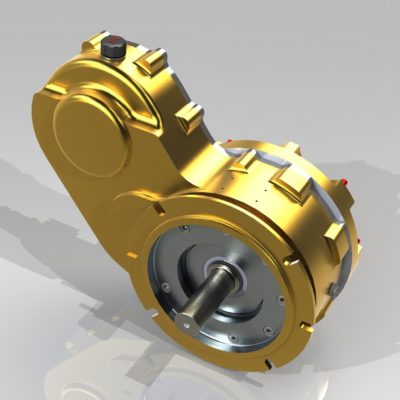
Common Industries Using Miter Gearboxes and Their Applications
Miter gearboxes find application in various industries due to their ability to change the direction of rotational motion by 90 degrees. Some of the common industries where miter gearboxes are commonly used include:
- Automotive: Miter gearboxes are utilized in automotive applications for power transmission between different components, such as steering systems and drive shafts.
- Printing: Printing machinery uses miter gearboxes to change the direction of motion in the paper feed mechanism, ensuring accurate paper alignment.
- Material Handling and Conveyors: Miter gearboxes are used in conveyor systems to facilitate the transfer of materials at right angles.
- Manufacturing: Various manufacturing processes require motion direction changes, such as in assembly lines and automated equipment.
- Robotics: Miter gearboxes are employed in robotics for motion control, allowing robots to move efficiently and accurately in different directions.
- Woodworking: Woodworking machinery uses miter gearboxes to change the direction of cutting tools, enhancing precision and efficiency.
- Textile: Miter gearboxes are used in textile machinery to control the motion of fabrics and threads during manufacturing.
- Machine Tools: Miter gearboxes play a role in machine tools where angular motion changes are needed.
The unique design of miter gearboxes makes them suitable for applications requiring precise 90-degree motion changes, enabling smoother and more efficient operation in these industries.
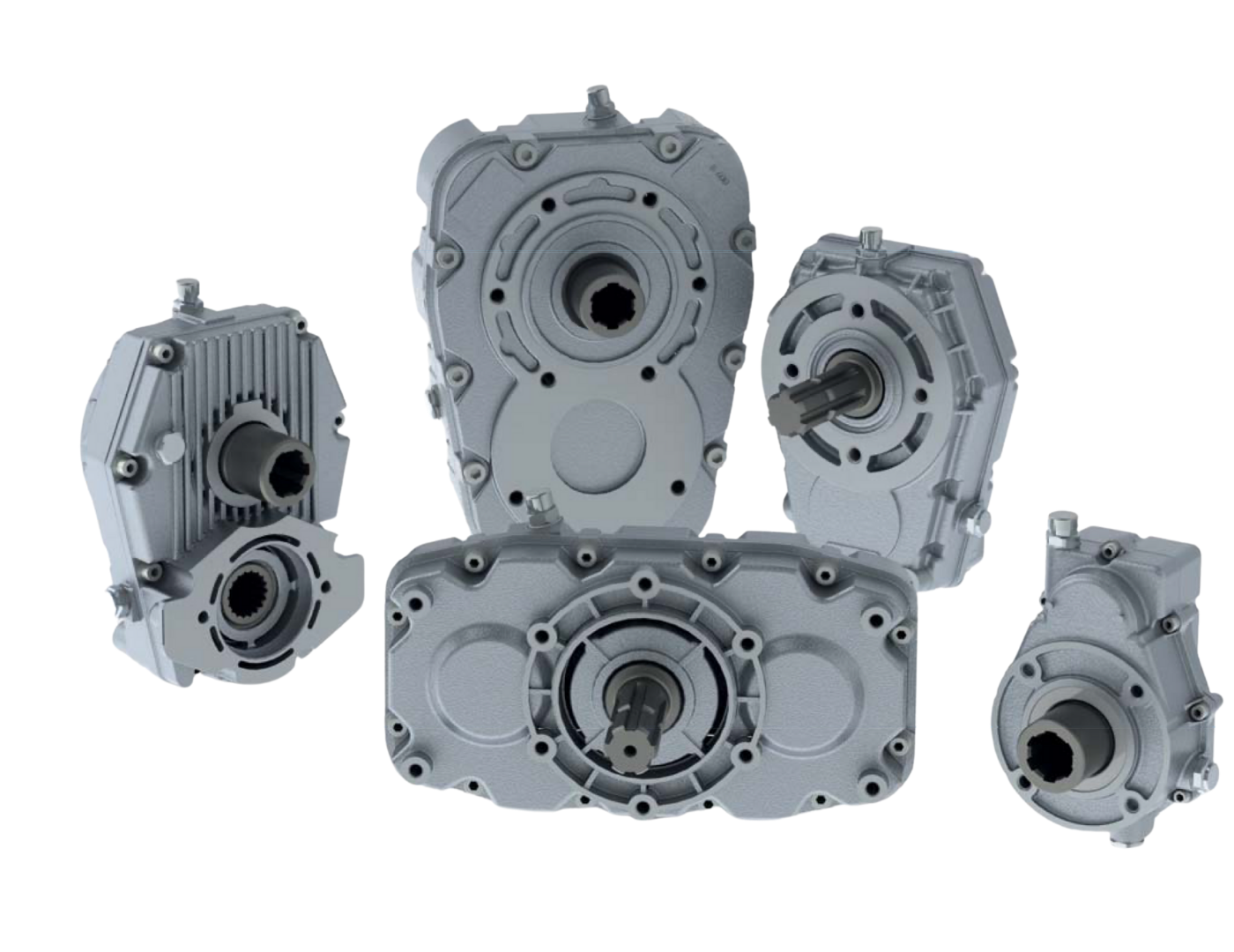
Transmission of Motion at a 90-Degree Angle by Bevel Gears in a Miter Gearbox
Bevel gears in a miter gearbox are specifically designed to transmit motion at a 90-degree angle between intersecting shafts. This is achieved through the unique tooth profile and arrangement of the bevel gears.
Bevel gears have conical-shaped teeth that taper towards the apex of the cone. In a miter gearbox, two bevel gears with identical tooth profiles are mounted on shafts that intersect at a 90-degree angle. The orientation of the teeth allows the gears to mesh smoothly and transmit motion from one shaft to another while changing the direction of rotation by 90 degrees.
As one bevel gear rotates, its conical teeth engage with the teeth of the second bevel gear, causing the second shaft to rotate perpendicular to the first shaft. The gear ratio and tooth configuration determine the speed and torque relationship between the input and output shafts.
Overall, the precise design of bevel gears and their arrangement in a miter gearbox enables efficient and reliable transmission of motion at a right angle, making them well-suited for applications that require changes in direction within mechanical systems.


editor by CX 2023-10-31