
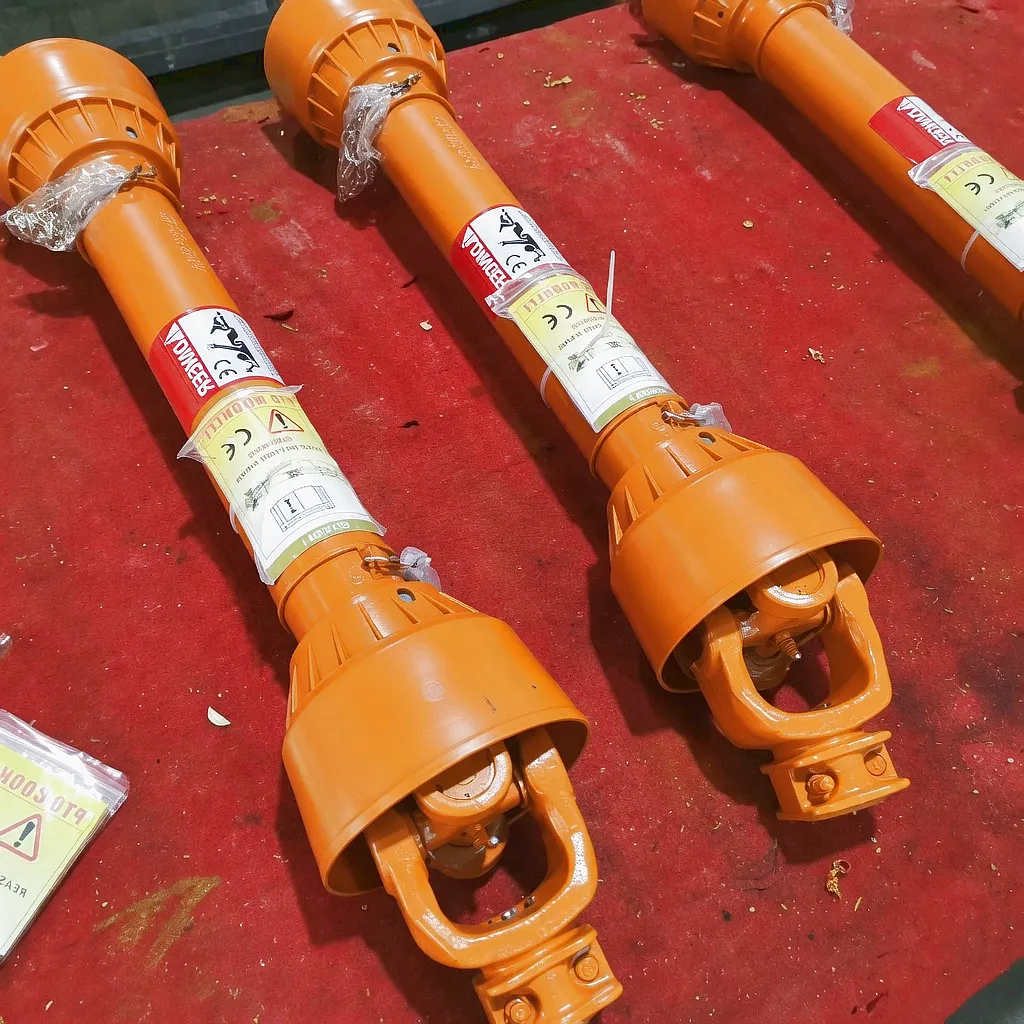
 Grain augers are among the most mechanically demanding pieces of equipment found on arable farms and cereal processing facilities across the United Kingdom. Whether handling spring barley in Lincolnshire, wheat in the East Riding of Yorkshire, or oilseed rape in the Norfolk Broads, the ability to move bulk grain rapidly and reliably depends almost entirely on one critical component: the PTO drive shaft. This rotating, articulated coupling transfers power from a tractor or stationary power unit directly to the auger’s intake impeller and spiral conveyor, turning raw engine output into controlled, high-volume grain movement. When that shaft is engineered with precision — correct torque rating, appropriate universal joint geometry, and matched yoke dimensions — the entire grain-handling chain operates with minimal downtime and reduced mechanical wear. When it is not, operators face overheating, vibration, premature gearbox failure, and costly interruptions at exactly the moment when harvest weather windows are closing.
How a PTO Drive Shaft Works in a Grain Auger
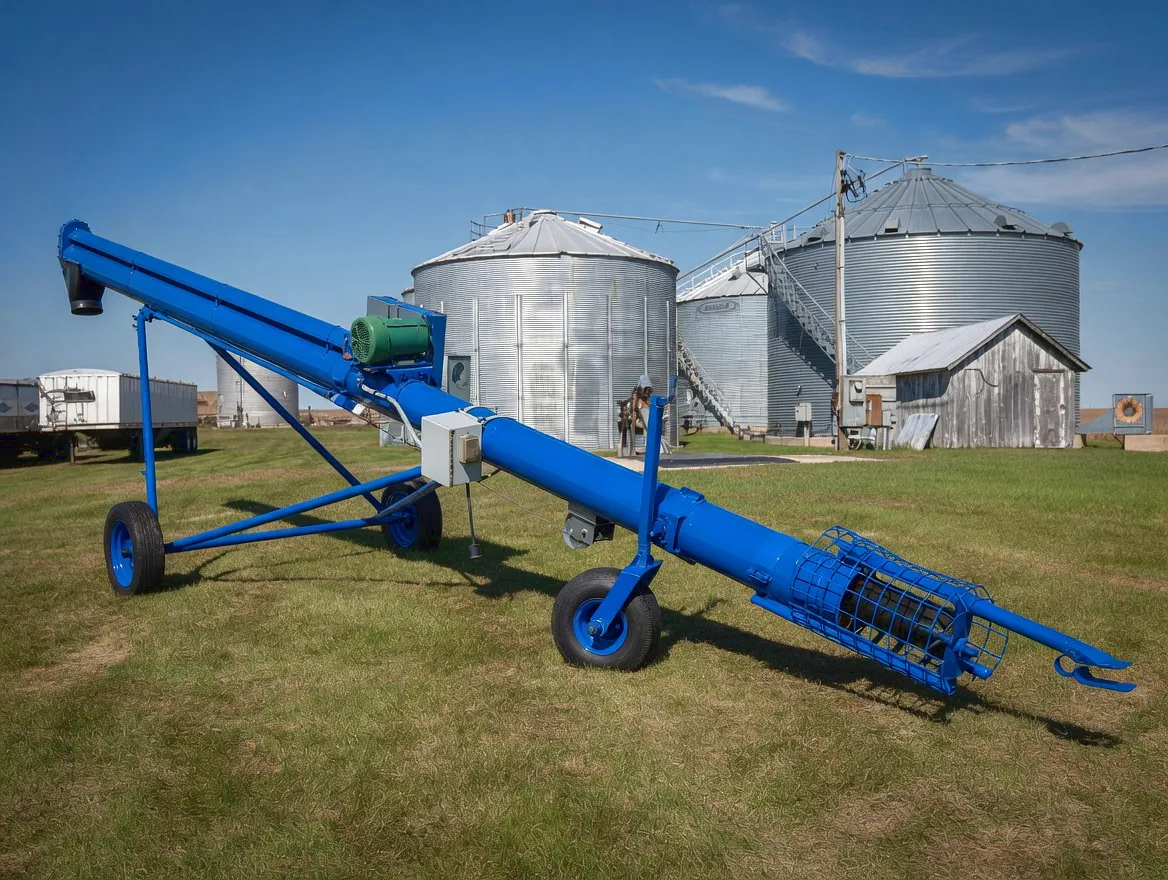 The operating principle of a PTO drive shaft in a grain auger system is rooted in the conversion of rotational torque from a tractor’s power take-off stub into controlled helical motion at the auger’s flighting. When the tractor PTO engages — typically at 540 RPM for smaller portable augers or 1000 RPM for high-capacity elevator models — the shaft begins to rotate and transmits that angular velocity through a series of universal joints (U-joints) to the auger’s input gearbox. The U-joints are the critical enabling technology here: they allow the shaft to operate at an angle to the input axis, which is essential because grain augers are rarely aligned perfectly straight with the tractor hitch. In the Fens of Cambridgeshire, for example, where large grain stores require augers to be positioned at steep angles to reach the apex of a storage heap, the shaft may be operating at an articulation angle of 15 to 20 degrees on a sustained basis.
The phase relationship between the two U-joints on a double-jointed PTO drive shaft is equally important. When both joints are phased at 0 degrees relative to each other — meaning the two cross-pin axes are in the same plane — the velocity fluctuation introduced by one joint is cancelled by the second, resulting in smooth, constant angular velocity at the auger input. Misphased shafts produce a twice-per-revolution pulsation in output speed that manifests as vibration, noise, and accelerated bearing wear throughout the machine. Correctly engineered PTO shafts for grain auger use are always assembled with matched-phase yokes, and reputable suppliers mark this clearly on the yoke flanges to assist operators during reinstallation after maintenance.
Core Materials Used in Manufacturing
The outer and inner profile tubes — which slide telescopically to accommodate length variation as the auger is repositioned — are drawn from alloy steel grades that combine high tensile strength with adequate ductility. 42CrMo4 (equivalent to BS EN 10083-3 in UK specification) is the preferred choice for high-torque applications, offering yield strength above 900 MPa after quenching and tempering. The splined or lemon-profile cross-section of the tube pair is cold-formed for dimensional precision, ensuring smooth telescopic action and minimal radial play even after thousands of operating hours in dusty grain-store environments.
The cross (spider) at the heart of each U-joint is manufactured from case-hardening steel — typically 16MnCr5 or 20MnCr5 — which is carburised to produce a surface hardness of 58–62 HRC while retaining a tough, fatigue-resistant core. This combination of hard surface and ductile core is essential in grain auger service, where the bearing needles in the joint cups experience high Hertzian contact stresses during load reversals. The bearing cups themselves are precision-ground and fitted with high-load needle roller bearings sealed with triple-lip grease seals to exclude grain dust and chaff, which are among the most abrasive contaminants an agricultural machine encounters.
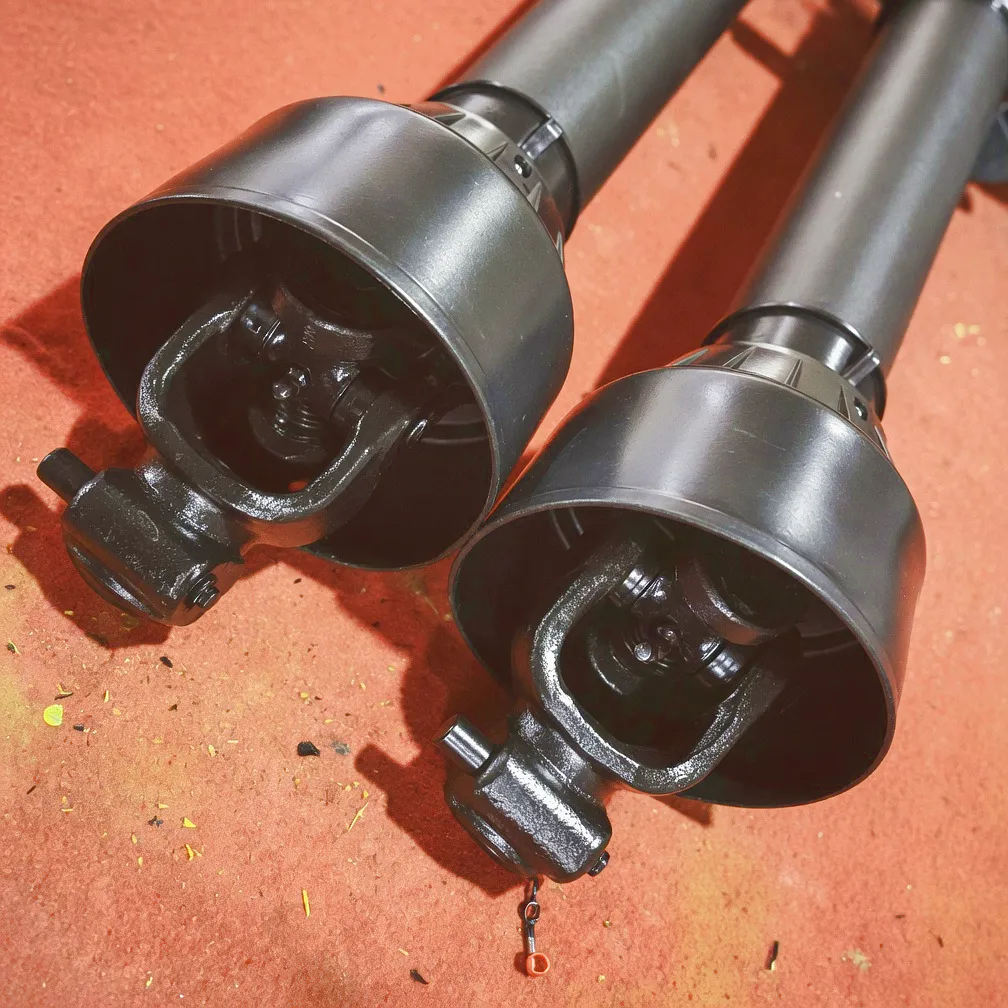
Yokes are hot-forged from medium carbon steel and then machined to tight bore tolerances for the connecting cross pins. Hot forging aligns the grain structure of the steel with the load path, dramatically improving fatigue resistance compared with machined-from-solid or cast alternatives. The outer safety guard — mandatory under UK PUWER (Provision and Use of Work Equipment Regulations) — is moulded from glass-reinforced polypropylene, designed to remain functional after UV exposure during British summers and crack-resistant at the sub-zero temperatures experienced during late-autumn grain clearance operations in northern England and Scotland.
Core Technical Advantages
Dual-phase U-joint geometry ensures that power is delivered at uniform angular velocity across the full operating angle range (typically 0° to 25° for standard grain auger configurations), eliminating the vibration harmonics that degrade gearbox bearings and accelerate wear in the auger tube supports. This is especially valuable in Yorkshire grain elevators where the intake must often be positioned at awkward angles to service both grain trailers and combine harvesters simultaneously.
A slip clutch or shear bolt torque limiter is built into the drive shaft assembly as standard on grain auger variants, activating at a pre-set torque threshold (typically 150 to 300 Nm depending on auger diameter and expected grain density). This safeguards the auger gearbox and intake impeller from the shock loads caused by wet grain ingestion or stone strike — a common occurrence on the flint-laden soils of the South Downs and chalk plains of Wiltshire.
The profiled tube-within-tube design allows shaft length to vary by 200 to 500 mm during operation, accommodating the positional shifts that occur as an auger is raised or lowered to match trailer heights. The sliding surfaces are coated with a high-load grease-compatible anti-friction compound and the profile geometry — either lemon, star, or cross-section — is precision-formed to transmit full torque even at minimum overlap lengths, giving operators complete operational flexibility without shaft removal.
Each U-joint bearing cup incorporates triple-lip sealing with an external labyrinth dust shield, providing IP54-equivalent contamination resistance in standard grain-dust environments. A grease nipple on each bearing cup — placed at a 45° angle for easy access with standard grease guns even with the safety guard fitted — enables routine lubrication every 8 operating hours as recommended for peak-season grain auger use, in line with LOLER/PUWER maintenance schedules common across UK grain merchants and farm estates.
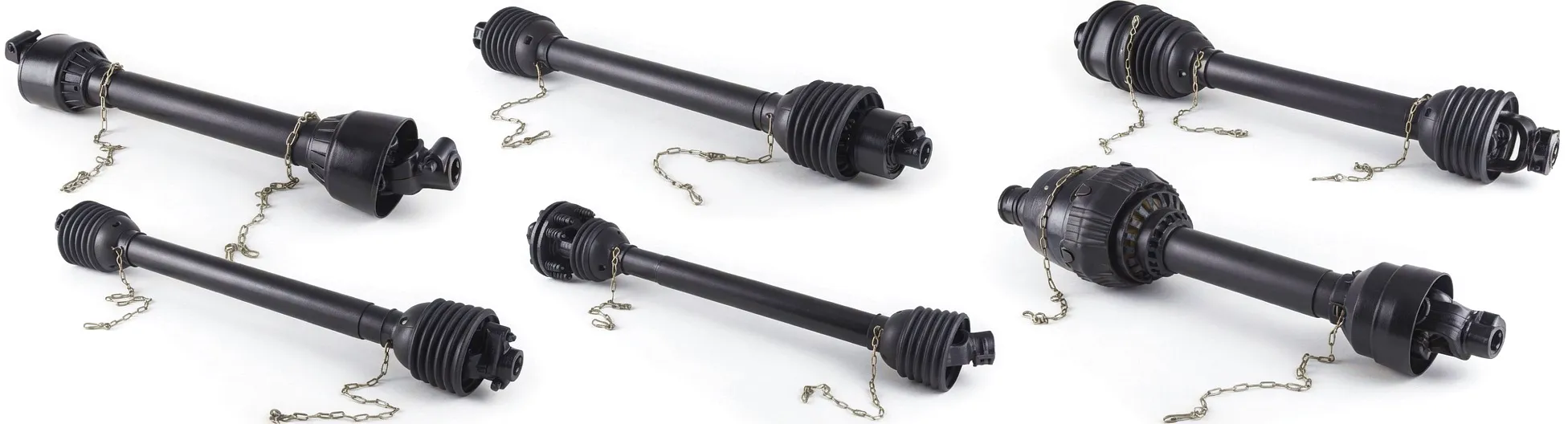
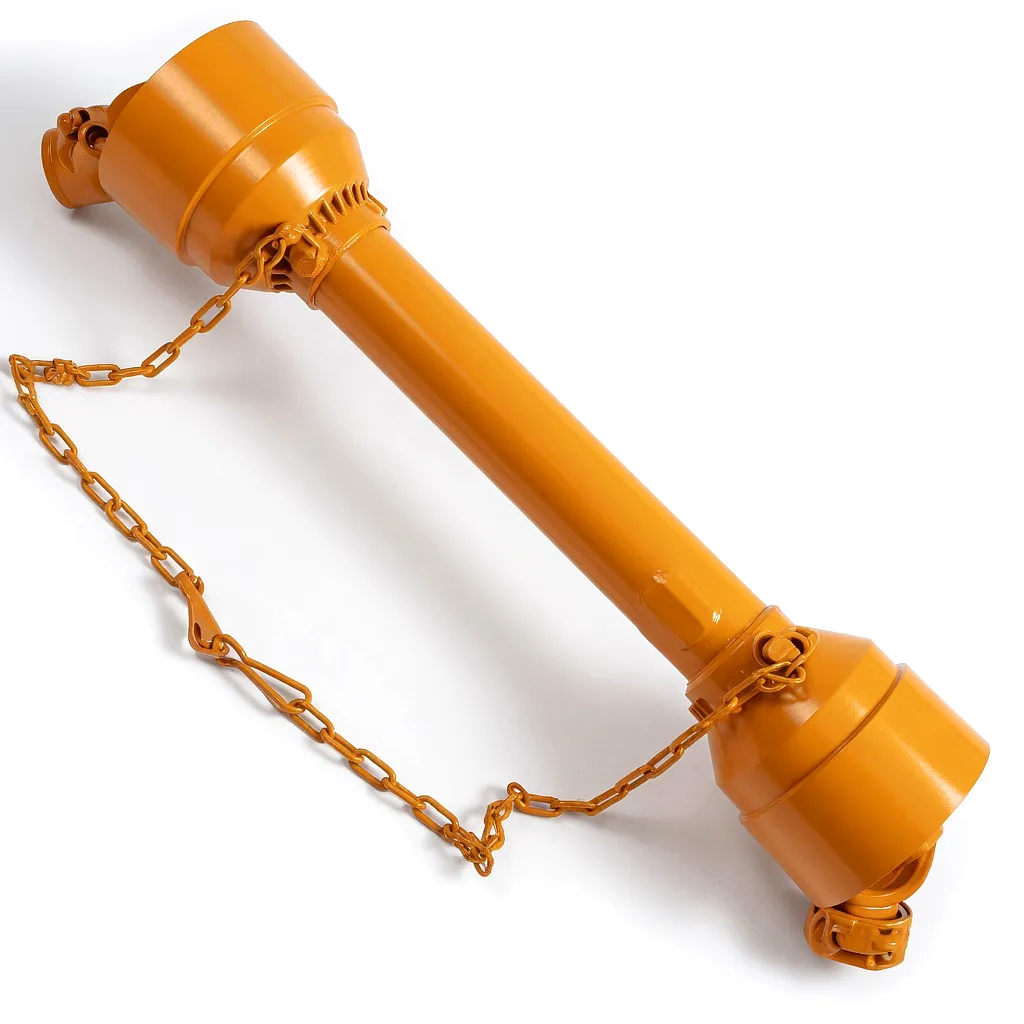
All PTO drive shafts for the UK market are supplied with full-length rotating safety guards that comply with Machinery Directive 2006/42/EC and its retained UK equivalent post-Brexit. The guard assembly incorporates a fixed-end chain anchor to prevent rotation with the shaft, and the cones at each end are profiled to direct debris away from operator feet and clothing — an important consideration given that PTO-related injuries remain a significant recorded cause of serious farm accidents reported annually to the HSE in Great Britain.
Product Technical and Performance Specifications
| Parameter | Standard Range | High-Capacity Range | Notes |
|---|---|---|---|
| Nominal Torque | 250 – 750 Nm | 800 – 2,500 Nm | Matched to auger tube diameter (100–300 mm) |
| Peak (Impact) Torque | Up to 1,800 Nm | Up to 6,000 Nm | Torque limiter trips at 2x nominal |
| Operating Speed | 540 RPM | 1000 RPM | Dual-speed yoke options available |
| Max Operating Angle | 25° | 25° (Wide-angle to 80° optional) | Wide-angle joints for steep-angle auger positions |
| Collapsed / Extended Length | 600 / 900 mm | 800 / 1400 mm (custom to 3000 mm) | Profile tube overlap min 1/3 of collapsed length |
| Tube Profile | Lemon / Star (series 4–6) | Cross / Trilobular (series 7–8) | Higher series = greater torque capacity |
| Yoke Connection | 1-3/8″ 6-spline (Cat.2) | 1-3/4″ 20-spline (Cat.3/4) | ASAE/ISO 500-2 compliant; custom bores available |
| Cross / Spider Material | 16MnCr5 (case-hardened, 58–62 HRC) | 20MnCr5 / 18CrNiMo7-6 | Core hardness 28–35 HRC for toughness |
| Overload Protection | Shear bolt (single-cut) or friction slip | Ratchet cam / friction-free clutch | Trip torque adjustable on friction-free models |
| Surface Finish | Zinc phosphate + paint | Hot-dip galvanised or epoxy powder coat | Galvanised preferred for outdoor UK grain-store environments |
| Safety Guard | GRP polypropylene, UV-stabilised | GRP polypropylene with steel cone ends | CE / UK Machinery Directive compliant |
Industrial Application Scenarios: PTO Drive Shaft in Grain Auger Operations
On-Farm Grain Pit to Storage Barn Transfer — Lincolnshire Arable Estates
Across the flat, intensively farmed arable land of Lincolnshire — one of the UK’s most productive cereal-growing counties — the most common grain auger application is the reception pit-to-barn transfer setup. Combines unload into a covered pit at the field edge, and a tractor-mounted PTO drive shaft powers a portable auger that lifts grain from the pit into an adjacent ventilated steel grain store. The PTO drive shaft here operates at continuous 540 RPM for extended periods during harvest — often 10 to 16 hours per day across a 4-to-6-week window in July and August. The demands this places on the shaft are very different from intermittent-duty applications: the U-joint needle bearings must sustain sustained Hertzian contact stress without overheating, which makes adequate lubricant replenishment critical. Shaft assemblies designed for this type of duty incorporate enlarged grease reservoirs in the bearing cups and heavy-duty needle complement to extend re-greasing intervals from 4 hours to 8 hours. Overload protection is particularly important in pit transfer service because incoming grain from the combine tank often carries soil clods, small flints, and baler-twine fragments that can cause momentary jamming of the auger flighting, generating spike loads that would otherwise propagate through to the tractor PTO clutch.
Scenario 02
Commercial Grain Merchant Intake Pits — East Yorkshire and Humberside
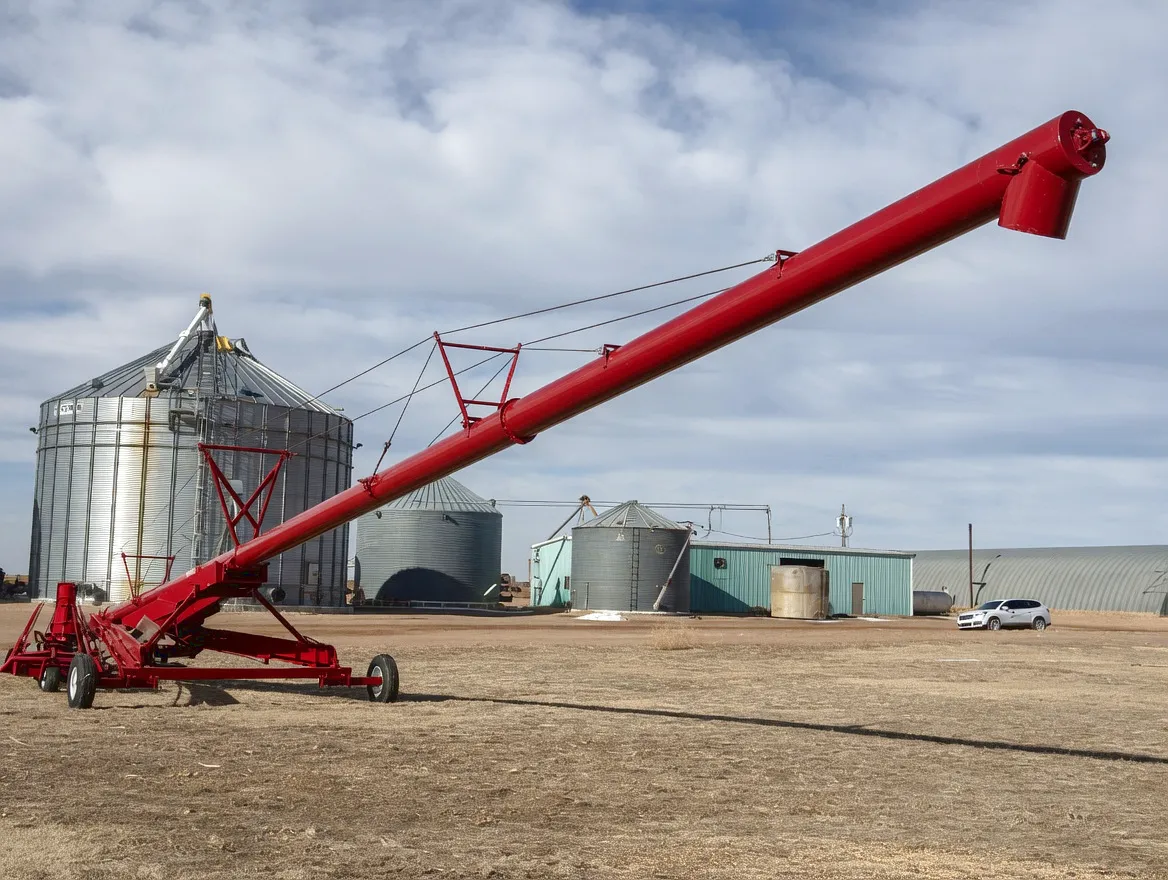
Commercial grain merchants operating inland buying stations in the East Yorkshire market towns of Driffield, Beverley, and Pocklington use permanent-installation auger conveyors as part of their weighbridge and drying complex infrastructure. These systems differ fundamentally from portable farm augers: they are semi-fixed in position, powered from stationary diesel or electric power sources via PTO stub shafts, and expected to run for multiple consecutive seasons without major bearing replacement. The PTO drive shaft in this context may be driving through a right-angle gearbox that then powers a horizontal conveyor running beneath the intake pit floor, followed by a vertical elevator leg and a horizontal drag conveyor to the dryer. Each of these driven sections places a cumulative torque demand on the primary drive shaft. Shaft series selection must account for the sum of all downstream losses, plus a safety factor for the transient loading during system start-up — when a partially filled horizontal conveyor contributes break-out torque that can be two to three times the running load.
The shaft specification here typically calls for a Series 7 or 8 assembly in the high-torque range, with flanged yoke connections to the gearbox input flanges rather than standard splined PTO stubs. Wide-flange bolted connections provide superior concentricity and simplify periodic removal for U-joint inspection without disturbing the connected gearboxes. Ever Power manufactures flanged-end PTO shaft assemblies to custom bolt circle diameters, enabling direct replacement of worn proprietary shafts in existing grain merchant installations throughout the Humber region.
Scenario 03
Animal Feed Milling and Grain Blending — Leicestershire and Northamptonshire Feed Compounders
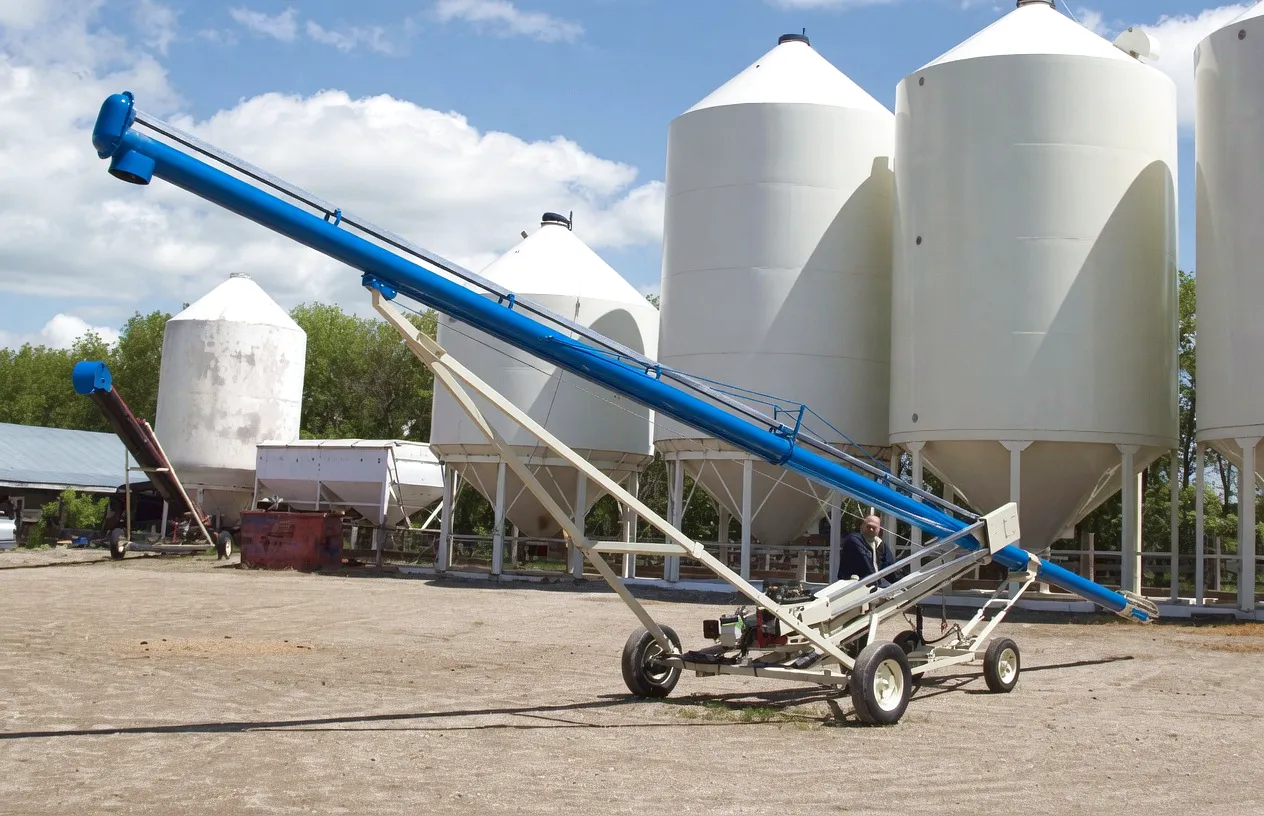
The animal feed manufacturing sector — centred in the East Midlands counties of Leicestershire and Northamptonshire — relies on grain auger systems to transfer raw material from intake hoppers into conditioning vessels, grinding mills, and mixer units. In this industrial environment, the PTO drive shaft must operate with precision because feed blending tolerances are tight: over-speed or under-speed in a metering auger section will alter the blend ratio and compromise batch quality. The shaft specification for feed mill duty favours friction-type overload clutches over shear bolt types because the continuous batch-cycle nature of production means that frequent clutch trips — caused by material bridging over the intake hopper — would require repeated bolt replacement under shear-bolt designs, causing production interruptions. A friction clutch that re-engages automatically after the overload clears is far more practical in this environment, even though it costs more initially. The extra investment is recovered within a single production season by avoiding the time cost of bolt replacements, which can add up to several hours per week in a high-throughput feed compound operation.
 The shaft profile tube in feed mill installations must also satisfy HACCP-compliant hygienic design principles where the auger conveyor passes through a controlled production zone. Smooth-profile outer guards with no exposed cavities that could harbour rodent activity or dead insects are specified, and stainless steel hardware is used for the guard chain anchors and end cone fasteners to prevent corrosion in the humid milling environment. Ever Power supplies a dedicated food-industry-adjacent PTO shaft range with these features as standard, available for rapid supply to UK feed compounders via their Birmingham-area distribution partner network.
Scenario 04
Distillery and Maltings Grain Intake — Scottish Highlands and Speyside
Scotland’s whisky distillery sector — particularly the cluster of malting and distilling operations concentrated in Speyside and the Highlands around Elgin, Keith, and Dufftown — handles enormous volumes of malting barley through auger conveyor systems during the malting season from September through to spring. The unique characteristic of distillery grain handling is the precision required in controlling intake rates to match the steeping and germination rhythm of the maltings floor. The PTO drive shaft powers metering augers that must be capable of running at reduced speed — achieved through gearbox ratio selection — as well as full-throughput speed for rapid silo clearance operations. The combination of variable-speed demand and the low ambient temperatures common in Highland grain stores (sometimes below 5°C on October mornings) places specific requirements on the lubricant specification for the U-joint bearing cups and telescopic tube grease. Standard lithium-based multipurpose grease can show significant thickening below 0°C, leading to stiff telescoping action and increased starting loads. Shafts destined for Scottish distillery service are specified with low-temperature NLGI-00 or EP synthetic greases that maintain adequate film strength down to -20°C.
 Water ingress is also a greater risk in the damp climate of the Scottish Highlands than in the drier eastern English counties. PTO shaft assemblies for this application benefit from enhanced seal specifications — specifically, the use of triple-lip seals with a secondary external grease-purge port that allows fresh grease to displace any moisture that has entered the bearing housing during outdoor exposure. Shaft surface finishing for Highland distillery service is typically hot-dip galvanised rather than painted, providing a 40-to-50 year baseline corrosion resistance even in the salt-laden coastal air that affects some Islay and Orkney distillery locations.
Scenario 05
Portable Auger Hire and Contractor Services — Midlands Agricultural Contractors
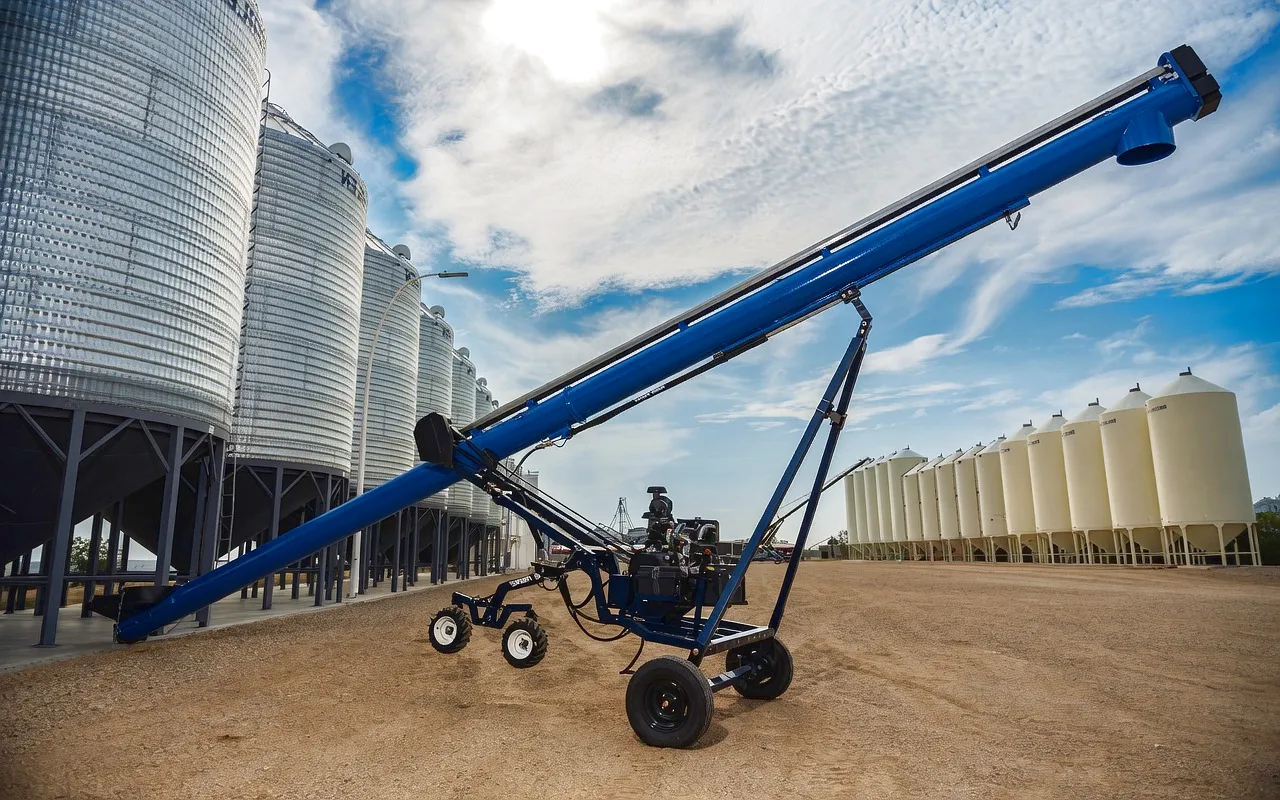 Agricultural contracting firms operating portable grain auger hire services across the Midlands — particularly those serving the arable farms of Nottinghamshire, Derbyshire, and Staffordshire — present a distinct and demanding use case for PTO drive shafts. A hire auger may be connected to a different tractor each week of the harvest season, and the PTO stub shaft dimensions, engagement length, and lock-pin retention can vary considerably between tractor makes and model years. This means the shaft yoke must accommodate a broader range of engagement depths than a dedicated machine-specific shaft would need to, while still maintaining positive retention in each application.
Contractor-service PTO drive shafts are also subject to more abuse than dedicated-machine equivalents: they are regularly dropped, exposed to dew and rain between jobs, and may be stored without removing chaff or grain debris from the safety guard interior. Robustness is therefore a primary specification criterion. Heavy-wall outer profile tubes, forged (rather than fabricated) yoke bodies, and hot-dip galvanised guard hardware all contribute to the resilience needed in hire-fleet service. Ever Power’s contractor-duty shaft range is engineered around exactly these requirements, with impact-resistant guard end cones and a positive-locking collar mechanism on the PTO stub engagement that prevents inadvertent uncoupling when reversing a tractor toward the auger intake — a manoeuvre that, without positive locking, can cause the shaft to disengage at dangerous rotational speeds.
Customer Success Story: Midland Grain Storers Ltd, Grantham, Lincolnshire
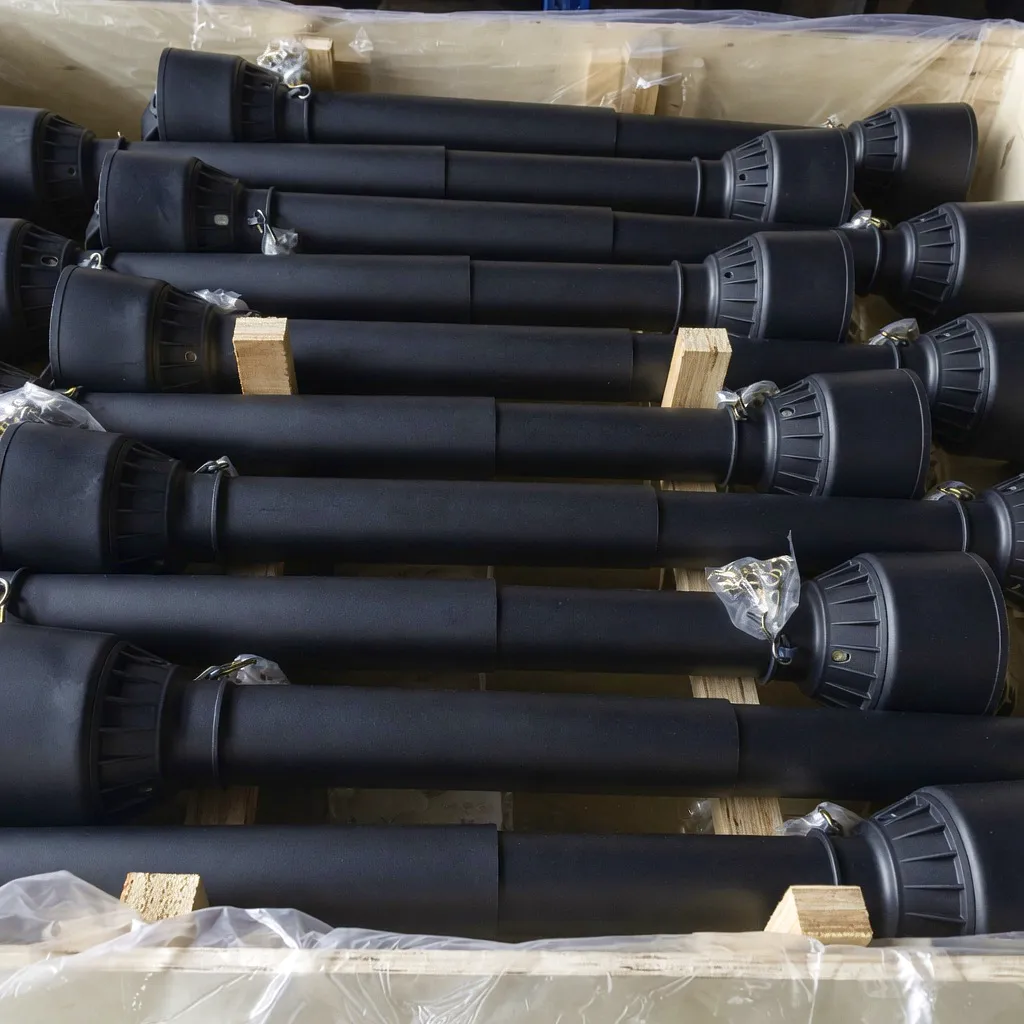 Midland Grain Storers Ltd is a third-generation family grain merchant based on the outskirts of Grantham in Lincolnshire, operating three intake pits across their 4,800-tonne flat-floor grain complex and handling grain from over sixty contract growers annually. During the 2022 harvest, the company suffered repeated PTO shaft failures on their two main pit-to-dryer auger systems — a Series 6 assembly on each machine that was supplied with the original auger equipment. The failures occurred at the U-joint bearing cups, with needle roller bearings collapsing after an average of 220 operating hours per season. The root cause was a combination of insufficient bearing needle complement in the original shaft’s cross design and a sealing arrangement that allowed fine barley dust to migrate into the bearing housing during extended high-throughput running. The result was abrasive wear that destroyed the bearing surface within two to three weeks of harvest starting.
The site manager, acting on a recommendation from their local agricultural engineering dealer in Sleaford, contacted Ever Power to review the application. Ever Power’s technical team reviewed the auger operating parameters — auger diameter, throughput rate, daily run hours, PTO engagement speed — and specified a Series 7 heavy-duty replacement shaft with a full needle complement bearing cross design, upgraded triple-lip seals with external labyrinth shields, and a hot-dip galvanised outer profile tube to resist the corrosive humidity of the grain store environment. The new shaft was also supplied with a friction-type slip clutch pre-set at 380 Nm to handle the load spikes caused by impacted grain plugs without forcing the U-joints to absorb the energy.
Through the 2023 and 2024 harvest seasons — a combined total of over 900 operating hours across the two machines — the Ever Power shafts ran without a single bearing failure or seal replacement. The friction clutch triggered on four occasions during each season when wet grain from late-harvested winter wheat caused intake blockages, successfully protecting the auger input gearboxes from damage each time. Midland Grain Storers Ltd has since placed standing orders for Ever Power replacement shafts across their full auger fleet, including two recently acquired portable units used for loading out into road tankers.
What Our Customers Say
“We went through three sets of shaft crosses in one season with our previous supplier. The Ever Power Series 7 replacement has now completed two full harvests and the bearings are still running smooth and quiet. The sealed design makes a real difference in dusty barley conditions — you can actually feel the difference in vibration levels from day one.”
“Ever Power were able to give us a custom shaft with non-standard flanged ends to match our existing gearbox bolt pattern — no other supplier we approached could do this without a 14-week lead time. The dimensional accuracy was spot-on and the first shaft assembled first time with no rework. We’ve now ordered twelve for our complete auger conveyor network.”
“We hire out nine portable auger units to arable farms across the East Midlands. The replacement shafts from Ever Power have proved considerably more resilient than what we were fitting before — particularly the positive-lock collar mechanism, which has eliminated the disconnection incidents we used to see when operators reversed tractors too aggressively. Worth every penny for the liability reduction alone.”
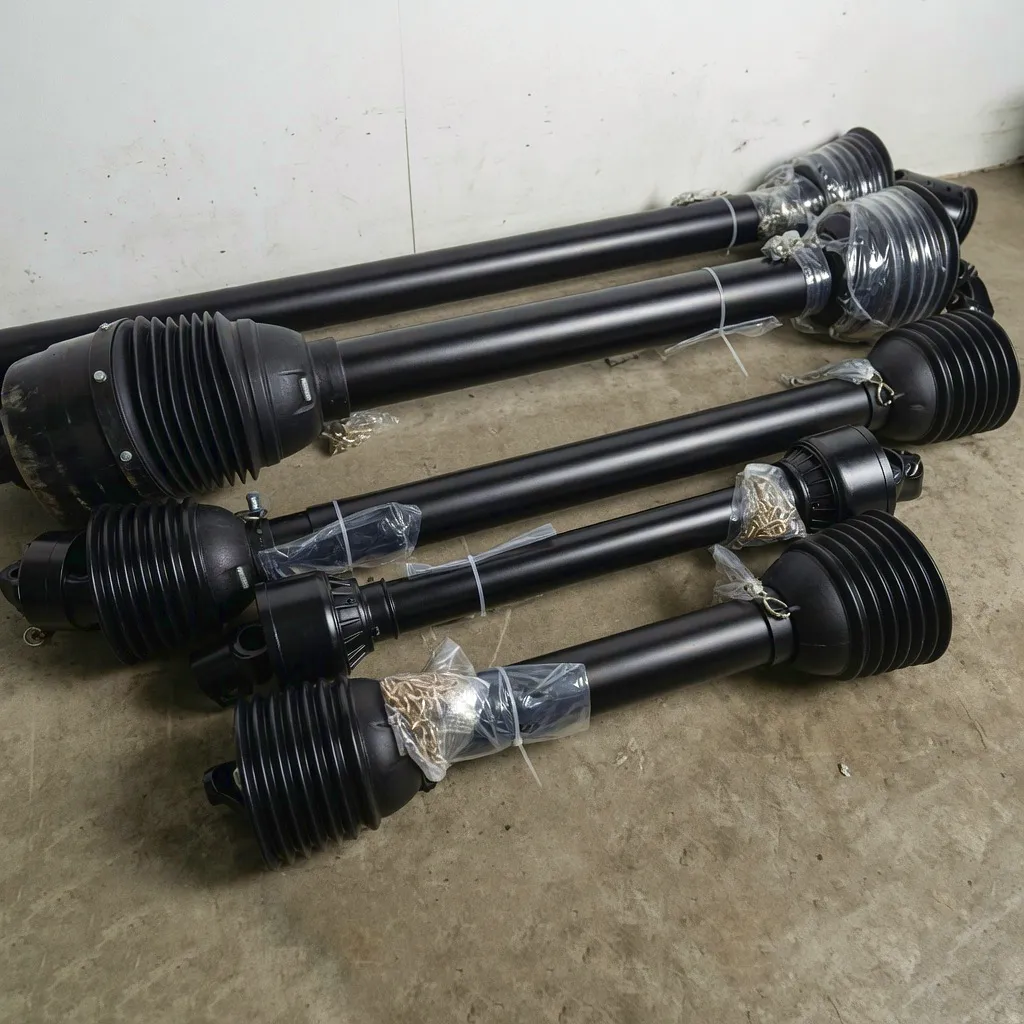
Tell us your auger model, throughput requirement, and operating environment. Our engineers will specify the optimal PTO drive shaft configuration and provide a competitive trade price with UK delivery.