
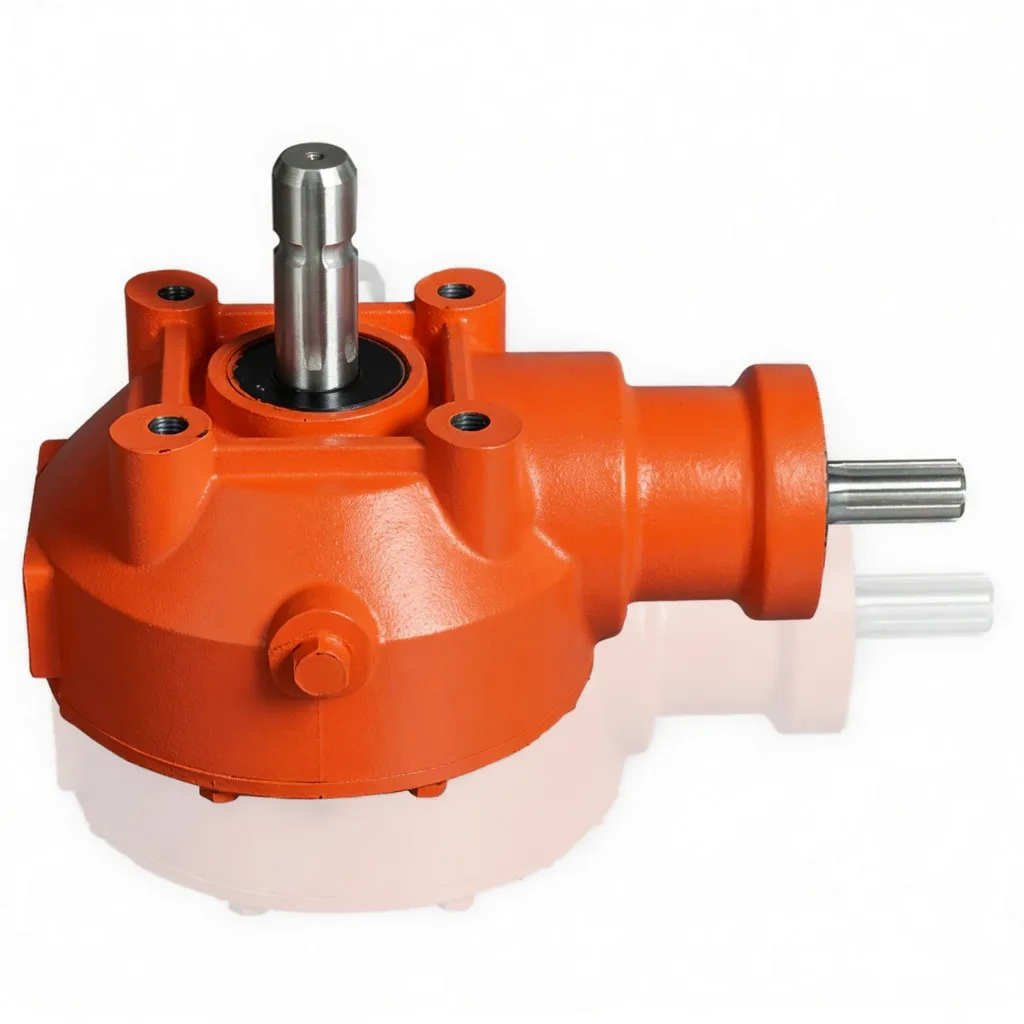
 Rotary tilling remains one of the most mechanically intensive operations in British arable and mixed farming. Whether preparing seed beds in the heavy clay soils of the East Midlands, breaking pan on Lincolnshire fenland, or working cover crops into the chalk downlands of Wiltshire, the agricultural gearbox at the heart of a rotary tiller determines everything — from fuel consumption and tillage depth to flange fatigue and field throughput. Unlike many drivetrain components that are bought once and forgotten, a rotary tiller gearbox operates under genuinely punishing duty cycles: high-frequency shock loads from stone strikes, continuous mud and moisture ingress, wide ambient temperature swings from early spring fieldwork to late autumn cultivations, and the relentless demand to transfer power reliably from the tractor PTO shaft at 540 or 1000 rpm through a right-angle transmission and on to the rotor shaft that drives the tines at precisely the speed needed for the target working depth and soil condition.
How a Rotary Tiller Gearbox Works: The Engineering Behind Every Pass
Power Input & Ratio Stage
The tractor PTO shaft delivers rotational power — typically at 540 rpm for smaller tractors below 60 hp or 1000 rpm for larger machines — into the agricultural gearbox input flange. Inside, a bevel gear set redirects the axis of rotation by 90 degrees, converting horizontal input into the transverse, ground-parallel drive required to spin the tine rotor. The gear ratio across this bevel stage is carefully selected — usually between 1:1.93 and 1:2.85 — to bring rotor speed into the 200–380 rpm band that produces the optimum tine tip speed for seedbed preparation without smearing or pulverising soil structure. This ratio selection is not a simple formula; it must account for tractor engine speed, PTO type, target working depth and soil density class.
Torque Multiplication & Shock Absorption
A rotary tiller working at 18–25 cm depth in stone-prone UK soils — particularly in the Yorkshire Dales, Cotswold brash, or Cornwall — generates instantaneous impact loads that can spike to three to five times the nominal running torque every time a tine strikes a buried stone or compacted clod. The agricultural gearbox must absorb and dissipate these shock pulses without transmitting them destructively back through the PTO driveline to the tractor gearbox. High-quality units achieve this through precision ground helical gears — which have greater tooth contact ratio than straight-cut bevel gears — combined with a carefully calculated gear mass moment of inertia that acts as a mechanical flywheel effect, smoothing out impulse loads across the gear tooth face. This is fundamentally different from a simple chain-drive design: the enclosed oil-bath lubrication system maintains a full hydrodynamic film on all gear flank surfaces even at the lowest operating temperatures encountered on a February morning in Northumberland.
Output Shaft & Rotor Drive
The output side of the agricultural gearbox typically uses a keyed shaft or splined flange that connects directly to the central rotor tube of the tiller. Many UK farmers and contractors specify a shear-bolt or slip-clutch overload protection system between the gearbox output and the rotor shaft, providing a last line of defence against catastrophic gear failure if the machine hits an unexpected obstruction. The output shaft diameter, spline count and keyway dimensions must match the specific rotary tiller OEM specification precisely — which is why a competent supplier must offer full dimensional customisation rather than insisting on a one-size-fits-all catalogue part. The bearing arrangement at the output shaft is equally critical: double-row angular contact bearings or tapered roller bearings are generally preferred over simple deep-groove ball bearings because they handle the combined radial and axial loads that arise from the bending moment imposed by a loaded tine rotor.
Core Materials: What Goes Into a Long-Life Rotary Tiller Gearbox
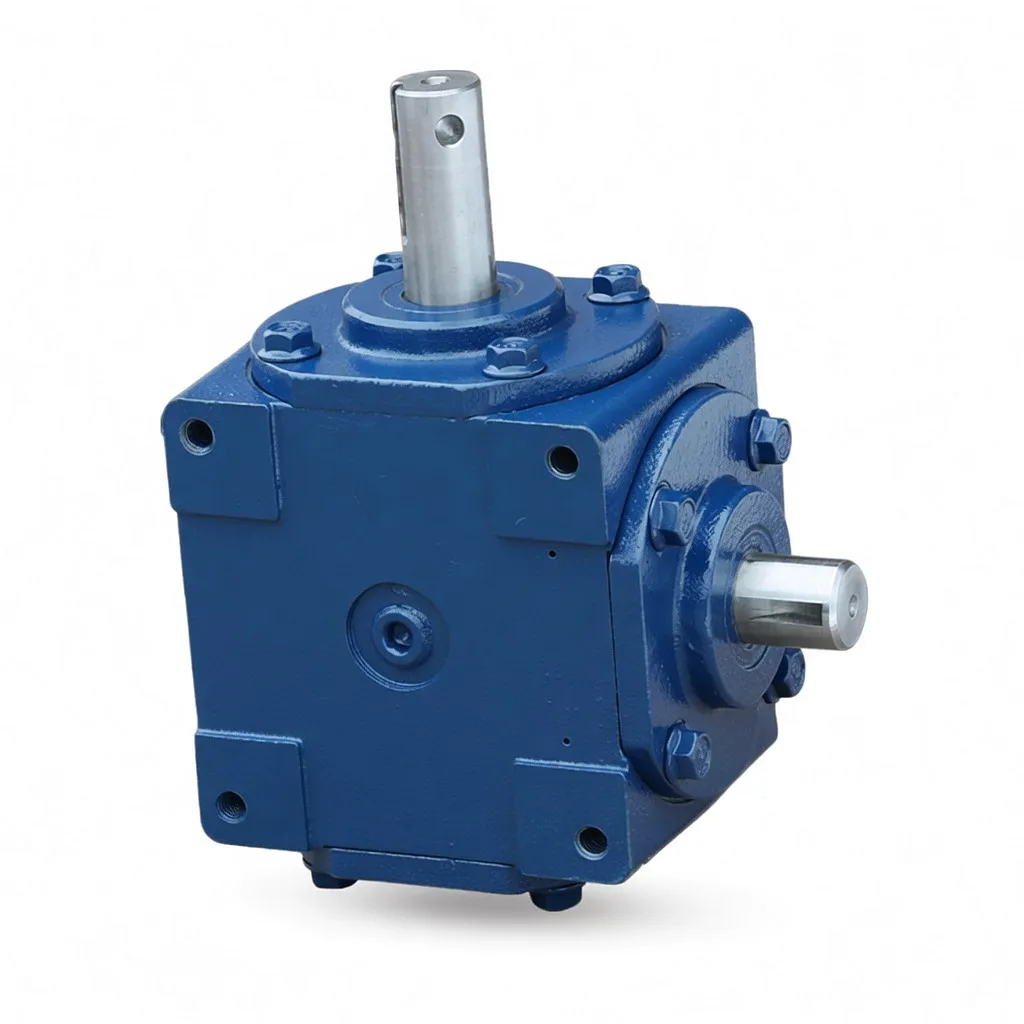 The material selection for a rotary tiller agricultural gearbox is not merely an engineering academic exercise — it is the single most consequential decision that determines field reliability, overhaul interval and total cost of ownership over the machine’s working life. At the gear tooth level, the industry benchmark is case-hardened 20CrMnTi alloy steel. This chromium-manganese-titanium alloy, after carburising to a case depth of 0.8–1.2 mm and quenching, achieves surface hardness of 58–62 HRC with a tough, ductile core hardness of 30–38 HRC. The combination of a hard surface that resists pitting and abrasive wear with a shock-absorbing core that prevents brittle fracture is exactly what the stone-impact loading of a UK rotary tiller demands. Cheaper gearboxes use through-hardened medium carbon steel gear blanks — these are significantly weaker in bending fatigue and will show accelerated tooth wear within two or three seasons on hard East Anglian arable land.
Why the Right Agricultural Gearbox Changes Everything on a Rotary Tiller
Precision-ground helical bevel gears deliver mechanical transmission efficiency of 95–97%, reducing the fuel burn on the tractor while maintaining full rotor output power. For a 75 kW tractor running 500 hours per season, this translates to meaningful diesel savings and reduced CO2 output — important for UK farms operating under Red Tractor and stewardship scheme scrutiny.
Case-hardened gear flanks with a contact fatigue limit exceeding 1,500 MPa, combined with sealed-for-life or easy-access drain/fill points, enable maintenance intervals of 250 hours or more in normal UK conditions. Competitive units with through-hardened gears typically require full gear replacement within 800–1200 working hours on heavy clay soils typical of the Humber basin or Somerset Levels.
Every rotary tiller installation is different — working width, tine rotor diameter, tractor linkage class, PTO type (540E economy, 1000, 1000E) and operator-specified working speed all influence the ideal gear ratio, output shaft spline count and housing geometry. A gearbox manufactured to a fixed standard catalogue specification will almost always represent a compromise; a custom-matched unit is always the engineered optimum.
UK field conditions — particularly autumn and spring work on waterlogged ground — impose high dust, mud and water ingress loads on gearbox sealing systems. Multi-lip radial shaft seals combined with a labyrinth outer seal ring and a positive-pressure breather valve maintain internal oil integrity even in submerged field conditions, a critical advantage on farms running continuous winter cover crop management programmes.
Gear tooth profile grinding to DIN 6 quality or better reduces mesh noise to below 72 dB(A) at 1 m distance — relevant to operator comfort during long cultivating shifts and increasingly important near UK rural communities where farm machinery noise is subject to planning-related restrictions on evening and weekend working windows.
When annualised over a 10-year field life, a precision-engineered agricultural gearbox from a tier-one supplier costs significantly less than two or three budget replacement gearboxes purchased during the same period, especially when workshop labour rates of GBP 60–90 per hour at machinery dealers in Yorkshire, Norfolk and the Welsh Borders are factored into the overhaul cost calculation.
Technical Performance Parameters: Rotary Tiller Agricultural Gearbox Range
| Parameter | Light Duty (L) | Medium Duty (M) | Heavy Duty (H) | Super Heavy (SH) |
|---|---|---|---|---|
| Input Power (kW) | 15–37 | 38–75 | 76–120 | 121–200 |
| Max Input Torque (Nm) | 650 | 1,350 | 2,100 | 3,500 |
| PTO Input Speed (rpm) | 540 / 1000 | 540 / 1000 | 540 / 1000E | 1000 / 1000E |
| Gear Ratio Range | 1.93:1 – 2.15:1 | 2.15:1 – 2.50:1 | 2.50:1 – 2.85:1 | 2.85:1 – 3.40:1 |
| Output Rotor Speed (rpm) | 250–280 | 216–251 | 188–216 | 147–190 |
| Housing Material | GGG40 cast iron | GGG50 cast iron | GGG50 / Steel | Forged steel |
| Gear Material | 20CrMnTi carburised, quenched, 58–62 HRC (all grades) | |||
| Input Shaft Diameter (mm) | 35 | 35 / 45 | 45 / 55 | 55 / 65 |
| Output Shaft Options | Keyed round shaft / Splined shaft / Flanged output — all customisable | |||
| Bearing Type | Deep-groove + tapered roller | Tapered roller / angular contact pairs | ||
| Transmission Efficiency (%) | 95–97% (all grades, precision ground helical bevel sets) | |||
| Lubrication | Oil-bath splash, EP80W-90 / SAE 90 gear oil, fill/drain/level plugs | |||
| Operating Temperature Range | -20 degrees C to +80 degrees C continuous; -30 degrees C cold-start capable with low-viscosity fill | |||
| IP Rating (Sealing) | IP65 standard; IP67 optional with upgraded labyrinth + multi-lip seals | |||
| Gear Quality Grade | DIN 3962 Grade 6–7 (ground); Grade 8 for standard hobbed options | |||
| Customisation Options | Gear ratio, shaft dimensions, housing colour, mounting flange, overload protection, PTO type | |||
Where the Agricultural Gearbox Delivers: Rotary Tiller Application Scenarios in UK Farming
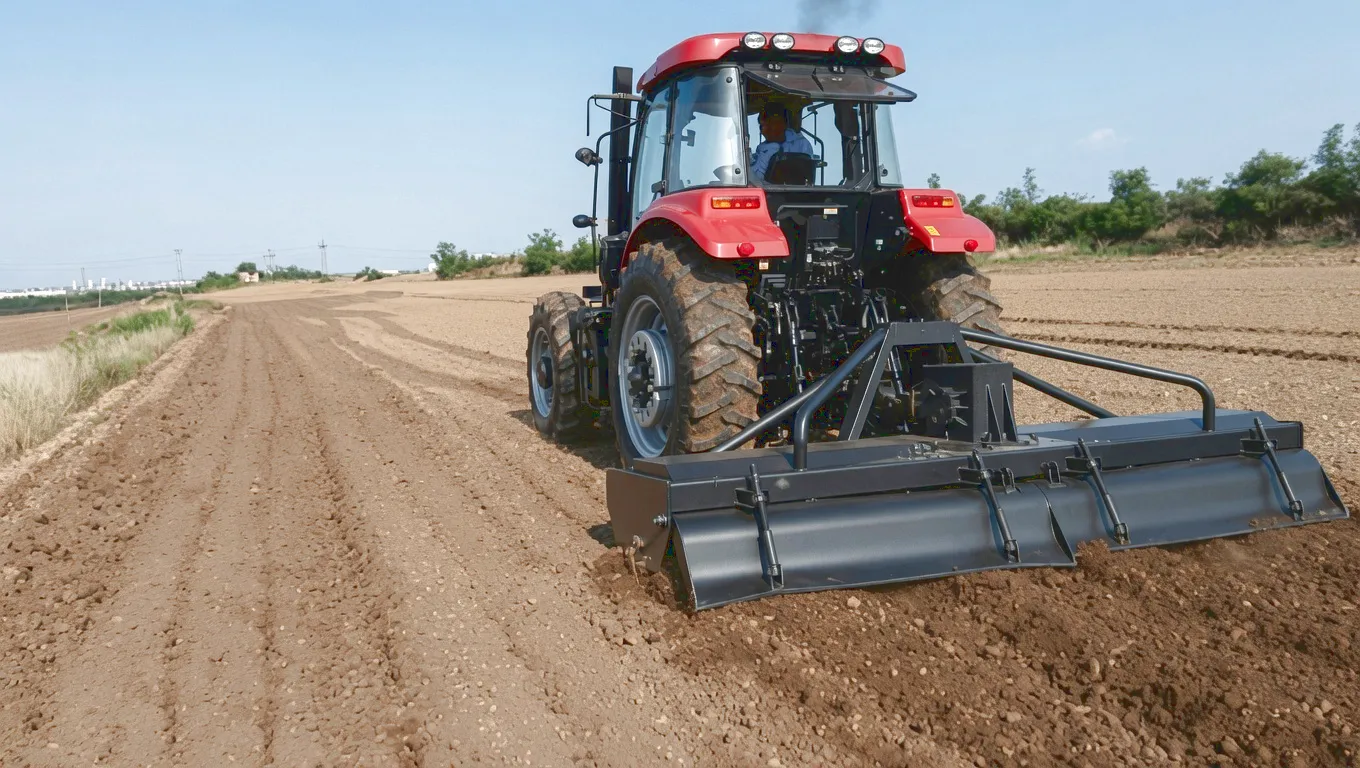 Britain’s arable heartland — the broad, flat fields of East Anglia and Lincolnshire — places very specific demands on a rotary tiller and its agricultural gearbox. Working widths of 3.0 to 6.0 metres are common on farms operating 160–240 hp four-wheel-drive tractors, and the objective is typically to take primary or secondary cultivated land down to a fine, consolidated 3–5 cm consolidation layer above a slightly firmed subsoil, in a single pass ahead of precision seed drill operations for winter wheat, spring barley or oilseed rape.
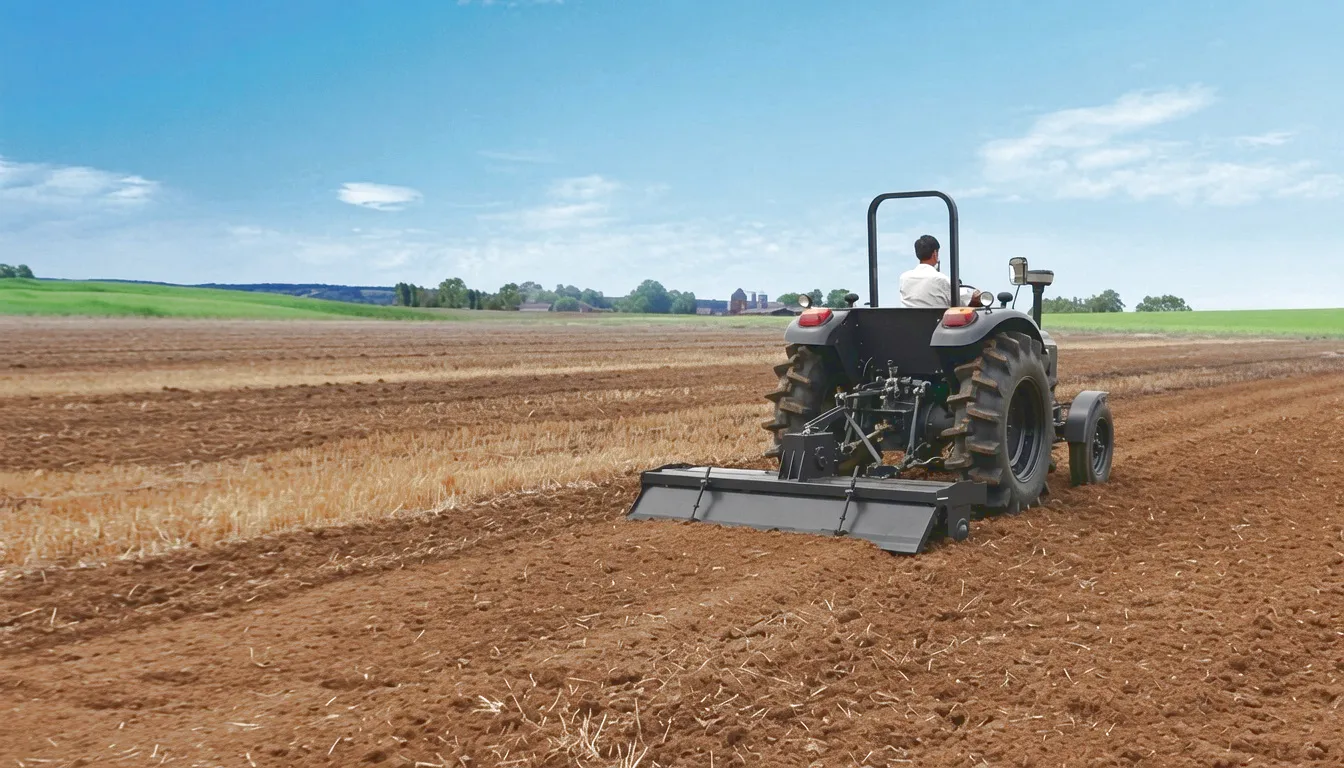 In horticultural production — the intensive vegetable fields of Kent’s Garden of England, the soft fruit growing areas of Tayside in Scotland, and the brassica market garden zones around Evesham in Worcestershire — the rotary tiller fulfils a different mission. Working width is typically much narrower — 1.0 to 2.5 metres — but the rotor speed demand is higher, often 280–350 rpm, because the objective is an ultra-fine, clod-free, stone-cleared seedbed surface ready for precision transplanting of salad crops, leek plants or brassica seedlings at spacings of 15–30 cm.
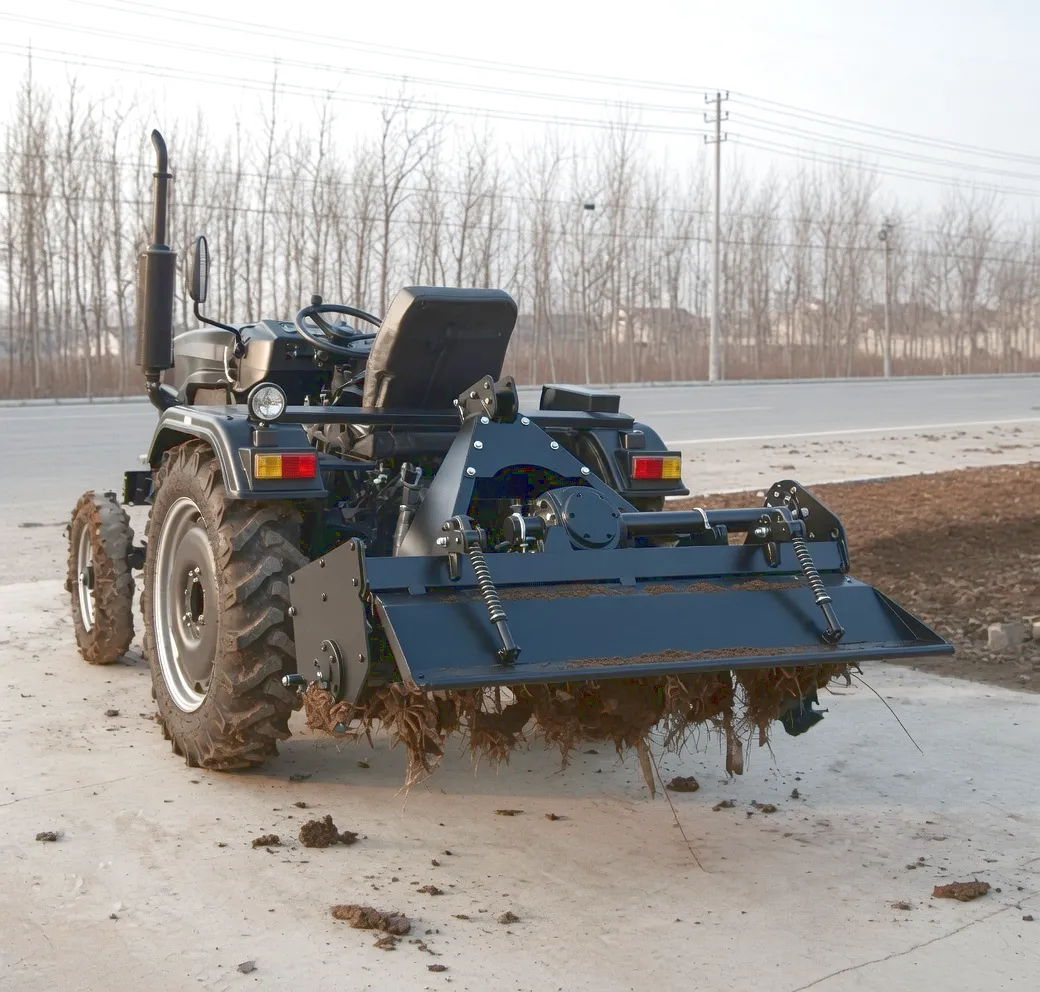 Rotary tiller — or rotary cultivator — use for grassland renovation has grown steadily across UK pastoral farming as farmers seek to avoid the full economic and environmental cost of complete grassland ploughing. Partial renovation — scratching in new perennial ryegrass or clover seed into a rough-scarified sward — uses a rotary tiller set at relatively shallow depth (4–8 cm) to scalp the sward surface and create a seedbed without fully inverted turf. This approach is widespread in the damp upland farming zones of Wales, Devon, Cumbria and the Yorkshire Dales where full ploughing and reseed is difficult on sloping ground and in wet autumns.
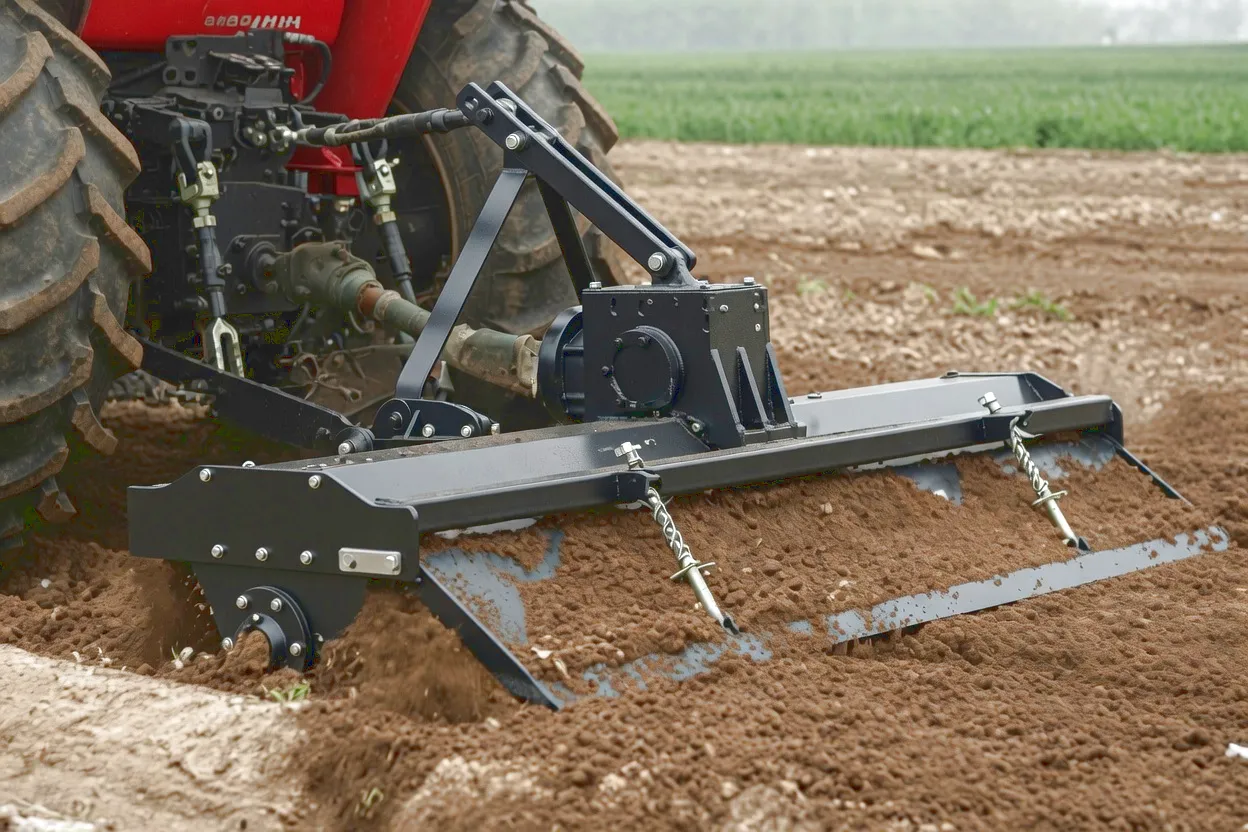 The expanding UK wine-growing industry — with estates now established across Kent, East Sussex, Hampshire and as far west as Cornwall — and the traditional top fruit orchards of Herefordshire and Worcestershire provide a demanding niche for compact rotary tillers with specialised narrow-body agricultural gearboxes. Inter-row width in a vineyard or orchard is often constrained to 1.4–2.5 metres, requiring a very compact tiller body with the gearbox offset-mounted or positioned with its housing underside clear of vine stakes and tree trunk flares.
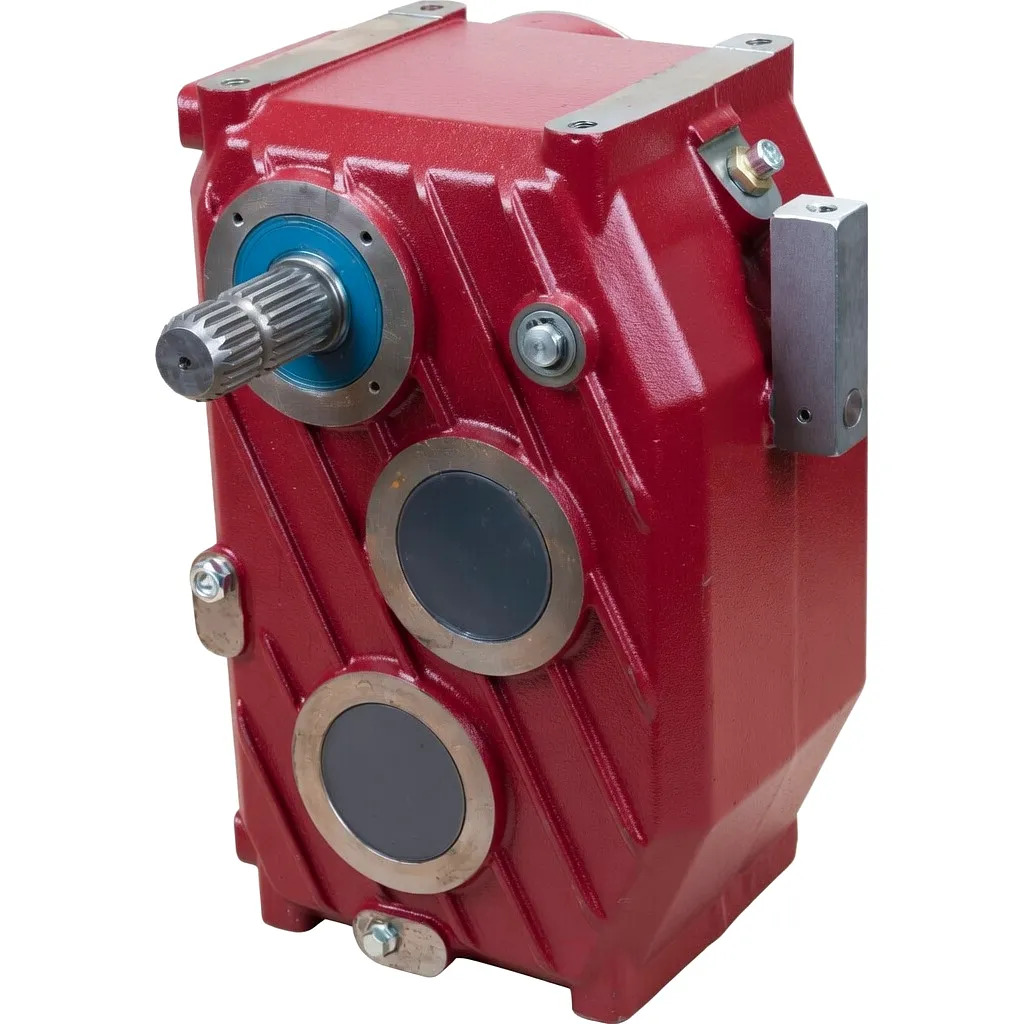 Modern one-pass combination implements — widely used by UK agricultural contractors operating from bases in the Fens, Yorkshire, Cheshire and across Northern Ireland — integrate a front-mounted tine cultivator, a central rotary tiller section and a rear-mounted seed drill or bed-former into a single three-point linkage and powered axle implement train. In this configuration, the agricultural gearbox driving the rotary tiller section is not only responsible for tine rotor drive but also for powering rear-mounted metering rolls, press wheels or bed-forming boards via a secondary power take-off from the gearbox housing.
Ever Power: Precision Manufacturing & Complete Custom Capability
Ever Power designs and manufactures agricultural gearboxes for rotary tillers across the full power spectrum — from compact horticultural tillers at 15 kW right through to 200 kW super-heavy tractor combinations. The manufacturing facility spans over 35,000 square metres of enclosed production area, housing a complete gear manufacturing cell with Gleason and Klingelnberg gear-cutting and grinding machines capable of ISO Grade 5–6 precision on bevel and helical sets up to 600 mm reference diameter. CNC turning and boring centres maintain housing bore alignment to within 0.01 mm — a precision standard that directly underpins bearing life and gear mesh quality in field operation.
What differentiates Ever Power in the UK and European market is not simply the quality of standard products but the depth of customisation capability the engineering team brings to every project enquiry. Customers — whether OEM rotary tiller manufacturers in Sheffield or Birmingham, machinery dealers in East Anglia, or procurement managers at large farming contracting businesses in Lincolnshire — can specify input PTO type and speed, exact gear ratio, housing colour, output shaft dimensions, bearing specification upgrade, auxiliary output port, overload protection method, and oil seal material, all within a structured four-to-eight-week delivery programme for prototype or trial units. Production orders above 20 units typically qualify for dedicated tooling to match customer-specific mounting flanges and housing bolt patterns.
Ever Power’s quality management system operates under ISO 9001:2015 certification, and all agricultural gearboxes destined for the UK market are supplied with full dimensional inspection reports, gear contact pattern analysis records and a warranty certificate that covers manufacturing defects for 24 months or 2,000 operating hours — whichever comes first. Spare parts availability is guaranteed for a minimum of 10 years from product date of manufacture, giving UK machinery owners and dealers confidence in long-term service support.
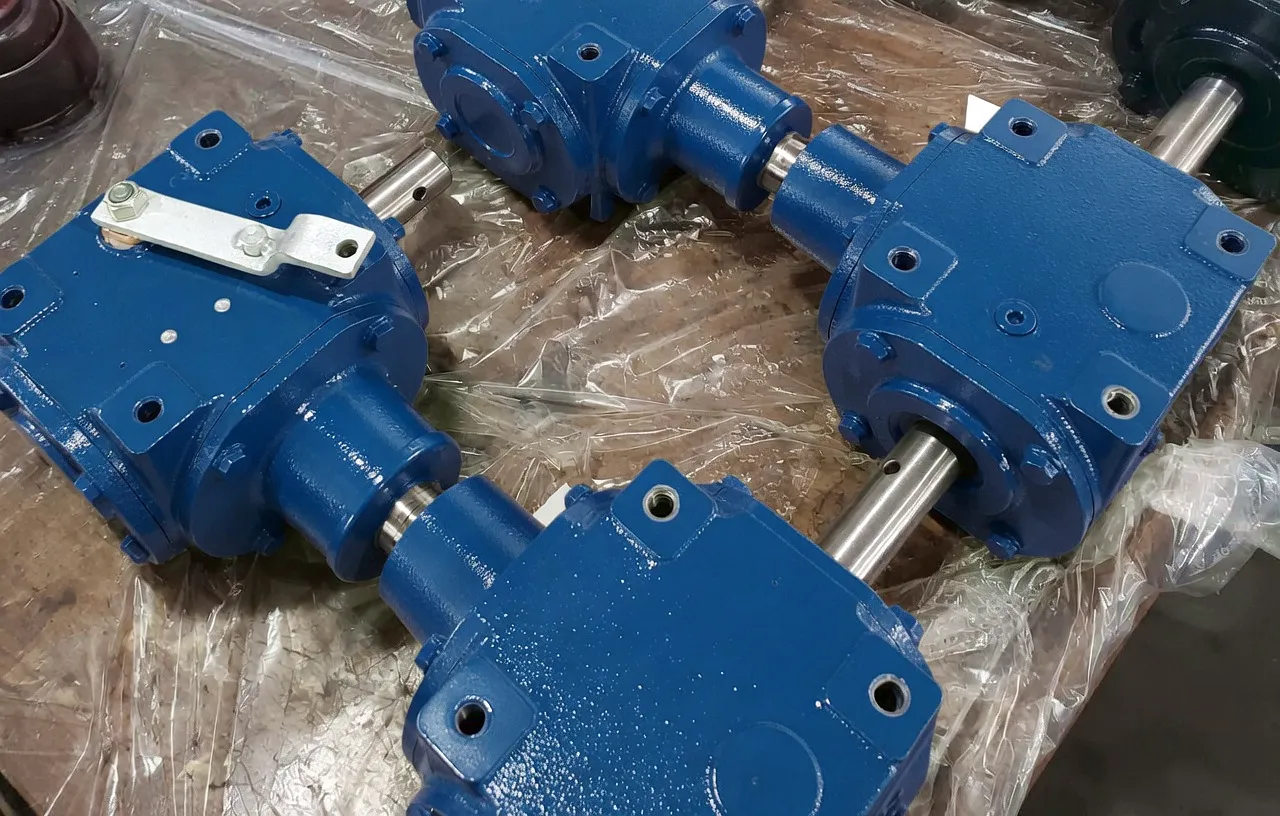
Complete the Drivetrain: Ever Power PTO Shaft Range
A precision agricultural gearbox performs at its best when matched to an equally well-engineered PTO shaft. Ever Power supplies a range of PTO driveshafts designed to complement the gearbox range and ensure a complete, optimised drivetrain from tractor output to rotor shaft, built to handle the torque, angular misalignment and telescopic extension requirements of UK rotary tiller applications.
Engineered for the high-torque, variable-load demands of round baling operations. Features reinforced cross-and-trunnion universal joints, heavy-duty wide-angle capability up to 80 degrees, and a CE-certified plastic safety guard. Compatible with all standard 6-spline and 21-spline 1000 rpm PTO outputs. Widely used with UK baler brands and also suited to rotary tiller driveline integration on combination implements.
A direct OEM-specification replacement PTO shaft designed to fit John Deere square baler models with full dimensional interchangeability. Manufactured to match the original flange, spline count, tube profile and overall extended and collapsed length, this shaft eliminates guesswork on fitment for farm workshops and dealers across the UK. The shaft is supplied ready to fit with all required safety guards, retaining pins and grease nipples.
Customer Success Story: High-Output Arable Contractor, Lincolnshire
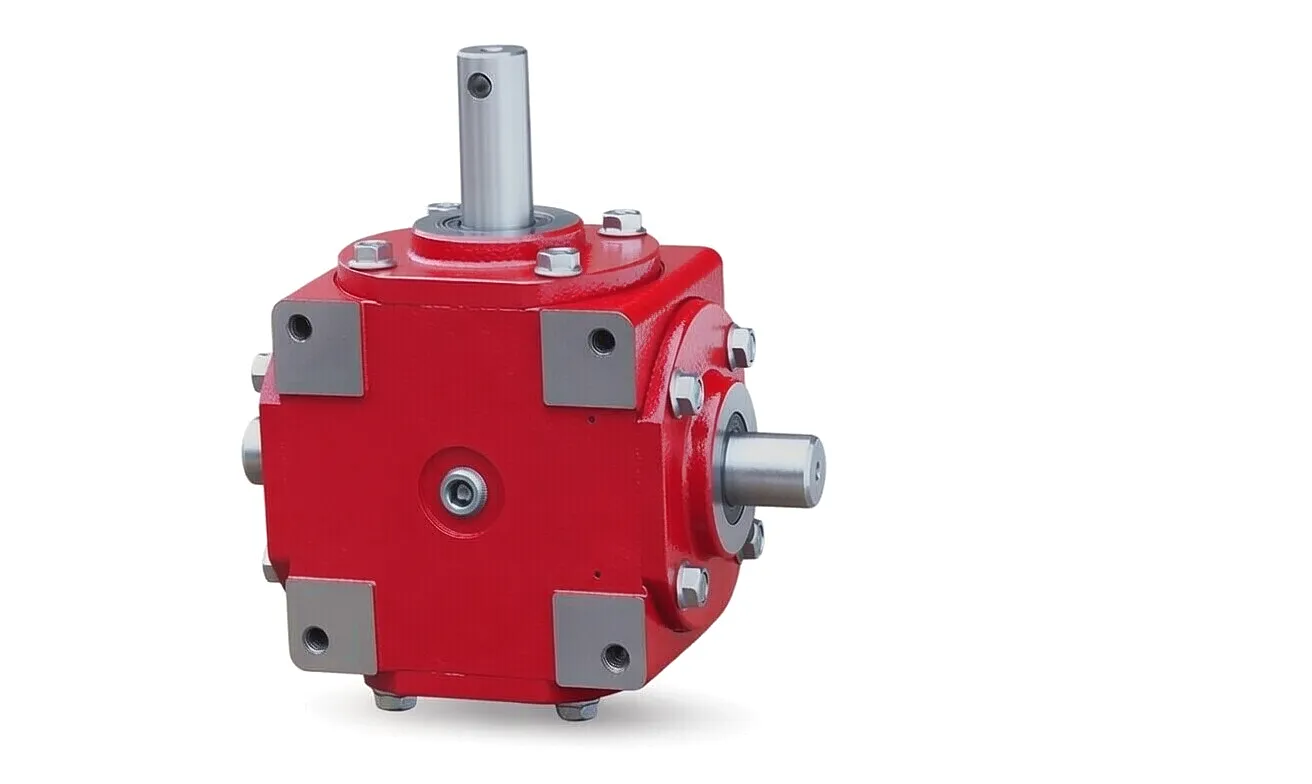 Sherwood Agri Contracting operates from a workshop and yard on the outskirts of Spalding in South Lincolnshire, providing rotary tilling, power harrowing, direct drilling and spraying services to over 60 arable farm clients across the South Holland district and into North Lincolnshire. In 2023 the company invested in a new 6-metre combination tiller-drill combination for a key winter wheat client base, and specified a custom central rotor drive gearbox from Ever Power to replace the original OEM unit that had shown premature bearing wear after only 800 hours of fieldwork on the heavy silt and clay soils characteristic of the reclaimed Wash fenland.
What UK Customers Say About Ever Power Agricultural Gearboxes
“We had struggled for two seasons with gearbox failures on our 5-metre tiller working the chalk brash soils in the Cotswolds. Ever Power built us a unit to our exact specification — ratio, shaft diameter, bearing spec — and we have had zero issues in 1,600 hours since fitment. The price was fair and the lead time was shorter than any UK dealer could match for an equivalent custom job.”
“As a manufacturer of specialist vegetable-bed tillers based in Norfolk, we need a gearbox supplier who can deliver consistent quality across production batches of 15–50 units and accommodate dimensional changes with short notice as we update our tiller designs. Ever Power has met every technical brief we have set them, with inspection documentation to support our own CE marking process. That level of supply chain reliability is genuinely hard to find.”
“We manage a 2,200-acre estate in Shropshire with a mix of arable, grassland and woodland edge. The rotary tiller on our power harrow combination has been running an Ever Power agricultural gearbox for three seasons — a mixture of seedbed work on cereal ground and lighter renovation passes on grass leys near Shrewsbury. Oil changes at 250 hours and the unit runs cooler and quieter than the original gearbox it replaced. The 10-year parts guarantee gave us the confidence to specify it.”
Frequently Asked Questions: Agricultural Gearboxes for Rotary Tillers in the UK
Ready to Source the Right Agricultural Gearbox for Your Rotary Tiller?
Contact Ever Power’s engineering team with your power class, tiller width, PTO type and any custom dimension requirements. We will confirm specification, provide a competitive quote and advise on the optimum gear ratio and bearing arrangement for your UK application within 5 working days.
📧 Get a Quote — [email protected]
edit by gzl