
Central Gearbox in Power Harrow Applications: Engineering Precision for UK Arable Farming
How the agricultural gearbox at the heart of every power harrow keeps British soils productive — and why specification choices matter more than most operators realise.
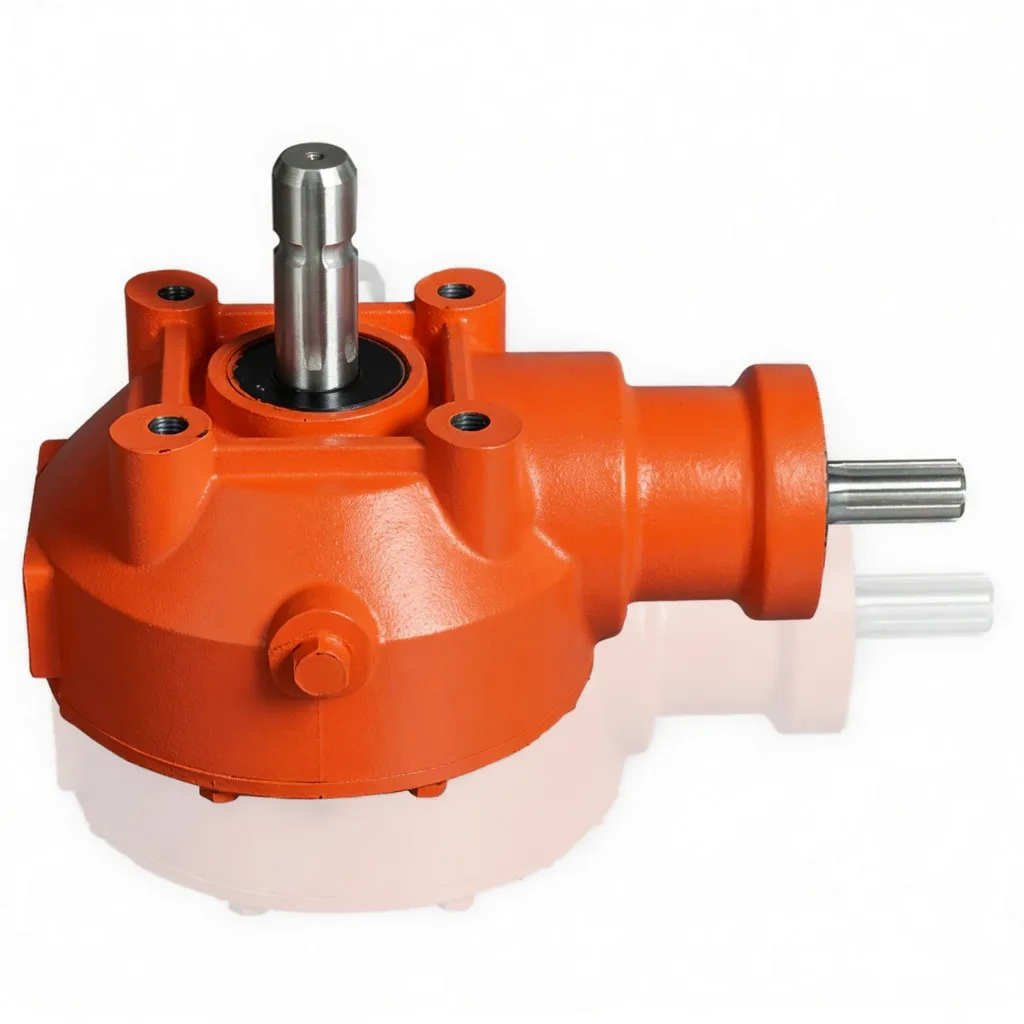 Walk across any arable field in Lincolnshire or Yorkshire in spring and the soil beneath your boots tells a story of machines that passed through weeks earlier. Power harrows are among the most mechanically demanding implements in the British farmer’s toolkit — they must shatter compacted winter soil, create an even tilth for drilling, and do so at field-wide scale without missing a pass. The component that makes this possible, the central agricultural gearbox tucked above the rotor bar, is rarely discussed at farm shows yet it is precisely the part that determines whether a field day goes to plan or ends with a three-hour wait for a parts van. The central gearbox on a power harrow takes the rotational input delivered from the tractor’s power take-off shaft, multiplies or reduces that torque according to the rotor speed required, and distributes drive simultaneously across an array of tines that can span anywhere from 1.5 metres on a compact mounted harrow to 6 metres or more on a trailed folding model used across the flat expanses of East Anglia. Getting the specification of that gearbox right — the gear ratio, the housing material, the sealing standard, the bearing grade — determines both the performance in the field and the total cost of ownership across a lifespan that might exceed fifteen seasons on a well-run arable enterprise.
Working Principle of the Power Harrow Central Gearbox
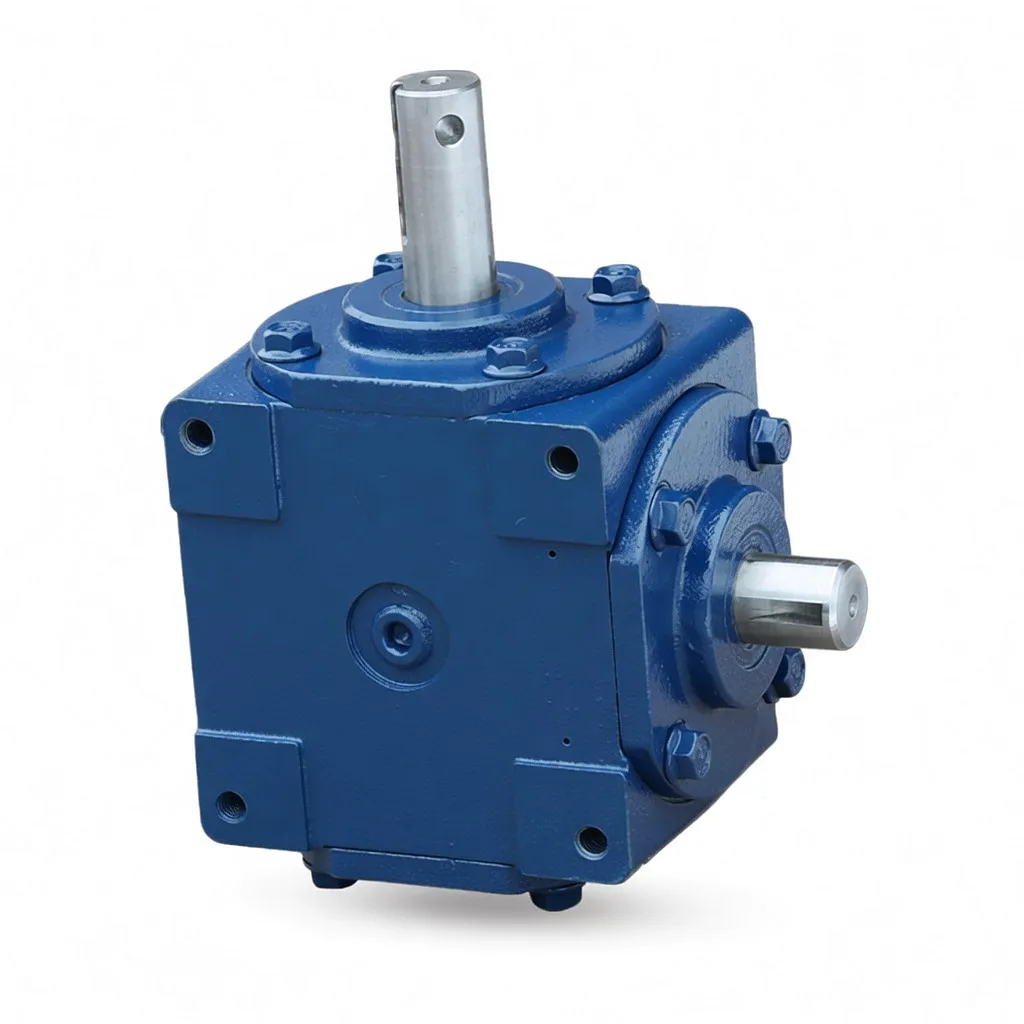 Drive enters the central gearbox through an input shaft running at the tractor’s standard PTO speed — in the UK market, this is predominantly 540 rpm for most compact and medium harrows and 1,000 rpm for larger, high-output machines. Inside the housing, a bevel gear pair changes the axis of rotation by 90 degrees, redirecting the longitudinal input torque into a transverse plane aligned with the rotor bar. This bevel stage is the most mechanically stressed element in the entire assembly because it must absorb not only the steady-state torque of normal tillage but also the shock impulses generated when a tine strikes a buried stone — conditions that are particularly common on the flint-heavy chalky soils of Kent and the boulder-scattered upland edges of the Pennines.
The internal oil bath lubrication system within a quality central gearbox keeps bevel and spur gears coated at all operating angles, including during turns at headlands when the implement briefly tilts. Oil passages and splash shields are designed to maintain coverage even when the machine is operating on cross-slopes, a consideration that is especially relevant in the undulating landscapes of the Welsh borders or the Chiltern scarp slopes where precision cultivation systems are increasingly being adopted. An integrated breather valve prevents pressure build-up caused by thermal expansion during extended working days, while labyrinth seals at the input and output shafts keep field debris out of the gear mesh without creating the parasitic drag associated with lip seals running against rotating shafts at high speed.
Core Materials in Agricultural Gearbox Manufacturing
Ductile cast iron (GGG50/GGG60 grade) delivers the impact resistance needed when tines engage buried obstacles. Nodular graphite structure absorbs shock loads that would crack grey iron, while the moderate weight keeps the machine’s centre of gravity manageable. Some premium housings use GS 52 cast steel for maximum wall-impact resistance in stony upland conditions.
Case-hardened alloy steels such as 20CrMnTi and 18CrNiMo7-6 are forged and then carburised to achieve a surface hardness of 58–62 HRC on a core that retains approximately 32–36 HRC toughness. This combination of hard surface and tough core is essential for bevel gears absorbing the impulse loads that characterise power harrow operation in heavy clay or stony soils.
Tapered roller bearings at the input shaft and double-row angular contact bearings at rotor shaft exits handle the combined radial and axial loads generated by helical gear geometry and tine reaction forces. Bearing preload is set at manufacture and retained by precision spacers, preventing the creep that leads to premature gear wear. Bearing steel grades conform to ISO 683-17 for through-hardened raceway performance.
Output shafts are manufactured from 42CrMo4 medium-carbon alloy steel, induction-hardened and ground to h6 tolerance for precise stub shaft or spline engagement. VITON (FKM) lip seals or polyurethane rotary shaft seals are used at input and output exits, providing chemical resistance to biodegradable hydraulic fluids and the mineral-based gear oils common across UK dealership service schedules.
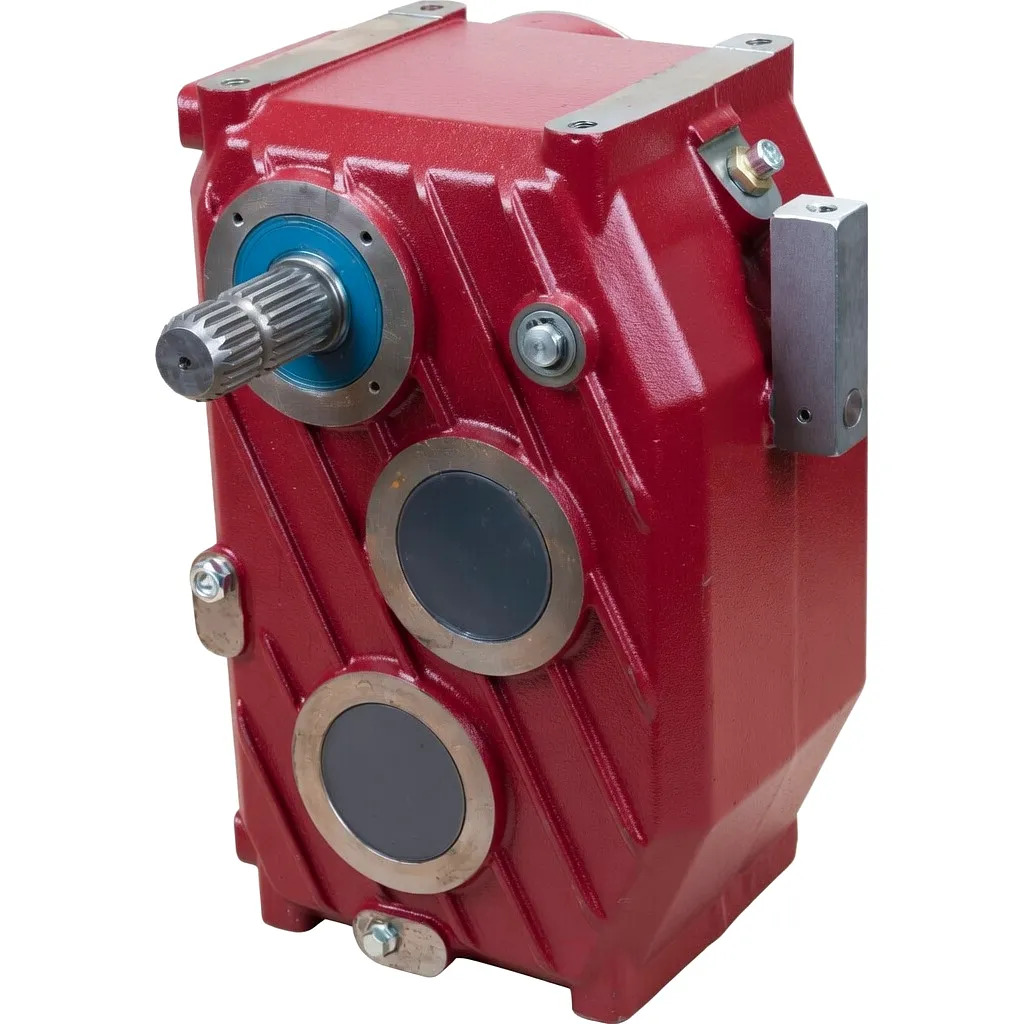
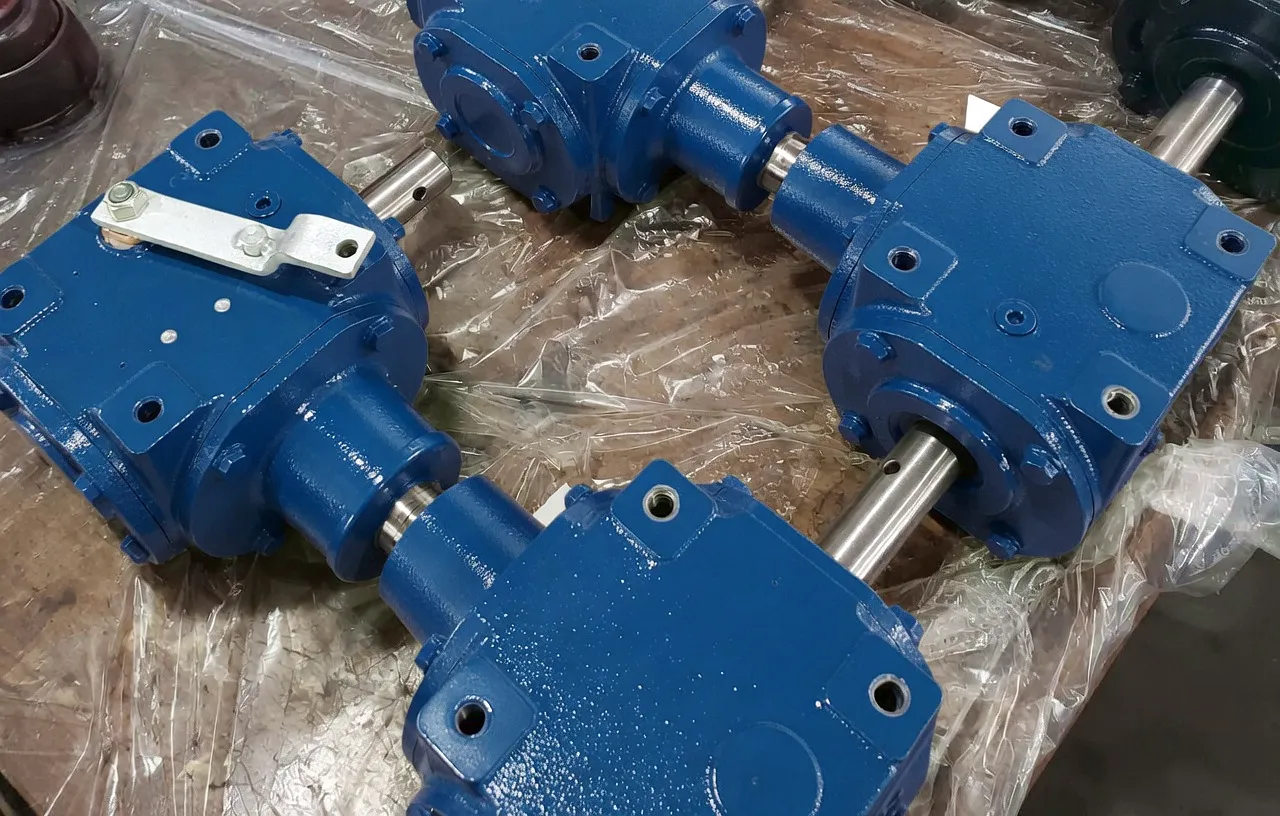
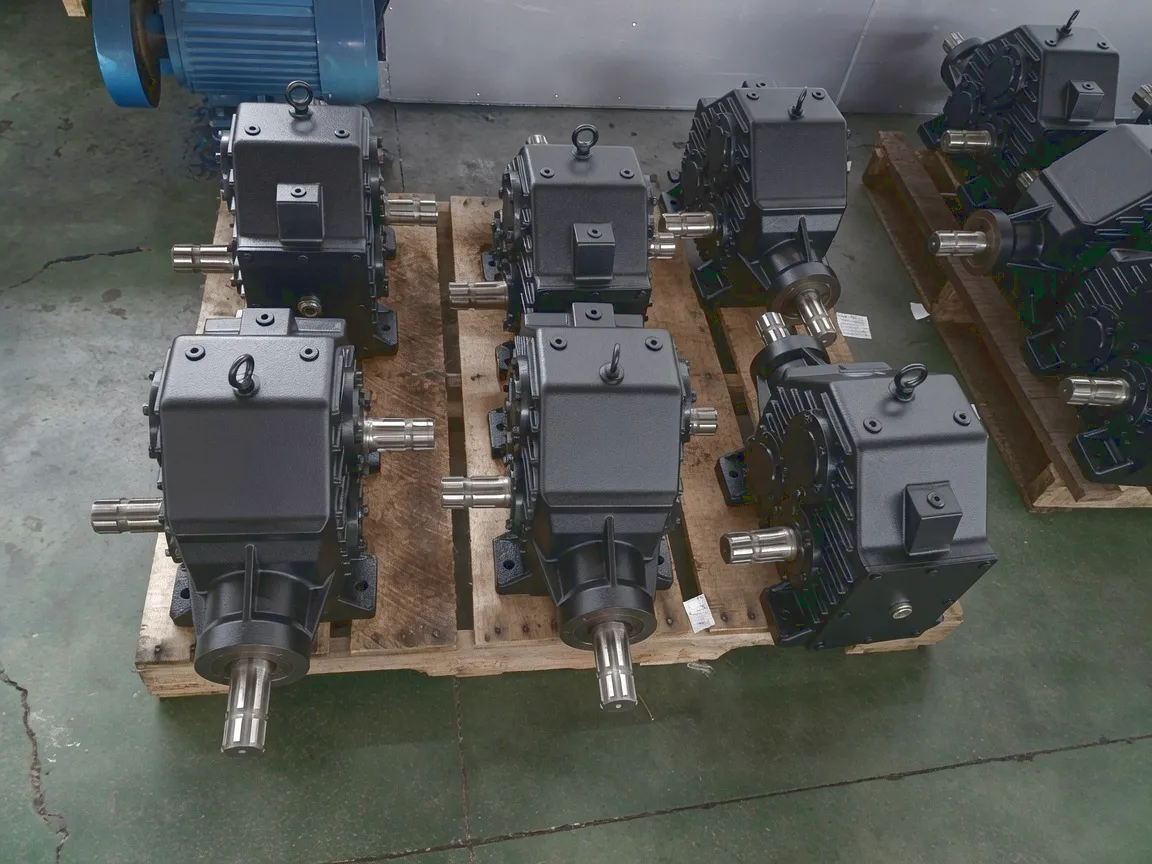
Power Harrow Agricultural Gearbox — Technical & Performance Specification Table
Application Scenarios: Where the Power Harrow Central Gearbox Performs
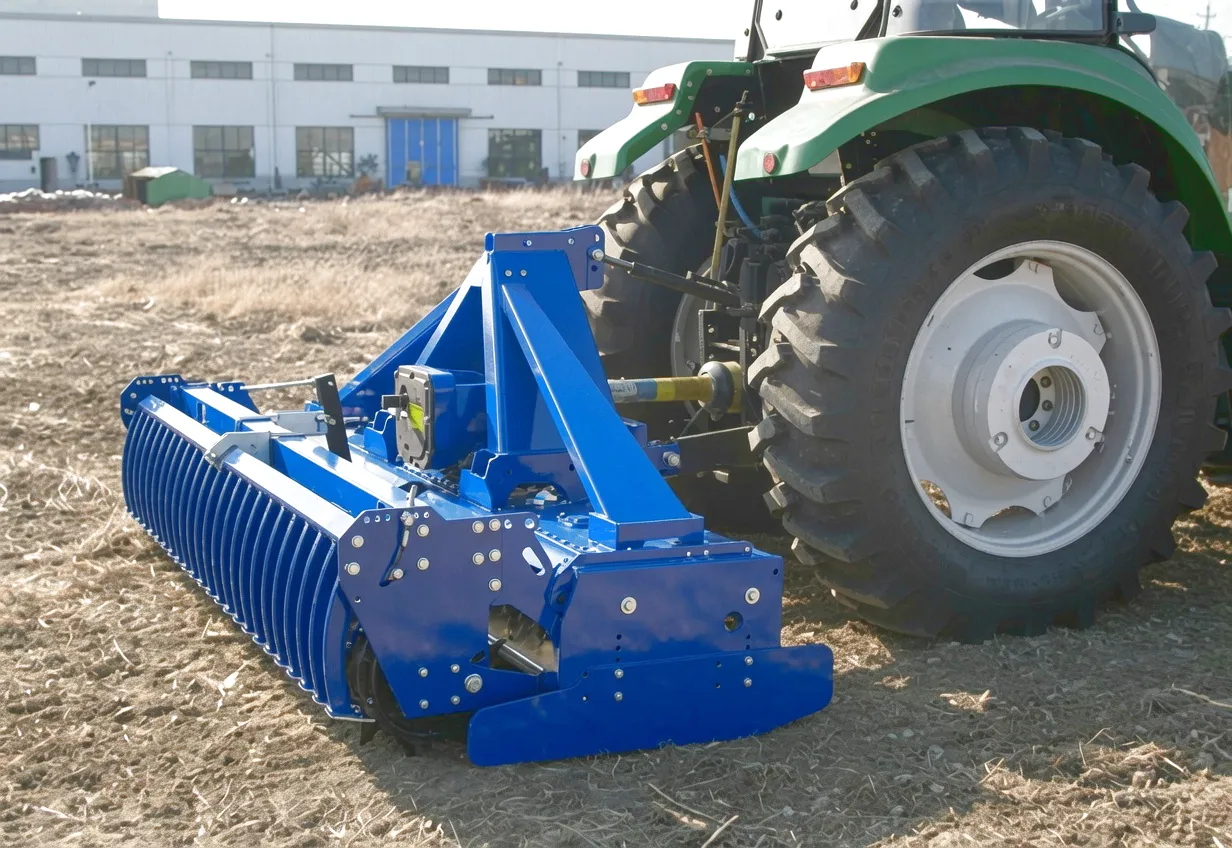 Spring seedbed preparation is the scenario that defines the agricultural gearbox’s capabilities most brutally. Across the Midlands counties — Warwickshire, Nottinghamshire, Northamptonshire — winter wheat stubbles compacted by heavy harvesting traffic and autumn rainfall present a dense, cohesive soil profile that demands sustained high torque from the power harrow rotor. The central gearbox must maintain rated torque delivery for shift-long periods of six to ten hours, crossing fields of 50 hectares or more without interruption. In these conditions, the gearbox oil temperature will climb to 60–70°C and must be sustained there without viscosity breakdown or seal weep. Helical spur gear stages with ground tooth profiles run quieter and cooler than straight-cut gears, helping manage thermal load across these extended runs. The result, when specification is correct, is a consistent crumb-tilth seedbed achievable in a single pass at 6–8 km/h forward speed, which is the commercial benchmark for contract cultivations across the East Midlands market. Farmers contracting seedbed work on a per-hectare basis cannot afford to lose an afternoon to a gearbox failure in late April when the drilling window may close within days.
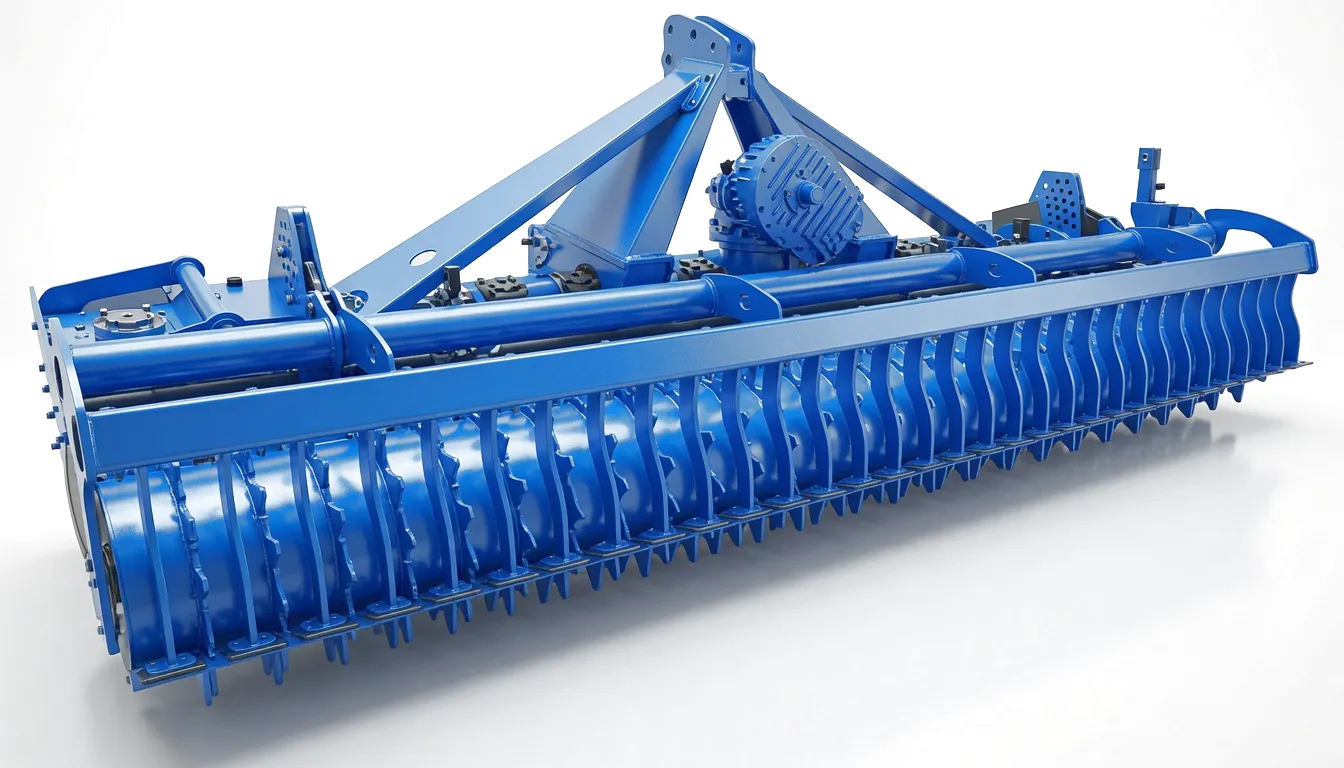 The UK’s concentrated vegetable production zones — the Fens of Lincolnshire and Cambridgeshire, the Vale of Evesham in Worcestershire, and the flat market garden belts around Peterborough — place a different set of demands on the agricultural gearbox compared to conventional arable cultivation. Here, the priority is creating a perfectly homogeneous fine tilth to a precise depth, typically 80–100 mm, without smearing the subsoil or creating a plough pan. Power harrows fitted with bed-former ridges or shaped rear boards are used to form the growing bed in a single pass, meaning the central gearbox must deliver utterly consistent rotor speed across the full working width regardless of soil texture variations encountered as the machine traverses across former fen drain lines or areas of variable organic matter content. The gear ratio stability of a precision-manufactured bevel set directly affects final tilth consistency: any backlash or pitch error in the gear mesh translates into rotor speed fluctuation, which in turn creates an uneven surface that causes problems with precision seed placement by downstream drill units. Salad crop growers around Boston, Lincolnshire — supplying major UK supermarket chains — routinely specify the highest-tolerance gear sets available precisely because the financial premium on uniform crop emergence is substantial.
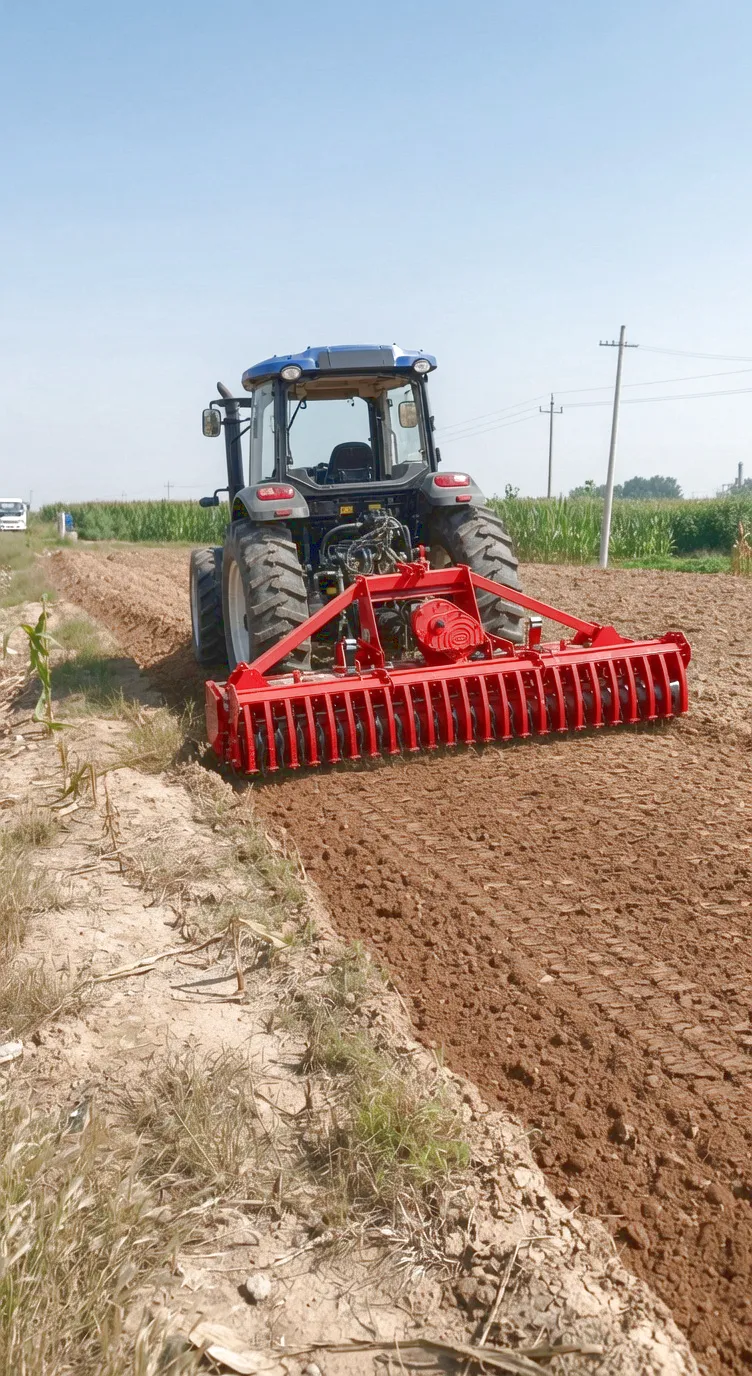 With the expansion of environmental land management schemes across England and the growing adoption of regenerative agriculture practices, power harrows are now routinely used to incorporate cover crop biomass — ryegrass, vetch, phacelia, radish — into the top 100–150 mm of soil prior to drilling. This application creates a distinctive loading pattern on the agricultural gearbox because the tines are simultaneously cutting through living or recently killed green material and penetrating compacted soil. The biomass wrapping around tine shafts and rotor tubes creates drag spikes rather than the more uniform loading of clean soil tillage. A central gearbox designed for these conditions benefits from positive oil pressure-relief features to prevent hydraulic lock from oil aeration caused by the tumbling action of wet green matter, as well as reinforced output shaft housings to resist the bending moment that occurs when biomass accumulates unevenly across the rotor width. Farms participating in Countryside Stewardship or Sustainable Farming Incentive payment schemes in counties from Herefordshire to Suffolk are incorporating cover crops at scale, generating consistent demand for robust agricultural gearbox units capable of handling these more demanding multi-material tillage operations.
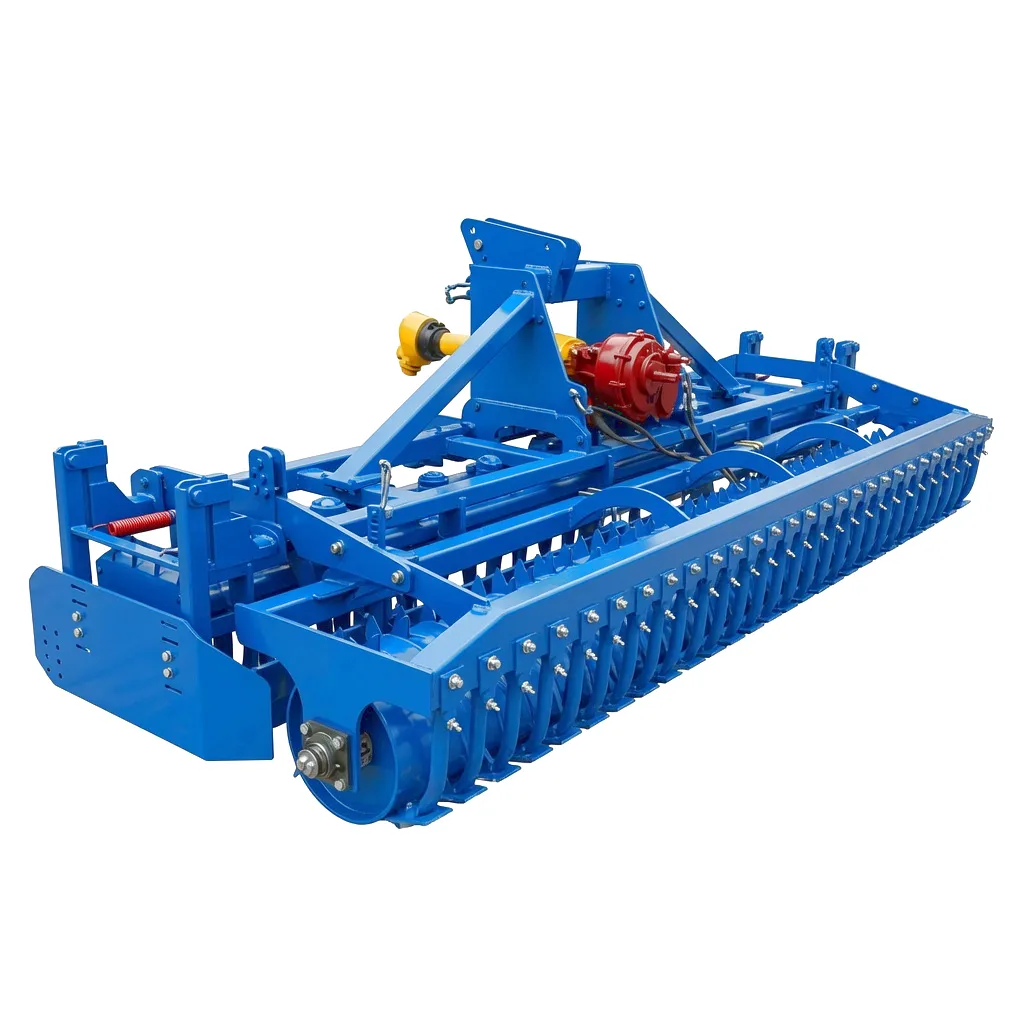 Sugar beet and carrot harvesting operations in Norfolk, Suffolk, and Lincolnshire leave behind heavily trafficked, structurally degraded soil with deep wheel ruts and compressed ridges that must be remedied before the next crop can be established. Power harrows configured with soil-levelling boards and cage rollers are deployed after shallow ploughing or subsoiling to break down the surface, fill ruts with loose material, and prepare a seedbed for autumn-drilled winter barley or oilseed rape. In this application, the central agricultural gearbox faces its most variable loading conditions: the tines alternate between free air in ruts, moderate resistance in loose plough furrows, and high resistance when crossing compressed trafficked zones. This load cycling — effectively a repeated impulse loading pattern — is what causes premature bearing fatigue in underpowered or poorly specified gearbox units. Tapered roller bearings correctly preloaded, with an L10 fatigue life rated to at least 5,000 hours at peak continuous torque, are the minimum standard for this application category. Agricultural contractors based near King’s Lynn or Wisbech who run machines continuously through the October-November root crop season benefit most from specifying agricultural gearbox units with verified bearing grade and overload documentation.
Customer Success Story: Agricultural Contractor, Lincolnshire
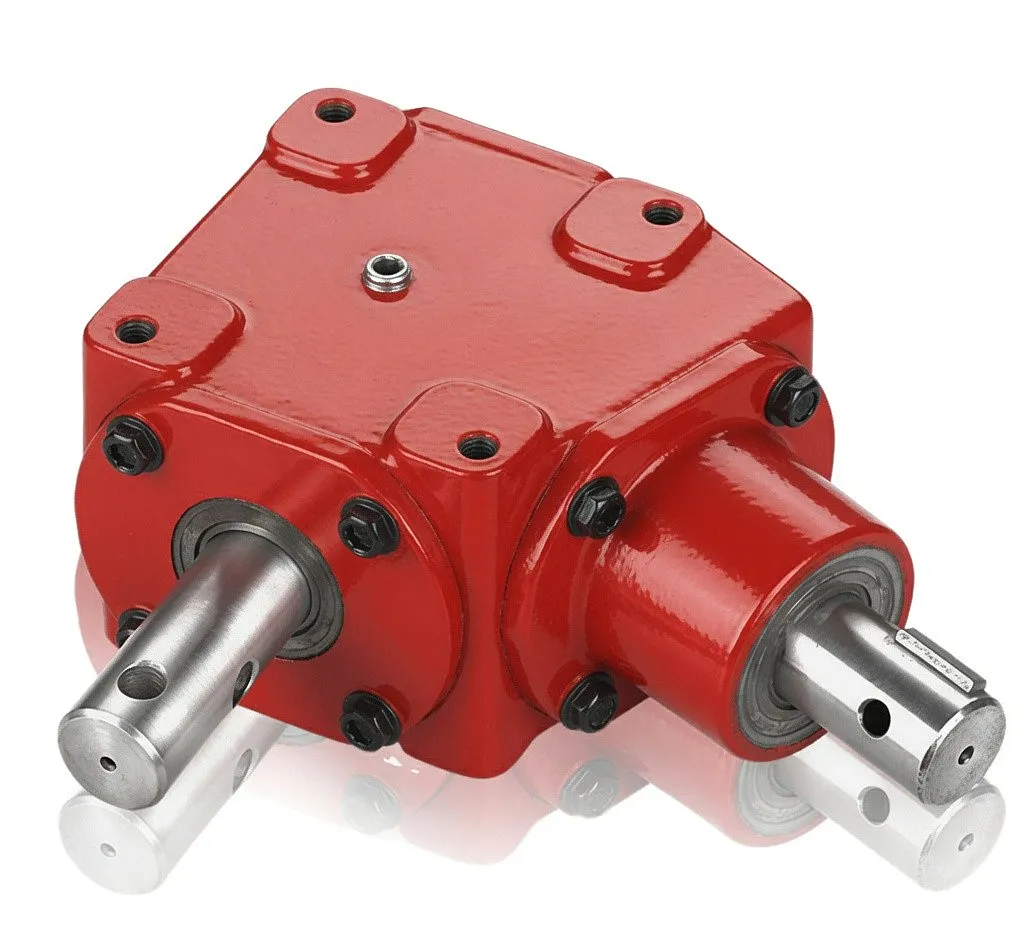 Background: Fenside Agricultural Services, a contract cultivations and drilling business operating from a base near Sleaford in Lincolnshire, runs three power harrows ranging from 3 to 6 metres working width across a customer base of 28 arable farms covering approximately 5,400 hectares per season. The business had been experiencing repeated central gearbox failures on two of its machines — one a 4-metre Kverneland HE model and the other a 6-metre Lemken Zirkon — during the spring 2023 seedbed season. Both gearboxes were original equipment units approaching the end of their service life, but accelerated wear from the sandy, abrasive Fenland soils and high daily utilisation rates of 10 to 12 hours had pushed their operating hours beyond the OE design envelope.
What UK Customers Say About Ever Power Agricultural Gearboxes
“We had the Ever Power unit fitted and running on the Kverneland within a day. After 200 hours of spring work on the Fen silts, the gear mesh is still quiet and there is not a trace of sand contamination in the oil. That IP65 sealing upgrade was the right call.”
Tom Brayshaw — Contractor, Sleaford, Lincolnshire
“Ever Power’s technical team matched the gear ratio on our Lemken from the data plate photographs within a few hours. The bearing quality is clearly a step above the OE part — the preload check was spot-on straight out of the box. It is the kind of attention to detail that makes a difference when you are running heavy machines hard through the season.”
James Whitfield — Arable Manager, Holbeach, South Lincolnshire
“We needed a custom ratio gearbox for a 3-metre mounted harrow converted to run on a 1,000 rpm PTO tractor. Ever Power provided a sample unit within three weeks of drawing approval, and the ratio accuracy was exactly as specified. The customisation process was genuinely straightforward — their engineering team actually knows what they are talking about.”
Rachel Holt — OEM Development Engineer, Birmingham
Matched PTO Drive Shafts for Power Harrow Applications
The performance of any agricultural gearbox depends directly on the quality of the PTO drive shaft connecting it to the tractor output. Ever Power supplies two matched shaft products that are engineered to complement the central gearbox range and handle the torque capacities and operating angles encountered in power harrow applications across British arable farms.
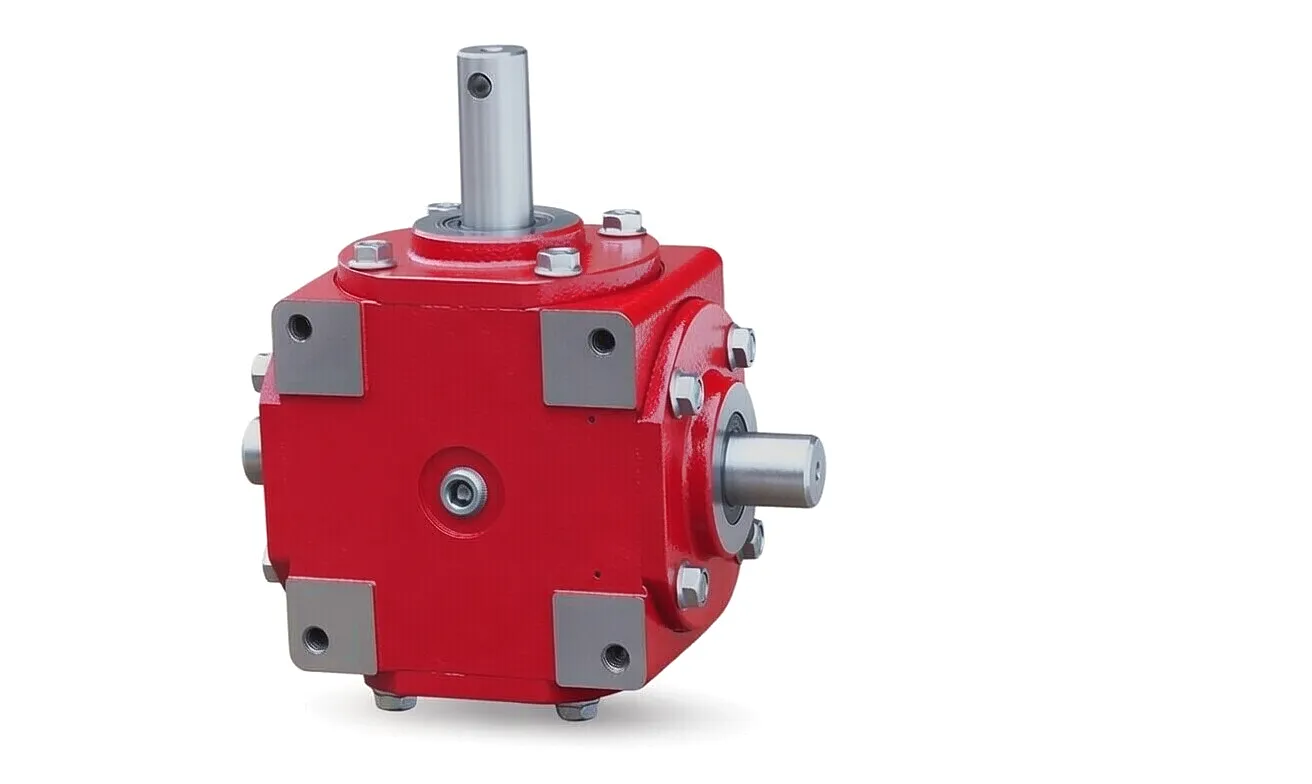
A heavy-duty, CV-jointed PTO shaft engineered for the high-torque, variable-angle demands of round baler feeding mechanisms. The wide-angle constant velocity joint maintains smooth torque delivery across the tight tractor-implement angles encountered in field headland turns, protecting the baler’s gearbox from the impulse peaks that a standard Hooke-joint shaft would transmit. Cross-journal kits comply with Category W2400 sizing, making the shaft interchangeable across the most common round baler makes operating across UK hay and silage production systems.
PTO Shaft Replacement for John Deere Square Balers
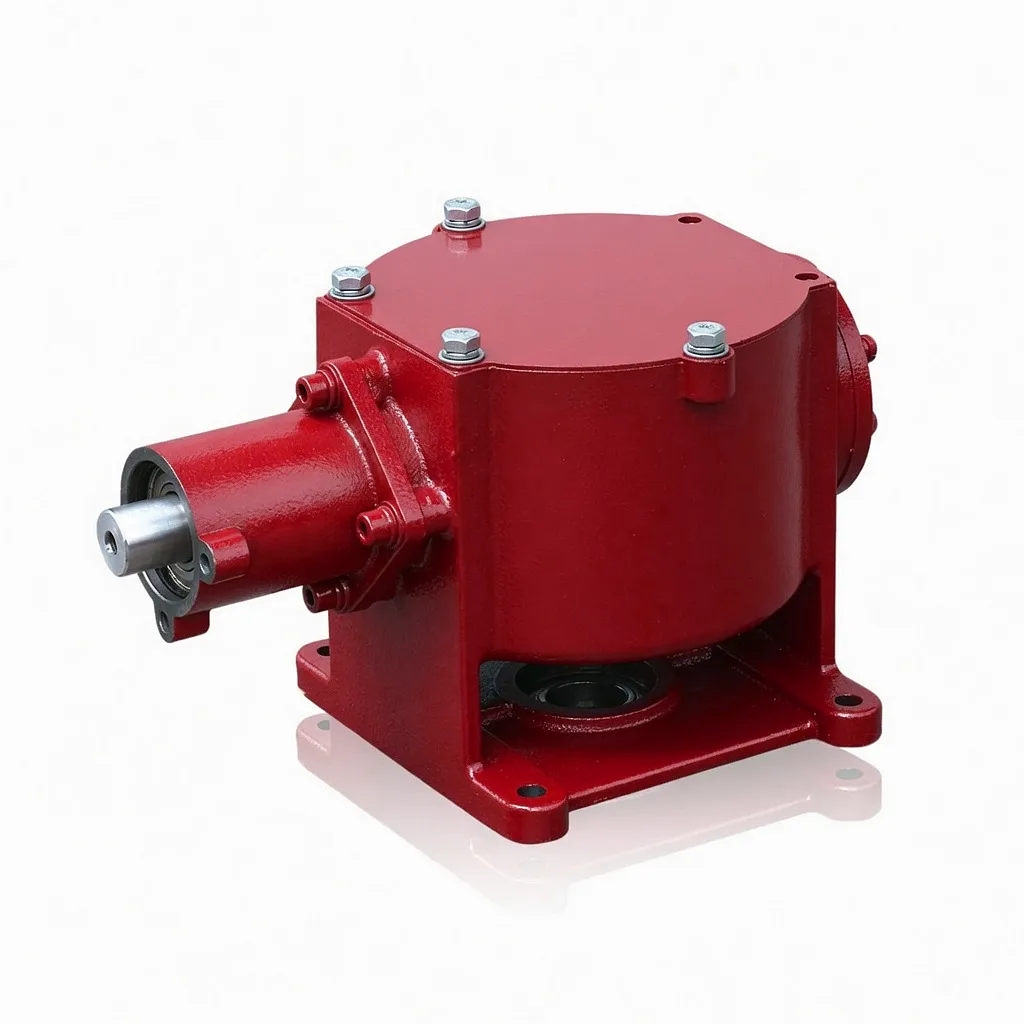
A dimensionally verified replacement PTO shaft engineered to John Deere square baler specifications, covering the most widely operated models across UK hay and straw enterprises. The shaft uses 42CrMo4 alloy steel tubes drawn to precise wall thickness tolerances, with spline profiles ground to DIN 5480 standards for guaranteed engagement without play in the baler gearbox input. Telescopic sliding tube sections are zinc-phosphated before assembly, and the safety guard complies with current EN ISO 4254-1 implement guarding requirements applicable to UK and EU market machinery.
Frequently Asked Questions: Agricultural Gearboxes for Power Harrows in the UK
Need an Agricultural Gearbox for Your Power Harrow?
Ever Power’s technical and commercial team is ready to match your specification, confirm compatibility, and provide a competitive quote — typically within 24 hours of your enquiry.
edit by gzl