
 Round balers are among the hardest-working machines in British agriculture. Season after season, these units collect, compress, and wrap thousands of tonnes of silage, hay, and straw across the UK’s diverse farmlands. At the mechanical heart of every round baler sits a component that rarely gets the attention it deserves: the PTO drive shaft. This rotating transmission link transfers power from the tractor’s power take-off stub to the baler’s internal gearbox, and when it performs flawlessly, the entire machine runs at peak output. When it doesn’t, an entire harvest window can be lost in a matter of hours. For UK farming operations running tight schedules between June and September, that kind of downtime is simply not an option. The engineering behind a modern PTO drive shaft — its yokes, cross-and-bearing kits, telescoping tubes, and overload protection devices — represents decades of refinement under genuine field conditions. Understanding how these components work, what separates a quality shaft from a budget replacement, and how to specify the right unit for your baler is the focus of this article.
How the PTO Drive Shaft Transfers Power Through a Round Baler System
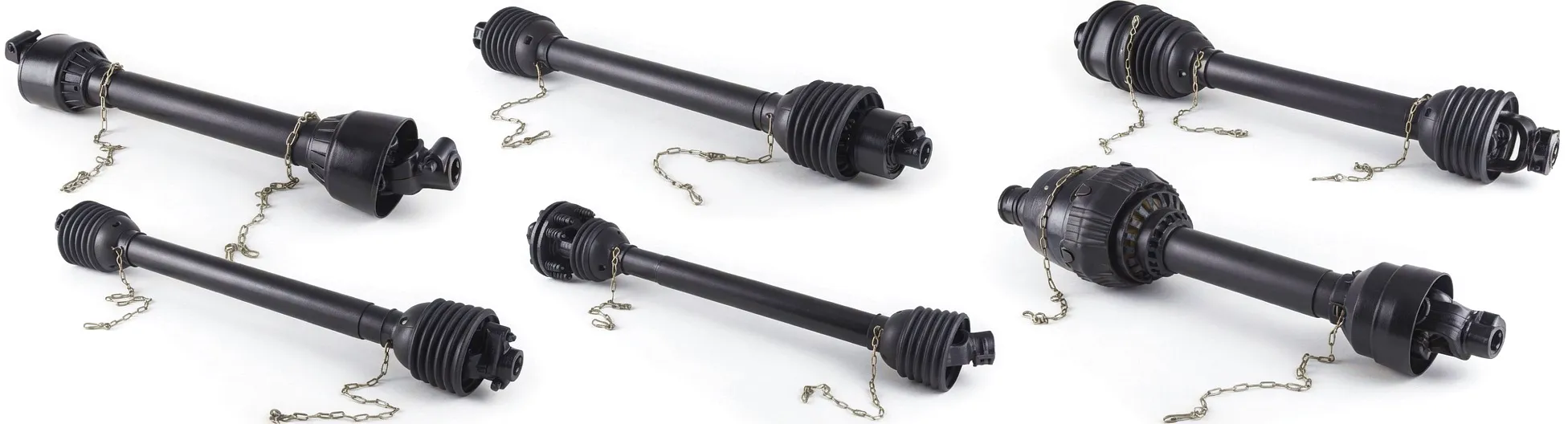
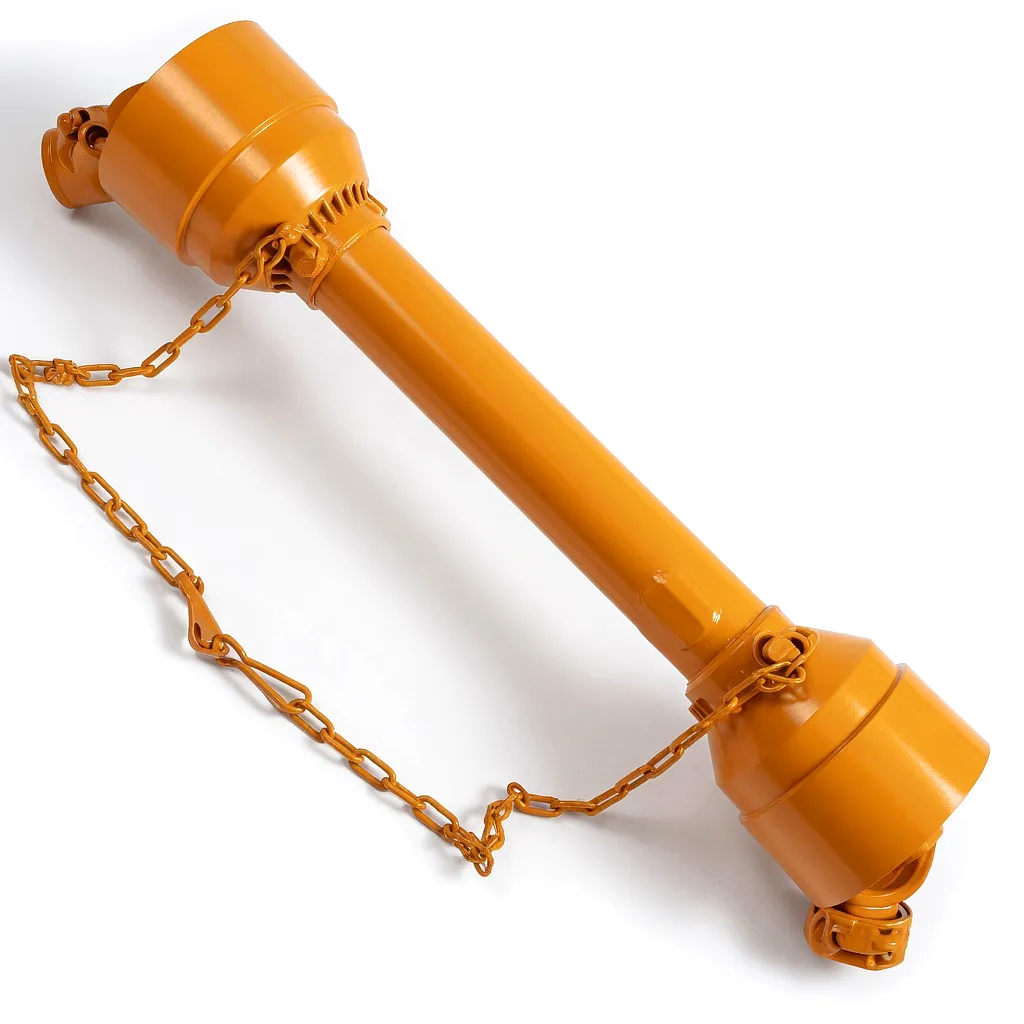
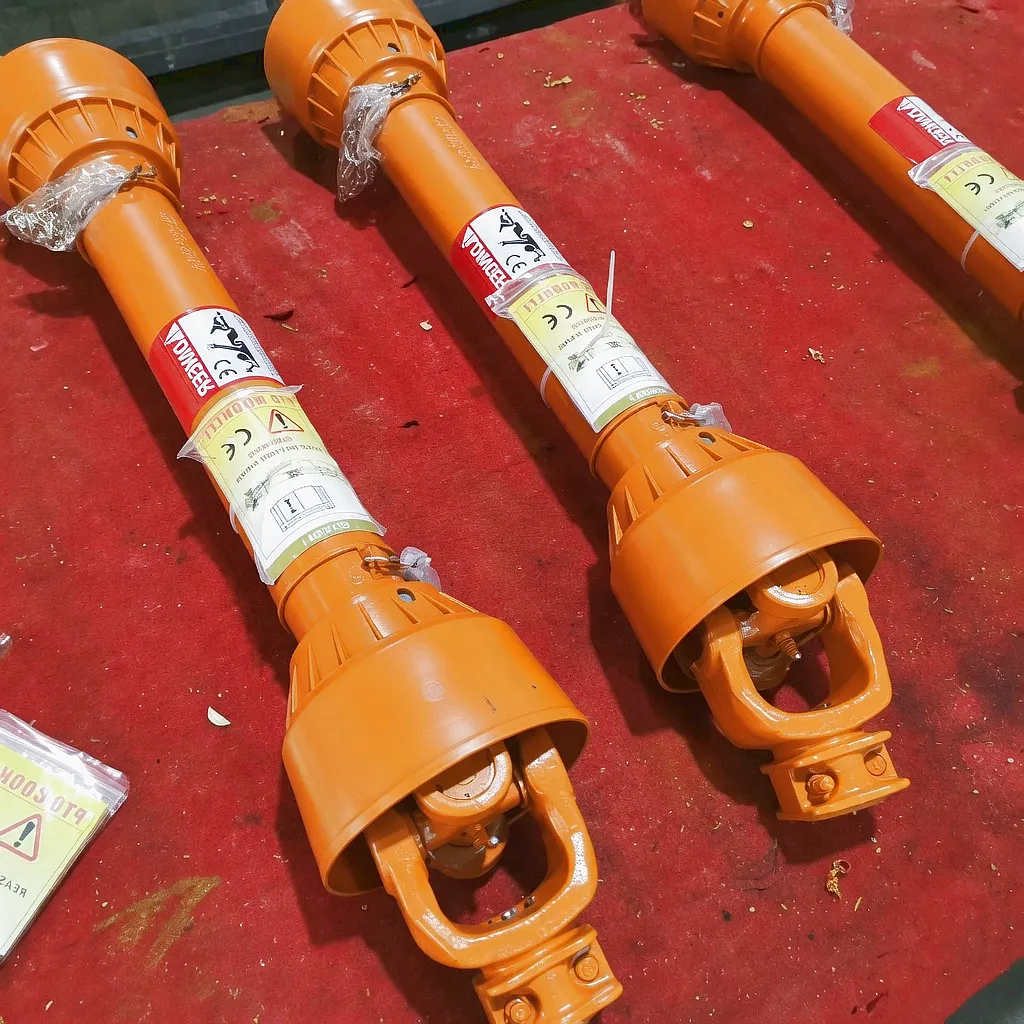
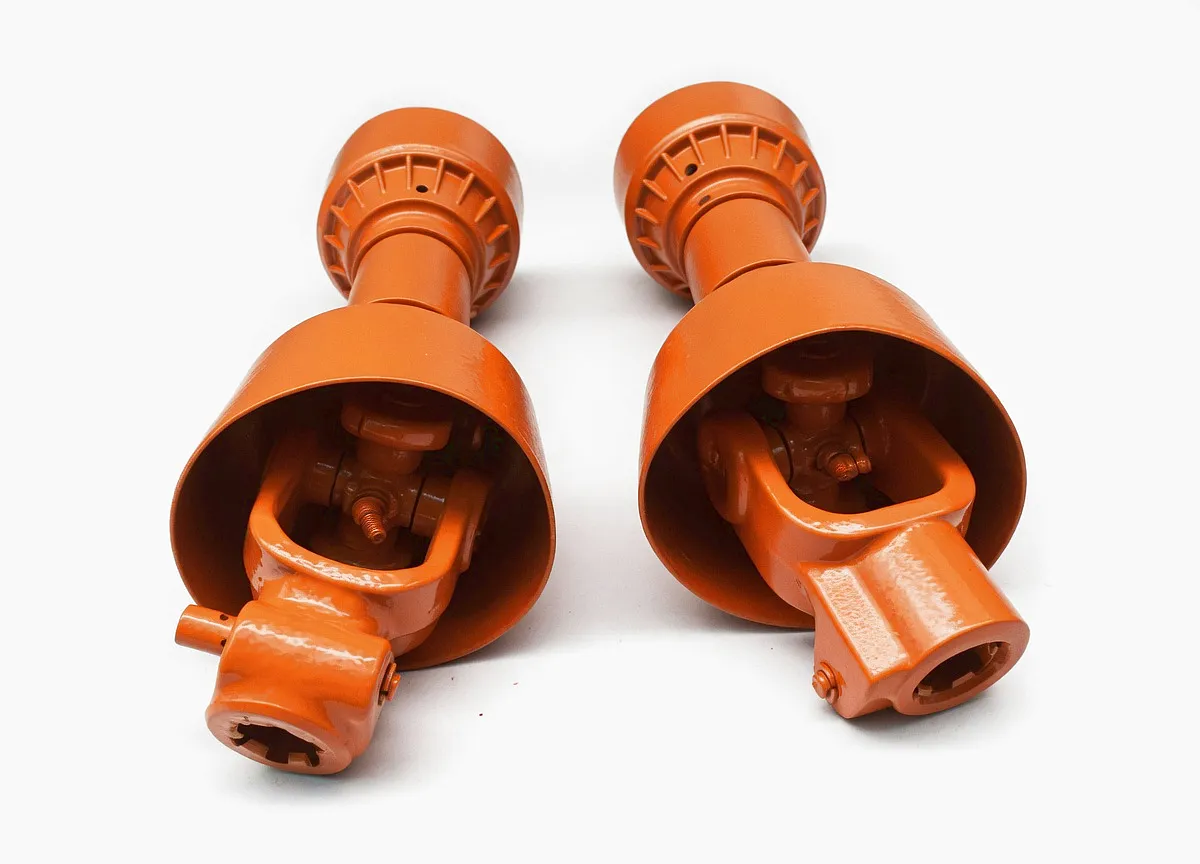
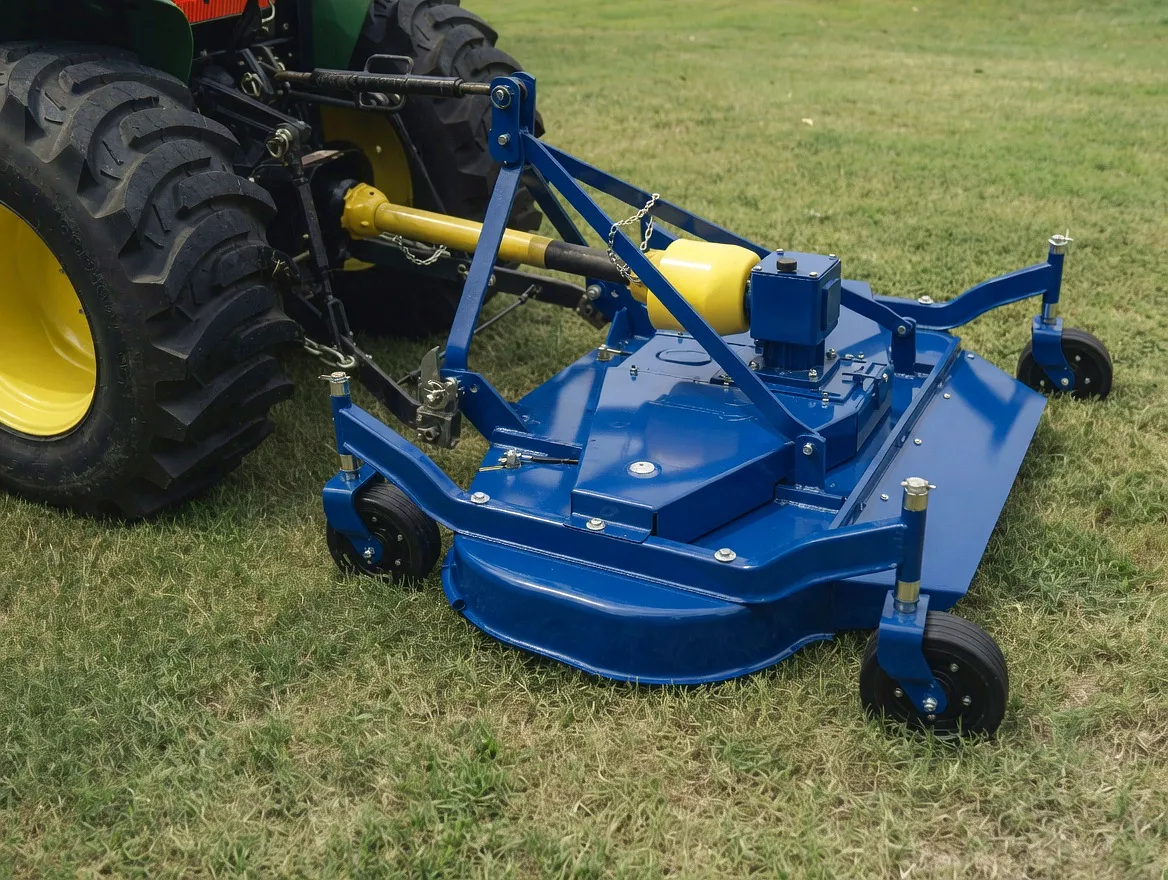 The power transfer chain begins at the tractor PTO stub shaft, which rotates at either 540 rpm or 1,000 rpm depending on the machine specification. The PTO drive shaft connects to this stub through a splined female yoke, locking in with a spring-loaded locking pin to prevent accidental disconnection during operation. From there, the shaft transmits torque through a universal joint — a cross-shaped trunnion bearing assembly — that accommodates the angular misalignment that inevitably exists between the tractor hitch and the baler drawbar. Most well-designed shafts for round baling applications handle operating angles of up to 25 degrees, with peak transient angles of 35 degrees during tight manoeuvres. The telescoping inner and outer profile tubes allow the shaft to extend and contract as the tractor and implement travel over uneven ground, maintaining continuous torque delivery without binding or play. At the implement end, a second universal joint feeds torque into the baler’s input gearbox, which then distributes drive to the pickup rotor, the bale chamber rollers, and the wrapping mechanism. The entire system must manage not only steady-state running torque but also sudden shock loads — for instance, when the pickup encounters a dense windrow or a foreign object. This is why quality PTO drive shafts for round balers incorporate either a friction clutch overload device or a ratchet-type torque limiter positioned between the two universal joints.
Core Materials That Define Long-Term Shaft Performance
Alloy Steel Tubes (20CrMnTi / 40Cr)
The inner splined tube and outer profile tube are both cold-drawn from medium-carbon alloy steel. The 20CrMnTi grade is case-hardened to achieve a surface hardness of 58–62 HRC while retaining a tough, ductile core that resists impact fracture. For heavier baling applications, 40Cr tubes are through-hardened to 28–34 HRC across the full section, delivering exceptional torsional stiffness under continuous high-torque loads. Spline profiles are formed by cold rolling rather than machining, which preserves grain flow and increases tooth fatigue strength by approximately 20–30% compared to cut splines.
Forged Yokes (45# Steel / QT Treated)
Yoke castings are replaced in quality shafts by closed-die forgings in 45# carbon steel, quench-and-tempered to 220–260 HB. The forging process eliminates internal porosity and aligns crystalline grain structure with the primary stress paths through the yoke arms. Each yoke bore is precision-bored to an H7 tolerance fit, ensuring the cross-and-bearing kit seats without the fretting that causes premature bearing failure. Weld-on yoke variants are friction-welded rather than MIG welded, creating a metallurgically bonded joint that can transmit the full rated torque of the tube without heat-affected zone weakness.
Cross-and-Bearing Kits (Needle Roller Bearings)
The trunnion cross is machined from 20CrNiMo alloy steel and carburised to a case depth of 0.8–1.2 mm, providing the hardened running surfaces that needle rollers require. Bearing cups are formed from GCr15 bearing steel (equivalent to 100Cr6 / SAE 52100) and precision-ground to ISO P0 tolerances. Needle rollers themselves are selected for an L/D ratio between 3:1 and 5:1, maximising load distribution across the cup bore. Each kit is factory-greased with an NLGI Grade 2 lithium complex grease rated for operation between -30°C and +120°C — important for UK winter maintenance checks and warm summer baling shifts alike.
Safety Guards (HDPE + Galvanised Steel Frame)
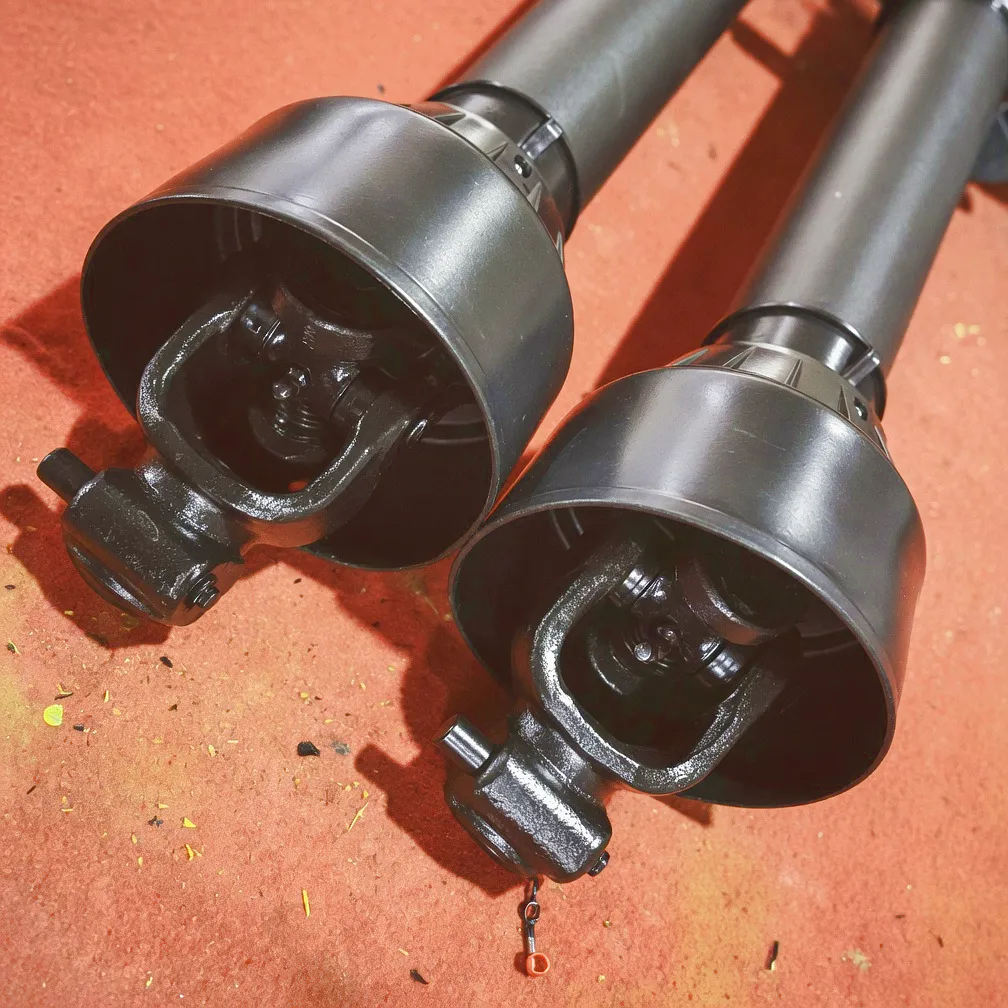
CE-compliant safety guards are mandatory under UK PUWER (Provision and Use of Work Equipment Regulations) requirements. The outer cone guard is moulded from high-density polyethylene with a wall thickness of at least 3.5 mm, UV-stabilised to resist the bleaching and embrittlement caused by extended field exposure. A galvanised steel support bracket maintains guard position relative to the stationary machine housing. The guard’s funnel profile is engineered to direct debris away from the rotating shaft rather than allowing wrap-around — a critical safety feature on machines operating near crop residues.
Core Technical Advantages of a Quality PTO Drive Shaft
01
Wide-Angle Constant Velocity Performance
Wide-angle CV joints on the tractor end maintain smooth torque delivery even when the shaft operates at high deflection angles, eliminating the cyclic speed variation that standard universal joints produce at angles above 15 degrees. This prevents torsional vibration that would otherwise damage baler gearbox seals and shorten the working life of pick-up rotor bearings.
02
Integrated Overload Protection
Friction clutches are set to disengage at predetermined torque thresholds — typically between 1,000 Nm and 3,500 Nm depending on shaft series — protecting both the baler’s internal gearbox and the tractor’s PTO mechanism from impact spikes that can occur when the pickup encounters knotted windrows or stones. Ratchet-type limiters offer a more positive reset, re-engaging instantly once the overload condition passes.
03
Telescoping Stroke Engineered to Field Realities
Profile tube pairs — whether lemon, star, or lobular cross-section — are matched to provide the exact telescoping stroke required for each baler model. Insufficient stroke causes the shaft to bottom out on uneven headlands, forcing torque through the yokes at extreme angles; excessive play creates NVH issues at high rpm. Correctly specified telescoping stroke is a precise engineering parameter, not an afterthought.
04
Corrosion-Resistant Surface Treatments
All external steel surfaces undergo phosphating followed by either hot-dip galvanising or an epoxy-polyester powder coat system rated to EN ISO 12944 corrosion category C3 — appropriate for the wet, muddy conditions typical of UK autumn harvesting. Yoke bores receive a thin-film chromate conversion coating as additional protection during storage and shipping. These treatments are not cosmetic; they directly determine whether a shaft stored over winter will still operate freely the following spring.
Application Scenario: Round Baler PTO Drive in UK Agricultural Operations
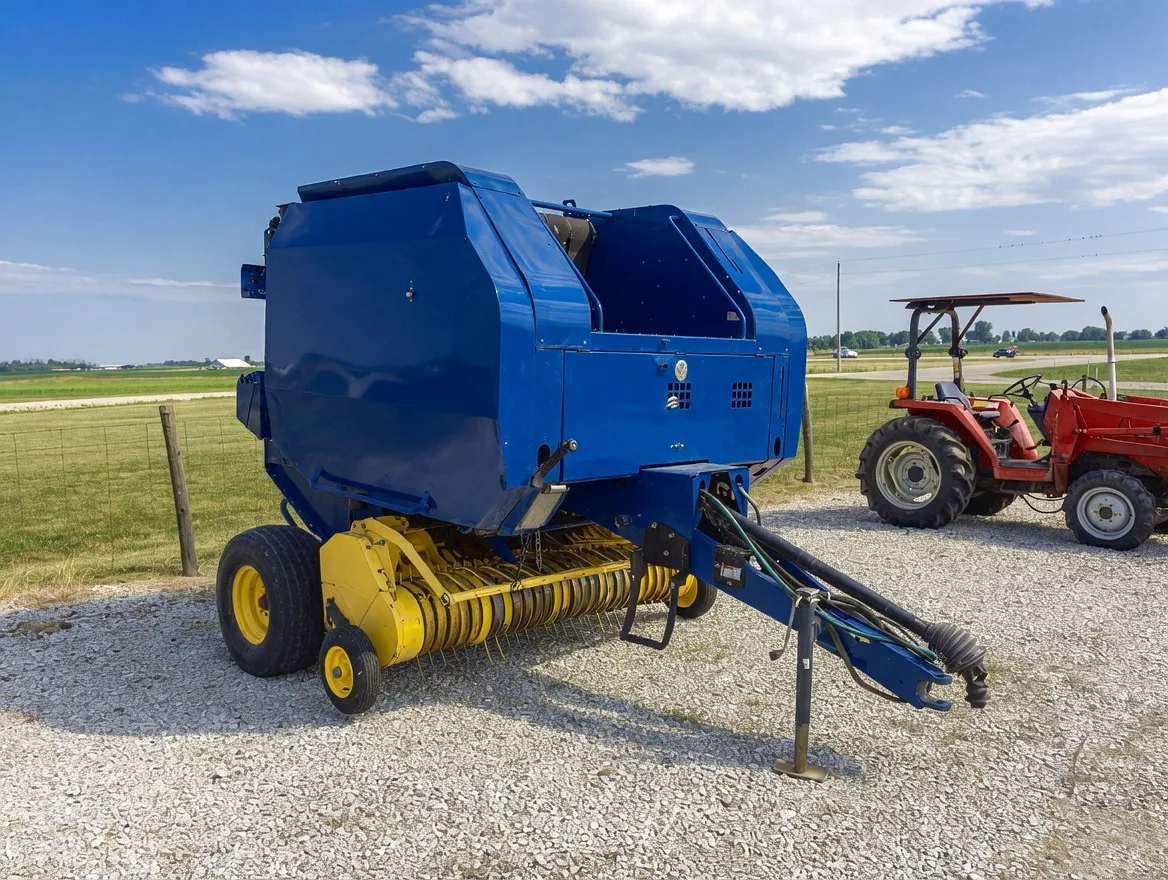
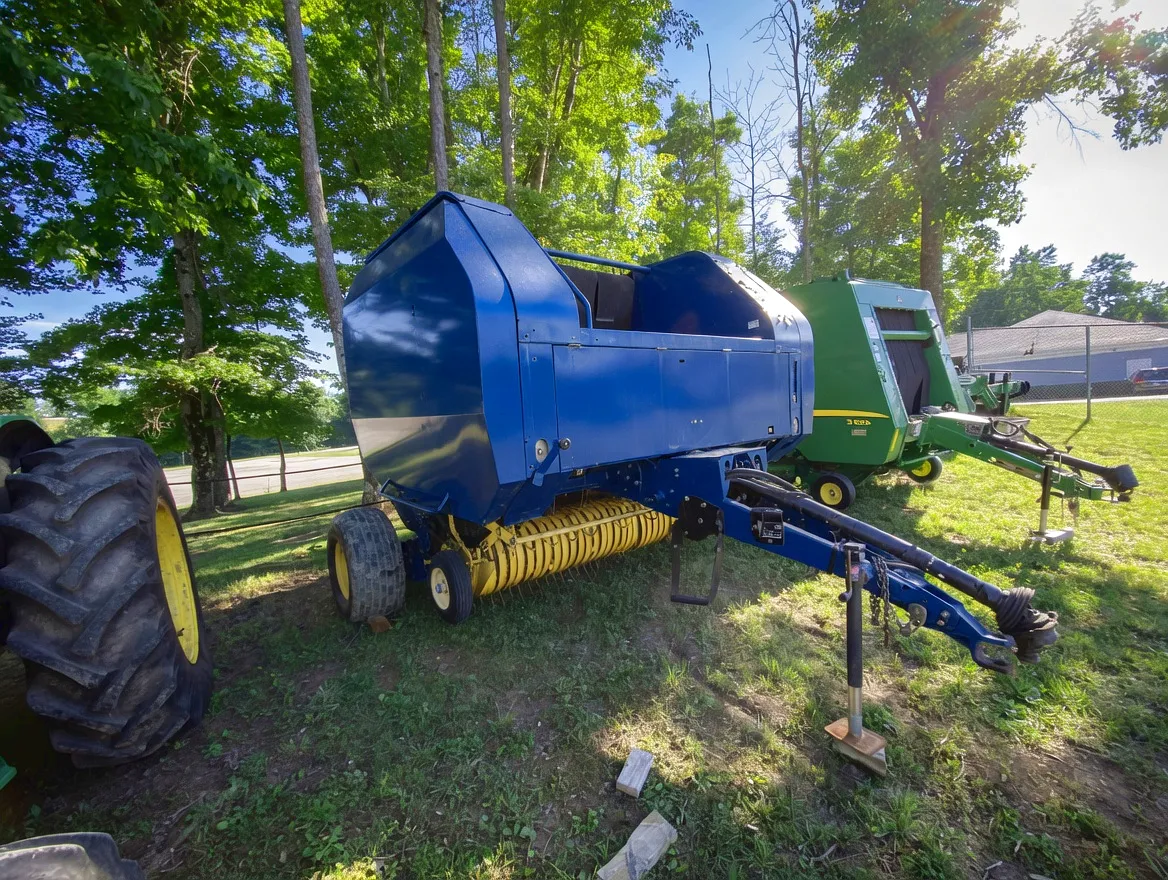 Round balers occupy a central role in UK grassland management, haylage production, and cereal straw harvesting. Across the pastoral landscapes of Devon and Somerset, the intensive grass-cutting rotations of Northern Ireland, and the large arable blocks of Lincolnshire and Cambridgeshire, contractors and farm businesses rely on variable-chamber and fixed-chamber balers from manufacturers including Claas, New Holland, Krone, John Deere, and McHale. These machines demand PTO drive shafts capable of sustaining continuous output in conditions that range from bone-dry July straw to wet September silage, where a single large-diameter bale can weigh 500 kg or more. The mechanical stresses involved are considerable: at 540 rpm, a shaft transmitting 80 kW is handling approximately 1,415 Nm of continuous torque, with momentary shock loads reaching three to four times that figure during pickup rotor slug events. A shaft that is correctly rated, precisely fitted to the OEM specification, and manufactured from traceable materials will complete a full season — often 2,000 to 3,500 bales — without intervention. One that is not will fail, usually at the most inconvenient possible moment.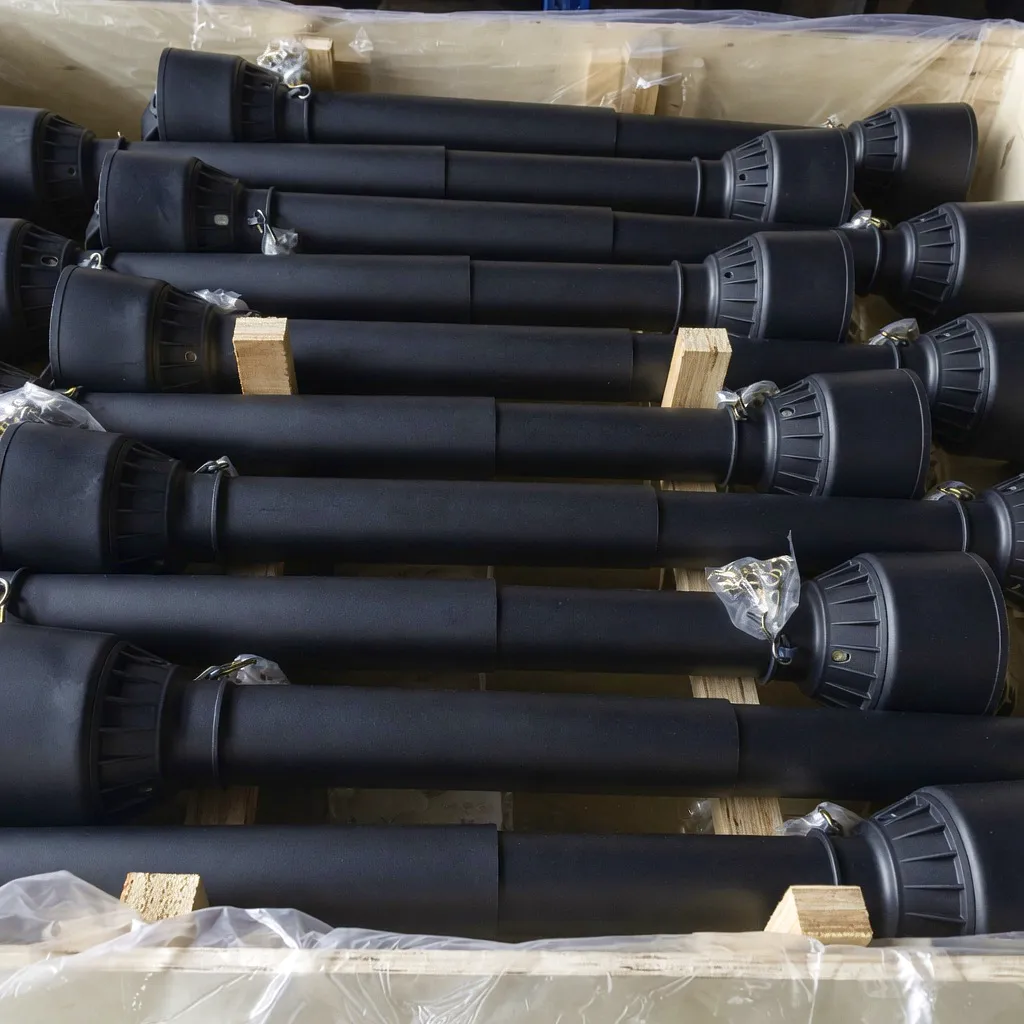
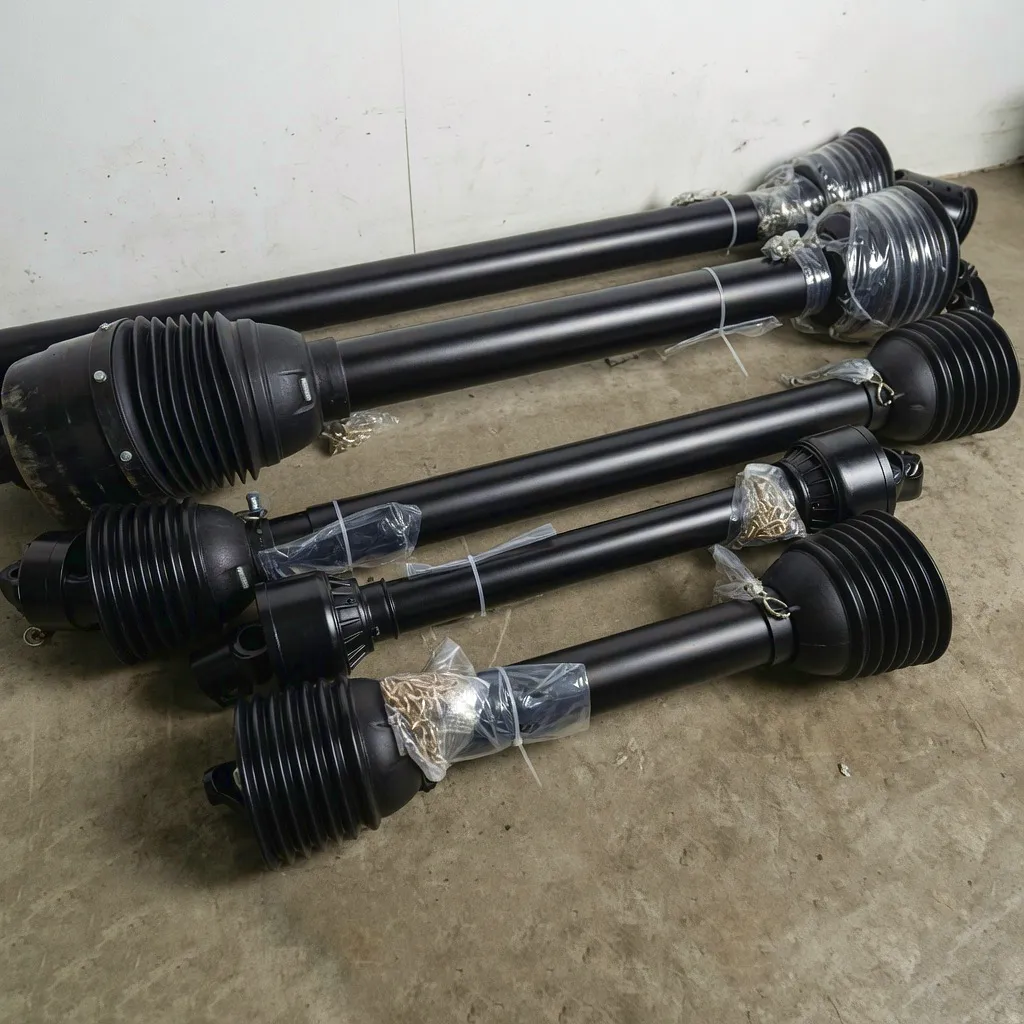
Product Technical and Performance Parameter Table
| Parameter | Series A (Light) | Series B (Standard) | Series C (Heavy) | Series D (Extra Heavy) |
|---|---|---|---|---|
| Rated Torque (Nm) | 500 – 800 | 800 – 1,400 | 1,400 – 2,500 | 2,500 – 4,000 |
| Peak Overload Torque (Nm) | 1,600 – 2,000 | 2,400 – 3,200 | 4,000 – 5,500 | 6,000 – 8,500 |
| Operating Speed (rpm) | Up to 540 | Up to 1,000 | Up to 1,000 | Up to 1,000 |
| Max Operating Angle (degrees) | 15° (standard) / 25° (CV) | 25° / 35° (wide-angle CV) | 25° / 40° (wide-angle CV) | 25° / 40° (wide-angle CV) |
| Tube Material | 20CrMnTi (case hardened) | 20CrMnTi / 40Cr | 40Cr (through hardened) | 42CrMo4 (QT) |
| Tube Wall Thickness (mm) | 3.0 – 4.0 | 4.0 – 5.0 | 5.0 – 6.5 | 6.5 – 8.0 |
| Cross Journal Size (mm) | 27 x 74.6 / 30.2 x 92 | 30.2 x 92 / 35 x 107 | 35 x 107 / 42 x 125 | 42 x 125 / 48 x 143 |
| Overload Protection Type | Friction clutch (optional) | Friction clutch / ratchet | Ratchet / shear bolt | Shear bolt / ratchet HD |
| Surface Treatment | Phosphate + epoxy coat | Phosphate + powder coat | Hot-dip galvanised | Hot-dip galvanised + seal |
| Corrosion Resistance Standard | EN ISO 12944 C2 | EN ISO 12944 C3 | EN ISO 12944 C3/C4 | EN ISO 12944 C4 |
| Guard Standard | CE / ISO 11684 | CE / ISO 11684 | CE / ISO 11684 | CE / ISO 11684 |
| Typical Baler Fit | Small variable-chamber | Mid-range round balers | Large variable-chamber | Contractor / biomass |
Matching PTO Drive Shaft Specification to Round Baler Model and Crop Type
 Selecting the right PTO drive shaft is not simply a matter of matching the male spline to the tractor PTO stub. The process begins with confirming the input torque requirement of the specific baler model — and this varies substantially between manufacturers and even between model generations from the same brand. A Claas Rollant 455 operating on a 150 hp tractor at 1,000 rpm PTO requires a different shaft specification than a Krone Comprima V180 XC operating in the same field. Input shaft bore diameter, yoke pin-to-pin length, cross journal size, and clutch release torque setting are all model-specific parameters that should be verified against the OEM parts list before any replacement shaft is ordered. Fortunately, experienced shaft suppliers maintain cross-reference databases covering most major baler manufacturers, allowing quick identification of the correct specification based on the machine’s serial number prefix. Within the UK market, several specialist agricultural engineering firms across the East Midlands — particularly in the Nottingham and Leicester areas — stock a broad range of replacement shafts and can carry out same-day fitting for agricultural contractors facing breakdown during a tight baling window.
It is worth understanding the distinction between OEM-original shafts and pattern replacement units. OEM shafts are manufactured to the precise torque and dimensional specifications set by the baler manufacturer and are the benchmark against which all replacements should be measured. High-quality pattern parts — those produced by ISO-certified manufacturers using traceable steel, precision machining, and documented quality control — can perform at or close to OEM standard at meaningfully lower cost. The critical differentiator is not price alone but the availability of the manufacturer’s material certifications and dimensional inspection records. Agricultural contractors purchasing pattern shafts for use across a fleet of balers should always request these documents, particularly if the machines will be operating under FGAS or other regulatory schemes that require maintenance record-keeping. The growing UK net-zero agricultural sector, particularly operations participating in the Sustainable Farming Incentive (SFI) and Countryside Stewardship schemes, is placing increased emphasis on documented maintenance practices for farm machinery.
Beyond the shaft itself, the condition of the baler’s input shaft housing and the tractor PTO stub have a significant impact on shaft service life. Worn housing bores allow the yoke to fret against the housing face, accelerating bearing wear and creating vibration that propagates through the entire shaft assembly. Similarly, a PTO stub showing visible corrosion or spline wear will cause uneven load distribution across the female yoke splines, leading to fretting fatigue cracks at the spline root radius. Before fitting a new PTO drive shaft, inspection and if necessary reconditioning of both the tractor stub and the baler input shaft is sound engineering practice that significantly extends the working life of the replacement component.
Manufacturing Excellence
Ever Power — Precision PTO Shaft Manufacturing and Custom Engineering
Ever Power operates an integrated PTO drive shaft manufacturing facility equipped with CNC cold-rolling lines, induction hardening stations, robotic welding cells, and a coordinate measuring machine (CMM) inspection centre. Every shaft leaves the facility with a full dimensional inspection report traceable to the individual production batch. This level of documentation is particularly valued by UK agricultural distributors and fleet contractors who require evidence of conformance for maintenance records or insurance purposes.
🌟
Custom Shaft Engineering
Ever Power’s engineering team designs bespoke shaft assemblies for non-standard applications — oversized baler modifications, prototype agri-tech machines, and specialist crop-handling equipment. Custom tube profiles, non-standard cross journal sizes, and application-specific clutch torque settings are all available within standard lead times of 4–6 weeks from drawing approval.
📈
OEM Cross-Reference Programme
Ever Power maintains a continuously updated cross-reference library covering over 4,000 OEM shaft part numbers from major agricultural equipment manufacturers. UK distributors can query this database by OEM part number, machine serial number, or shaft dimensional specification to identify the correct replacement unit with confidence, reducing incorrect-fitment returns to near zero.
🚛
UK-Optimised Supply Chain
Stock is held at a UK-accessible bonded warehouse facility, allowing next-day despatch of standard shaft assemblies to agricultural merchants and dealers across England, Scotland, and Wales. Freight is consolidated through established freight partners with proven track records in temperature-controlled, well-packaged mechanical component delivery, ensuring shafts arrive in installation-ready condition without cosmetic or dimensional damage.
Customer Success Story: Yorkshire Agricultural Contracting, Harrogate
Dales Agri Contracting Ltd
Harrogate, North Yorkshire — Grassland Contracting Specialist
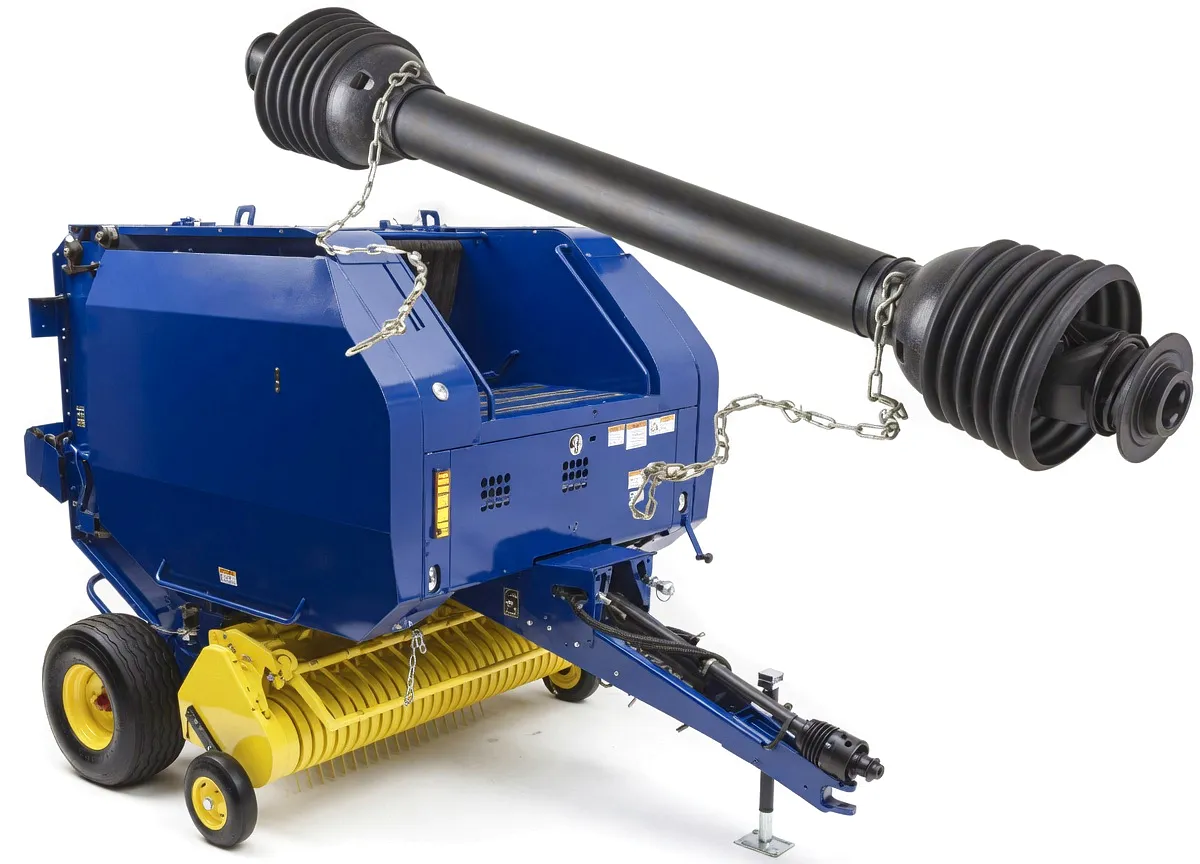
Dales Agri Contracting runs a fleet of five round balers across dairy and beef farms in the Wharfe Valley and lower Dales, producing an average of 18,000 bales per season. Following two shaft failures in consecutive seasons — both on the same machine model, a large variable-chamber baler operating at 1,000 rpm PTO — the business owner contacted Ever Power to investigate whether the standard replacement shafts being sourced from a local factor were correctly specified for the application.
Ever Power’s technical team reviewed the OEM shaft specification alongside the actual operating data: 110 hp tractor, 1,000 rpm PTO, frequently baling dense mixed grass/clover swards at 70% DM content, with considerable angular variation during headland manoeuvres on a 12-degree slope terrain. The analysis identified that the replacement shafts sourced previously had been specified for 540 rpm operation rather than 1,000 rpm, and used a 30.2 x 92 mm cross journal kit rather than the 35 x 107 mm kit specified by the baler manufacturer. The friction clutch on the replacement units was also set 400 Nm below the correct engagement torque, meaning the shaft was slipping during normal peak-torque baling events rather than only on genuine overload conditions — exactly the wear pattern reflected in the service history.
Ever Power supplied five correctly specified shafts — Series C units with 35 x 107 mm cross kits, 1,000 rpm rating, wide-angle CV joint on the tractor end, and friction clutch preset to 2,200 Nm — along with a maintenance schedule and greasing chart tailored to the contractor’s operating season. Dales Agri Contracting reported zero shaft-related downtime across the following two complete baling seasons, covering approximately 36,000 bales. The total cost saving, accounting for avoided labour, shaft replacement parts, and the estimated value of baling window time lost to previous breakdowns, was calculated by the business owner at over GBP 7,400 across the two seasons.
“The difference in shaft quality between what we were sourcing before and what Ever Power supplied is immediately obvious — heavier wall tubes, cleaner welds on the yokes, and the clutch actually releases at the torque it’s stamped with. We’ve had zero failures across two full baling seasons on the new units.”
James Thornton
Owner, Dales Agri Contracting Ltd, Harrogate
“Their technical team was the first supplier I’d spoken to who actually asked about my operating angle and crop density before recommending a specification. The wide-angle CV joint recommendation has made a real difference on our hilly ground — the baler runs noticeably smoother during tight headland turns.”
Rachel Pemberton
Farm Manager, Stainburn Estate, North Yorkshire
“We switched our entire fleet to Ever Power shafts after a single trial unit performed well through 4,000 bales without a bearing change. Documentation is excellent — all the material certs we need for our maintenance records. As a contractor operating under farm assurance schemes, that traceability matters to us.”
David Hartley
Director, Pennine Agricultural Services Ltd, Skipton
Frequently Asked Questions About PTO Drive Shafts for Round Balers in the UK
Ready to Specify the Right PTO Drive Shaft for Your Round Baler?
Tell us your baler model, tractor horsepower, crop type, and annual bale volume — Ever Power’s engineers will recommend the correct specification and return a competitive quote within one working day.