
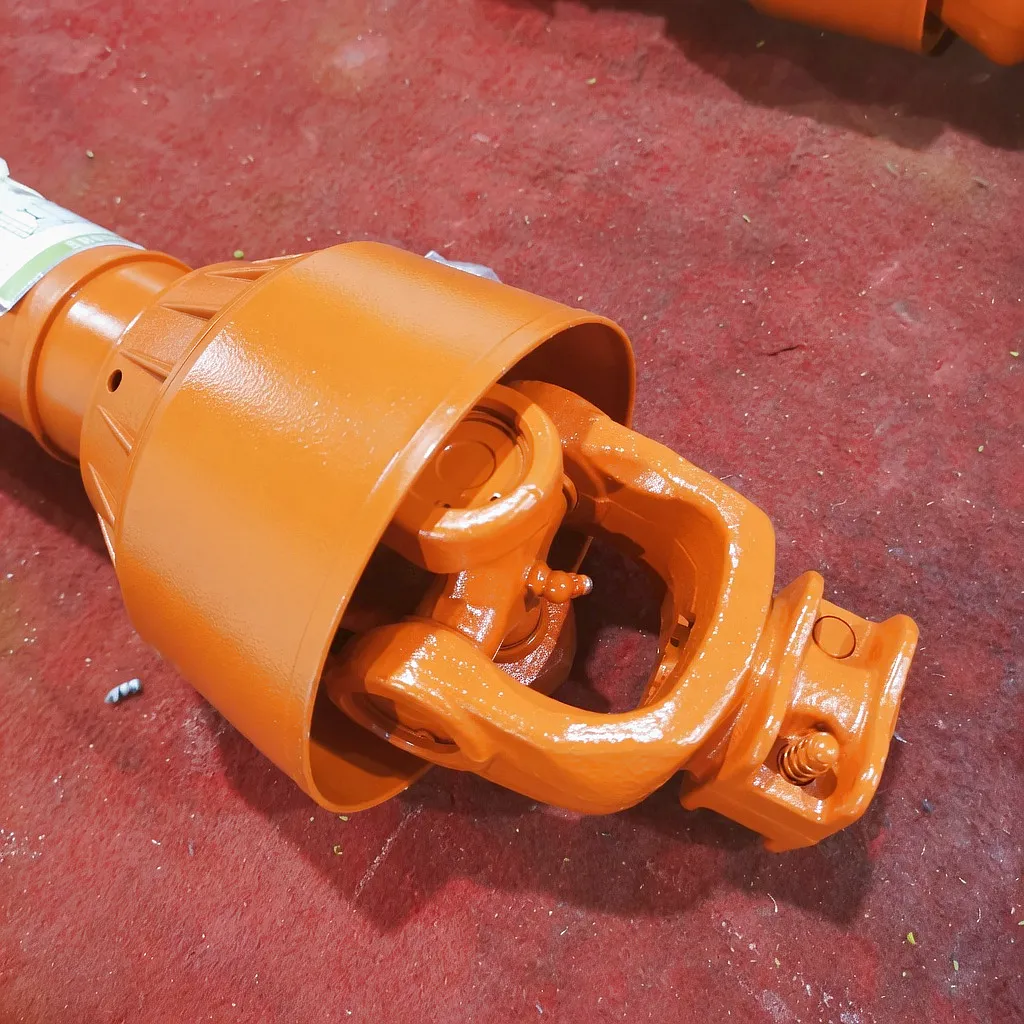
 Walk any arable holding in East Anglia, the Midlands, or the north of England during spring and you will almost certainly find a rotary tiller turning a recently ploughed field into a finely worked seedbed. The machine looks deceptively simple — a set of curved blades spinning behind a tractor — but hidden inside that orange or yellow housing is a drivetrain under extraordinary stress. Every torque spike, every buried rock, every sudden direction change transmits directly through the PTO shaft that links the tractor’s power take-off stub to the tiller’s input gearbox.
Choosing the correct PTO shaft for a rotary tiller is not simply a case of matching the spline count and pressing on. Working depth, soil type, tractor horsepower, implement width, and the presence of buried obstructions all influence which shaft specification is correct. Get it wrong and the consequences range from nuisance downtime — a sheared bolt or a blown seal in the middle of a tight seedbed window — to catastrophic gearbox failure that costs thousands of pounds and days of lost productivity. Get it right and the shaft becomes invisible, just another component that quietly does its job season after season.
At Ever Power, our engineering team has been supplying PTO shaft assemblies into the UK agricultural market for well over a decade, supporting dealers, OEM integrators, and individual farmers who need replacement parts shipped quickly to rural postcodes across England, Scotland, and Wales. This guide draws on that accumulated field experience to explain exactly how a rotary tiller PTO shaft works, what to look for when specifying one, and how to avoid the most common failure modes that cost British farmers money every year.
How a PTO Shaft Transfers Power Inside a Rotary Tiller
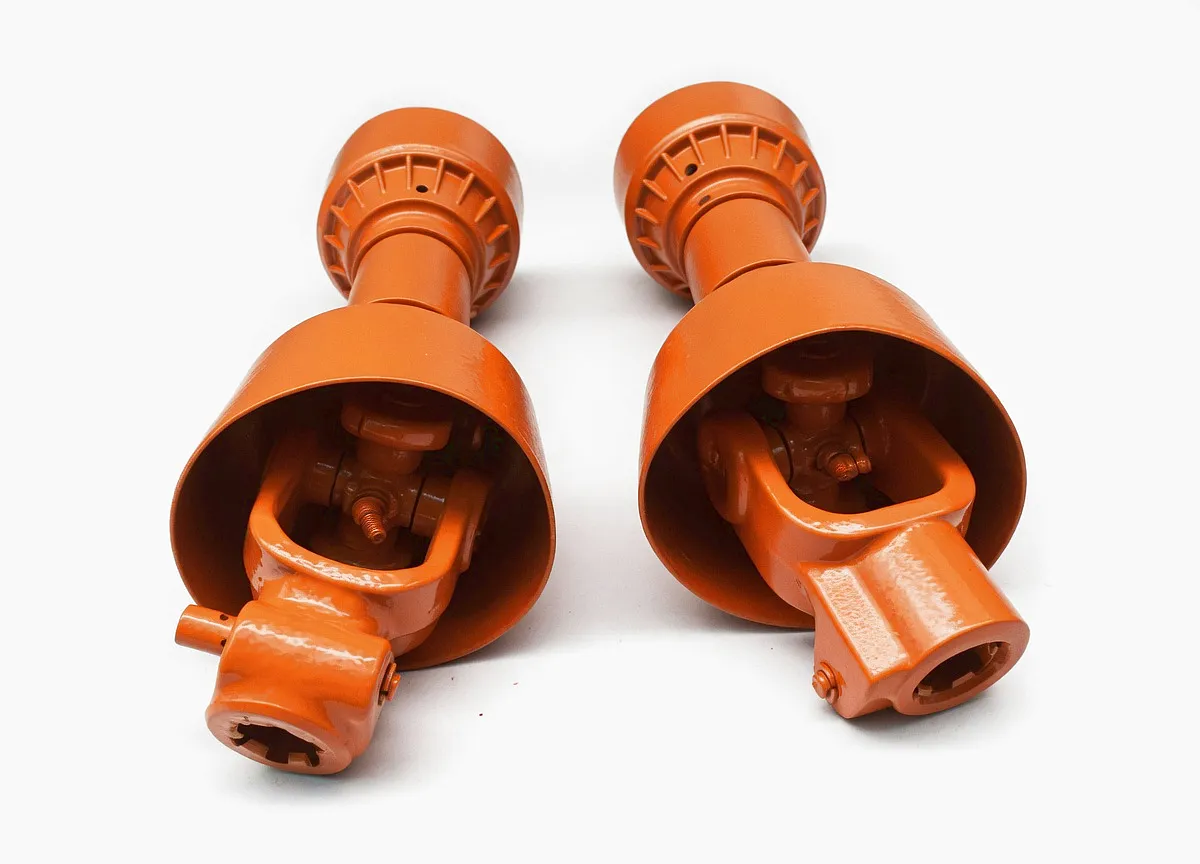
Understanding the power path through a rotary tiller is essential before any shaft specification decision. When the tractor operator engages the PTO, the gearbox output stub — typically a 6-spline 1⅜-inch shaft rotating at 540 RPM, or occasionally a 21-spline 1¾-inch shaft at 1000 RPM — begins spinning. The PTO driveshaft connects this stub to the tiller’s central input gearbox via two yoke-and-cross-joint assemblies at either end of a telescoping inner and outer tube.
Inside the tiller’s gearbox, a pair of bevel gears — often a spiral or hypoid cut for quieter running — redirects that rotational energy through 90 degrees, from the forward-facing input shaft down to the horizontal blade shaft running across the full working width of the machine. A secondary chain or gear reduction set then steps down the speed to deliver the correct blade tip velocity, typically between 180 and 250 metres per minute for optimum soil particle size.
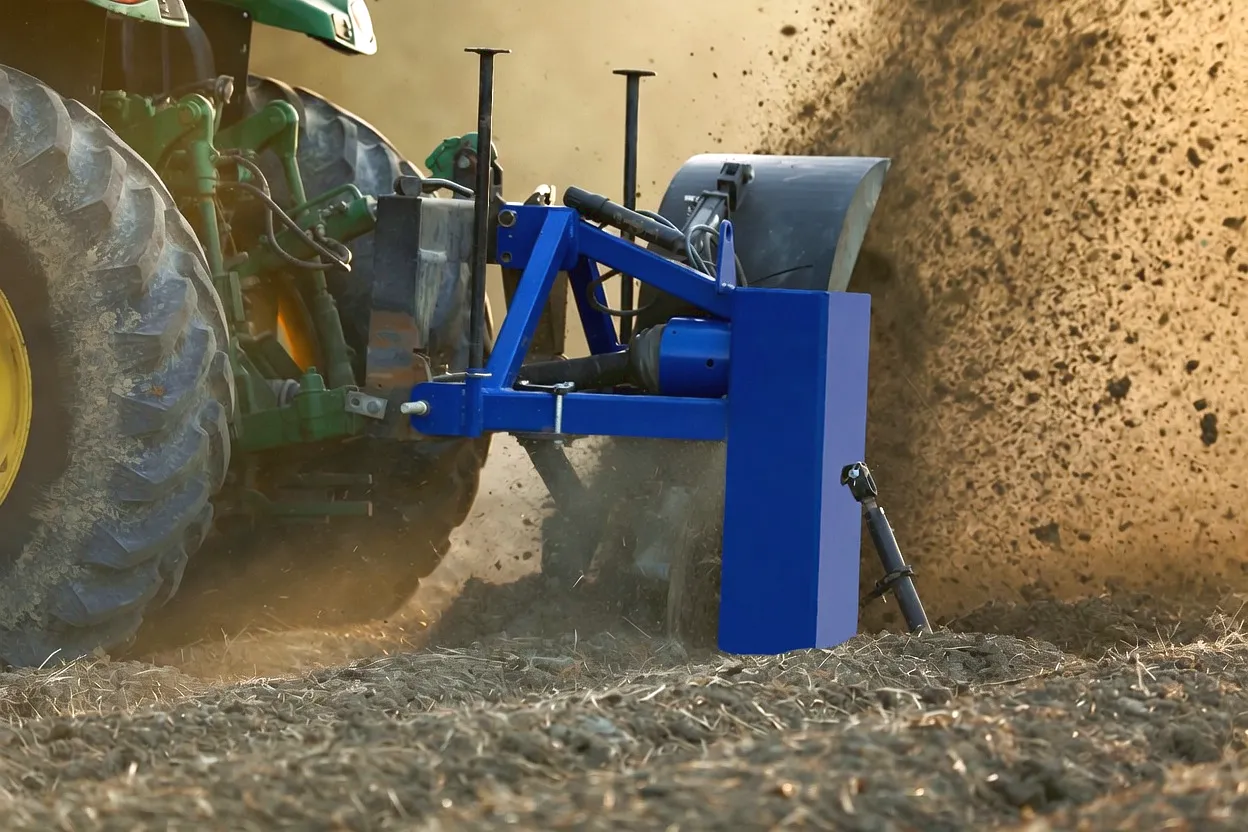
The blades themselves are C-shaped or L-shaped forged steel cutting edges bolted in pairs around the rotor. As they spin, the curved geometry first cuts vertically into the soil column and then throws the severed material rearward against a rear crumble roller or scratch board, pulverising clods in the process. The entire cutting action imposes a highly cyclical torque load on the PTO shaft — smooth rotation punctuated by sharp peaks each time a blade strikes compacted ground, a root mat, or an embedded stone. Those peaks can reach three to five times the nominal rated torque of the implement, which is precisely why every quality PTO shaft for a rotary tiller must incorporate an appropriately rated overload protection device.
The Slip Clutch: Your First Line of Defence Against Costly Overloads
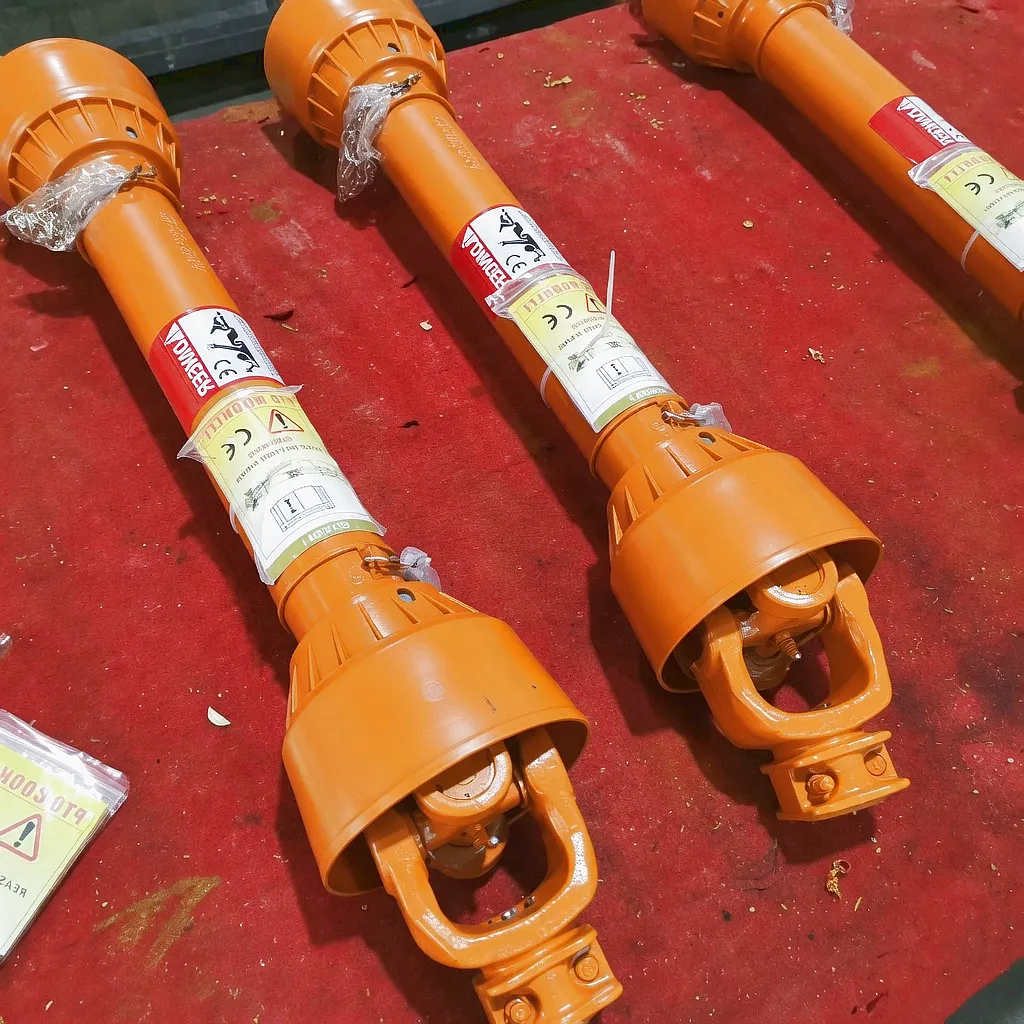 No component in the entire PTO shaft assembly attracts more questions — and causes more misunderstanding — than the slip clutch. A friction-plate slip clutch is not a luxury on a rotary tiller; it is, in every practical sense, a mandatory safety component. UK farm machinery dealers will tell you without hesitation that the two most common causes of catastrophic rotary tiller gearbox failure are running without a correctly set slip clutch and running with one that has seized due to neglect.
When a rotating blade encounters an immovable obstacle — a buried concrete post, a large flint, a compacted tree root — the rotor attempts to decelerate instantaneously while the tractor engine continues delivering full torque. Without an overload device, that energy has nowhere to go except into the driveline components themselves. Yoke welds crack, cross-journal caps shatter, and bevel gears in the tiller head shed teeth in spectacular fashion. The repair bill for a tiller gearbox in the UK currently runs anywhere from £400 to well over £1,200 depending on brand and availability of parts.
A properly rated slip clutch absorbs that shock by allowing the drive plates to slip relative to one another for the fraction of a second needed to pass the energy peak. A good agricultural-grade slip clutch fitted to an Ever Power PTO shaft for rotary tiller applications uses Belleville spring washers to maintain consistent clamping force across a defined torque threshold. The operator sets that threshold during initial fitting by adjusting the compression of the spring stack — typically tightening or loosening a series of nuts against calibrated torque values printed in the installation instructions. Once set, the clutch should be checked and re-set each season, because friction plates do bed in over time and the actual slip torque will drift upward.
Technical Specification — Ever Power PTO Shaft Range for Rotary Tillers
All figures represent nominal rated values. Actual performance depends on installation angle, ambient temperature, and maintenance schedule. Contact our engineering team for application-specific sizing.
Materials, Manufacturing Quality & What Sets a Professional Shaft Apart
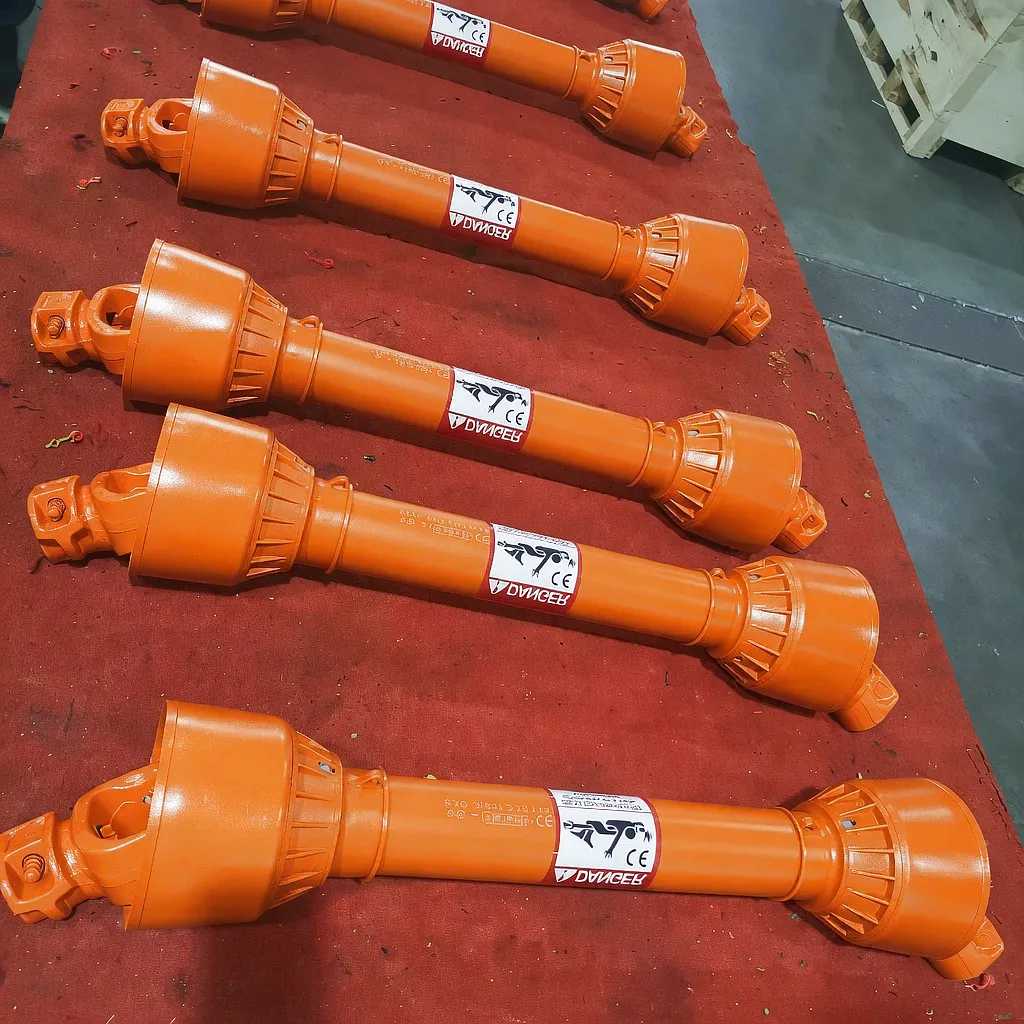
The working environment of a rotary tiller PTO shaft is about as hostile as it gets in agricultural engineering. The shaft sits low to the ground, directly in the path of thrown soil, stones, and crop residue. It must accommodate three-point linkage movement through angles up to 35 degrees on the input end. It will be drenched in muddy water, packed with clay, exposed to fertiliser spray, and left standing in a damp shed for months over winter.
Ever Power constructs the telescoping inner tubes from seamless cold-drawn steel tube, drawn to tight dimensional tolerances that ensure the internal and external profiles mate without slop even after thousands of operating hours. The profile geometry — typically a lemon (two-sided), star (six-pointed), or bell (lobular) cross-section — is precision-broached to control both the interference fit and the sliding resistance. Too tight and the shaft binds; too loose and the wear rate accelerates dramatically.
Cross-journal bearing cups on the universal joints use needle roller bearings running in hardened steel cups, pressed and retained with circlips. The grease nipple positioning on our standard series allows a standard grease gun to reach all four nipples without removing guards. Yokes are forged from SAE 1045 medium-carbon steel, machined and then induction-hardened at the weld zones to resist fatigue cracking — the dominant failure mechanism in high-cycle agricultural applications.
Where British Farmers and Contractors Use Rotary Tiller PTO Shafts
The rotary tiller occupies a unique position in UK land management. Unlike a plough, which inverts the soil profile, or a disc harrow, which merely scratches the surface, the rotary tiller creates a thoroughly homogeneous tilth from the surface down to the working depth — typically 100 to 200 mm — in a single pass. That characteristic makes it the implement of choice across a wide range of British land management contexts, each of which places subtly different demands on the PTO shaft.
Arable Seedbed Preparation — East Anglia & Lincolnshire
On the heavy silt and clay soils of the Fens and the Lincolnshire Wolds, rotary tillers working 3 to 4 metres wide are routinely powered by 120 to 160 HP tractors. The PTO shaft must handle extended continuous operation without heat build-up in the universal joints, and the slip clutch must be set conservatively because buried beet harvester debris is common.
Paddock Renovation — Yorkshire, Cheshire & Derbyshire
Grassland renovation with a rotary tiller presents a different challenge: dense root mats and the stone-heavy profiles common across the Pennine fringe. Shafts working in these conditions frequently encounter sustained overloads rather than single shock events, which can cause friction plates to overheat if the clutch torque setting is too low. Our EP-T540-M ratchet-friction hybrid clutch manages this scenario well.
Market Garden & Horticultural Holdings — Kent & the Vale of Evesham
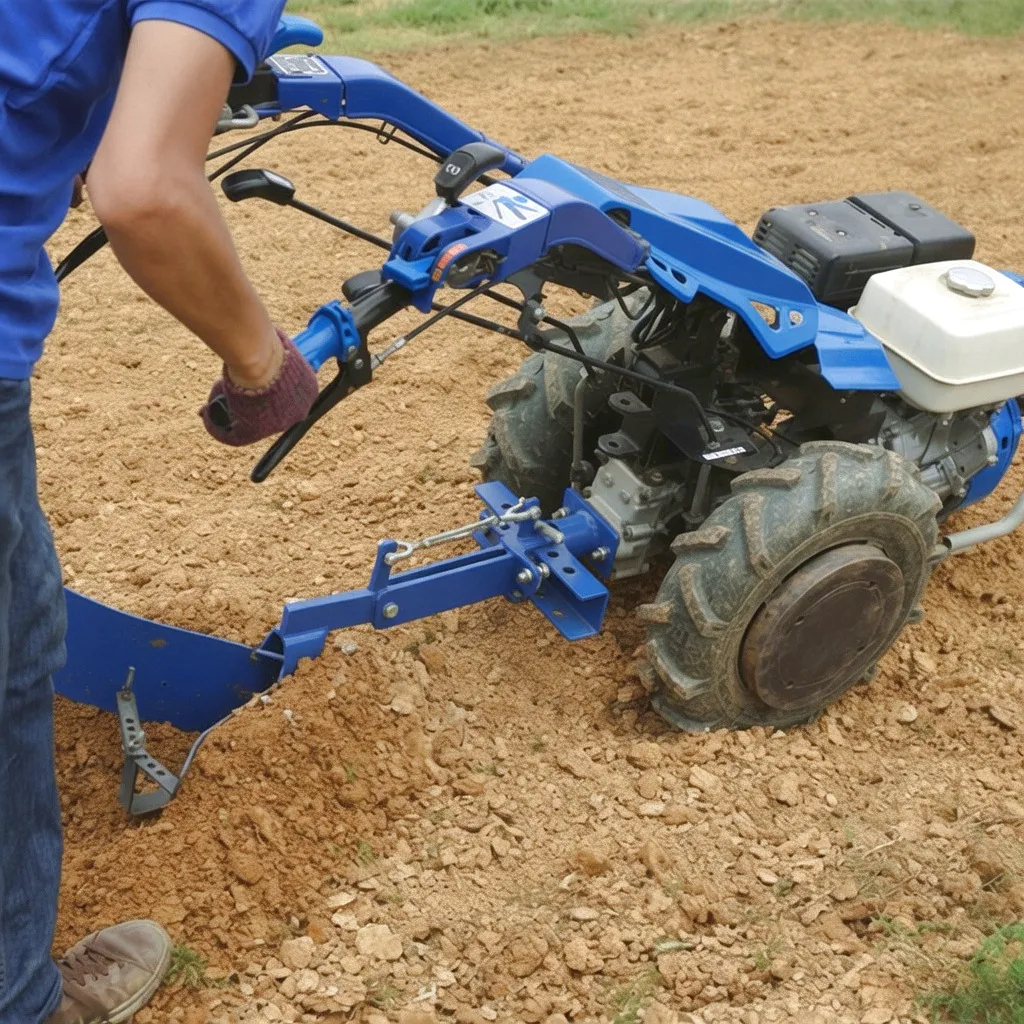
Compact two-wheel drive tractors and compact tillers dominate the horticultural sector. Here, a 1-metre to 1.5-metre wide tiller might be driven by a 40 to 65 HP compact utility tractor. Shaft length selection is critical because these machines operate at close coupling distances and the minimum shaft length restriction must be observed to prevent the inner and outer tubes from bottoming out in tight headland turns.
Agricultural Contracting — National
Agricultural contractors operating across multiple farm types face the toughest shaft requirements of all. A contractor’s tiller may move from a light sandy soil in Suffolk to a stonewalled Cotswold field within the same week. Contractors need shafts that can cope with maximum-rated torque continuously, and they need reliable access to replacement cross-journal kits, friction plate sets, and guard components without waiting for slow dealer stock cycles.
Why UK Farmers & Dealers Choose Ever Power PTO Shafts
Customer Success: How a Lincolnshire Arable Contractor Cut Downtime by 60%
Briggs Agricultural Services operates three Massey Ferguson 6700S series tractors paired with 3-metre Kuhn Perfecta rotary tillers, working primarily on the heavy black soils of South Holland and the Holland Fen. Prior to switching to Ever Power PTO shafts in the spring of 2023, the business was experiencing an average of 2.3 PTO shaft-related stoppages per 100 operating hours — a rate that the owner, David Briggs, described as “unacceptable given our tight spring window.”
The root cause analysis identified two contributing problems. The original shafts had factory slip clutch settings that were too aggressive for the buried sugar beet harvester trash prevalent across their operating area, and the guard systems were disintegrating from repeated impacts, leading operators to remove them — a serious health and safety risk under UK PUWER regulations. The needle roller cross-joint bearings on two of the three shafts were also showing accelerated wear due to inadequate greasing intervals.
Ever Power supplied three EP-T540-M units with factory torque settings adjusted to the specific tiller model torque ratings, together with a bulk supply of cross-joint repair kits and friction plate spares. An Ever Power application engineer provided a half-day on-farm installation and greasing interval briefing to the team. The result after a full 2023 and 2024 season was a reduction in shaft-related stoppages to 0.9 per 100 hours — a 61% improvement — with zero guard-removal incidents and no gearbox damage claims on the tillers themselves.
“We run four tillers through a short spring window and cannot afford to lose a day. The Ever Power shafts have been remarkably reliable since we swapped over. The slip clutch settings are spot-on for the flint-heavy chalk soils we work on the Wolds.”
“As an importer of rotary tillers into the UK, we were looking for a PTO shaft supplier who could do custom lengths and engrave our brand on the guard tubes. Ever Power delivered on both counts and the price for volume was genuinely competitive. Lead times were tight but they kept to their promise.”
“I grow salad vegetables near Faversham and my compact 45 HP tractor works a 1.2-metre tiller on very stony greensand. The EP-T540-S has survived two seasons without a single cross-joint replacement — which is better than any shaft I’ve used before. The guard system has also stayed intact, which my insurance broker appreciates.”
Custom PTO Shaft Manufacturing: Built to Your Exact Specification
Standard catalogue shafts serve the majority of rotary tiller applications competently, but the real engineering capability at Ever Power lies in our custom manufacturing service. Our production facility operates CNC tube-drawing and profiling equipment, precision forging lines, and in-house heat treatment facilities that together allow us to produce virtually any PTO shaft configuration that a rotary tiller OEM or machinery importer might require.
Custom projects handled by our engineering team include: non-standard spline profiles for legacy implements where the original manufacturer no longer stocks replacement shafts; extended working length shafts for high-clearance tractor configurations used in orchards and vineyards; reinforced tube profiles for ultra-heavy-duty contractors running 200+ HP articulated tractors; and dual-clutch designs where both the tractor end and the implement end require independent overload protection. If you are a UK tiller manufacturer, distributor, or dealer looking to offer a branded shaft line, our OEM programme includes custom guard colours, embossed logo mouldings, and private-label documentation.
Our minimum order quantities for custom work are deliberately low — typically 20 to 50 units per configuration — because we understand that small and medium UK importers cannot always commit to large volume upfront. Sample units for fitment testing are available on short lead times, usually within 4 to 6 weeks for a first-article custom shaft from our drawing acceptance date.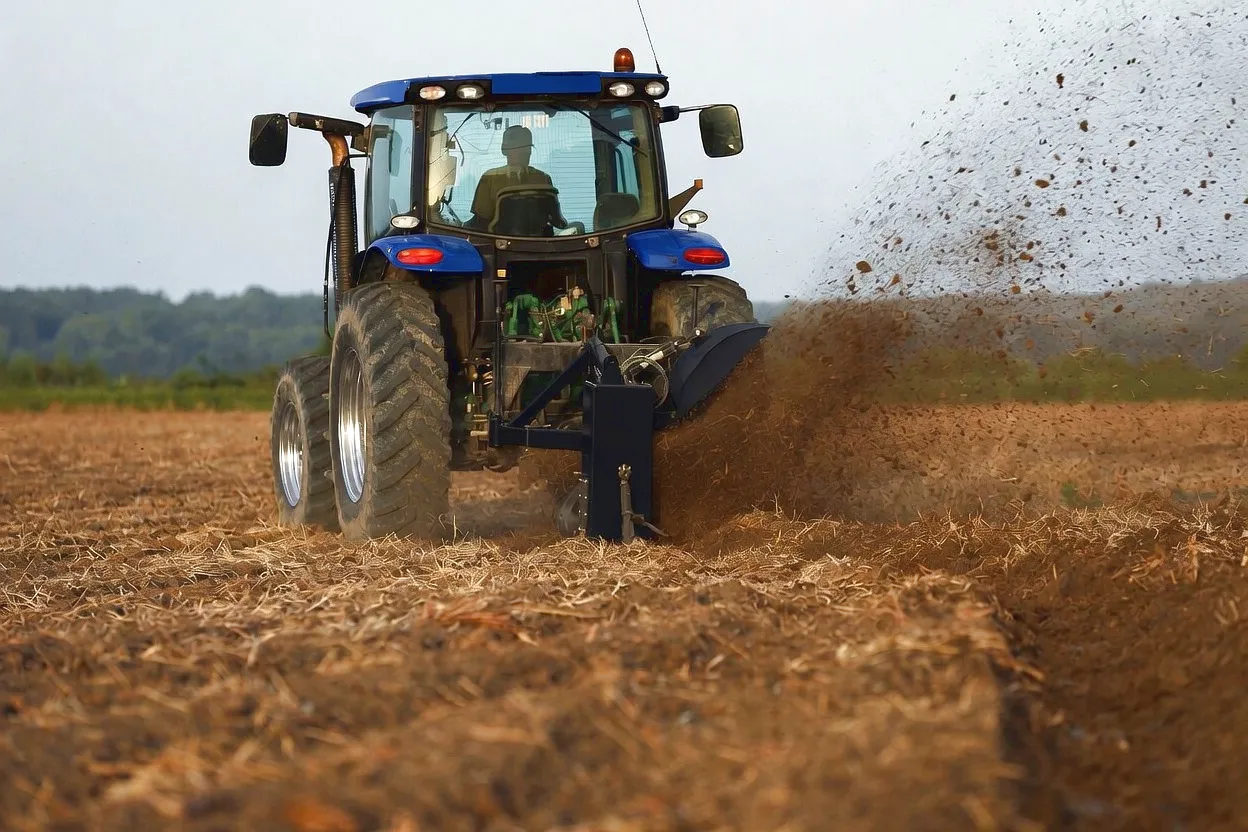
Seasonal Maintenance Schedule for Rotary Tiller PTO Shafts
A PTO shaft that is correctly lubricated and inspected at each service interval will reliably outlast one that is neglected, even if the neglected shaft started with a marginally superior specification. The table below reflects the recommended maintenance actions and intervals for Ever Power EP series shafts used in rotary tiller applications under UK field conditions. These intervals assume normal seasonal use of 200 to 400 operating hours per year; contractors working 600+ hours per season should halve the intervals for all critical checks.
⚠ UK Safety & Legal Compliance — What Every Operator Must Know
The Provision and Use of Work Equipment Regulations 1998 (PUWER 98) and the Supply of Machinery (Safety) Regulations 2008 impose clear legal obligations on anyone using or supplying PTO-driven machinery in the United Kingdom. Operating a rotary tiller with a damaged guard, without a guard, or with a guard that is not properly retained via the guard chains constitutes a breach of these regulations and leaves the operator, employer, and machine owner exposed to enforcement action by the Health and Safety Executive (HSE).
Every Ever Power PTO shaft supplied for the UK and European markets carries CE marking and has been assessed against EN ISO 5674:2009 (Tractors and machinery for agriculture and forestry — guards for power take-off (PTO) drive shafts). The plastic guard cones and tube sections are manufactured from UV-stabilised polyethylene with no exposed metal components that could entangle with clothing in a guard contact event.
When replacing an existing shaft on a used tiller, ensure you carry over the guard chain anchor points from the old system. If the tiller’s implement gearbox bracket anchor is corroded or missing, replace it before operating. The HSE has published clear guidance — HSE AIS8 and HSE AIS33 — on PTO safety in agriculture; both documents are freely available from the HSE website and are recommended reading for any UK farm or contracting business.
How to Select the Right PTO Shaft for Your Rotary Tiller: A Practical Checklist
Before contacting a supplier for a quotation, having the following information ready will allow them to specify correctly first time and avoid costly errors. These are the questions every experienced application engineer will ask, and having accurate answers ready can reduce the time between initial contact and shaft despatch from days to hours.
Frequently Asked Questions
Ready to Specify Your Next Rotary Tiller PTO Shaft?
Our application engineering team is available to advise on shaft selection, clutch settings, and custom builds. Quotes are typically returned within one working day. We ship to all UK mainland and offshore postcodes.
[email protected] · CE Certified · ISO 5674 Compliant · UK Shipping Available
Speed Reduction
Worm
Gearbox
5:1 — 100:1
≤ 4,500 N·m
✓ Available
Feed Mixers
Grain Elevators
Conveyors
edit by gzl