
✉ Get a Quote — Contact Our Engineering Team
Response within 24 hours · Custom specs welcome · Global shipping from Hangzhou
How the Transmission Case Works Inside a Rice Transplanter
Core Materials That Define Agricultural Gearbox Performance
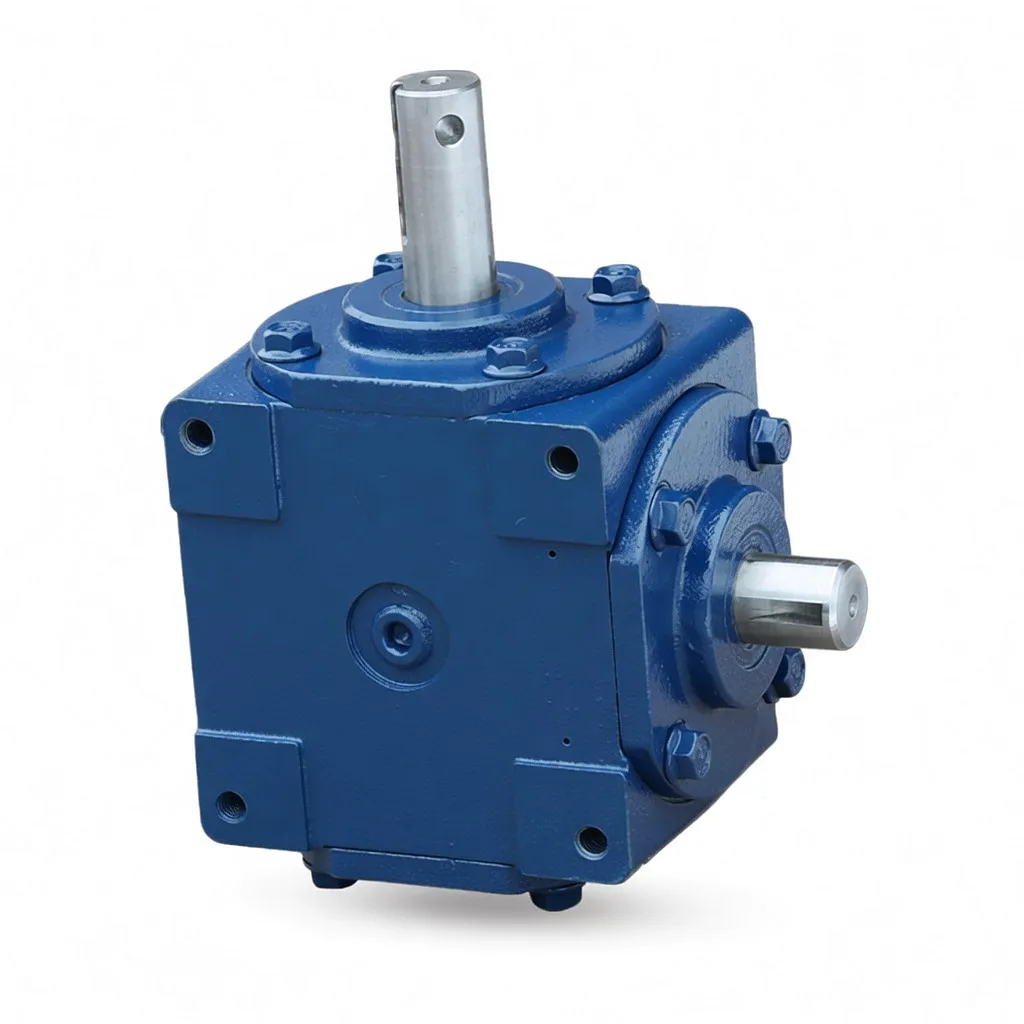
Material selection in a rice transplanter agricultural gearbox is not a secondary engineering consideration — it is what separates components that survive a single planting season from those that run reliably for a decade. The operating environment is punishing: saltwater and mineral-laden paddy mud attack exposed surfaces, continuous vibration works at fasteners and gear teeth, and the thermal cycling from cold morning starts to full operating temperature stresses housing castings and seals alike. Each material choice in the gearbox assembly therefore carries specific mechanical and chemical justifications.
Grey cast iron (GG25) offers excellent vibration damping and cost-effective machinability for heavy-duty housings. High-pressure die-cast ADC12 aluminium alloy is chosen in weight-sensitive designs — it cuts housing mass by up to 40% while maintaining sufficient rigidity. Surface treatment with epoxy primer and agricultural-grade topcoat provides corrosion resistance against paddy chemicals.
Gear shafts and pinions are manufactured from 20CrMnTi or its Japanese equivalent SCM420, both chromium-manganese-titanium alloy steels that respond exceptionally well to carburising heat treatment. After carburising to a case depth of 0.8–1.2 mm and quenching, surface hardness reaches 58–62 HRC while the core retains 30–40 HRC toughness — a critical combination for withstanding shock loads when the transplanter wheel drops into a submerged furrow.
Double-sealed deep-groove ball bearings rated for agricultural environments (C3 clearance, NBR seals) handle radial loads on intermediate shafts. Output shafts carrying combined radial and axial loads from the drive wheels use tapered roller bearings with press-fit cones and a pre-loaded cup assembly to eliminate end play under reversing torque.
Hydrogenated nitrile rubber (HNBR) lip seals on rotating shafts withstand ISO VG 46 hydraulic fluid, gear oil GL-4, and muddy water simultaneously. PTFE composite gaskets between housing halves maintain a reliable static seal across temperature ranges from −10°C (common in UK early spring planting) to +95°C operating temperature.
Why Precision-Engineered Agricultural Gearboxes Outperform Generic Transmission Units
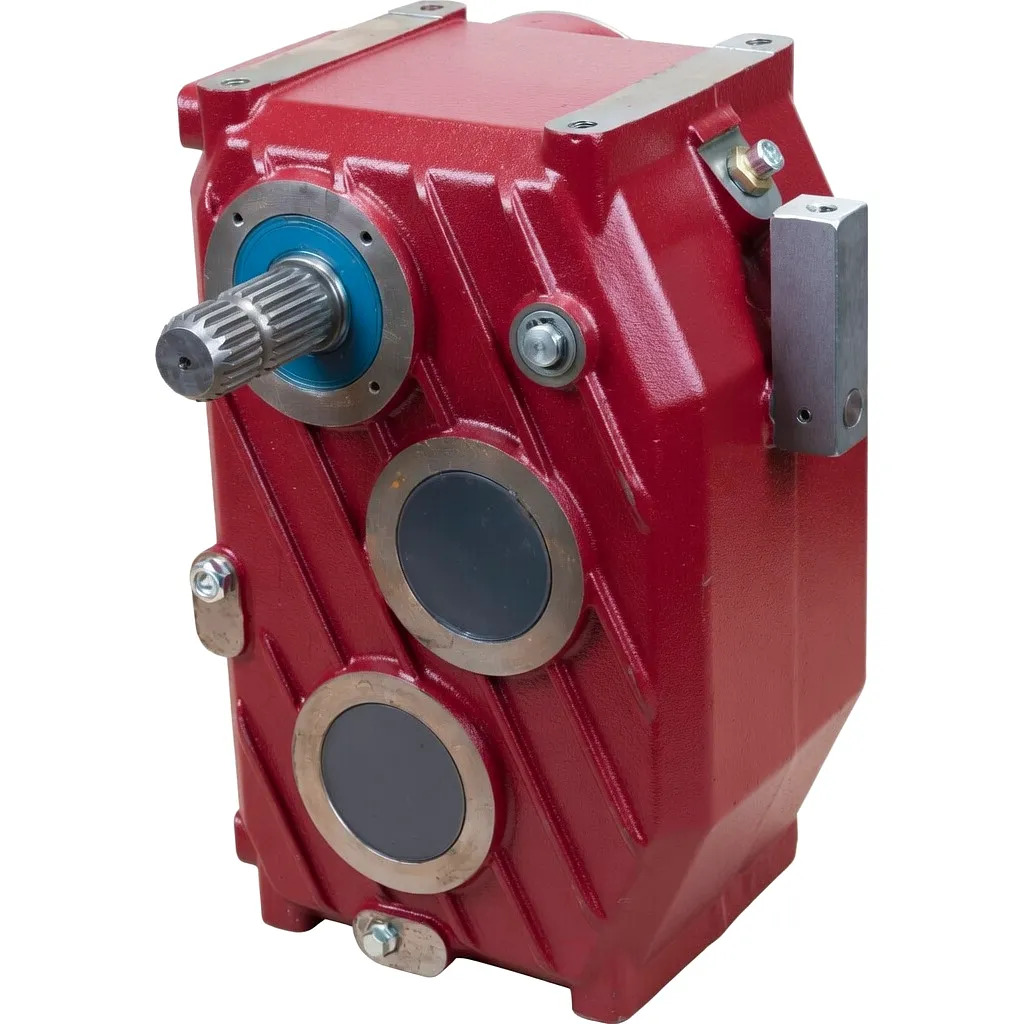
Built-in hydrostatic transmission eliminates gear-shift shock in muddy terrain. Infinitely variable ground speed (0–6 km/h) without interrupting transplanting arm synchronisation. Planting density remains accurate across the full speed range, with hill-spacing error held within ±5 mm at rated speeds.
Closed-loop oil circulation with magnetic drain plug captures metallic wear debris before it re-enters the gear mesh. IP67-rated housing seals prevent paddy water ingress even when the transplanter is parked on sloped bunds between rows. Oil service intervals extend to 200 working hours under normal paddy conditions.
Dedicated synchronisation gear train within the agricultural gearbox maintains a fixed speed ratio between the wheel output shaft and the PTO output shaft feeding the transplanting crank. Ratio options of 1:1.2, 1:1.5, and 1:1.8 correspond to standard row spacings of 30 cm, 25 cm, and 21 cm respectively, available through interchangeable ratio modules.
Integrated left/right brake discs housed within the agricultural gearbox casing activate automatically beyond 60° of steering angle. The inner wheel is braked progressively rather than abruptly, reducing the turning radius from over 2.5 m to approximately 1.2 m. This headland performance is especially valued in the narrow bunded plots typical of research farms in Cambridgeshire and specialist paddy operations in the Thames Valley.
A hydraulic pressure-relief valve set at 320 bar within the HST circuit and a mechanical slip-torque clutch on the transplanting PTO output shaft protect the agricultural gearbox from sudden load spikes — such as the transplanting arm striking a hidden stone. Both protective elements reset automatically after the overload clears, eliminating the need for operator intervention and reducing downtime during the critical planting window.
Bolted sub-assembly design allows the HST unit, mechanical gear train module, and differential/steering brake assembly to be removed and serviced independently. This modular approach significantly reduces repair time in field workshops across agricultural regions from Yorkshire to Kent, where machine downtime during the brief UK planting window has a direct and measurable impact on seasonal yield.
Technical Performance Parameters — Agricultural Gearbox for Rice Transplanter
The table below summarises the critical technical specifications that govern gearbox selection for rice transplanting applications. Engineers specifying replacement or OEM units should cross-reference these parameters against their machine’s drive train requirements, taking particular note of HST rated pressure, synchronisation ratio, and operating torque ranges. Values shown represent typical performance data for mid-segment ride-on transplanter configurations using an agricultural gearbox in the 4–6 row class.
| Parameter | Specification / Range | Notes |
|---|---|---|
| Max Input Torque | 180 – 320 N·m | Varies by engine class (8–18 hp) |
| Max Output Torque (Wheel Drive) | 620 – 1,080 N·m | After final drive reduction; typical ratio 3.8:1 – 6.5:1 |
| PTO Output Torque (Transplanting) | 40 – 95 N·m | Slip clutch override at 110 N·m |
| HST Rated Pressure | 280 – 320 bar | Relief valve factory-set; field-adjustable on request |
| Ground Speed Range (HST) | 0 – 6.0 km/h (working); 0 – 12 km/h (road) | Two-range mechanical selector |
| Transplanting Sync Ratio Options | 1:1.2 / 1:1.5 / 1:1.8 | Corresponds to 30 / 25 / 21 cm hill spacing |
| Housing Material | GG25 Cast Iron / ADC12 Al Alloy | Customer choice; Al alloy saves ~3.2 kg |
| Gear Material / Heat Treatment | 20CrMnTi, carburised + quenched | Surface 58–62 HRC; case depth 0.8–1.2 mm |
| Oil Capacity | 1.8 – 3.2 L (gear section); 2.5 – 4.0 L (HST section) | ISO VG 46 hydraulic oil recommended |
| Ingress Protection | IP67 | HNBR lip seals + PTFE gaskets |
| Operating Temperature | −10°C to +95°C | Suitable for UK early spring conditions |
| Min Turning Radius (with brake) | 1.2 – 1.4 m | Differential brake activated at >60° steer angle |
| Oil Service Interval | 200 working hours (normal conditions) | Magnetic drain plug standard |
| Gear Precision Class | DIN 6 or better | Helical profile; ground finishing on critical pairs |
Application Scenarios: Where Agricultural Gearbox Systems Drive Real Results
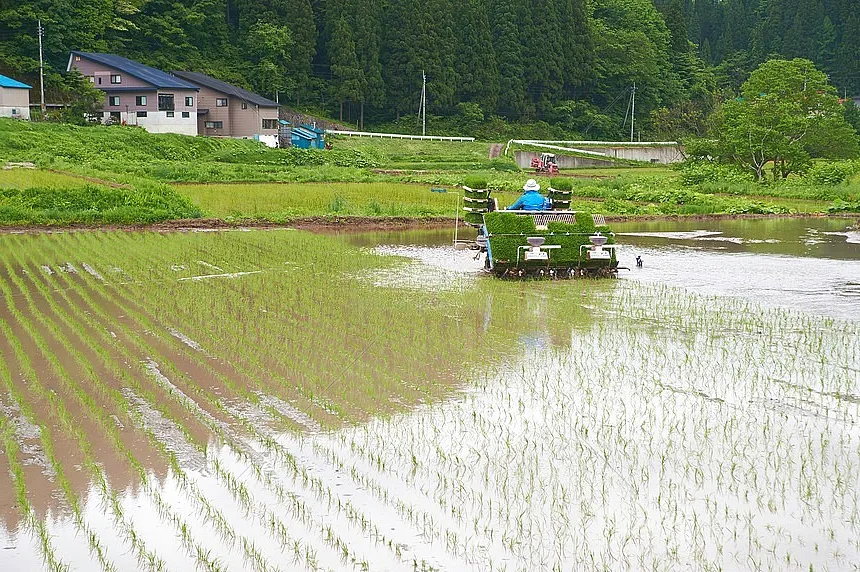
The rice transplanter agricultural gearbox is not a single-purpose unit. Its core engineering — power splitting, synchronised output, sealed hydraulics, and differential braking — translates across a wide range of paddy and upland crop machinery. Below are the primary application scenarios where the transmission case delivers measurable value.
Application Scenario 1: Ride-On Rice Transplanter (4–8 Row) — Paddy Field Locomotion and Planting Synchronisation
Application Scenario 2: Walk-Behind Transplanter with Mechanical Transmission Case
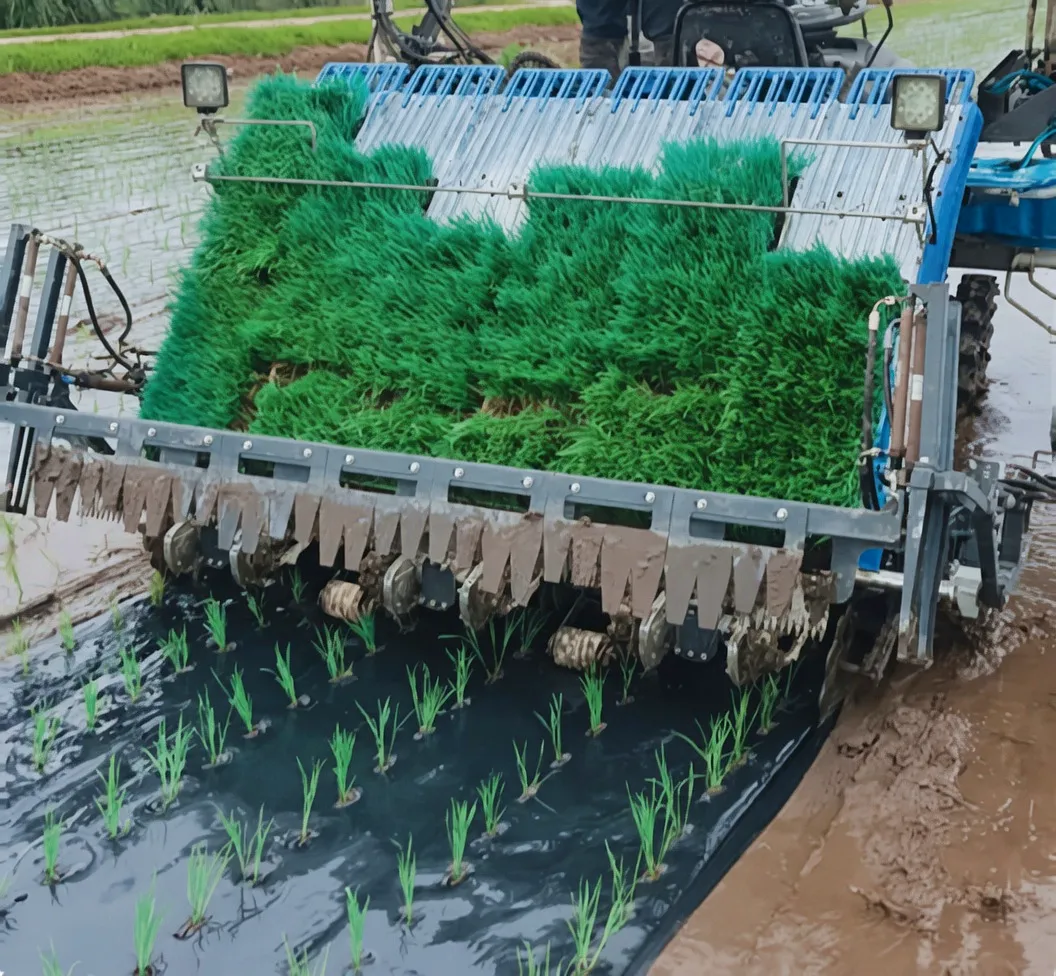
Application Scenario 3: GPS-Guided Precision Transplanting Systems — Agricultural Gearbox as Electro-Hydraulic Interface
Emerging precision agriculture platforms — increasingly evaluated at agricultural engineering institutions in Cranfield, Shropshire, and the Scottish Rural College — integrate GPS and auto-steering with the transplanting function. In these systems, the agricultural gearbox is augmented with electrically controlled proportional solenoid valves that modulate hydraulic flow in the HST circuit based on signals from an onboard guidance computer. The gearbox housing accommodates an electronic sensor port for wheel speed feedback (typically a Hall-effect pulse encoder on the output shaft) and one or two solenoid valve mounting bosses on the HST port block.
This electro-hydraulic agricultural gearbox configuration allows the guidance system to hold straight transplanting rows with a lateral error below ±2 cm — a specification that conventional manual transplanting cannot approach reliably over an eight-hour shift. The implications for uniformity of emergence, canopy architecture, and ultimately yield quality are well documented in UK and EU precision farming trials. From the component specification standpoint, the agricultural gearbox must accommodate CAN-bus sensor wiring (IP67-rated Deutsch DT connectors on the sensor port), and the HST port block must be machined to SAE straight-thread O-ring face-seal standards to accept the solenoid valve manifold without custom adapters.
Application Scenario 4: Dual-Purpose Transplanter / Seeder Configuration — Reconfigurable Agricultural Gearbox Ratios
Equipment manufacturers targeting small-scale and cooperative farm operations increasingly offer transplanter platforms that can be reconfigured for direct seeding by exchanging the transplanting head for a seed dispersal unit. In this dual-purpose context, the agricultural gearbox must provide a different PTO output ratio for the seeder function, since seed dispersal rate is calibrated in seeds per metre of travel rather than in transplants per unit time. Achieving this without replacing the gearbox requires a PTO ratio change module — either a small sub-plate with a different internal gear pair or a selectable dog-clutch between two fixed-ratio pathways.
UK machinery dealers distributing into both paddy and vegetable transplanting markets in the South East and East Midlands find that this flexibility increases the commercial appeal of the transplanting platform substantially — allowing a single machine to earn revenue across a longer working season. The agricultural gearbox design that enables this flexibility must accommodate the additional torque demand of the seeder head (potentially 30–40% higher than the transplanting arm due to the seed metering mechanism’s higher friction losses) and ensure that the PTO output shaft spline is compatible with both head units — typically achieved through a standardised 6-spline 1 3/8 inch PTO stub in line with European agricultural equipment standards.
Featured Agricultural Gearbox Products from Ever Power
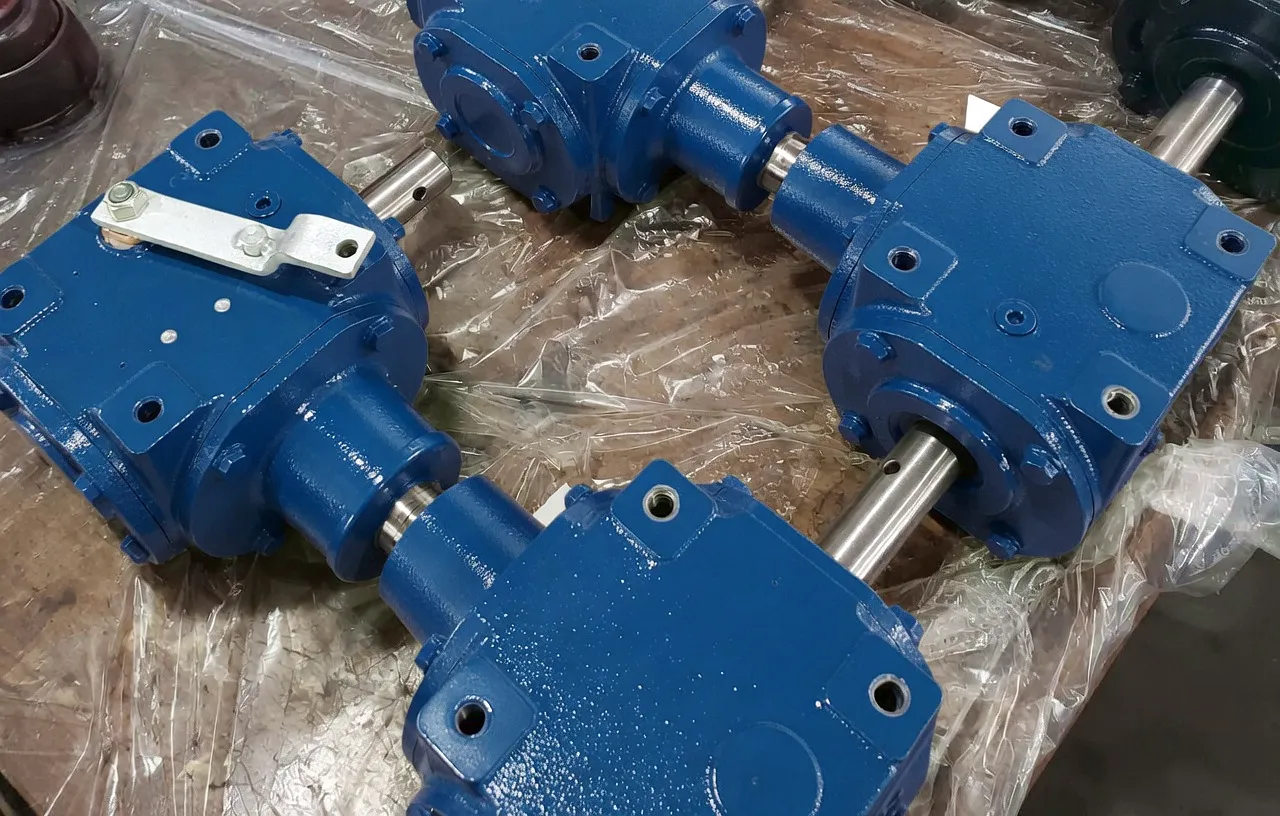
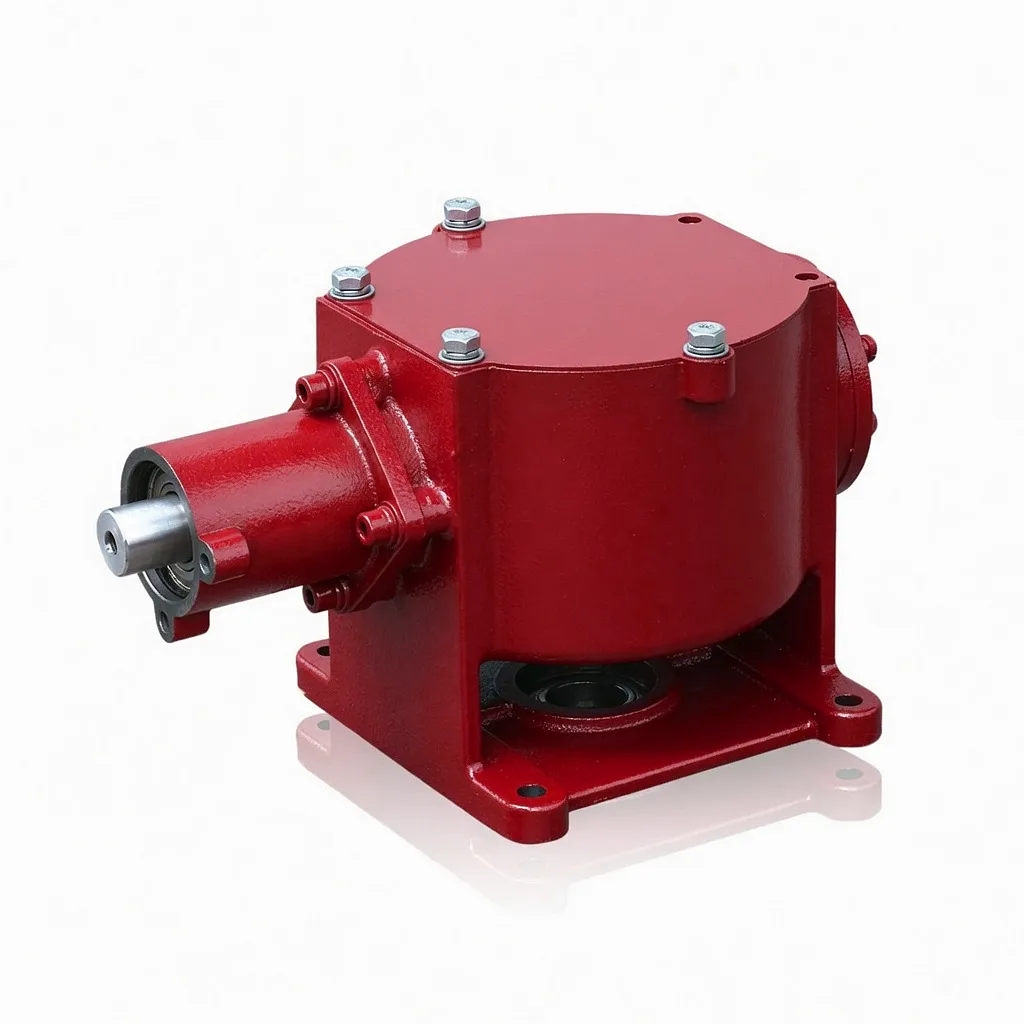
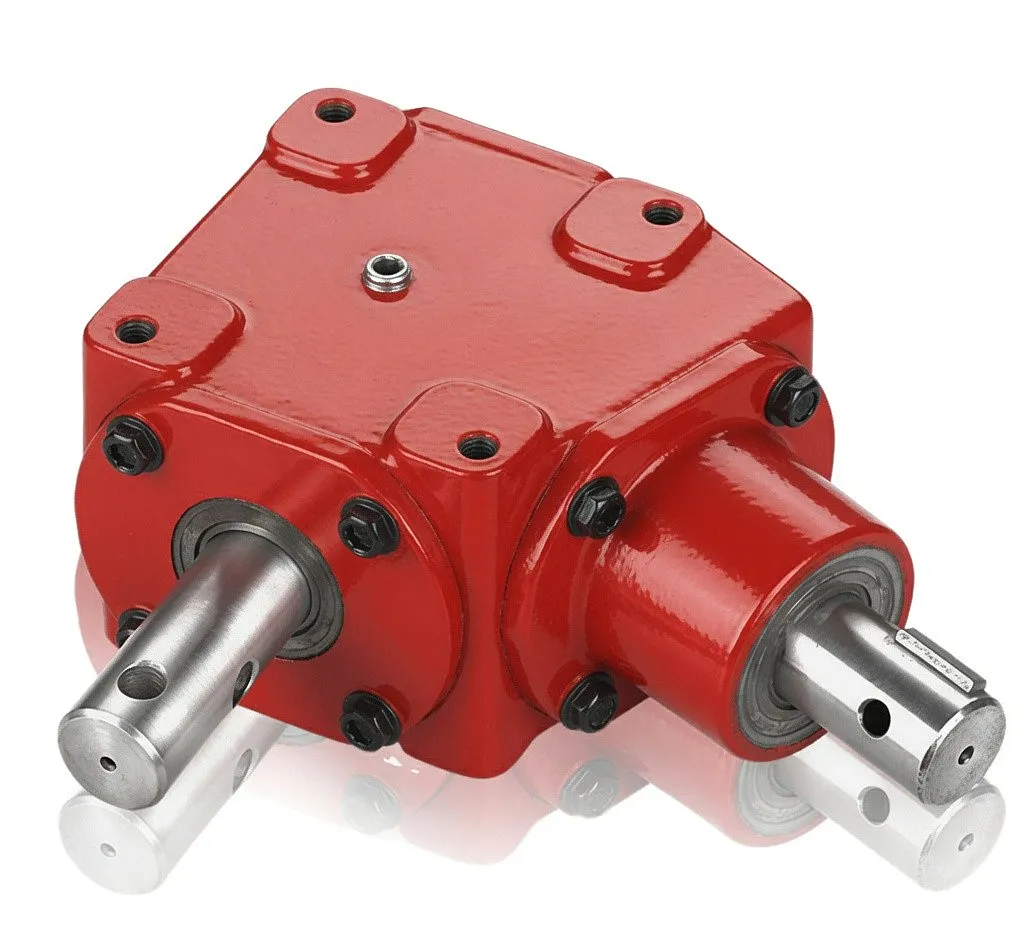
Two of our most widely deployed agricultural gearbox models for PTO-driven transplanting and tillage applications are detailed below. Both are available with custom ratio, mounting, and sealing specifications for OEM integration.
Ever Power: Precision Manufacturing and Agricultural Gearbox Customisation at Scale
Any wheel-to-PTO synchronisation ratio from 1:0.8 to 1:3.0 achievable through internal gear set redesign. Sample validation within 8 weeks of drawing approval.
Cast iron or aluminium housing options with customer-specified mounting face patterns, port locations, and auxiliary boss configurations. 3D model exchange in STEP format.
HST pump and motor pairs sourced from Eaton, Sauer-Danfoss, or equivalent, integrated to customer displacement and pressure spec. Full hydraulic bench test before shipping.
Neutral or customer-branded packaging and nameplate engraving available. NDA-protected design files and part numbering alignment with customer ERP systems standard practice.
Request a Custom Agricultural Gearbox Quote →
[email protected] · Engineering response within 24 hours
Customer Success Story: Lincolnshire Precision Paddy — Solving Transplanting Downtime with a Custom Agricultural Gearbox
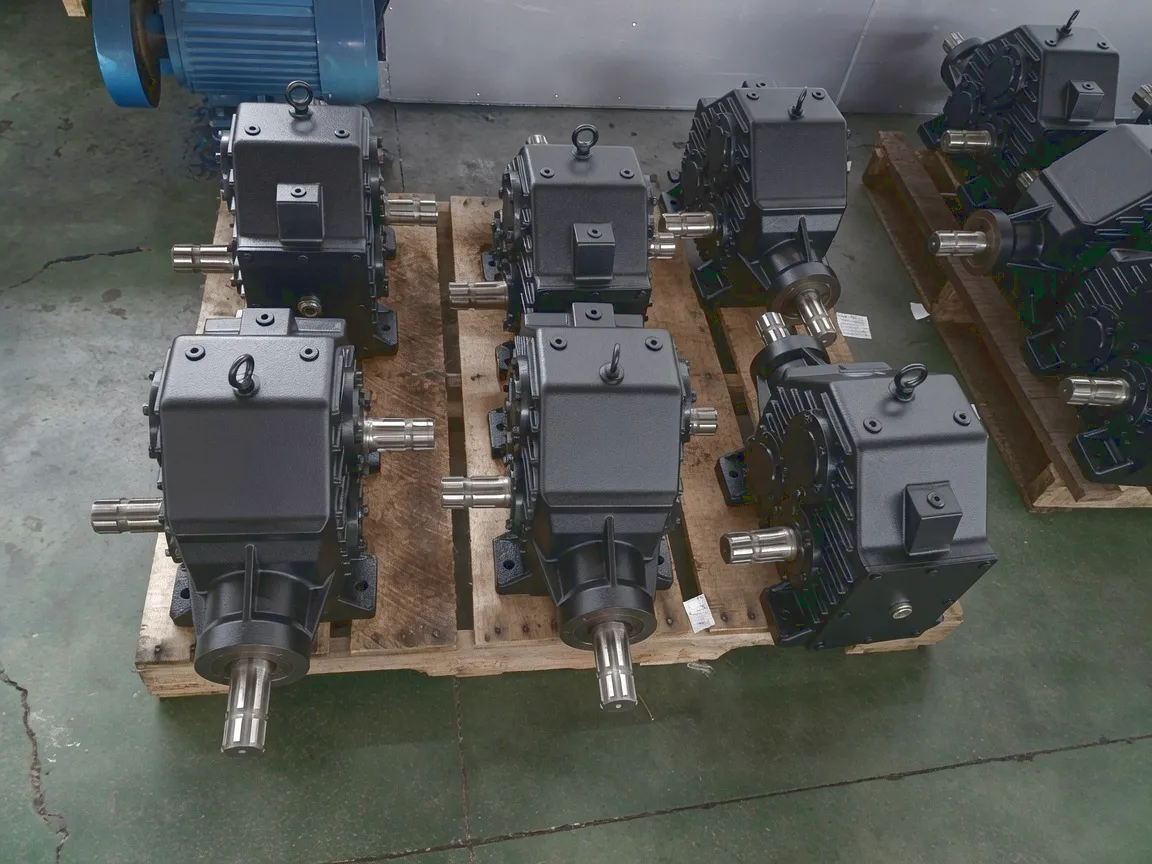
The upgraded unit was fitted during the pre-season service window and operated through the following planting campaign without unscheduled stoppages. Post-season measurement of hill spacing across twelve sample rows confirmed variation had been reduced to ±3.8 mm — better than the original machine specification. GreenRow subsequently ordered two additional agricultural gearbox units as service spares and has maintained a direct supply relationship with Ever Power for three years. The total cost of the custom upgrade gearbox, including freight and UK customs clearance, represented less than 14% of the annual downtime cost the company had experienced with the failing original unit.
What UK Clients Say About Ever Power Agricultural Gearboxes
“The synchronisation accuracy on the Ever Power replacement gearbox is noticeably tighter than the original unit. We measured our hill spacing across five rows after fitting and found it within 4 mm across the full run — genuinely impressive for a unit that arrived as a custom build. The sealed bearings have held up through two seasons of heavy paddy mud without any sign of ingress. Worth every penny compared to the disruption we had before.”
GreenRow Agritech Ltd, Boston, Lincolnshire
“We specified a non-standard PTO output ratio for our dual-purpose transplanter/seeder build, and Ever Power delivered sample units to the drawing within six weeks. Their engineering team caught an interference issue between our requested output shaft length and the HST valve block before manufacture — a detail we had missed ourselves. The production units have run faultlessly across our Yorkshire test plots for two full seasons. Custom work at this quality level, delivered at competitive pricing, makes Ever Power our first call for agricultural gearbox sourcing.”
Fieldwise Machinery Ltd, Harrogate, North Yorkshire
“Our logistics partnership requires agricultural gearbox spares to clear UK customs without delays, and Ever Power’s documentation package — material certs, test reports, packing declarations — has been accurate and complete every time. The units themselves perform reliably in our GPS-guided transplanting rig, with the Hall-effect sensor port and SAE solenoid boss machined to the exact tolerances our guidance system demands. Supply chain consistency and technical quality in the same supplier is rare. We’ve standardised on Ever Power for this reason.”
Agrilink Distribution UK, Birmingham, West Midlands
Frequently Asked Questions About Agricultural Gearboxes for Rice Transplanters
Answers to the questions UK buyers, machinery engineers, and distributors ask most often about rice transplanter transmission case sourcing, specification, and service.
How much does it typically cost to source a custom agricultural gearbox for a rice transplanter in the UK, and what factors affect the final price?
Pricing for a custom agricultural gearbox for rice transplanting applications depends on several variables: housing material (aluminium alloy costs 15–20% more than cast iron per unit at low volumes), gear precision class (DIN 6 ground gears add roughly 25–40% over DIN 8 hobbed gears), HST integration (adds £350–£700 per unit depending on displacement spec), and order quantity. For UK buyers, a fully custom agricultural gearbox with HST and steering brake in annual quantities of 50–200 units typically prices between £480 and £950 CIF Felixstowe or Southampton, depending on specification. Requesting a quote via [email protected] with your drawing or functional spec produces a detailed breakdown within 24 hours. Minimum order quantities for custom work at Ever Power start at 10 units for prototype phases and 30 units for regular production runs.
Which UK agricultural machinery distributors or suppliers can I approach for a reliable agricultural gearbox replacement for my ride-on rice transplanter?
Within the UK, agricultural gearbox units for rice transplanters are typically sourced through specialist import distributors rather than high-street machinery dealers. Distributors based in the agricultural machinery hubs of Sheffield, Birmingham, and Edinburgh are the most active in supplying Asian-origin transplanting equipment and its spares. However, for custom or non-standard units — particularly those requiring specific ratio changes or HST modifications — direct procurement from the manufacturer via a freight forwarder is often faster and more cost-effective than working through domestic distribution. Ever Power supplies directly to UK engineering companies and dealers at competitive pricing with full documentation support for HMRC customs purposes.
What is the best way to get an accurate quote for a replacement agricultural gearbox that matches my transplanter’s original PTO synchronisation ratio and mounting dimensions?
The fastest route to an accurate agricultural gearbox quotation is to supply three things: the original unit’s identification tag data (or a dimensional drawing with shaft positions), your required PTO-to-wheel output ratio, and your target annual volume. Photographs of the mounting face, output shaft details, and the gearbox nameplate (if intact) are sufficient to initiate a quote. Sending this information to [email protected] will result in a preliminary quotation — with a 3D model file of the proposed replacement — within 24–48 working hours. For worn or unidentified original units, Ever Power can accept the physical unit by courier and conduct a reverse-engineering measurement exercise before quoting.
Where are the most reliable agricultural gearbox manufacturers for rice transplanter applications located, and how do I assess their engineering quality before placing an order from the UK?
The world’s most concentrated production of agricultural gearbox units for transplanting machinery is in the Zhejiang and Jiangsu provinces of China, with Hangzhou, Taizhou, and Changzhou being the primary manufacturing hubs. Quality assessment from the UK without a factory visit is best conducted through a combination of ISO certification verification (request the certificate serial number and verify it independently), review of CMM measurement reports for sample parts (dimensional accuracy of gear bores and bearing seats is the best proxy for manufacturing quality), hydraulic bench test records for HST-integrated units, and reference checks with existing UK or European customers. Ever Power provides all of the above as standard deliverables with initial sample orders.
When should I replace the agricultural gearbox on my rice transplanter rather than repairing it, and how do I recognise the early signs of synchronisation wear in a UK paddy farming context?
The two most reliable indicators of agricultural gearbox synchronisation wear are increasing hill-spacing variation measured across a test run of at least ten rows, and audible gear rattle at low HST speeds that disappears at higher speeds (indicating worn backlash in the synchronisation gear set). In UK paddy research settings, where hill-spacing consistency is measured as part of trial protocols, variation exceeding ±8 mm across a single row at a consistent operating speed is a reliable trigger for gearbox inspection. If internal inspection reveals tooth face pitting, dedendum cracking, or bearing race spalling, replacement of the complete agricultural gearbox assembly is typically more economical than selective internal repair, particularly when labour costs in the UK are factored against the risk of recurring failure during the short planting window.
How does an integrated HST unit inside a rice transplanter agricultural gearbox differ from a standard mechanical transmission, and why does it matter for UK paddy field conditions?
A standard mechanical transmission requires the operator to disengage a clutch, select a new gear ratio, and re-engage — a process that takes several seconds and introduces a momentary drive interruption. In a waterlogged paddy field, that momentary interruption can be enough to cause wheel slip and partial sinking of the machine in softer soil zones. The hydrostatic transmission within an HST agricultural gearbox varies ground speed continuously by changing hydraulic pump displacement — no clutch, no gear change, no drive interruption. In the fenland soils typical of UK paddy research plots, where surface firmness can change markedly between rows as irrigation water is redistributed, this continuous drive is particularly important for maintaining forward momentum and avoiding the machine becoming stuck mid-row, an event that in heavy clay fenland soil can require a separate tractor for extraction.
Who at Ever Power should I contact to discuss a bulk supply agreement for agricultural gearbox units for our UK-based transplanter assembly programme, and what lead times can we expect?
For bulk supply discussions, Ever Power’s export sales team handles UK and European agricultural gearbox accounts directly. Contact [email protected] to initiate a conversation — outline your annual volume requirement, your technical specification (or reference to the model you are currently using), your preferred delivery schedule, and any branding requirements. The team will assign a dedicated account engineer who provides a formal commercial proposal within three business days, including pricing tiers for annual volumes of 50, 100, 200, and 500+ units, along with a draft supply framework agreement. Standard production lead time for catalogue agricultural gearbox units under a blanket order is 25–35 working days from call-off; for full custom designs, 45–60 working days from approved drawings.
© Ever Power Group · Hangzhou, China · [email protected] · Agricultural Gearbox Specialists for Global Markets
edit by gzl