
PTO Drive Shaft Applications in Square Baler Machinery: A Complete UK Market Guide
From Yorkshire’s rolling hay meadows to the flat arable expanses of East Anglia, square balers are the backbone of UK forage and straw harvesting. At the heart of every reliable baler is a precision-engineered PTO drive shaft — the mechanical bridge between tractor and machine that defines whether harvest day runs smoothly or grinds to a costly halt.
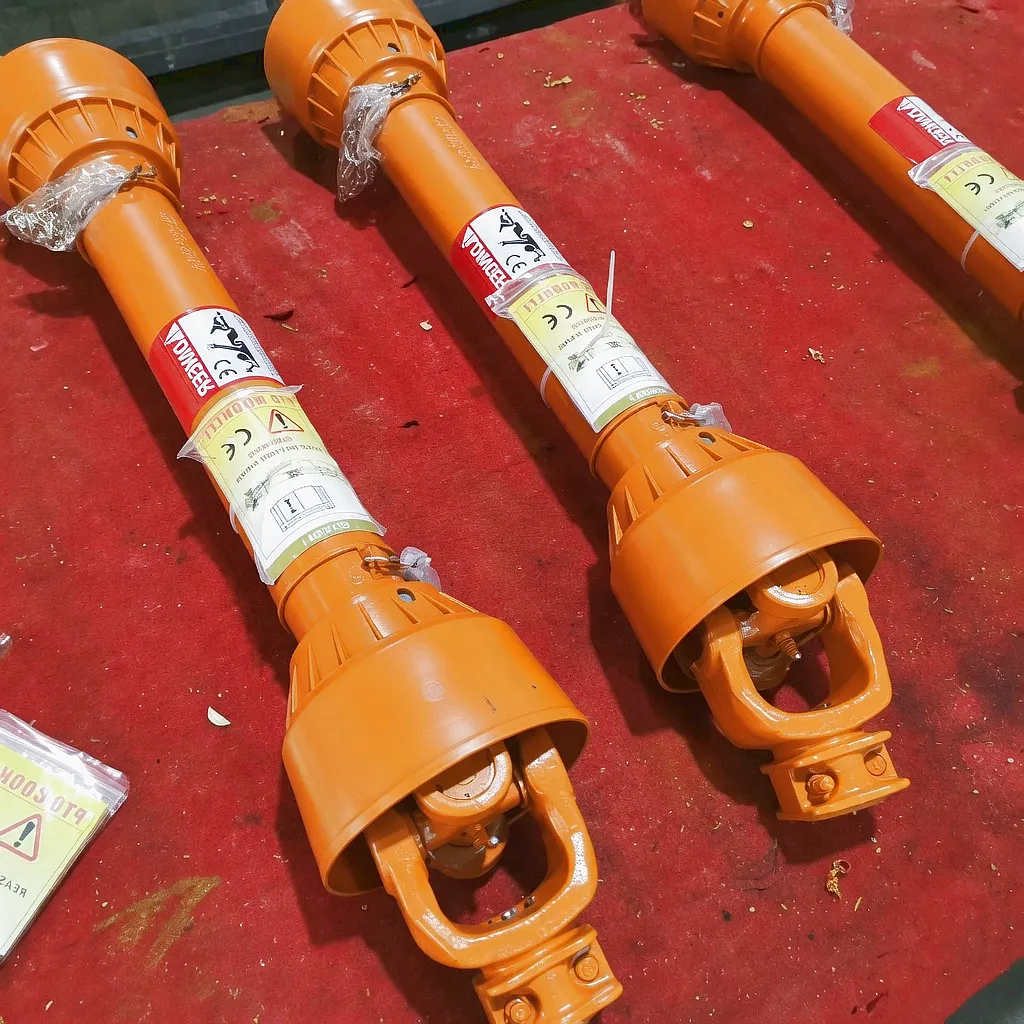 Square balers place some of the most demanding mechanical loads on drive-line components in all of British agriculture. Unlike round balers that wrap forage in a continuous motion, square balers use a reciprocating plunger mechanism that generates sharp, high-peak torque impulses with every stroke of the bale chamber — often 80 to 120 compression cycles per minute during peak throughput. These repeated shock loads, combined with seasonal dust, moisture, and extreme field debris ingestion, create a uniquely harsh operating environment that tests every component in the power transmission chain.
Need a PTO drive shaft for your square baler? Ever Power engineers are ready to specify the exact shaft for your model and torque requirement.
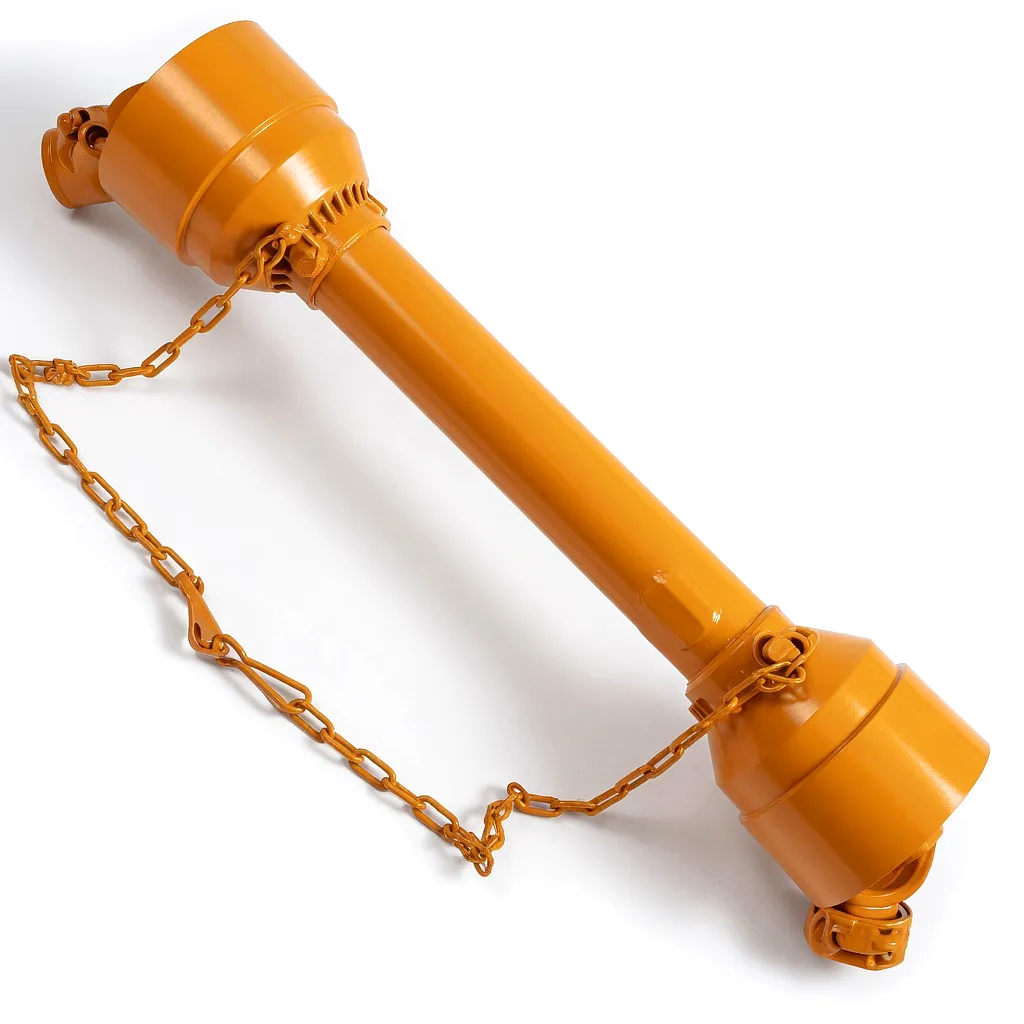
How a PTO Drive Shaft Works on a Square Baler
Power originates at the tractor’s PTO stub, typically rotating at 540 rpm or 1,000 rpm depending on the tractor model and baler requirement. The PTO drive shaft captures this rotational energy through a splined connection, transmitting it along the shaft tube to the baler’s input gearbox. The gearbox then steps up speed and converts rotation into the reciprocating plunger action and knotting mechanism movement that forms a bale. A well-engineered shaft maintains this power transfer with less than 3% loss, even through articulation angles encountered during headland turns.
The universal joints — typically double-Cardan or single-cross-and-bearing configurations — are the articulating heart of any PTO drive shaft. On a square baler application, where the tractor-to-machine distance and angle change continuously during field operation, the joints must allow smooth rotation through angles up to 25 degrees while preventing velocity fluctuation that could induce resonance in the baler’s knotting or plunger systems. High-quality needle-roller bearings within each cross-journal minimise friction and extend service intervals well beyond what lower-specification alternatives can achieve in dusty harvest conditions across fields in Norfolk or the Scottish Borders.
Square balers are notorious for sudden blockages — a clump of wet grass, a stone lodged in the pickup, or a twine jam can stop the plunger mid-stroke and spike torque to dangerous levels within milliseconds. Every correctly specified PTO drive shaft for square baler use must incorporate an overload protection device. Friction slip clutches set to the manufacturer’s specified torque threshold are most common, but ratchet-type and shear-bolt designs also appear in certain OEM configurations. The clutch engages the slip mechanism before the overload energy can propagate into the baler’s expensive flywheel, gearbox, or knotting table — saving a potential £2,000 to £8,000 repair bill from a single field incident anywhere from the Midlands to the far north of Scotland.
Materials That Make the Difference
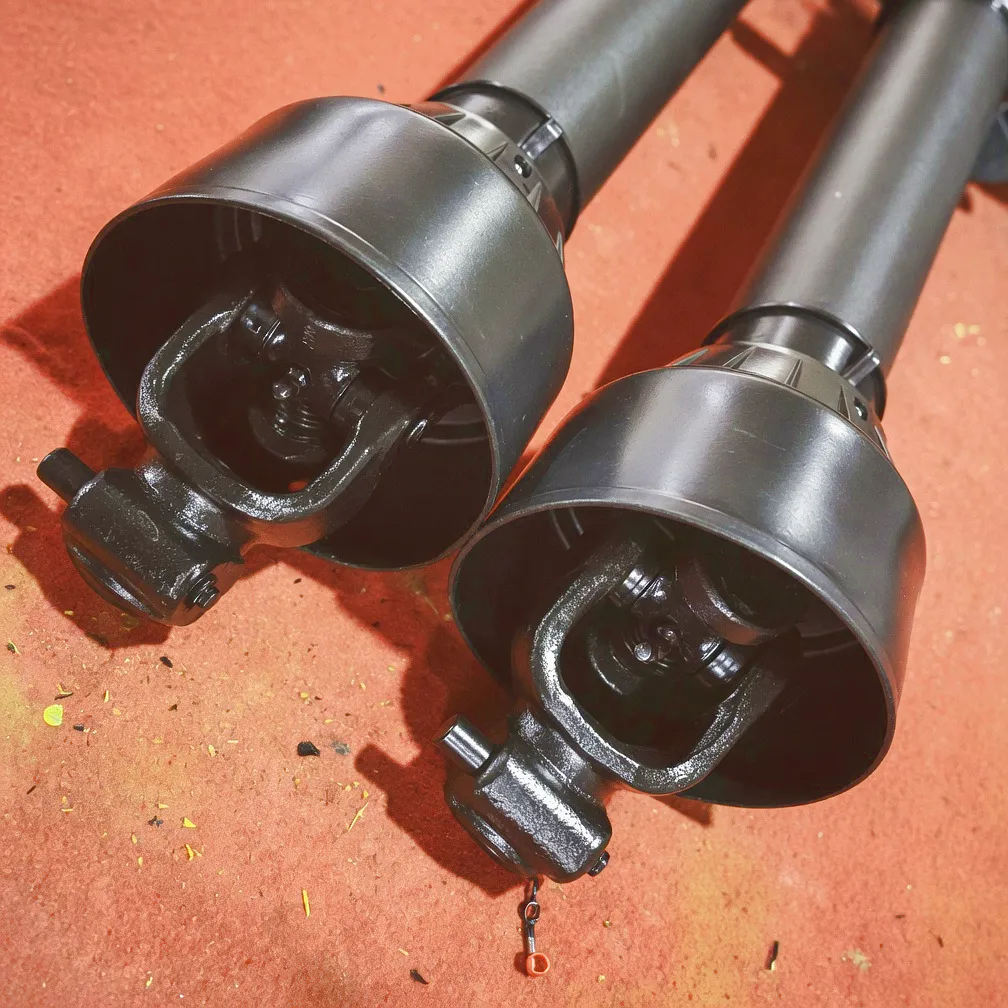 The material selection for a PTO drive shaft destined for square baler service is anything but arbitrary. The shaft tube — the structural backbone of the assembly — is most commonly produced from seamless or DOM (Drawn Over Mandrel) steel tubing in grades equivalent to EN10305-1 E355 in European standards. This cold-drawn steel delivers a tensile strength exceeding 600 N/mm², which is critical when a 200-plus-horsepower tractor is driving a fully loaded large square baler at peak throughput. The tube must resist both torsional fatigue from the cyclic loading of the plunger mechanism and bending stresses introduced whenever the shaft operates at a working angle during turns.
Core Technical Advantages of Ever Power PTO Drive Shafts for Square Balers
Forged alloy yokes and crosses engineered specifically for the impulse torque profile of square baler plunger mechanisms, tested to sustained peak loads 2.5× the rated continuous torque without deformation.
Precision-bored bearing caps with triple-lip seals and high-capacity grease nipples maintain lubrication across 50-hour service intervals — matching or exceeding OEM recommendations even during intensive UK contractor operations.
Full-length co-extruded PE safety shields with funnel-cone ends meet both current UK retained legislation and EC Machinery Directive requirements, keeping operators across British farms protected and legally compliant.
Factory-set slip torque values with ±5% accuracy protect the baler’s costly flywheel and gearbox investment. Clutch packs are field-adjustable without specialist tools, a critical feature for UK contractors working remote farm locations.
Catalogued cross-reference data for New Holland BB/BigBaler ranges, Claas Quadrant series, Case IH LB series, and John Deere L-series square balers, covering the most common machines used by UK cereal and hay contractors.
Phosphate pre-treatment plus high-build epoxy primer and weather-resistant topcoat are standard, delivering corrosion resistance well suited to the damp maritime climate experienced across much of England, Wales, and Scotland through long storage months.
Technical and Performance Parameters — Square Baler PTO Drive Shafts
Application Scenario: Square Baler Operations in the UK
Large Square Baler — Wheat Straw Harvesting, East Anglian Cereal Belt
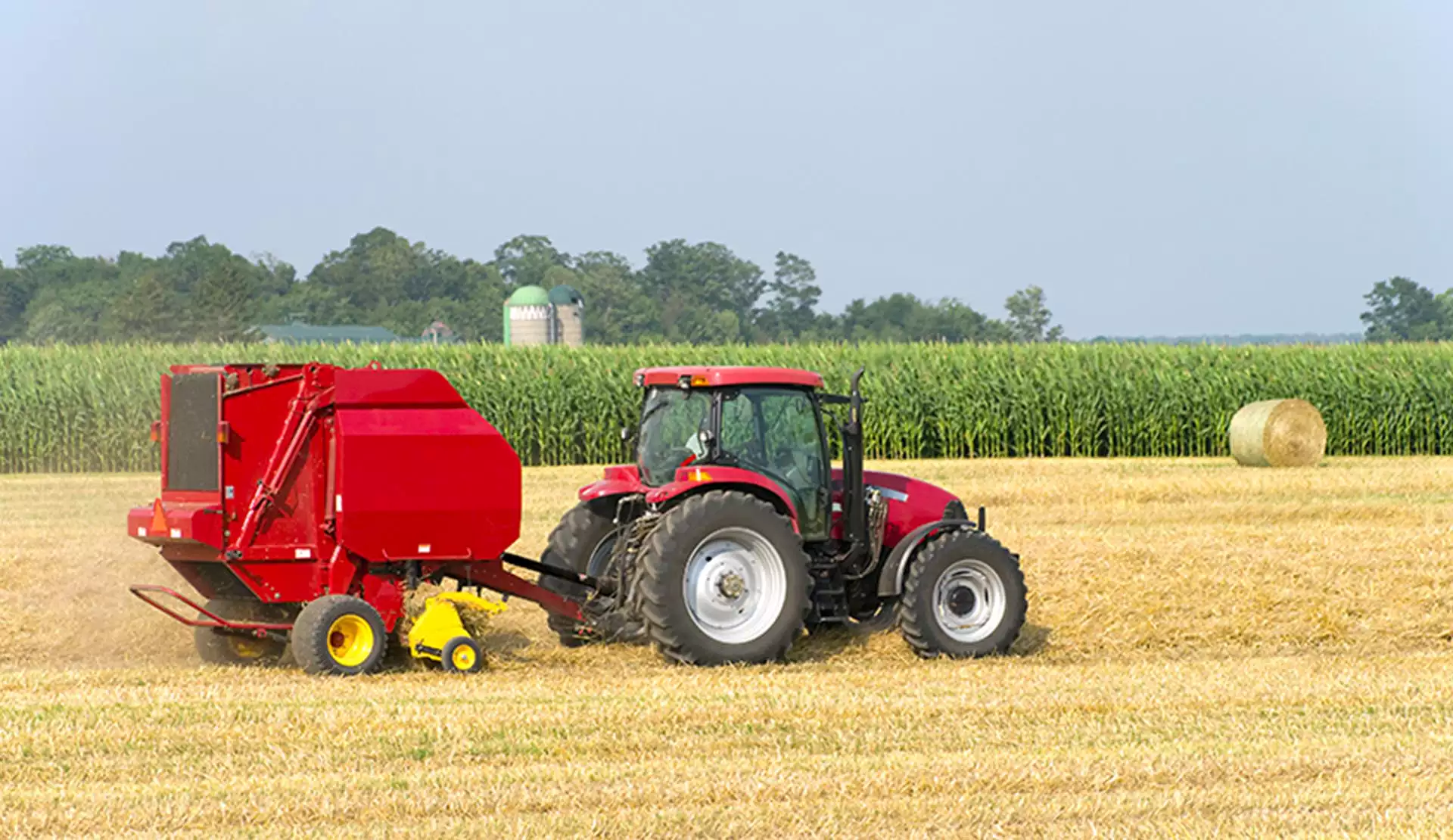 The arable region stretching across Cambridgeshire, Suffolk, Norfolk, and Lincolnshire represents one of the most intensive large square baler markets in Europe. During a typical UK cereal harvest, contractors in this region operate large square balers — machines like the New Holland BB960R or the Claas Quadrant 5300 FC — behind 200-to-300-horsepower tractors on a 24-hour rotation basis whenever weather permits. A single contractor fleet may produce 40,000 to 80,000 bales in a season across multiple farms and counties.
The PTO drive shaft in this application must sustain continuous operation for stretches of 10 to 14 hours between maintenance stops. Input speeds are typically 1,000 rpm, and the rated input torque on these machines reaches 2,000 to 3,500 Nm during dense wheat straw swath processing. The slip clutch is particularly critical here: dry cereal straw can jam the knotting mechanism with very little warning, and the speed with which the clutch engages its slip action determines whether the incident costs two minutes or two thousand pounds. A correctly specified, properly adjusted friction clutch on an Ever Power PTO drive shaft will respond within a quarter of a revolution, limiting the transmitted shock torque before the upstream gearbox casing experiences any stress concentration.
Mid-Size Square Baler — Hay and Silage Baling, Yorkshire Dales and Lake District
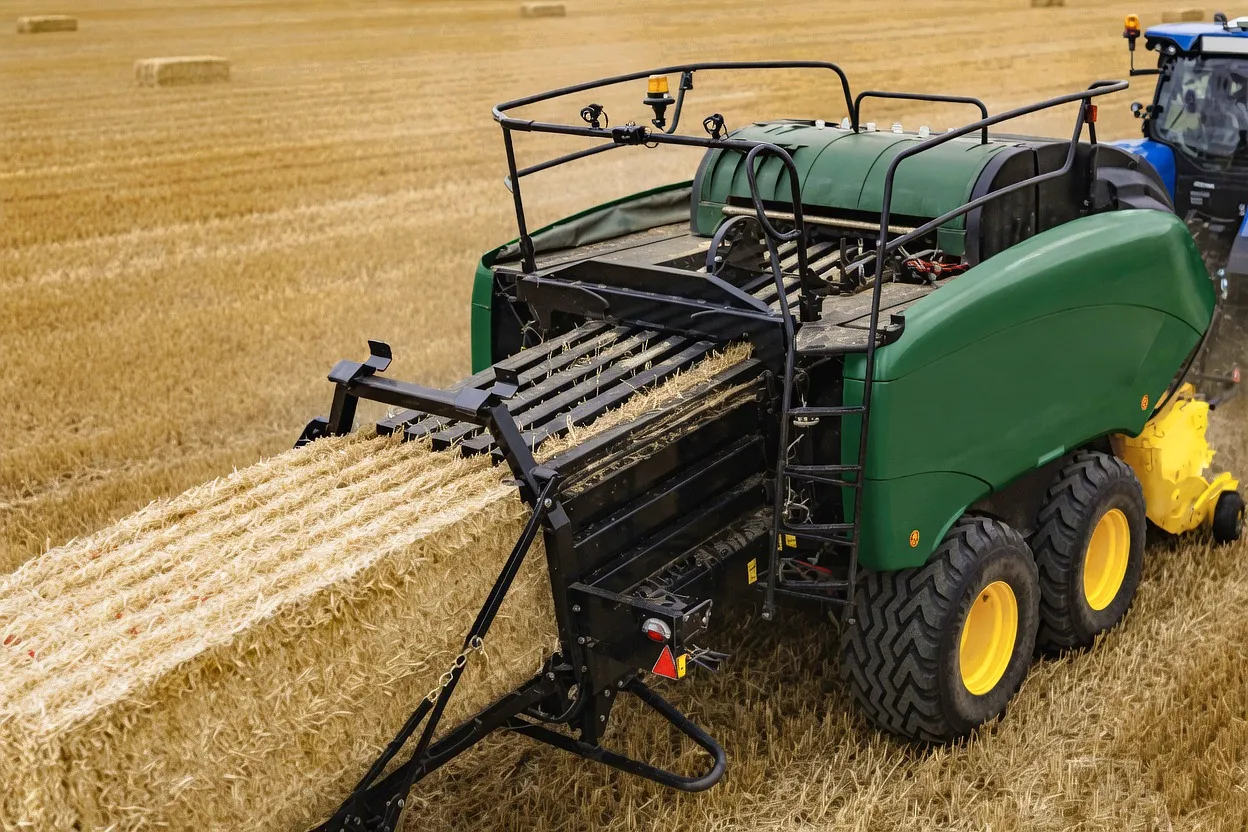 The upland farming country of North Yorkshire, Cumbria, and the Scottish Southern Uplands presents a markedly different challenge from the flat cereal plains of East Anglia. Here, mid-size square balers — typically producing bales in the 80×50×120 cm or 80×70×120 cm format — operate on steep, uneven ground where the tractor-to-baler geometry changes dramatically with every field contour. On a hillside field in Wensleydale or around the higher-altitude farms near Kendal, the PTO drive shaft may operate at sustained lateral angles of 15 to 20 degrees combined with vertical articulation, placing simultaneous bending and torsional stress on the universal joint crosses that simply would not occur in flat-land operation.
In these conditions, wide-angle Cardan joints provide measurable benefits. A wide-angle double-Cardan joint at the tractor end of the PTO drive shaft allows the total operating angle to be split between two joints, reducing the velocity variation (and resulting vibration) that a single-joint design would generate at the same overall angle. For a dairy or beef farmer cutting several hundred acres of meadow grass annually across the Yorkshire Dales, the reduced vibration of a wide-angle shaft translates into lower wear on the baler’s knotting mechanism and a measurably smoother twine tension profile — which means fewer broken twines and fewer mis-tied bales across a full season’s work.
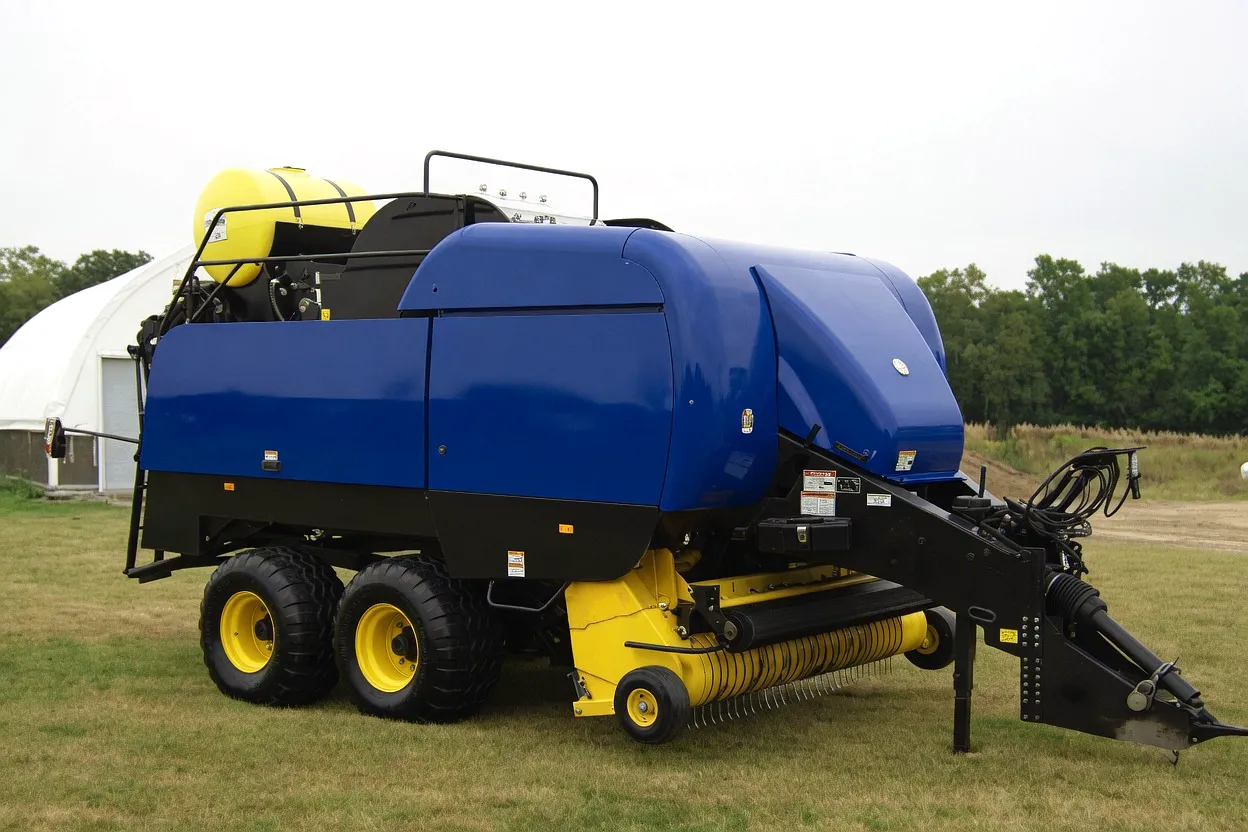 The rapid expansion of biomass energy production across the UK Midlands — particularly in Staffordshire, Shropshire, and Worcestershire, where energy crop cultivation has grown significantly over the past decade — has introduced a new and highly demanding application for large square balers and their PTO drive shafts. Miscanthus giganteus, the dominant energy crop species, presents a very different baling challenge compared to cereal straw or hay. The stems are significantly denser, the moisture content at harvest is more variable, and the crop can contain fine silica particles that accelerate abrasive wear on all components throughout the drive-line assembly.
Equestrian Hay Baling — Small Square Baler, Home Counties and Welsh Borders
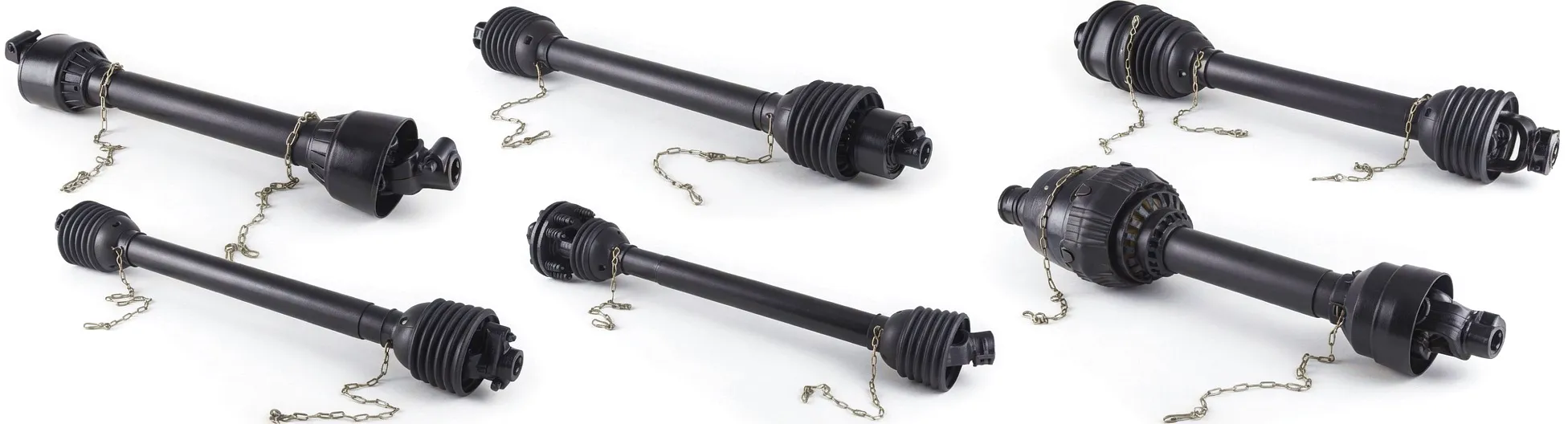
The equestrian sector in the UK — particularly dense across Surrey, Berkshire, Hertfordshire, and the Welsh Borders region — relies almost entirely on small square bales for horse forage. These traditional two-twine bales (typically 36×46×90 cm, weighing 16–22 kg each) are produced by older-style small square balers, many of which have been in service for decades and are still powered by 50 to 100 horsepower tractors running at 540 rpm PTO speed.
In this application, the PTO drive shaft requirements differ significantly from the large-baler scenarios described above. The rated torque requirement is modest — typically 500 to 900 Nm — but the shaft must still incorporate a correctly sized slip clutch because small square balers are just as prone to knotting and pickup blockages as their larger counterparts, and the older-generation gearboxes fitted to machines like the New Holland 273 or the Claas Markant are correspondingly less tolerant of overload events. Many UK equestrian hay producers and contractors operating in the Home Counties supply premium bagged hay to livery yards and equestrian centres, which means the baler must produce consistently well-tied, dense bales — directly dependent on a vibration-free, constant-velocity drive-line connection between tractor and machine.
Industrial Hemp and Linseed Baling — Specialist Crop Processing, East of England
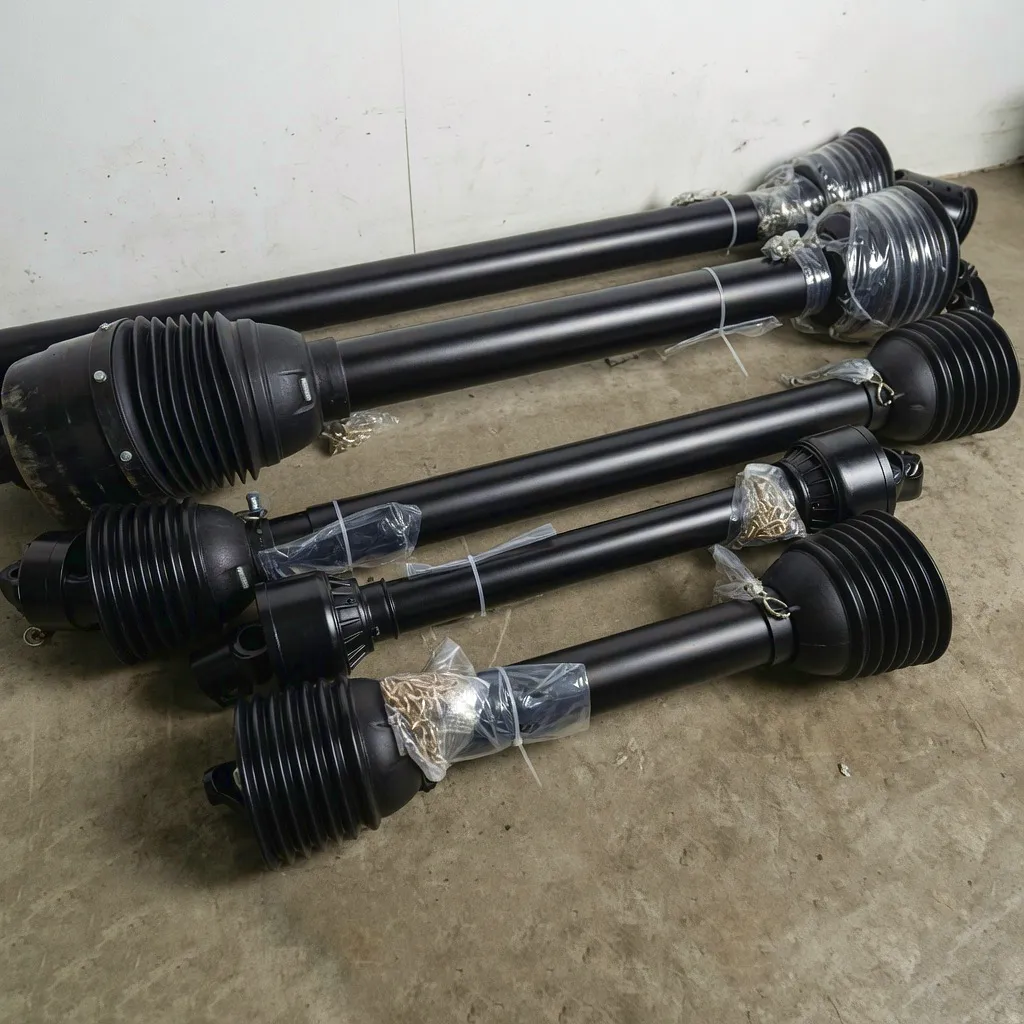 Growing licence-registered industrial hemp for fibre and seed production has expanded considerably across the East of England over the past several years, driven by demand from the natural textile, construction insulation (hemp fibre batts), and nutrition sectors. Hemp straw baling presents a uniquely demanding application for PTO drive shafts because the long, fibrous stems tend to wind around rotating components if crop flow is disrupted, and the dense, tangled nature of the swath creates unpredictable load spikes that are arguably more severe than those encountered in cereal straw baling.
Experienced hemp crop operators working in the Fens and around the Breckland of Norfolk and Suffolk have learned to prioritise overload protection above almost every other specification criterion when selecting a PTO drive shaft for hemp baling. A shaft that allows the slip clutch to engage slightly early — protecting the baler’s gearbox and knotting mechanism at the cost of a brief baling interruption — is far preferable to one that transmits the full wrapping torque into the driveline before the clutch responds. Ever Power engineers have worked directly with specialist hemp processors to develop custom clutch calibration curves that match the measured load profile of hemp baling, delivering shafts that are already preset for this specific application rather than requiring field recalibration by the operator.
Ever Power — Precision Manufacturing and Custom PTO Drive Shaft Solutions
Ever Power operates a dedicated precision machining and assembly facility specifically structured around the demanding requirements of agricultural PTO drive shaft production for global export markets, including the UK. The manufacturing infrastructure includes CNC turning centres for shaft tube and yoke machining to tolerances within ±0.02 mm, induction hardening lines for all bearing contact surfaces, and automated grease-fill stations that ensure every cross-and-bearing assembly leaves the line pre-lubricated to the correct specification — a quality detail that matters enormously when a UK customer receives a shaft and needs to fit it to a machine within hours of delivery.
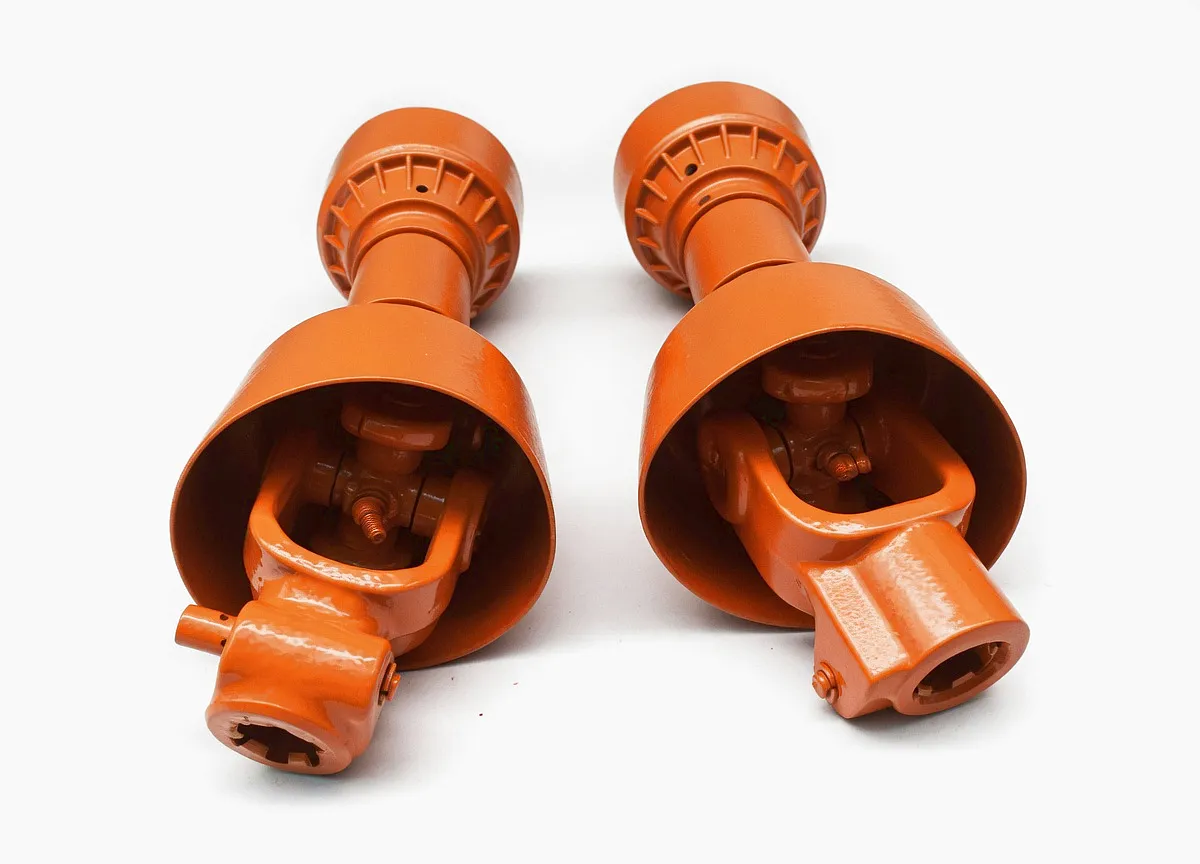
The customisation capability at Ever Power is a genuine differentiator in this market. UK agricultural machinery dealers and OEM parts suppliers who approach standard catalogue distributors often find that they can specify only from a fixed range of shaft sizes, profiles, and clutch settings that may not exactly match the machine at hand. Ever Power offers full customisation across every parameter: tube outer diameter and wall thickness, cross-journal size (from 23×61 mm to 36×127 mm and beyond), spline count and form factor to match any tractor manufacturer’s PTO stub, collapsed and extended length to customer’s measured tractor-to-machine distance, clutch type (friction disc, ratchet, or shear-bolt), and factory-preset slip torque value. Custom surface colours and branding options are also available for OEM partners and machinery dealers who wish to supply branded replacement shafts to their customer base.
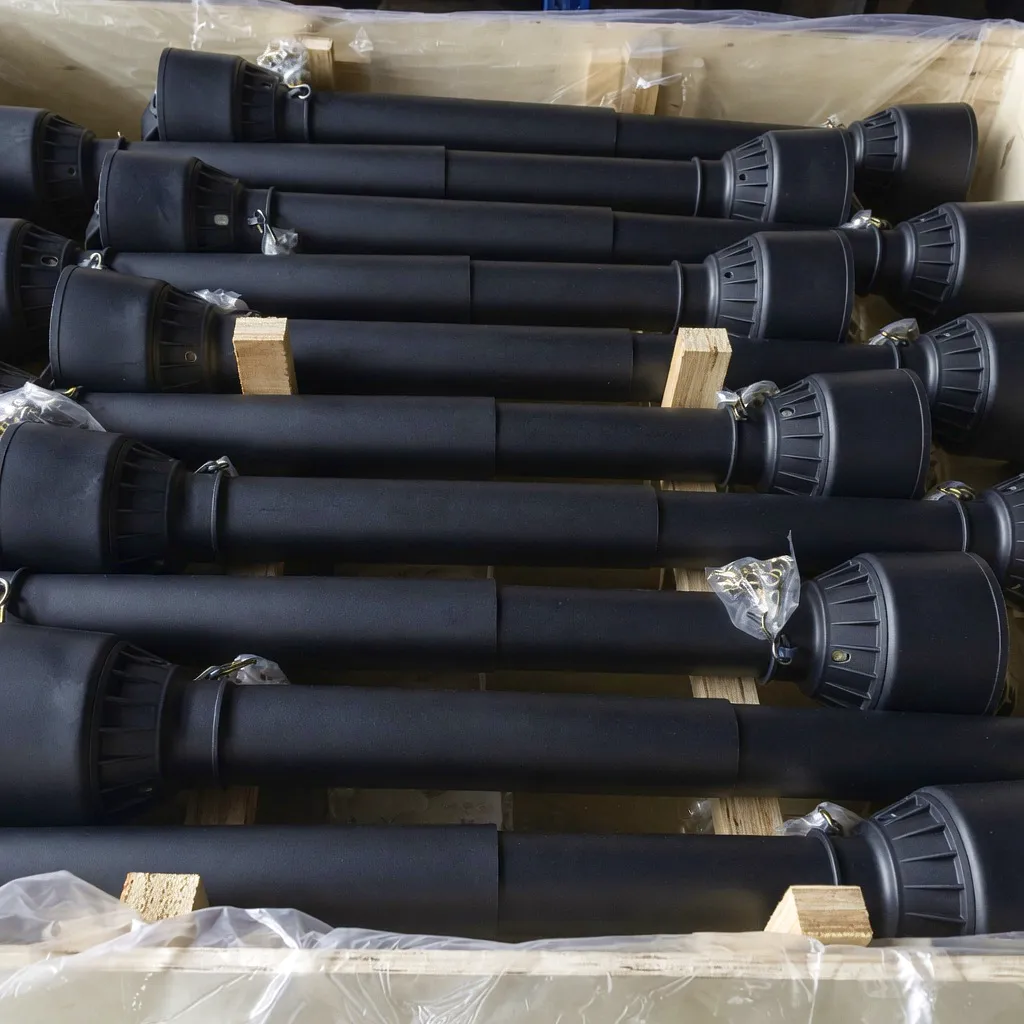
The supply chain reliability that Ever Power provides is particularly valued by UK customers who understand the seasonal nature of agricultural demand. Harvest windows in the UK are short and unpredictable, and a baler sitting idle awaiting a shaft replacement loses money by the hour. Ever Power maintains safety stock of the most common agricultural shaft cross-references and commits to rapid turnaround on custom orders, with express air freight options available for urgent UK delivery requirements. All shafts are tested on a dynamic torque rig before despatch, with test certificates available on request for customers who require documented quality evidence for their fleet maintenance records.
Customer Success Story: Lincolnshire Arable Contractor Cuts Downtime by 80%
Briggs Agricultural Contracting Ltd, a well-established agricultural services business operating from their base near Boston in Lincolnshire, runs a fleet of three large square balers serving cereal farmers across a wide area of the South Lincolnshire fens. During the 2023 harvest season, the business encountered repeated PTO drive shaft failures on two of their balers — both New Holland BigBalers operating on 1,000 rpm PTO drive — that resulted in a combined 34 hours of unplanned downtime across the peak straw harvest period. The financial impact, including missed contracting revenue and emergency parts freight from a UK dealer, exceeded £9,500 for the season.
Tom Briggs, the company’s operations manager, approached Ever Power through an online enquiry in early 2024, seeking replacement shafts that could withstand the specific demands of continuous straw baling in the Lincolnshire fenland environment — including high-throughput fields with dense, tangled straw swaths and frequent short-field headland reversals that stress the universal joint crosses particularly hard. Ever Power’s technical team reviewed the baler model specifications, the tractor-to-machine measured distance, and the previous shaft failure modes (cross-bearing seizure due to grit ingress was the primary cause) before proposing a custom specification featuring upgraded lip-seal bearing caps with a higher grit-exclusion rating and a pre-greased assembly with extended grease retention channels machined into the telescoping profiles.
The three Ever Power custom PTO drive shafts were delivered to Briggs Agricultural Contracting in time for the 2024 harvest season. The company completed the entire season — over 68,000 bales produced across the three machines — with zero shaft-related failures. The total investment in Ever Power shafts represented less than 20% of the previous year’s breakdown and lost-revenue cost, a return on investment that Tom Briggs has described as transformative for the business’s confidence in committing to intensive contracting contracts the following season.
“The slip clutch on Ever Power’s shaft is the best I’ve fitted in 20 years of contracting. It’s saved our BigBaler’s gearbox twice already this season when the straw has bridged across the pickup. The precision on the clutch setting is exactly what the machine manual specifies — not close enough, actually exact.”
“We run a Claas Quadrant 5200 on hilly ground up in Swaledale, and the articulation angles are brutal on any shaft. Ever Power gave us a wide-angle Cardan option that we just couldn’t find elsewhere at a reasonable price. No vibration issues at all, and the knotting quality has been consistently better than the previous season with the OEM shaft.”
“As an agricultural machinery dealer in the East Midlands, we’ve tried three or four PTO shaft suppliers over the years. Ever Power’s service from enquiry to delivery is the most professional we’ve encountered — measured drawing confirmation within 24 hours, accurate lead time quoted and met, and every shaft arrives with a test certificate. Our customers come back when they need a second shaft.”
Square Baler PTO Drive Shaft Selection Guide by Baler Type
Frequently Asked Questions — PTO Drive Shafts for Square Balers in the UK
You’ll need three measurements: the distance between the tractor’s PTO stub and the baler’s input shaft coupling flange when hitched and ready to work; the PTO speed your tractor delivers at that stub (check the tractor manual — 540 rpm or 1,000 rpm); and the baler model’s rated input torque from the operator’s manual. With those three figures, Ever Power’s technical team can identify the correct tube diameter, cross size, and clutch rating immediately. Contact us at [email protected] with your measurements and we’ll come back with a precise specification and price within one working day.
Prices vary considerably depending on the shaft size, cross-journal specification, clutch type, and any customisation requirements. For a standard replacement shaft for a mid-to-large square baler, the range typically runs from £180 to over £600 when sourced through UK machinery dealer networks. Ever Power’s direct supply model eliminates the intermediary margin, meaning customers sourcing from us via international freight often achieve significantly lower landed cost even including shipping from our manufacturing facility. To get an accurate quote with no obligation, email [email protected] with your baler model, tractor make and model, and PTO speed, and we’ll provide a detailed price within 24 hours.
Most agricultural PTO drive shaft manufacturers and baler OEMs recommend greasing the cross-and-bearing assemblies every 50 operating hours. During an intensive UK harvest, where a large square baler might run 12 hours per day, that translates to a greasing interval of every 4 to 5 days. In very dusty conditions — such as dry straw harvesting in East Anglia or hemp baling in the Fens — shortening that interval to every 30 hours is advisable. Apply EP2 lithium-complex grease to each nipple until fresh grease begins to emerge from the bearing seal, confirming that the old, contaminated lubricant has been displaced. Neglecting this schedule is the single most common cause of premature cross-bearing failure on any shaft in active agricultural service.
For high-throughput large square baler operation on wheat straw, a friction disc slip clutch is generally preferred over ratchet or shear-bolt designs. Friction discs engage the slip function smoothly and re-engage without operator intervention, which is critical when the baler is being driven hard and blockages occur frequently. Ratchet clutches produce a characteristic clicking action during slip events that generates vibration, and shear-bolt designs require the operator to stop and replace the bolt after every overload — impractical during intensive contracting work. Claas Quadrant series balers specify factory clutch settings in the operator’s manual; Ever Power can supply custom friction disc clutches preset to those exact values and ships internationally with fast freight options available for UK customers. Contact our sales team for specifications.
Yes — wide-angle Cardan joints are specifically designed for applications where the total operating angle between tractor and implement exceeds 25 degrees, which can happen with short drawbar hitches or when operating on sloping ground in hilly farming areas like Wales, the Peak District, or the Scottish Highlands. A wide-angle double-Cardan joint at the tractor end splits the total angle between two joint crosses, maintaining near-constant output velocity and eliminating the vibration that a single-joint design generates at high angles. The practical limitation to be aware of is that the maximum continuous operating angle for most wide-angle joints is 35 degrees per joint — exceeding this will dramatically shorten bearing life regardless of shaft quality. Measure your actual working angle before specifying, and Ever Power’s team will advise on the correct joint configuration for your specific tractor and field combination.
For standard specifications that match our existing production cross-references, we can typically dispatch within 3 to 5 working days and offer express air freight options that reach UK addresses within 5 to 8 working days total from order confirmation. Fully custom specifications — bespoke lengths, unusual spline forms, or non-standard clutch configurations — generally require an additional 7 to 10 working days for manufacturing. We understand that harvest season timing is critical in the UK, and we prioritise urgent enquiries flagged as harvest-critical at the ordering stage. We recommend planning shaft replacement orders in the spring months before harvest begins to avoid time pressure; however, our team handles urgent requests throughout the harvest period and will always advise the fastest available lead time. Contact us at [email protected] to discuss your timeline.
Ever Power’s engineering team is ready to review your baler model, tractor specification, and operating conditions to recommend the precise shaft configuration — and deliver it on a timeline that works for UK harvest seasons.