
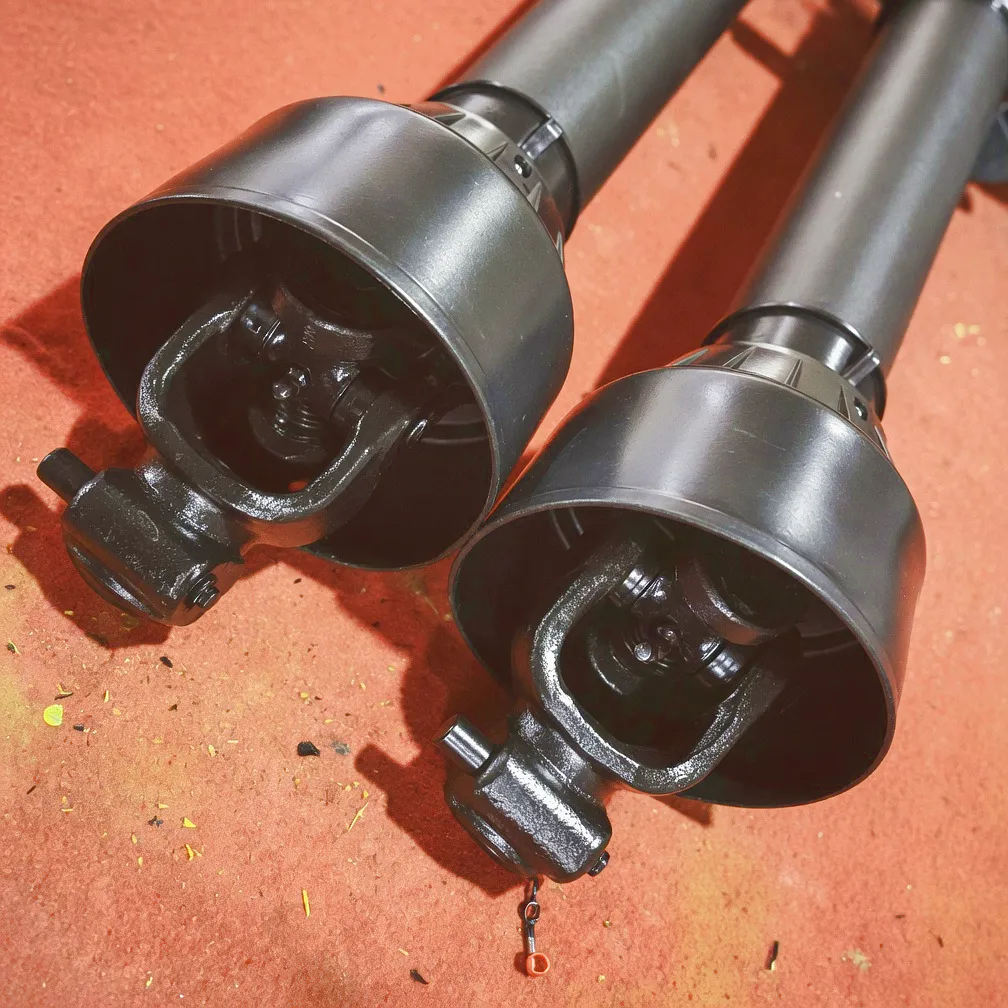
The rotary rake is one of the most mechanically demanding implements on any mixed arable or livestock farm. During the summer harvest window — a window that in England’s climate is notoriously brief — a rotary rake must work reliably across long daily shifts, often covering hundreds of acres. The implement draws all its rotational energy directly from the tractor’s power take-off (PTO) port, and the shaft that bridges that mechanical gap must tolerate continuous high-cycle loading, abrupt angular changes as the machine follows undulating ground, and the ever-present risk of sudden shock loads when the tine head strikes hidden obstructions. When farmers and contractors in places like Shropshire, the Vale of York, or the Somerset Levels talk about a “lost day” during hay-making, it is frequently a failed or damaged PTO drive shaft sitting at the centre of that downtime story.
Selecting the right PTO drive shaft for a rotary rake is therefore a procurement and engineering decision with real financial consequences. An under-specified shaft wears rapidly and fractures under peak shock loading. An over-specified, poorly matched shaft may run with excessive vibration, accelerating wear on the tractor gearbox and the rake’s input bearing. This guide examines the engineering principles that govern shaft selection, the materials and manufacturing tolerances that define service life, and the specific technical parameters that define performance in a rotary rake application — with particular relevance to the conditions and equipment brands common in the United Kingdom.
How a PTO Drive Shaft Delivers Power to a Rotary Rake
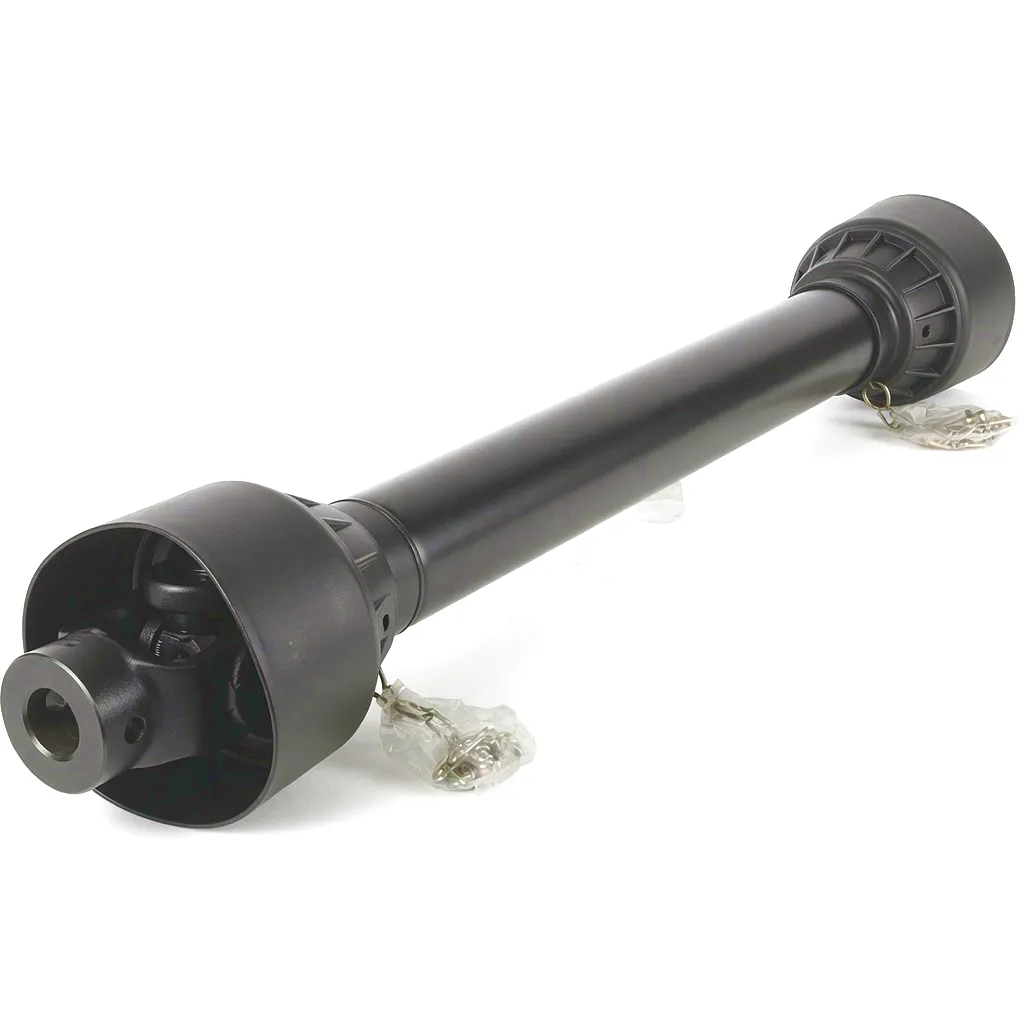
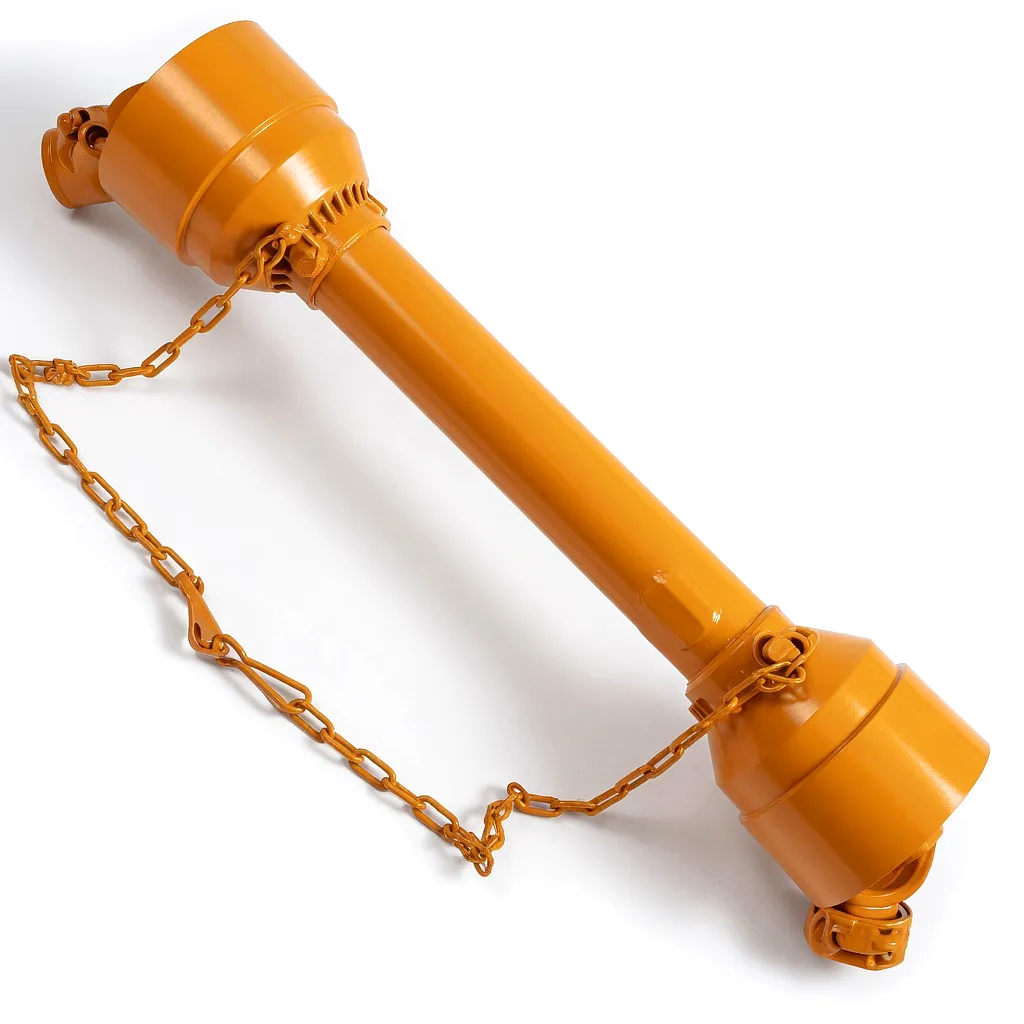
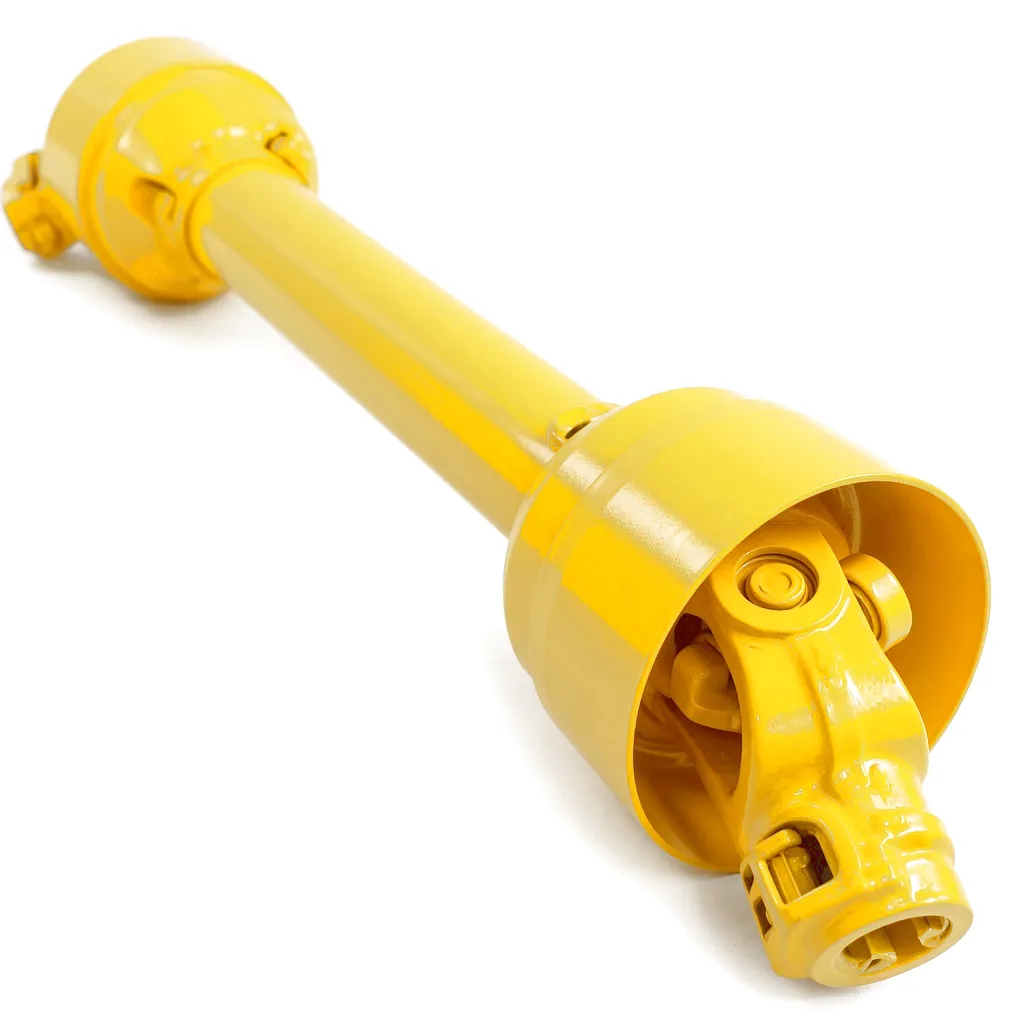
The PTO drive shaft operates as a constant-velocity or Hooke’s joint (cross-and-bearing universal joint) system that transmits rotational torque from the tractor’s rear PTO stub at a nominal speed of 540 RPM or 1,000 RPM. In a rotary rake setup, the shaft bridges the angular misalignment between the tractor hitch point and the implement’s gearbox input — an angle that varies continuously as the rake’s head floats across field contours. The cross-joint assembly allows this misalignment to be accommodated without interruption to the torque transmission.
The inner tube profile — most commonly a profile shaft in lemon, star, or rectangular cross-section — slides within the outer tube. This telescoping action allows the effective shaft length to change as the tractor turns or as the implement rides over a dip in the field. Without this mechanism, the driveline would bind and snap on the first sharp headland turn. The profile engagement length is a critical dimension: too short an overlap under maximum extension risks disengagement; too long a tube under minimum length risks bottoming out and fracturing yokes.
Modern PTO drive shafts for rotary rake applications are specified with an integrated torque-limiting clutch — either a shear-bolt type or a friction ratchet clutch. When the rake head strikes a rock or a tree root hidden in a swath of cut grass, the torque spike that reaches the shaft can be four to six times the steady-state running torque. The overload protection device activates within milliseconds, disconnecting the torque path and preventing a catastrophic failure that would otherwise damage the rake gearbox, strip the tractor PTO splines, or — in worst cases — create an uncontrolled whipping hazard for the operator.
Core Materials That Define Service Life
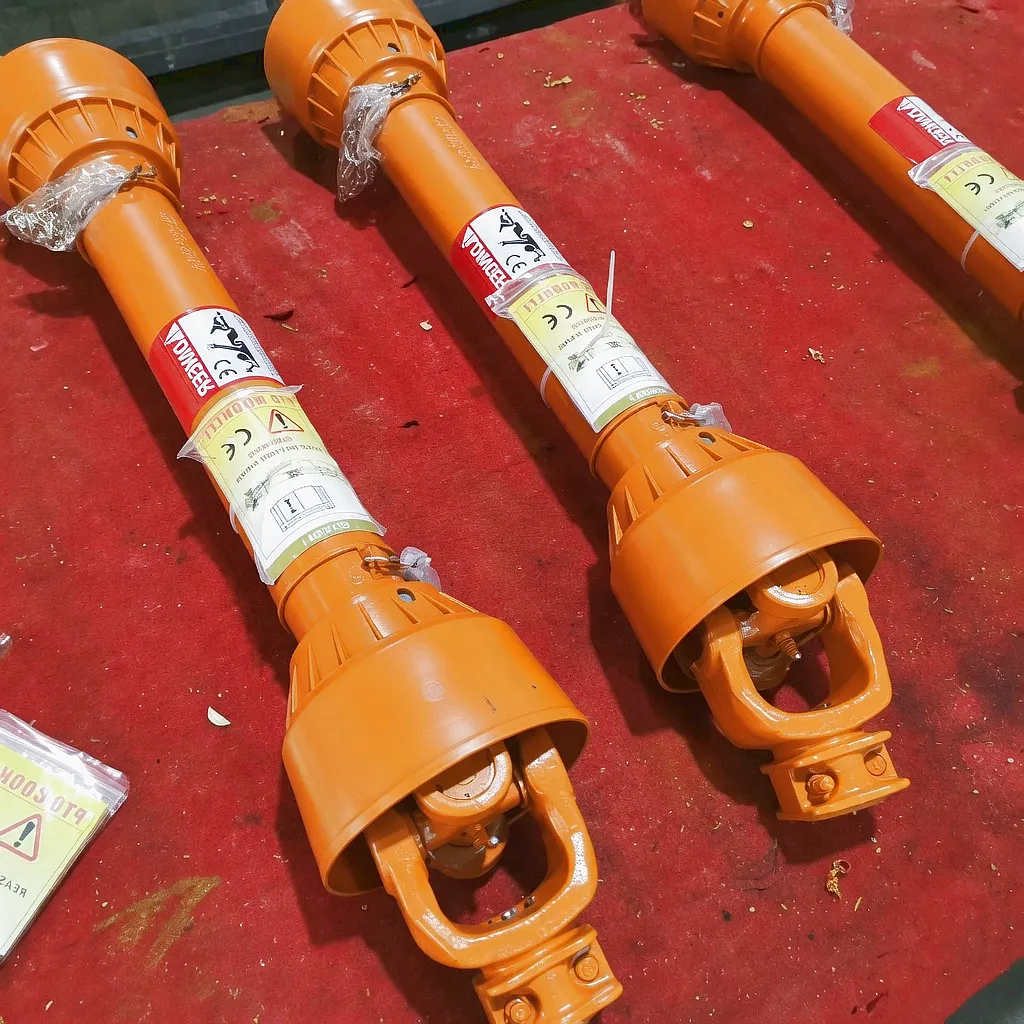 The durability and performance of a PTO drive shaft for rotary rake use is determined primarily by three material systems working together. The tube body, the yoke forgings, and the cross-and-bearing assembly each face different mechanical and environmental demands, and the specification of each must be appropriate for the duty cycle expected in British agricultural conditions — which include significant seasonal moisture exposure, frequent soil and crop debris contact, and the need for reliable cold-weather start-up after the implement has stood unused over winter.
Tube bodies for quality agricultural driveshafts are drawn from seamless cold-rolled steel tube, typically to EN 10305-1 specification. The advantage of seamless construction over welded tube is the elimination of a longitudinal weld seam — a potential crack-initiation site under the cyclic bending loads imposed when the shaft runs with angular misalignment. Cold-rolling imparts a favourable compressive residual stress to the outer surface, improving fatigue resistance. For profile shaft inners and outers, the star or lemon profile is precision-formed to tight tolerances so that torsional play (backlash) is minimised. Excessive backlash in the profile coupling causes an audible “clunk” at each load reversal and, more importantly, accelerates wear in both the tube and the yoke connections.
Yoke forgings are produced from medium-carbon alloy steel — SAE 1045 or 20CrMnTi grades being common — hot-forged and then machined to final dimensions. Forging ensures that the grain structure of the steel follows the contour of the yoke arm, maximising fatigue strength in the high-stress transition zones at the cross-journal bores. The cross-and-bearing assembly uses needle rollers running in case-hardened bearing cups. The grease nipple arrangement on the cross allows periodic regreasing, which is essential in a rotary rake application where the shaft runs at moderate speed but high torque and may be exposed to water splash and crop dust throughout the season.
Application Scenario: Rotary Rake
Single-Rotor Rotary Rake: Power Demand and Shaft Specification
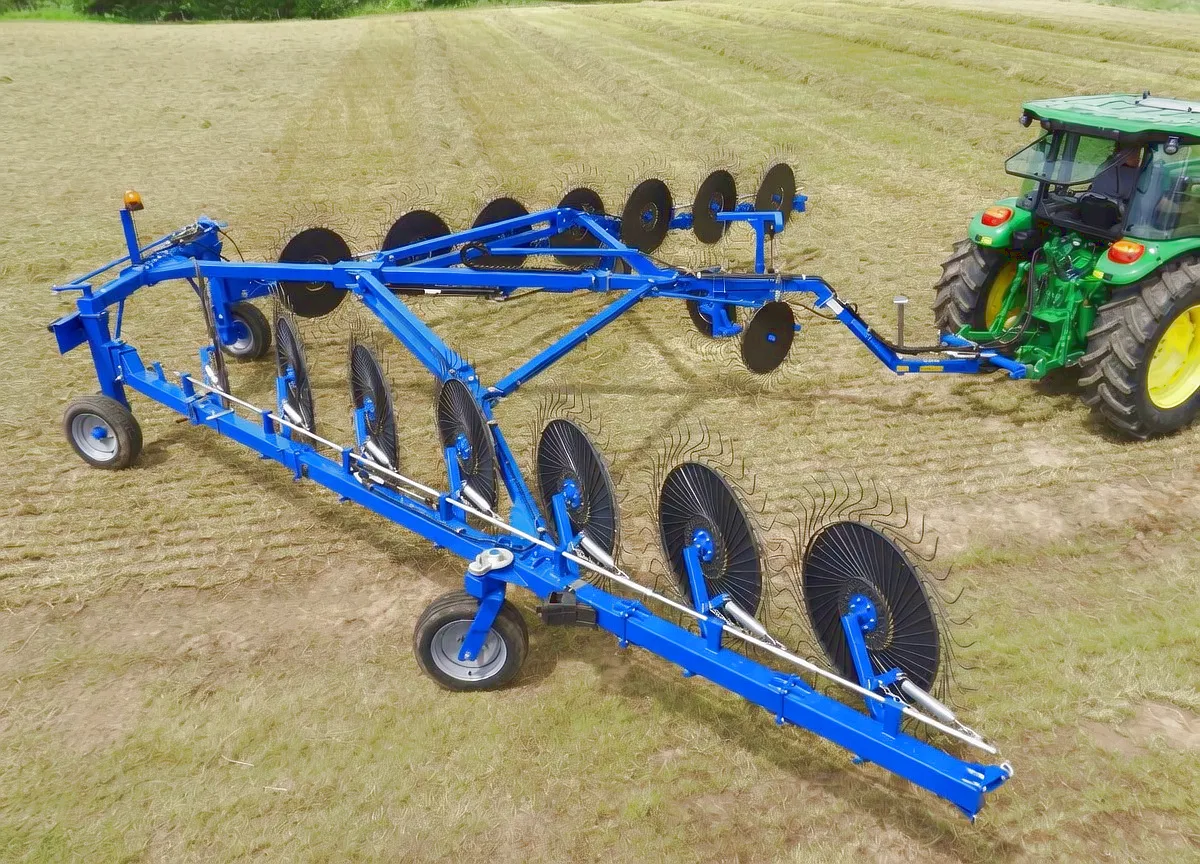 The single-rotor rotary rake remains the workhorse of smaller mixed farms in the West Midlands, Herefordshire, and across the hill farms of Wales and the Scottish Borders. Typically operating with a working width of 3.5 to 5.5 metres, the single rotor is designed to windrow cut hay or silage grass into a single consolidated swath for subsequent picking by a round baler or self-propelled forage harvester. The steady-state PTO torque demand for a mid-size single-rotor rake running at 540 RPM typically falls in the range of 250 to 450 Newton-metres, with short-duration shock peaks that can reach 900 Nm when the tines engage a dense, slightly damp windrow or when a rotor tine catches a ridge in an uneven field.
For this application, the standard PTO drive shaft specification combines a W2400 or W2500 rated series tube body with a friction clutch set to disengage at approximately 600 Nm. The working angle between the tractor hitch point and the rake input is typically between 5 and 15 degrees on flat ground, but this rises to as much as 25 degrees during headland manoeuvres — which is exactly why the cross-joint series (standard universal joint type) must be selected rather than a constant-velocity joint for most standard single-rotor applications. The standard outer guard with retaining chain is mandatory for compliance with CE/UKCA marking requirements that now apply to agricultural machinery placed on the market in Great Britain.
Twin-Rotor Rotary Rake: Heavy-Duty Driveline Requirements
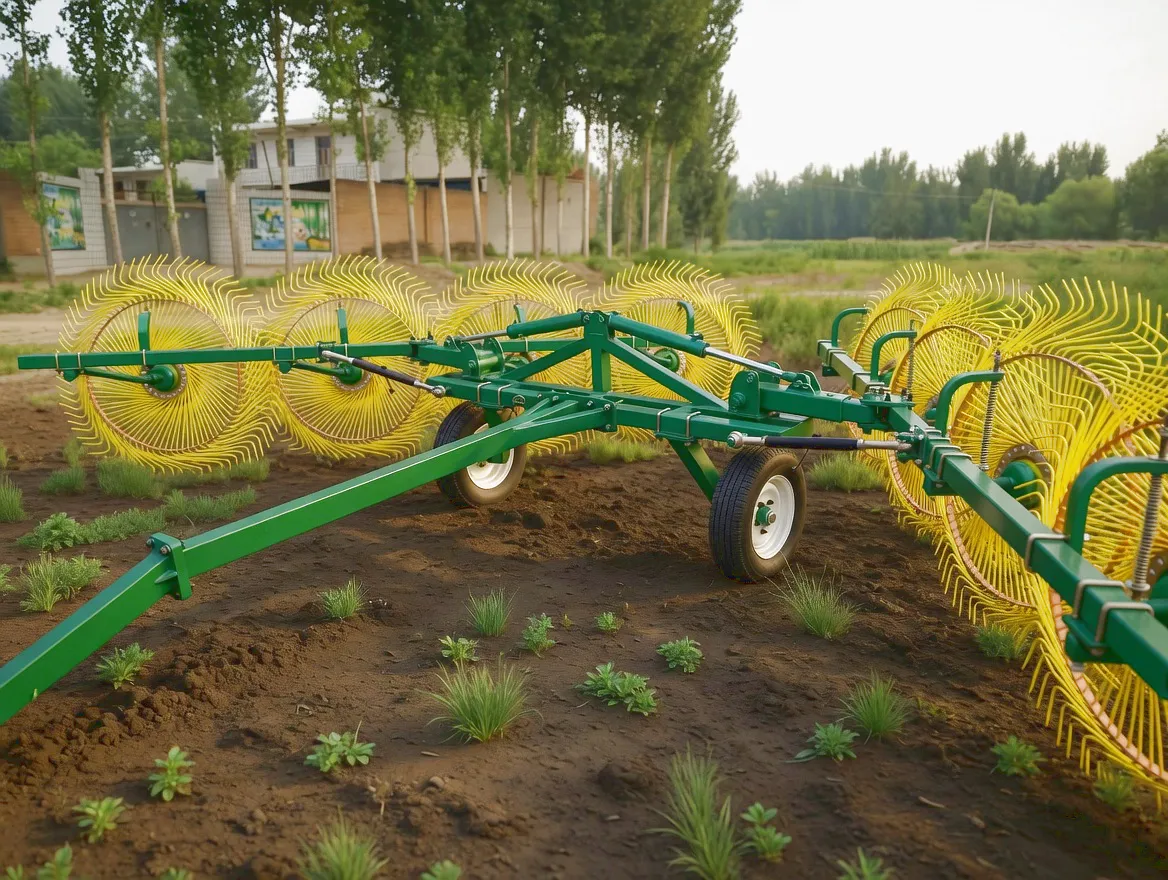 The twin-rotor rotary rake — such as the Claas Liner 2900, Krone Swadro TC, or Kuhn GA series — is increasingly common on the large arable and dairy farms of Lincolnshire, Norfolk, and the Yorkshire Wolds, where maximising daily windrow output is essential during the narrow British summer harvesting window. These machines produce combined working widths of eight to twelve metres and can process upwards of 40 tonnes of dry matter per hour. The PTO driveline on these implements therefore carries a substantially higher continuous torque than a single-rotor machine, and the reliability demands on the driveshaft are correspondingly more stringent.
In a typical twin-rotor configuration, a single main driveshaft — usually a heavy-series W3500 or equivalent rated tube set — carries power from the tractor PTO to the central gearbox of the implement. From that gearbox, secondary shafts distribute power laterally to each rotor head. Each of these secondary shafts is a shorter, fixed-length unit often running at close to zero angular offset during field work, but the main input shaft must tolerate the full combined torque demand at the 540 RPM input speed. The main shaft on a 6.5-metre twin-rotor rake may see continuous running torques of 650 to 800 Nm, with overload peaks up to 1,600 Nm. Specifying a shear-bolt clutch rather than a friction ratchet for the main shaft is common practice where the operator wants a positive — and audible — indication that a protection event has occurred.
Multi-Rotor & Centre-Swath Raking: PTO Shaft Customisation Needs
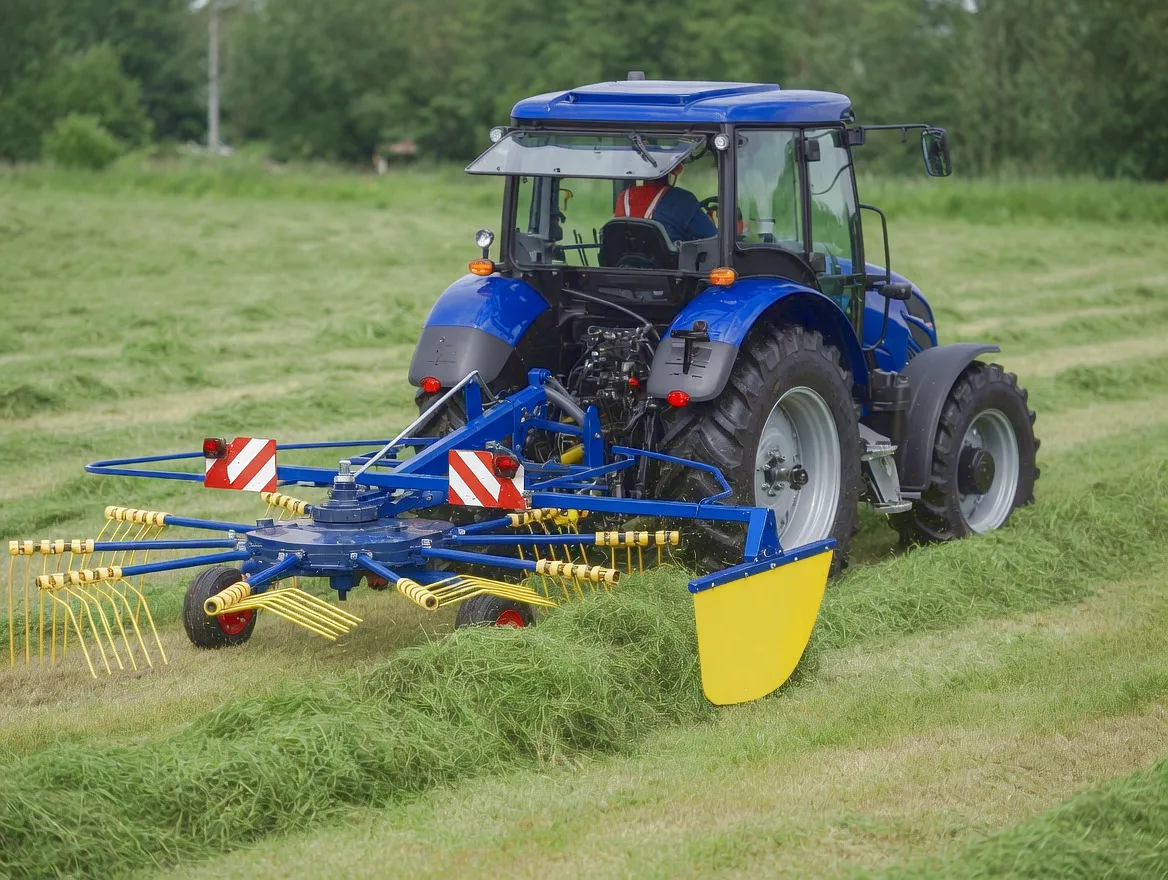 The most demanding rotary rake applications in the UK context involve four-rotor carousel rakes and wide-working multi-rotor systems deployed by agricultural contractors who cover large acreages across counties like Cambridgeshire, Northumberland, and the Humber plain. These implements draw their design philosophy from continental European high-intensity forage production and are now a common sight on the largest arable and dairy farms in England. The PTO drive shaft on a four-rotor implement must be engineered to an entirely different standard compared with a basic single-rotor machine.
A typical four-rotor carousel rake places its central gearbox at a considerable horizontal distance from the tractor hitch point, resulting in a shaft working length that can exceed 1,200 millimetres and a maximum angular deflection at headland turns of up to 30 degrees. This combination demands either a wide-angle constant-velocity (CV) joint at the implement end of the main shaft — capable of accommodating the full angular range without cyclic velocity variation — or a two-section driveline with an intermediate support bearing mounted on the implement frame. The spline interface at both ends must be verified against the tractor’s PTO stub specification (1-3/8″ x 6-spline for 540 RPM; 1-3/4″ x 6-spline for 1,000 RPM) and against the implement’s input shaft specification, which varies between European manufacturers.
For specialist contractors based in regions like the Fens of East Anglia or the flatlands around Boston, Lincolnshire, the daily usage hours on a wide-working carousel rake can be extraordinary during peak hay-making weeks. Contractors report running equipment from first light to dusk — sometimes sixteen or more operational hours per day — and the PTO drive shaft must perform reliably across that entire daily cycle without requiring anything beyond a mid-shift grease check. This is precisely where the quality of the cross-joint bearing seals and the effectiveness of the grease retention system become decisive factors in the total cost of ownership calculation that a professional contractor applies when sourcing replacement or OEM-equivalent shafts.
Core Technical Advantages of a Precision PTO Drive Shaft
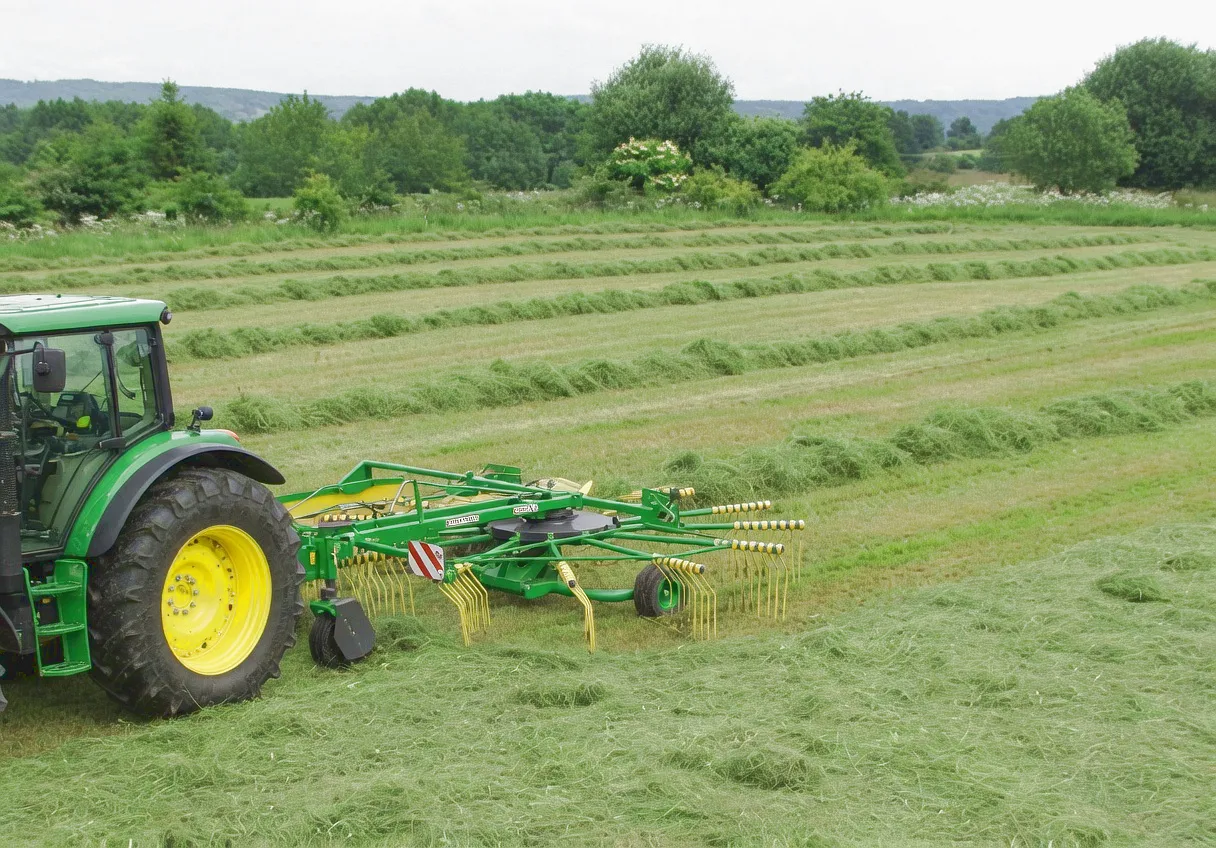 The engineering advantages of a well-specified PTO drive shaft in a rotary rake application extend far beyond the simple delivery of rotational power. The design of the shaft system has a cascading effect on the performance and longevity of every other component in the driveline — from the tractor’s PTO clutch pack to the implement’s gearbox bearings. When farmers and contractors in agricultural counties across England select a quality-engineered shaft, they are investing in a component that actively protects the considerably more expensive machinery on either side of it.
The integrated friction ratchet or shear-bolt clutch absorbs sudden torque spikes within milliseconds, protecting the tractor PTO clutch pack and the implement gearbox from fatigue damage caused by repeated overload events. This is particularly valuable in UK field conditions where flint stone and compressed chalk ridges in arable soils are common.
Quality cross-joint assemblies accommodate operating angles up to 25 degrees (standard UJ) or up to 80 degrees (wide-angle CV joint), maintaining smooth power delivery without introducing cyclic vibration that would otherwise stress the shaft tubes, yoke welds, and implement bearings over a long operating season.
Full-complement needle roller cross-joints with improved NBR lip seals retain grease effectively even in the wet, abrasive conditions typical of British summer grass fields, reducing the frequency of regreasing during active fieldwork compared with older open-bearing designs. This directly reduces maintenance downtime during the critical hay-making window.
Standardised spline profiles (1-3/8″ x 6-spline, 1-3/4″ x 6-spline) and yoke dimensions ensure compatibility with the full range of tractor makes present in UK agriculture — Case IH Puma, New Holland T7, John Deere 6R, and Fendt Vario series. CE/UKCA-compliant safety guards with retaining chain meet the legal requirements for agricultural machinery operated in Great Britain.
Hot-dip galvanised tube bodies and zinc phosphate / chrome-free coatings on yoke forgings provide effective protection against the corrosive combination of wet grass sap, soil minerals, and seasonal storage moisture typical of British agricultural environments. This corrosion resistance directly translates to shaft life measured in seasons rather than months.
The co-extruded HDPE outer guard prevents contact with the rotating shaft and, critically, prevents bale twine, crop wrapping, and loose clothing from being drawn into the shaft — a serious hazard in British farmyards. The anti-wrap retaining chain ensures the guard cannot rotate with the shaft following any contact, a requirement of the HSE’s agricultural safety guidelines applicable across England, Scotland, and Wales.
Product Technical & Performance Specification Table
The following table consolidates the principal engineering parameters for PTO drive shafts specified for rotary rake applications across the single-rotor, twin-rotor, and multi-rotor categories most commonly encountered in British agricultural contracting. All torque figures represent measured values at the shaft input; application safety factors should be applied according to ISO 11684 recommendations.
| Parameter | Single-Rotor Rake | Twin-Rotor Rake | Four-Rotor / Carousel | Standard / Note |
|---|---|---|---|---|
| Rated Torque (Nm) | 250 – 500 | 600 – 900 | 900 – 1,400 | ISO 5674 Series |
| Peak Shock Torque (Nm) | Up to 900 | Up to 1,600 | Up to 2,800 | Clutch set to 1.5× rated |
| PTO Speed (RPM) | 540 | 540 / 1,000 | 540 / 1,000 | EN 876 / ASAE S203 |
| Max. Operating Angle (°) | 25° (UJ) | 25° (UJ) / 50° (CV) | 50° – 80° (Wide-angle CV) | Per joint type |
| Overall Length Range (mm) | 600 – 1,000 | 800 – 1,200 | 1,000 – 1,600 | Min. 150 mm overlap |
| Tube Profile | Lemon / Star | Star / Rect. | Rect. / Hexagonal | DIN 7513 |
| Input Spline (Tractor End) | 1-3/8″ × 6-spline | 1-3/8″ or 1-3/4″ × 6 | 1-3/4″ × 6-spline | ASAE S203.12 |
| Overload Protection | Friction Ratchet / Shear bolt | Shear bolt / Auto-reset | Shear bolt / Ratchet SA | ISO 11684 |
| Tube Material | Seamless cold-rolled steel — EN 10305-1 / DIN 7513 | Seamless preferred | ||
| Yoke Material | SAE 1045 / 20CrMnTi forged alloy steel | Hot-forged | ||
| Surface Treatment | Hot-dip galvanised / Zinc phosphate + paint | ISO 1461 / EN 12329 | ||
| Safety Guard | HDPE co-extruded, PE inner, anti-wrap retaining chain | EN ISO 4254-7 / CE+UKCA | ||
| Regreasing Interval (hrs) | 50 | 50 | 40 – 50 | Cross-joint grease nipple |
Ever Power: Precision Manufacturing & Customisation Capabilities
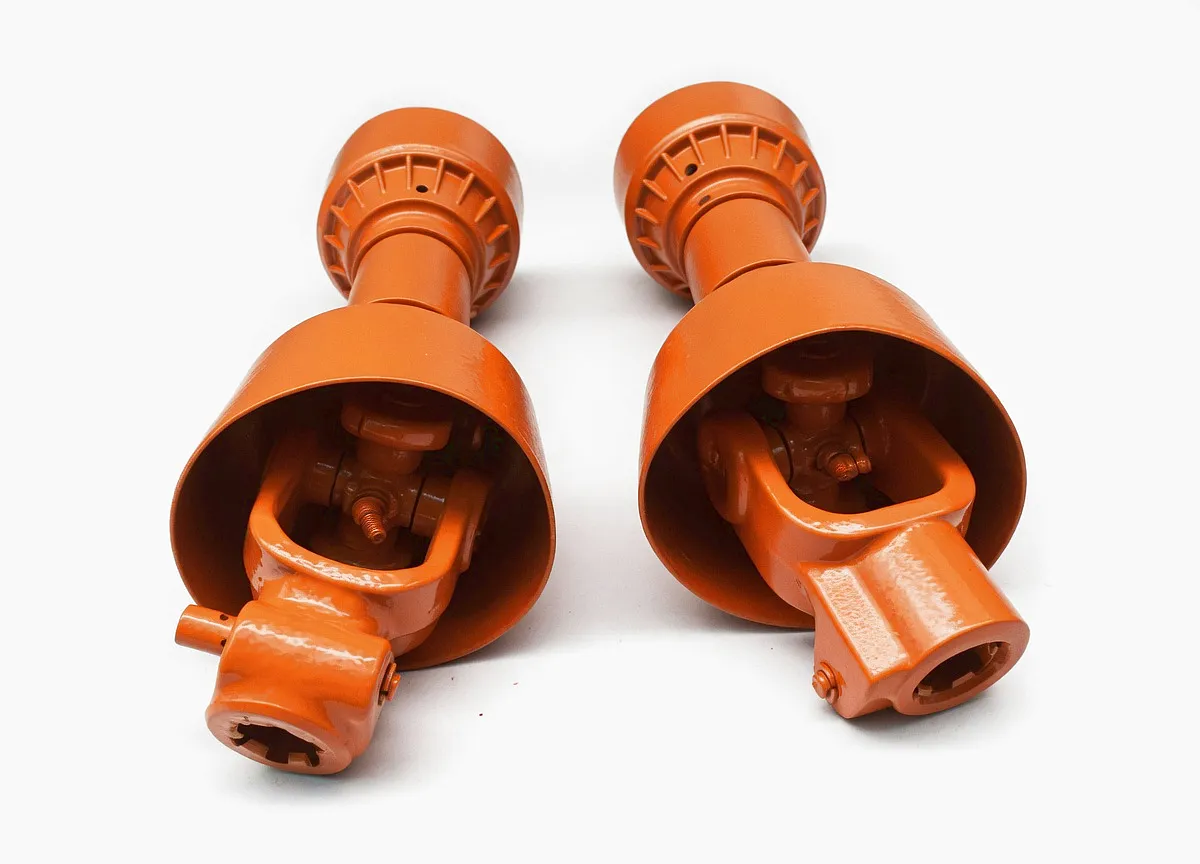 Ever Power operates a vertically integrated manufacturing facility dedicated to precision driveline components for the global agricultural and industrial markets. With in-house forging presses, CNC tube profiling, heat treatment furnaces, and full-cycle quality inspection including magnetic particle testing and dimensional verification of cross-journal bore geometry, Ever Power occupies a rare position among PTO drive shaft suppliers: the ability to control quality at every production stage without outsourcing critical sub-assemblies to third parties whose standards may be inconsistent.
The customisation capability at Ever Power extends far beyond simple length adjustment. For UK machinery dealers and agricultural contractors who operate non-standard implement configurations — imported carousel rakes, bespoke trailed raking systems, or hybrid machine builds assembled by British agricultural engineers — Ever Power’s engineering team can design and supply PTO drive shafts that precisely match the input and output geometry, torque requirements, and operating angle profile of the specific application. This includes custom yoke face patterns, non-standard spline specifications, bespoke tube length combinations, and application-specific clutch torque settings validated on the factory’s test bench before despatch.
The supply chain reliability that Ever Power provides to UK importers, agricultural machinery dealers, and direct farm procurement contacts is grounded in a maintained stock programme covering the most commonly specified shaft series for rotary rake applications, combined with a manufacturing lead time for custom-engineered shafts that is typically measured in days rather than the weeks that a standard European OEM supplier might require. For seasonal agricultural markets where the difference between a 48-hour parts despatch and a 10-day lead time can represent an entire hay-making cycle, this responsiveness is a commercially significant advantage.
 Whether you need a direct replacement shaft for a Claas Liner, a custom-engineered solution for a non-standard implement, or a bulk supply contract for a machinery dealership in Yorkshire, Shropshire, or Norfolk — Ever Power’s sales engineering team will provide a detailed technical proposal and competitive pricing. All enquiries receive a response within one business day.
Customer Success Story: Whitmore Agricultural Contracting, North Yorkshire
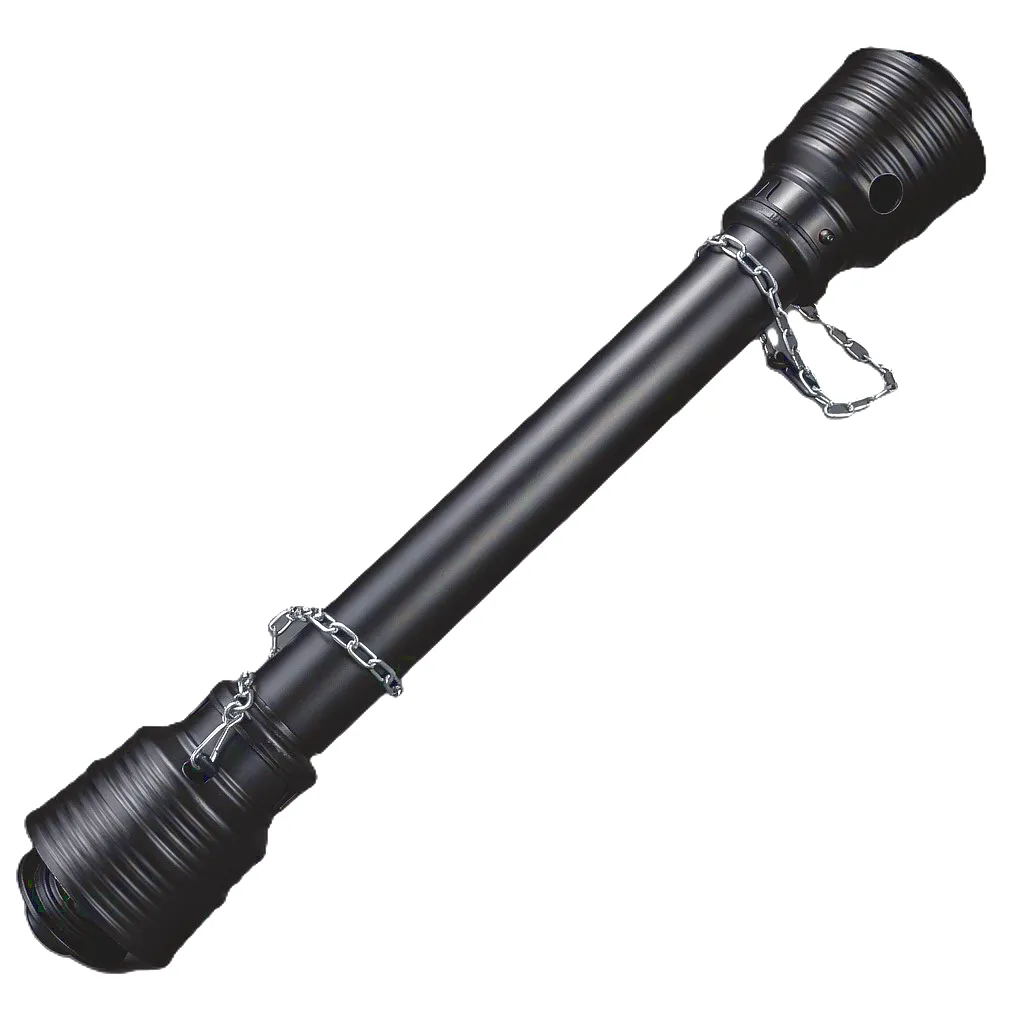 Whitmore Agricultural Contracting operates a fleet of six tractors from a base near Harrogate in North Yorkshire, providing silage and hay-making services across a wide catchment area that spans the Yorkshire Dales, the Vale of York, and the southern edge of the North York Moors. The contracting operation runs three twin-rotor rotary rakes — two Kuhn GA 9531 units and one Claas Liner 2600 — and processes upwards of 3,500 acres of silage and hay ground annually for a mixture of dairy and sheep farming clients.
In the seasons prior to establishing a supply relationship with Ever Power, the company was sourcing replacement PTO drive shafts through a local agricultural merchant whose stock was limited and whose lead times for non-standard specifications sometimes stretched to two weeks or more. On two separate occasions, a shaft failure during peak silage making required a full day of downtime while a replacement was sourced from a merchant in a different county. The commercial cost of those delays — in terms of lost contracting days and damaged client relationships during the critical first-cut silage window — was significant enough that the business owner, James Whitmore, began a systematic review of driveshaft suppliers.
After initial contact with Ever Power’s sales engineering team, Whitmore Contracting received a detailed technical proposal covering three shaft specifications — matched to each rake model in the fleet — with documented torque ratings, clutch torque settings, and tube length recommendations based on the measured geometry of the Kuhn and Claas implement input shafts. A sample batch of six shafts was supplied for evaluation at the start of the following season. Running across both the first-cut silage campaign in late May and the hay-making runs in July, the Ever Power shafts completed the full season without a single cross-joint failure or clutch replacement event — a marked improvement on the performance of the previous supplier’s components, which had required cross-joint replacement at least once per season on two of the three rakes.
Based on that first season’s performance, Whitmore Contracting placed a standing order with Ever Power covering annual supply of replacement shafts and a stock of spare cross-joint kits and clutch shear bolts. The switch also simplified the maintenance schedule: because the shaft specifications were now consistent across all three rakes, a single regreasing procedure and a single clutch setting protocol applied to the entire fleet, reducing the training requirement for seasonal staff.
What UK Customers Say About Ever Power PTO Drive Shafts
“We run three twin-rotor rakes hard through June and July, and the Ever Power shafts have gone through two full seasons now without a single cross-joint failure. The clutch settings were exactly right for our Kuhn GA units — not too sensitive to trip in normal conditions but absolutely dead-on when a rotor hits something solid. That’s not easy to get right, and these shafts do it. The technical support when we specified the replacements was also genuinely helpful — they understood what we needed immediately.”
“As a machinery dealer covering Lincolnshire and the East Midlands, I need a PTO shaft supplier who can deliver on short notice when a farmer comes in with a broken shaft at the start of silage week. Ever Power’s dispatch speed and consistent product quality means we’ve been able to turn those emergency situations around for our customers in 24 to 48 hours. The custom specifications for the Claas Liner 2900 input shaft profile were produced and delivered faster than any European supplier we’d used previously. We now stock their entire agricultural range.”
“We operate a large four-rotor carousel rake for contract raking work across Shropshire and the Welsh Marches, and the input shaft specification on that machine is non-standard — it’s not something you can walk into a merchant and buy off the shelf. Ever Power’s engineering team reviewed our shaft geometry drawings, confirmed the correct tube series and CV joint specification, and manufactured a set of five shafts to exactly our requirements. The price was competitive and the quality is clearly there — the surface finish on the yoke machining and the tube coating are both better than the OEM replacement parts we used to buy from the implement manufacturer’s dealer network.”
Power Take-Off Solutions
Featured PTO Gearbox Products
Industrial-grade PTO gearboxes engineered for agricultural and heavy-duty applications — built for global B2B markets.
HC-RC31 PTO Gearbox
Model: HC-RC31 · Right-Angle Series
The HC-RC31 PTO Gearbox is a high-torque right-angle gearbox designed for demanding agricultural and industrial machinery. Featuring precision-cut bevel gears and robust cast-iron housing, it delivers reliable power transmission with minimal energy loss — ideal for OEM integration and field-replacement applications across global markets.
High Torque
540 / 1000 RPM
OEM Compatible
HC-RC30-193 PTO Gearbox
Model: HC-RC30-193 · RC30 Series
The HC-RC30-193 PTO Gearbox delivers versatile multi-ratio power output engineered for a wide range of implement attachments. With its compact, heavy-duty profile, sealed bearing system, and universal spline interface, it adapts seamlessly to tractors from 30 HP to 193 HP — a dependable choice for distributors and equipment manufacturers worldwide.
Universal Spline
Sealed Bearings
Multi-Implement
Exported to 60+ countries worldwide
Global OEM & B2B supply chain
Custom specifications available