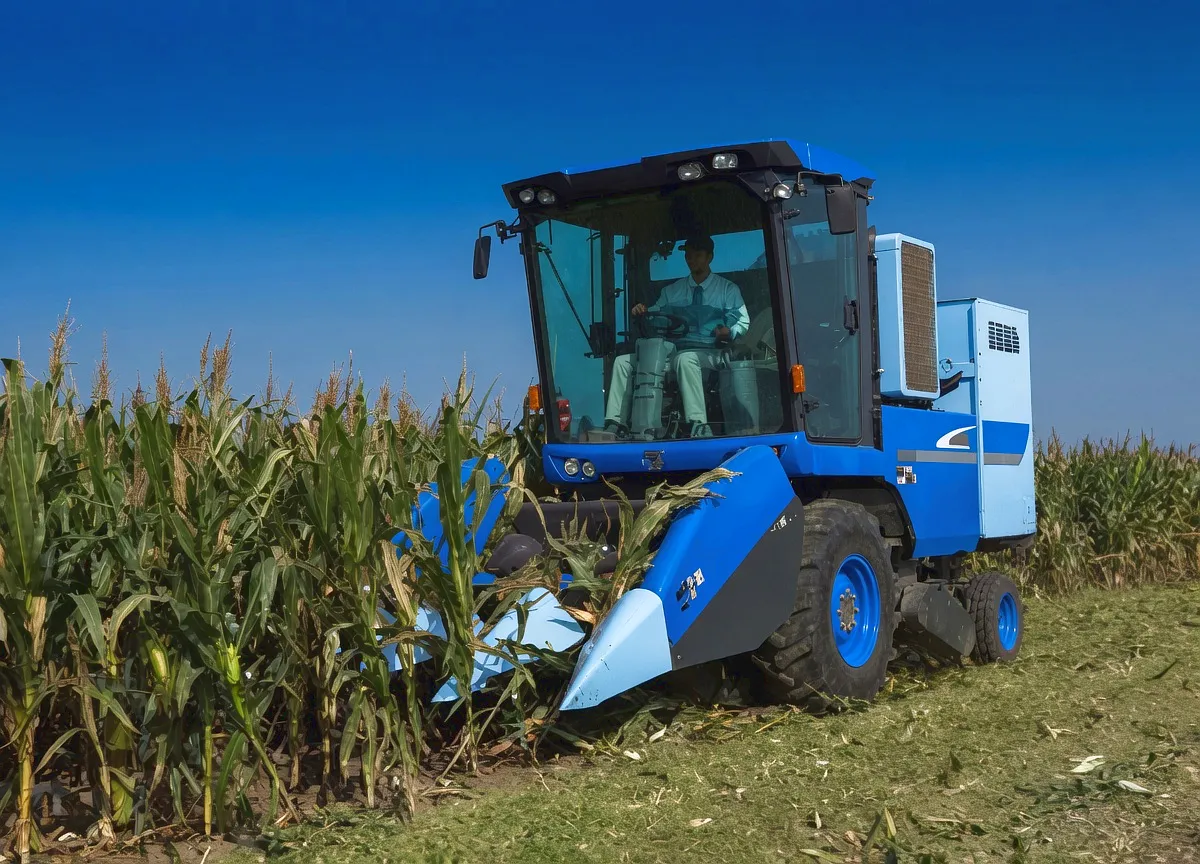
Walk into any large arable farm in Lincolnshire or the East Riding of Yorkshire during September and October, and the sight is unmistakable: multi-row corn harvesters moving through standing crops at calculated speed, stripping ears from stalks with mechanical precision that would seem almost impossible without engineering that has been refined over decades. At the heart of each harvesting row — typically between six and twelve rows on a modern self-propelled machine — sits a component that most operators never see but cannot afford to ignore: the row unit gearbox. This specialised agricultural gearbox governs the rotational speed, torque transmission, and mechanical phasing of the gathering chains, deck plates, and snapping rolls that define how cleanly and how fast a corn head processes each row of standing maize. When this gearbox performs well, everything from kernel loss rates to operator fuel consumption improves. When it fails, the entire row shuts down and harvest windows — already brutally narrow in the British climate — begin to close.
The engineering requirements placed on a row unit gearbox are remarkably demanding for a component that often goes unnoticed in conversations about precision agriculture. It must transmit power continuously from the PTO drive shaft system through to gathering snails and snapping rolls, handling torque spikes when the machine encounters lodged or tangled crops without slipping, seizing, or suffering gear tooth fatigue. In the field conditions typical across the English Midlands — heavy clay soils, variable crop densities, and the occasional wet October that delays harvest until the last defensible moment — these demands intensify considerably. The agricultural gearbox installed in each row unit therefore needs to be built not just to a specification but to a philosophy: precision manufacturing, correct material selection, and design geometry that balances power density with long service life.
Application Scenario: Row Unit Gearbox in Corn Harvesters
The Mechanical Role Within the Corn Head
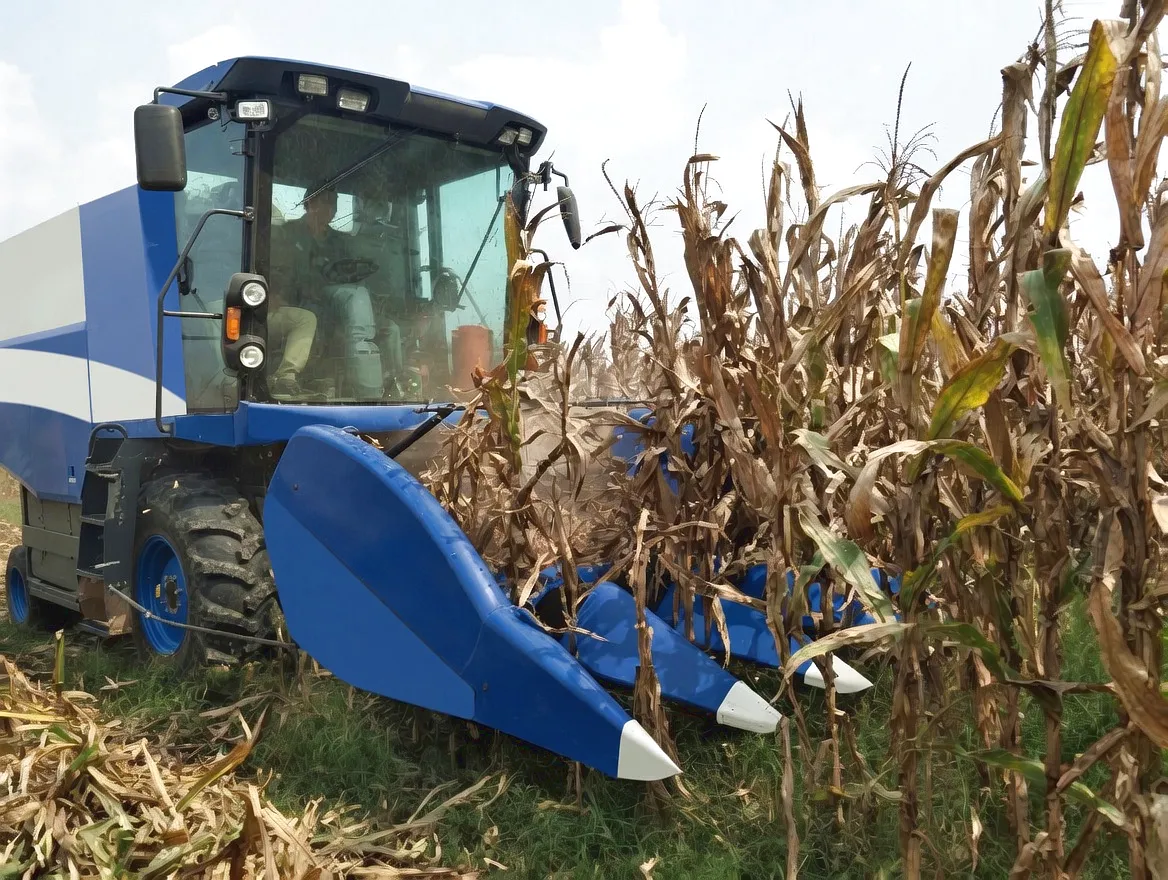
A modern corn harvester head is a multi-row assembly in which each individual row unit operates as a semi-independent mechanical module. Power enters the header from the main machine’s PTO-driven gearbox at the centre of the header frame and is then distributed laterally via cross-shaft arrangements to each row unit. At the row unit itself, the agricultural gearbox performs the critical task of converting this rotational input into the specific output ratios needed to drive the snapping rolls — which pull the stalk downward while stripping the ear — and the gathering chains that guide the plant into position. The speed relationship between these elements must be precisely maintained. If the snapping rolls run too slowly relative to machine ground speed, stalk wrap increases and blockages become frequent. If they run too fast, grain is shelled from the cob before it reaches the threshing section, causing kernel loss that costs UK arable producers real revenue. The row unit gearbox is the component that sets and holds this critical speed relationship, making its internal geometry — gear ratios, shaft centres, bearing placement — central to overall machine performance and harvest efficiency across the season.
UK Corn Harvesting Context and Seasonal Demands
The United Kingdom’s maize growing area has expanded significantly over the past two decades, driven by demand from anaerobic digestion plants, dairy silage requirements, and grain maize production in the warmer counties of Cambridgeshire, Norfolk, Suffolk, and Worcestershire. Harvest typically runs from late September through to mid-November, depending on variety maturity and season rainfall patterns. This creates a compressed window in which farm machinery must perform reliably every single day, often for extended shifts. Contractors operating out of market towns across the East Midlands — places like Spalding, Boston, and Market Rasen — cover hundreds of acres per season and cannot afford mechanical failures that send a self-propelled harvester back to the workshop. Under these conditions, the agricultural gearbox in each row unit is exposed to continuous operating stress across long daily run times, often in ambient temperatures that drop sharply by evening, adding thermal cycling to the list of engineering challenges it must overcome with complete reliability.
Working Principle of the Row Unit Gearbox
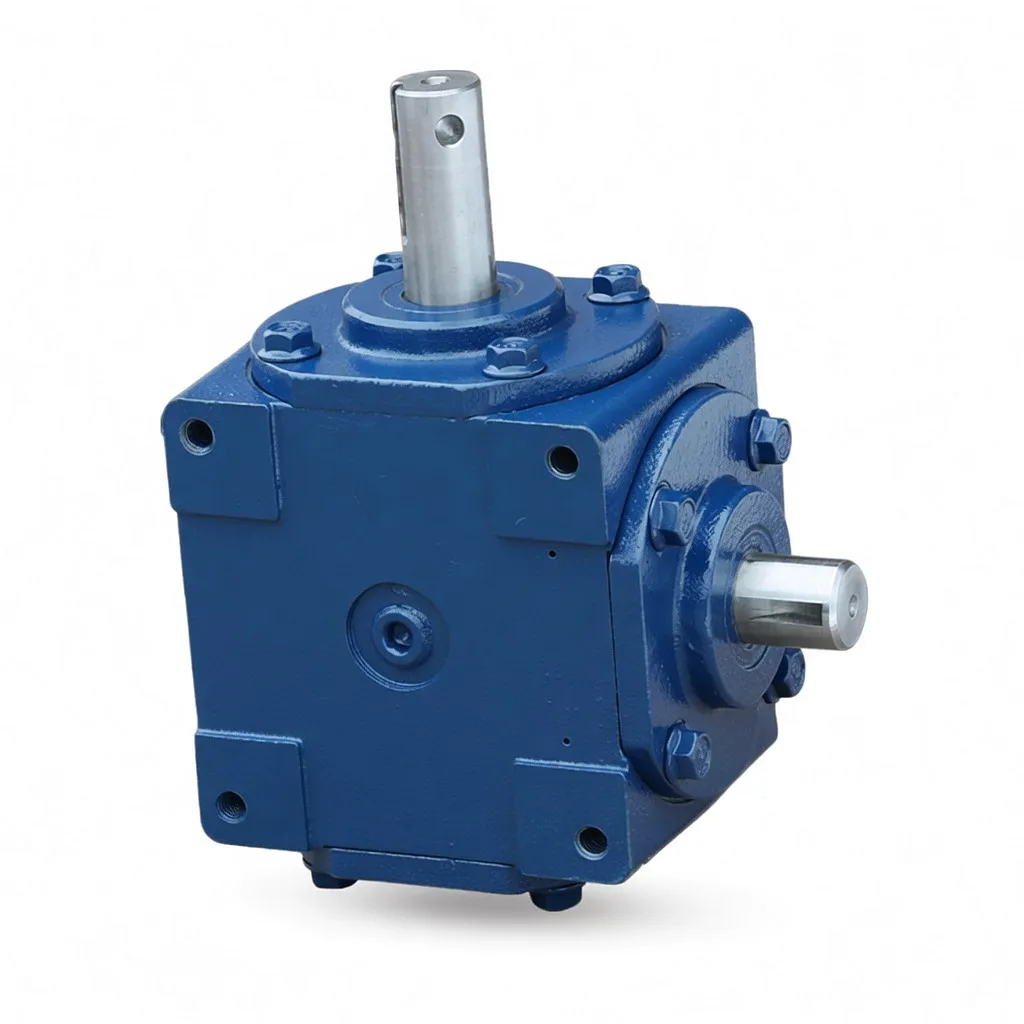
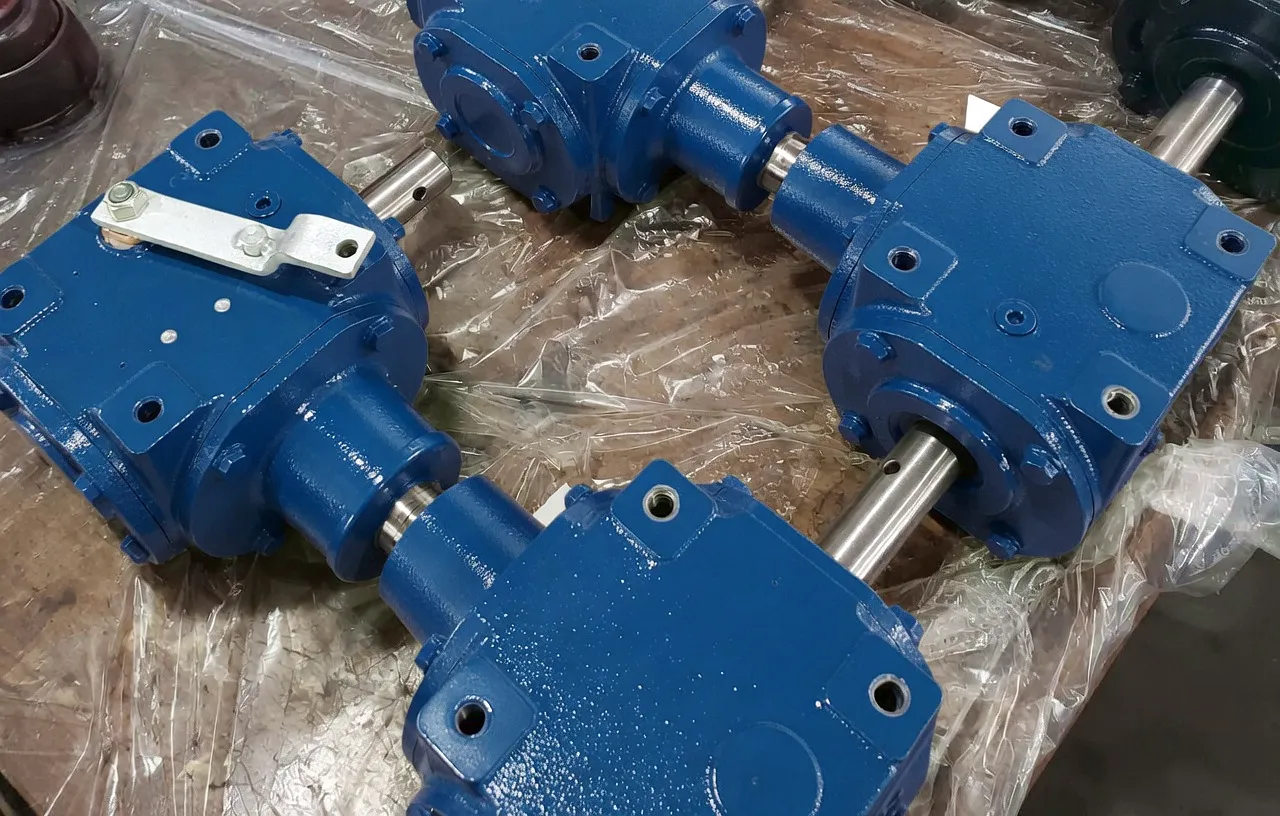
The row unit agricultural gearbox operates on the principle of bevel or helical gear transmission, taking a rotational input from the main header cross-shaft — typically running between 400 and 700 RPM depending on machine type and operator setting — and converting it into separate output shafts that drive the opposing snapping rolls and the gathering chain sprockets. The gear train within the housing is arranged so that left-hand and right-hand snapping rolls rotate in opposite directions, drawing the stalk down between them with a controlled force that strips the ear cleanly. The ratio selected inside the gearbox determines how much torque multiplication occurs between input and output, and this ratio is matched during manufacture to the expected torque requirement of the snapping roll geometry and crop variety being harvested.
Most row unit gearboxes use a combination of bevel gear sets at 90-degree input-to-output transitions and spur or helical gear stages for ratio adjustment. The input shaft typically receives drive from a splined or keyed connection to the header cross-shaft, while output shafts exit the housing in the directions required by the physical geometry of the row unit. Bearing selection at each shaft position is critical: the bearings must accommodate radial and axial loads simultaneously as the gears transmit power under variable crop loads, and they must do so with minimal deflection to preserve gear mesh geometry and prevent accelerated tooth wear. Lip seals at all shaft exits protect the internal lubricant — typically a high-viscosity gear oil or grease-packed design depending on manufacturer preference — from contamination by crop dust, chaff, and moisture that are ever-present in a combine harvester environment.
Core Materials in Agricultural Gearbox Manufacturing
Core Technical Advantages of Ever Power Agricultural Gearboxes
All gear tooth profiles are finish-ground using CNC gear grinding centres after heat treatment, achieving profile and lead tolerances within ISO Quality 6 limits. This level of accuracy reduces noise, minimises dynamic loads on bearings, and extends gear tooth fatigue life significantly beyond what is achievable with hobbed-only gears used by lower-cost suppliers.
Each shaft exit is protected by a dual-lip PTFE-reinforced seal running against a hardened and ground shaft journal. This seal arrangement excludes crop chaff, moisture, and fine soil particles that are omnipresent during corn harvesting operations. Service intervals of 500 operating hours or one full season are achievable, reducing the maintenance burden on farm workshop teams across busy harvest periods.
The gear train and housing structure are engineered with a service factor of 2.0 to 2.5 applied to peak calculated torques, providing substantial reserve capacity when the machine encounters lodged crop, slugging conditions, or the wet, heavy stalk bases typical at the end of the British maize harvest season. Core material selection and tooth root fillet geometry are optimised specifically to resist dynamic loading rather than merely static torque ratings.
Ever Power agricultural gearboxes are engineered to match the mounting bolt patterns, shaft diameters, and spline or keyway specifications of the world’s leading corn header manufacturers, including compatibility standards for platforms commonly serviced by agricultural dealers across the UK dealer network. Drop-in fitment eliminates the need for custom adapter plates or machining, reducing workshop time during the pre-harvest preparation period when schedules are already compressed.
Product Technical & Performance Parameters
| Parameter | Standard Range | High-Performance Variant | Unit / Note |
|---|---|---|---|
| Rated Input Torque | 80 – 250 | Up to 450 | N·m |
| Peak Shock Load Torque | 160 – 500 | Up to 900 | N·m (2.0× service factor) |
| Input Speed Range | 300 – 700 | Up to 900 | RPM |
| Gear Ratio Options | 1:1 / 1.5:1 / 2:1 | Custom ratio available | Fixed ratio or multi-speed |
| Gear Material | 20CrMnTi carburised | 20CrMnMo / 18CrNiMo7 | HRC 58–62 surface |
| Housing Material | GGG50 ductile iron | AlSi9Cu3 die-cast alloy | Weight-optimised option |
| Gear Accuracy Grade | ISO Class 7 | ISO Class 5–6 (ground) | Post heat-treat grinding |
| Lubrication Type | ISO VG 220 gear oil | Lifetime-grease sealed | Oil or sealed variants |
| Operating Temperature | -20°C to +80°C | -30°C to +100°C | Continuous / synthetic lube |
| Transmission Efficiency | 96% | 97.5%+ | At rated load |
| IP Protection Rating | IP54 | IP65 | Dust and moisture sealed |
Featured Agricultural Gearbox Products
HC-RC31 PTO Gearbox
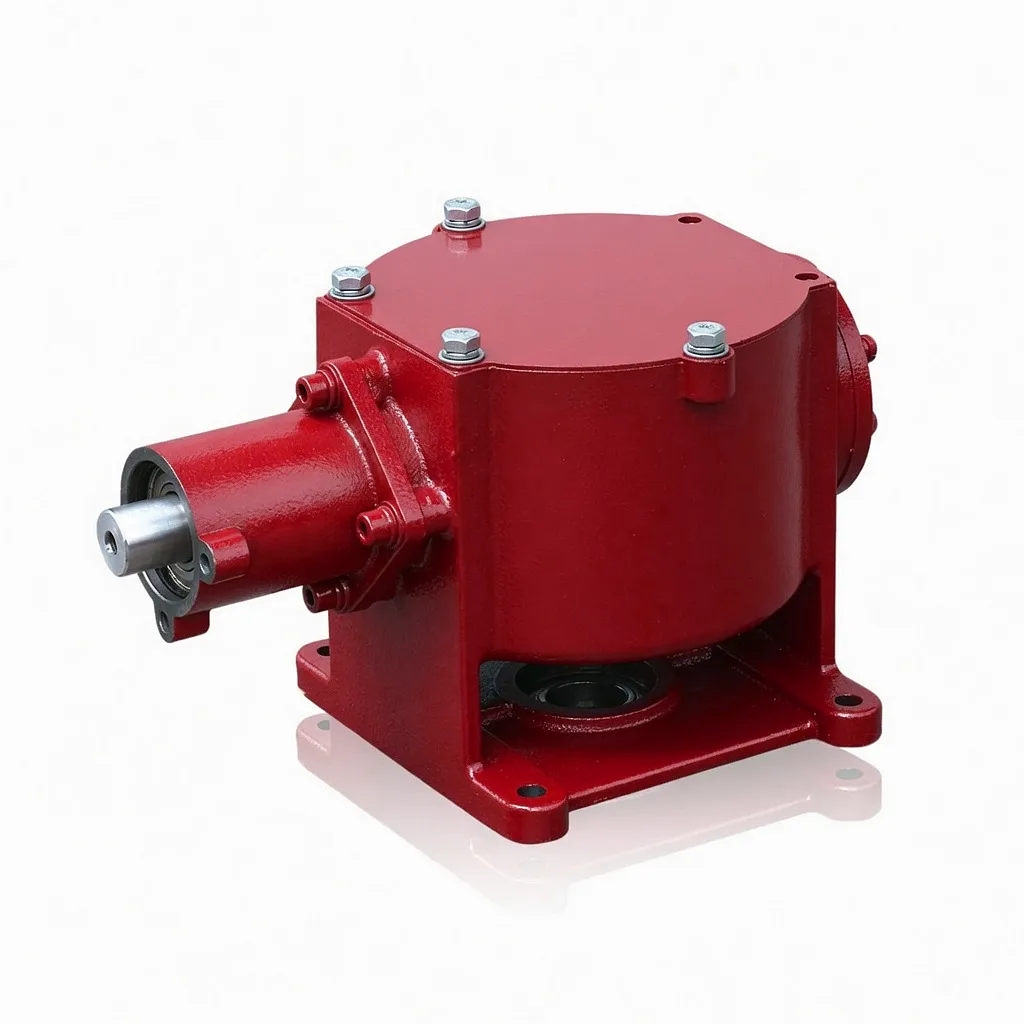
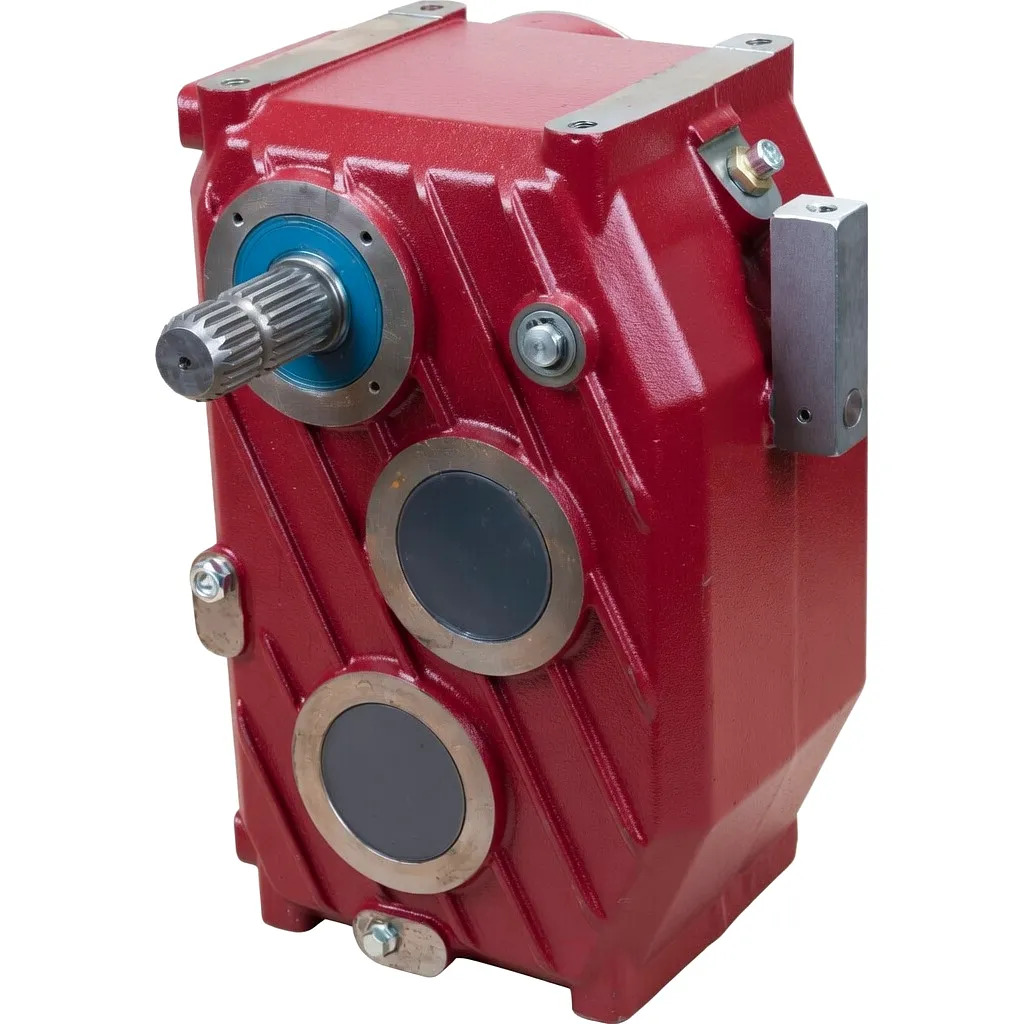
The HC-RC31 is a high-performance agricultural gearbox designed for demanding PTO-driven applications including corn harvester row units. Featuring a robust alloy steel gear train with precision-ground flanks, sealed bearing positions, and a heavy-duty ductile iron housing, this unit delivers exceptional torque capacity and long service life across UK harvesting conditions. Its compact envelope and OEM-matched mounting geometry make it a preferred replacement and upgrade choice for arable contractors across the East Midlands and beyond.
HC-RC30-193 PTO Gearbox
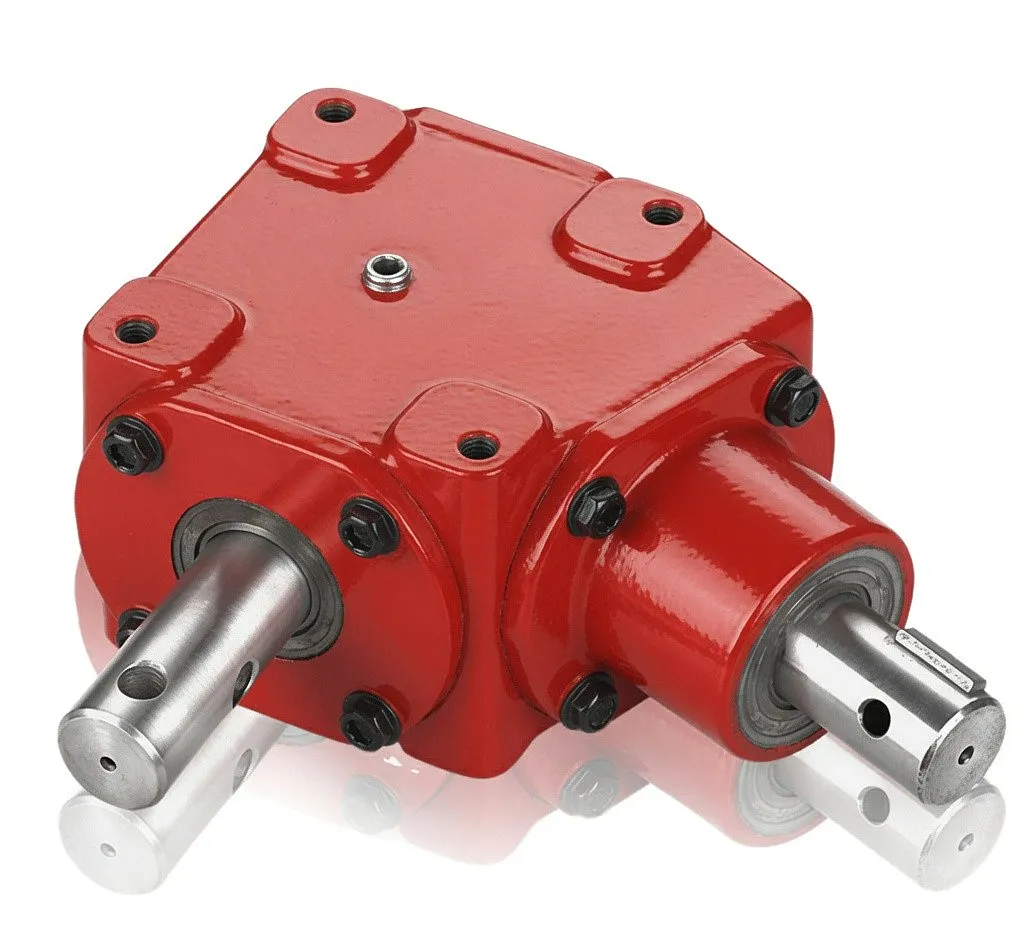
The HC-RC30-193 PTO Gearbox is engineered for multi-output drive distribution in wide-header corn harvesters and other PTO-driven agricultural equipment. With its precision-machined bevel gear assembly, hardened and ground output shafts, and sealed housing construction rated to IP65, this agricultural gearbox handles the sustained power demands of continuous harvesting operations. The design accommodates the high-cycle, variable-load duty profile of row unit drives, making it well-suited for contractor operations covering large acreages across Lincolnshire, Nottinghamshire, and the broader UK grain belt.
Broader Agricultural Application Scenarios
Agricultural gearboxes drive gathering and pre-cutting mechanisms in forage harvester heads across dairy farming regions of the UK, including Cheshire, Somerset, and Dumfries and Galloway, where grass silage seasons run from May through August with continuous daily operation demands.
Reel drives, auger gearboxes, and cutterbar drive units on grain combine headers across wheat and barley growing regions — particularly in Hampshire, Wiltshire, and the Thames Valley — rely on compact agricultural gearboxes that maintain shaft phasing under variable header load throughout the main cereal harvest window.
Potato and sugar beet harvester agitation webs, elevator drives, and haulm removal mechanisms use agricultural gearboxes with high shock-load tolerance in Fenland operations across the Isle of Ely and the sandy soils of south Lincolnshire and Norfolk, where continuous autumn harvesting across heavy clay soils demands exceptional component durability.
Beyond the core harvesting applications described above, agricultural gearboxes from Ever Power also find service in fertiliser spreader drive trains, where corrosion resistance from the housing coating and seal integrity are paramount given the aggressive chemical environment of MAP and AN-based compound fertilisers common across UK arable rotations. Slurry tanker agitator drives in livestock-intensive regions such as Devon, Herefordshire, and the Scottish Borders represent another significant application where the gearbox must operate intermittently but with high starting torques from settled, viscous material that generates extreme initial load spikes.
The versatility of Ever Power’s agricultural gearbox range — supported by the company’s willingness to provide bespoke gear ratios, modified output shaft arrangements, and alternative housing configurations — means that a single supplier relationship can cover a wide portfolio of farm machinery drive requirements across both arable and livestock enterprises common throughout the diverse agricultural landscape of England, Scotland, and Wales.
Customer Success Story: Lincolnshire Grain Contractor
Bridgewater Agri-Contracting Ltd., operating from the market town of Boston in the South Holland district of Lincolnshire, runs a seven-machine fleet of self-propelled forage and grain harvesters covering maize, wheat, and oil seed rape operations for farm clients across the Fenland region and up into the Wolds. In the 2023 season, the company faced a critical problem: row unit gearboxes on two of their eight-row corn heads were suffering recurring gear tooth fatigue failures during the peak harvest window, averaging one failure every 120 operating hours. The original equipment supplier’s replacement lead times of three to five weeks made this frequency commercially devastating — every day of downtime during October meant lost harvesting contracts and damaged client relationships built over many years.
The company’s workshop manager contacted Ever Power through a recommendation from a fellow contractor at the Louth Farming Forum event in early 2024. After a detailed technical consultation involving review of the original failure analysis reports, operating torque data, and crop density profiles typical of the Lincolnshire maize varieties grown in the area, Ever Power’s engineering team identified that the original units were being operated at approximately 85% of their rated torque capacity during peak stalk ingestion — leaving insufficient margin against shock loads from tangled, lodged crops.
Ever Power proposed a replacement agricultural gearbox with an uprated gear module, 20CrMnMo case-hardened gears ground to ISO Class 6, and an upgraded bearing arrangement using C3-clearance tapered rollers at the bevel gear shafts. The housing design was maintained to preserve drop-in fitment with the existing row unit frames, eliminating any need for adapter machining. Four units were delivered to the Boston workshop within eleven days of order confirmation — a supply chain response the workshop manager described as exceptional by industry standards. The units were installed before the 2024 harvest season began and completed the full season — over 380 operating hours per unit — without a single failure. The company subsequently ordered an additional four units as planned stock ahead of the 2025 season.
“We went from one row unit gearbox failure every season to zero across a full 380-hour campaign. The torque capacity of the Ever Power units gives us genuine confidence when we’re running hard through heavy lodged crop — something we never had with the OEM parts we were using before.”
“The customisation service from Ever Power was what really impressed us — they didn’t just offer a standard catalogue product, they actually looked at our failure data and proposed a specific engineering solution. That level of technical support from a gearbox supplier is genuinely rare at this price point.”
“Eleven days from order to delivery — in the middle of summer, while we were already mid-preparation for harvest season. That kind of supply chain performance is exactly what a contractor business in the Fens needs. We’ve since placed these units across all our corn heads as a preventative upgrade and have not had a single issue.”