
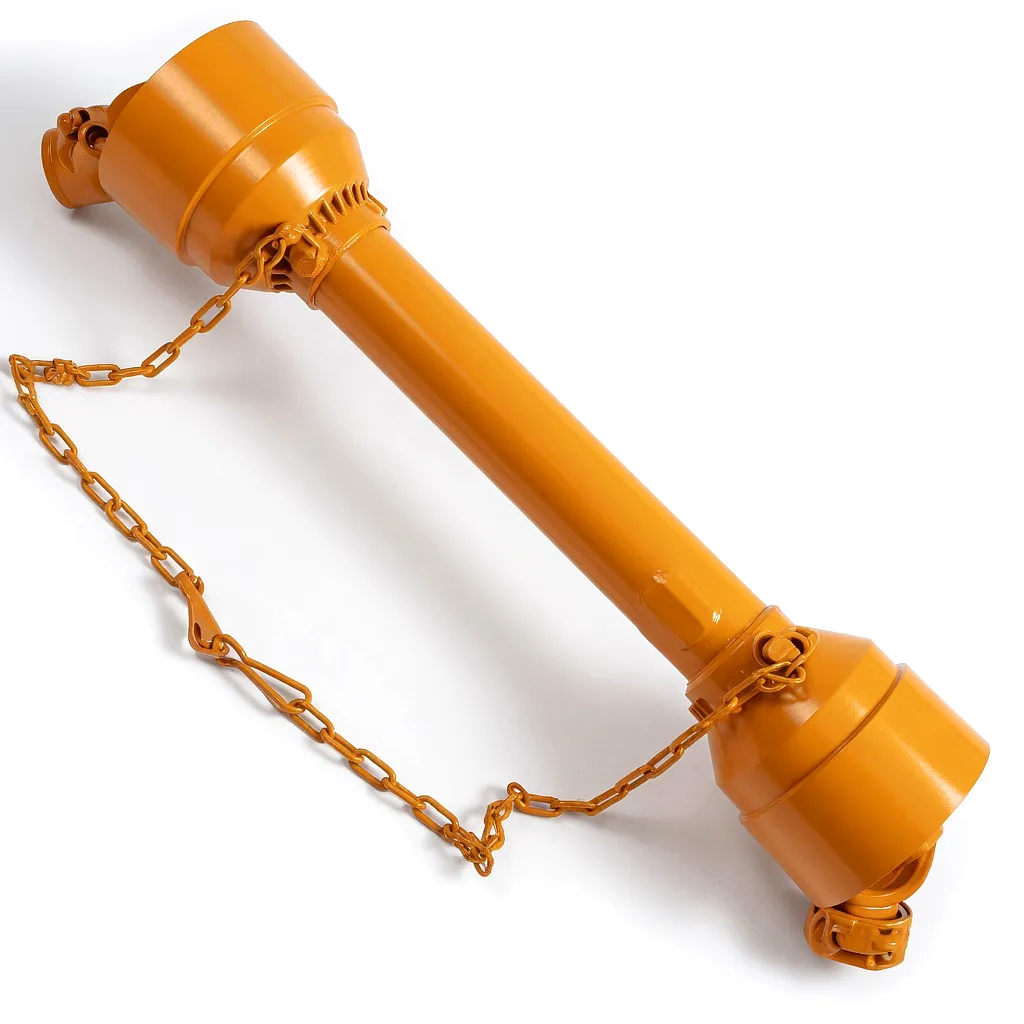
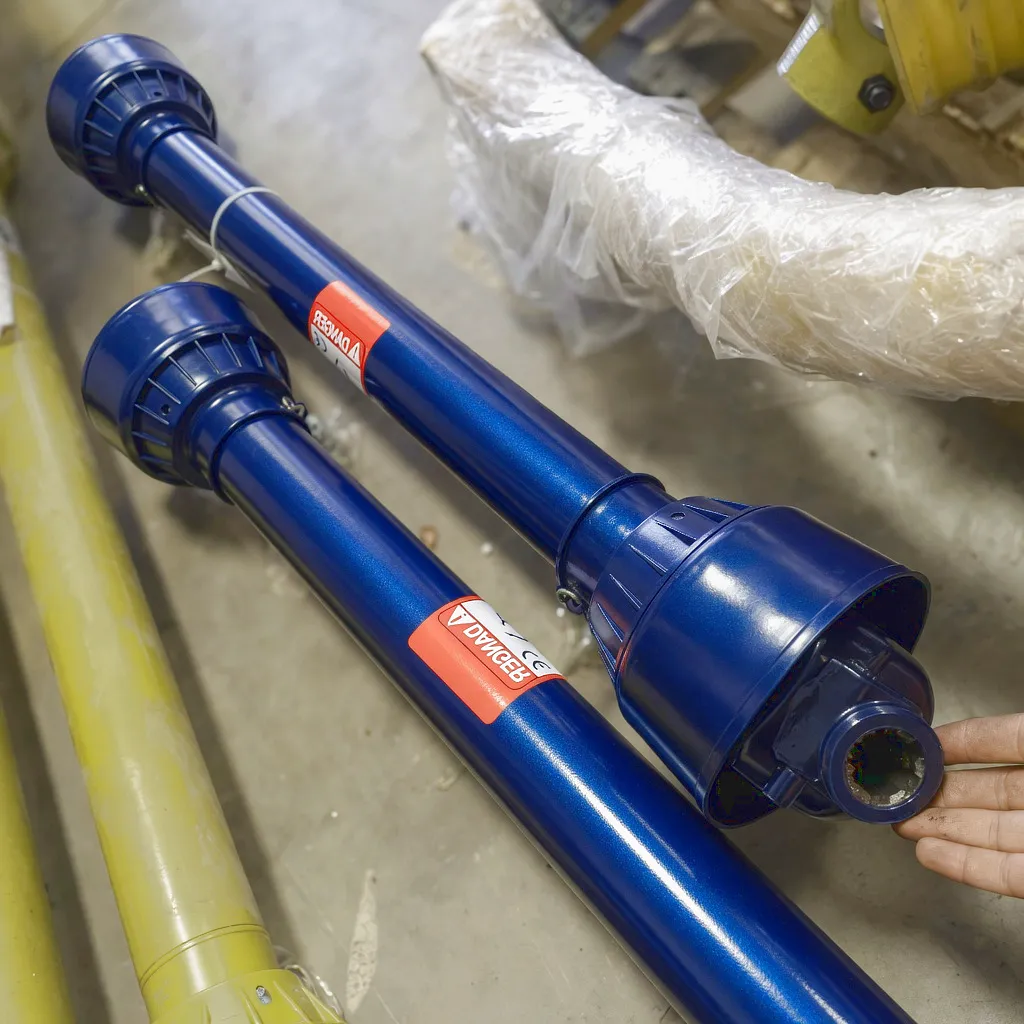
 Running a wood chipper without the correct PTO shaft is a gamble that most contractors in the UK cannot afford to take. The drive shaft connecting a tractor to a chipper faces a genuinely brutal mechanical environment — the sudden inertia kick when a twisted oak limb hits a 400 kg flywheel, the relentless vibration transmitted back through a rotating drum rotor, and the misalignment stress introduced every time an operator turns the tractor on uneven ground. A PTO shaft for wood chipper work is not interchangeable with the light-duty shafts fitted to slurry pumps or fertiliser spreaders. The torque demands, the shock-load profile, and the safety requirements are categorically different, and selecting the wrong component leads to shear-pin failures at the worst possible moment, premature cross-journal bearing collapse, or — in the most serious cases — a catastrophic driveline release that creates a genuine risk under the UK’s Provision and Use of Work Equipment Regulations 1998 (PUWER).
Ever Power has been designing and supplying precision PTO shafts for heavy-duty machinery applications for close to two decades. Our engineering team works directly from customer-supplied chipper input-shaft drawings and tractor category data, rather than relying on generic off-the-shelf sizing. The result is a bespoke PTO shaft that fits right first time, survives the shock loads that wood-chipping generates, and meets the CE-marking requirements that UK and European B2B buyers demand. This guide covers everything a UK forestry contractor, agricultural engineer, or green-waste fleet manager needs to understand about specifying, sourcing, and maintaining the right PTO shaft for a wood chipper.
How a PTO Shaft Works Inside a Wood Chipper — The Mechanical Reality
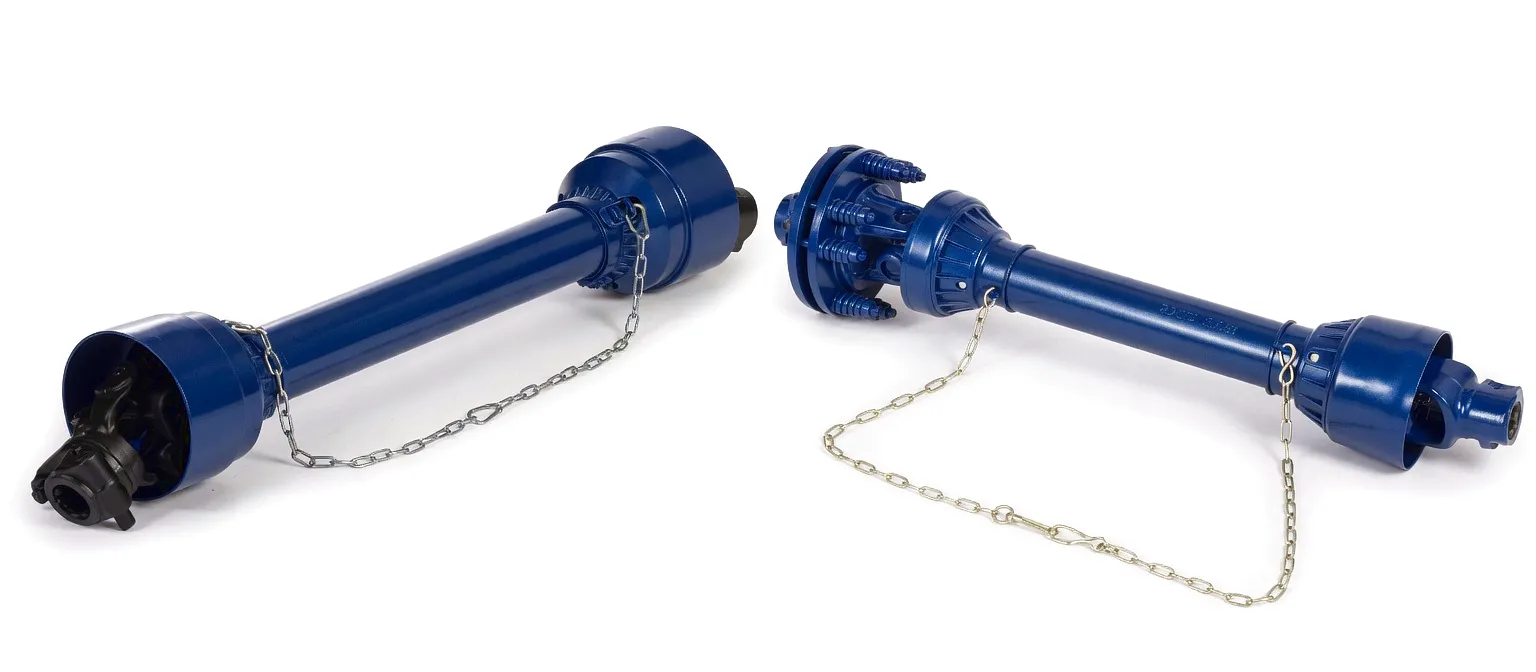
To specify the right PTO shaft for a wood chipper, you first need to understand the mechanical sequence that takes tractor power and transforms it into chipping force. The tractor’s rear power take-off stub rotates at either 540 rpm or 1,000 rpm depending on operator selection and tractor model. The PTO shaft picks up that rotation through a splined yoke and transmits it along a telescoping tube assembly to the input shaft of the chipper gearbox or directly to the chipper’s main rotor shaft. At the chipper end, the rotating shaft either spins a heavy disc flywheel — in disc chipper designs — or drives a cylindrical drum rotor, which in drum chippers can weigh several hundred kilograms when fully constructed with its inserted blade cassettes. The energy stored in that rotating mass is enormous: a 350 kg flywheel spinning at 1,000 rpm holds kinetic energy equivalent to a small vehicle rolling at motorway speed. That stored energy is exactly what drives the cutting action when a branch arrives at the blade.
This is precisely why the PTO shaft for wood chipper use must be engineered differently from lighter applications. When a large-diameter knotted hardwood limb — say a mature beech or oak branch at 200 mm diameter — enters the infeed and contacts the blade, the impact creates a massive instantaneous resistance spike. If the PTO shaft were a simple rigid tube, that spike would transmit directly back to the tractor gearbox and the tractor’s PTO stub shaft, causing bending loads that would rapidly fatigue the shaft, strip the spline, or snap the cross-and-bearing joints (also called universal joints or U-joints). To absorb and manage this energy, a correctly specified PTO shaft for wood chipper service incorporates one or both of two protection mechanisms: a shear-bolt clutch and an overrun (freewheel) clutch. Understanding the difference between these two devices — and when each is appropriate — is one of the most important decisions in driveline specification.
🛡 Shear-Bolt Clutch
The most commonly specified overload device for wood chippers. A precision-graded bolt passes through the clutch body; when peak torque exceeds the design threshold, the bolt shears cleanly, decoupling the input from the output. The remaining driveline coasts to a halt. The operator replaces the bolt — a 30-second job — and resumes work. Correctly sized shear bolts are essential: a bolt that is too hard prevents the clutch from releasing at the right point; too soft, and it shears on normal load surges, causing nuisance downtime.
⚙ Overrun (Freewheel) Clutch
An overrun clutch allows the output shaft to spin faster than the input shaft — it transmits drive in one direction only, like a bicycle ratchet. This is critical for flywheel chippers where the heavy rotating mass continues to spin after the tractor PTO disengages. Without overrun protection, a decelerating tractor PTO stub would be driven backwards by the flywheel’s momentum, potentially causing severe gearbox damage. Many premium wood chipper PTO shafts combine both a shear-bolt clutch and an overrun device in a single assembly.
Modern drum chippers and disc chippers also increasingly use what some manufacturers call a No-Stress feed control system. This works by coupling the hydraulic feed-roller circuit to the tractor’s PTO speed signal: if the tractor engine begins to bog down under excessive chip load — causing the PTO shaft to slow below a threshold rpm — the feed rollers automatically halt or reverse, clearing the blockage before the rotor stalls completely. The PTO shaft’s rotational speed sensor forms a critical part of this closed-loop control circuit. This further underlines why PTO shaft selection for wood chipper service is not simply about picking the biggest shaft available: it must be matched precisely to the machine’s hydraulic and electronic control architecture.
Technical Specifications — Ever Power PTO Shaft for Wood Chipper Series
Data applies to standard catalogue configurations. Custom ratings available on request.
| Series | Peak Torque (Nm) | Input Spline | Tube Profile | Collapsed Length | Protection Type | Max PTO Speed | Chipper Power Range |
|---|---|---|---|---|---|---|---|
| EP-W3 | 800 | 1 3/8″ · 6 spline | Triangular / Lemon | 750–1,100 mm | Shear-bolt | 1,000 rpm | 35–55 hp |
| EP-W4 | 1,400 | 1 3/8″ · 6 spline | Star / Trilobal | 800–1,250 mm | Shear-bolt + Overrun | 1,000 rpm | 55–90 hp |
| EP-W5 | 2,100 | 1 3/4″ · 20 spline | Star / Trilobal | 900–1,400 mm | Friction Disc + Overrun | 1,000 rpm | 90–130 hp |
| EP-W6 | 3,000 | 1 3/4″ · 20 spline | Wide-angle CV Joint | 1,000–1,600 mm | Shear-bolt + Overrun | 1,000 rpm | 130–180 hp |
| EP-W7 | 4,200+ | 1 3/4″ · 20 spline / Custom | Heavy Trilobal / Custom | Custom | Friction Disc + Overrun | 1,000 rpm | 180–250 hp |
ⓘ Custom flange yokes, non-standard collapsed lengths, and specialised safety shields available upon request. All series CE-marked. ATEX variants available for specific environments.
Materials, Construction & Engineering Standards
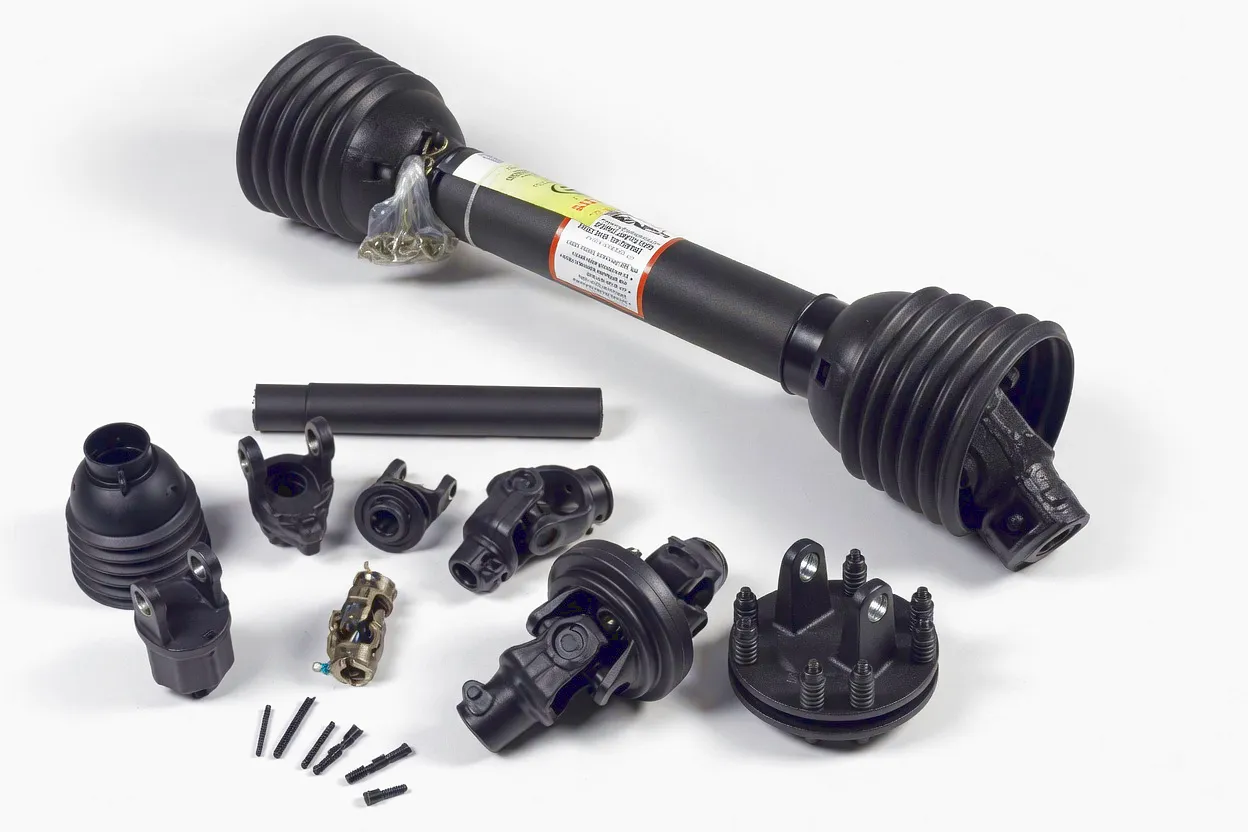
The structural integrity of a PTO shaft for wood chipper use depends on the quality of the base steel and the precision of the forming processes applied to it. At Ever Power, we use SAE 1045 medium-carbon steel for the telescoping outer and inner tubes, cold-drawn to achieve a tight dimensional tolerance on the tube profile — whether lemon, trilobal, star, or wide-lemon — so that the sliding fit remains smooth under axial load without developing slap or rotational play. The yoke forgings are manufactured from SAE 1040 or alloy steel 42CrMo4, quench-and-temper treated to achieve a minimum tensile strength of 900 MPa, ensuring that the yoke ear geometry can withstand the combined bending and torsion loads generated during angular operation.
The cross-and-bearing joint assemblies — universally known as U-joints — are a critical wear component in any PTO shaft. For wood chipper service, we specify needle-roller bearing cups with a minimum dynamic load rating 25% higher than the rated torque of the shaft series. Each cup is retained by a circlip or a bolted retainer plate rather than a snap ring alone, because vibration in high-torque applications can work snap rings loose over time. Grease nipples are positioned on each cross trunnion and on the telescoping tube assembly so that a thorough greasing regime — we recommend every 8 hours of chip work — keeps the shaft running cool and extends service life significantly beyond an ungreased equivalent.
Real-World Application Scenarios: Where Wood Chipper PTO Shafts Are Deployed in the UK
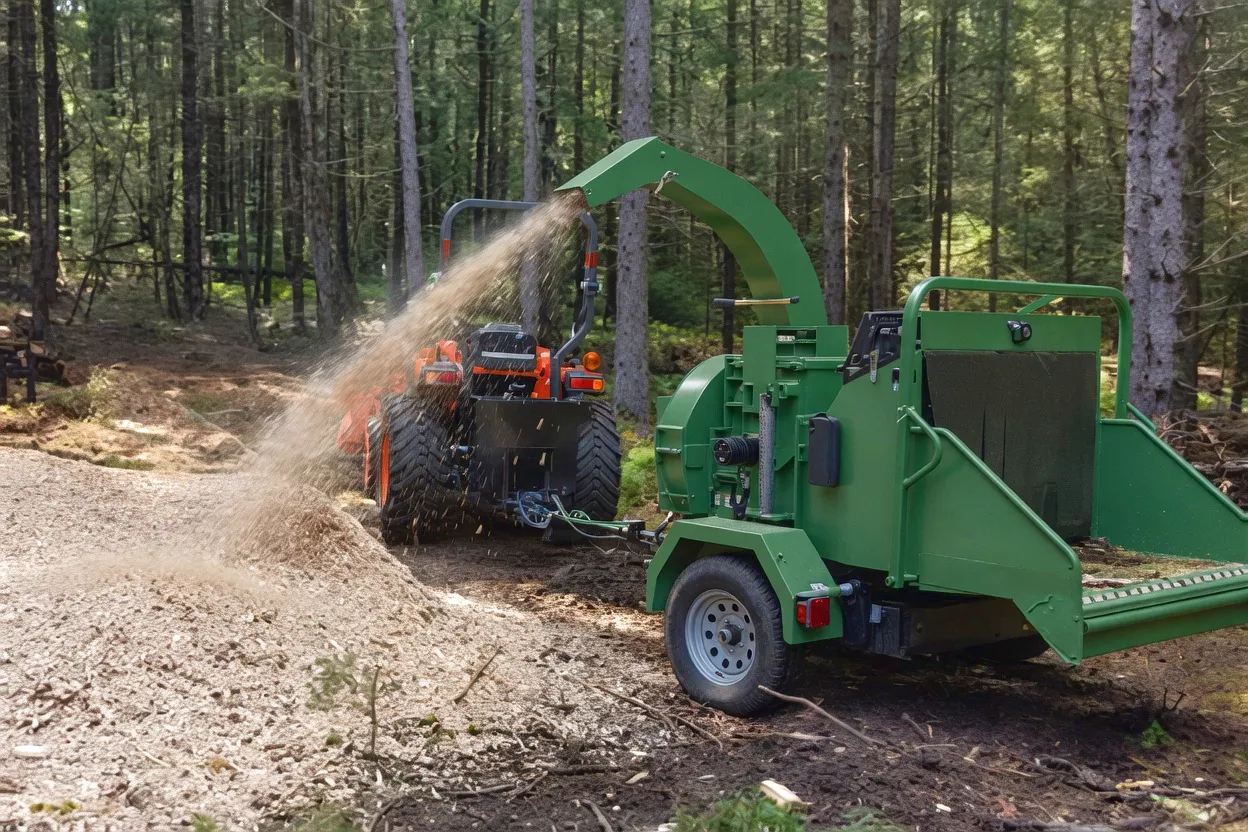
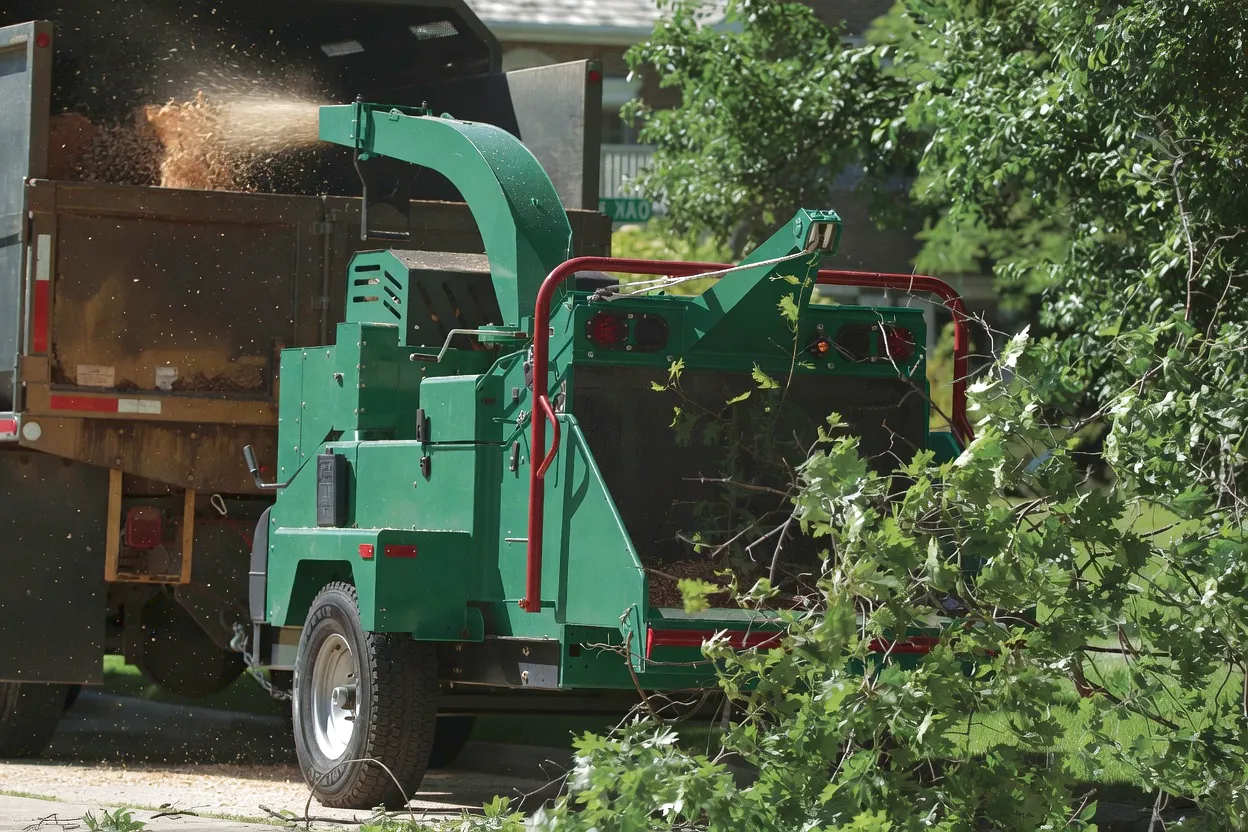
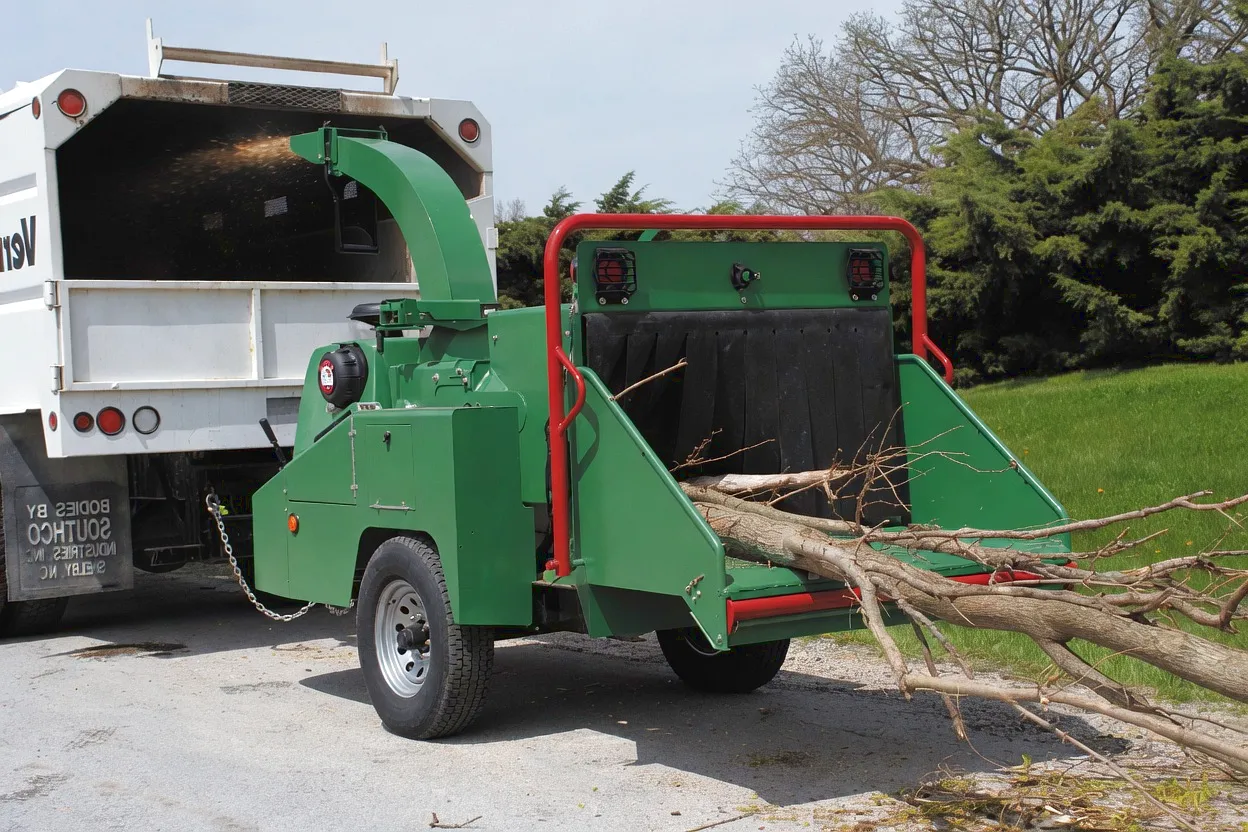
From local authority highways departments to private estate managers, these are the operational environments where specification decisions matter most.
Why UK Contractors Choose Ever Power PTO Shafts for Wood Chipper Work
Eight engineering and commercial advantages that set our wood chipper driveline solutions apart.
Application-Specific Torque Rating
We engineer torque capacity to the actual demand of the chipper model — not a generic safety margin. This means your shaft is neither under-specified (failure risk) nor massively over-specified (unnecessary cost and weight).
Bespoke Yoke & Length Customisation
Our factory can produce shafts to any collapsed length from 600 mm upward, and we stock a comprehensive range of yoke geometries — 1 3/8″, 1 3/4″, flanged, quick-release, and taper-bore — to match the output specifications of every tractor brand sold in the UK market.
Dual Overload Protection Options
Whether your chipper application calls for a shear-bolt clutch, a friction disc clutch, an overrun freewheel, or a combined unit, we supply all protection types within our standard range and can configure custom combined clutch assemblies for complex drive layouts.
Wide-Angle CV Joint Technology
For applications requiring continuous operation at shaft angles above 15°, our CV (constant velocity) joint options at the tractor yoke end eliminate the cyclic speed variation inherent in a standard U-joint at high angle, extending bearing life and reducing vibration transmission to the tractor driveline.
Full CE Marking & Documentation
All Ever Power PTO shafts for wood chipper applications are supplied with full Declaration of Conformity documentation for CE marking under Machinery Directive 2006/42/EC. This is essential for UK contractors operating under PUWER inspections and for OEMs certifying machinery for the GB market post-Brexit.
Fast Quote & Short Lead Times
We know that chipper downtime has a real cost — you cannot chip branches sitting in a truck while a shaft is on a six-week lead time. Our standard series shafts are typically available within 10–15 working days. Custom configurations are quoted within 24 hours of receipt of full technical specification.
Maintenance & Spare Parts Support
We supply spare cross-joint kits, replacement shear-bolt packs to correct grade specification, and individual yoke assemblies for all series in our range. This allows field-level repairs without replacing the entire shaft, which is especially valuable for fleet managers running multiple chippers across extended contracts.
No-Stress System Compatibility
Our shafts are engineered to be fully compatible with modern hydraulic No-Stress feed control systems used on premium chipper brands. The rotational speed signal derived from the PTO shaft is accurate and consistent, enabling the feed control system to function as designed and preventing rotor stall events.
Serving the UK Market: From Yorkshire Farming to Welsh Forestry
 The United Kingdom has a diverse and geographically varied demand for wood chipping equipment. In arable counties like Lincolnshire, Cambridgeshire, and parts of East Anglia, hedgerow management and shelter-belt thinning generate large volumes of brushwood that contractors process using medium-duty tractor-mounted chippers — typically in the 60–100 hp input range. In the pastoral and upland areas of the Yorkshire Dales, the Scottish Borders, and mid-Wales, land managers use heavier chippers for woodland management and habitat restoration work, where the material tends to be denser and the terrain more demanding on driveline components. Urban authorities from Greater London to Edinburgh City Council operate contractor-managed tree teams using chippers rated from 80 to 150 hp, often mounted on dedicated tractor-chipper combinations that spend their entire working day chipping street-tree prunings.
Across all these applications and regions, compliance with UK workplace safety law is non-negotiable. PUWER 1998 and the Health and Safety at Work Act 1974 impose specific duties on employers to ensure that power transmission equipment — which explicitly includes PTO shafts — is properly guarded, maintained, and appropriate for its intended use. Our engineering team can provide technical data to support HSE-compliant risk assessments for PTO-driven equipment, including shaft operating angle calculations, torque utilisation percentages, and recommended inspection intervals. For UK importers and OEMs, we can also provide test reports supporting UKCA marking as required since January 2021 for the Great Britain market.
“ Whether you are tendering for a Local Authority grounds maintenance framework contract in South East England or managing a private sporting estate in Perthshire, the PTO shaft you specify will be one of the most-used and hardest-worked components on your chipper. Get the specification wrong and you will pay for it in downtime. Get it right and it becomes the component you never have to think about. ”
— Ever Power Application Engineering Team
Customer Success: How a Yorkshire Arboriculture Contractor Eliminated Driveline Downtime
Arboriculture & Grounds Maintenance
Fleet: 8 Machines
Greenfield Arb & Grounds Ltd — Harrogate, North Yorkshire
Greenfield Arb & Grounds Ltd is a mid-sized grounds maintenance and tree surgery contractor based near Harrogate, operating across North and West Yorkshire under a combination of private estate contracts, local authority framework agreements, and commercial grounds maintenance. Their fleet includes eight tractor-chipper combinations, ranging from a 75 hp John Deere driving a Timberwolf TW-230VBH drum chipper to a 160 hp Fendt 516 Vario paired with a large disc chipper processing timber for a biomass energy scheme near Skipton.
Before working with Ever Power, Greenfield were purchasing PTO shafts from a UK agricultural merchant who stocked only generic agricultural series shafts rated for light-to-medium duty. Their operations manager, speaking at a regional LANTRA arborist network meeting in 2024, described the situation clearly: the shafts were shearing bolts every two to three days on the heavier machines, and the cross joints on the high-duty units were needing replacement every six to eight weeks. On an eight-machine fleet, that maintenance overhead was consuming nearly a full day of labour per week, and the parts cost was running to several thousand pounds per season.
After contacting Ever Power’s sales engineering team and providing the tractor and chipper input shaft specifications, Greenfield were supplied with EP-W5 shafts for the mid-range machines and EP-W6 wide-angle CV joint shafts for the 160 hp Fendt unit. The correct-grade shear bolts supplied by Ever Power — matched to the friction disc clutch specification rather than being generic fasteners — immediately resolved the nuisance-shearing problem. Eighteen months after fitting, the operations manager reported zero shaft failures, a 90% reduction in PTO shaft-related maintenance hours, and a significant improvement in chip uniformity from the disc chipper serving the biomass contract, which had direct quality implications for the fuel payment schedule they received.
Results at a Glance
Shaft Failures
Zero
in 18 months post-installation
Maintenance Reduction
90%
in PTO shaft-related labour
Fleet Size
8 Units
across 75–160 hp tractor range
Application
EP-W5 / EP-W6
series fitted across fleet
What Our UK Customers Say
❝
We run a Greenmech Arborist 150 and a CS Timber chipper side by side on big estate clearances in the Chilterns. The shaft on the Greenmech used to shear bolts maybe once a week in hard larch. Since we put the EP-W5 on with the correct grade pins, it has not missed a beat in two seasons. Proper engineering, not guess work.
James Whitmore
Owner, Whitmore Tree Services — Oxfordshire, England
❝
We manage over 4,000 acres of mixed woodland in Perthshire and use a heavy drum chipper behind a 140 hp tractor on steep hillside rides. The wide-angle CV shaft from Ever Power made a noticeable difference — the vibration through the tractor seat went down, and we have not had a U-joint failure since we made the switch. The CE documentation was ready immediately, which mattered for our woodland management scheme compliance.
Alasdair Mackinnon
Estate Forester — Perthshire, Scotland
❝
We operate three green waste processing sites across South Wales processing council and commercial garden waste. Our chippers run ten-hour days, five days a week, and the shafts take a hammering. We trialled Ever Power EP-W4 and EP-W5 units eighteen months ago and our engineering team was impressed by the consistency of the cross joints even at high temperature after long shifts. Spare pin kits arrive quickly and the prices are competitive against what we were paying before.
Rhian Owens
Fleet Technical Manager, GreenCycle Wales Ltd — Cardiff, Wales
Custom Engineering & OEM Capabilities: Built Exactly to Your Specification
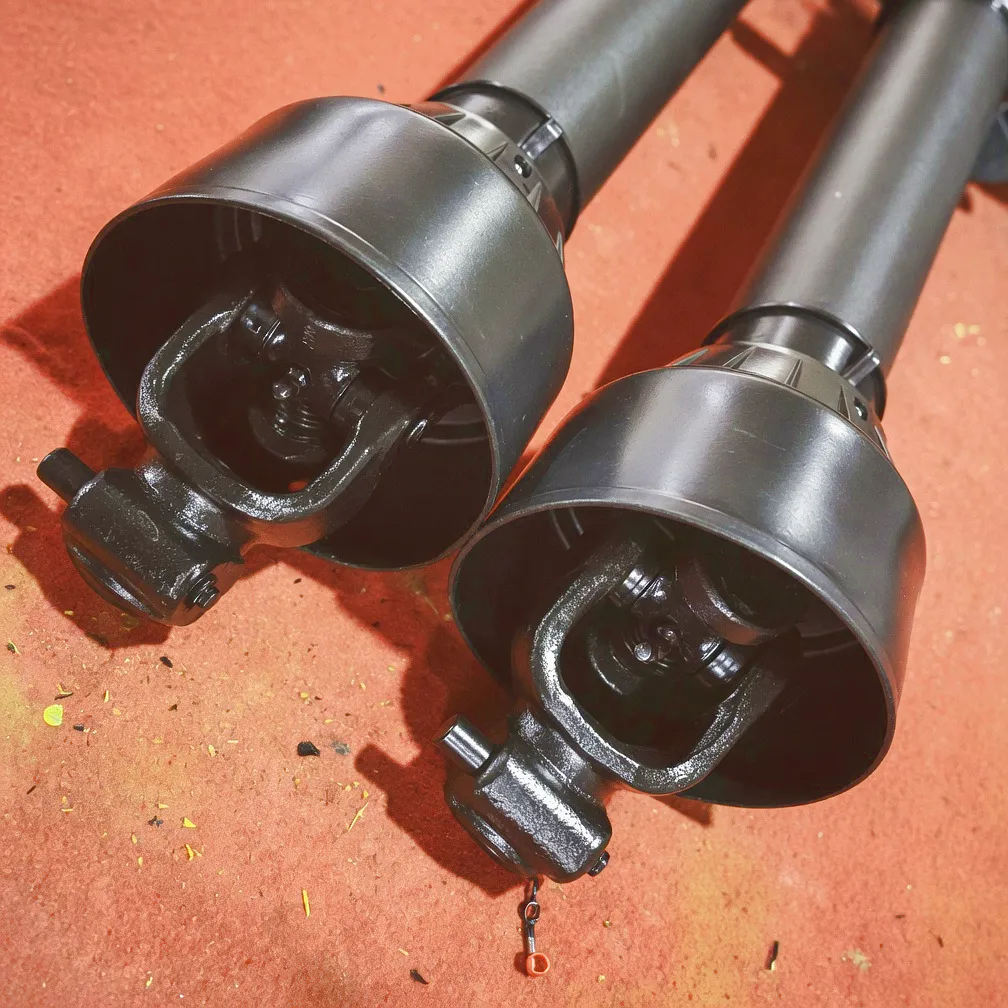
One of the most important differentiators between a commodity PTO shaft supplier and a true engineering partner is the ability to manufacture to a non-standard specification without a minimum order quantity that makes the economics impractical. Many UK chipper OEMs and larger fleet operators have bespoke requirements that cannot be met from a standard catalogue. A chipper manufacturer in Lincolnshire may design their machine around a specific input shaft geometry that does not match any standard catalogue yoke. A large estate management company in the Scottish Borders may need shafts at a specific collapsed length to clear an obstacle unique to their tractor fleet configuration. A biomass processing site in Wales may require a shaft assembly with an additional vibration-damping coupling to protect a gearbox with known resonance issues.
Ever Power’s factory is equipped with full CNC machining, forging and heat treatment capabilities, allowing us to produce custom yoke profiles, non-standard tube lengths, special surface treatment specifications (including hot-dip galvanising and zinc-nickel electroplating for corrosive environments), and custom clutch torque calibrations. Our quality management system operates to ISO 9001:2015, and we can provide full material traceability certification, dimensional inspection reports, and factory acceptance testing data for OEM customers who require this for their own product certification process. We also offer private-label packaging for distributor customers and OEMs who wish to supply Ever Power shafts under their own brand identity.
Frequently Asked Questions
Answers to the questions UK forestry contractors, arborists, and fleet engineers most commonly ask about PTO shafts for wood chippers.
What is the best PTO shaft for a wood chipper that is used daily by a UK arboriculture contractor working in urban environments?
For daily urban arborist use, the ideal PTO shaft for a wood chipper needs a combined shear-bolt and overrun freewheel clutch, because urban chipping involves frequent start-stop cycles, irregular material sizes, and the occasional hidden contaminant in garden waste that can cause sudden shock loads. Our EP-W4 or EP-W5 series with the dual protection assembly is the most popular choice for this application in the UK. The overrun clutch is particularly important in urban settings because operators often disengage the tractor PTO while repositioning between trees, and the overrun clutch prevents the decelerating PTO stub from being back-driven by the flywheel’s residual momentum.
How do I find out the correct PTO shaft torque rating I need for my specific wood chipper model in the UK?
The torque requirement for a PTO shaft on a wood chipper is determined by the chipper manufacturer’s input shaft specification, which is usually listed in the machine’s technical manual as either a peak torque figure (in Nm) or as a maximum tractor hp rating. If neither is available, you can calculate a conservative estimate using the formula: Torque (Nm) = (Power in kW x 9,550) divided by PTO speed (rpm). For a 100 hp (74.6 kW) tractor at 1,000 rpm, this gives approximately 712 Nm — though you should add a safety factor of at least 1.5x for shock-load applications like wood chipping, giving a minimum shaft rating of around 1,070 Nm. We can review your tractor and chipper data and recommend the correct series at no charge.
Where can I get a PTO shaft for a wood chipper quickly in the UK, and what is a realistic lead time for a custom order?
Ever Power’s standard range PTO shafts for wood chipper applications are typically available within 10–15 working days from receipt of your order. Custom shafts — including non-standard lengths, special yoke profiles, or custom clutch calibrations — usually require 3–4 weeks from confirmed order and approved technical drawing. We provide a formal quotation within 24 hours of receiving your specification, and we can work with urgent requirements when advance notice is given. Email [email protected] with your tractor model, chipper model, existing shaft dimensions (collapsed length, yoke type), and desired protection type, and our UK sales team will come back to you promptly.
What is the price difference between a standard agricultural PTO shaft and a heavy-duty wood chipper PTO shaft, and is the extra cost worth it for UK contractors?
A heavy-duty PTO shaft for wood chipper service will typically cost two to three times more than a light agricultural equivalent of the same length, primarily because of the higher-grade steel, the larger cross-joint assembly, the more sophisticated clutch mechanism, and the additional engineering in the yoke geometry. For UK contractors operating under commercial contracts, this cost difference is almost always recovered within a single season through reduced downtime, fewer consumable shear-bolt replacements (when correctly specified), and longer service intervals. A standard agricultural shaft fitted to a drum chipper in heavy hardwood service in UK conditions might last one season before failing; a correctly specified heavy-duty shaft from Ever Power should give five or more seasons of service with regular greasing. The total cost of ownership calculation overwhelmingly favours the correct component.
Which PTO shaft protection system is better for a Scottish forestry wood chipper — a shear-bolt clutch or a friction disc clutch, and how does the environment affect the choice?
In Scottish forestry conditions — where the material being chipped often includes wet, dense conifers, birch, and hardwoods, and where the terrain causes the tractor to work at high engine load — the friction disc clutch offers practical advantages over a shear-bolt system for sustained high-torque work. A friction disc clutch slips progressively when peak torque is exceeded, then automatically re-engages once the overload clears, without any operator intervention or parts replacement. This is particularly useful in steep terrain where the tractor engine may fluctuate in power delivery. However, for material that includes occasional contaminants — stones, metal fragments — a shear-bolt is more positive in its protection action. Many Scottish forestry operators specify a combined friction disc and overrun assembly, which provides slip-through protection for sustained overloads and coasting protection during deceleration.
How often should I grease and inspect a PTO shaft fitted to a wood chipper that is working five days a week on a UK council tree maintenance contract?
For a PTO shaft on a wood chipper operating five days a week in commercial council tree maintenance service, we recommend greasing all cross-joint nipples and the telescoping tube nipple every 8 operating hours — essentially at the start of every working day. Visual inspection of the safety guard for cracks or retaining chain security should be done daily. A more thorough inspection of the U-joint bearing cups for play or heat discolouration should be done weekly, and the shear-bolt torque (or friction disc adjustment setting on disc clutches) should be checked monthly. These intervals exceed the minimum requirements under PUWER Regulation 6, which requires that maintenance is carried out at appropriate intervals, and will significantly extend shaft life in the demanding conditions of urban tree work.
Can Ever Power supply a PTO shaft for a wood chipper with CE certification and UKCA marking for a UK-based chipper manufacturer who needs to certify new machine builds?
Yes. Ever Power can supply PTO shafts for wood chipper applications with full CE documentation (Declaration of Conformity under Machinery Directive 2006/42/EC), and we can provide the technical file content that a UK chipper OEM requires to support their own UKCA marking process for the Great Britain market. This includes dimensional drawings, material specifications, torque test reports, and the relevant harmonised standard compliance statement (principally EN ISO 5674 for PTO shafts used on agricultural machinery). For OEM customers building machines that will be sold both in the UK and in EU markets, we can support dual CE/UKCA documentation pathways. Contact our technical sales team with your specific certification requirements.
Ready to Specify the Right PTO Shaft for Your Wood Chipper?
Send us your tractor model, chipper model, and operating conditions — our application engineers will recommend the correct series, clutch type, and yoke configuration within 24 hours. No obligation. No minimum order.
📅 Get a Quote — [email protected]
CE-marked · Custom sizing · UK B2B supplier · ISO 9001:2015
edit by gzl | Ever Power PTO Shaft Technical Content | United Kingdom Market