
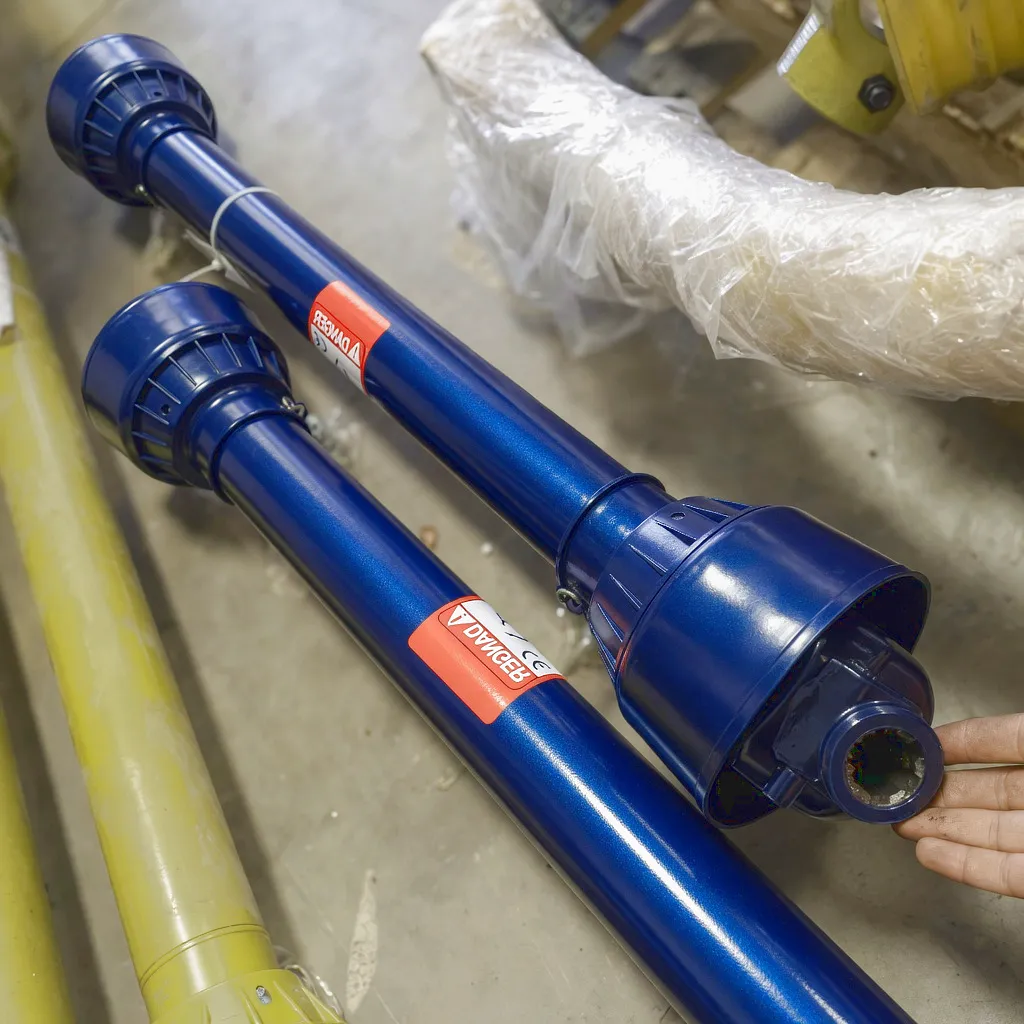
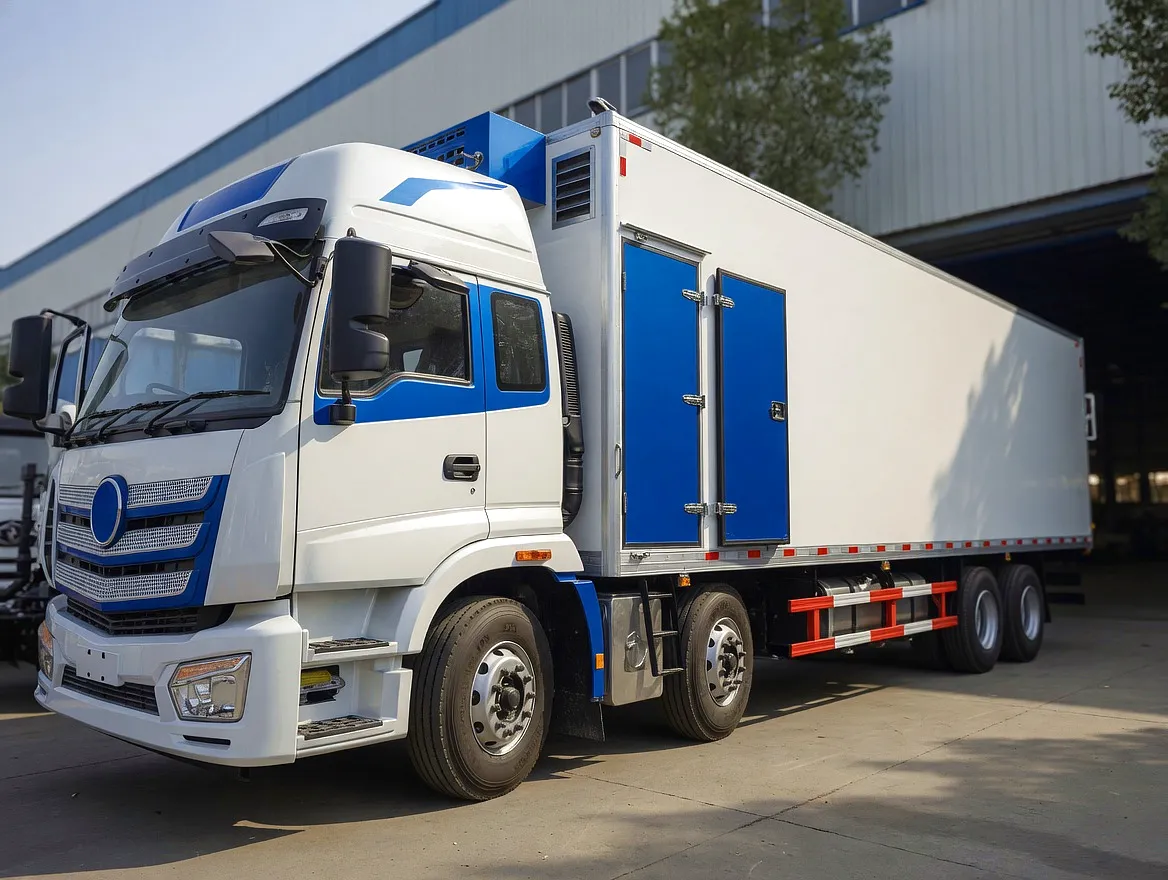
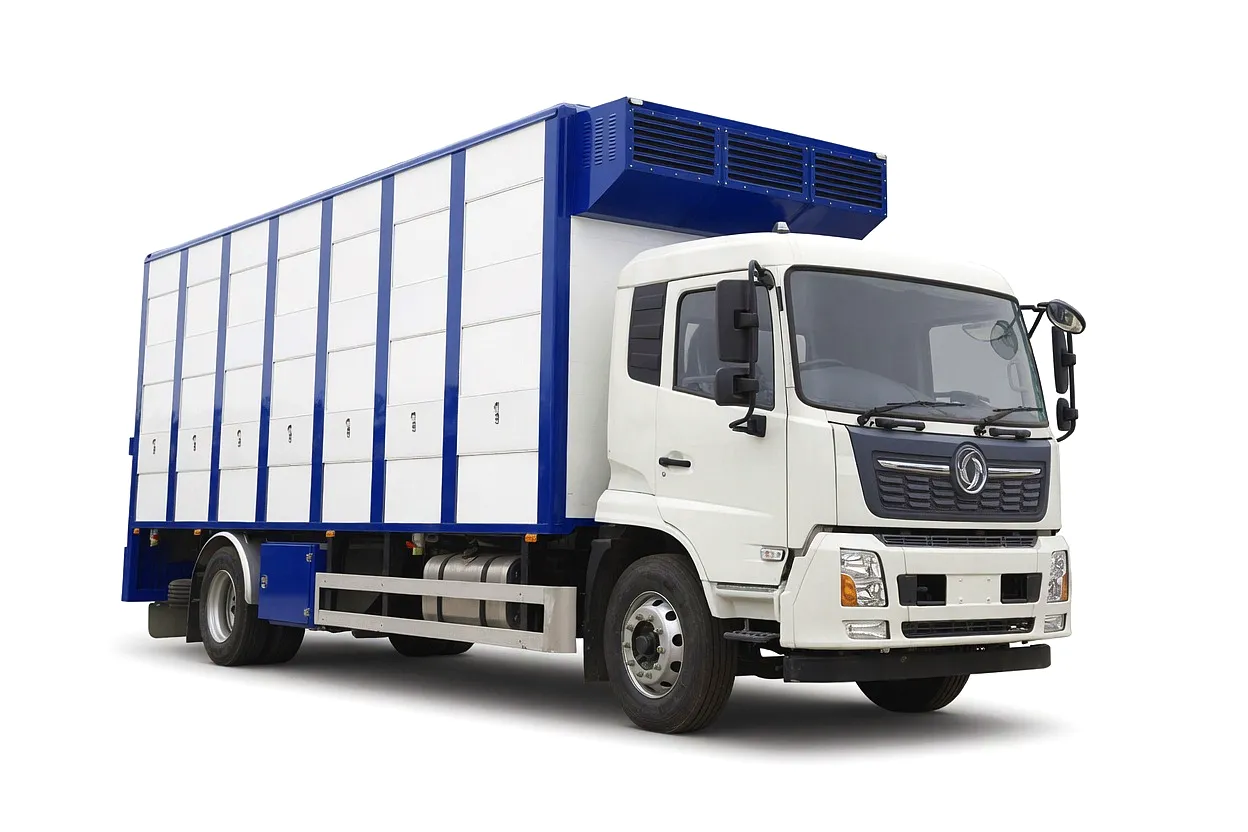
 Walk into any large-scale broiler or dairy operation in the East Midlands or Yorkshire Wolds on a Tuesday morning, and you will almost certainly find a bulk feed transport truck working its way around the perimeter road. The driver positions the vehicle alongside a feed silo, engages the power take-off, and within minutes several tonnes of compounded pellets move seamlessly from the truck body into the storage tower — without a single bag lifted, without a single gram of contamination risk. What makes that entire sequence possible is a component most people never see: the PTO shaft.
The PTO shaft on a bulk feed truck is not simply a rotating bar connecting two flanges. It is a precision-engineered torque transmission device that must cope with variable load demands, angular misalignments inherent in the truck’s chassis deflection, and the repeated engagement-disengagement cycles that define a full day’s delivery route. When specified correctly, the shaft runs quietly, efficiently and indefinitely. When under-specified, the consequences range from nuisance vibration and premature bearing failure all the way to catastrophic driveline fracture mid-delivery — a situation no operator in the UK agricultural supply chain can afford.
This guide draws on eighteen-plus years of field application engineering across European and British agricultural markets to examine every engineering dimension of PTO shaft selection for bulk feed transport trucks. Whether you are a fleet procurement manager sourcing replacement shafts for a ten-vehicle operation or an OEM engineering team designing the driveline for a new-generation pneumatic blower truck, the principles covered here will help you make decisions grounded in mechanical reality rather than catalogue guesswork.
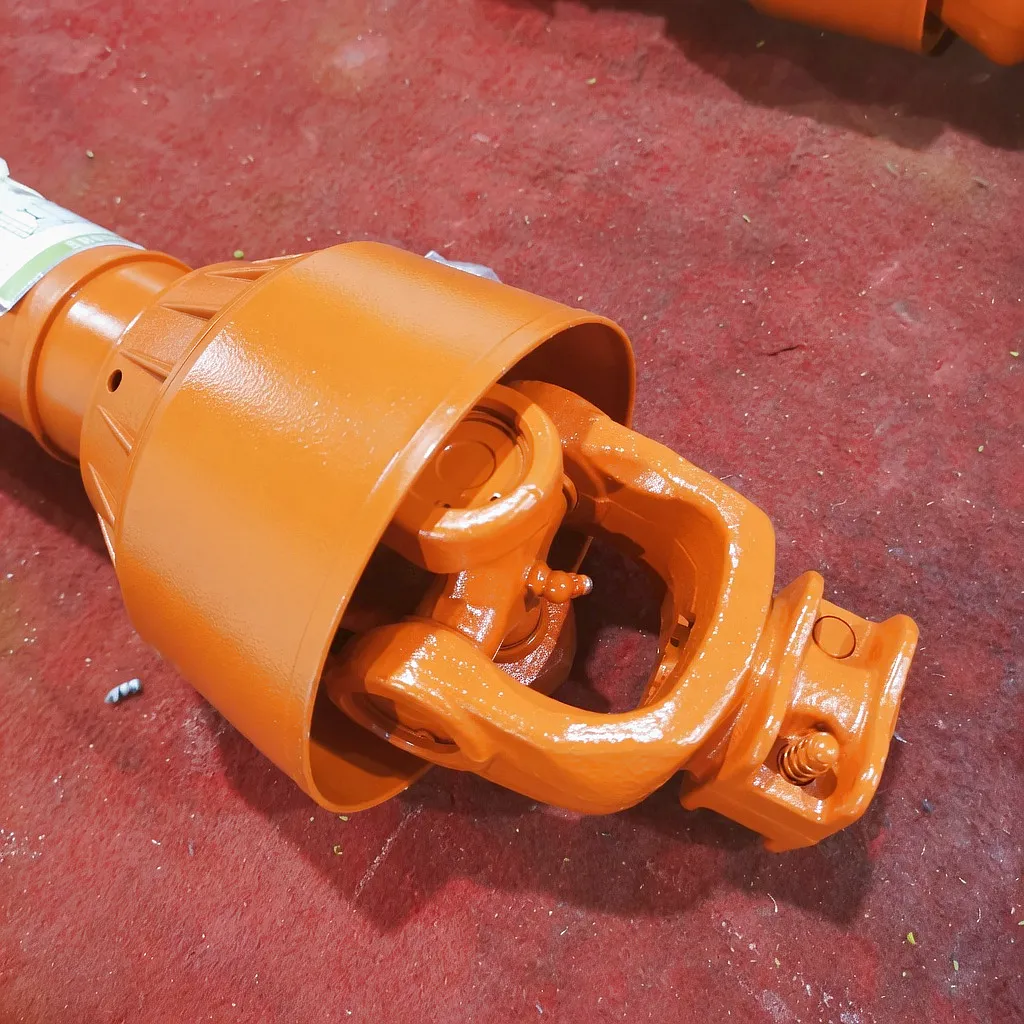
Custom-Engineered PTO Shafts for Agricultural Bulk Feed Vehicles
Torque capacities from 500 N·m to 18,000 N·m. CE-marked. Tested to ISO 500 standards. Available in series 4 through series 8 cross-and-roller joints with overload protection options to suit every bulk feed truck application in the UK market.
How the PTO Shaft Powers a Bulk Feed Transport System
Understanding the complete mechanical chain before specifying a shaft
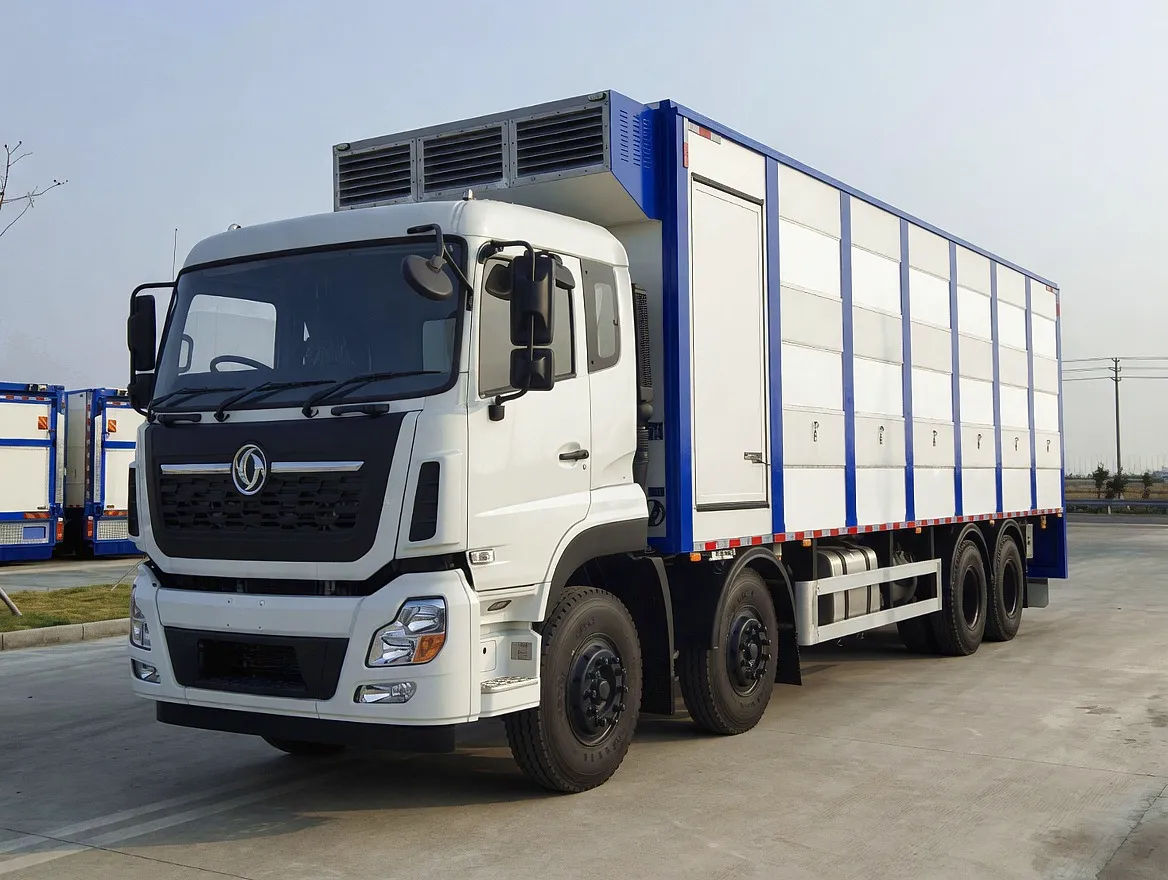
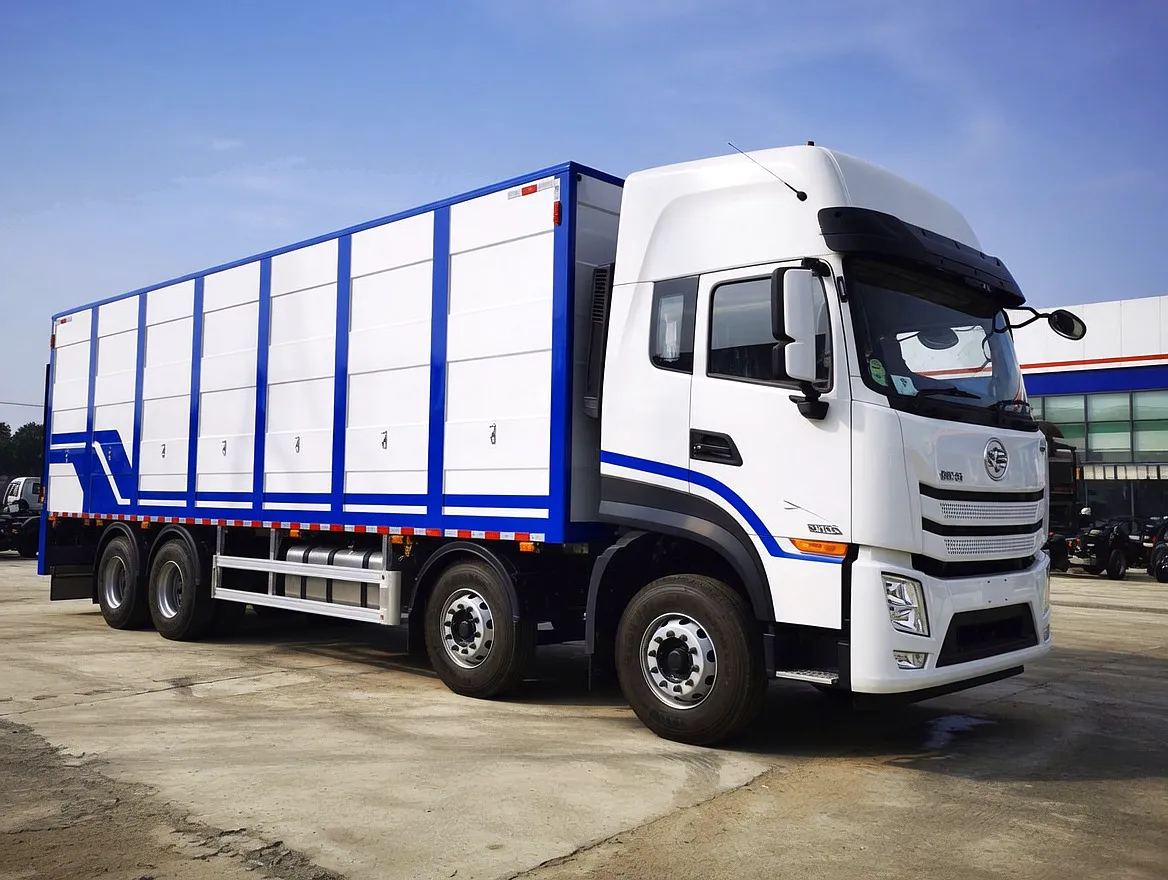
A modern bulk feed transport truck is, at its core, a mobile conveying system. The truck body is divided into multiple compartments — typically two to four separate bays — each carrying a different formulation: grower pellets, layer mash, finisher crumbles, or mineral supplements. Within each bay, the floor is fitted with a helical screw conveyor, commonly called an auger or Schnecke in Continental literature. Above the payload, a second set of longitudinal augers may run along the top of the body to facilitate complete evacuation of the compartment.
When the driver engages the power take-off at the truck’s gearbox, rotational power is extracted from the vehicle’s transmission — typically at 540 RPM or 1,000 RPM depending on the PTO specification — and directed rearward along the chassis. The PTO shaft bridges the gap between the gearbox output and the primary drive component, which in hydraulic-drive configurations is the hydraulic pump, and in direct-mechanical configurations is the gearbox input for the auger drive train. The PTO shaft must accommodate the misalignment between the chassis-mounted gearbox and the body-mounted drive assembly; in loaded conditions, a 26-tonne gross vehicle weight truck can exhibit chassis twist angles of 2.5° to 4°, placing significant angular load on any universal joint in the driveline.
Materials, Construction and Engineering Principles
What separates a long-service PTO shaft from a short-life compromise
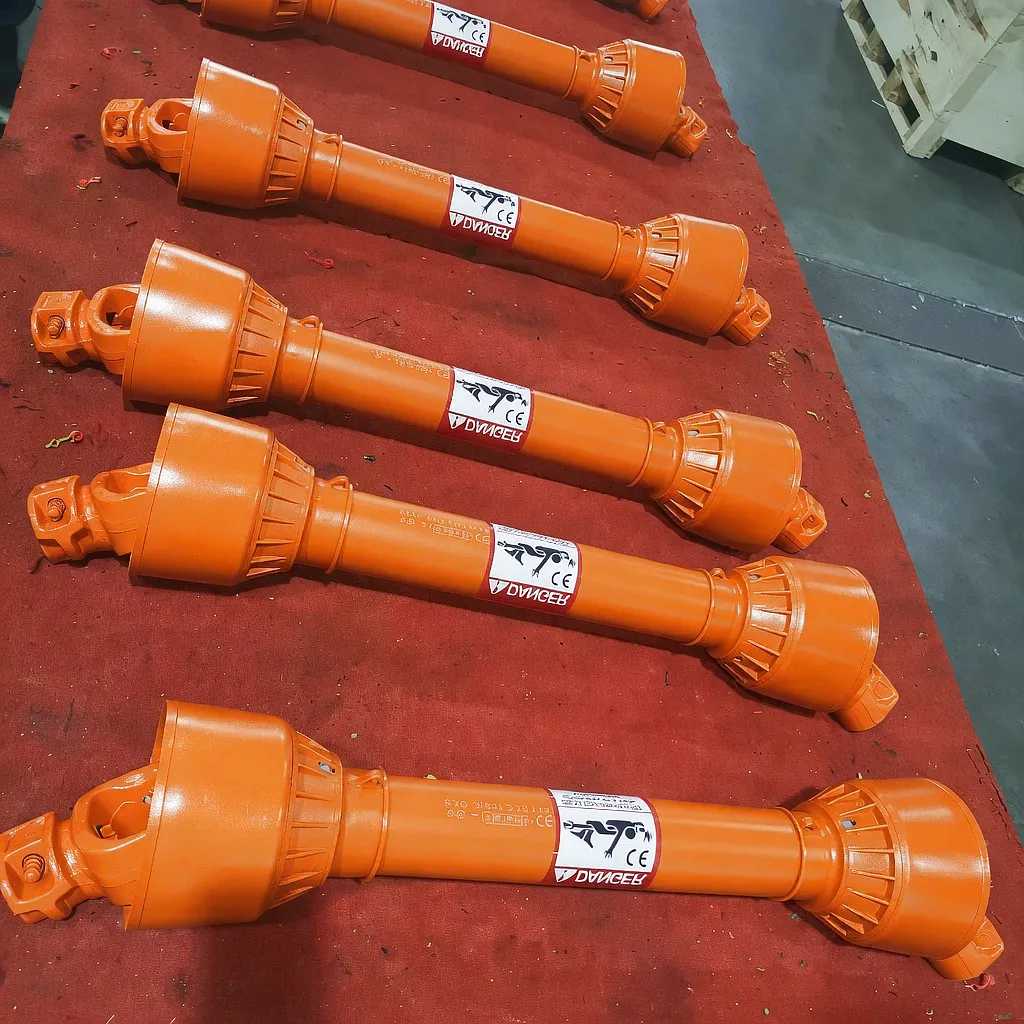
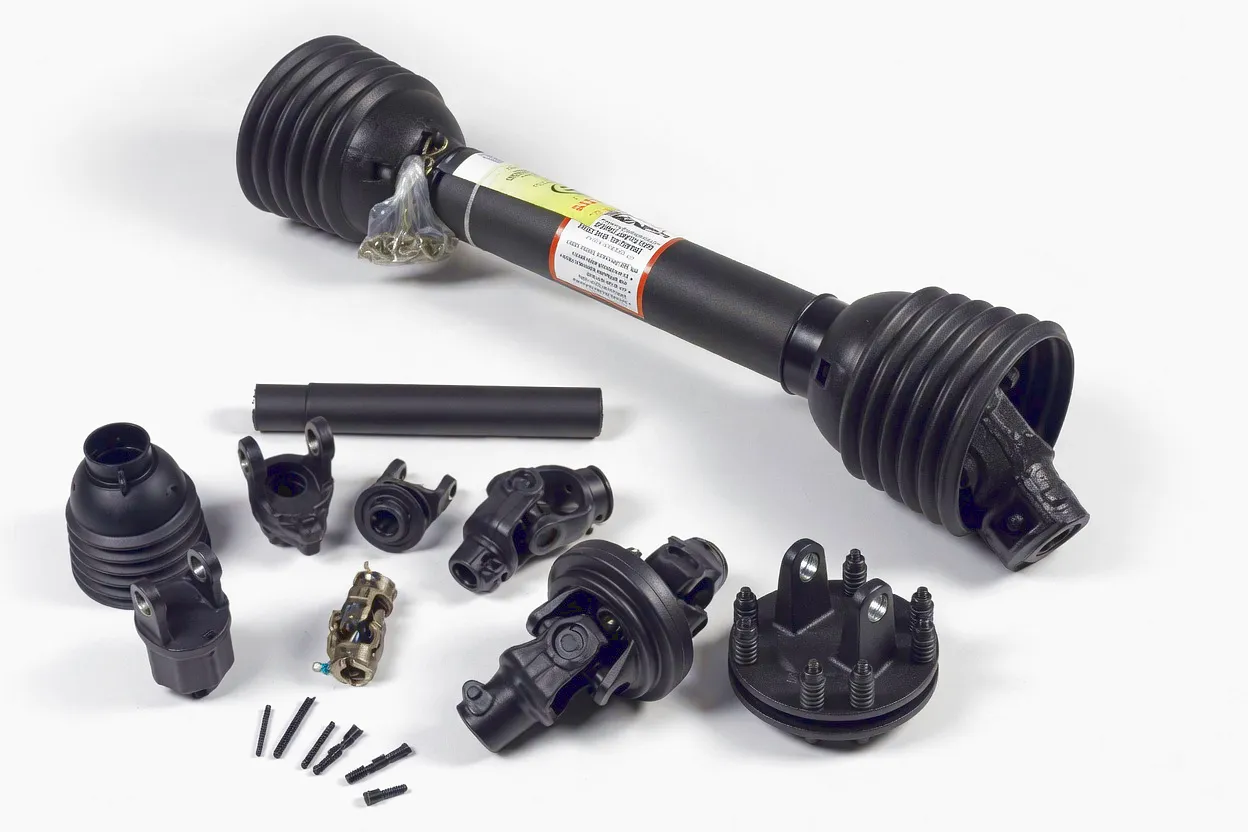
The shaft tube itself is produced from seamless cold-drawn steel — typically 20MnCr5 or equivalent EN 10297 grade — selected for its exceptional torsional stiffness-to-weight ratio. The cold-drawing process eliminates the micro-voids inherent in hot-rolled tube, which translates directly into better fatigue life under the cyclic bending loads experienced on a bulk feed truck chassis. Wall thickness varies by series rating; a series 6 shaft tube for a 16-tonne payload truck will typically run a 4.5 mm wall, while a heavy-duty series 8 unit for a 26-tonne twin-steer vehicle might carry a 6 mm wall specification.
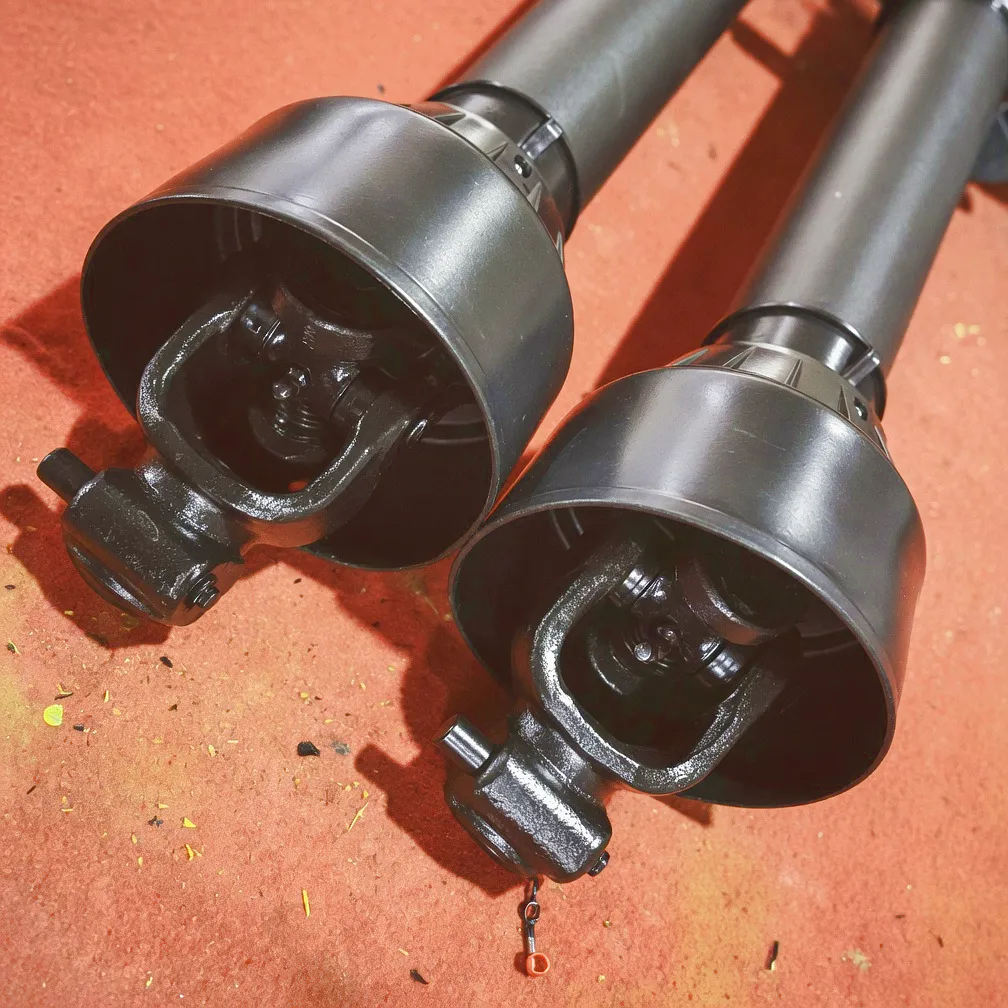
Universal joints — the cross-and-roller assemblies that allow angular articulation — are hardened to 58–62 HRC at the trunnion journals and roller contact surfaces. This hardness specification ensures adequate case depth to resist the Hertzian contact stresses generated during angular operation. Grease nipples (Zerk fittings) are positioned for accessibility during on-farm maintenance, and sealed-for-life variants are available for operations where scheduled greasing is impractical in muddy agricultural environments.
The telescoping section — which compensates for length variation as the truck body lifts and rocks relative to the chassis — uses either a splined profile or a lemon/star profile bore. For bulk feed truck applications, the wide-angle spline profile offers superior torque capacity per unit weight, which is why it has become the dominant choice among UK truck bodybuilders over the past decade. The slip profile is coated with a dry film lubricant to enable smooth sliding under load, reducing the stick-slip phenomenon that can introduce torsional impulses into the auger drive train.
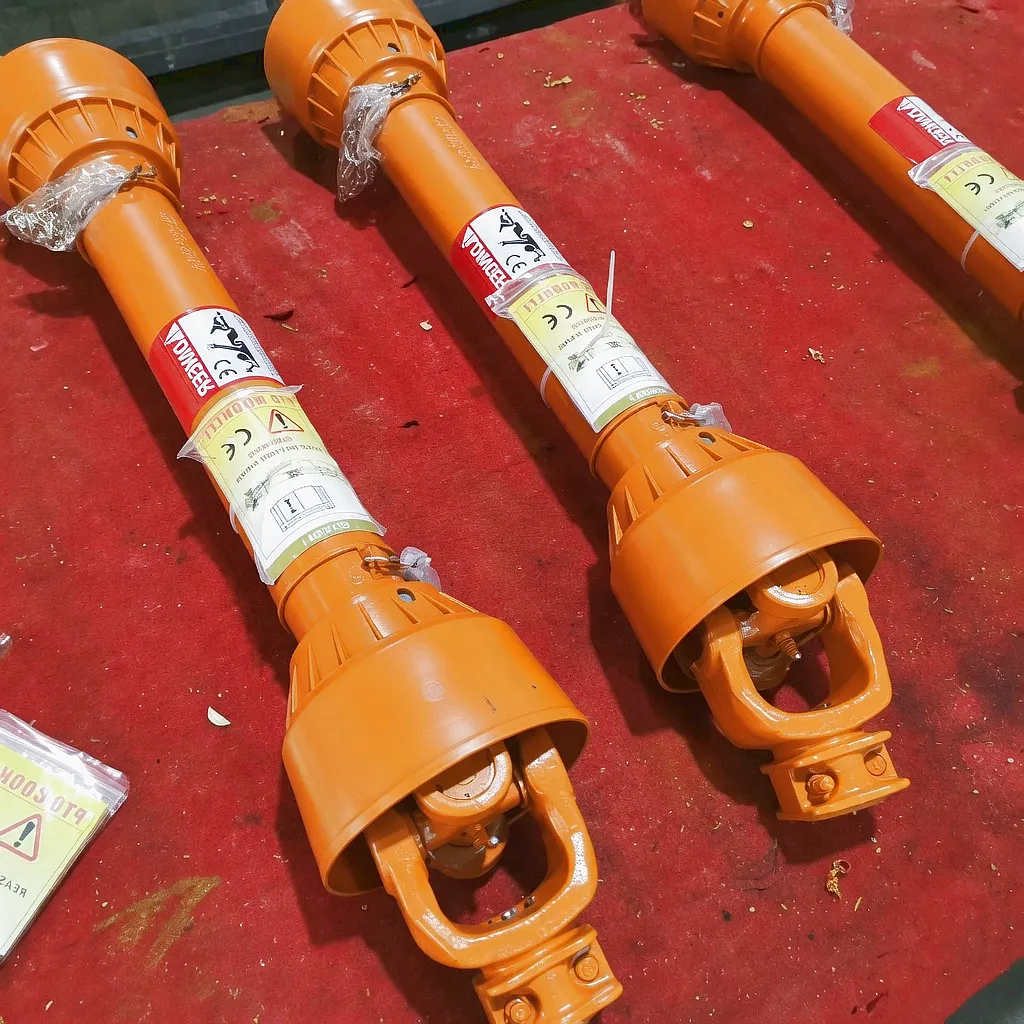
Technical Specifications: PTO Shaft Series Guide for Bulk Feed Trucks
Selection reference by vehicle GVW and payload capacity
| Series | Rated Torque | Peak Torque | Max Speed | Tube OD | OLP Options | Typical Application |
|---|---|---|---|---|---|---|
| Series 4 | 500 N·m | 1,000 N·m | 1,000 RPM | 38.3 mm | Shear bolt | Light feed trucks, <7.5 t GVW |
| Series 5 | 900 N·m | 1,800 N·m | 1,000 RPM | 44.5 mm | Shear bolt / slip-clutch | Medium trucks, 7.5–18 t GVW |
| Series 6 | 1,800 N·m | 3,600 N·m | 800 RPM | 57.2 mm | Slip-clutch / friction disc | Standard 26 t feed trucks |
| Series 7 | 3,400 N·m | 6,800 N·m | 700 RPM | 69.9 mm | Ratchet / friction disc | Heavy 32 t trucks, twin auger decks |
| Series 8 | 6,500 N·m | 13,000 N·m | 600 RPM | 82.5 mm | Cam-over / friction plate | Super-heavy fleet, pneumatic blowers |
All torque figures at 1.4× service factor. OLP = overload protection. Dimensions are nominal; confirm with Ever Power engineering for final specification.
Real-World Application Scenarios Across the UK Agricultural Sector
From broiler integrations in Lincolnshire to dairy co-operatives in Devon
Large-Scale Broiler Integration — East Anglia
Multiple 16,000-bird houses are serviced daily by 26-tonne feed trucks running series 6 PTO shafts at 540 RPM. The shaft drives a 90 kW hydraulic pump that powers the floor auger motors and the rotatable discharge head simultaneously. Uptime requirements demand a minimum 98% reliability rate — something only achieved through properly rated, correctly protected PTO shafts with overload clutch protection against stone or foreign object ingestion.
Dairy Co-operative Feed Delivery — Devon & Somerset
A regional dairy co-operative operating 30 bulk feed trucks across Devon and Somerset specifies series 7 PTO shafts for their newest twin-axle fleet. The hilly terrain means the truck engine frequently operates at higher torque outputs than on flat East Anglian roads, and the series 7 rating provides the necessary safety margin. The sealed-for-life universal joint option eliminates the need for routine greasing on a fleet this large, reducing scheduled maintenance time by an estimated 40 hours per vehicle per year.
Mixed Livestock Farm — Yorkshire Wolds
On smaller mixed farms across the Yorkshire Wolds, 7.5-tonne bulk feed trailers pull behind agricultural tractors rather than purpose-built HGV trucks. These trailer-mounted feed systems use the tractor’s 540 RPM agricultural PTO as the power source. A series 4 or series 5 PTO shaft of agricultural spline form (6-spline 1 3/8″ or 21-spline 1 3/4″) connects the tractor to the trailer’s gearbox. The shorter overall length requires careful attention to minimum operating length at maximum compression to avoid yoke-to-yoke contact and catastrophic failure.
Why Ever Power PTO Shafts Outperform Generic Alternatives
Engineering advantages that translate to lower total cost of ownership for UK fleet operators
Superior Torque Density
The combination of seamless tube with induction-hardened splines delivers 15–20% higher torque capacity per kilogram compared with standard ERW-tube alternatives. For a 26-tonne bulk feed truck running two auger decks simultaneously, this margin is the difference between a shaft that runs cool and quiet and one that runs at its design limit all day.
Integrated Overload Protection
Every Ever Power PTO shaft for agricultural feed truck duty is available with an integrated overload protection (OLP) device — shear bolt, slip-clutch or ratchet torque limiter. When an auger encounters a foreign object, the OLP disengages within milliseconds, protecting the $40,000+ truck driveline from downstream shock loads. The cost of the OLP device — measured in tens of pounds — is negligible compared with the cost of a failed gearbox or bent output shaft.
Full CE Compliance
All Ever Power PTO shafts are CE marked and shipped with full technical documentation conforming to the Machinery Directive 2006/42/EC and ISO 500 standards. For UK fleet operators, this means straightforward compliance with PUWER 1998 regulations and LOLER requirements, reducing the legal risk exposure that comes with uncertified third-party components sourced from unverified suppliers.
Custom Length & End Fitting Options
No two bulk feed truck chassis layouts are identical. Ever Power’s engineering team works directly with UK truck bodybuilders to specify PTO shafts with the exact compressed length, extended length and yoke configuration required for each vehicle type. Whether you need a standard 6-bolt flange, an agricultural 1 3/8″ 6-spline yoke or a custom metric square shaft interface, custom specifications can be produced and delivered to a UK address within 15 working days from drawing approval.
Long Operational Life in Harsh Conditions
Agricultural environments are among the most aggressive in any industrial sector — water ingress, dusty feed materials, frequent temperature cycling, and impact loads from rough farm tracks all conspire to reduce component life. Ever Power shafts are tested to 10 million load cycles at rated torque with angular misalignment applied, simulating the equivalent of five or more years of continuous farm service. Surface treatments include epoxy primer with polyurethane topcoat or hot-dip galvanisation on request.
Food-Grade Grease & Contamination Control
For Red Tractor-compliant feed delivery operations, cross-contamination control extends beyond the feed compartments to the mechanical driveline. Ever Power offers PTO shafts pre-lubricated with NSF H1 food-grade grease for operations where any chance of grease migration into feed material must be eliminated. The HDPE safety guard also acts as a physical barrier preventing loose feed particles from accumulating in the universal joints, further protecting joint life in the dusty conditions typical of farm silo areas.
Customer Success Stories
Real outcomes from agricultural operators who switched to Ever Power PTO shafts
Humber Agri Logistics Ltd — 14-Vehicle Bulk Feed Fleet Upgrade
Humber Agri Logistics, a specialist bulk feed haulier serving poultry integrations across Lincolnshire and the Humber estuary, was experiencing recurring PTO shaft failures on seven of its fourteen 26-tonne MAN TGS trucks. The shafts — sourced from a low-cost European distributor — were failing at the universal joint crosses after an average of 14 months’ service, well below the 36-month design life claimed. Each failure required the vehicle off the road for two to three days while a replacement was sourced, at an estimated lost revenue of £1,800–£2,400 per incident.
After a detailed technical review, Humber Agri switched to Ever Power series 6 PTO shafts with integrated friction-disc OLP devices across their entire active fleet. The OLP devices were set to a disengagement torque of 2,200 N·m — just above normal operating load but well below the joint’s fatigue threshold. In the eighteen months following the switch, the company recorded zero PTO shaft failures. Maintenance costs on the driveline component dropped by an estimated 78%, and the drivers reported noticeably less vibration through the cab during PTO operation, indicating that the correctly rated OLP was absorbing start-up shock loads that the previous shafts had been transmitting directly to the truck’s output flange.
cost reduction
18 months
to Ever Power
“We operate over the Yorkshire Dales and the road conditions are punishing. The Ever Power series 7 shafts have been running on our twin-deck trucks for two full seasons now without a single unplanned stop. The sealed-for-life joints are a genuine benefit — no more sending someone under the truck with a grease gun in the January mud.”
“As an OEM building bulk feed bodies for the UK and Irish markets, specifying the right PTO shaft is something we take very seriously. Ever Power’s engineering team came to our facility, measured the chassis clearances on three different truck platforms, and delivered custom-length shafts with the correct yoke pattern within two weeks. That level of service is rare and genuinely appreciated by our production team.”
“I manage procurement for a Devon-based dairy co-operative running 30 vehicles. We’ve standardised on Ever Power PTO shafts across the entire fleet for the past three years. The consistent quality, the documentation package that satisfies our insurance requirements, and the competitive pricing all make it an easy decision to stick with the same supplier. Lead times have always been within the agreed window.”
Ever Power Factory: Your Partner for Custom PTO Shaft Solutions
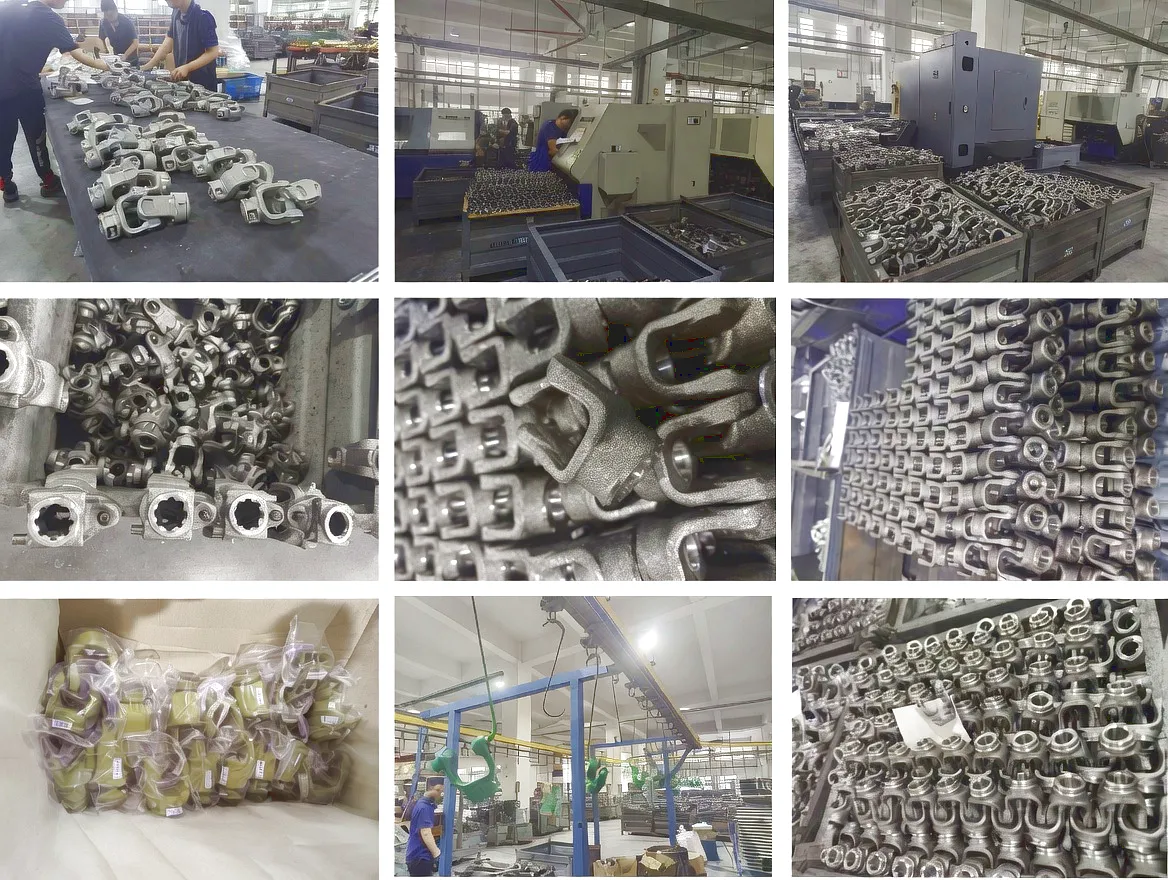
Ever Power’s manufacturing facility operates a full suite of in-house capabilities: CNC tube cutting and profiling, robotic welding, induction hardening, spline rolling, dynamic balancing to G2.5 standard, and complete dimensional inspection. This means that when a UK truck bodybuilder or feed company fleet manager requests a non-standard PTO shaft, the entire manufacturing process happens under one roof — no subcontracted machining, no third-party heat treatment, no quality gaps between processes.
How to Select the Right PTO Shaft for Your Bulk Feed Truck — UK Buyer’s Guide
A practical framework for fleet procurement managers and truck body engineers
Selecting a PTO shaft for a bulk feed transport truck requires more than simply matching the shaft’s rated torque to the truck engine’s PTO output torque. There are five key parameters that must be evaluated in combination: torque rating, operating speed, installation length, angular misalignment capacity, and overload protection trip torque. Getting any one of these wrong can result in premature failure, even if the shaft appears to be correctly sized on paper.
The first step is to establish the actual drive torque at the PTO output flange. This is calculated by dividing the hydraulic pump’s (or mechanical gearbox’s) input power requirement in kilowatts by the angular velocity in radians per second at PTO shaft speed. For a 90 kW pump at 540 RPM (56.5 rad/s), this gives approximately 1,592 N·m. A service factor of 1.4–1.6 should then be applied to account for start-up shock, uneven load distribution across multiple auger decks, and the additional torque peak that occurs when an auger re-starts after a blockage clearance event.
| Selection Parameter | What to Measure / Consider | Common Mistake | Consequence of Error |
|---|---|---|---|
| Rated Torque | PTO output torque × 1.4–1.6 service factor | Using nominal engine PTO torque without service factor | Fatigue fracture within 12 months |
| Operating Speed | 540 RPM or 1,000 RPM — verify with truck spec sheet | Fitting 540 RPM shaft to 1,000 RPM output | Critical speed resonance; bearing overheating |
| Installation Length | Measure compressed and extended lengths with body loaded and unloaded | Measuring in static unloaded condition only | Yoke-to-yoke contact; shaft ejection risk |
| Angular Misalignment | Measure chassis twist under max load; account for body movement | Assuming zero misalignment in “straight” installations | Premature universal joint bearing wear |
| OLP Trip Torque | Set to 1.2× max normal operating torque | Setting OLP at maximum to avoid nuisance trips | Gearbox output shaft damage on blockage events |
Frequently Asked Questions
Voice-search-ready answers for UK agricultural fleet operators and procurement teams
Ready to Specify Your Bulk Feed Truck PTO Shaft?
Send your truck specifications to our engineering team and receive a fully costed proposal with technical drawings, CE documentation and UK delivery timescales — typically within 24 hours.
📧 Get a Quote — [email protected]
Serving fleet operators, truck bodybuilders and OEM engineers across England, Wales and Scotland.
edit by gzl