
PTO Drive Shaft for Round Balers: Engineering Performance Across UK’s Agricultural Heartlands
A technical deep-dive into how the right PTO drive shaft transforms round baling operations — from Yorkshire’s arable plains to the dairy pastures of Devon.
 Round baling is one of the most mechanically demanding operations in modern UK agriculture. Every season across the rolling fields of Lincolnshire, the highland pastures of Cumbria, and the dense grasslands of Somerset, round balers run continuous, punishing cycles — compressing hay, silage and straw into dense, weather-resistant cylinders at rates that place enormous rotational stress on every drivetrain component. At the centre of that drivetrain sits the PTO drive shaft: a deceptively simple yet critically engineered component whose performance determines whether an operation runs profitably or grinds to a halt mid-harvest.
A PTO drive shaft — Power Take-Off drive shaft — transfers torque directly from a tractor’s gearbox output to the implement being powered. In the context of round balers, this means sustaining high angular velocities while accommodating the constant vertical and lateral movement of a baler being towed across uneven terrain. The shaft must cope with peak torque spikes when dense clumps of wet grass flood the pickup reel, maintain smooth rotational balance at sustained speeds, and protect both tractor and baler from catastrophic overload events. Choosing the wrong shaft, or continuing with a worn one, creates ripple-effect failures that cascade through belts, bearings, gearboxes and — in worst cases — the baler’s main frame.
How a PTO Drive Shaft Actually Works in a Round Baler System
Torque Transmission Path
The tractor’s engine delivers power to the rear PTO stub at a standardised 540 RPM or 1,000 RPM output. The PTO drive shaft picks this up via a splined yoke connection, transmits it through telescoping inner and outer tubes protected by an overrunning clutch, and delivers it to the baler’s gearbox input. The universal joints at each end of the shaft permit angular misalignment between the tractor hitch point and the baler’s input shaft — essential when the tractor corners, crests a rise, or descends into a field hollow.
Universal Joint Mechanics
Universal joints (Hooke joints or U-joints) are the articulation points that allow angular displacement while maintaining torque continuity. In round baler applications, a double-Cardan joint configuration is frequently specified for shafts operating at angles exceeding 15 degrees. This design cancels the inherent velocity variation of a single U-joint by stacking two joints in opposition — producing a constant-velocity output that prevents the rhythmic pulsing that would otherwise fatigue baler belts and pickup bearings prematurely.
Overload Protection
Modern PTO drive shafts for round balers integrate slip-clutch or shear-bolt overload protection between the drive yoke and the telescoping shaft body. When a baler chokes on an unexpected foreign object — a stone, a steel fence post fragment, or an unusually dense clump — the clutch slips before torque can spike high enough to shatter a gearbox shaft or strip a baler’s main drive gear. Shear-bolt versions offer a budget-friendly alternative; slip-clutch types recover automatically without requiring the operator to leave the tractor cab.
The telescoping mechanism — an inner tube that slides within an outer tube, typically with internal splines — is what allows the shaft to vary its working length as the baler pivots behind the tractor. Without this capability, every turn the tractor made would either stretch the shaft to its breaking point or buckle it under compressive load. Telescoping profiles in agricultural shafts typically follow the W2580 or W2480 series cross-section standards, with lemon-profile splines being favoured for heavy-duty round baler applications because of their superior torque distribution across the spline faces.
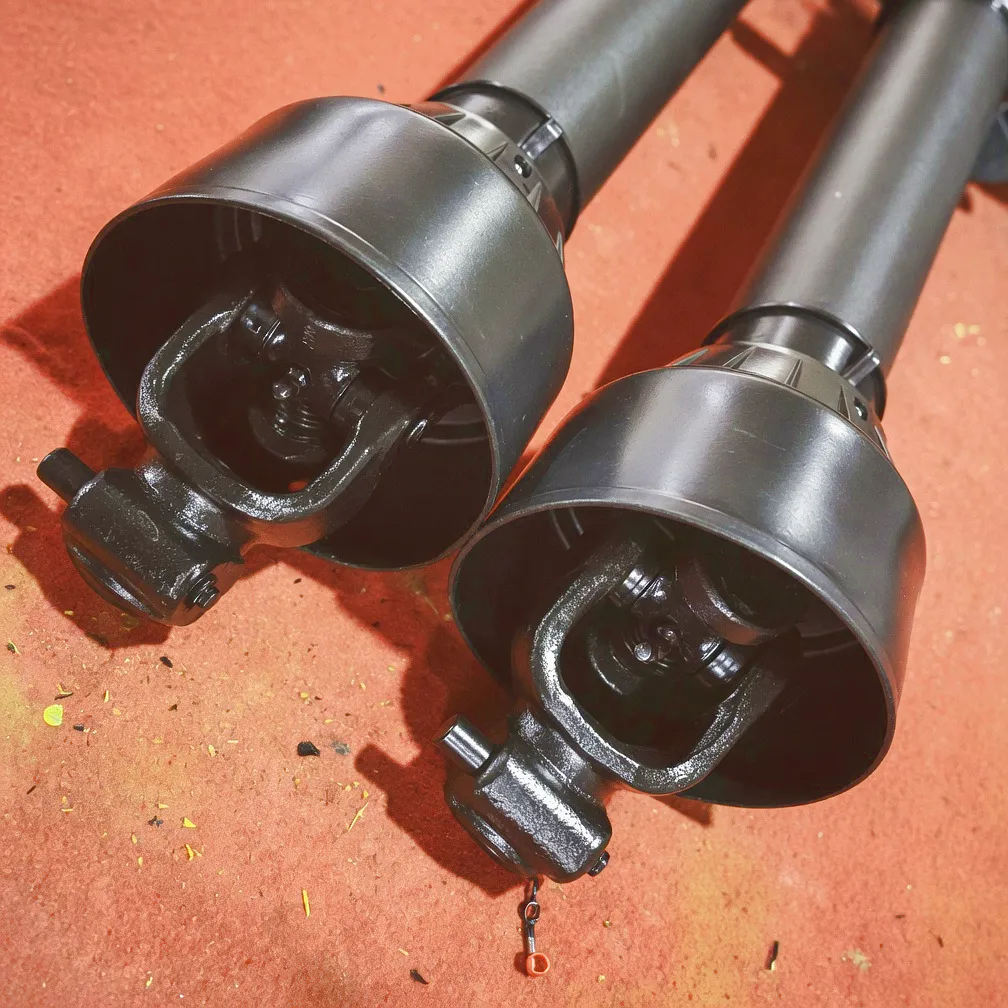 The protective guarding system is legally mandatory under UK PUWER 1998 regulations and the Supply of Machinery (Safety) Regulations 2008. A proper guard consists of a rotating inner cone fixed to the implement and an outer plastic or metal shield held stationary by a retaining chain anchored to the tractor or baler frame. The guard must fully enclose the rotating shaft and yokes, and must be replaced immediately if cracked or missing. UK Health and Safety Executive enforcement data shows that PTO-related incidents continue to account for a disproportionate share of serious agricultural injuries, making guard integrity as important as the shaft’s mechanical specification.
Materials Engineering Behind High-Performance PTO Drive Shafts
Tube Body — Seamless Carbon Steel
Cold-drawn seamless steel tubing, typically Grade S355 or equivalent EN 10210-1, provides the primary structural integrity. Cold drawing refines the grain structure and eliminates weld seams that could initiate fatigue cracking under cyclic torsional loading. Wall thickness is calculated against peak torque plus a safety factor — typically 2.5x — to cover field shock loading.
Yokes — Forged Alloy Steel
Drop-forged yokes in 40Cr or 42CrMo4 alloy steel are heat-treated to 28–32 HRC to balance strength against machinability. Forging closes the grain flow around the bore and lug geometry, dramatically increasing fatigue life compared to castings. Induction-hardened bearing seats extend grease retention and resist fretting wear at the U-joint interface.
Cross-Kits — Needle-Bearing Hardened Steel
The trunnion cross bodies are precision-machined from case-hardened 20CrMnTi or similar bearing-grade steel, with needle roller bearings running on ground journal surfaces. Bearing cups are sealed with triple-lip seals that exclude both field debris and water ingress while retaining grease under centrifugal force. Cross-kit replacement is engineered to be a field-serviceable operation requiring only a press or C-clamp.
Surface Treatment — Zinc Phosphate + Paint
UK field conditions — rain, mud, silage effluent, and morning dew that never fully dries in northern counties — make corrosion protection non-negotiable. High-specification PTO shafts receive zinc phosphate conversion coating followed by polyurethane topcoat or powder coating. Internal telescoping surfaces are zinc-plated to maintain sliding freedom while resisting rust seizure during winter storage.
Core Technical Advantages of Premium PTO Drive Shafts for Round Balers
Constant-Velocity Output
Double-Cardan joint geometry delivers isochronous rotation at operational angles up to 25 degrees, eliminating the velocity fluctuation that causes belt slip and pickup-reel vibration in round balers. This directly reduces crop loss and maintenance intervals.
Automatic Overload Protection
Integrated ratchet-type or friction-disc slip clutches disengage instantly when impact torque exceeds preset thresholds, then re-engage without operator intervention. This feature alone can save thousands of pounds in baler gearbox repairs per season.
Extended Grease-Retention Sealing
Triple-lip seals on needle-bearing cups keep contaminants out and grease in through the full operating cycle. Extended re-greasing intervals — up to 50 operating hours in premium variants — reduce downtime demands during peak harvest periods when operators cannot afford to stop.
Lemon-Profile Spline Engagement
The lemon or trilobular cross-section of premium agricultural inner tubes distributes torsional stress across a broader contact area than round or star profiles. Under the sustained high-torque output of a 150 hp+ tractor feeding a large-chamber round baler, this geometry significantly delays the onset of fretting wear in the telescoping joint.
Broad Tractor Compatibility
Broad Tractor Compatibility
Splined connection ends manufactured to ISO 500 and DIN 9611 standards ensure compatibility with the full range of tractors used in UK agriculture: John Deere, New Holland, Massey Ferguson, Case IH, CLAAS, Fendt and others. Custom connection profiles are available for OEM replacement across all major baler brands.
Dynamic Balancing
Precision-balanced shaft assemblies eliminate vibration at both 540 RPM and 1,000 RPM operating speeds. Dynamic imbalance in a PTO shaft running at 1,000 RPM generates centrifugal forces that transmit directly into the tractor rear axle bearings and baler input gearbox, accelerating wear across multiple expensive components simultaneously.
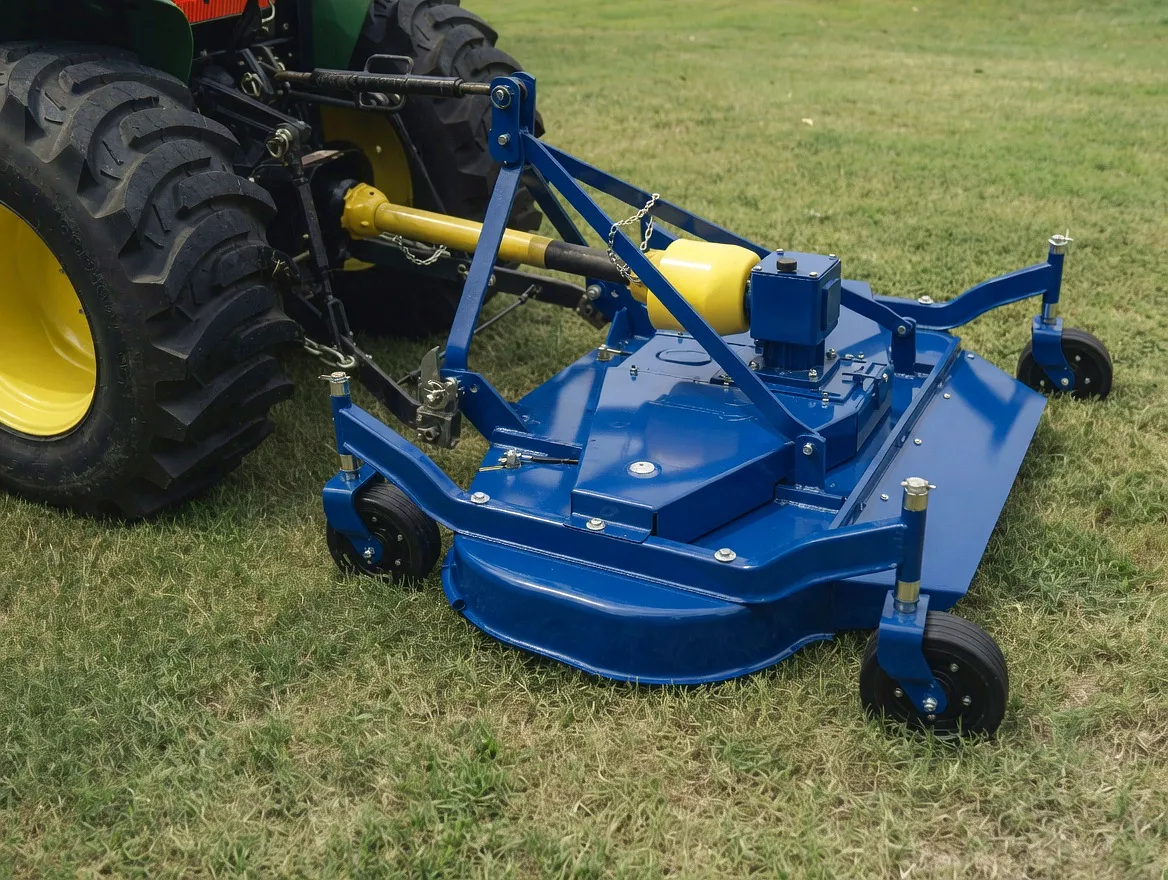
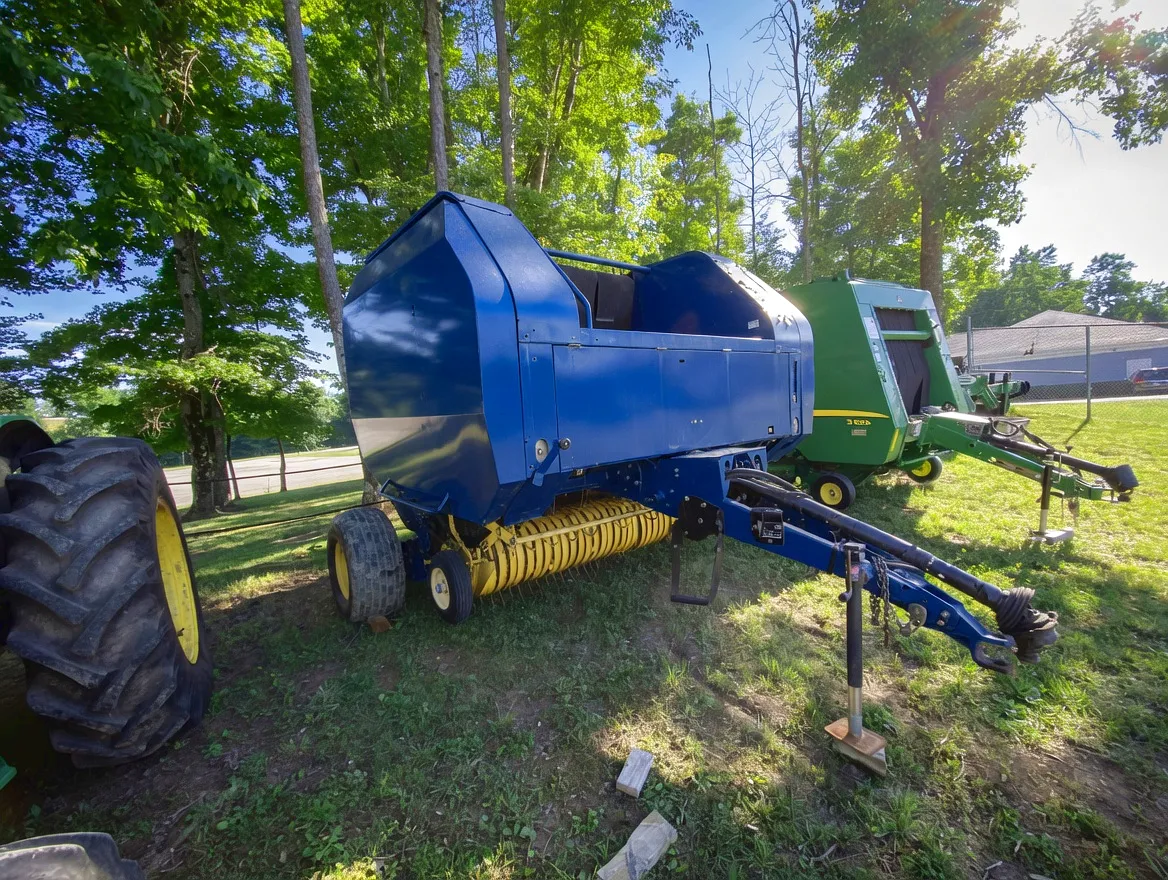
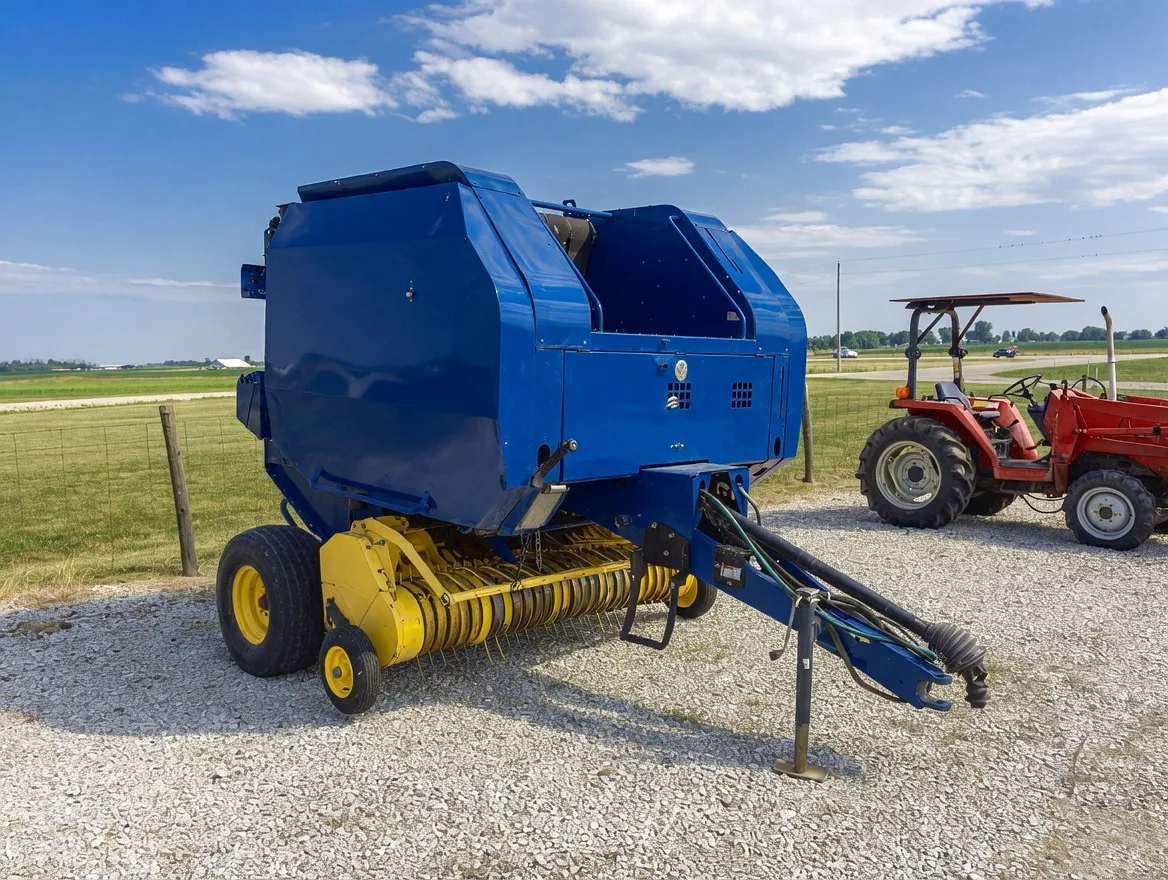
PTO drive shaft round baler application scenes across UK field conditions
Product Technical Performance Parameters
| Parameter | Series A (Standard) | Series B (Heavy-Duty) | Series C (High-Angle CV) |
|---|---|---|---|
| Rated Torque | 500 Nm | 1,200 Nm | 1,800 Nm |
| Peak (Shock) Torque | 1,250 Nm | 3,000 Nm | 4,500 Nm |
| Operating Speed (RPM) | 540 / 1,000 | 540 / 1,000 | 540 / 1,000 |
| Max Operating Angle | 15 degrees | 18 degrees | 25 degrees (CV joint) |
| Telescoping Stroke | 150 mm | 200 mm | 250 mm |
| Tube Profile | Star / Lemon | Lemon / Trilobular | Trilobular |
| Overload Protection | Shear bolt | Slip clutch (friction) | Ratchet slip clutch |
| Yoke Material | 40Cr forged steel | 42CrMo4 heat-treated | 42CrMo4 induction-hardened |
| Tube Material | S355 seamless steel | S355J2 seamless steel | S355J2 cold-drawn |
| Surface Finish | Phosphated + painted | Zinc phosphate + PU coat | Zinc plate + powder coat |
| Greasing Interval | Every 8 hours | Every 25 hours | Every 50 hours |
| Guard System | Plastic cone guard | Full-length plastic tunnel | Full-length metal + plastic |
| Tractor HP Range | 60 – 100 hp | 100 – 180 hp | 150 – 300 hp |
| Applicable Baler Type | Small round baler | Fixed-chamber round baler | Variable-chamber combination baler |
Application Scenario: Round Baler PTO Drive Shaft in UK Agriculture
Comprehensive industry deployment across grass silage, hay, straw and combinable crops throughout England, Scotland and Wales
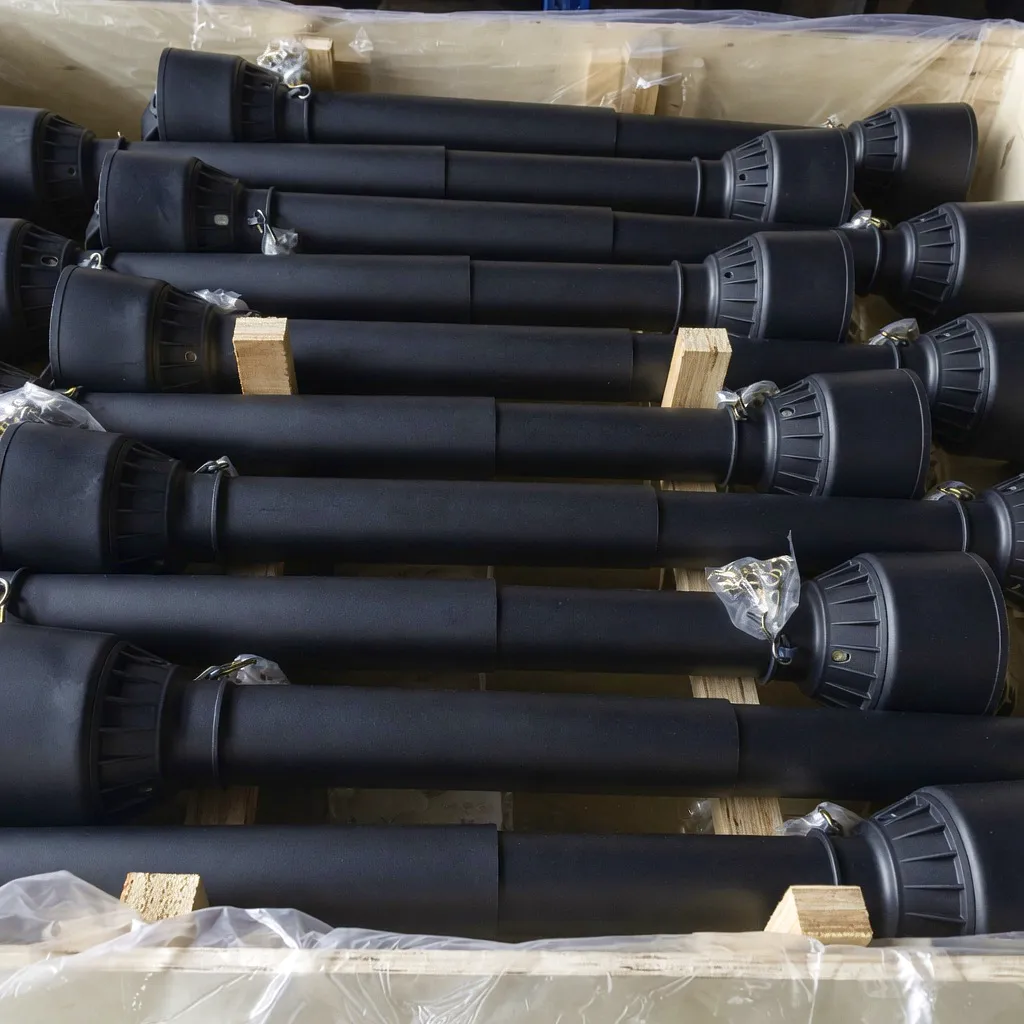 Across the dairy-heavy landscape of the Yorkshire Dales and the wide cultivated expanses of the Cheshire Plain, grass silage round baling is typically carried out in three to four cuts per season — beginning in late April and continuing through September. Each cut demands intensive baling activity concentrated into narrow weather windows of two to five days. The PTO drive shaft operates continuously during these periods at full rated output, with the tractor seldom stopping between field entry and the final bale being ejected.
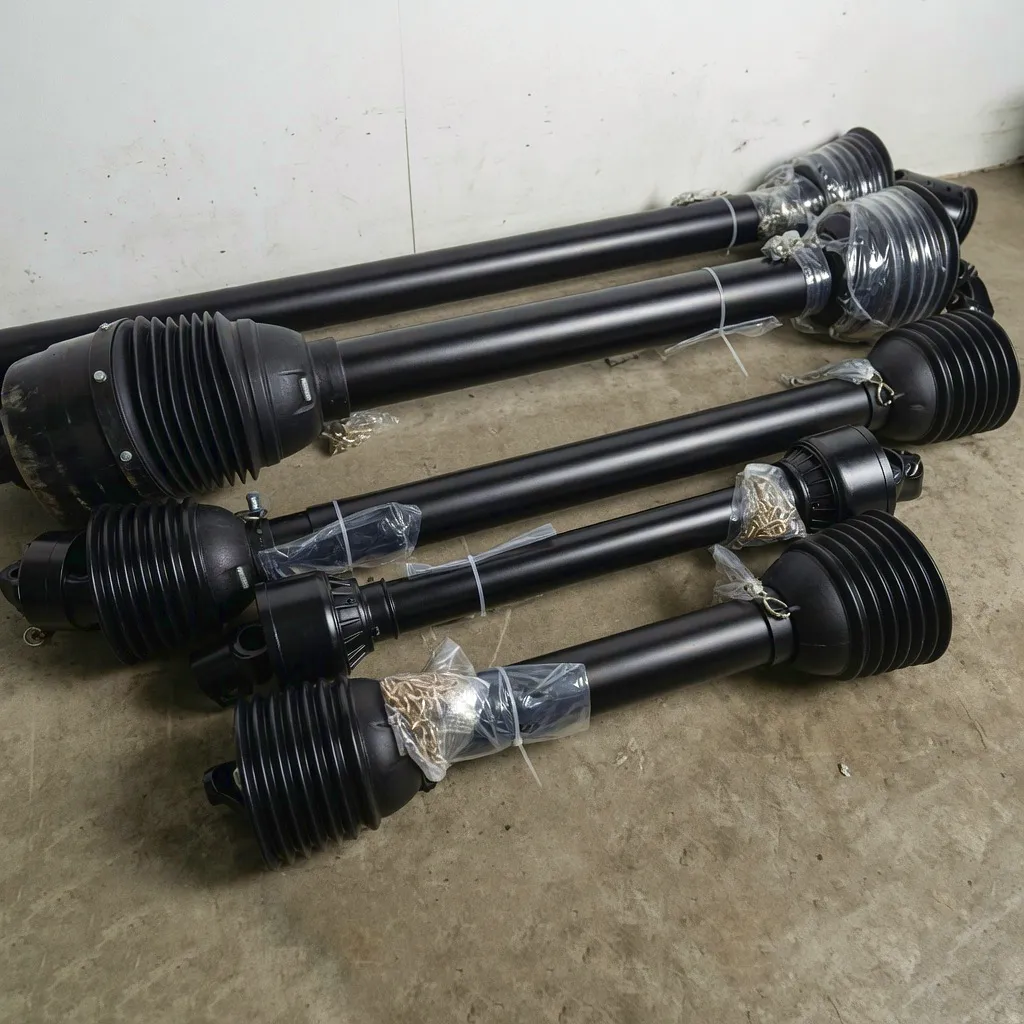 Hay production represents a more temperature-sensitive operation than silage — the crop must be cut, turned, and baled at a dry matter level above 85%, which in the UK’s variable climate creates intense short-run baling pressure whenever weather conditions align. East Anglian farms, with their lighter soils and more predictable summer weather patterns, are among the most productive hay regions in England. The Cotswold uplands, where a significant proportion of the national show-jumping horse forage supply originates, also see intensive July hay baling activity with premium quality requirements.
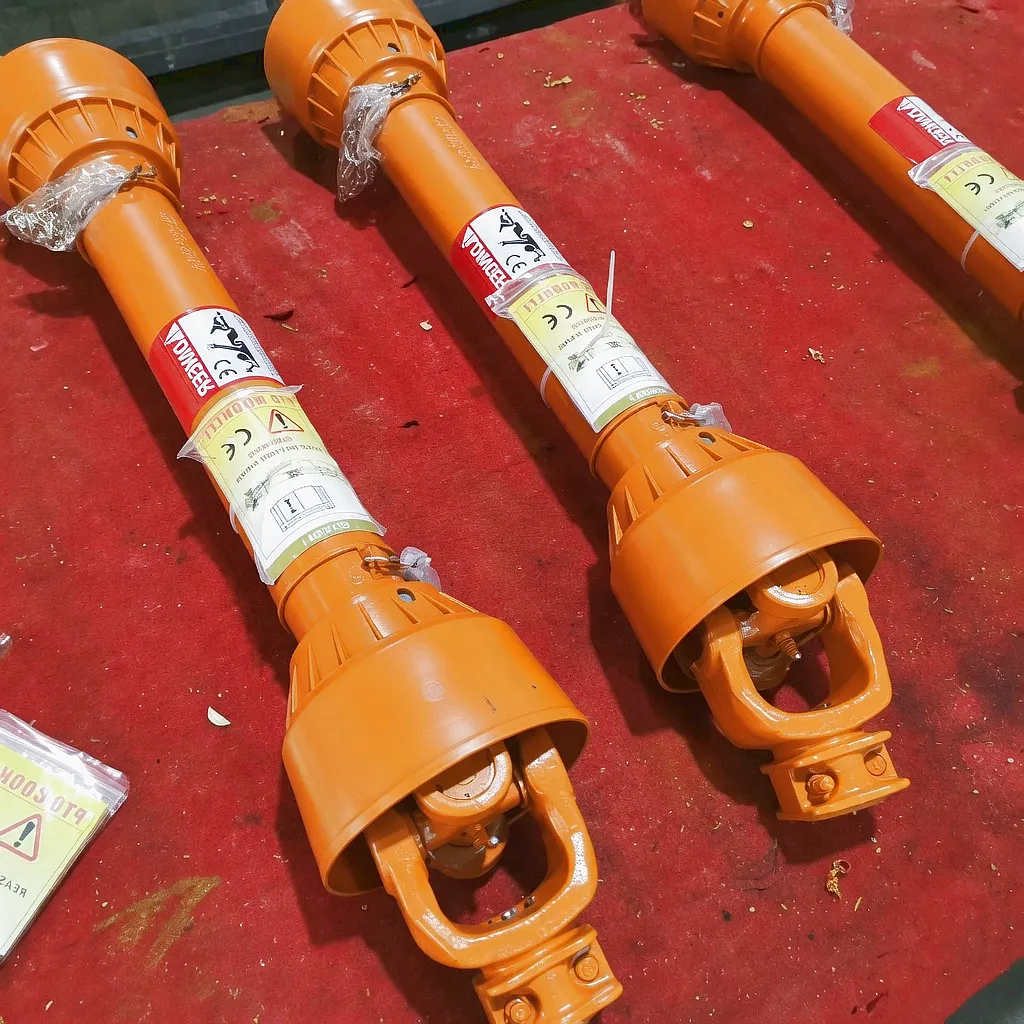 Lincolnshire and the Fens represent some of the most concentrated cereal growing areas in the UK. Following combine harvest of wheat, barley and oilseed rape, the windrow of straw left behind is typically baled for bedding or biofuel. The combination baler — round baler with integrated net or film wrapper — is increasingly common in these areas, producing plastic-wrapped round bales that can be stored outdoors. These machines place very high demands on the PTO drive shaft because they run both the baling chamber and the wrapping turntable from a single PTO input, often through a dividing gearbox.
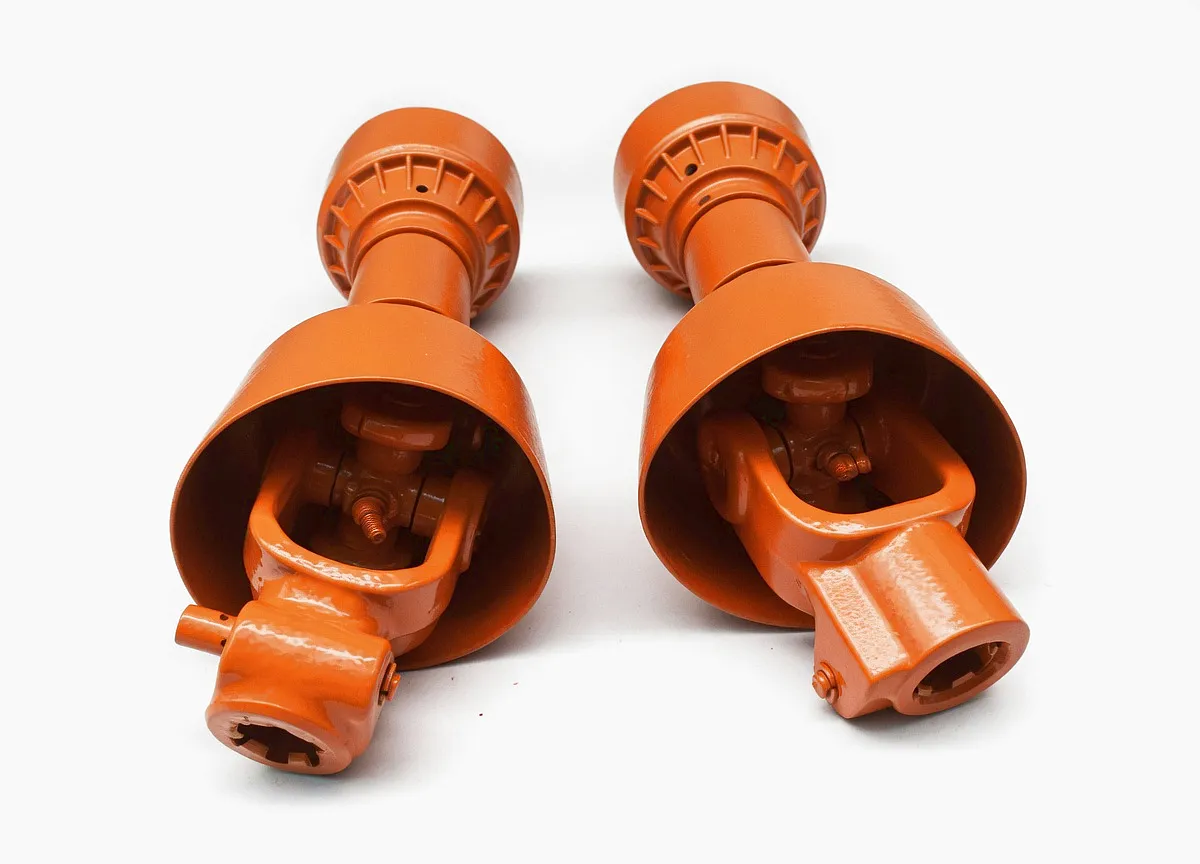 The dairy farms of Devon, Cornwall, and South Wales increasingly use whole-crop cereals and maize silage as part of diversified winter forage strategies. Whole-crop baling is perhaps the most mechanically punishing application for a round baler PTO shaft: the chopped material is coarse, fibrous and tough, and frequently includes standing stem sections that create impact loads when they suddenly enter the pickup and chamber. Peak torque spikes during whole-crop processing can reach 3–4 times the steady-state operational torque within milliseconds.
Ever Power — Precision PTO Drive Shaft Manufacturing
Custom-engineered PTO drive shafts for round balers, manufactured to OEM-grade tolerances and shipped directly to UK agricultural equipment distributors and end-users.
Full Customisation
Custom shaft lengths, spline profiles, yoke bore diameters, clutch torque settings and guard configurations. OEM drawing replication available for exact replacement parts.
Precision Manufacturing
CNC-machined yoke bores to H7 tolerance. Cold-drawn seamless tube processed to DIN 2393 standards. Dynamic balancing on every shaft to Grade G6.3 or better per ISO 1940.
UK Supply Chain
Direct shipping to UK agricultural dealers in the Midlands, East Anglia and Scotland. Consolidated pallet dispatch for large orders. Customs documentation provided for post-Brexit import compliance.
Quality Certification
ISO 9001:2015-certified manufacturing processes. Each shaft batch accompanied by material traceability certificates and dimensional inspection reports. Non-conformance reporting system with full production record retention.
Response within one business day · Technical consultation available · Minimum order flexible
Customer Success Story: Smithfield Agricultural Contractors, Spalding, Lincolnshire
Smithfield Agri
Spalding, Lincolnshire
Smithfield Agricultural Contractors operates a five-tractor baling fleet serving arable farms across the South Lincolnshire Fens, providing contract baling services for straw, whole-crop wheat silage and miscanthus energy grass. The business bales approximately 28,000 round bales per season across the period from May through October, using a mix of fixed and variable-chamber balers rated from 100 to 200 hp.
Before partnering with Ever Power for PTO drive shaft supply, Smithfield experienced two to three PTO shaft failures per season across the fleet — primarily U-joint cross-kit seizures caused by inadequate seal performance in their previous-supplier shafts combined with the abrasive environment generated by Fenland silts and fine cereal chaff. Each failure meant a 2–4 hour operational pause, direct shaft replacement cost, and in one instance a secondary gearbox damage claim when a seized cross-kit transferred shock loads into the baler’s main drive gearbox before the operator noticed the vibration.
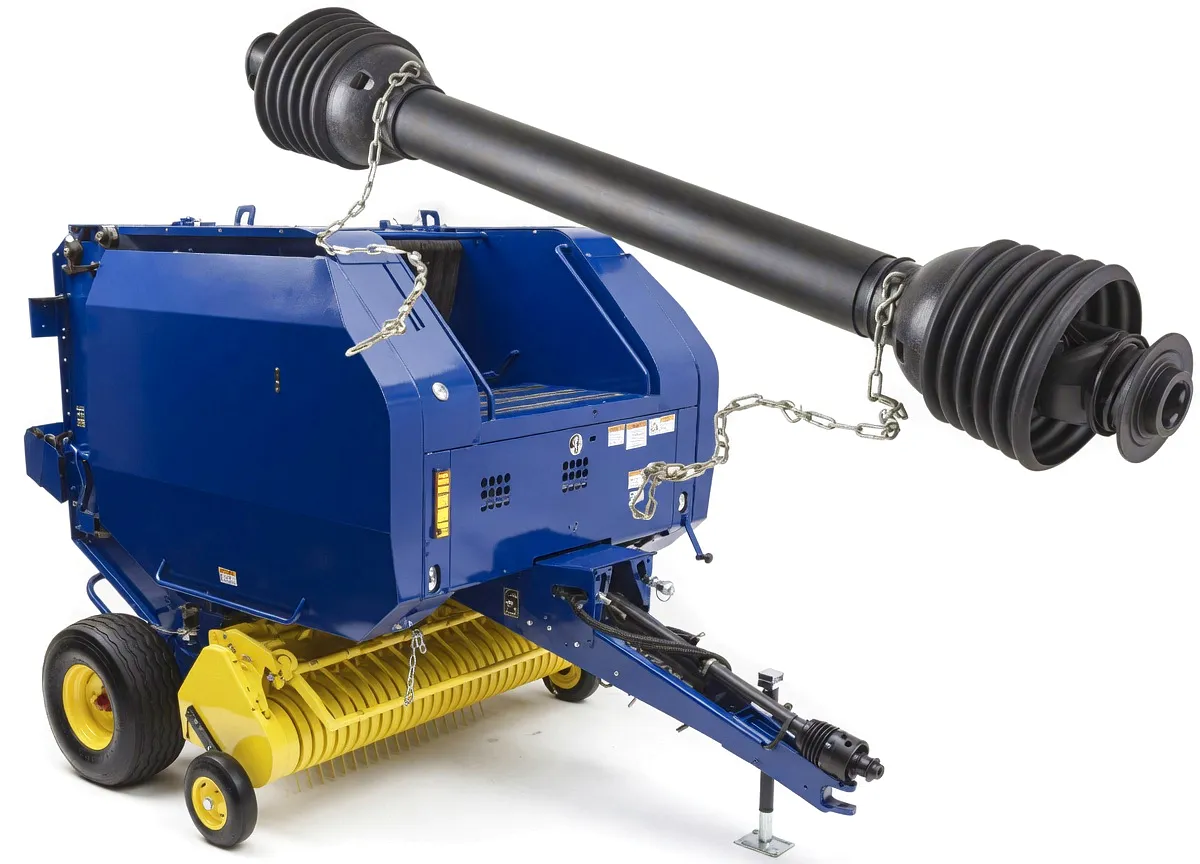 Following contact with Ever Power through an online quotation enquiry, Smithfield received a detailed technical recommendation matching Series B heavy-duty shafts for the three high-output tractors and Series A units for the two lighter machines. Ever Power supplied a batch of nine shafts — incorporating matched spare cross-kits — at a total cost representing a 23% saving over the equivalent OEM spare part pricing from the baler manufacturers’ dealer networks. The shafts arrived palletised with full CE-equivalent documentation, pre-greased and ready for fitting. Through the following two seasons, the Smithfield fleet recorded zero PTO shaft failures, and the extended 25-hour greasing intervals on the Series B units reduced mid-season maintenance time sufficiently to allow one additional operator to be reassigned from routine shaft service to machine operation.
What UK Agricultural Operators Say
“We fitted the Ever Power Series B shafts on our two John Deere 6R tractors at the start of the season and ran them through 14,000 bales of whole-crop wheat silage without a single issue. The slip clutch activated twice during the season on stone strikes — both times the baler cleared and we were moving again within two minutes. The seal quality is noticeably better than what we had before.”
James Thornton
Owner, Thornton Agricultural Contracting — York, North Yorkshire
“Getting a technical data sheet alongside the actual shaft was genuinely useful — our workshop team could verify that the spline profile matched our Case IH baler input shaft before we even fitted it. Ever Power got the custom length right first time based on our drawbar height measurement, and the turnaround from enquiry to delivery was ten working days. That kind of supplier response is what we need when a shaft fails mid-season.”
Caroline Birch
Farm Manager, Birch Farms Ltd — Melton Mowbray, Leicestershire
“We changed over to Ever Power shafts for our grass silage fleet after losing two seasons to U-joint failures on our previous supplier’s shafts. The price difference at point of purchase was negligible, but the whole-season performance has been completely different. The 50-hour greasing intervals on the Series C units mean our operators are spending time baling, not servicing. Custom-built to our exact drawbar height specification — that attention to detail is what keeps us coming back.”
Andrew MacPherson
Director, MacPherson Farming — Cupar, Fife, Scotland
How to Select the Right PTO Drive Shaft for Your Round Baler
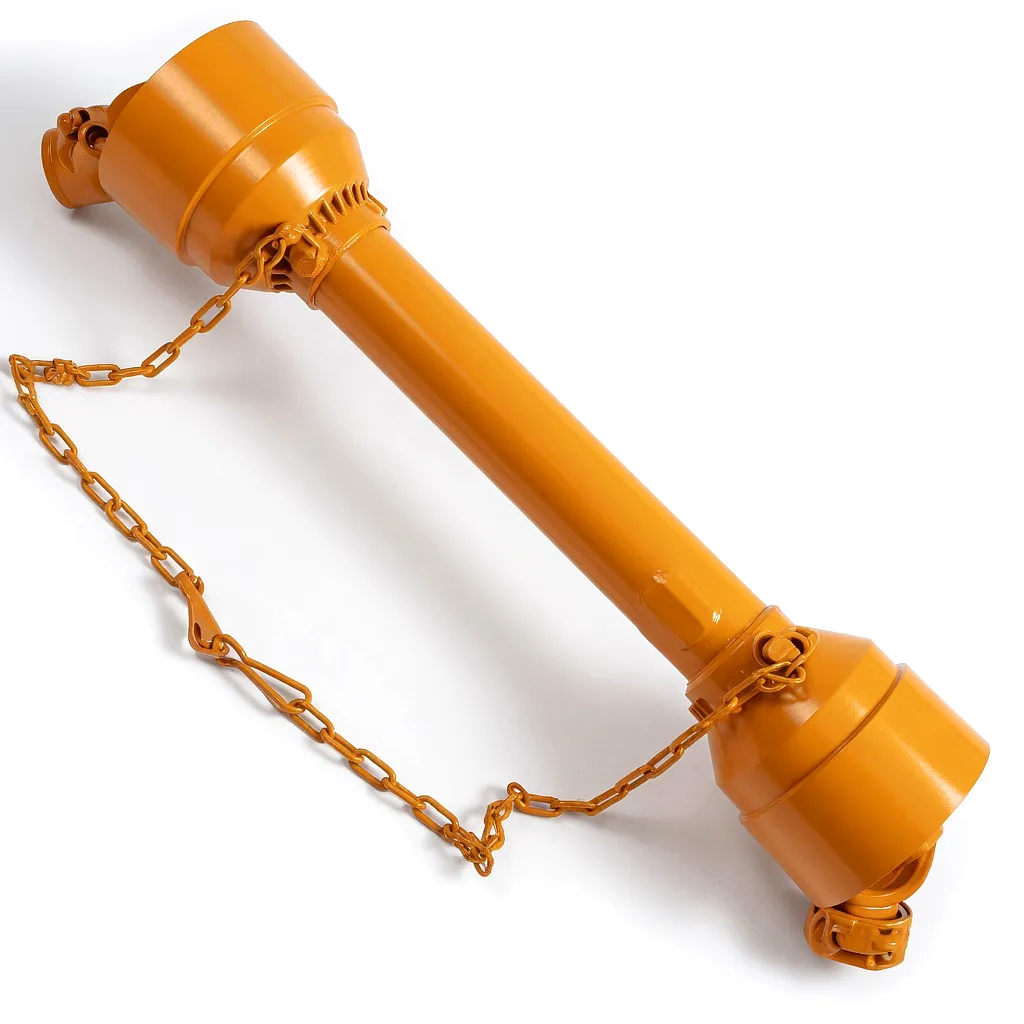 The process of matching a PTO drive shaft to a specific round baler and tractor combination begins with three measurements and one datasheet. Measure the distance from the tractor PTO stub face to the baler input shaft face at the minimum articulation angle (tractor and baler in a straight line on level ground). This gives the shaft’s required collapsed length. Then measure the same distance at the maximum likely working angle — typically the sharpest headland turn the combination will make — to verify the shaft has adequate telescoping travel without risk of fully extending and separating. Retrieve the baler manufacturer’s PTO input torque rating from the operator manual; this figure, combined with the tractor’s PTO output power, defines the minimum shaft torque specification.
PTO spline profile is dictated by the tractor — most modern UK-market tractors use the 1-3/8 inch 6-spline or 1-3/8 inch 21-spline profiles for 540 RPM and 1,000 RPM outputs respectively, with some larger machines offering a 1-3/4 inch 20-spline heavy-duty option. The baler input end will specify its own connection requirement in the technical manual. When ordering a custom shaft from Ever Power, providing both ends’ measured bore diameter and spline count allows the technical team to match the correct yoke series in a single exchange.
| Selection Factor | What to Check | Why It Matters |
|---|---|---|
| Shaft Length | Measure collapsed and extended length at operating angles | Prevents over-compression or separation failure |
| Torque Rating | Check baler manual for PTO input torque spec | Ensures shaft body and cross-kits are not under-rated |
| PTO Speed | Confirm 540 or 1,000 RPM requirement on baler | Different balance grades required at each speed range |
| Spline Profile | Measure bore and count splines at both ends | Determines correct yoke specification at each connection point |
| Working Angle | Assess maximum field operating angle | Drives choice between single U-joint and CV joint configuration |
| Crop Type | Identify silage, hay, straw or whole-crop | Determines overload protection type and seal grade required |
Frequently Asked Questions — PTO Drive Shaft for Round Balers (UK)
How do I know what size PTO drive shaft I need for my round baler in the UK?
You need three pieces of information: the collapsed and extended length measured between your tractor’s PTO stub face and the baler input flange at maximum and minimum operating angles, the spline profile at both ends (bore diameter and spline count), and the torque rating from your baler operator’s manual. Providing these measurements to Ever Power allows the technical team to specify the correct shaft series and build a matched unit to your exact dimensions.
What is the typical price or cost of a replacement PTO drive shaft for a round baler from a UK supplier?
Replacement PTO drive shaft pricing varies considerably with specification. A standard Series A shaft for a small round baler typically costs significantly less than an OEM replacement from the baler manufacturer’s dealer network. Heavy-duty Series B and C shafts with friction slip clutches carry a premium over basic shear-bolt units but represent considerable value versus the cost of a baler gearbox repair or replacement. Contact Ever Power for a specific quotation — pricing is transparent and based on your measured specification without unnecessary dealer margins.
Where in the UK can I find a reliable supplier of heavy-duty PTO drive shafts for large-chamber round balers?
Ever Power supplies PTO drive shafts directly to UK agricultural dealers, farm machinery workshops and end-user farming businesses throughout England, Scotland and Wales. Orders are placed via the contact email at [email protected], and Ever Power’s technical team responds within one business day with a specification confirmation and quotation. Delivery is by pallet freight to UK mainland addresses, with customs clearance documentation included for post-Brexit import compliance.
How often should I grease the universal joints on my round baler PTO drive shaft during the UK harvest season?
Greasing intervals depend on the shaft’s seal specification. Standard shafts should be greased every 8 operating hours during active baling — which in a busy UK grass silage season can mean daily lubrication. Ever Power’s Series B shafts with triple-lip sealed needle bearings extend this to every 25 hours, and Series C units are rated to 50-hour intervals. Always grease with the shaft rotating slowly to distribute lubricant evenly through all bearing needle rows, and never over-pack, which can cause seal extrusion.
Which type of overload protection is better for round baling in Yorkshire or Lincolnshire — a shear bolt or a slip clutch?
For commercial round baling in the high-throughput arable areas of Lincolnshire, where stone contamination in crop windrows is a real hazard and time pressure is severe, a friction slip clutch or ratchet clutch is strongly preferred over a shear bolt. When a shear bolt parts, the operator must stop, find replacement bolts, and re-assemble the clutch before continuing — costing typically 10–20 minutes per incident. A slip clutch re-engages automatically the moment the overload clears, often without the operator needing to leave the cab. In Yorkshire’s livestock areas, where crops are cleaner, shear bolts remain a reasonable budget choice.
When is it necessary to replace a PTO drive shaft rather than just replacing the universal joint cross-kits?
Replace the entire shaft when the tube shows visible bending or twisting, when the telescoping inner tube moves roughly or with visible corrosion seizing, when the yoke bores show oval wear at the cross-kit bearing cup seats, or when the total runout measured at mid-shaft exceeds 1.5mm. Cross-kit replacement alone is appropriate when the tube, yokes and clutch mechanism are all undamaged and within service specification. Never weld a bent agricultural shaft or continue with a shaft showing any visible structural deformation — the torsional loads in round baling applications will propagate a fatigue crack from any distortion point.
Structured data (FAQPage + Speakable Schema JSON-LD for Google) is provided separately below the article body for WordPress header or footer injection. Do not include inside post content editor.
Ready to Source PTO Drive Shafts for Your Round Baler Fleet?
Ever Power provides custom-length, specification-matched PTO drive shafts with full UK import documentation. Technical consultation included with every enquiry.
edit by gzl